Hardcover. New Brunswick, Rutgers University Press, 1st, 1991, Book: Very Good, Dust Jacket: Very Good, Hardcover in a lightly worn dust jacket, 326 pages. Firth Haring Fabend has studied a large colonial American family over five generations. The Haring family settled in the Hackensack Valley (on the New York/New Jersey border), where they lived, prospered, and remained throughout the eighteenth century. Fabend looks at how this ordinary family of independent, middle-class farmers coped with immigration, established themselves in a community, acquired land and capital, and took part in the social, political, economic, and religious changes of the seventeenth and eighteenth centuries. As she traces the lives of the Harings and their neighbors, Fabend focuses on their marriage and childbearing patterns, living conditions, agricultural methods, and relative economic position. She investigates inheritance patterns, concluding that the position of women deteriorated under English law. She is equally interested in the political and religious life of the family. Name on front fly leaf, light pencil checks in margins to several pages, otherwise clean.
Hardcover. Chicago, self-published, 1st, 1897, Book: Good, Dust Jacket: None, Hardcover, blue cloth stamped with white lettering and design on front cover and spine. 270 pages. Andrea Hofer Proudfoot's classic work on parenting and family life is as relevant today as it was when it was first published over a century ago. Drawing on her experiences as a kindergarten teacher and mother, Proudfoot offers practical advice and insight into the challenges and joys of raising young children. This is the original first printing, dated 1897 on copyright page. Name on front fly leaf, light pencil marking on about a dozen pages.
Softcover. Princeton NJ, Princeton University Press, 1st pbk, 2002, Book: Very Good, Dust Jacket: None, Softcover, 282 pages. 113 color plates, 47 in b&w. The painters who came to be known as the Hudson River School - Thomas Cole, Asher B. Durand, Frederic Edwin Church, Jasper Cropsey, Sanford Robinson Gifford, and others - found inspiration in our young country's natural wonders and were the first to paint many of its still-wild vistas. As America was settled and the wilderness receded, their successors - most notably Albert Bierstadt and Thomas Moran - carried their quest for the sublime to the Far West, communicating its breathtaking grandeur in brilliant views of Rocky Mountain peaks, roaring waterfalls, and vast canyons. Within a single generation these artists established the dramatic approach to American landscape painting that is celebrated in this stirringly beautiful book. The freshness of their vision, the intensity of their invention, and the energy of their execution were all born of the urgency these artists sensed in the life of America itself. Clean copy. DUE TO WEIGHT, DOMESTIC SHIPPING ONLY.
Hardcover. Philadelphia, Lea & Blanchard, reprint, 1851, Book: Very Good, Dust Jacket: None, Hardcover, maroon boards with brown calf spine, title label on front cover. 21 double-page maps detailing the geography of ancient nations, featuring color country borders, extensive index. Maps include: Orbis Veteribus Notus; Britannia; Hispania; Gallia; Germania; Vindelicia; Italia, Pars I; Italia, Pars II; Macedonia; Graecia extra Pelo; Peloponnesus; Insulae Maris Aegaei; Asia Minor; Oriens; Syria; Palaestina; Armenia; Africa; Mauritania, Numidia and Africa Propria; and Aegyptus. Spine neatly re-inforced with clear tape, clean, bright copy.
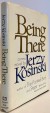
Hardcover. New York, Harcourt Brace Jovanovich, 1st, 1970, Book: Very Good, Dust Jacket: Good, 142 pages. Hardcover. Yellow endpapers. Some agewear. Black cover boards, tan quarter cloth. Dust jacket unclipped, slightly tanned, some chipping with light agewear (see image). Binding good. Spine straight. Pages unmarked. Very good condition. Kosinski has written a modern parable, which is actually a suspense story. It is remarkable for its tension, wit, and irony. It is exciting, and it is memorable.
Softcover. Bergen County Historical Society, 1st, 1960, Book: Very Good, Dust Jacket: None, Softcover, pale rose wrappers with black type and engraving of courthouse and church in Hackensack. 112 pages, clean copy.
Hardcover. New Delhi, Lalit Kala Akademi, 1st, 1959, Book: Very Good, Dust Jacket: Good, 52 pages. Hardcover. Illustrated with black & white photographs. Dust jacket with tape repaired tears along edges, areas of fading. Clean, tight copy.
Hardcover. White Hall, VA, Shoe Tree Press, 1st, 1991, Book: Near Fine, Dust Jacket: None, 95 pages. Hardcover. (INSCRIBED BY AUTHOR)B/w illustrations throughout. Decorated cover boards. Pages clean and bright. Spine straight. Binding tight. The excitement in the barracks on the night of May 10, 1864 was electric. At last, the cadets of the Virginia Military Institute were going to war!
Hardcover. Chattanooga, TN, Chattanooga News-Free Press, 1st, 1980, Book: Very Good, Dust Jacket: Fair, 499 pages. Hardcover. B/w illustrations throughout. Dark blue cover boards, gilt title on spine and front cover. Boards excellent. Light foxing to top edge. Pages bright. Binding good. Spine slightly cocked, doesn't affect binding. Dust jacket unclipped, dust jacket has some moisture damage, book does not. Very good condition. A new approach to local Chattanooga, TN history--combining a chronological account of a city's past with much genealogical material about many of the city's leading families. DUE TO WEUGHT, DOMESTIC SHIPPING ONLY.
Hardcover. Oxford, England, Oxford University Press, 1st, 2010, Book: Very Good, Dust Jacket: Very Good, 328 pages. Hardcover. B/w illustrations throughout. Previous owner's name on front flyleaf. Black cover boards, gilt title on spine. Binding tight. Spine straight. Pages clean, unmarked, bright. Dust jacket unclipped, excellent, glossy. Assesses the comexity and fluidity of Christian identity from the reign of Elizabeth I and the early Stuart kings through the English Revolution, and into the Restoration, which the English Church and monarchy were restored.
Hardcover. Canada, McGill-Queen's University Press, 1st, 1982, Book: Very Good, Dust Jacket: None, 227 pages. Hardcover. Brown cloth cover boards, black title on spine and front cover. Pages clean and bright. Spine straight. Binding tight. Previous owner's name on front flyleaf. Brown endpapers. This book challenges widespread asumptions about common-sense philosophies and provides a major reassessment of an influential segment of the history of ideas.
Hardcover. New York , Pantheon, reprint, 1997, Book: Very Good, Dust Jacket: Very Good, Hardcover, 296 pages, b&w illustrations by Spiegelman. Maus is a holocaust survival story, a biography, and an autobiography. Written as a graphic novel (and winner of a Pulitzer Prize), Art Spiegelman captures the process of interviewing his father while simultaneously telling his father's story. In that sense, the text is very self-reflexive - there are parts in it showing Spiegelman working to create the very page you read, as previous parts of the his father's story are reintroduced from previous portions of the text. The story is complex. It not only details the horrors of the holocaust and the extreme lengths to which people went to survive, but it also captures the harrowing guilt survivors faced, and the lifelong aftereffects of the war. It also shows the struggle between father and son, both through the lens of a typical familial challenge, and of those unique between a survivor and child born afterwards.
Softcover. Ann Arbor, University of Michigan Press, reprint, 1995, Book: Very Good, Dust Jacket: None, Softcover, 204 pages. Translated by Roxanne Lapidus. Clean, bright copy. Although elected to the prestigious French Academy in 1990, Michel Serres has long been considered a maverick--a provocative thinker whose prolific writings on culture, science and philosophy have often baffled more than they have enlightened. In these five lively interviews with sociologist Bruno Latour, this increasingly important cultural figure sheds light on the ideas that inspire his highly original, challenging, and transdisciplinary essays. Clean copy.
Hardcover. London, England, Pickering & Chatto, 1st, 2001, Book: Very Good, Dust Jacket: None, Six volumes, Hardcovers. 1636-1691. Volume 1: 521 pages. Two bumps to front cover board edge. Volume 2: 674 pages. front cover board top right corner bump. Volume 3: 445 pages. Volume 4: 528 pages. Volume 5: 474 pages. Volume 6: 616 pages. Some b/w illustrations. Blue cover boards, gilt title on black with decoration on spines. Previous owner's name and information on flyleaf of volumes 1, 2, and 6. Pages clean and bright. Binding tight. Spines straight. Beautiful set right out of a professor's library. Domestic Shipping Only.
Softcover. Los Angeles, CA, William Andrews Clark Memorial Library, Reprint, 1970, Book: Very Good, Dust Jacket: None, 77 pages. Softcover. Augustan Reprint Society. Pamphlet with staple binding. Light tanning to cover, cover is becoming detached from bound pages. No pages missing or ripped. Very good condition. Previous owner's name written on front cover. Some underlining and brief notes written inside (pencil)."The most satisfactory of Collins' many pamphlets and books..."
Hardcover. Durham UK, Acumen, 1st, 2009, Book: Very Good, Dust Jacket: None, Hardcover in blue cloth, with red title block, gilt lettering, 348 pages. The early modern period in philosophy - encompassing the 16th to the 18th centuries - reflects a time of social and intellectual turmoil. The Protestant Reformation, the Catholic Counter-Reformation, and the birth of the Enlightenment all contributed to the re-evaluation of reason and faith. The revolution in science and in natural philosophy swept away two millennia of Aristotelian certainty in a human-centered universe. Covering some of the most important figures in the history of Western thought - notably Descartes, Locke, Hume and Kant - "Early Modern Philosophy of Religion" charts the philosophical understanding of religion at a time of intellectual and spiritual revolution. "Early Modern Philosophy of Religion" will be of interest to historians and philosophers of religion, while also serving as an indispensable reference for teachers, students and others who would like to learn more about this formative period in the history of ideas. Lacks dust jacket. Clean copy.
Hardcover. Princeton NJ, Princeton University Press, 2nd pr., 2013, Book: Very Good, Dust Jacket: Very Good, Hardcover in a bright dust jacket, 332 pages, b&w illustrations. Einstein and the Quantum reveals for the first time the full significance of Albert Einstein's contributions to quantum theory. Einstein famously rejected quantum mechanics, observing that God does not play dice. But, in fact, he thought more about the nature of atoms, molecules, and the emission and absorption of light-the core of what we now know as quantum theory-than he did about relativity. A compelling blend of physics, biography, and the history of science, Einstein and the Quantum shares the untold story of how Einstein-not Max Planck or Niels Bohr-was the driving force behind early quantum theory. It paints a vivid portrait of the iconic physicist as he grappled with the apparently contradictory nature of the atomic world, in which its invisible constituents defy the categories of classical physics, behaving simultaneously as both particle and wave. And it demonstrates how Einstein's later work on the emission and absorption of light, and on atomic gases, led directly to Erwin Schrodinger's breakthrough to the modern form of quantum mechanics. The book sheds light on why Einstein ultimately renounced his own brilliant work on quantum theory, due to his deep belief in science as something objective and eternal. Clean copy.
Hardcover. Bristol UK, Thoemmes Press, reprint, 1997, Book: Very Good, Dust Jacket: None, Hardcover, blue cloth with gilt lettering on spine, 403 pages plus a 27 page addenda. A facsimile printing of the 1671 edition. Some 100 illustrations to text showing physical or geometrical calculations. Henry More (1614-1687), was an influential Jesuit, Neoplatonist, and philosopher. This work on metaphysics profoundly influenced the development of Newton's thought, "It seems undeniable that Newton read and was influenced by More's views on space and time, as presented in the Enchiridion metaphysicum. Like More, Newton also believed that for something to exist it must exist in space, and he identified the immensity of infinite space with the extension of God the similarities between their views of space and time, and their relationship to God, guarantees More's place in the history of science." Name on front fly leaf, otherwise clean and bright.
Hardcover. NY, Rizzoli, 1st US, 1990, Book: Very Good, Dust Jacket: Very Good, Hardcover in a bright dust jacket, 207 pages. Entertainingly idiosyncratic in its selection of material, this historical compendium of facts and fascinating lore takes off on a visual romp through the history of gardens. Rather than adhere to a conventional narrative format, Vercelloni--an Italian architect, city planner and landscape gardener--arranges his material as though it were a slide show, devoting each page to an image and accompanying text. Beginning with the "landscape" of the Ice Ages, forging ahead to the Renaissance and finally reaching contemporary times, the author presents a captivating grab-bag of information, covering such topics as the significance of flowers in Renaissance painting, the reasoning behind the 17th-century craze for tulips and the role of contemporary urban parks in society. With its strong visual orientation and pungent text, Vercelloni's "historical atlas" looks deftly and light-heartedly at humanity's ongoing love of gardens. Clean copy.
Softcover. New Jersey, Bergen County Board, 1st, 1983, Book: Very Good, Dust Jacket: None, Softcover, 104 pages. Volume six of a seven volume set on the history and heritage of Bergen County. Clean, like new..

 "A Dutch Family in the Middle Colonies, 1660-1800 by: Fabend, Firth")
 "A Mother's Ideals: A Kindergarten Mother's Conception Of Family Life by: Andrea Hofer Proudfoot")
 "Albany's First Church and It's Role in the Growth of the City, 1642-1942. With an introduction by Dr. Howard Hageman by: Alexander, Robert S.")


 "American Sublime: Landscape Painting in the United States 1820-1880 by: Wilton, Andrew; Barringer, Tim")
 "Atlas of Antient Ancient Geography by: Butler, Samuel")


 "Being There by: Kosinski, Jerzy")

 "Benny and the Bear by: Barbee Oliver Carleton")
 "Bergen County Historical Society Papers: Revolutionary War Round Table Papers 1960 by: Albert T. Klyberg et. al.")
 "Bergen County History. 1976 Annual by: Tholl, Claire K., Editor")
 "Billy Bunnyscoot, the Lost Bunny by: Smith, Georgia Tucker")


 "Birbhum Terracottas (Lalit Kala Series of Indian Art) by: Dey, Mukul")
 "Cadets at War: The True story of Teenage Heroism at the Battle of New Market (INSCRIBED BY AUTHOR) by: Beller, Susan Provost")


 "Chattanooga's Story by: Wilson, John")


 "Christian Identity: Jews & Israel in Seventeenth-Century England by: Guibbory, Achsah")


 "Cluade Buffier and Thomas Reid: Two Common-Sense Philosophers by: Marcil-Lacaste, Louise")


 "Complete Maus, The by: Spiegelman, Art")
 "Conversations on Science, Culture, and Time by: Serres, Michel with Latour, Bruno")
 "Correspondence of Robert Boyle, The (Six volumes, complete set) by: Hunter, Michael (Editor), Antonio Clericuzio (Editor), Lawrence M. Principe (Editor)")


 "Discourse Concerning Ridicule and Irony in Writing, A (1729) by: Collins, Anthony, Bloom, Edward A. (Introducation), Lillian D. Bloom (Introduction)")


 "Early Modern Philosophy of Religion (The History of Western Philosophy of Religion, Volume 3) by: Oppy, G.raham & Trakakis, Nick N. (eds)")
 "Einstein and the Quantum: The Quest of the Valiant Swabian by: Stone, A. Douglas")
 "Enchiridion Metaphysicum by: Henry More")
 "European Gardens: An Historical Atlas by: Vercelloni, Virgilio")
 "Farmland To Suburbia 1920-1960 by: Mitchell, Craig")