Hardcover. Boca Raton FL, CRC Press/Taylor & Francis, 1st, 2010, Book: Very Good, Dust Jacket: None, Hardcover, glossy boards, 312 pages, color illustrations. This introductory text teaches students and practitioners how to combine neurological history and physical examination so they can localize pathologies within the nervous system and determine appropriate treatment. It provides a wealth of illustrations that emphasize the functioning nervous system, in addition to an invaluable DVD for further exploration and access to a state-of-the-art web-site with additional materials that are updated periodically. Clean copy.
Softcover. NY, Citadel Press, reprint, 2007, Book: Very Good, Dust Jacket: None, Softcover, b&w illustrations, 240 pages. More than 50 years after Timothy Leary encouraged an entire generation to "turn on, tune in, drop out," there's been a resurgence of scientific research and popular interest in the use of psychedelic drugs for everything from therapeutic treatments to productivity boosts. The Psychedelic Reader collects the writings of luminaries from the dawn of the psychedelic era. With words from Alan Watts, Timothy Leary, Sir Julian Huxley, Ralph Metzner, and more, this powerful anthology presents the entire psychedelic spectrum with both the seriousness and open-mindedness it requires. Once an alternative doorway into radical culture, LSD is now being re-examined for its possible mental health benefits. Take a visionary trip back to where it all began in The Psychedelic Reader. Clean copy.
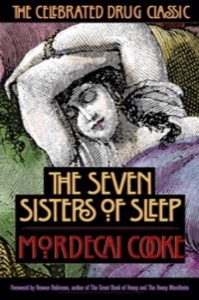
Softcover. Rochester VT, Park Street Press, 1st thus, 1997, Book: Very Good, Dust Jacket: None, Softcover, 288 pages. This groundbreaking survey, originally published in London in 1860, is a radically open-minded look at the use of drugs across the world and throughout the ages. Early users of tobacco in Russia would have their noses cut off and repeat offenders their heads. Pope Innocent XII excommunicated any who used it in St. Peters. Marijuana users in 14th century Egypt would have their teeth extracted for the crime. Yet use of these and other forbidden substances continued to grow. If only as a record of the perennial failure of harsh punishments to deter drug use Victorian naturalist Mordecai Cooke's work The Seven Sisters of Sleep would remain significant. But Cooke's natural humor and keen insights have ensured this work's reputation as possibly the best early book from what has grown into an enormous body of literature on mind- and mood-altering substances. Written at a time, similar to our own, when drug use was being reconsidered, The Seven Sisters of Sleep is a thought-provoking and open-minded look at the use of drugs across the world and throughout the ages. Clean copy.
Hardcover. Philadelphia, David McKay, reprint, 1889, Book: Very Good, Dust Jacket: None, Hardcover, terra cotta cloth stamped in black and gilt, 362 pages including index. Originally published in 1878, this is the 1889 New Edition with final corrections and additions. A Victorian era study of male sexuality. Clean copy.
Hardcover. NY, Routledge, 1st US, 1992, Book: Very Good, Dust Jacket: Very Good, Hardcover in a bright dust jacket, 289 pages, b&w illustrations. In the nineteenth century, major developments in internal surgery were due to operations on ovaries. Women bore the brunt of surgical experimentation and also reaped its rewards. Their need was great, but so was their compliance. From the first operation in America in 1809, much suffering was relieved at the expense of prolonged surgery endured by both black slaves and prosperous whites. Later, in the Victorian era, many surgeons looked at certain types of behavior as reasons for mutilating operations. Such procedures as "spaying" and clitoridectomies were performed to "cure" hysteria and masturbation, as well as questionable interventionalist surgery in pregnancy and childbirth which still continue today. Women Under the Knife is an extraordinary history, giving a vivid picture--medical, literary, and sociological--of Victorian society in America and Europe. Clean copy.


 "The Psychedelic Reader: The Revolutionary 1960's Forum of Psychopharmacological Substancesby: Timothy Leary, Ralph Metzner, Gunther M. Weil")