Hardcover. Brookfield, CN, Roaring Brook Press, 1st, 2002, Book: Very Good, Dust Jacket: Very Good, 32 pages. Hardcover with dust jacket. Clean, tight copy. Color illustrations by Robert Andrew Parker. A kids' picture book introducing the Abstract Expressionist painter Jackson Pollock.
Hardcover. Brookfield, CN, Roaring Brook Press, 1st, 2002, Book: Very Good, Dust Jacket: Very Good, 32 pages. Hardcover with dust jacket. Clean, tight copy. Color illustrations by Robert Andrew Parker. A kids' picture book introducing the Abstract Expressionist painter Jackson Pollock.
Hardcover. New Haven CT, Yale University Press, 1st, 2009, Book: Very Good, Dust Jacket: Very Good, Hardcover, 344 pages. The abstract paintings of Jackson Pollock, Willem de Kooning, Barnett Newman, Lee Krasner, Clyfford Still, Helen Frankenthaler, and others revolutionized the art world in the 1940s and 1950s and continue to inspire passionate arguments to this day. What were these artists trying to achieve? Who were the critical voices of the time that rallied public interest in Abstract Expressionism and sparked rancorous debate? Drawing on recent critical, historical and biographical work, this lavishly illustrated book offers a sharp new focus on a pivotal art movement.
Softcover. Newport, California, Newport Harbor Art Museum, 1st, 1984, Book: Very Good, Dust Jacket: None, Softcover, 159 pages. Exhibition catalog featuring the work of Norman Bluhm, Michael Goldberg, Grace Hartigan, Al Held, Alfred Leslie and Joan MItchell. Color illustrated covers with white titles, foreword by Kevin E. Consey, acknowledgments by Paul Schimmel, essays by Paul Schimmel, B.H. Friedman, John Bernard Myers, and Robert Rosenblum, b&w frontispiece, 36 full page color plates, numerous b&w figures throughout, biographical notes. Light rubbing to covers; a very clean, tight copy in great condition.
Hardcover. New York, Harry N. Abrams, 1st, 1899, Book: Very Good, Dust Jacket: Very Good, 96 pages. Hardcover with dust jacket. Very clean, unmarked copy still in publishers shrink-wrap. In 1952, at the age of 23, Helen Frankenthaler created her legendary painting Mountains and Sea. She poured thinned-down pigment directly onto unprimed canvas to be absorbed into its fibers. This large painting, the first in which Frankenthaler used her soak-stain technique, synthesized the influences that had informed her work to that point and announces her arrival as a mature artist. Published to accompany a 1998 exhibition at the Solomon R. Guggenheim Museum, New York, this book focuses on Mountains and Sea and other groundbreaking paintings of Frankenthaler's early career. In this period, Frankenthaler drew upon Cubism, the abstractions of Arshile Gorky and, especially, those of Jackson Pollock, whose radical technique inspired her to reject easel painting. Frankenthaler herself became associated with the second generation of the New York School and her unique method and experimental use of materials influenced her contemporaries and subsequent generations of artists.
Hardcover. NY, Whitney Museum of Art/Abrams, 1st, 1992, Hardcover in a bright dust jacket, 187 pages. Published to accompany a 1992-93 exhibition held at the Whitney Museum of American Art, New York, this book deals with the full scope of Agnes Martin's art. It includes essays that place her work in the context of American and European 20th-century art and culture. Agnes Martin's paintings, constructions, and works on paper provide a link between the chromatic abstraction of artists such as Mark Rothko and Barnett Newman, her generational and ideological peers, and the Minimalist vocabulary of the 1960s. This book reproduces works made between 1957 and 1967, and better-known paintings and constructions created since 1974. A selection of Martin's writings reveals the spiritual philosophy that sustains her painting. Clean copy.
Hardcover. New Haven CT, Yale University Press, 1st, 2006, Book: Very Good, Dust Jacket: Very Good, Hardcover in a bright dust jacket, 190 pages, Includes chronology, footnotes, selected bibliography, list of exhibited works, index. Profusely illustrated with color and b&w prints. This beautifully illustrated book highlights the contrasts and correspondences in the lives and work of two of Modernism's greatest innovators, Josef Albers (1888-1976) and Laszlo Moholy-Nagy (1895-1947). Beginning in the 1930s, Albers and Moholy-Nagy each developed a rigorously abstract language that condensed art to its visual fundamentals: line, color, texture, light, and form. This language experienced a creative explosion during their Bauhaus years, when both artists moved freely between media and disciplines. Essays by leading scholars follow the artists' separate paths through to their emigration to the United States, where each continued to push tirelessly the conventions of artistic practice--Albers at Black Mountain College in North Carolina and then at Yale University, and Moholy-Nagy in Chicago at the New Bauhaus School and the Institute of Design. As highly influential teachers, Albers and Moholy-Nagy became important catalysts for the transmission of Modernist ideas from Europe to America.
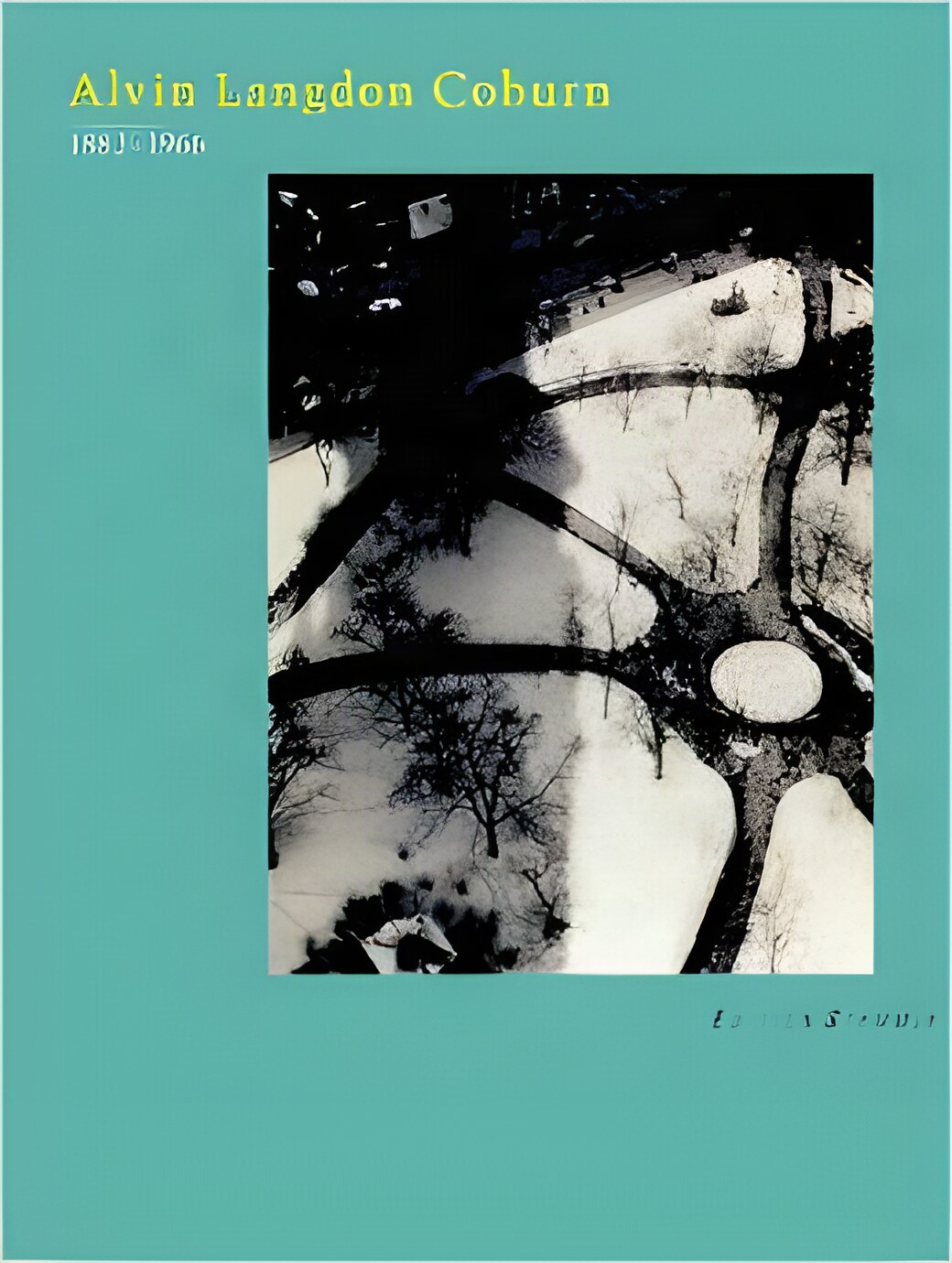
Hardcover. US, Edition Stemmle, 1st, 1998, Book: Very Good, Dust Jacket: Very Good, 208 pages, illustrated throughout in sepia. Light edgewear and tanning to dust jacket, else a clean, tight copy. Alvin Langdon Coburn (1882-1966) is remembered today as one of photography's early masters and great innovators. This monograph investigates the unconventional nature of his personal and artistic achievements. Coburn's landscapes, cityscapes, portraits, and Vortographs reflect his unprecedented steps towards the creation of a photography of symbol and abstraction.
Hardcover. Koln GR, Walther Konig, 1st, 2008, Book: Near Fine, Dust Jacket: None, Like new in publishers shrink-wrap. Hardcover, 118 pages, no dust jacket issued. English and French text. On the occasion of what would have been Andy Warhol's eightieth birthday, in 2008, this exquisitely produced volume examines one essential but miraculously under-studied element of the artist's work: The shadow. Beginning with photographic still lifes of skulls and taxidermied animals, then moving on to male nudes, tabletops and table settings, celebrity portraits, gems, fruits and many amazing still lifes of hammers, sickles, shoes and other ordinary objects that presage Fischli & Weiss' Equilibres by several years, Shadows and Other Signs of Life concludes with Warhol's photographs of actual shadows and an outstanding selection of abstract silkscreens, stenciled works and piss paintings. Published to accompany the eponymous exhibition at Paris' Galerie Chantal Crousel, this volume contains illuminating short texts--Anniversary Notes for Andy Warhol--by Benjamin H.D. Buchloh.
Hardcover. Koln GR, Walther Konig, 1st, 2008, Book: Very Good, Dust Jacket: None, Like new in publishers shrink-wrap. Hardcover, 118 pages, no dust jacket issued. English and French text. On the occasion of what would have been Andy Warhol's eightieth birthday, in 2008, this exquisitely produced volume examines one essential but miraculously under-studied element of the artist's work: The shadow. Beginning with photographic still lifes of skulls and taxidermied animals, then moving on to male nudes, tabletops and table settings, celebrity portraits, gems, fruits and many amazing still lifes of hammers, sickles, shoes and other ordinary objects that presage Fischli & Weiss' Equilibres by several years, Shadows and Other Signs of Life concludes with Warhol's photographs of actual shadows and an outstanding selection of abstract silkscreens, stenciled works and piss paintings. Published to accompany the eponymous exhibition at Paris' Galerie Chantal Crousel, this volume contains illuminating short texts--Anniversary Notes for Andy Warhol--by Benjamin H.D. Buchloh.
Hardcover. GR, Steidl, 1st, 2007, Book: Very Good, Dust Jacket: Very Good, Hardcover, 232 pages. When celebrated photographer Arnold Newman began his career in 1938 in chain portrait studios in Philadelphia, Baltimore and West Palm Beach, he also immediately began to make abstract and documentary photography on his own, studying people and places impoverished by the Depression. In June of 1941, Beaumont Newhall of The Museum of Modern Art, New York, and Alfred Stieglitz "discovered" him, and he was given an exhibit with Ben Rose at the A.D. Gallery that September. There Newman began to combine his independent work with the portraiture that had been his bread-and-butter, developing the approach for which he is best known, which came to be called "environmental portraiture," and which is so widely influential today that it might be the new standard practice. This style made Newman a distinctive contributor to publications like Life, Vanity Fair, and the New York Times Magazine, brought him into the collections of museums around the world, including The Museum of Modern Art, The Metropolitan Museum of Art, and the International Center of Photography in New York, and led to his recognition in photography histories and with awards including France's Commander of the Order of Arts and Letters. The photographs collected here were made before Newman achieved recognition as a pioneering portraitist, during the formative years from 1938 to 1942. They highlight the early stirrings of a great photographic master.
Softcover. NY, Albright-Knox Gallery, 1st, 1995, Book: Very Good, Dust Jacket: None, Softcover, This solid, authoritative presentation of Gorky's pivotal art of the 1940s accompanies an exhibit of paintings and drawings showing this year at the National Gallery in Washington, D.C., as well as Buffalo and Fort Worth. Biographical and art-historical essays by Auping, a Modern Art Museum of Fort Worth curator, as well as Dore Ashton and Matthew Spender summarize the critical consensus of Gorky, placing him between Surrealism and Abstract Expressionism in the development of 20th-century art. Excellent reproductions of the paintings and drawings in the show are supplemented by close-ups from several paintings, photographs of Gorky, and selections from Gorky's letters. While not a comprehensive or groundbreaking work, this volume is an excellent summary of or introduction to Gorky for both general and informed lay readers. Clean copy.
Softcover. New York , Peacock Press/Bantam, 1st, 1975, Book: Very Good, Dust Jacket: None, Unpaginated. Softcover. Clean, unmarked copy with only minor wear to wrappers.
Hardcover. Cambridge MA, The MIT Press, 1sr, Book: Very Good, Dust Jacket: Very Good, Hardcover in a bright gold foil dust wrapper, 476 pages. The artist Francis Picabia -- notorious dandy, bon vivant, painter, poet, filmmaker, and polemicist -- has emerged as the Dadaist with postmodern appeal, and one of the most enigmatic forces behind the enigma that was Dada. In this first book in English to focus on Picabia's work in Paris during the Dada years, art historian and critic George Baker reimagines Dada through Picabia's eyes. Such reimagining involves a new account of the readymade -- Marcel Duchamp's anti-art invention, which opened fine art to mass culture and the commodity. But in Picabia's hands, Baker argues, the Dada readymade aimed to reinvent art rather than destroy it. Picabia's readymade opened art not just to the commodity, but to the larger world from which the commodity stems: the fluid sea of capital and money that transforms all objects and experiences in its wake. The book thus tells the story of a set of newly transformed artistic practices, claiming them for art history -- and naming them -- for the first time: Dada Drawing, Dada Painting, Dada Photography, Dada Abstraction, Dada Cinema, Dada Montage.Along the way, Baker describes a series of nearly forgotten objects and events, from the almost lunatic range of the Paris Dada "manifestations" to Picabia's polemical writings. Clean copy.
Hardcover. Merrell, 1st, 2008, Book: Very Good, Dust Jacket: Very Good, Hardcover. 176 pages. This illustrated volume - the first major monograph ever devoted to Stillman - is a timely and revealing examination of a remarkable talent, encompassing every phase of Stillman's stylistic development, from his early representational painting to his striking post-war Abstract Expressionist works. With contributions from prominent curators, critics, and art historians, the book comprises o detailed overview of the artist's life and achievements together with essays on more specific aspects of his oeuvre, including Stillman's Paris period, his innovative "white line" drawings, his Mexican paintings, and the influence on his work of his Jewish identity. Featuring a comprehensive selection of Stillman's drawings and paintings, this beautiful book restores the artist to his rightful place among the most important names of twentieth-century art.
Hardcover. London, Merrell, 1st, 2008, Book: Very Good, Dust Jacket: Very Good, Hardcover. Orange cloth with black lettering on the spine; 176 pages; 125+ color and bw plates and figures. Includes essays on the artist and his work by Donald Kuspit, James Wechsler, Susan Power, Michael Betancourt, Helen A. Harrison, David Craven, and Rachel Garfield; Artist biography also included.
Hardcover. NY, Prestel, 1st, 2015, Book: Very Good, Dust Jacket: Very Good, Hardcover in a bright dust jacket, 208 pages, color plates. Celebrating an experimental decade in the career of Alex Katz, this book introduces audiences to a relatively unknown body of his work. Coming of age as an artist in the 1950s, Alex Katz set out to reinvent representational painting in the wake of Abstract Expressionism. At first, Katz struggled to find an audience, destroying hundreds of canvases. This book surveys the artwork that survived from this momentous decade, one in which he first painted outdoors, innovated with collages, and met Ada del Moro, his wife and muse. The essays in this book contextualize Katz's painting, consider how he and his peers looked at one another, mined 19th-century portraiture, and borrowed from television, advertising, and cinema. The result is a fascinating study of a young artist laying the groundwork for an astonishingly successful career. Fans of Katz will be inspired by the radicality of his early work, and those being introduced to the artist will be struck by its freshness and relevance.
Hardcover. New Haven CT, Yale University Press, 1st, 2008, Book: Very Good, Dust Jacket: Very Good, Hardcover, 256 pages. Like new in publisher's shrink-wrap. Widely known for his vibrant paintings that employ a variety of styles--including abstraction, figuration, pop, and cartoon--Carroll Dunham (b. 1949) is also one of the most prolific printmakers of his generation. An integral part of his artistic process, Dunham's prints combine the spontaneity and drama of his paintings with the careful premeditation demanded of the medium. His imagery--which shares the wickedly cartoony semi-abstractions of his paintings--is transformed, refined, and often intensified in his graphic work. Carroll Dunham Prints documents the artist's entire print archive--which includes nearly 300 lithographs, etchings, drypoints, linocuts, wood engravings, screenprints, digital prints, and most recently, monotypes--the majority of which have never before been published. The authors examine the significance of printmaking to Dunham's overall oeuvre, his innate sensitivity toward the systematic materials and procedures of printmaking, his inventive approach to this process, and the evolution of his imagery. It also features an insightful essay by Dunham that discusses his journey as a printmaker and his discoveries of the medium.
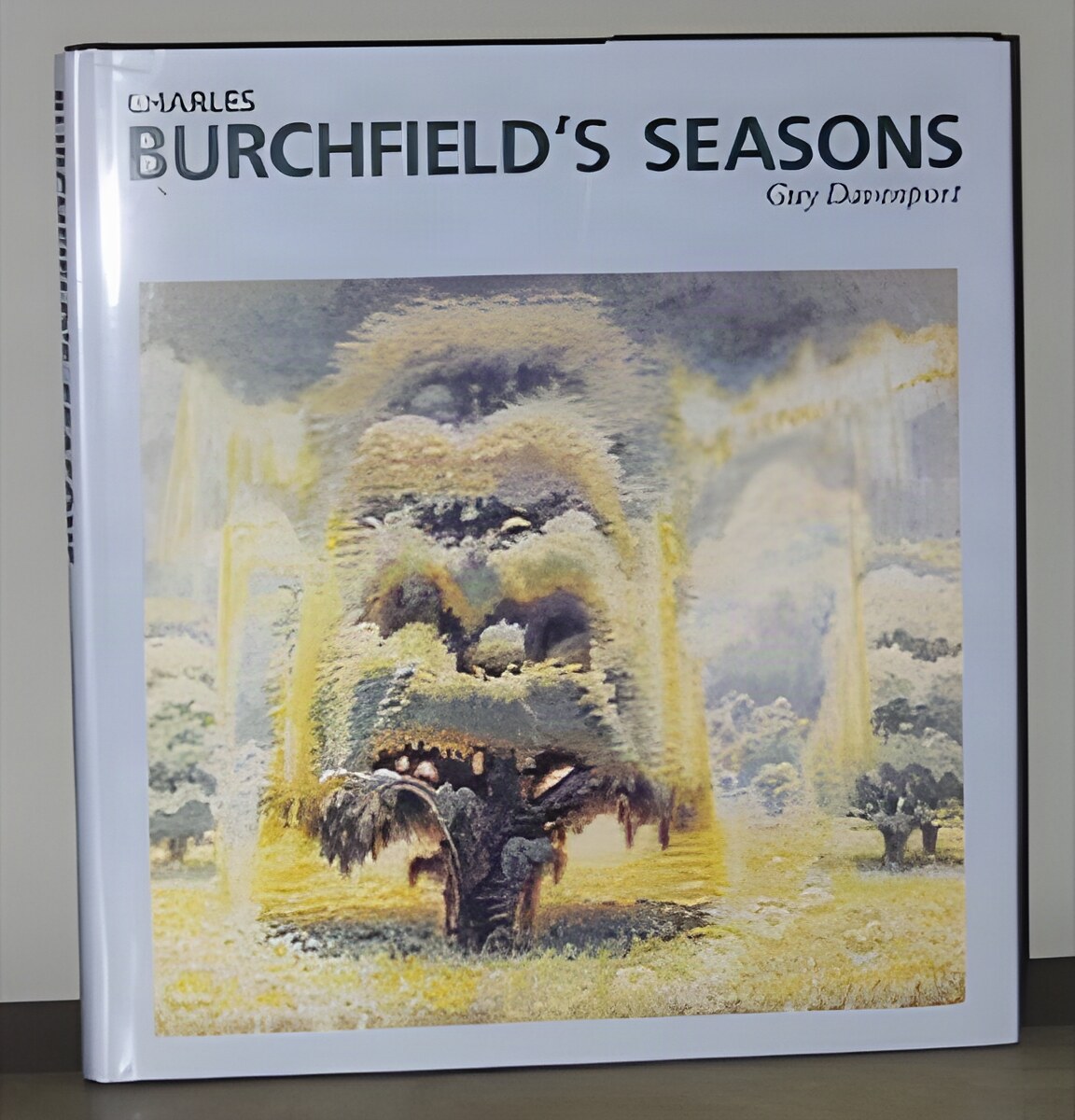
Hardcover. San Francisco, Pomegranate, 1st, 1994, Book: Very Good, Dust Jacket: Very Good, Hardcover in a bright dust jacket. Charles Burchfield's Seasons offers a wealth of visionary art rendered in his personal abstract stylistic shorthand that vividly expresses the moods and sounds of light and wind. Accompanied by quotations from Charles Burchfield's Journals, the color plates in this book resonate with the artist's vibrancy. Clean copy.
Hardcover. New York, Harry N. Abrams, Inc., 1st, 1969, Book: Near Fine, Dust Jacket: Near Fine, Exhibition catalogue for Bulgarian artist Christo. Illustrated with 71 reproductions of his often large-scale work, 3 of which are in shown in full color. Cloth bound book and dust jacket are in near fine condition; dust jacket has very slight wear some corners, book is very clean and new-looking.
Hardcover. NY, Metropolitan Museum of Art : distributed by H. N. Abrams, 1st, 1979, Book: Very Good, Dust Jacket: Good, Hardcover, 221 pages, illustrated throughout with 165 plates, including 89 in full color. Light edgewear, rubbing and soil to dust jacket. Clean, tight copy.
Hardcover. NY, Metropolitan Museum of Art : distributed by H. N. Abrams, 1st, 1979, Book: Very Good, Dust Jacket: Good, Hardcover, 221 pages, illustrated throughout with 165 plates, including 89 in full color. Light edgewear, rubbing and soil to dust jacket. Clean, tight copy.
Hardcover. Long Beach CA, Long Beach Museum of Art, 1st, 2005, Book: Very Good, Dust Jacket: Very Good, Hardcover with a nice dust jacket. Since 1970, Mizuno's work has evolved from functional dinnerware to abstract sculptural forms, from playful and humorous trompe l'oeil plates to richly layered sculpture informed by his evocative personal history, paralleling the development of the ceramics field itself in the late 20th century as it evolved from functional forms to a medium of full artistic expression. The exhibition is the first major museum exhibition to survey the work of this artist whose superbly crafted works, while firmly grounded in the traditions of the ceramic arts, extend to new forms in clay that defy traditional categories. This exhibition catalogue designed by Takaaki Matsumoto includes a forward, interview with the artist, a biography and exhibition history, and the exhibition checklist of 48 artworks. The exhibition and publication trace the work of this Japanese-born, Los Angeles-based ceramist from 1971 through 2003. Interview of the artist by Deborah McLeod, foreword by Museum Director Harold Nelson Format: hardcover Dimensions: 8-1/2 x 6-1/4 inches, 96 pages plus cover / 51 color plates. in conjunction with the exhibition of the same title at the Long Beach Museum of Art November 18, 2005 through January 15, 2006.

 "Action Jacksonby: Greenberg, Jan; Jordon, Sandra")
 "Action Jacksonby: Greenberg/Robert Andrew Parker, Jan; Jordon, Sandra")
 "Action/Abstraction: Pollock, de Kooning, and American Art, 1940-1976by: Norman L. Kleeblatt , Maurice Berger , et al.")
 "Action/Precision: The New Direction in New York, 1955-60by: Schimmel, Paul et al.")
 "After Mountains and Sea: Frankenthaler 1956-1959 (Guggenheim Museum Publications)by: Brown, Julia")


 "Albers and Moholy-Nagy: From the Bauhaus to the New Worldby: Borchardt-Hume, Achim (Editor)")
 "Andy Warhol: Shadows and Other Signs of Life: Anniversary Notes for Andy Warholby: Buchloh, Benjamin")
 "Andy Warhol: Shadows and Other Signs of Life: Anniversary Notes for Andy Warholby: Buchloh, Benjamin")
 "Arnold Newman: The Early Workby: Philip Brookman , Arnold Newman")
 "Arshile Gorky: The Breakthrough Yearsby: Spender, Matthew,Auping, Michael,Ashton, Dore")
 "Artwork Caught by the Tail:Francis Picabia and Dada in Parisby: Baker, George")
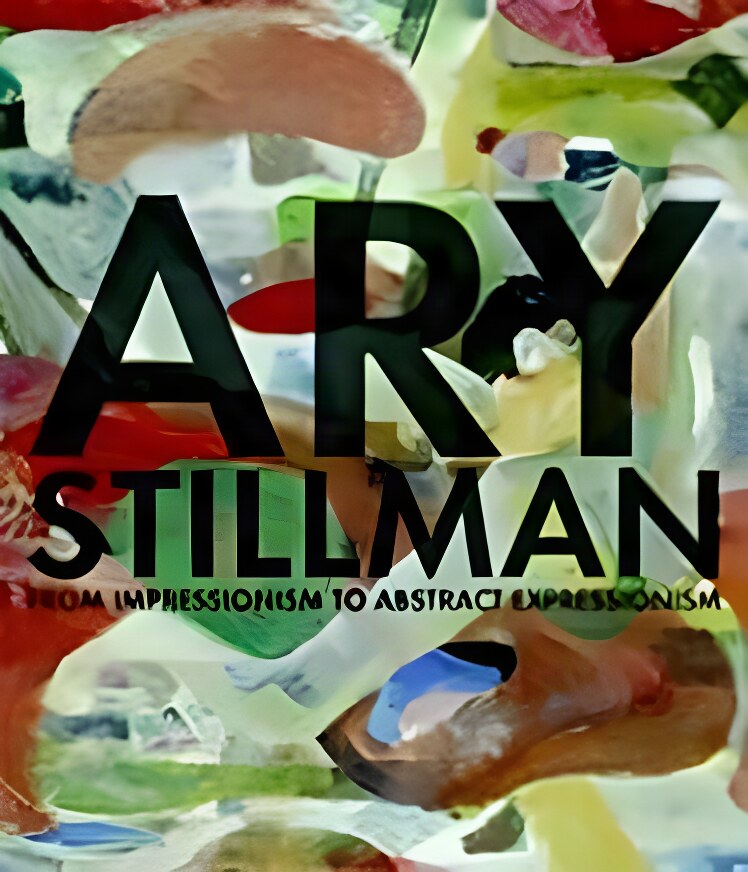
 "Ary Stillman: From Impressionism to Abstract Expressionismby: STILLMAN, Ary: WECHSLER, James (Edited by)")
 "Brand-New and Terrific: Alex Katz in the 1950sby: Diana Tuite , Sharon Corwin, et al.")
 "Carroll Dunham Prints: Catalogue Raisonne, 1984-2006 (Addison Gallery of American Art)by: Kemmerer, Allison N.")
 "Christoby: Alloway, Lawrence")
 "Cleve Grayby: Weber, Nicholas Fox")
 "Clyfford Stillby: O'Neill, John P.")
 "Clyfford Stillby: O'Neill, John P.")