Hardcover. Long Beach CA, Long Beach Museum of Art, 1st, 2005, Book: Very Good, Dust Jacket: Very Good, 95 pages, illustrated with 45 color plates. Like new in publisher's shrinkwrap. Since 1970, Mizuno's work has evolved from functional dinnerware to abstract sculptural forms, from playful and humorous trompe l'oeil plates to richly layered sculpture informed by his evocative personal history, paralleling the development of the ceramics field itself in the late 20th century as it evolved from functional forms to a medium of full artistic expression. The exhibition is the first major museum exhibition to survey the work of this artist whose superbly crafted works, while firmly grounded in the traditions of the ceramic arts, extend to new forms in clay that defy traditional categories. This exhibition catalogue designed by Takaaki Matsumoto includes a forward, interview with the artist, a biography and exhibition history, and the exhibition checklist of 48 artworks. The exhibition and publication trace the work of this Japanese-born, Los Angeles-based ceramist from 1971 through 2003. ISBN 0-97127772-3-0 Published by the Long Beach Museum of Art Interview of the artist by Deborah McLeod, foreword by Museum Director Harold Nelson Format: hardcover Dimensions: 8-1/2 x 6-1/4 inches 96 page plus cover / 51 color plates.
Softcover. Spain, Fundacion La Caixa, 1st, 2004, Book: Very Good, Dust Jacket: None, 284 pages. Softcover. A very clean, unmarked copy with only minor edgewear. Beautiful color illustrations and photographs throughout.
Hardcover. Steidl, 1st, 2016, Book: Very Good, Dust Jacket: None, Hardcover, illustrated boards, 96 pages. Determining the perfect exposure time for a photographic print in a traditional darkroom can be a time-consuming and tedious process, and the irreverent David Bailey (born 1938) has never had much patience for it. Normally a photographer makes a number of test strips, each showing different exposure times; but Bailey has always just intuitively torn off strips of the unexposed paper to find the desired result: "I would usually have it in the bag after three tears." Over the decades, Bailey has kept his "test tears," re-fixing and washing them to preserve the unpredictable and unique qualities of these "accidents." This book contains the best of Bailey's tears, which transform some of his most famous motifs into fascinating abstract pictures through their torn edges and myriad tones.
Softcover. Newport Beach CA, Newport Harbor Art Museum, 1st, 1977, Book: Very Good, Dust Jacket: None, Unpaginated, softcover exhibition catalog, illustrated in color and b&w. Essay by Betty Turnbull. Clean, tight copy. David Park, an artist who fused representational figuration with abstract expressionism and was one of the creators of the Bay Area Figurative style is featured here in a career retrospective exhibition containing work from throughout his life.
Hardcover. New York, Harry N. Abrams Inc., 1st, 1974, Book: Very Good, Dust Jacket: Very Good, Hardcover (cloth) in near fine condition with dust jacket which is protected by clear plastic covering, also in near fine condition. 293 pages., including 226 illustrations with 65 color plates. A beautiful and large-format monograph focusing on Willem De Kooning's life and paintings.
Hardcover. New York, Hudson Hills Press, 1st, 1996, Book: Very Good, Dust Jacket: Very Good, Hardcover, 175 pages, illustrated with 247 plates, 37 in color. In publisher's shrinkwrap. Nobel Prize-winner Heaney introduces a volume that richly reflects every aspect of Hadzi's career, from intimate studio photographs to large architectural commissions. Hadzi's works in bronze and stone are powerfully abstract and expressionist, yet involved with the past as a literary and aesthetic source.
Hardcover. New York, Harper Design, 1st, 2014, Book: Very Good, Dust Jacket: Very Good, 256 pages. Hardcover with dust jacket. Color photographs. Clean, unmarked copy with only minor wear to dust jacket. A lavish, gorgeously designed full-color collection that showcases the designs of Dorothy and Otis Shepard, two groundbreaking giants of early twentieth-century American advertising. Dorothy and Otis Shepard are the unsung heroes of early twentieth-century North American visual culture. Together, they were the first American graphic designers to work in multiple mediums and scales with equal skill and vision, and their work remains brilliant; yet their names are little known today. Dorothy and Otis chronicles their story in detail for the first time. It explores the Shepards' penchant for abstraction and modernism, and shows how the advent of billboard advertising inspired their creativity--large campaigns that matched the grandeur of their lifestyle. Throughout, it demonstrates how their influence touched all aspects of consumer culture--from collaborating on the packaging for Wrigley's Gum and designing uniforms and logos for the Chicago Cubs to planning and promoting the resort island Catalina, where Stan Laurel, Oliver Hardy, Clark Gable, and other celebrities frequented.
Hardcover. Kansas City, Andrews McMeel Publishing, 1st, 2012, Book: Very Good, Dust Jacket: Very Good, Hardcover, 320 pages. Everyone who grew up entertained, provoked, and enlightened by Dr. Seuss books will love this big, color-saturated volume covering 70 years of published and private art by the master of smart, loopy fun. Here are examples of Theodor Geisel's clever, now ironic advertising work, including a rambunctious campaign for Flit, an insecticide containing DDT. Geisel's political cartoons and magazine illustrations are animated by his phenomenal gift for line and color, mischievous humor, and humanitarian values. It is thrilling, too, to see the original drawings for Green Eggs and Ham and other Seuss classics. But the big discoveries in this bountiful and redefining volume are his "Midnight Paintings," surreal watercolors, oils, and acrylics featuring tiny figures in a vast, labyrinthine world, and private versions of his expressive characters, especially the Cat, his alternate identity. Geisel's vibrant, trippy, hilarious, and poignant art plays on Hieronymus Bosch, M. C. Escher, and Persian miniatures. Every creature, plant, architectural marvel, object, and landscape is wriggling, leaping, flying, arcing, tilting, and rolling. When he dives into abstraction, he plunges into a deep chromatic sea, while his taxidermic sculptures prove just how real his sweet and goofy invented critters were to him. Spectacular reproductions and excellent, if episodic, commentary map Geisel's exuberant, world-altering artistic journey on what he would call "long wiggled roads" into "weirdish wild space."
Hardcover. US, Prestel, 1st, 2013, Book: Very Good, Dust Jacket: Very Good, 128 pages. Like new in publisher's shrink-wrap. The first publication dedicated to Rose Mandel, a pioneering woman in photography, introduces her remarkable, if often overlooked, body of work to a wider audience. Born in Poland, Rose Mandel immigrated to California in 1942. A love of photography soon brought her into contact with Edward Weston, and then with Ansel Adams and Minor White, both of whom had a strong influence on Mandel's work. Including her important sequence The Errand of the Eye, this book presents the sensitivity and clarity of Mandel's vision. Images from natural and man-made environments, eloquent portraits, and abstract landscapes convey Mandel's delight in the compositions and patterns that can be found anywhere, whether walking along a city street or a country path. These photographs are the result of a highly refined sense of craftsmanship and a complex understanding of psychology and abstract expressionism that caused Mandel to be described as "a painter with a camera." The first monograph on the artist, this volume features an enlightening overview of Mandel's life and work, along with an illustrated chronology and exhibition history.
Hardcover. Indianapolis, Indiana, Indianapolis Museum of Art, 1st, 2013, Book: Very Good, Dust Jacket: None, 160 pages. Hardcover no dust jacket. Color pictures throughout. Clean, unmarked copy with only minor wear to boards. Decoding Robert Indiana's work for a new generation, this revelatory book explores previously unknown autobiographical elements in the work of the Pop artist and printmaker. Famously proclaiming himself to be "an American painter of signs," Robert Indiana has created an enormous body of work, much of it boldly colored abstractions. In this incisive new examination of the artist, based on ongoing conversations with Indiana, art historian Martin Krause sifts through autobiographical clues within the artist's work and finds a wealth of affecting and affectionate references to Indiana's childhood, literary heroes, and the cultural icons of his generation. In addition, a penetrating essay by Pop art scholar John Wilmerding deconstructs Indiana's use of geometric shapes, making unexpected connections that enhance Krause's thesis. Accompanied by reproductions of more than 50 prints from the period 1960-2010--and focusing specifically on series such as Decade: Autoportraits, Vinalhaven Suite, and The Hartley Elegies as well as the "Love" and "Hope" images and studies of Marilyn Monroe, Picasso, and the Brooklyn Bridge--Krause's decryption of Indiana's visual language provides telling insight into the work of this quintessentially American artist.
Hardcover. Princeton NJ, Princeton Architectural Press, 1st, 2001, Book: Very Good, Dust Jacket: Very Good, 326 pages, illustrated with b&w photographs, several color plates and architectural drawings by Vitale. Foreword by Horace Havemeyer III. Ferruccio Vitale is America's forgotten landscape architect. Though his works like Skylands and Longwood Gardens are well known, his name has been eclipsed by his contemporary, Frederick Law Olmsted, Jr. Yet Vitale's influence on the modern direction of landscape design and his promotion of it as a profession is arguably more significant than Olmsted's. His unique designs and philosophy, which challenged the then-dominant pictorial mode of landscape architecture, influenced generations of followers, and is still felt today. Vitale (1875-1933) developed his rationale designs, based on the principles of composition from the fine arts and architecture, in both civic commissions and, most notably, at the country estates of captains of industry and finance. He introduced an idealized and abstracted type of formal design that created beautiful spaces, structured large sites, and reflected informal and relaxed plant compositions. Ferruccio Vitale tours over 40 of his masterworks, photographed by some of the best landscape photographers of the time, including Samuel Gottscho. It recounts the compelling story of a life in the early twentieth century, influenced by immigrant dreams, social clubs, and professional connections, and its culmination in some of the greatest landscapes of the 20th century.
Hardcover. Princeton NJ, Princeton Architectural Press, 1st, 2001, Book: Very Good, Dust Jacket: Very Good, 326 pages, illustrated with b&w photographs, several color plates and architectural drawings by Vitale. Foreword by Horace Havemeyer III. Ferruccio Vitale is America's forgotten landscape architect. Though his works like Skylands and Longwood Gardens are well known, his name has been eclipsed by his contemporary, Frederick Law Olmsted, Jr. Yet Vitale's influence on the modern direction of landscape design and his promotion of it as a profession is arguably more significant than Olmsted's. His unique designs and philosophy, which challenged the then-dominant pictorial mode of landscape architecture, influenced generations of followers, and is still felt today. Vitale (1875-1933) developed his rationale designs, based on the principles of composition from the fine arts and architecture, in both civic commissions and, most notably, at the country estates of captains of industry and finance. He introduced an idealized and abstracted type of formal design that created beautiful spaces, structured large sites, and reflected informal and relaxed plant compositions. Ferruccio Vitale tours over 40 of his masterworks, photographed by some of the best landscape photographers of the time, including Samuel Gottscho. It recounts the compelling story of a life in the early twentieth century, influenced by immigrant dreams, social clubs, and professional connections, and its culmination in some of the greatest landscapes of the 20th century.
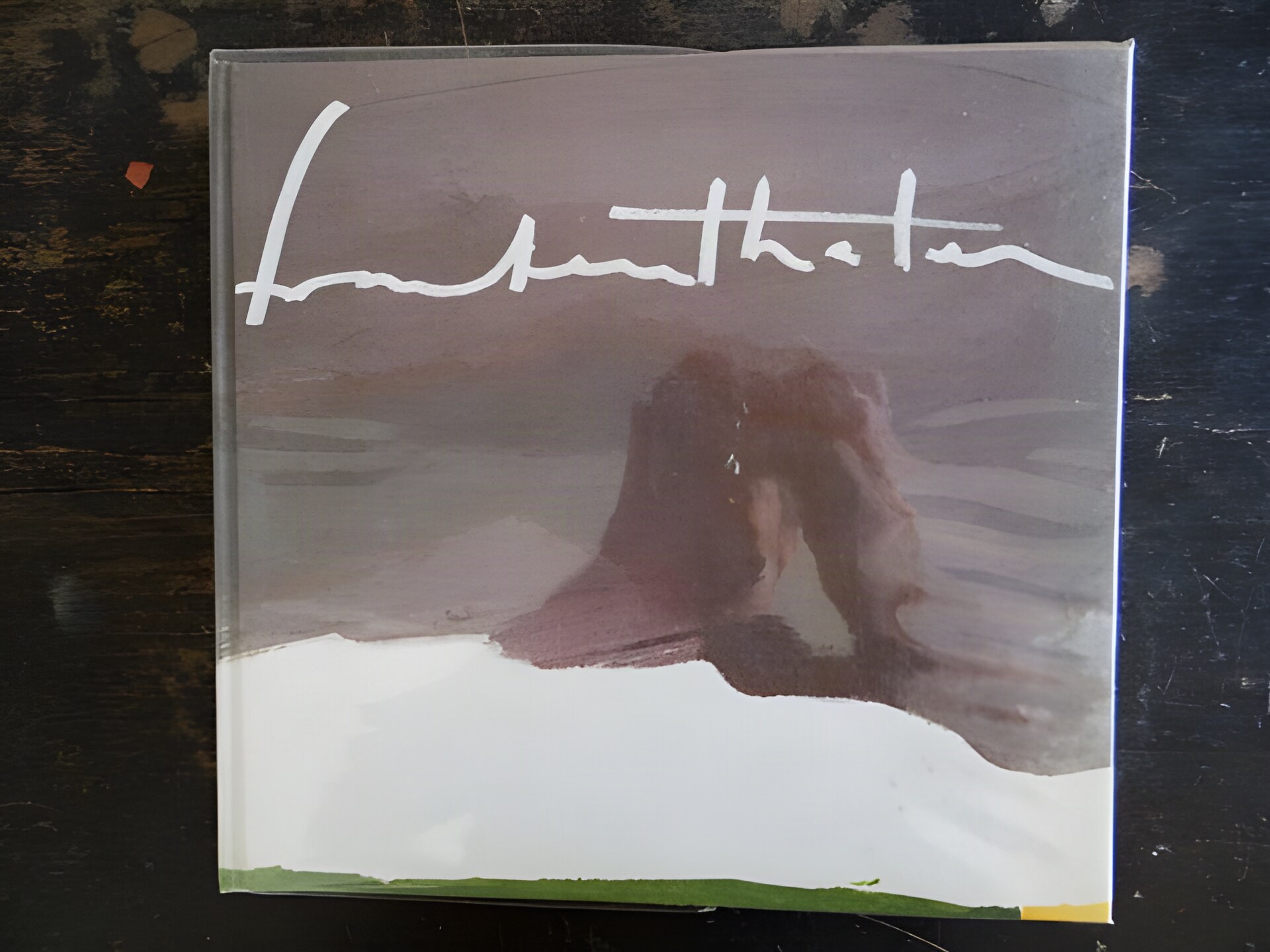
Hardcover. NY, Abrams, 1st, Book: Very Good, Dust Jacket: Very Good, Hardcover. VG/VG printed mylar jacket, some foxing to top and edge of text block, else a clean solid copy of the first edition, with no later printings indicated. Book design by Robert Motherwell. Illustrated cloth boards with clear plastic DJ with minor soil, 272 pages, 53 color and 152 BW plates, one fold-out. Mostly plates by American artist Helen Frankenthaler (1928-2011), with some interspersed text by Barbara Rose; also includes a biographical outline and selected bibliography. A fairly comprehensive collection of her work from 1951-1969. DUE TO SIZE AND WEIGHT, This is a heavy and oversized book and will require extra shipping. International customers please ask for a shipping quote before purchasing.
hardcover. NY, Knopf , 1st, 1999, Book: Very Good, Dust Jacket: Very Good, Hardcover, 448 pages. Black & white photos and illustrations. Like new. Purely out of artistic ambition, Armenian-American abstract painter Gorky (1895-1948; born in Turkey as Vostanig Adoian) fabricated a new identity, complete with an Ivy League education and personal histories with master artists, on arriving in the United States. Spender (Within Tuscany), who is married to Gorky's oldst daughter, unhesitatingly exposes the painter's many "tall tales." He also assesses Gorky's difficulty in arriving at his own aesthetic until late in life in terms of both the artist's ties to the artistic patriarchs of the previous generation, the Surrealists (including Breton, Duchamp and Brancusi) and his complex status as a forerunner who eventually became alienated from the New York Abstract Expressionists (particularly de Kooning and Rothko). Spender derives much information from anecdotal sources, including an interview with de Kooning, and assumes a chatty tone in dealing with other artists. But he becomes increasingly less sympathetic to Gorky, whose last years are presented from the perspectives of Spender's wife and her mother. Nonetheless, painting constantly despite failing health, family problems and critical indifference, Gorky's frustrations are heartbreaking. Equally compelling is the window opened on New York's art scene when it was still a small clique. Gorky was so in love with the "artist" archetype that he not only lied about himself but also plagiarized anecdotes, artistic statements, love letters and possibly even his own suicide note. Spender preserves the personal dimensions of his subject while demonstrating that the painter should have adopted a youthful declaration. "I shall be a great artist or if not a great crook"as his motto. 90 b&w illustrations.
Softcover. Baltimore, Clearfield, reprint, 2000, Book: Very Good, Dust Jacket: None, Softcover, light gray wrappers, 278 pages. This volume consists of abstracts of genealogical data from four of New York's earliest newspapers--the New-York Gazette (1726-1744) and the New-York Weekly Journal (1733-1751), the two earliest city papers, and the New-York Mercury and the Weekly Mercury (1752-1783). These newspapers were originally produced as weeklies and usually consisted of four pages, with occasional supplementary issues. Their subject matter encompassed essays, treatises, parliamentary proceedings, governors' messages, European and West Indian news, shipping news, incidents culled from other newspapers, and many advertisements. In this volume of abstracts may be found items yielding information concerning marriage, birth, death, age, status, place of residence, and place of origin, covering, in all, the years 1726 through most of 1783. Treatment is not confined to New York, for among individuals mentioned are those from all the other colonies, especially New Jersey (which had no newspaper in the colonial period), New England, Pennsylvania, and Maryland.
Hardcover. Baltimore, Genealogical Publishing Co., 1st, 1983, Book: Very Good, Dust Jacket: None, Hardcover, black cloth with gilt lettering, 733 pages. Many of the early settlers of Barbados eventually moved to the mainland of North America and settled in Virginia, Georgia, the Carolinas, and other colonies. Records of Barbados families exist in a variety of places and indeed a great many have been written up and published in the turn-of-the-century journal "Caribbeana" and "The Journal of the Barbados Museum and Historical Society". Unfortunately, back issues of these journals are no longer available, and copies can be found today in only a handful of libraries. With this present work, however, genealogists at last have access to both of these publications, for the book contains every article pertaining to family history ever published in these journals. The combined articles, reprinted here in facsimile, range from conventional genealogies and pedigrees to will abstracts and Bible records and refer to some 15,000 persons, all of whom are listed in the index. Besides the genealogies and family records, this compilation also contains a selection of notes on the connections between Barbados and New England families and four invaluable lists of Barbados Quakers.
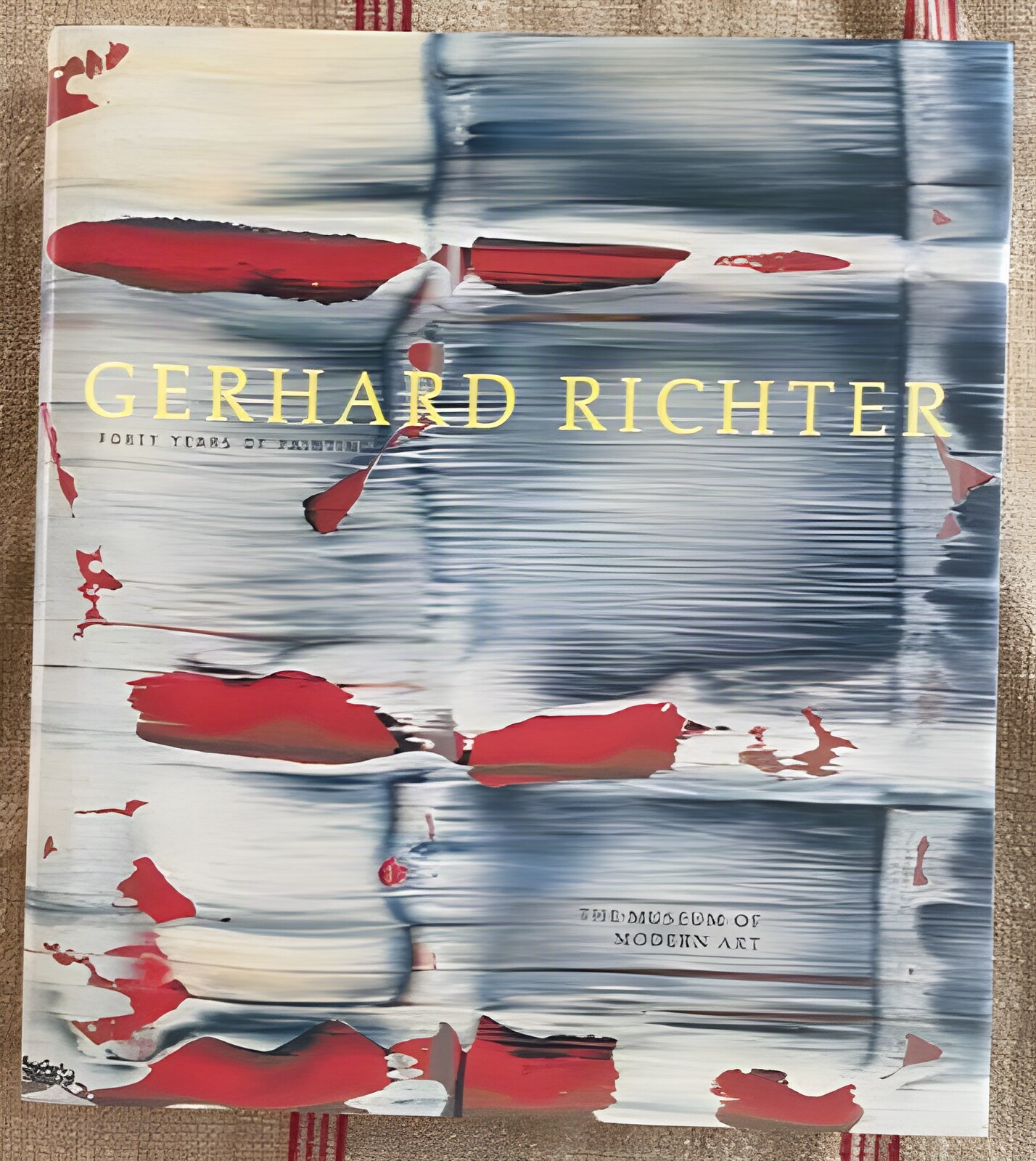
Softcover. NY, Museum of Modern Art , 1st, 2002, Book: Very Good, Dust Jacket: None, Softcover, 340 pages illustrated in color and b&w. A survey of works by German artist Gerhard Richter (born 1932), one of the most influential painters working today from every phase of Richter's career. ranging from photography-based pictures to gestural abstraction, and includes a rare interview with the artist. This was the catalog for the traveling exhibit 2002-2003 at The Museum of Modern Art, NY, the Art Institute of Chicago, the San Francisco Museum of Modern Art and the Hirshhorn Museum in Washington DC. Clean copy. DOMESTIC SHIPPING ONLY.
Hardcover. Richmond, Va., Candela Books, 1st, 2010, Book: Good, Dust Jacket: None, 100 pages. Hardcover. Extensive b&w photography throughout. Tipped in plate on front cover. Small stain to front cover, otherwise clean, tight copy. Working primarily from the 1940s through the early 1960s, the American photographer Gita Lenz (1910-2011) made documents of New York street life that won her early recognition and inclusion in two group shows curated by Edward Steichen for The Museum of Modern Art, a three-person show at the Brooklyn Museum and numerous articles and features in photography magazines of the time. Equally given to inflecting her portraiture with hints of social realism one on hand, and surrealism on the other, and also influenced by her close friend Aaron Siskind, Lenz produced abstract compositions, city still lifes, surreal still lifes and intimate portraits. She receded from view in the 1960s as financial demands impeded her practice, but in 2002, a chance meeting with photographer Gordon Stettinius led to the retrieval of this small but charming body of work, and the publication of this superbly printed first monograph.
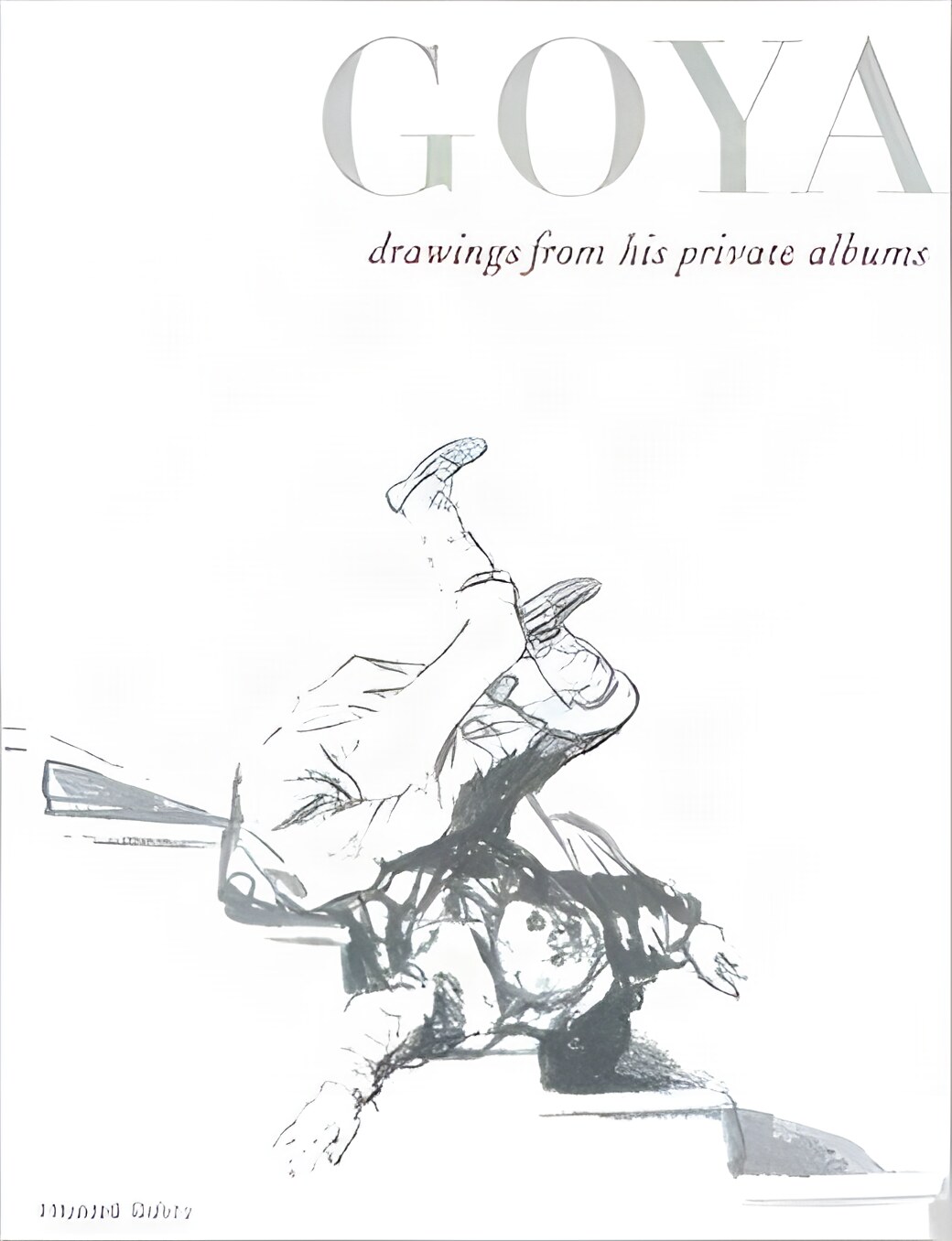
Softcover. US, Lund Humphries Publishers, 2004, Book: Very Good, Dust Jacket: None, Softcover. Like new in publisher's shrink-wrap. Over 35 years, alongside his paintings and prints, Francisco Goya expressed his creative genius in eight albums of drawings. Split up after his death, their pages scattered across various collections, the albums remain little known. This book reunites over 100 of the drawings, almost all in colour at actual size, including both sides of double-sided sheets, and there are detailed commentaries on each album and each drawing. The album drawings reveal Goya's astonishing powers of invention and observation. Essay by Tom Lubbock.
Softcover. New York, WMAA/Prestel, 1st, 1990, Book: Very Good, Dust Jacket: None, 200 pages. Softcover. Full color illustrations. Shallow crease at bottom right corner of front cover. Clean, unmarked copy. Goodman's book, with essays by Clement Greenberg and Irving Sandler and the artist's own statements, provides an excellent introduction to the life and work of the man frequently called the dean of the New York School of Abstract Expressionism.
Hardcover. New York, Harry Abrams Inc, 2nd Ed., Book: Very Good, Dust Jacket: Very Good, Hardcover, in a bright. unclipped dust jacket, 227 pages, 168 illustrations and 51 tipped-in color plates. Includes five essays by Hans Hofmann and an introductory essay by Sam Hunter. Stated second edition.
Hardcover. Washington DC, Smithsonian, 1st, 1999, Book: Very Good, Dust Jacket: Very Good, Hardcover, 166 pages. Accompanied by a biographical essay by Carolyn Kinder Carr, this collection of seventy-five of Hans Namuth's photographic portraits, taken between 1950 and 1989, shows how his friendships with his often reclusive subjects and his determination to capture the essence of each artist's style resulted in revealing portraits of such notable painters as Willem and Elaine de Kooning, Mark Rothko, Roy Lichtenstein, Jasper Johns, Andrew Wyeth, Helen Frankenthaler, and Andy Warhol. Although Namuth identified most closely with the Abstract Expressionists who became famous in the 1950s and early 1960s, his repertoire included a new generation of 1980s artists, among them Julian Schnabel and David Salle. In both his black-and-white and color photographs, Namuth used subtle but telling poses, settings, and details: John Steinbeck appears with his famous dog Charley; Philip Johnson stands jauntily on a staircase in the Museum of Modern Art beside a painting that he donated; Louise Nevelson wears jewelry that echoes the sweeping lines of her wood sculpture.
Washington. DC, Smithsonian, 1st , 1999, Book: Very Good, Dust Jacket: Very Good, Hardcover in a bright dust jacket. 75 portraits of artists in black & white and color by Namuth. 166 pages. Accompanied by a biographical essay by Carolyn Kinder Carr, this collection of seventy-five of Hans Namuth's photographic portraits, taken between 1950 and 1989, shows how his friendships with his often reclusive subjects and his determination to capture the essence of each artist's style resulted in revealing portraits of such notable painters as Willem and Elaine de Kooning, Mark Rothko, Roy Lichtenstein, Jasper Johns, Andrew Wyeth, Helen Frankenthaler, and Andy Warhol. Although Namuth identified most closely with the Abstract Expressionists who became famous in the 1950s and early 1960s, his repertoire included a new generation of 1980s artists, among them Julian Schnabel and David Salle. In both his black-and-white and color photographs, Namuth used subtle but telling poses, settings, and details: John Steinbeck appears with his famous dog Charley; Philip Johnson stands jauntily on a staircase in the Museum of Modern Art beside a painting that he donated; Louise Nevelson wears jewelry that echoes the sweeping lines of her wood sculpture.
Hardcover. New York, Harry N. Abrams, 1st, 1981, Book: Very Good, Dust Jacket: Very Good, Hardcover, 308 pages. 397 illustrations, including 104 plates in full color. This beautiful volume is in very good shape with tight binding. Tanned cloth, front cover illustration; Stampede(1969). Looks as good as new.

 "Crossing Boundaries: The Ceramic Sculpture of Mineo Mizunoby: Mizuno, Mineo")
 "Dali: Mass Cultureby: Dali, Salvador")
 "David Bailey: Tears and Tears by: Bailey, David")
 "David Park 1911-1960: A Retrospective Exhibitionby: Park, David")
 "De Kooningby: Rosenberg, Harold")
 "Dimitri Hadziby: Selz, Peter and Seamus Heaney")
 "Dorothy and Otis: Designing the American Dreamby: Hathaway, Norman")


 "Dr. Seuss: The Cat Behind the Hatby: Smith, Caroline M.")
 "Errand of the Eye, The: Photographs by Rose Mandelby: Ehrens, Susan")
 "Essential Robert Indiana, Theby: Krause, Martin")
 "Ferruccio Vitale: Landscape Architect of the Country Place Eraby: Schnadelbach, R. Terry")
 "Ferruccio Vitale: Landscape Architect of the Country Place Eraby: Schnadelbach, R. Terry")
 "From A High Place - A Life Of Arshile Gorkyby: Spender, Matthew")
 "Genealogical Data from Colonial New York Newspapers: A Consolidation of Articles from The New York Genealogical and Biographical Record by: Kenneth Scott (Compiler)")
 "Genealogies of Barbados Families: From Caribbeana and the Journal of the Barbados Museum and Historical Societyby: James C. Branow")
 "Gita Lenzby: Lenz/Gordon Stettinius, Gita")
 "Hans Hofmannby: Goodman, Cynthia/Irving Sandler/Clement Greenberg")
 "Hans Hofmannby: Hofmann, Hans")
 "Hans Namuth Portraitsby: Carr, C.K.")
 "Hans Namuth Portraitsby: Carr, Carolyn Kinder")
 "Harry Jacksonby: Pointer, Larry, Donald Goddard")