Hardcover. New York, Pace Wildenstein, 1st, 2007, Book: Very Good, Dust Jacket: Very Good, Hardcover, 188 pages. Illustrated in full color and black & white. Clean, bright copy.
Hardcover. New York, PaceWildenstein, 1st, 2007, Book: Very Good, Dust Jacket: Very Good, 187 pages. Hardcover with dust jacket. Sun fading to dust jacket spine and front cover. An otherwise very clean, unmarked copy with only minor wear to dust jacket edges. Color works throughout as well as black & white and color film stills. A tight copy.
Hardcover. Preinceton NJ, Princeton University Press, 2nd pr., 2006, Book: Very Good, Dust Jacket: Very Good, Hardcover in a bright, unclipped dust jacket. "What is abstract art good for? What's the use-for us as individuals, or for any society-of pictures of nothing, of paintings and sculptures or prints or drawings that do not seem to show anything except themselves?" In this invigorating account of abstract art since Jackson Pollock, eminent art historian Kirk Varnedoe, the former chief curator of painting and sculpture at the Museum of Modern Art, asks these and other questions as he frankly confronts the uncertainties we may have about the nonrepresentational art produced in the past five decades. He makes a compelling argument for its history and value, much as E. H. Gombrich tackled representation fifty years ago in Art and Illusion, another landmark A. W. Mellon Lectures volume. Realizing that these lectures might be his final work, Varnedoe conceived of them as a statement of his faith in modern art and as the culminating example of his lucidly pragmatic and philosophical approach to art history. He delivered the lectures, edited and reproduced here with their illustrations, to overflowing crowds at the National Gallery of Art in Washington in the spring of 2003, just months before his death. 297 pages; approx. 250 color and bw figures. Remains a nice, sharp and bright copy.
Softcover. London ; New York, Phaidon Press, reprint, 2001, Book: Very Good, Dust Jacket: None, Softcover, 160 pages, illustrated throughout in color and b&w. Clean, unmarked copy with only minor wear to wrappers. Pipilotti Elisabeth Rist is a Swiss visual artist best known for creating experimental video art and installation art. Her work is often described as surreal, intimate, abstract art, having a preoccupation with the female body. Her artwork is often categorized as feminist art. Wikipedia
Hardcover. London/NY, Routledge, 1st, 2005, Book: Very Good, Dust Jacket: None, Hardcover, pictorial boards, 280 pages with index. Color and b&w illustrations. Why does art matter to us, and what makes it good? Why is the role of imagination so important in art? Illustrated with carefully chosen color and black-and-white plates of examples from Michaelangelo to Matisse and Poussin to Pollock, Revealing Art takes us on a compelling and provocative journey. Kieran explores some of the most important questions we can ask ourselves about art: how can art inspire us or disgust us? Is artistic judgement simply a matter of taste? Can art be immoral or obscene, and should it be censored? He brings such abstract issues to life with fascinating discussions of individual paintings, photographs and sculptures, such as Michelangelo's Pieta, Andres Serrano's Piss Christ and Francis Bacon's powerful paintings of the Pope. He also suggests some answers to problems that any one in an art gallery or museum is likely to ask themselves: what is a beautiful work of art? and can art really reveal something true about our own nature? Clean copy.
Hardcover. Boston, Museum of Fine Arts, 1st, 2008, Book: Very Good, Dust Jacket: Very Good, Hardcover in a bright dust jacket. It is little known that interbellum Britain hosted a generation of Modernist artists who absorbed the wealth of Continental avant-garde idioms and adapted them to their own unique ends. Some of this work was done under the rubric of Vorticism, the Neofuturist movement spearheaded by Wyndham Lewis, while other artists were closely associated with London's Grosvenor School of Art (and so came to be known collectively as the Grosvenor School), breaking new ground in the practice of linocut. Rhythms of Modern Life examines the impact of Cubism and Futurism on British printmaking in the years between the First and Second World Wars, focusing in particular on the dynamic imagery of 13 artists, including C.R.W. Nevinson, Paul Nash, Edward Wadsworth and David Bomberg, all early followers of Italian Futurism and British Vorticism, and on the works of Grosvenor School artists Claude Flight, Sybil Andrews, Cyril Power and Lill Tschudi. All of these artists coined styles that addressed the velocity of modern life, espousing industry, speed and an optimism for the century ahead. This book, the first survey of its kind, features more than 100 lithographs, etchings, woodcuts and linocuts, ranging from geometric abstractions to forceful impressions of the first fully mechanized war, Jazz Age images of sporting events, speed trials and other contemporary diversions. Clifford S. Ackley's introduction takes stock of the art historical moment and is followed by discussions of the prints, an overview of the history and technique of the modern linocut and short biographies of the artists.
Hardcover. The Monacelli Press , 1st, 2018, Book: Very Good, Dust Jacket: Very Good, Hardcover in a bright dust jacket, 264 pages. Richard Filipowski (1923-2008) was among the most gifted polymaths in the annals of American modernism. Whether as a painter, sculptor, or designer of furniture and jewelry, Filipowski developed a lush, abstract, and amazingly consistent visual language that marks him among the finest figures of midcentury art and design. As a student at the Institute of Design (formerly the New Bauhaus) in Chicago, he quickly became a protege of founder Laszlo Moholy-Nagy, who featured several of Filipowski's works in his seminal text Vision in Motion (1947); Filipowski was the only student Moholy-Nagy called upon to join the faculty, where he taught alongside Walter Gropius and Marcel Breuer. Recruited by Gropius to develop a course in design fundamentals at Harvard, which remains a cornerstone of design pedagogy to this day, he would move to MIT where he taught for more than three decades, until his retirement in 1988. With a foreword by Laszlo Moholy-Nagy's daughter Hattula, Richard Filipowski: Art and Design Beyond the Bauhaus is the first monograph of this master, who over the course of his career created a unique body of work in diverse media that has largely, until recently, been held in private collections due to his relative lack of compulsion to seek media attention or worldly rewards. But now through the efforts of the Filipowski family and new attention by design scholars--several of whom contribute essays here on Filipowski's graphic and painted works, sculpture, furniture, and position in design history--the work is being revealed to a new generation of aficionados. Richard Filipowski is a rich document of a life and career that is poised to reenter the canon of modernism.
Softcover. New York, New York, Gimpel & Weitzenhoffer Ltd., 1st, 1985, Book: Very Good, Dust Jacket: None, Exhibition catalog. Stiff covers with full-color illustration to front, perfect binding, gray textured endpapers, 29 full-page, full-color illustrations, essay by artist entitled "Why Hitchcock?", chronology, list of museum collections and solo-exhibitions. Mild rubbing to covers, right edge of catalog slightly bent; overall a very clean, tight copy.
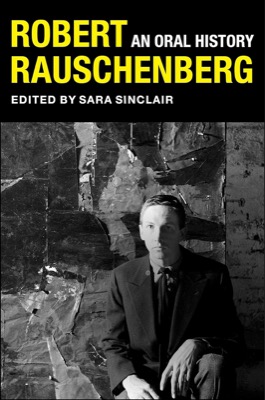
Hardcover. NY, Columbia University Press, 1st, Book: Very Good, Dust Jacket: Good, Hardcover in a bright dust jacker with a closed tear. 297 pages, color plates. Robert Rauschenberg is a work of collaborative oral biography that tells the story of one of the twentieth century's great artists through a series of interviews with key figures in his life-family, friends, former lovers, professional associates, studio assistants, and collaborators. The oral historian Sara Sinclair artfully puts the narrators' reminiscences in conversation, with a focus on the relationship between Rauschenberg's intense social life and his art. The book opens with a prologue by Rauschenberg's sister and then shifts to New York City's 1950s and '60s art scene, populated by the luminaries of abstract expressionism. It follows Rauschenberg's eventual move to Florida's Captiva Island and his trips across the globe, illuminating his inner life and its effect on his and others' art.
Hardcover. New York , Harry N. Abrams, 1st, 1969, Book: Very Good, Dust Jacket: Very Good, 229 pages, illustrated in b&w and color. Autobiography, bibliography. Book designed by Rauschenberg. Acetate dust jacket with chip to top of spine, small tear to rear panel at bottom. Otherwise crisp, clean copy.
Hardcover. Hatje Cantz, 1st, 2010, Book: Very Good, Hardcover, 208 pages. Between 1961 and 1968, at the height of the Pop art movement, Roy Lichtenstein (1923-1997) created about 50 large black-and-white drawings. Not only was their imagery, culled from consumer culture, entirely new--baked potatoes, ads for foot medication and BB Guns--but so was their treatment, which drew on the rudimentary character of cheaply printed commercial drawings. Conceived independently from Lichtenstein's paintings, these drawings recast illustrations from newspaper ads and comic books into works of keen visual intensity, curiously echoing the clean-edge aesthetic of 1960s geometric abstraction. "Drawing is the basis of my art," Lichtenstein later affirmed; "It is where my thinking takes place." Published for an exhibition at the Morgan Library in New York, this richly illustrated publication offers 120 color illustrations, plus essays on Lichtenstein's technique and on his little-known 1967 Aspen project, in which the artist transformed a room into a black-and-white cartoon drawing.
Hardcover. NY, Thames & Hudson, 1st, 2022, Book: Very Good, Dust Jacket: None, Hardcover, pictorial boards, oversize format. 408 pages with 534 color illustrations. Rudolph de Harak (1924-2002) is one of the most influential graphic designers of the mid-twentieth century. This beautifully produced, comprehensive monograph is devoted to this fascinating and significant figure and provides an in-depth account of de Harak's life and work. From his early years in Los Angeles to his success as a design consultant and educator in New York City, de Harak brought inventiveness to everything he designed, from record covers to book jackets, from furniture to exhibitions. De Harak's work was influenced by early modernist masters, such as Will Burtin, Gyorgy Kepes, Alvin Lustig, and Max Bill, as well as by the rigor, simplicity, and rationalism of the International Style, Abstract Expressionism, Op Art, and Pop Art. Organized chronologically into six chapters that cover de Harak's life and career, each supported by sidebars on the designers, architects, and art movements that have influenced his work, Rudolph de Harak Graphic Designer documents de Harak's pioneering and prolific fifty-year career in graphic, experiential, industrial, and furniture design for a wide range of clients, including the Metropolitan Museum of Art, Cummins engine company, McGraw Hill publishing, and many others. PLEASE NOTE: DUE TO WEIGHT, DOMESTIC SHIPPING ONLY.
Softcover. Gottingen, Steidl, 1st, 2002, Book: Very Good, Dust Jacket: Very Good, Non paginated. Hardcover. Extensive color photographs by Sam Taylor-Wood throughout. Clean, unmarked copy with only minor wear to dust jacket. Published on the occasion of the exhibition Sam Taylor-Wood, Hayward Gallery, London 25 April - 21 June 2002.
Softcover. Cambridge MA, MIT Press, 4th pr., 1977, Book: Very Good, Dust Jacket: None, Softcover, 82 pages, b&w illustrations. The collected writings of the "dean of the New York School of Abstract-Expressionist Painting." "The creative process lies not in imitating, but in paralleling nature; translating the impulse received from nature into the medium of expression, thus vitalizing this medium. The picture should be alive, the statue should be alive and every work of art should be alive." Thus Hans Hofmann wrote nearly half a century ago. He left the Old World, Germany, for the New, at the age of 50. In 1948, when the retrospective exhibition was held at the Addison Gallery of American Art, Hofmann was 68; he had been in the United States for 18 years, a citizen for seven years. Yet he was scarcely recognized in Europe or America as an artist of significance and had never had a full-scale retrospective exhibition of his work. Beginning with a group exhibition in Germany in 1909, he had been given 12 one-man shows and had been included in four group exhibitions before the exhibit at Andover. Subsequently, he was to have 33 one-man shows and to be in over 60 group exhibitions, including the 1960 Venice Biennale, in which he was one of the four artists chosen to represent America. Clean copy.
Hardcover. NY, Abrams, 1st, 2005, Book: Very Good, Dust Jacket: Very Good, Hardcover, 240 pages. Steinberg's high-concept graphic art--epitomized by his oft-imitated cartoon map in which a Manhattan distended with self-importance shoves the continents of North America and Asia to the margins--is enchantingly showcased in this lavishly illustrated retrospective of his work for the New Yorker. Smith, a curator at the Frances Lehman Loeb Art Center at Vassar and author of Edward Steichen: The Early Years, surveys six decades of Steinberg's pieces, including all 89 New Yorker covers (in full color), cartoons, wartime sketches from overseas, evocative (but never literal-minded) illustrations for articles, and unpublished items from the artist's portfolio. The material is arranged thematically, examining such recurring motifs as cats, pedestals and rubber-stamped figures and documenting the turn to visual metaphor in Steinberg's later work, where symbolic graphic representations of sound, abstract relationships and existential conundrums replace the usual scenario-with-verbal-punch line cartoon setup. Smith's pithy biographical essay situates Steinberg as a self-conscious modernist who helped develop a distinctive New Yorker visual style, one with "a wry, informal wit... attuned to the jittery optimism of the Atomic Age." Steinberg's cartoons usually made readers think before they laughed, and so will this splendid memorial to a 20th-century artistic landmark.
Hardcover. Washington, Prestel, 1st, 2016, Book: Very Good, Dust Jacket: None, 288 pages. Softcover. Very clean, like new in publishers shrink-wrap. This book pays tribute to the mature work of Stuart Davis, a distinctly American artist who adapted European modernism to reflect the sights, sounds, and rhythms of popular culture. Beginning in 1921, a series of creative breakthroughs led Davis away from figurative painting and toward a more abstract expression of the world he inhabited. Drawing upon his admiration for Cezanne, Leger, Picasso, and Seurat, Davis developed a style that would evolve over the next four decades to become a dominant force in postwar art. His visionary responses to modern life and culture both high and low remain relevant more than 50 years after his death. Focusing on the images and motifs that became hallmarks of his career, this book features approximately 100 works-from his paintings of tobacco packages of the early 1920s, the abstract Egg Beater series, and the WPA murals of the 1930s, to the majestic works of his last two decades. The authors take a critical approach to the development of Davis's art and theory, paying special attention to the impact his earlier work had upon his later masterpieces. They also discuss Davis's unique ability to assimilate the lessons of Cubism as well as the imagery of popular culture, the aesthetics of advertising, and the sounds and rhythms of jazz-his great musical passion. Informed by previously unpublished primary documents, the detailed chronology is, in effect, the first Davis biography. Together, these elements create a vital portrait of an artist whose works hum with intelligence and energy.
Softcover. Zach Feuer Gallery, 1st, 2006, Book: Very Good, Dust Jacket: None, Softcover, 70 pages. Priya Bhatnagar in Flash Art has written "Threatening to unravel pop culture's abstractions, Hawkins's images call into question the socially coded nature of its identities, icons, meanings and values while contesting its homogenization of beauty and fashion. Joel Sternfeld's foreword calls this survey of recent work "an achievement of the first magnitude." Inviting friends and strangers in Nepal to pose for the camera, Blue Eyes includes three photographic series and three video projects that reveal the ubiquity of American media culture while underscoring certain behaviors as they pertain to global capitalism and race. Each image investigates the experience of cultural imperialism as seen through the eyes of those living in the developing world. Hawkins highlights the visual dialogue that comprises consumer and popular culture and asks the viewer to consider a world of differences increasingly veiled by surface similarities.
Softcover. Zach Feuer Gallery, 1st, 2006, Book: Very Good, Dust Jacket: None, Softcover, 70 pages. Priya Bhatnagar in Flash Art has written "Threatening to unravel pop culture's abstractions, Hawkins's images call into question the socially coded nature of its identities, icons, meanings and values while contesting its homogenization of beauty and fashion. Joel Sternfeld's foreword calls this survey of recent work "an achievement of the first magnitude." Inviting friends and strangers in Nepal to pose for the camera, Blue Eyes includes three photographic series and three video projects that reveal the ubiquity of American media culture while underscoring certain behaviors as they pertain to global capitalism and race. Each image investigates the experience of cultural imperialism as seen through the eyes of those living in the developing world. Hawkins highlights the visual dialogue that comprises consumer and popular culture and asks the viewer to consider a world of differences increasingly veiled by surface similarities.
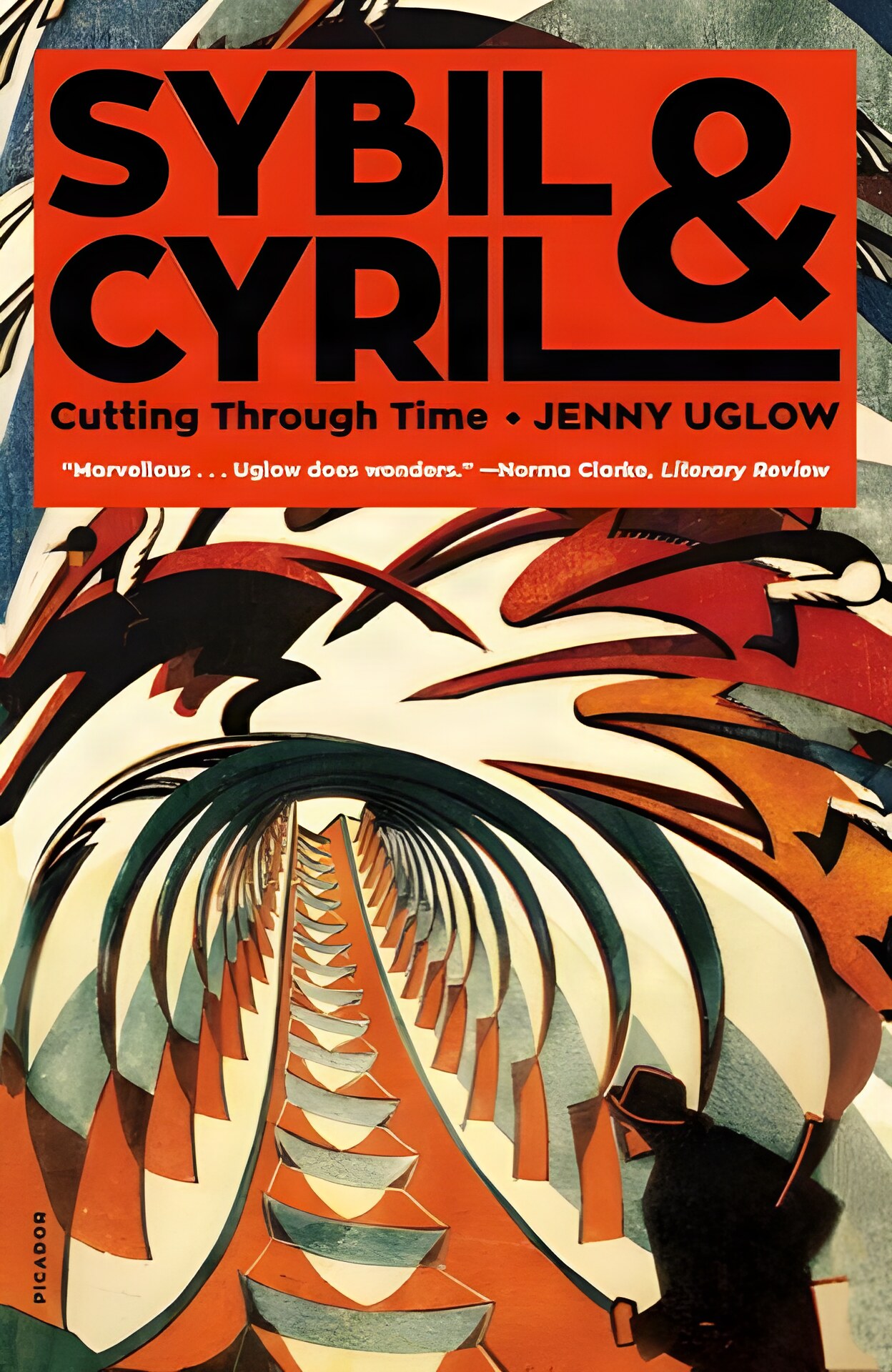
Softcover. NY, Picador/Farrar Straus Giroux, 1st US, 2022, Book: Very Good, Dust Jacket: None, Softcover, 398 pages, Illustrated in color and b&w. In 1922, Cyril Power, a fifty-year-old architect, left his family to work with the twenty-four-year-old Sybil Andrews. They would be together for twenty years. Both became famous for their dynamic, modernist linocuts-streamlined, full of movement and brilliant color, summing up the hectic interwar years. Yet at the same time, they looked back to medieval myths and early music, to country ways that were disappearing from sight. Jenny Uglow's Sybil & Cyril: Cutting Through Time traces their struggles and triumphs, conflicts and dreams, following them from Suffolk to London, from the New Forest to Vancouver Island. This is a world of futurists, surrealists, and pioneering abstraction, but also of the buzz of the new, of machines and speed, of shops and sport and dance, shining against the threat of depression and looming shadows of war. Remainder dot to top edge otherwise like new.
Hardcover. Chicago, University of Chicago Press;, 1st, 2002, Book: Very Good, Dust Jacket: None, Hardcover, 272 pages. One of Chicago's great cultural achievements, the Institute of Design was among the most important schools of photography in twentieth-century America. It began as an outpost of experimental Bauhaus education and was home to an astonishing group of influential teachers and students, including Lazlo Moholy-Nagy, Harry Callahan, and Aaron Siskind. To date, however, the ID's enormous contributions to the art and practice of photography have gone largely unexplored. Taken by Design is the first publication to examine thoroughly this remarkable institution and its lasting impact. With nearly 300 illustrations, including many never-before published photographs, Taken by Design examines the changing nature of photography over this critical period in America's midcentury. It starts by documenting the experimental nature of Moholy's Bauhaus approach and photography's new and enhanced role in training the "complete designer." Next it traces the formal and abstract camera experiments under Harry Callahan and Aaron Siskind, which aimed at achieving a new kind of photographic subjectivity. Finally, it highlights the ID's focus on conscious references to the processes of the photographic medium itself. In addition to photographs by Moholy, Callahan, and Siskind, the book showcases works by Barbara Crane, Yasuhiro Ishimoto, Joseph Jachna, Kenneth Josephson, Gyorgy Kepes, Nathan Lerner, Ray K. Metzker, Richard Nickel, Arthur Siegel, Art Sinsabaugh, and many others. Major essays from experts in the field, biographies, a chronology, and reprints of critical essays are also included, making Taken by Design an essential work for anyone interested in the history of American photography.
Hardcover. Mexico, Fundacion Olga y Rufino Tamayo, Reprint, 2002, Book: Very Good, Dust Jacket: Very Good, 150 pages. Hardcover with dust jacket. Clean, unmarked copy with only minor wear to dust jacket. Book text in Spanish. Former price tag residue on back of dust jacket. Color illustrations throughout.
Softcover. London, Tate Publishing, 2008, 2008, Book: Very Good, Dust Jacket: None, 123 pages. Softcover. Extensive color photographs throughout. Clean, unmarked copy with only minor wear to wrappers.
Softcover. London, Tate Publishing, 1st, 2008, Book: Very Good, Dust Jacket: None, 123 pages. Softcover. Extensive color photographs throughout. Clean, unmarked copy with only minor wear to wrappers.

 "Picasso, Braque and Early Film in Cubism - April 20-June 23, 2007by: Rose, Bernice B./Arne Glimcher/Tom Gunning/Jennifer Wild")
 "Picasso, Braque and Early Film in Cubismby: Picasso, Pablo")
 "Pictures of Nothing: Abstract Art since Pollock (The A. W. Mellon Lectures in the Fine Arts, 38)by: Kirk Varnedoe , Adam Gopnik, et al.")
 "Pipilotti Ristby: Bronfen, Elisabeth")
 "Raw Creation - Outsider Art and Beyondby: Maizels, John")
 "Rhythms of Modern Life: British Prints, 1914-1939by: Clifford Ackley (Editor), Stephen Coppel/Thomas Rassieur / Samantha Rippner")
 "Richard Filipowski: Art and Design Beyond the Bauhausby: Marisa Bartolucci (Editor), Hattula Moholy-Nagy (Foreword)")
 "Robert Natkin: Recent Paintings from Hitchcock Seriesby: Natkin, Robert")
 "Robert Rauschenbergby: Forge, Andrew and Robert Rauschenberg")
 "Roy Lichtenstein: The Black-and-White Drawings, 1961-1968by: Isabelle Dervaux , Graham Bader, et al.")
 "Rudolph de Harak Graphic Designer: Rational Simplicity by: Richard Poulin")
 "Sam Taylor-Woodby: Taylor-Wood, Sam")
 "Search for the Real and Other Essays by: Hans Hofmann")
 "Steinberg at the New Yorkerby: Smith/Saul Steinberg, Joel")
 "Stuart Davis: In Full Swingby: Cooper, Harry")
 "Stuart Hawkins: Blue Eyesby: Hawkins Stuart and Joel Sternfeld")
 "Stuart Hawkins: Blue Eyesby: Hawkins Stuart and Joel Sternfeld")
 "Tamayo Ilusradorby: Tamayo, Rufino")
 "Tate Modern Artists: Ed Ruschaby: Richards, Mary")
 "Tate Modern Artists: Ed Ruschaby: Richards, Mary")