Hardcover. NY, Atheneum Books, reprint, Book: Very Good, Dust Jacket: None, Hardcover, green cloth stamped in black. Color art by Haley. Discover how an African trickster god made it possible for people to tell stories in this brightly illustrated, Caldecott Medal-winning picture book. Long, long ago there were no stories on earth for children to hear. All stories belonged to Nyame, the Sky God. Ananse, the Spider man, wanted to buy some of these stories, so he spun a web up to the sky to bargain with the Sky God. The price the Sky God asked was Osebo, the leopard-of-the-terrible-teeth, Mmboro the hornet-who-stings-like-fire, and Mmoatia the fairy-whom-men-never-see. Can Ananse capture these sly creatures and give the children of earth stories to tell? No dust jacket, clean copy.
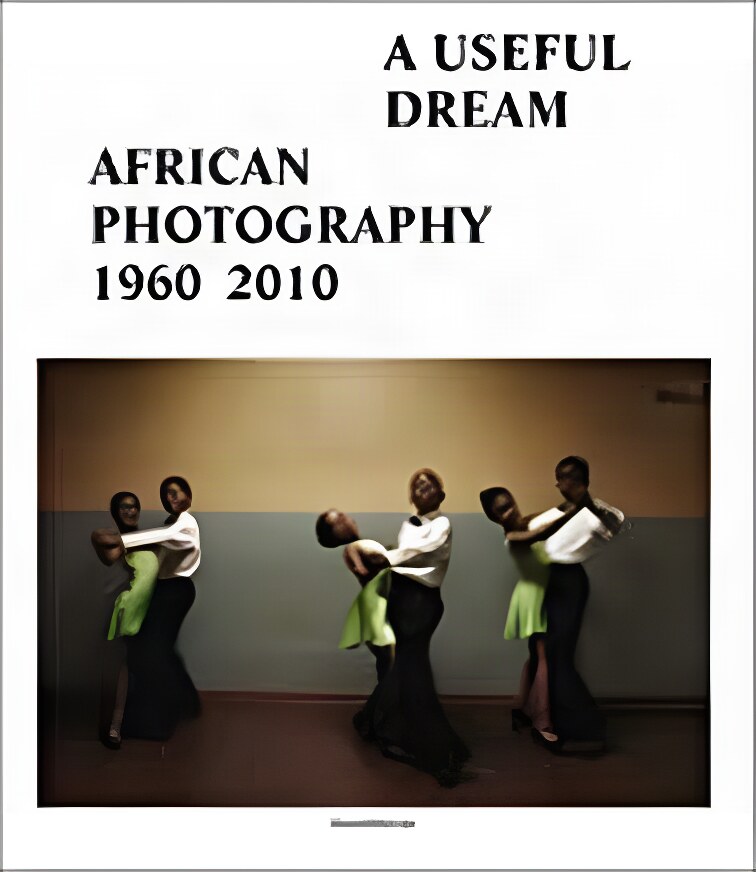
Softcover. Silvana Editoriale, 1st, 2010, Book: Very Good, Dust Jacket: None, Softcover, 192 pages. Photography has proved a particularly essential art in the African continent's postcolonial era, both for recording the numerous seismic moments in its recent history, and for reclaiming the imagery of Africa from its colonial portrayers. As Africa has begun to step beyond its colonial subjugation, photography has also assumed a leading role in providing African countries with individual identities. Tracking the blossoming of postcolonial photography in Africa from 1960 to the present, and accompanying an exhibition at the Palais des Beaux-Arts in Brussels, A Useful Dream: African Photography 1960-2010 celebrates 50 years of African photography. Among the 34 photographers gathered in its pages are Rui Assubuji, Nabil Boutros, Loulou Cherinet, James Depara, Samuel Fosso, David Goldblatt, Bob Gosani, Pierrot Men, Zwelethu Mtethwa, Eileen Perrier, Ricardo Rangel, Malick Sidibe and Patrice-Felix Tchikaya. The volume includes an introduction by Simon Njami and a text by Frank Vanhaec
Hardcover. New York, Harry N. Abrams, inc., Reprint, 1985, Book: Very Good, Dust Jacket: Very Good, 304 pages. Hardcover. Color and b/w illustrations throughout (more than 400). Previous owner's bookplate on front endpaper. Brown cloth cover boards, bold gilt title on spine. In beautiful condition. Dust jacket unclipped, has small rip at bottom of front cover and wear at top of spine, otherwise very good. A look at the jewelry and body art of the African people.
Softcover. NY, Babcock Galleries, 1s, 2010, Book: Very Good, Dust Jacket: None, Softcover, 48 pages illustrated in color. Published in conjunction with the exhibition of the same name; Includes images of and images by African-Americans, including William Sidney Mount, Thomas Worth, Edward Mitchell Bannister, Lyell E. Carr, Sol Eytinge, Eastman Johnson, Sheldon Orrin Parsons, and others. Clean copy.
Softcover. NY, Scala Arts Publishers/Cornell, 1st, 2020, Book: Very Good, Dust Jacket: None, Softcover, 112 pages illustrated in color. Featuring African textiles, clothing, headwear, and jewelery, this book celebrates African dress as a product of global interactions, generational conflict and continuity, and expressions of gender. Featuring African textiles, clothing, headwear, and jewelery, this book celebrates African dress as a product of global interactions, generational conflict and continuity, and expressions of gender. The book highlights the strength and resilience of long-standing practices that characterize African dress; the wide variety of cultural, religious, and political motivations for adorning oneself; and the varying identities reflected in analyzing African material culture of the last century and a half. Textile selections include hand-woven and dyed examples alongside factory-woven and machine-printed cloth. Items of adornment include amber and silver jewelery from North Africa, beadwork-embellished clothing from South Africa, and various headdresses from across the continent, to name a few examples. From formal European colonization, to independence for African countries, to the liberalization of African economies, this book will demonstrate how dress practices reveal personal and group identities, cultural traditions, religious associations, political affiliations, and aspirations. Clean copy.
Hardcover. New York, Thomas Yoseloff, 1st, 1960, Book: Good, Dust Jacket: Fair, 175 pages. Hardcover. 131 Illustrations, 16 color plates. Top corner bump, causing a light crease to pages at upper corner. Otherwise very good, clean. Dust jacket with light edge wear, chipping, mild soil.
Softcover. NY, Archipelago Books, reprint, 2008, Book: Very Good, Dust Jacket: None, Softcover in pictorial wrappers, 115 pages, color illustrations. All One Horse is a marvel-filled journey through Breyten Breytenbach's kaleidoscopic imagination. The electrifying colors and penetrating images of his paintings converse with his lyrical and satirical dream-fables. These visions and parables emerge from a melange of cultures and traditions: African and Eastern thought, the spirit world, and the spheres of visual art, philosophy, history and politics. Breytenbach's watercolors communicate in hieroglyphs, where private conversation embraces myth and dream. These reflections and images - clear and complex at once - are cries for human dignity and justice, are truth disguised as play. An outspoken human rights activist, Breyten Breytenbach is a poet, painter, memoirist, essayist and novelist. His paintings and drawings have been exhibited around the world. Born in South Africa, he emigrated to Paris in the late '60s and became deeply involved in the anti-Apartheid movement. Clean Copy.
Atgen PA, Schiffer, 1st, 2017, Book: Very Good, Dust Jacket: Very Good, Hardcover in a bright dust jacket. 144 pages illustrated in color and b&w. In 1942, Ed Vebell landed with the US Army in North Africa and was recruited by Stars & Stripes, the US armed forces newspaper, as their official staff artist. Daily, he drew illustrations and reported on the progress of World War II throughout Europe. This book offers a selection of his sketches, drawings, paintings, and photographs from that time, and presents one artist's view of the war from North Africa, through the campaigns in Italy, France, and Germany. After the war, the author spent two weeks with the Russians in Berlin, and was then assigned as the courtroom artist during the Nuremberg War Crimes Trials. Along the way are Ed's reminiscences about such personalities as famed war correspondent and artist Bill Mauldin, singers Josephine Baker and Edith Piaf, Charles de Gaulle, Gen. Teddy Roosevelt Jr., and many others. Ed also reminisces about his two years photographing backstage at the Folies Bergere in Paris, as well as his time as an Olympic fencer. Clean copy.
Hardcover. Washington, Smithsonian Books, 1st, 2003, Book: Very Good, Dust Jacket: Very Good, 292 pages. Hardcover with dust jacket. Color and black and whote photos throughout. Clean, tight copy. The Smithsonian holds more than 13 million images spanning over 150 years of taking and collecting photographs. This largely unknown body of photography (most never before published) represents nothing less than the Smithsonian's effort, in the name of all Americans, to describe and comprehend the world. Open anywhere in these pages to be plunged into the history of our modernity, and see what the Smithsonian deemed important to document and preserve. The famous, the infamous, and the never-before-seen are here in a remarkable "democracy of images": Amelia Earhart, Abraham Lincoln, P.T. Barnum and Tom Thumb, John Brown, Frederick Douglass, Lucille Ball, Greta Garbo, Babe Ruth; the earliest views of the moon and the earliest panoramic view of Damascus; rare Native American photography; views of Asia, Africa, and the American West; photographs of early flight, and much, much more. By recording the act of seeing, and of what was seen, both photography and the Smithsonian have shaped our sense of ourselves, as individuals, as a people, and as a country.
Softcover. New York, Museum for African Art, 1st, 2001, Book: Very Good, Dust Jacket: None, 263 pages. Softcover with paper wrappers. Exhibition catalog, 9x12", color and b&w photographs of the art and culture of the Bamana people. Tight copy with only minor wear to wrappers.
Hardcover. NY, Abrams, 1st, 2016, Book: Very Good, Dust Jacket: None, Hardcover in pictorial boards. Gray Malin is the artist of the moment for the Hollywood and fashion elite. His awe-inspiring aerial photographs of beaches around the world are shot from doorless helicopters, creating playful and stunning celebrations of light, shape, and perspective, as well as summer bliss. Beaches features more than twenty cities across six continents: Australia: Sydney/North America: Santa Monica, Miami, San Francisco, Kaua'i, Chicago, the Hamptons, and Cancun / South America: Rio de Janeiro / Europe: Capri, Rimini, Forte dei Marmi, Viareggio, Amalfi Coast, Barcelona, Lisbon, and Saint-Tropez / Africa: Cape Town / Asia: Dubai. Clean, bright copy.
Hardcover. 5 Continents, 1st, 2001, Book: Very Good, Dust Jacket: Very Good, Hardcover, 10" x 11.5", together with dust jacket, new, still in shrinkwrap. 196 pages, illustrated in color. Ceil Pulitzer started her journey as a collector of African art more than thirty years ago. Her artistic spirit has drawn her to all forms of culture and human expression across time and space. As a dedicated painter, she has relentlessly exercised her eye in the study of art and art history. As a collector of modern art first, she understood that African art shaped the trajectory of twentieth-century art. Later, in Paris, she met the venerable expert and legendary dealer of African art, Charles Ratton. In one brief meeting, he said to her: "You have a good eye." This encounter distilled her passion and pursuit of excellence in classical African art. The Ceil and Michael Pulitzer Foundation has developed and supported a number of philanthropic endeavors in Africa, and in major institutions that promote the art of Africa and humanitarian efforts there.
Softcover. Cambridge MA, MIT Press, 1st, 2000, Book: Very Good, Dust Jacket: None, 184 pages, illustrated in color, essays and an interview with the photographer. From his provocative Cover Girl series featuring photographic portraits of himself on the covers of popular magazines, to his writings on sexuality and identity, the work of Nigerian-born Ike Ude explores a world of dualities: African/postnationalist, photographer/performance artist, artist/spectator, male/female, mainstream/marginal, seduction/narcissism, and fashion/art. As an artist from Nigeria working in New York City, connected to the world of fashion and celebrity, Ude gives the political aspects of performance and representation a new vitality, melding his own theatrical selves and multiple personae with his art.
Hardcover. Five Continents, 1st, 2018, Book: Very Good, Dust Jacket: None, Hardcover in pictorial boards. Born into slavery around 1853-4 on a cotton plantation in Benton, Alabama, Traylor has become one of the most important self-taught artists of the twentieth century, and certainly one of the most celebrated African-American artists, along with Thorton Dial and William Edmondson. The story of Bill Traylor's life and work is a remarkable one. It is a story that deserves attention both nationally and internationally. This publication, generously illustrated with full-page high-quality reproductions, provides a close examination of Traylor's recurrent themes, composition schemes, favored iconography, and contextual information related to the artist's biography, creative process and tools, visual environment, and artistic mindset. Each artwork is considered in a context beyond that of an isolated image and in response to one another, forming a series of intricate and consistent narratives, intriguingly cinematic in its development. The elements of Traylor's biography are the anchors of an individual mythology. Instead of merely being a basic depiction, the subject becomes a visual statement structuring Traylor's mind, bringing together hidden symbols from Kongo Vodou, Hoodoo, Southern Baptist, Freemasonry, and Blues sources, as well as layers of references: slavery, uncensored violence in the Jim Crow era, and turbulence within the black enclave known as 'Dark Town' in Montgomery, Alabama. Bilingual edition in French and English. Still in publisher's shrinkwrap.
Hardcover. Boston, Little, Brown, 1st, 1947, Book: Good, Hardcover, green cloth with black lettering. Frontis portrait. This text is an expansion of the author's 1937 article Black Hamlet : the mind of an African Negro revealed by psychoanalysis. "This is the true story of John Chavafambira. It is a unique, never-before-written account of a native African medicine man, his life experiences and inner conflicts, etched against the background of two worlds-- white and black -- in collision. It is an amazing study of seemingly irreconcilable elements, laid in South Africa where the clash of color is most violent". Clean copy but mild musty odor.
Softcover. Hanover NH, Hood Museum of Art, Dartmouth College , 1st, 2008, Book: Very Good, Dust Jacket: None, Softcover, 374 pages illustrated in b&w and color. Issued in connection with an exhibition held March 8 to September 7, 2008, Hood Museum of Art, Dartmouth College. Black Womanhood examines an especially charged icon - the black female body - and contemporary artists' interventions upon historical images of black women as exotic Others, erotic fantasies, and supermaternal Mammies. This book presents icons of the black female body as seen from three separate but intersecting perspectives: the traditional African, the colonial, and the contemporary global. The display and contemplation of such iconic images addresses complex and often competing forces of self-presentation and the representation of others. Clean, like new. DOMESTIC SHIPPING ONLY.
Hardcover. Seattle, Fantagraphics, 1st, 2025, Book: Very Good, Dust Jacket: None, Hardcover, pictorial boards, 327 pages, illustrated throughout in b&w by Crane. Ripped from the headlines of the day, these eleven stories propel ace troubleshooter Buz Sawyer from Africa to South America to the Arctic Circle, from the heart of a hurricane to a plague of ravenous locusts. Meanwhile, back home, a femme fatale seduces Buz's C.O. to steal military secrets. Then, it's every parent's worst nightmare - Buz and Christy's new baby is kidnapped right in the hospital! Roy Crane, dean of the golden age of adventure comic strips, peppers these rollicking tales with rapid-fire action, suspense, intrigue, humor, unforgettable characters, and brilliant art. Now, at last, you can enjoy these stories, unseen since the 1950s.
Hardcover. Stichting Kunstboak , 1st, 2014, Book: Very Good, Dust Jacket: Very Good, Hardcover, 144 pages. Like new in publisher's shrink-wrap. Photography offers a thousand possible ways of looking at the society we live in. Foremost among the talents that have brought Calvin Dondo international recognition is the ability to put into his work all the respect he has for the individual identities of those he captures on film. This artist who reveals the nature of Zimbabwe today freely tells us of his country and the history concealed within it. This book presents a new world in which images are an essential component. This first monograph to be devoted to a contemporary Zimbabwean photographer will encourage others, for the excellent reason that it is time to look at Africa through the clearsighted viewfinder of those working on its development. Text in English, French, Dutch and German.
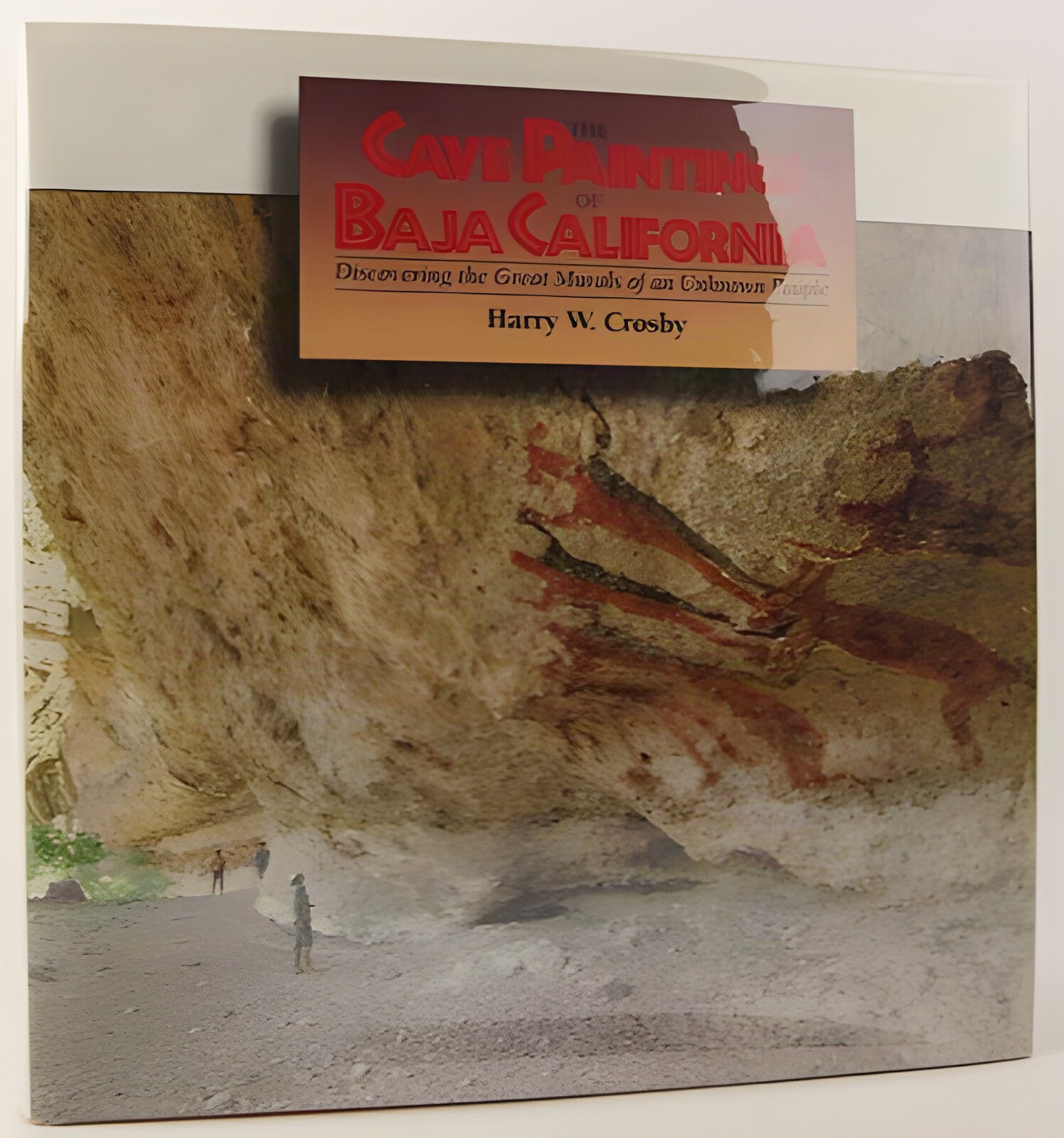
Hardcover. San Diego, Sunbelt Publications, Revised Ed., 1998, Book: Very Good, Dust Jacket: Very Good, Hardcover, 246 pages, color photographs and illustrations throughout, illustrated end paper. The Great Murals of Mexico's Baja California are one of the five greatest sites in the world for primitive rock art. They rank with those of southern France, northern Spain, northwest Africa, and outback Australia. These Great Murals, created by an unknown people, are without doubt the most distinctive trove of rock art in the Western Hemisphere. The site was unveiled to the modern world in the 1960s by adventure/mystery writer Erle Stanley Gardner who brought in UCLA archaeologist Clement Meighan to validate the importance of his find. But it was not until the 1970s, when author/photographer Harry W. Crosby undertook a systematic search for the largely unknown works hidden in the mountains of central Baja that the scope and significance of the find became known. He documented his search and discovery of over 200 previously unreported rock art sites leading to the original publication of The Cave Paintings of Baja California by Copley Books in 1975 which first introduced this cave art to the general public. Since that time, Baja California's Great Murals have been designated a United Nations Heritage Site. This lavishly illustrated full-color account is greatly revised and expanded from the original edition and offers Crosby's unique perspective on the painted sites and painting styles found in different parts of the Great Mural area. Light edge wear to dust jacket. Else a very clean, tight copy.
Hardcover. New York, Viking Press, 1st, 1961, Book: Very Good, Dust Jacket: Fair, 153 pages. Hardcover with dust jacket. Color/b&w photographs. Brodart covered dust jacket shows heavy wear on all edges. closed tear on upper front, spine edge. The internationally renowned photographer and filmmaker Eliot Elisofon (1911-1973) demonstrates the means he used to produce the distinguished pictures that made him famous. A frequent contributor to Life magazine, he also created an enduring visual record of African life from 1947 to 1973.
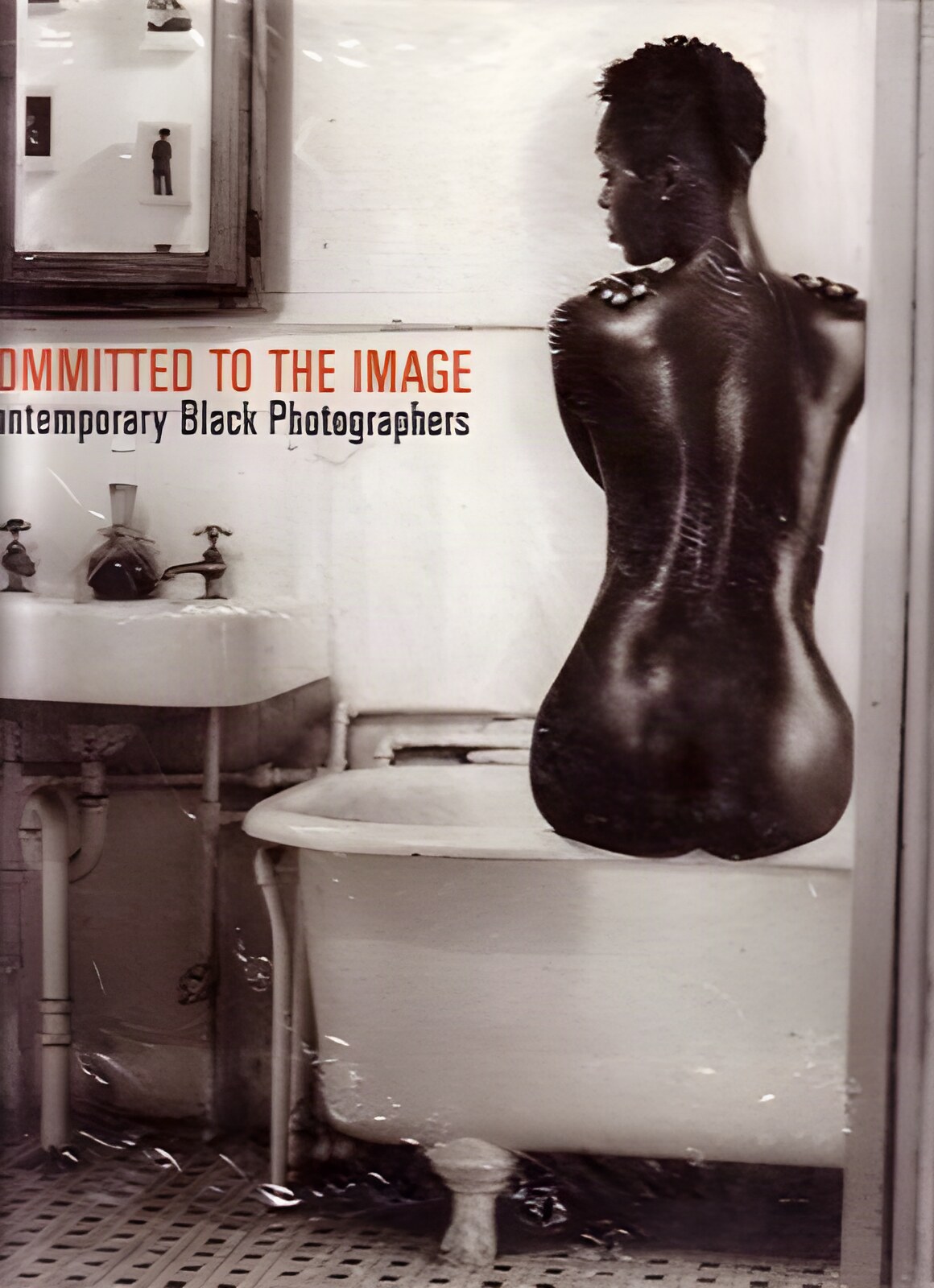
Softcover. London, Merrell Publishers, 1st pbk, 2001, Book: Very Good, Dust Jacket: None, Softcover, 240 pages, mostly b&w photos, some color. Catalogue of an exhibition held at the Brooklyn Museum of Art, New York, Feb. 16 - Apr. 29, 2001. The 94 African American photographers whose works appear in this volume, have used their equipment as tools of social commentary and personal and artistic exploration, bearing witness to the changes in American society over the past 50 years. Clean copy.
Softcover. Urbana IL, University of Illinois Press, 1st, 2015, Book: Very Good, Dust Jacket: None, Softcover, 295 pages, b&w illustrations. INSCRIBED BY BECK on the title page. A daughter of freed African American slaves, Daisy Turner became a living repository of history. The family narrative entrusted to her--"a well-polished artifact, an heirloom that had been carefully preserved"--began among the Yoruba in West Africa and continued with her own century and more of life. In 1983, folklorist Jane Beck began a series of interviews with Turner, then one hundred years old and still relating four generations of oral history. Beck uses Turner's storytelling to build the Turner family saga, using at its foundation the oft-repeated touchstone stories at the heart of their experiences: the abduction into slavery of Turner's African ancestors; Daisy's father Alec Turner learning to read; his return as a soldier to his former plantation to kill his former overseer; and Daisy's childhood stand against racism. Other stories re-create enslavement and her father's life in Vermont--in short, the range of life events large and small, transmitted by means so alive as to include voice inflections. Beck, at the same time, weaves in historical research and offers a folklorist's perspective on oral history and the hazards--and uses--of memory. Clean copy.
Hardcover. Hatje Cantz, 1st, 2007, Book: Very Good, Dust Jacket: None, Hardcover, 84 pages. When David Goldblatt received the world-renowned Hasselblad Award in 2006, he had been making photographs of the South African landscape and culture for more than 50 years. Born in 1930 in a gold-mining town near Johannesburg, his parents were Jewish refugees from Lithuania, and they raised him with an emphasis on tolerance and antiracism. In 1975, at the height of apartheid, Goldblatt explored white nationalist culture in Some Afrikaners Photographed, and in the 80s he observed workers on the Kwandebele-Pretoria bus, many of whom traveled eight hours every day to work and back. His late-90s solo show at New York's Museum of Modern Art focused on architectural work, and showed off Goldblatt's uncanny ability to discover a society through its buildings and landscapes. His photographs of architectural structures revealed the ways that ideology had defined his home country's landscape. No dj issued.




 "Africa Adornedby: Fisher, Angela")


 "African Americans Seeing and Seen, 1766-1916by: Tess Sol Schwab / John Driscoll (Foreward)")

 "African Artby: Schmalenbach, Werner")


 "At First Sight: Photography and the Smithsonianby: Foresta, Merry A.")
 "Bamana: The Art of Existence in Maliby: Colleyn , Jean-Paul (editor)")
 "Beaches by: Gray Malin")


 "Beyond Decorum: The Photography of Ike Udeby: Bessire, Mark H. C. and Lauri Firstenberg")


 "Bush Negro Art: An African Art in the Americasby: Dark, Philip J. C.")

 "Calvin Dondo: Hodhii Zimbabweby: Dondo, Calvin")
 "Color Photographyby: Elisofon, Eliot")
 "Daisy Turner's Kin: An African American Family Saga (INSCRIBED COPY)by: Beck, Jane C.")
 "David Goldblatt: Photographs: Hasselblad Award 2006by: Michael Godby, David Goldblatt, et al.")