Hardcover. New Haven CT, Yale University Press;, 1st, 2009, Book: Very Good, Dust Jacket: Very Good, Hardcover, 180 pages. John Gutmann (1905-1998) was one of America's most distinctive photographers. Born in Germany where he trained as an artist and art teacher, he fled the Nazis in 1933 and settled in San Francisco, reinventing himself as a photo-reporter. Gutmann captured images of American culture, celebrating signs of a vibrant democracy, however imperfect. His own status as an outsider--a Jew in Germany, a naturalized citizen in the United States--informed his focus on individuals from the Asian-American, African-American, and gay communities, as well as his photography in India, Burma, and China during World War II. This handsome book acknowledges Gutmann's place in the history of photography. Drawing on his archive of photographs and papers at the Center for Creative Photography, it presents both unfamiliar works and little-known contexts for his imagery, linking his photography to his passionate interest in painting and filmmaking, his collections of non-Western art and artifacts, and his pedagogy. In addition to a major essay by Sally Stein, the volume includes an introduction by Douglas R. Nickel, and an overview of the Gutmann archive by Amy Rule.
Hardcover. New Haven CT, Yale University Press;, 1st, 2009, Book: Very Good, Dust Jacket: Very Good, Hardcover, 180 pages. John Gutmann (1905-1998) was one of America's most distinctive photographers. Born in Germany where he trained as an artist and art teacher, he fled the Nazis in 1933 and settled in San Francisco, reinventing himself as a photo-reporter. Gutmann captured images of American culture, celebrating signs of a vibrant democracy, however imperfect. His own status as an outsider--a Jew in Germany, a naturalized citizen in the United States--informed his focus on individuals from the Asian-American, African-American, and gay communities, as well as his photography in India, Burma, and China during World War II. This handsome book acknowledges Gutmann's place in the history of photography. Drawing on his archive of photographs and papers at the Center for Creative Photography, it presents both unfamiliar works and little-known contexts for his imagery, linking his photography to his passionate interest in painting and filmmaking, his collections of non-Western art and artifacts, and his pedagogy. In addition to a major essay by Sally Stein, the volume includes an introduction by Douglas R. Nickel, and an overview of the Gutmann archive by Amy Rule.
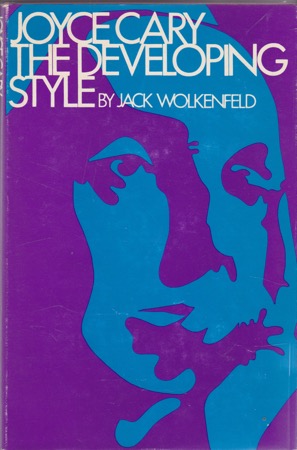
Hardcover. NY, New York University Press, 1st, 1968, Book: Very Good, Dust Jacket: Very Good, Hardcover in a bright dust jacket. 200 pages. Joyce Cary long a popular author among discriminating readers, is gaining a wider audience for his novels every year. This critical study of his work considers the developing relationship between his matter and his manner. It especially emphasizes his growth as artist and thinker. Looking closely at the language and structure of Cary's books, the author examines all the novels- the African ones, the historical ones, and the two trilogies most of them in detail. To gain an overall view he also considers Cary's nonfiction and some as yet unpublished material. While this study is essentially non-biographical, it does analyze Cary's interpretations of history, sociology and politics as they are gathered from the actions and words of his colorful characters. One of the most intriguing features of Dr. Wolkenfeld's book is the dialogue between characters of the various novels, where likenesses as well as dissimilarities, which reveal so much about Cary as a writer, become evident. Clean copy.
Hardcover. Hatje Cantz, 1st, 2008-08-01, Book: Very Good, Dust Jacket: Very Good, Hardcover, pages. Like new in publisher's shrink-wrap. In the early 1950s, Berlin-born photographer Jurgen Schadeberg captured Nelson Mandela, (then a young attorney), singer Miriam Makeba and the nightlife in Sophiatown, a dynamic black neighborhood in Johannesburg. Revealing the poverty endemic to the majority of South Africa's black population became Schadeberg's chief focus. He arrived there in 1950, at the advent of apartheid, to work for Drum, the first magazine for black readers. In 1964, when Drum was banned, Schadeberg left South Africa for Europe and the United States, creating a body of portraits unique in their ability to cut across race, class and social standing. In 1994, Schadeberg created an iconic image of Nelson Mandela, by then the first black President of South Africa, standing at the window of his former prison cell on Robben Island, where he had been detained on charges of conspiracy from 1964-1982. Schadeberg, whose work has been highly influential to younger artists, now lives and works near Paris. This substantial volume collects 250 images from across his career.
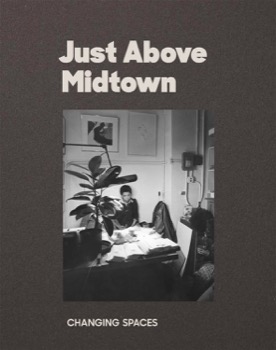
Softcover. NY, Museum of Modern Art, 1st, 2022, Book: Very Good, Dust Jacket: None, Softcover, 184 pages, illustrated in color and b&w. Just Above Midtown, or JAM, was an art gallery and self-described laboratory for experimentation led by Linda Goode Bryant that foregrounded African American artists and artists of color. Open from 1974 to 1986, it was a place where an expansive idea of contemporary art flourished and debate was cultivated. The gallery offered early opportunities for artists recognized as pivotal figures in late-20th-century art-including David Hammons, Butch Morris, Senga Nengudi, Lorraine O'Grady and Howardena Pindell-as well as a nonhierarchical approach to art that welcomed artists without stylistic proscription. Published in conjunction with the first museum exhibition to focus on this visionary gallery and its ongoing impact, Just Above Midtown: Changing Spaces showcases rarely seen material from JAM's history-artworks, ephemera and photographs-that collectively document the gallery's communal and programmatic activities. This richly illustrated, jacketed paperback catalog includes essays that contextualize JAM and consider its legacy, a conversation between Goode Bryant and Thelma Golden, Director and Chief Curator of the Studio Museum in Harlem, a complete exhibition chronology written by MoMA and Studio Museum staff with nearly 50 annotated entries, and excerpts from oral histories with JAM staff and artists conducted especially for this project. Clean copy.
Hardcover. Paris, Editions Charles Massin & Cie, 1st French, 1953, Book: Very Good, Dust Jacket: None, 176 pages. Illustrated with primarily black & white photographs. Darkening to endpapers. Black calf leather with raised bands on spine. Title in gilt on spine. Clean, tight copy. 16 color plates out of 131 total illustrations. Includes bw map. Text in French, translated from the original German by Maurice Muller-Strauss. The art of the central-latitude countries of the African continent. Includes (as named at the time of publication) Angola, Cameroun, Belgian Congo, Lower Congo, Ivory Coast, Gold Coast, Dahomey, Gabon, French Guinea, Liberia, Nigeria, Rhodesia, Sierra Leone, French Sudan, Togo, and Tanganyika. Map at back shows/lists these countries/territories, regional rivers, and local tribes.
Hardcover. Koln GR, Taschen, 1st, 2001, Book: Very Good, Dust Jacket: Very Good, Hardcover, 336 pages. One remarkable woman, five remarkable careers: Leni Riefenstahl is the exception to the rule. From dancer to actress to film-maker to photographer to diver, she has excelled in each field and is one of the most important and controversial artists of the 20th century. Her contributions to the art and technique of film-making were vast, most notably in her epochal film "Olympia" (1938). Critically acclaimed during the 1930's for her work under the Hitler administration and harshly criticized after the war, Riefenstahl surged on, completing the famous "Tiefland" in 1954. In the 1960s and 70s she traveled to Africa and extensively photographed East Africa and the Nuba tribes in Sudan, publishing three books. Ready for yet another change, she took up deep-sea diving at the age of 71, beginning a new chapter as an underwater photographer. Though she has attracted much attention throughout her life and has been the subject of many books, articles, and films, Leni Riefenstahl Five Lives is the first book to showcase her entire career in pictures. Produced in collaboration with Riefenstahl herself, the book includes her most famous images as well as many previously unpublished pictures from her private archives.
Hardcover. New York, Harcourt Brace Jovanovich, 1st, 1975, Book: Very Good, Dust Jacket: Very Good, Non-paginated. Hardcover with dust jacket. Price-clipped dust jacket. Previous owner's name on front fly leaf. Light soil to top pages, abrasion on title page. Black and white pictures throughout, some color.
Hardcover. NY, E.P. Dutton , 1st, 1967, Book: Very Good, Dust Jacket: Very Good, Hardcover in a nice, unclipped dust jacket, 214 pages. "A journey into the heart of primitive Africa, yesterday and today" based on the author's research and his first-hand observations. Wellard describes living among the Dawadans, a small isolated tribe,who still live in a state of pre-history and to whom the wheel is unknown. He also examines the art of prehistoric Africa and in particular the rock art of the Acacus Mountains. The third section deals with the Garamantes, an empire that flourished for more than a thousand years,until they were conquered by Arab invaders in the 17th century. Illustrated with 24 photographs and five maps. Bibliographical notes, index. Clean.
Hardcover. Bloomington, IN, Indiana University Press, 1st, 2016, Book: Very Good, Dust Jacket: Very Good, 152 pages. Hardcover with dust jacket. A very clean, unmarked copy with only minor wear to dust jacket edges. A tight copy. As a photographer for Life and Fortune magazines, Margaret Bourke-White traveled to Russia in the 1930s, photographed the Nazi takeover of Czechoslovakia in 1938, and recorded the liberation of Buchenwald at the end of WWII. In 1949, Life sent her to South Africa to take photographs in a country that was becoming racially polarized by white minority rule. Life published two photo-essays highlighting Bourke-White's photographs, but much of her South African work remained unpublished until now. Here, these stunning photographs collected by Alex Lichtenstein and Rick Halpern offer an unparalleled visual record of white domination in South Africa during the early days of apartheid. In addition to these powerful and historically significant photographs, Lichtenstein and Halpern include two essays that explore Bourke-White's artistic and political formation and provide background material about the cultural, political, and economic circumstances that produced the rise and triumph of Afrikaner nationalism in South Africa. This richly illustrated book brings to light a large body of photography from a major American photographer and offers a compelling history of a reprehensible system of racial conflict and social control that Bourke-White took such pains to document.
Hardcover. Paris, Arthaud, 1st, 1966, Book: Very Good, Dust Jacket: Very Good, Hardcover in a bright, lightly edgeworn dust jacket. A photographic study of Morocco and it's people. Gravure photos, mostly b&w, some color. TEXT IN FRENCH. Name on front fly leaf, otherwise clean.
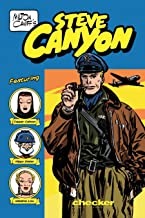
Softcover. Checker, 1st, 2004, Book: Very Good, Dust Jacket: None, Softcover, 148 pages. The entire first year of the great Milton Caniff's landmark action and adventure strip featuring All-American flyboy Steve Canyon and a menagerie of faithful comrades and diabolical rogues. Recurring sidekicks and villains like Copper Calhoon and Happy Easter appear are introduced in four great stories: "Copperhead", "Delta," "Easter's Oil," and "Jewels of Africa."
Hardcover. Syracuse NY, Syracuse University Press, 1st, 2010, Book: Very Good, Dust Jacket: Very Good, Hardcover in a bright dust jacket, 142 pages, b&w illustrations. In 1950, future Hall of Famer Earl Lloyd became the first African American to play in a National Basketball Association game. A warm and gracious man, widely loved and respected, Lloyd has lived what he describes as an 'incredible journey' and has spent eighty years gathering passionate lessons from that experience. He was born in Virginia, a state he describes as 'the cradle of segregation', only sixty-two years after the end of the Civil War. Nicknamed 'Moonfixer' in college, Lloyd led West Virginia State to two CIAA Conference and Tournament Championships and was named All-American twice. One of three African Americans to enter the NBA at that time, Lloyd played seven games for the Washington Capitals before the team folded. He joined the Syracuse Nationals for six seasons and later played for the Detroit Pistons before he retired in 1961. Throughout his career, he quietly endured the overwhelming slights and exclusions that went with being black in America. Yet he has also lived to see basketball - a demonstration of art, power, and pride - become the black national pastime and to witness the inauguration of Barack Obama. In a series of extraordinary conversations with Sean Kirst, Lloyd reveals his fierce determination to succeed, his frustration with the plight of many young black men, and his sincere desire for the nation to achieve true equality among its citizens. CLEAN COPY.
Hardcover. NY, William Morrow, 1st, 1972, Book: Very Good, Dust Jacket: Good, Hardcover in a lightly worn dust jacket with light chipping, 180 pages. Ortiz Montaigne Walton was the first African-American member of the Buffalo Philharmonic Orchestra and a prominent figure in African-American studies. He performed in Buffalo for three seasons, before moving on to become the first African-American member of the Boston Symphony Orchestra. Mr. Walton later was principal contrabassist with the Cairo Symphony Orchestra in Egypt and performed a number of acclaimed solo recitals. Dust jacket art is a photo-montage by Romare Bearden.
Softcover. NY, Farrar, Straus and Giroux, pbk proof, 1999, Book: Very Good, Dust Jacket: None, Softcover, 420 pages. Publishers uncorrected proof with flyer promoting the title laid in. The first major biography of the great jazz pianist and singer, written with the full cooperation of his family. When he died in 1965, at age forty-five, Nat King Cole was already a musical legend. As famous as Frank Sinatra, he had sold more records than anyone but Bing Crosby. Written with the narrative pacing of a novel, this absorbing biography traces Cole's rise to fame, from boy-wonder jazz genius to megastar in a racist society. Daniel Mark Epstein brings Cole and his times to vivid life: his precocious entrance onto the vibrant jazz scene of his hometown, Chicago; the creation of his trio and their rise to fame; the crossover success of such songs as "Straighten Up and Fly Right"; and his years as a pop singer and television star, the first African American to have his own show. Epstein examines Cole's insistence on changing society through his art rather than political activism, the romantic love story of Cole and Maria Ellington, and Cole's famous and influential image of calm, poise, and elegance, which concealed the personal turmoil and anxiety that undermined his health.
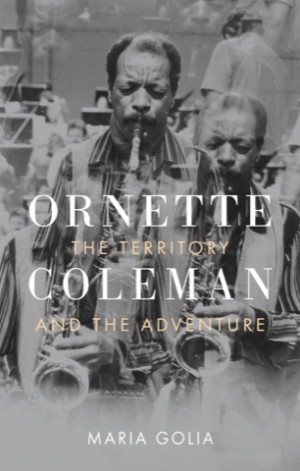
Hardcover. London, Reaktion Books, 1st, 2020, Book: Very Good, Dust Jacket: Very Good, Hardcover in a bright dust jacket, b&w photos. Ornette Coleman's career encompassed the glory years of jazz and the American avant-garde. Born in segregated Fort Worth, Texas, during the Great Depression, the African-American composer and musician was zeitgeist incarnate. Steeped in the Texas blues tradition, he and jazz grew up together, as the brassy blare of big band swing gave way to bebop--a faster music for a faster, postwar world. At the luminous dawn of the Space Age and New York's 1960s counterculture, Coleman gave voice to the moment. Lauded by some, maligned by many, he forged a breakaway art sometimes called "the new thing" or "free jazz." Featuring previously unpublished photographs of Coleman and his contemporaries, this book tells the compelling story of one of America's most adventurous musicians and the sound of a changing world. Clean copy.
Softcover. Cape Town, Planet Paul, 1st, 2016, Book: Very Good, Dust Jacket: None, Softcover, 318 pages including appendix. A celebration of the South African artist Paul du Toit who died of cancer in 2014. Clean, bright copy illustrated in color.
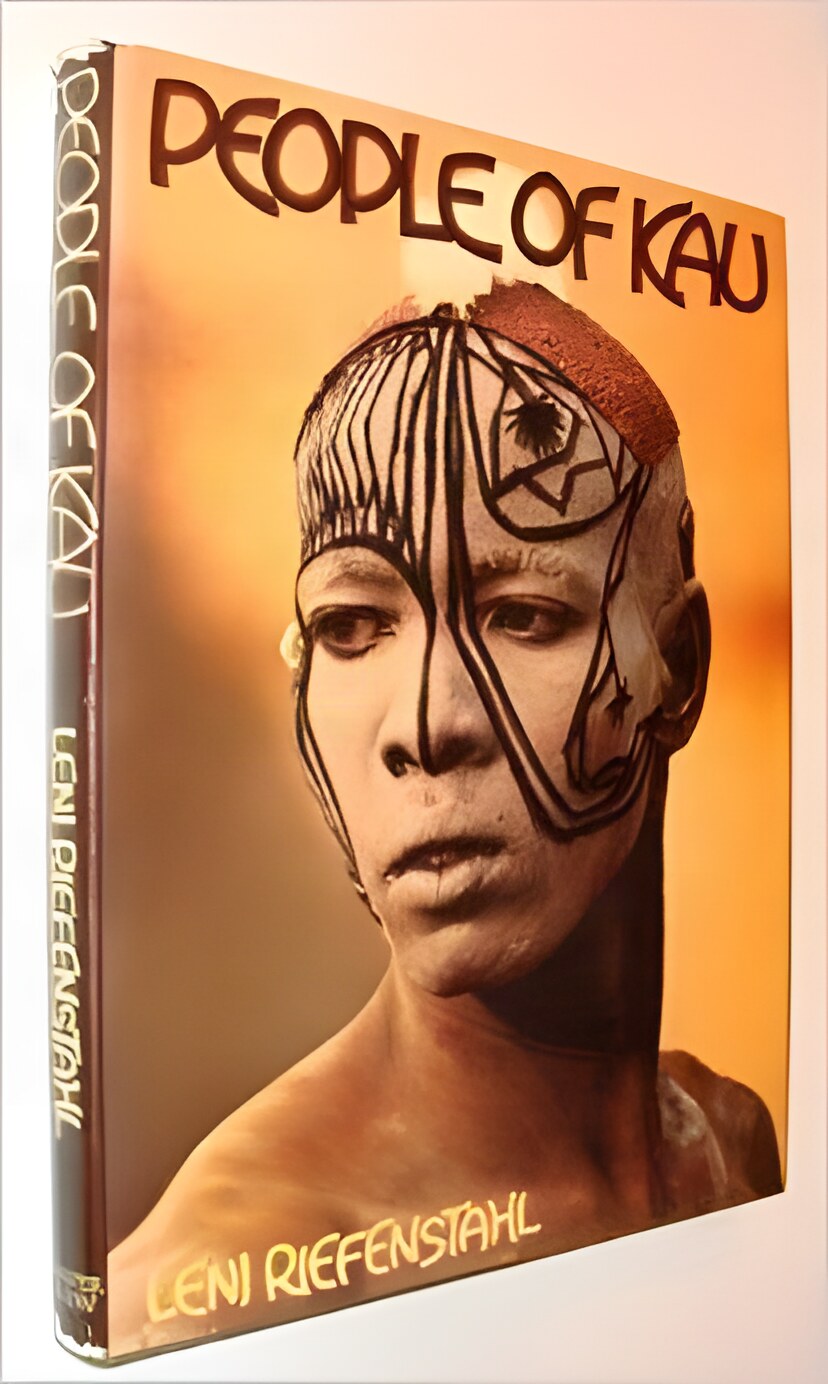
Hardcover. New York , HarperCollins, 1st us, 1976, Book: Very Good, Dust Jacket: Good, 224 pages. Hardcover. Color photographs. sun fading on spine, otherwise with only minor wear to dust jacket. Clean, unmarked copy. This book is Leni Riefenstahl's second opus on Sudan's Nuba People (Die Nuba von Kau, 1976, followed her first book The Last of the Nuba / Die Nuba, first German ed.,1973). It is a classic and laandmark in 20th century ethnographic photography. Translated from the German by J. Maxwell Brownjohn. DUE TO WEIGHT, This is a heavy and oversized book and will require extra shipping. International customers please ask for a shipping quote before purchasing.
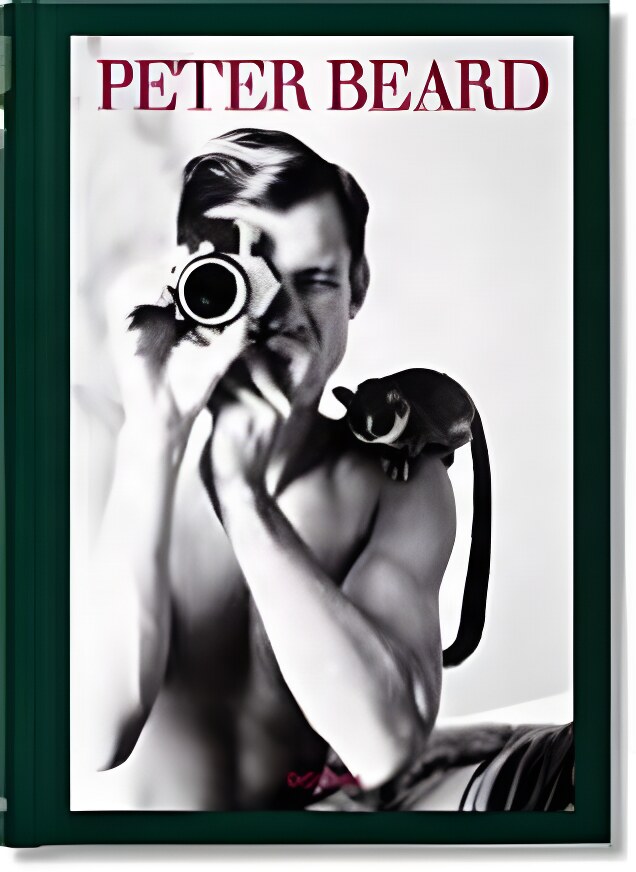
Hardcover. Koln GR, Taschen, 1st, 2008, Book: Very Good, Dust Jacket: None, Two large hardcovers in a slipcase, Volume 1: African wildlife photos, Volume II: biography. 494 pages. Text in English. French & German. As a photographer, collector, diarist and writer, U.S. born Peter Beard has fashioned his life into a work of art; the illustrated diaries he kept from a young age evolving into a serious career as an artist. He first visited Africa as a teenager and his documenting of the plight of starving animals, including elephants and rhinos, has continued to highlight the problems facing conservationists. This special edition is based on the original limited Collector's Edition which sold out on publication. NOTE: THIS LARGE HEAVY SET UNAVAILABLE FOR SHIPPING OUTSIDE THE U.S.
Hardcover. Taschen, 1st revised, 2013, Book: Very Good, Dust Jacket: None, Hardcover, 706 pages. Photographer, collector, diarist, and writer of books Peter Beard has fashioned his life into a work of art; the illustrated diaries he kept from a young age evolved into a serious career as an artist and earned him a central position in the international art world. He was painted by Francis Bacon and painted on by Salvador Dali, he made diaries with Andy Warhol and toured with Truman Capote and the Rolling Stones--all of whom are brought to life, literally and figuratively, in his work. As a fashion photographer, he took Vogue stars like Veruschka to Africa and brought new ones--most notably Iman--back to the U.S. with him. After spending time in Kenya and striking up a friendship with the author Isak Dinesen (Karen Blixen) in the early 1960s, Beard bought a piece of land near hers. He witnessed the dawn of Kenya's population explosion, which challenged finite resources and stressed animal populations--including the starving elephants of Tsavo dying by the tens of thousands in a wasteland of eaten trees. So he documented what he saw--with diaries, photographs, and collages. He went against the wind in publishing unique and sometimes shocking books of these works. The corpses were laid bare; the facts carefully recorded, sometimes in type and often by hand. Beard uses his photographs as a canvas onto which he superimposes multi-layered contact sheets, ephemera, found objects, newspaper clippings that are elaborately embellished with meticulous handwriting, old-master inspired drawings and often swaths of animal blood used as paint. This is a heavy and oversized book and will require extra shipping. International customers please ask for a shipping quote before purchasing.
Softcover. NY, Universe, 1st, 1998, Book: Very Good, Dust Jacket: None, Softcover, unpaginated (approx. 110 pages), illustrated in color throughout. A catalog for an exhibition organized by Peter T. Tunney which first ran in Milan in 1997. One-page Introduction by Beard, essay by Owen Edwards. Extremely scarce. Color illustrated wraps, like new condition.
Hardcover. Boston, Museum of Fine Arts, 1st, 2018, Book: Very Good, Dust Jacket: Very Good, Hardcover in a bright dust jacket. , 144 pages illustrated in color and b&w. During the global postcard craze that peaked around 1900 and continued for several decades thereafter, photographers in Africa grasped the opportunity to serve a lucrative market for images of the continent, both locally and worldwide. Their picture postcards now contribute to understanding political and cultural changes in Africa at the time, as the rise of the new medium coincided with the expansion and consolidation of colonial rule. They also provide a way to reconstruct the life and work of the photographers of European, African and other backgrounds who created these images-which often survive only in postcard form-and in some cases published them as well. The cards were produced for residents and travelers in Africa, as well as for buyers and collectors who had never set foot on the continent. Their depictions of colonial administrations and the exploitation of resources and peoples, as well as images inscribing tribal identities and racial classifications, often reflect the colonizers' worldview. Yet it is also possible to recover the authorship of some of the African women and men who participated in these photographic encounters. For instance, some cards show that members of Africa's elites recognized the power of photographic images to enhance their standing and present their own narratives.

 "John Gutmann: The Photographer at Workby: Sally Stein , Douglas R. Nickel, et al.")
 "John Gutmann: The Photographer at Workby: Sally Stein , Douglas R. Nickel, et al.")
 "Jurgen Schadebergby: Schadeberg, Jurgen")


 "L'Art Negreby: Schmalenbach, Werner")
 "Leni Riefenstahl-Five Lives: A Biography in Picturesby: Walk Ines; Leni Riefenstahl")
 "Longing for Darkness Kamante's Tales from Out of Africa. With original Photographs 1914-1931by: Beard (Editor), Peter; Kamante")


 "Margaret Bourke-White and the Dawn of Apartheidby: Lichtenstein, Alex")


 "Music: Black, White and Blue: A Sociological Survey of the Use and Misuse of Afro-American Musicby: Walton, Ortiz M.")
 "Nat King Cole by: Epstein, Daniel Mark")
 "Paul (Paul du Toit)by: JAMAL, ASHRAF ; STIELAU, ANNA ; LEIBBRANDT, TIM ; MCCARTHY, SARAH ; MCNULTY, CLAIRE")
 "Perpetuating the Culture: African Images of Mother and Childby: Gilbert Graham/Herbert Cole")
 "Peter Beard (2 Volume Set}by: Beard, Peter and Ruth Ansel")
 "Peter Beard: Beyond the End of the World - Photographs, diaries, notes, sketches, and collages; phantasmagoria, metamorphoses, natural horrors, and prehistoric memories: Last voices of a lost Africab")


