Hardcover. London, Cambridge University Press, 1st, 1969, Book: Very Good, Dust Jacket: Very Good, Hardcover in a bright dust jacket, 403 pages, 2 maps. In the belief that intensive study of selected local areas is an important development in scholarship on Africa, the author presents a micropolitical study of an important region of one of East Africa's Rew nations. Sukumaland, an area of Tanzania which contains one tenth of the country's population and its largest tribe, was chosen for the study. Before independence it exhibited the most organized nationalist political activity of any part of the country and developed the largest African-owned co-operative movement in all of Africa. In the final decade of the colonial era Sukumaland was the British administration's principal experimental area for attempts at radical transformation of indigenous political institutions and traditional agricultural techniques. After independence it became a critical testing ground for President Julius Nyerere's concepts of African socialism. Owner's signature on the front fly leaf, otherwise clean.
Hardcover. Cambridge MA, Harvard University Press, 1st, 1995, Book: Very Good, Dust Jacket: Very Good, Hardcover in a bright dust jacket, 145 pages. Gordimer examines the tension for a writer between life's experiences and narrative creations. She tries to unravel the mysterious process that breathes "real" life into fiction by exploring the writings of revolutionaries in South Africa and the works of Naguib Mahfouz, Chinua Achebe and Amos Oz. Ending on a personal note, Gordimer reveals her own experience of "writing her way out of" the confines of a dying colonialism.
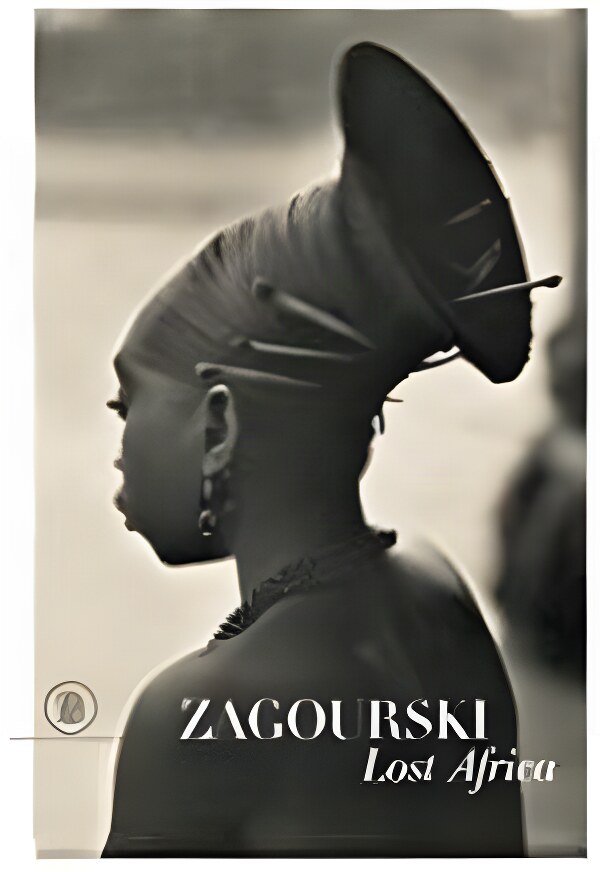
Hardcover. Milan, Skira, 1st, 2001, Book: Very Good, Dust Jacket: Very Good, Hardcover, 224 pages. An outstanding photographic monograph from the Twenties and Thirties brings back the memory of ways of living, ceremonies, adorned bodies of an Africa that be aptly defined as "lost". These extraordinary, unpublished pictures, taken with great technical skill and with a sense of great dignity of the people portrayed, constitute a monument to the African continent as it was. Kazimir Ostoja Zagourski (1880-1941) was born in Poland and moved to Congo in 1924. Zagourski was the first professional photographer to travel throughout the interior of Congo and visited also the neighboring countries, Tchad, Rwanda, Burundi, Uganda, Kenya, and South Africa. During his long stay in Africa he took hundred of pictures, 500 of which, divided in two extraordinary series on different tribes, build up to a unique historic and ethnographic survey. In a sense, Zagourski's work constitutes the first "non-European" look, devoid of the colonial overtones that characterize much contemporary work. His forays into the depths of the African continent took him into the most remote villages of Kuba, Mangbetu, Bwaka, Tutsi, Masai, etc. where he took unprecedented pictures of great ethnographic interest. he documented for example, ceremonies (initiation, circumcision, excision, masked dances, etc.), the great African creativity in body ornament (from scarification to hair dresses, from jewels to lip plugs), clothes and all utilitarian objects placed in their appropriate cultural context (musical instruments, shields, stools, knives, containers, etc.).

 "Toward 'Uhuru' in Tanzania. The Politics of Participation by: Maguire, G. Andrew")