Hardcover. NY, G.P. Putnam's Sons, 8th pr., 1928, Book: Good, Dust Jacket: None, Hardcover, orange cloth with gilt lettering, 294 pages. Illustrated with 66 photographs by the author, the famous explorer Martin Johnson, who later became the noted documentary filmmaker in Africa with his wife, Osa. A story of adventure and exploration in Africa, with much information about the extraordinary wildlife, including elephants, lions, rhinos, and gorillas. Fold-out map in rear. Minor edge wear, slight dust soiling, a bit of pitting to the cloth along spine edge. Inscription on first blank page otherwise clean.
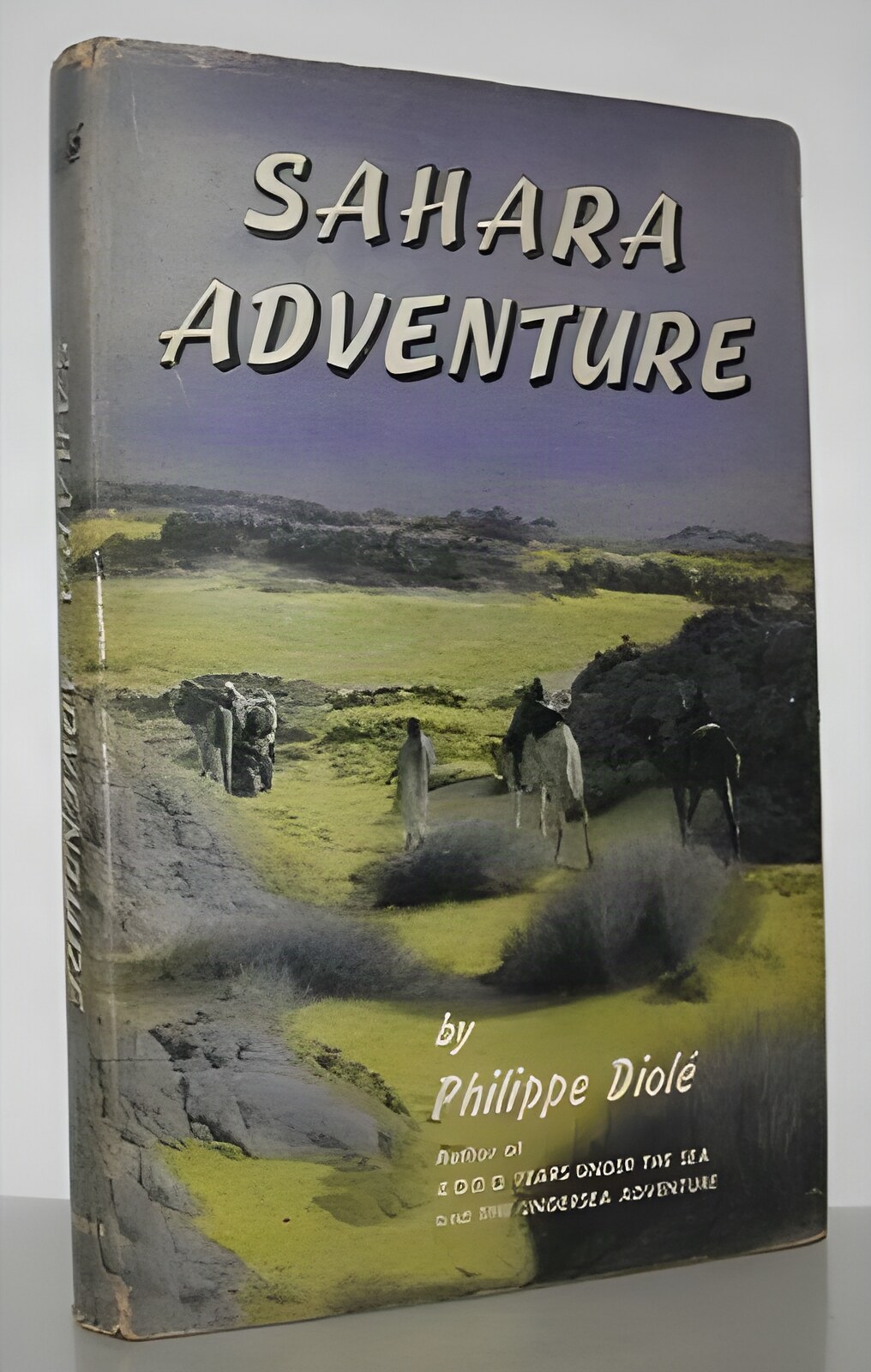
Hardcover. NY, Julian Messner, 1st, 1956, Book: Very Good, Dust Jacket: Good, Hardcover in a lightly worn, price-clipped dust jacket. Translated from the French by Katherine Woods. Engaging account of the author's camel trek across the untamed South Fezzen region of the Sahara Desert, encountering exotic vegetation and prehistoric cave paintings along the way. No markings.
Hardcover. Long Beach CA, Safari Press, 1st, 2010, Book: Very Good, Dust Jacket: Very Good, Hardcover in a bright dust jacket. 336 pages, color and b/w photographs, b/w sketches by the author. Brown boards, spine titled in gilt. Fine new copy in dust-wrapper. As the longtime editor of Safari magazine, Quimby had the chance to hunt on multiple continents for all the sundry game animals found there. In this book he tells us of hunts across North and South America; South Africa, Zimbabwe, Zambia, and other parts of Africa; Spain; Mongolia; and New Zealand. Also included is Quimby's successful quest to become one of the very few to take all ten of Arizona's big-game species. Several of his hunts were memorable for what went wrong. A horse panicked and fell off a series of ledges during a hunt for a mountain lion, which led to Quimby and a friend spending a cold New Year's Eve on a ridge without shelter or fire. Then, after he had waited thirty-nine years to draw an Arizona desert sheep tag, Bill is changing a tire on the first day of hunting when a bumper jack slips and breaks his arm. (He shot his ram and completed his "Big Ten" quest twelve days later by firing his rifle one-handed.) Some other stories include the time an Indian guide fell from a boat in the Northwest Territories and drowned on the author's caribou hunt; the time a storm on a Yukon moose hunt kept Quimby and his guide snowbound in a plywood shack for nine days. Still in publisher's shrinkwrap.
Hardcover. NY, Alfred A. Knopf, 1st US, 1954, Book: Very Good, Dust Jacket: None, Hardcover, decorative red cloth, 370 pages, no dust jacket, Abrahams was born in the slums of Johnannesburg and later moved to England. Autobiography of author's 22 years of struggle before he left South Africa. Name on front fly leaf, otherwise tight and clean copy.
Hardcover. NY, Norton, 1st, 2010, Book: Very Good, Dust Jacket: Very Good, 752 pages. Hardcover with dust jacket. A very clean, unmarked copy with only minor wear to dust jacket edges. A tight copy. Never before has Gordimer, awarded the Nobel Prize for Literature in 1991, published such a comprehensive collection of her nonfiction. Telling Times represents the full span of her works in that field-from the twilight of white rule in South Africa to the fight to overthrow the apartheid regime, and most recently, her role over the past seven years in confronting the contemporary phenomena of violence and the dangers of HIV. The range of this book is staggering, and the work in totality celebrates the lively perseverance of the life-loving individual in the face of political tumult, then the onslaught of a globalized world. The abiding passionate spirit that informs "A South African Childhood," a youthful autobiographical piece published in The New Yorker in 1954, can be found in each of the book's ninety-one pieces that span a period of fifty-five years.
Softcover. Madison WI, University of Wisconsin, reprint., 2005, Book: Very Good, Dust Jacket: None, Softcover in pictorial wraps, 244 pages. The Blind African Slave recounts the life of Jeffrey Brace (ne Boyrereau Brinch), who was born in West Africa around 1742. Captured by slave traders at the age of sixteen, Brace was transported to Barbados, where he experienced the shock and trauma of slave-breaking and was sold to a New England ship captain. After fighting as an enslaved sailor for two years in the Seven Years War, Brace was taken to New Haven, Connecticut, and sold into slavery. After several years in New England, Brace enlisted in the Continental Army in hopes of winning his manumission. After five years of military service, he was honorably discharged and was freed from slavery. As a free man, he chose in 1784 to move to Vermont, the first state to make slavery illegal. There, he met and married an African woman, bought a farm, and raised a family. Although literate, he was blind when he decided to publish his life story, which he narrated to a white antislavery lawyer, Benjamin Prentiss, who published it in 1810. Upon his death in 1827, Brace was a well-respected abolitionist. In this first new edition since 1810, Kari J. Winter provides a historical introduction, annotations, and original documents that verify and supplement our knowledge of Brace's life and times. Clean copy.
Hardcover. Evanston IL, Northwestern University Press, 1959-1963, Book: Very Good, Dust Jacket: None, Four hardcover volumes: Vol. 1, East Africa November 1889 to December 1890, 432 pages. Vol. 2, East Africa December 1890 to December 1891, 481 pages. Vol. 3, East Africa January 1892 to August 1892, 454 pages. Vol. 4, Nigeria 1894-5 and 1898, 444 pages. Black-and-white illustrations and maps; Bindings vary: Vols. 1, 3 and 4 are matching green cloth with gilt lettering on spine. Vol. 2 is terra-cotta cloth with a black clorh spine. Previous owner'e signature in 1 and #. Otherwise clean and tight set.
Hardcover. NY, Prentice Hall, 1st, 1991, Book: Very Good, Dust Jacket: Very Good, Hardcover in a bright, unclipped dust jacket. Describes the author's experiences traveling through Africa, meeting and talking with warriors, activists, and poachers. 334 pages, clean copy.
Hardcover. NY, William Morrow, 1st, 1961, Book: Very Good, Dust Jacket: None, Hardcover, light gray boards with a blue cloth spine, 268 pages. The author's passionate concern for Africa and for the human spirit is evident in this portrait of the "First People" of southern Africa, the Bushmen. Van der Post describes his desert travels, the splendid landscape and wildlife, and his encounters with the Bushman, an elusive culture. Drawings by Maurice Wilson. SIGNED BY VAN DER POST on the front fly leaf. No dust jacket, Clean copy.
Softcover. London, September Publishing, 1st, 2022, Book: Very Good, Dust Jacket: None, Softcover, 302 pages. A uniquely vivid and wickedly funny memoir of growing up ambitious, creative and sometimes hungry in Malawi, by the award-winning conceptual artist. Clean copy.
Hardcover. Boston, Houghton Mifflin, 1st, 2008, Book: Very Good, Dust Jacket: Very Good, Hardcover in a bright dust jacket, 386 pages. The first narrative history of the Civil War told by the very people it freed. Groundbreaking, compelling, and poignant, The Slaves' War delivers an unprecedented vision of the nation's bloodiest conflict. An acclaimed historian of nineteenth-century and African-American history, Andrew Ward gives us the first narrative of the Civil War told from the perspective of those whose destiny it decided. Woven together from hundreds of interviews, diaries, letters, and memoirs, here is the Civil War as seen from not only battlefields, capitals, and camps, but also slave quarters, kitchens, roadsides, farms, towns, and swamps. Speaking in a quintessentially American language of wit, candor, and biblical power, army cooks and launderers, runaways, teamsters, and gravediggers bring the war to vivid life. From slaves' theories about the causes of the war to their frank assessments of such major figures as Lincoln, Davis, Lee, and Grant; from their searing memories of the carnage of battle to their often startling attitudes toward masters and liberators alike; and from their initial jubilation at the Yankee invasion of the slave South to the crushing disappointment of freedom's promise unfulfilled, The Slaves' War is a transformative and engrossing vision of America's Second Revolution. Clean copy.
Hardcover. New York, American Subscription Publishing House, 1st, 1859, Book: Very Good, Dust Jacket: None, 358 pages. Black & white illustrations. Title in gilt on spine. Fading to spine, and along top 1" of front cover.
Hardcover. New York, Charles Scribner's Sons, First Edition, 1961, Book: Very Good, Dust Jacket: Very Good, 221 pages. Hardcover. Brown cloth covers with gilt decoration to cover, gilt titles to spine. Full page, full color & bw illustrations throughout. Clean, unmarked text. A nice copy.
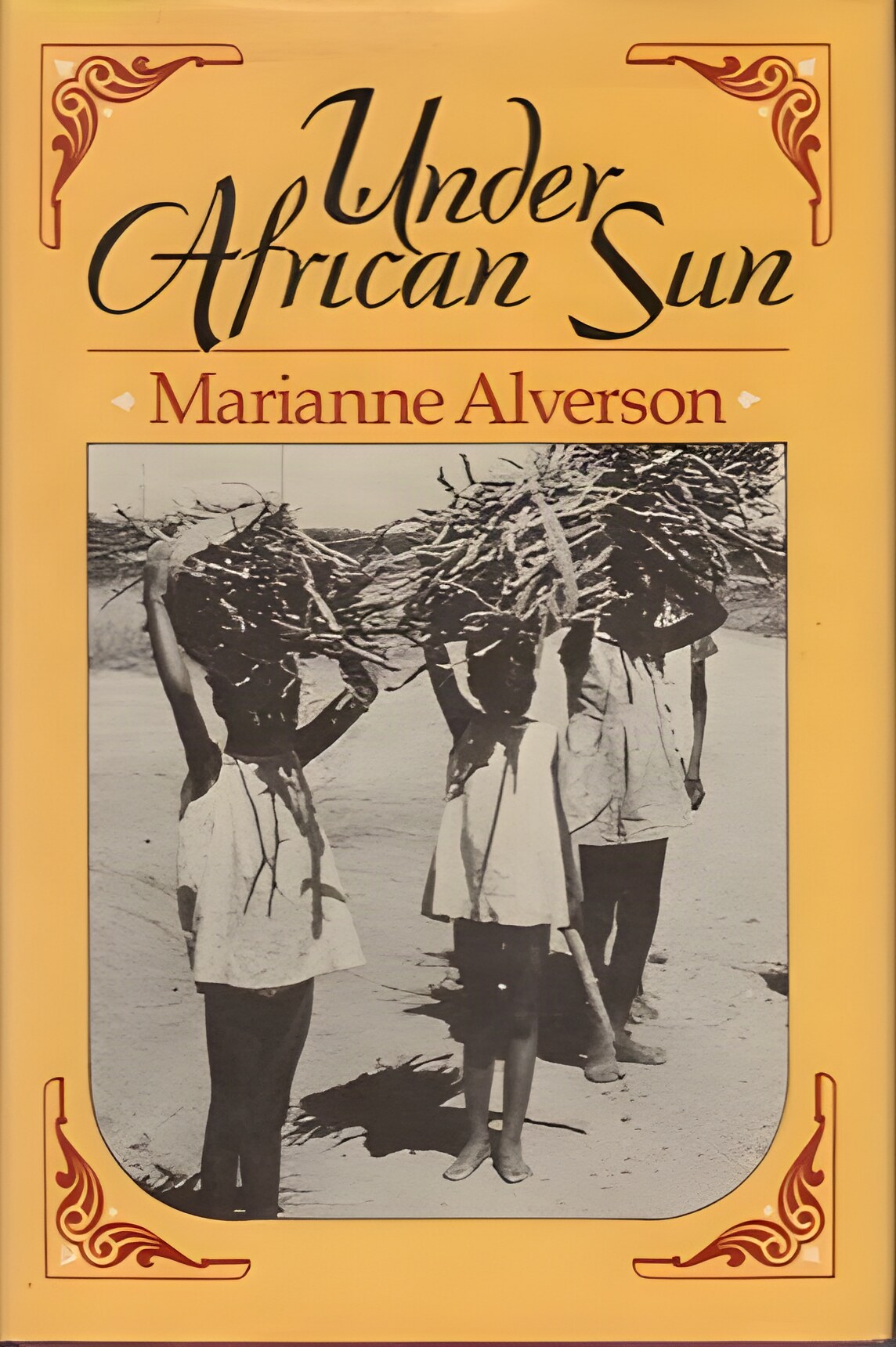
Hardcover. Chicago, University of Chicago Press, 1st, 1987, Book: Very Good, Dust Jacket: Very Good, Hardcover in a lightly sunned dust jacket, 233 pages, b&w illustrations. Memoir of the author's experience living in a Botswana village. Glossary and A Note on the Setswana Language at back. Clean copy.
Softcover. Seattle, University of Washington Press, reprint, 1993, Book: Very Good, Dust Jacket: None, Softcover, 255 pages, b&w photos. A Peace Corps worker sent to the Sakel to establish a fish-farming project, the author lived with a family in a tiny Sengalese village near the Mauretania border. We share her initial feelings of dislocation as she contends not only with a primitive lifestyle, lack of creature comforts, and the overt sexism of the Moslem men she supervises, but also with her burgeoning relationships with the women in the little compound who become as much her family as her relatives in America. In a guileless narrative filled with affection and anger, Lowerre tells of the ill health and bureaucratic failings that beset her; she acknowledges the Pulaar people's love and good humor, and offers an unprettified closeup of daily life in an African village. Clean copy.
Hardcover. London, Peter Owen Publishers, 1st UK , 1972, Book: Very Good, Dust Jacket: Good, Hardcover, 379 pages. 8 pages of b&w photographs. Gilt titles on spine. Edge wear to top edge of cover and dust jacket. Otherwise clean, tight copy.

 "Safari: A Saga of the African Blue by: Johnson, Martin")
 "Tell Freedom: Memories Of Africaby: Abrahams, Peter")
 "Telling Times: Writing and Living, 1954-2008by: Gordimer, Nadine")
 "The Blind African Slave: Or Memoirs of Boyrereau Brinch, Nicknamed Jeffrey Brace by: Jeffrey Brace; Editor Kari J. Winter; Contributor Benjamin F. Prentiss")
 "The Diaries of Lord Lugard, 4 Volume Set by: Lord Lugard/Margery Perham and Mary Bull (edited by)")
 "The Frozen Leopard: Hunting My Dark Heart in Africaby: Aaron Latham")




 "Tunisia - A Personal View of a Timeless Landby: Anthony, John")



 "Without Stoppingby: Bowles, Paul")