Softcover. Northampton MA, White Star Press, 1st, 1995, Book: Very Good, Dust Jacket: None, Softcover, 86 pages, exhibition catalog. Full of b&w plates. . Catalogue of works from the Charles Derby collection of African art. 136 pieces are pictured and described in brief. With an introduction by Derby, an exhibition checklist, and addendum.
Hardcover. Germany, Hatje Cantz, 1st, 2006, Book: Very Good, Dust Jacket: None, Hardcover, 80 pages, photos in color. Minor shelf-wear to boards, else a clean, tight copy. This book documents the two most recent works by the critically acclaimed British artist and filmmaker, Isaac Julien, both of which continue his investigation of issues of race and global politics. True North, shot in the spectacular landscapes of Iceland and Northern Sweden, is conceived around the expedition writings of the African-American explorer Matthew Henson, one of the key members of Robert E. Peary's 1909 Arctic expedition, and arguably the first person to reach the North Pole. True North's diametric counterpart, Fantome Afrique, weaves cinematic and architectural references through the rich imagery of urban Ouagadougou, Africa's cinematic center, and the arid spaces of rural Burkina Faso. The film is punctuated by archival footage from early colonial expeditions and landmark moments in African history.
Hardcover. Germany, Hatje Cantz, 1st, 2006, Book: Very Good, Dust Jacket: None, Hardcover, 80 pages, photos in color. Minor shelf-wear to boards, else a clean, tight copy. This book documents the two most recent works by the critically acclaimed British artist and filmmaker, Isaac Julien, both of which continue his investigation of issues of race and global politics. True North, shot in the spectacular landscapes of Iceland and Northern Sweden, is conceived around the expedition writings of the African-American explorer Matthew Henson, one of the key members of Robert E. Peary's 1909 Arctic expedition, and arguably the first person to reach the North Pole. True North's diametric counterpart, Fantome Afrique, weaves cinematic and architectural references through the rich imagery of urban Ouagadougou, Africa's cinematic center, and the arid spaces of rural Burkina Faso. The film is punctuated by archival footage from early colonial expeditions and landmark moments in African history.
Softcover. Chapel Hill, University of North Carolina Press, 1st pbk, 2002, Book: Very Good, Dust Jacket: None, Softcover, 411 pages, b&w illustrations. Tracing the erosion of white elite paternalism in Jim Crow Virginia, Douglas Smith reveals a surprising fluidity in southern racial politics in the decades between World War I and the Supreme Court's 1954 Brown v. Board of Education decision. Smith draws on official records, private correspondence, and letters to newspapers from otherwise anonymous Virginians to capture a wide and varied range of black and white voices. African Americans emerge as central characters in the narrative, as Smith chronicles their efforts to obtain access to public schools and libraries, protection under the law, and the equitable distribution of municipal resources. This acceleration of black resistance to white supremacy in the years before World War II precipitated a crisis of confidence among white Virginians, who, despite their overwhelming electoral dominance, felt increasingly insecure about their ability to manage the color line on their own terms. Exploring the everyday power struggles that accompanied the erosion of white authority in the political, economic, and educational arenas, Smith uncovers the seeds of white Virginians' resistance to civil rights activism in the second half of the twentieth century. Light marking to 10 pages, otherwise clean, very good.
Hardcover. London, Bloomsbury Publishing, 1st, 2024, Book: Very Good, Dust Jacket: None, Hardcover in pictorial cloth, 301 pages, color illustrations. Across the Mediterranean, one delicious cuisine gives way to the next. From Spain and Italy, through Greece and Turkey and down to North Africa, the region is rich with deeply delicious food. In Mediterra, renowned chef and author Ben Tish gives the tour of a lifetime. With seven-spice falafel from Lebanon, pork belly gyros from Greece, classic tiramisu from Italy, and grilled smoky sardines from Crete, the full flavors of the region are on glorious display for recipes that work across diets and seasons. Clean, bright copy.
Hardcover. MI, Northwestern University Press, 1st, 1968, Book: Very Good, Dust Jacket: None, Hardcover, pictorial binding, 128 pages, 47 maps, 60 b&w illustrations. Mombasa is the largest and most important port on the East African coast. A brief history of it's European colonizers is followed by a study of the port city and how it empowered the economy in the 1960s. Clean copy.
Hardcover. New York, Alfred Knopf, 1st, 1997, Book: Very Good, Dust Jacket: Very Good, 462 pages. Hardcover with dust jacket. Clean, tight copy with minor wear to covers and edges. A modern classic of travel literature: "Ostensibly a quest for Mokele-mbembe, the Congo dinosaur , this story of travel through the jungles and swamp forests of the northern Congo is Tolstoyan in its depth, scope and range of characters, and as vivid as Nabokov in its image and detail. A portrait of a country, it is alive with natural history: eagles and parrots, hornbills and sunbirds, forest cobras and crocodiles, gorillas and elephants. A search for the meaning of sorcery, the purpose of religion (and a celebration of the comfort and mysteries of science), it is also an adventure told with great narrative force. Of course there is a darker side to the Congo, and that too is recorded here." Kazuo Ishiguro called this a "unique messy masterpiece."
Hardcover. Boston, Little, Brown and Company, 1st, 1947, Book: Very Good, Dust Jacket: None, Hardcover, blue cloth with gilt lettering on spine. Volume VI in The History of United States Naval Operations in World War II. 297 pages, illustrated with maps (one fold-out) and b&w photos. This volume covers the operations of the United States Navy in North African waters, both on the Atlantic coast and in the Mediterranean, from the beginning of World War II through the capture of Pantelleria in June 1943. More than half the volume is devoted to the capture of bases in French Morocco, which was an all-American operation and in many respects one of the most remarkable of the war. Gilt on spine with light fading, lacks dust jacket, otherwise clean, tight copy.
Hardcover. London, England, Karl Baedeker, 2nd Edition, REvised and Augmented, 1894, Book: Good, Dust Jacket: None, 444 pages. Hardcover (flexible cloth). "With 17 Maps, 44 Plans, and a Panorama of Jerusalem". B/w and color illustrated maps, some fold out. Red fabric cover boards with gilt title on spine (faded) and front cover board. Banded design blind stamped on boards and spine. Fabric ribbon bookmark attached at top of spine. Age wear to covers (see images). Former library book with expected labels, marks, stamps and other identifying characteristics (see images). Decorated marbled edges. Front cover has bump to top right corner (see image). Charming, old, pocket-sized travel book that will tell you everything you ever wanted to know about turn-of-the-century Palestine and Syria.
Softcover. Sheffield UK, Vertebrate Publishing Ltd , 1st, 2019, Book: Very Good, Dust Jacket: None, Softcover, 425 pages, color photos. In 1965 Tony Howard made the first British ascent of Norway's Troll Wall. He went on to found Troll Climbing Equipment but never stopped exploring. Quest into the Unknown, his autobiography, covers his extensive travels in North Africa, the Middle East, Scandinavia, Canada and much more. Clean copy.
Hardcover. Long Beach CA, Safari Press, 1st, 2010, Book: Very Good, Dust Jacket: Very Good, Hardcover in a bright dust jacket. 336 pages, color and b/w photographs, b/w sketches by the author. Brown boards, spine titled in gilt. Fine new copy in dust-wrapper. As the longtime editor of Safari magazine, Quimby had the chance to hunt on multiple continents for all the sundry game animals found there. In this book he tells us of hunts across North and South America; South Africa, Zimbabwe, Zambia, and other parts of Africa; Spain; Mongolia; and New Zealand. Also included is Quimby's successful quest to become one of the very few to take all ten of Arizona's big-game species. Several of his hunts were memorable for what went wrong. A horse panicked and fell off a series of ledges during a hunt for a mountain lion, which led to Quimby and a friend spending a cold New Year's Eve on a ridge without shelter or fire. Then, after he had waited thirty-nine years to draw an Arizona desert sheep tag, Bill is changing a tire on the first day of hunting when a bumper jack slips and breaks his arm. (He shot his ram and completed his "Big Ten" quest twelve days later by firing his rifle one-handed.) Some other stories include the time an Indian guide fell from a boat in the Northwest Territories and drowned on the author's caribou hunt; the time a storm on a Yukon moose hunt kept Quimby and his guide snowbound in a plywood shack for nine days. Still in publisher's shrinkwrap.
Hardcover. Evanston IL, Northwestern University Press, 1959-1963, Book: Very Good, Dust Jacket: None, Four hardcover volumes: Vol. 1, East Africa November 1889 to December 1890, 432 pages. Vol. 2, East Africa December 1890 to December 1891, 481 pages. Vol. 3, East Africa January 1892 to August 1892, 454 pages. Vol. 4, Nigeria 1894-5 and 1898, 444 pages. Black-and-white illustrations and maps; Bindings vary: Vols. 1, 3 and 4 are matching green cloth with gilt lettering on spine. Vol. 2 is terra-cotta cloth with a black clorh spine. Previous owner'e signature in 1 and #. Otherwise clean and tight set.
Hardcover. Boston, Little, Brown and Company, 1st US, 1943, Book: Very Good, Dust Jacket: None, Hardcover, red cloth covers lettered in gold with black letterbox, 322 pages. Contains speeches throughout 1942. This year was a low point of the war, full of setbacks and disappointments across the globe for the British. Throughout the year Churchill's speeches conveyed sober, resolved, and eloquent defiance - with of course an occasional sparkle of Churchillian wit, even in the dark hours of the war. The title of this volume comes from Churchill's 10 November 1942 speech at the Lord Mayor's Day Luncheon in London at a time when fortune finally favored the British with victories in North Africa: "The Germans have received back again that measure of fire and steel which they have so often meted out to others. Now this is not the end. It is not even the beginning of the end. But it is, perhaps, the end of the beginning." Light marking to front endpapers.
Softcover. NY, Red Sea Press, 1st, 2018, Book: Very Good, Dust Jacket: None, Softcover, 321 pages. This book tells the story about an African Jewish community known as the Beta Israel that used to live in the northern part of Ethiopia. They were repatriated to Israel in many waves with the aid of the Israeli government and the Jewish Diaspora. The Beta Israel had struggled and faced hardships in order to live out their destiny which was to migrate to the Promised Land. However, their struggle did not stop there. They have had to struggle again to overcome unexpected and new challenges after their long anticipated migration. The book is organized around these two issues. The early chapters of the book describe the quest for Beta Israel identity within Ethiopia and explore their origins. The discussion on this topic is based on mainly textual analyses of previous works on the Beta Israel. It outlines their history and explores their origins. It examines whether the different types of oppressive Ethiopian regimes have contributed to their decision to leave for the Promised Land. It sketches the socio-economic background of the twentieth-century Aliyah, and briefly analyses the impact of the political upheavals in Ethiopia between 1974 and 1991 when the Derg, the post Haile Selassie military regime, was in power.
Hardcover. London, John Murray, 1st, 1966, Book: Very Good, Dust Jacket: Very Good, Hardcover in a bright dust jacket, 227 pages. "In North Africa, between the Sahara and the Mediterranean, [are] four...States...Libya, Morocco, Tunisia, and Algeria. Together they form what the Arabs call 'The Maghrib', and Sir Geoffrey Furlonge calls 'The Lands of Barbary'." Black and white photographic plates.
Softcover. Silver Spring MD, Picture This Press, 1st, 2018, Book: Very Good, Dust Jacket: None, Softcover, 140 pages in color. Edited and restored by the artist's grandson, Brian E. Collins, with an introduction by Eisner Award-winning author Frank M. Young, and an Afterword by comics columnist Ed Catto. Lost Art Books launches the initial volume in a new series devoted to under-appreciated illustrator and comic artist Kreigh Collins (1908-74), collecting for the first time his syndicated Sunday strip, Mitzi McCoy, in its entirety. Kreigh Collins (1908-74) had a wanderlust, fueled by an itinerant childhood, that led to a lifetime of adventures, whether it was leaving his humble midwestern roots to study the masters in the Louvre and hone his craft painting on the banks of the Seine or getting knifed in Morocco while boating and painting his way through North Africa. But equally strong was the draw of his adopted home in Michigan, which is where he launched and set his first syndicated newspaper strip, Mitzi McCoy, in 1948. It didn't take long, though, for wanderlust to strike again, rendering Mitzi but a precursor to Collins' eventual 20-year run on the picaresque adventure comic, Kevin the Bold. Lost Art Books celebrates these beautiful beginnings with this first-ever complete collection of Collins' Mitzi McCoy. Drawn as well as scripted by Collins, Mitzi McCoy showcased the artist's skill as an illustrator and storyteller. His picturesque landscapes, lovely character designs, and thrilling action sequences brimmed with detail and charm, and the strip's ensemble cast rotated in and out of the spotlight, taking turns as protagonists in the dozen story arcs collected in this volume.
Hardcover. Boston, Little Brown, 1st, 1960, Hardcover, 336 pages, b&w drawings by Lea. Dust jacket with light edgewear, chipping. Novel about Hank Spurling, a Marine hero of the war in the Pacific, who returned to the Cloudrock Mountains in Wyoming. In the early days of World War II, Lea became a war correspondent for Life magazine, executing paintings of action in the North Atlantic, the South Pacific, China, North Africa, and Europe. Lea's career thereafter involved both painting and writing, on a variety of subjects but generally reflective of his roots in the Southwest. Clean copy.
Hardcover. London, Faber & Faber, 1st, 1991, Book: Very Good, Dust Jacket: Very Good, Hardcover in a bright, unclipped dust jacket, 281 pages. South African mystery featuring Afrikaner Tromp Kramer and Bantu Sergeant Zondi, set in a small town in northern Zululand in 1962. This book is a prequel to the other Kramer and Zondi mysteries - the story of how they first met each other.
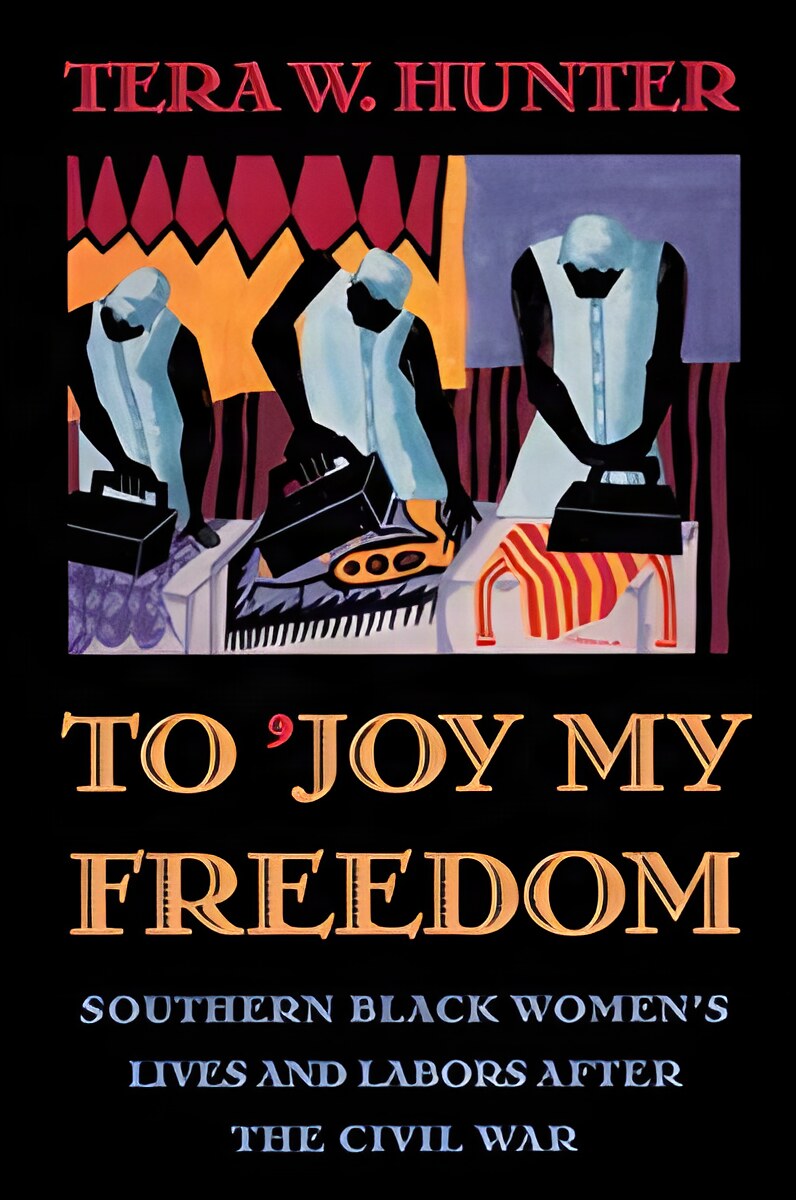
Softcover. Cambridge MA, Harvard University Press, reprint, 1998, Book: Very Good, Dust Jacket: None, Softcover, 311 pages. As the Civil War drew to a close, newly emancipated black women workers made their way to Atlanta-the economic hub of the newly emerging urban and industrial south-in order to build an independent and free life on the rubble of their enslaved past. In an original and dramatic work of scholarship, Tera Hunter traces their lives in the postbellum era and reveals the centrality of their labors to the African-American struggle for freedom and justice. Household laborers and washerwomen were constrained by their employers' domestic worlds but constructed their own world of work, play, negotiation, resistance, and community organization. Hunter follows African-American working women from their newfound optimism and hope at the end of the Civil War to their struggles as free domestic laborers in the homes of their former masters. We witness their drive as they build neighborhoods and networks and their energy as they enjoy leisure hours in dance halls and clubs. We learn of their militance and the way they resisted efforts to keep them economically depressed and medically victimized. Finally, we understand the despair and defeat provoked by Jim Crow laws and segregation and how they spurred large numbers of black laboring women to migrate north. Clean copy.
Hardcover. NY, Knopf, 1st US, 1992, Book: Very Good, Dust Jacket: Very Good, Hardcover, 287 pages, b&w illustrations. From the construction of the Berlin Wall through every major conflict of his adult lifetime up to the Syrian Civil War, photographer Don McCullin has left a trail of iconic images. Unreasonable Behavior traces the life and career of one of the top photojournalists of the twentieth century and beyond. Born in London in 1935, McCullin worked as a photographer's assistant in the RAF during the Suez Crisis. His early association with a North London gang led to the first publication of his pictures. As an overseas correspondent for the Sunday Times Magazine beginning in 1966, McCullin soon became a new kind of hero, taking a generation of readers beyond the insularity of post-war domestic life through the lens of his Nikon camera. He captured the realities of war in Biafra, the Congo, Vietnam, Cambodia, and the human tragedy of famine and cholera on the Bangladesh border and later, the AIDs epidemic in Sub-Saharan Africa. McCullin now spends his days in a Somerset village, where he photographs the landscape and arranges still-lifes. Harrowing and poignant, Unreasonable Behavior is an extraordinary account of a witness who triumphed over the memories that could have destroyed him.
Softcover. Philadelphia, University of Pennsylvania Press, 2nd pr., 2001, Book: Very Good, Dust Jacket: None, Softcover, 211 pages. Exposes the fact that slavery remains widespread in Sudan and is not grounded in the current civil war but on old prejudices between the Muslim north and the Christian south. A shocking account of Sudanese slavery.
Hardcover. London, Quiller Press, 1st, 1989, Book: Very Good, Dust Jacket: Very Good, Hardcover in a bright, unclipped dust jacket, 432 pages. Profusely illustrated in color and b&w, folding map in rear pocket. The story of Lake Rudolph/Turkana, and its exploration by numerous expeditions of explorers from the earliest days. The author has spent his life in Kenya and roamed the Northern Frontier District for over 35 years. Clean copy.
Hardcover. NY, Atlantic Monthly Press, 1st, 2020, Book: Very Good, Dust Jacket: Very Good, Hardcover in a bright, unclipped dust jacket, 426 pages, illustrations. From Pulitzer Prize-winner David Zucchino comes a searing account of the Wilmington riot and coup of 1898, an extraordinary event unknown to most Americans. By the 1890s, Wilmington was North Carolina's largest city and a shining example of a mixed-race community. It was a bustling port city with a burgeoning African American middle class and a Fusionist government of Republicans and Populists that included black aldermen, police officers and magistrates. There were successful black-owned businesses and an African American newspaper, The Record. But across the state-and the South--white supremacist Democrats were working to reverse the advances made by former slaves and their progeny. In 1898, in response to a speech calling for white men to rise to the defense of Southern womanhood against the supposed threat of black predators, Alexander Manly, the outspoken young Record editor, wrote that some relationships between black men and white women were consensual. His editorial ignited outrage across the South, with calls to lynch Manly. Clean copy.


 "Isaac Julien: True North Fantome Afriqueby: Anthony Appiah, Eveline Bernasconi, Lisa Bloom, Mark Nash, Cristina Albu, Isaac Julien, Veit Gorner (Foreword)")
![Isaac Julien: True North Fantome Afriqueby: Appiah, Anthony; Bernasconi, Eveline; Bloom, Lisa; Nash, Mark; Albu, Cristina; Julien, Isaac; Gorner, Veit [Foreword]](javascript:largeIMTop('https://www.browsingisarousing.com/shop/images/Isaac-Julien-True-North-Fantome-Afrique_by_Appiah-Anthony-Bernasconi-Eveline-Bloom-Lisa-Nash-Mark-Al350324-408463.jpg','https://www.browsingisarousing.com/shop/images/Isaac-Julien-True-North-Fantome-Afrique_by_Appiah-Anthony-Bernasconi-Eveline-Bloom-Lisa-Nash-Mark-Al350324-408463.jpg',0,'350324',0,'') "Isaac Julien: True North Fantome Afriqueby: Appiah, Anthony; Bernasconi, Eveline; Bloom, Lisa; Nash, Mark; Albu, Cristina; Julien, Isaac; Gorner, Veit [Foreword]")



 "No Mercy: A Journey to the Heart of the Congoby: O'Hanlon, Redmond")
 "Operations in North African Waters: October 1942-June 1943 - (History of the United States Naval Operations in World War II; Vol. 2)by: Morison, Samuel Eliot")


 "Quest into the Unknown: My life as a climbing nomadby: Tony Howard")


 "The Diaries of Lord Lugard, 4 Volume Set by: Lord Lugard/Margery Perham and Mary Bull (edited by)")


 "The Lands of Barbaryby: Furlonge, Geoffrey")
 "The Lost Art of Kreigh Collins Volume 1: The Complete Mitzi McCoyby: Collins, Kreigh")

 "The Song Dogby: McClure, James")
 "Unreasonable Behaviour: An Autobiographyby: McCullin with Lewis Chester, Don")
 "War and Slavery in Sudan The Ethnography of Political Violence by: Jok, Jok Madut")
 "Where Giants Trod: The Saga of Kenya's Desert Lakeby: Brown, Monty")