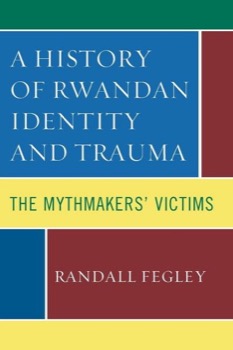
Softcover. Lanham MD, Lexington Books, 1st, 2016, Book: Very Good, Dust Jacket: None, Softcover, 167 pages. Introduces basic information on Rwanda and how it has been viewed by the outside world. Chapter One describes early Rwanda's political and cultural development, traditional narratives, group migrations, the effects of German and later Belgian colonialism, and the introduction of Christianity. It concludes with a look at how this early history has been interpreted and reinterpreted. The second chapter discusses the end of Tutsi dominance and the 1959 Hutu Revolution. It details Hutu Power ideology, Belgian domestic politics, early acts of genocide, refugee movements, and economic and political stagnation. The text documents the development of the Rwandan Patriotic Front, its 1990 invasion, and the Arusha peace process. An account of the 1994 genocide follows. Drawing on numerous sources and fieldwork, it discusses this east central African nation's deeply seated cleavages, atrocious recent past, and the internal and external myths that have directed its history and national life. Clean copy.
Hardcover. London, The Hogarth Press, 1st, 1931, Book: Very Good, Dust Jacket: None, Hardcover reddish cloth, 173 pages. A classic farsighted expose of the destructive effects of colonialism on the indigenous social fabric in Kenya. Remains of dust jacket laid in. There are some handwritten notes on first and last blank pages of book, otherwise clean.
Hardcover. London/Colorado, Heinemann/Westview press, 1st, 1977, Book: Very Good, Dust Jacket: None, 310 pages. Yellow cloth, gilt lettering to spine. Lacks dust jacket. Previous owner's signature on front end paper. Else a clean, tight copy.
Softcover. NY, Cambridge University Press, 1st pbk, 2009, Book: Very Good, Dust Jacket: None, Softcover, 309 pages. An Empire of Facts presents a fascinating account of the formation of French conceptions of Islam in France's largest and most important colony. During the period from 1870 to 1914, travelers, bureaucrats, scholars, and writers formed influential and long-lasting misconceptions about Islam that determined the imperial cultural politics of Algeria and its interactions with republican France. Narratives of Islamic mysticism, rituals, gender relations, and sensational crimes brought unfamiliar cultural forms and practices to popular attention in France, but also constructed Algerian Muslims as objects for colonial intervention. Personal lives and interactions between Algerian and French men and women inflected these texts, determining their style, content, and consequences. Drawing on sources in Arabic and French, this book places such personal moments at the heart of the production of colonial knowledge, emphasizing the indeterminacy of ethnography, and its political context in the unfolding of France's empire and its relations with Muslim North Africa. Clean copy.
Hardcover. NY, George Braziller , 1st, 1987, Book: Very Good, Dust Jacket: Very Good, Hardcover in a bright, unclipped dust jacket. A history of apartheid traces the institution back to its roots in the 17th century, and shows how it developed along with Afrikaner nationalism, as well as the response from the Africans.
Hardcover. Princeton NJ, Princeton University Press, 1st, 2011, Book: Very Good, Dust Jacket: Very Good, Hardcover in a bright dust jacket. Small ink notation on front fly leaf otherwise clean. 320 pages with extensive notes and index. This book tracks the dramatic outcomes of the federal government's growing involvement in higher education between World War I and the 1970s, and the conservative backlash against that involvement from the 1980s onward. Using cutting-edge analysis, Christopher Loss recovers higher education's central importance to the larger social and political history of the United States in the twentieth century, and chronicles its transformation into a key mediating institution between citizens and the state. Framed around the three major federal higher education policies of the twentieth century--the 1944 GI Bill, the 1958 National Defense Education Act, and the 1965 Higher Education Act--the book charts the federal government's various efforts to deploy education to ready citizens for the national, bureaucratized, and increasingly global world in which they lived. Loss details the myriad ways in which academic leaders and students shaped, and were shaped by, the state's shifting political agenda as it moved from a preoccupation with economic security during the Great Depression, to national security during World War II and the Cold War, to securing the rights of African Americans, women, and other previously marginalized groups during the 1960s and '70s. Along the way, Loss reappraises the origins of higher education's current-day diversity regime, the growth of identity group politics, and the privatization of citizenship at the close of the twentieth century. At a time when people's faith in government and higher education is being sorely tested, this book sheds new light on the close relations between American higher education and politics.
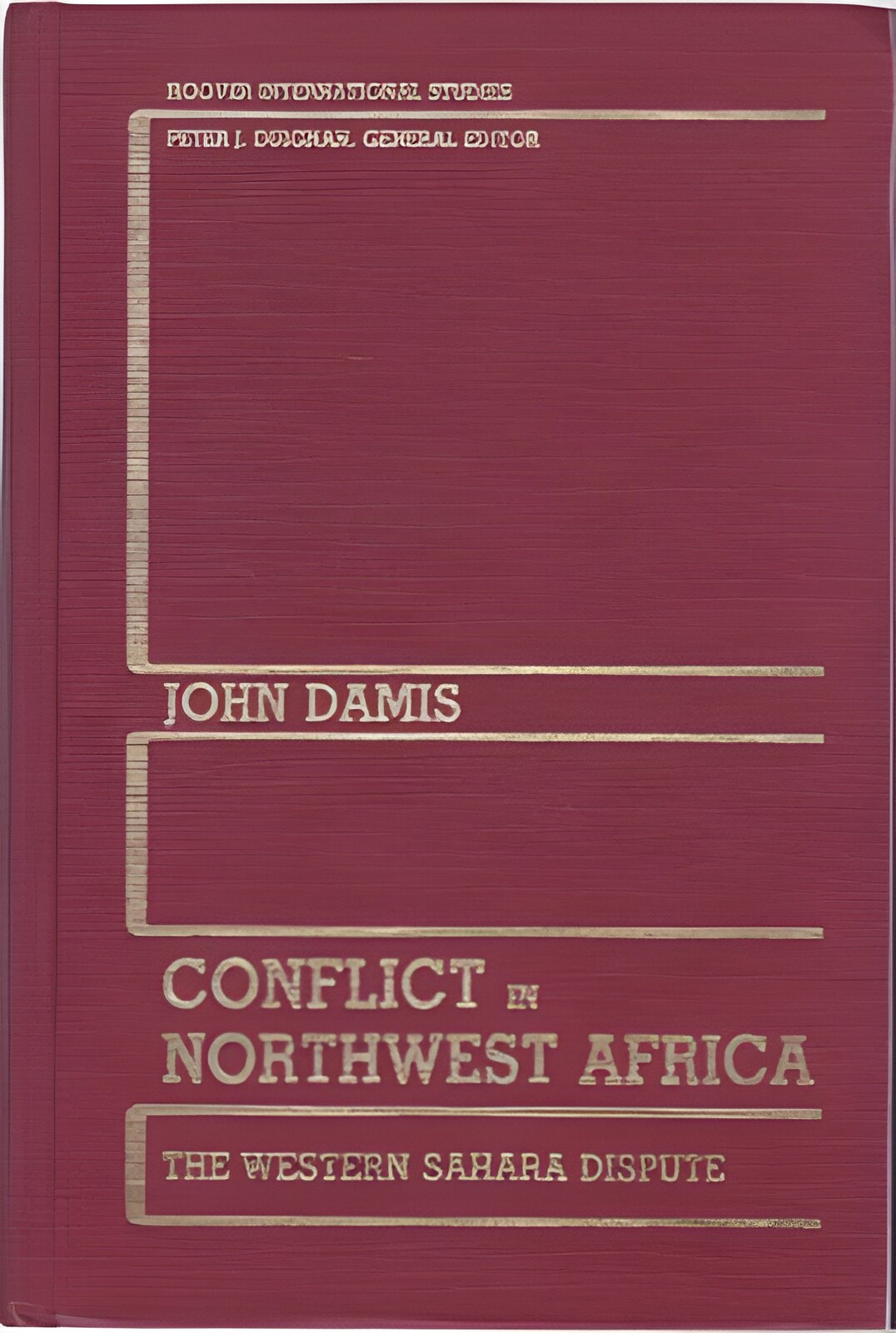
Hardcover. Stanford CA, Hoover Institution Press, 1st, 1983, Book: Very Good, Dust Jacket: None, Hardcover, maroon cloth with gilt lettering. 196 pages. illustrated with several maps. A study of the conflict between Morocco and Algeria over tribal areas in the Sahara. Clean copy.
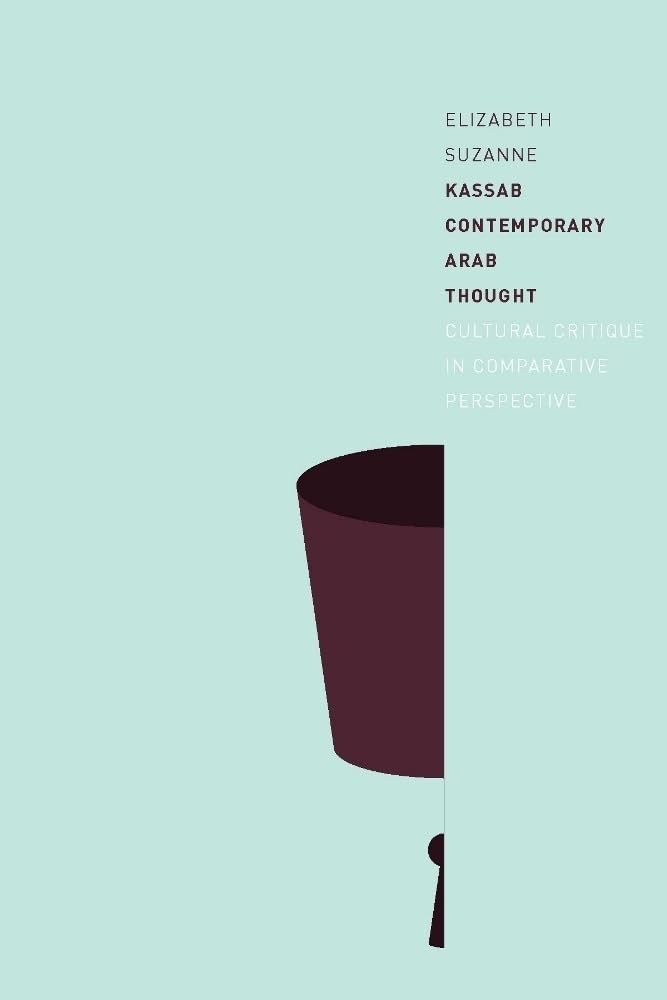
Softcover. NY, Columbia University Press, 2nd pr., 2009, Book: Very Good, Dust Jacket: None, Softcover, 496 pages. During the second half of the twentieth century, the Arab intellectual and political scene polarized between a search for totalizing doctrines-nationalist, Marxist, and religious-and radical critique. Arab thinkers were reacting to the disenchanting experience of post-independence Arab states, as well as to authoritarianism, intolerance, and failed development. They were also responding to successive defeats by Israel, humiliation, and injustice. The first book to take stock of these critical responses, this volume illuminates the relationship between cultural and political critique in the work of major Arab thinkers, and it connects Arab debates on cultural malaise, identity, and authenticity to the postcolonial issues of Latin America and Africa, revealing the shared struggles of different regions and various Arab concerns. Clean copy.
Softcover. Berkeley CA, University of California Press, 1st pbk, 2001, Book: Very Good, Dust Jacket: None, Softcover, 418 pages, b&w illustrations. "...chronicles the historic transition from apartheid to democracy. This compelling story is told through the lives of four pairs of South Africans from opposite sides of the racial and political divide. Taken together, the profiles provide the most intimate look yet at the social dynamics of post-apartheid South Africa." Clean copy.
Hardcover. NY, William Morrow, 1st, 1982, Book: Very Good, Dust Jacket: Very Good, Hardcover in a bright, unclipped dust jacket, 324 pages. This provocative study touches all the bases, probing the important cases of U.S. involvement in Africa (the Congo, Angola, South Africa), laying out U.S. interests in Africa's minerals and strategic outposts, and depicting the concern of American blacks with Africa since the nineteenth century. Riding his theses rather hard, Jackson argues strongly against an ineluctable U.S. tendency to react in cold-war terms to African crises. Name on front fly lesf, otherwise clean.
Paperback. London/Berkeley, James Curry/University of California, 1st wraps, 1985, Book: Very Good, Dust Jacket: None, Softcover, 244 pages. Focuses on the events in one key "operational zone" in the Zambezi valley in the struggle for Zimbabwe between 1966-1980. Preface by Maurice Block. Illustrated with many maps and photographs. Bibliography, index.
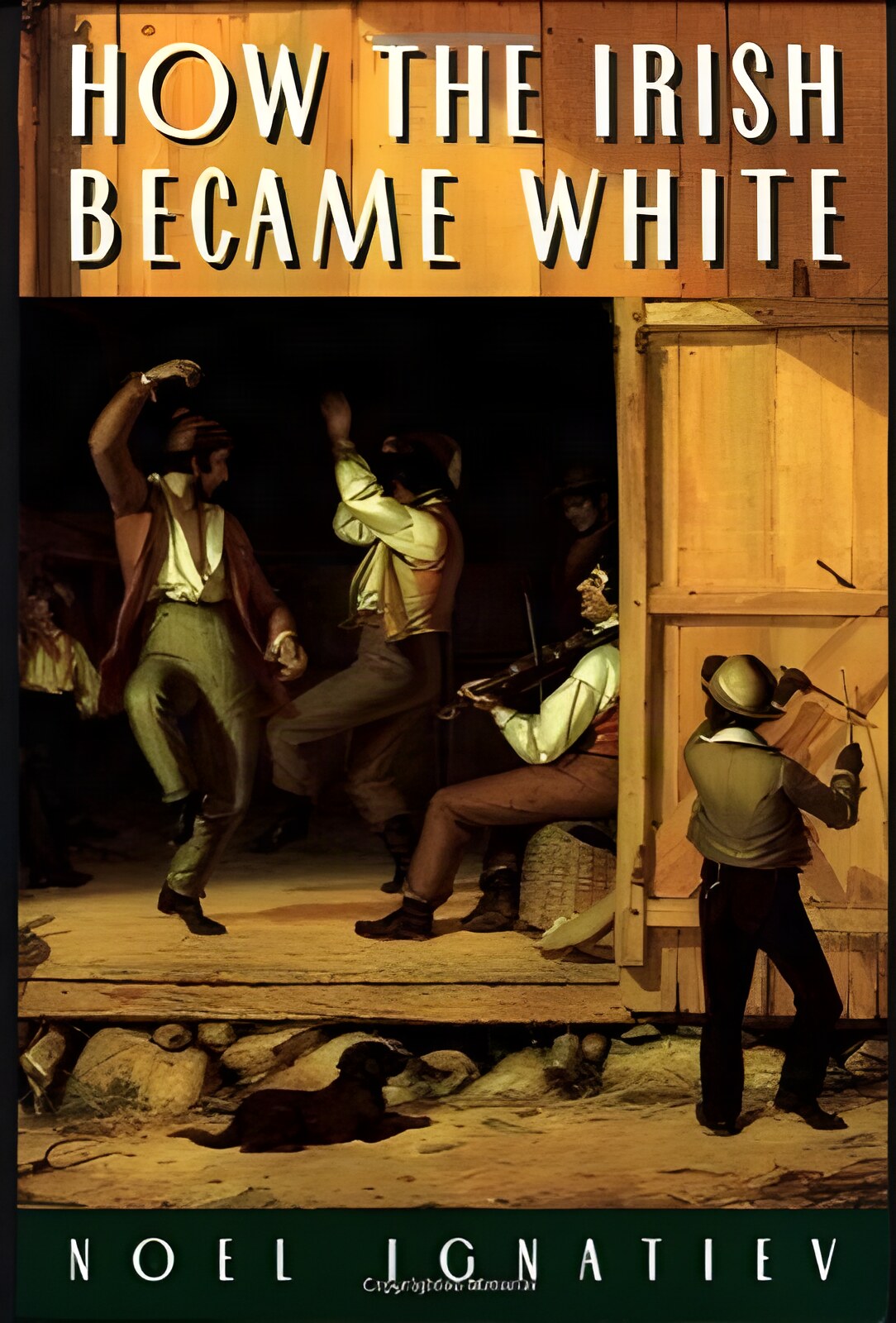
Softcover. NY/London, Routledge, 1st, 1995, Book: Very Good, Dust Jacket: None, Softcover in pictorial wrappers, 233 pages. Ignatiev traces the tattered history of Irish and African-American relations, revealing how the Irish used labor unions, the Catholic Church and the Democratic party to succeed in American. He uncovers the roots of conflict between Irish-Americans and African-Americans and draws a powerful connection between the embracing of white supremacy and Irish "success" in 19th century American society. Clean copy.
Hardcover. Nairobi, The English Press,, 1st, 1954, Book: Good, Dust Jacket: None, Hardcover, blue cloth with black title on front, 117 pages + postscript. The Mau Mau, the black challenge to white supremacy and the need for British rule to remain in Kenya. Name on front fly leaf, light marking to margins on some pages.
Hardcover. NY, E.P. Dutton , 1st, 1967, Book: Very Good, Dust Jacket: Very Good, Hardcover in a nice, unclipped dust jacket, 214 pages. "A journey into the heart of primitive Africa, yesterday and today" based on the author's research and his first-hand observations. Wellard describes living among the Dawadans, a small isolated tribe,who still live in a state of pre-history and to whom the wheel is unknown. He also examines the art of prehistoric Africa and in particular the rock art of the Acacus Mountains. The third section deals with the Garamantes, an empire that flourished for more than a thousand years,until they were conquered by Arab invaders in the 17th century. Illustrated with 24 photographs and five maps. Bibliographical notes, index. Clean.
NY, Viking, 4th pr., 2011, Book: Very Good, Dust Jacket: Very Good, Hardcover in a bright, unclipped dust jacket. 594 pages, b&w illustrations. Of the great figure in twentieth-century American history perhaps none is more complex and controversial than Malcolm X. Constantly rewriting his own story, he became a criminal, a minister, a leader, and an icon, all before being felled by assassins' bullets at age thirty-nine. Through his tireless work and countless speeches he empowered hundreds of thousands of black Americans to create better lives and stronger communities while establishing the template for the self-actualized, independent African American man. In death he became a broad symbol of both resistance and reconciliation for millions around the world. Manning Marable's new biography of Malcolm is a stunning achievement. Filled with new information and shocking revelations that go beyond the Autobiography, Malcolm X unfolds a sweeping story of race and class in America, from the rise of Marcus Garvey and the Ku Klux Klan to the struggles of the civil rights movement in the fifties and sixties. Reaching into Malcolm's troubled youth, it traces a path from his parents' activism through his own engagement with the Nation of Islam, charting his astronomical rise in the world of Black Nationalism and culminating in the never-before-told true story of his assassination.
Hardcover. NY, Abrams, 1st, 2008, Book: N, Hardcover, 168 pages. Nelson Mandela, an icon of the international struggle for freedom and equality, whose importance rivals that of Martin Luther King and Mahatma Gandhi, turns ninety in July 2008. Mandela spent twenty-seven years in prison for his opposition to the apartheid regime of his native South Africa. Released in 1990, he pursued a policy of reconciliation, steering his nation into the ranks of the world's multi-racial democracies. He was elected president of South Africa in 1994. Photographer David Turnley covered Mandela and South Africa for the world's press, beginning in the 1980s. He witnessed the turbulence of the last violent years of apartheid, was there when Mandela was released from prison, campaigned with him during the presidential election, and sought out the significant people and places of his life. In Mandela: Struggle and Triumph, he tells in words and photographs the dramatic and emotional story of the most powerful movement for civil rights since the American civil rights movement, through the eyes of its legendary leader.
Hardcover. Cambridge MA, Harvard University Press, 1st, 1970, Book: Very Good, Dust Jacket: Very Good, Hardcover in a bright, unclipped dust jscket, 224 pages. The influence of traditional and religious groups on modern politics. The author investigates the political role of religious organizations in the West African country of Senegal. Upon independence in 1960. Senegalese politicians adopted the pattern of cooperation established by the French. Behrman, examining the present role of the brotherhoods, analyzes their inter-relationships as well as their relations with political parties, government officials, the government reform program, and modern Muslim reform groups. She reveals that Senegalese officials often defer to the opinion of the strongest marabus and that, in times of crisis or uncertainty with in the government party, the Union Progressiste Senegalaise, they turn to the marabus for support. She also shows that, although the Muslim leaders occupy such a privileged position in Senegalese society, they do not actually control the government, which issecularand modern in form and is led by Western-educated men devoted to a program of industrialization and agricultural and social reform. Name on half-title page otherwise clean.
Hardcover. London, Macmillan, 1st, 1963, Book: Very Good, Dust Jacket: Good, Hardcover in worn dust jacket, 383 pages. fold-out map, bibliographical notes. A seminal study of the infiltration of European influence into West Africa (1860s-90s) from Senegal to Cameroon, the tension between French and English leading to partition.. Light pencil marking throughout. Name on front fly leaf.
Hardcover. Oxford UK, Clarendon Press, 1st, 1923, Book: Very Good, Hardcover, red cloth, 296 pages. Gilt title on spine. Folding maps in rear. Contents: Relation of Bantu to other African races: Africa & Africans - Study of Bantu life & thought: Spirits of things; Spirits of people; Tribal law & politics; Woman & marriage; Training of Bantu youths - Europeanization of Bantu Africa: Discovery of Bantu; White man's burden & how he got it; Some problems of government in Bantu areas; Native labour; Colour bar; Task of Church. Newsp. clippings re author laid in, leaving tan mark.
Hardcover. Montclair NJ, Allanheld, Osmun, 1st US, 1980, Book: Very Good, Dust Jacket: Very Good, Hardcover in a lightly worn dust jacket, 266 pages. Illustrated with maps and tables, this study describes and analyse the social and ecological destruction of the 1968-78 Sahel drought and famine, during which more than 100,000 W. Africans died of starvation and hunger related diseases, and livestock herds and agricultural production were critically reduced. It traces the history of this disaster to the impact of French colonial government policy on the fragile ecology of the region and the effects of food and export regulations on agriculture and on the social structure and interrelationships of the tribes. Clean copy.
Softcover. London, James Currey, 1st, 1995, Book: Very Good, Dust Jacket: None, Softcover, pictorial green wrappers, 211 pages. This work is an attempt to look at some of the realities of Zimbabwe's liberation war and at what happened afterwards, rather than at the comfortable myths. Both heroic and terrible deeds are recorded. Zimbabwe: University of Zimbabwe Publications
Hardcover. London, Heinemann, 1st, 1971, Book: Very Good, Dust Jacket: Very Good, Hardcover in a bright, unclipped dust jacket. 303 pages, black & white photos and maps. Name on front fly leaf. Otherwise, clean.
Hardcover. Edinburgh, Adam & Charles Black, 1st, 1838, Book: Very Good, Dust Jacket: None, Four volumes complete, [x], 676p, [1]; [iv], 632p; [iv], 626p; 571p+Index. Full calf binding, marbled edges, spine ribbed with 6 sections, 2 with leather labels and gilt titles. Gilt edge design on all edges, ornate gilt design on spine. Bookplate of Herbert John Gladstone on inside covers. He was a British Liberal politician. The youngest son of Prime Minister William Ewart Gladstone, he was Home Secretary from 1905 to 1910 and Governor-General of the Union of South Africa from 1910 to 1914. All volumes are bright and clean. Some minor wear to spine edges.
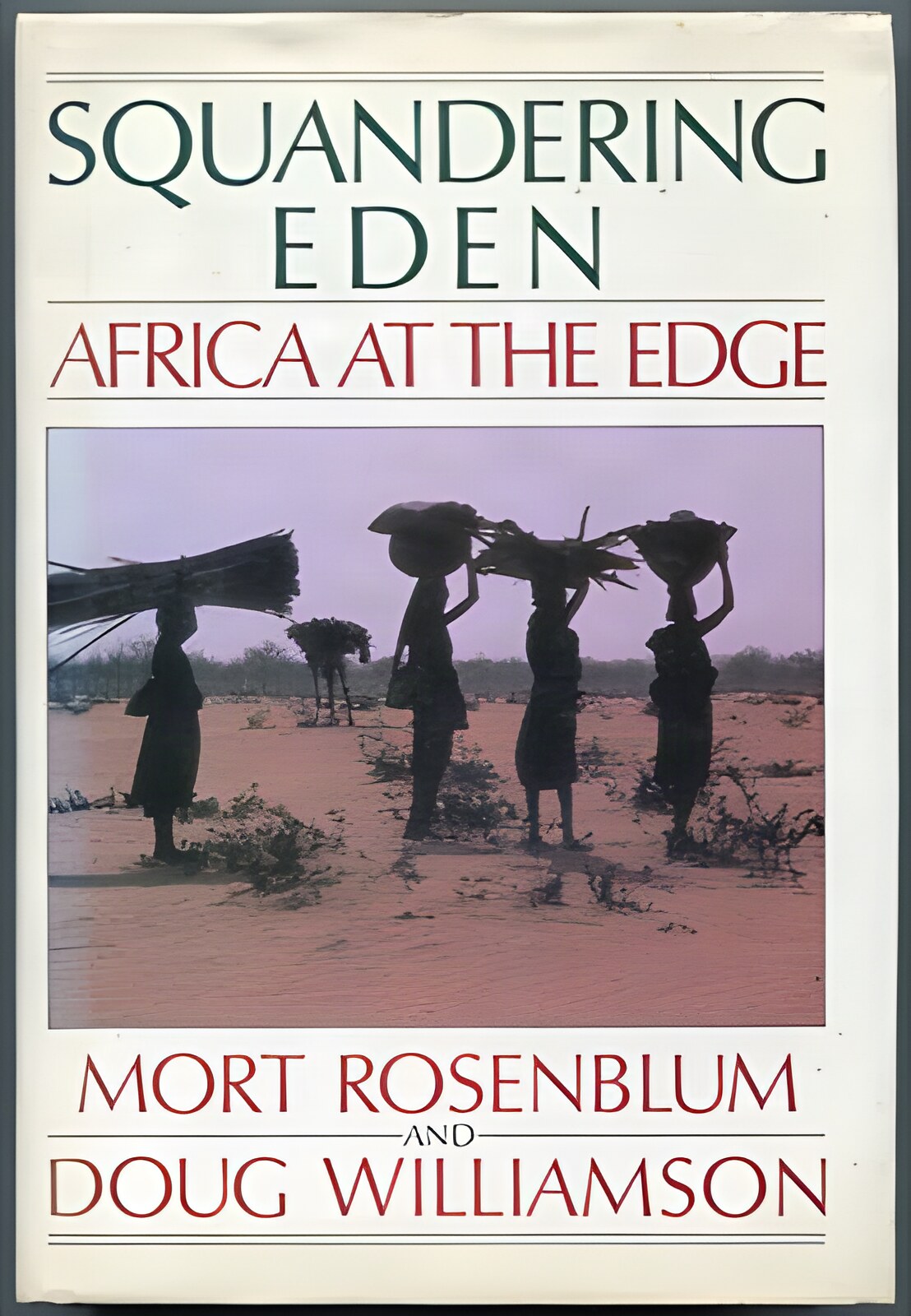
Hardcover. NY, Harcourt Brace Jovanovich, 1st, 1987, Book: Very Good, Dust Jacket: Very Good, Hardcover in a bright, unclipped dust jacket, 326 pages, b&w photos. Rosenblum, a journalist, and Williamson, a scientist, explore Africa in the 1980s and report ubiquitous disaster and tragedy. It weaves a backdrop of misguided charity, of bloated egos amid corruption and waste, and of our State Department consistently backing the wrong horse. It is a hard look at a depressing future. Pages tanning slightly, no markings.

 "A Last Chance in Kenyaby: Leys, Norman")

 "An Empire of Facts: Colonial Power, Cultural Knowledge, and Islam in Algeria, 1870??\"1914 by: Trumbull IV, George R.")
 "Apartheid: A Historyby: Brian Lapping")
 "Between Citizens and the State: The Politics of American Higher Education in the 20th Centuryby: Christopher P. Loss")
 "Fault Lines: Journeys into the New South Africa by: Goodman, David")

 "Guns & Rain - Guerrillas & Spirit Mediums in Zimbabweby: Lan, David")
 "Kenya's Warning: The Challenge to White Supremacy in Our British Colonyby: Wilson, Christopher")

 "Malcolm X: A Life of Reinvention by: Marable, Manning")
 "Mandela : Struggle and Triumphby: Turnley, David")
 "Muslim Brotherhoods and Politics in Senegal by: Behrman, Lucy C.:")

 "Race Problems in the New Africa A Study of the Relation of Bantu and Britons in Those Parts of Bantu Africa Which Are under British Controlby: Willoughby, Rev. W. C.")
 "Seeds of Famine: Ecological Destruction and the Development Dilemma in the West African Sahelby: Richard W Franke and Barbara H Chasin")
 "Soldiers in Zimbabwe's Liberation War by: Bhebe, Ngwabi (Editor), and Ranger, T O (Editor)")
 "South-West Africa under German Rule 1894-1914by: Bley, Helmut")
 "Speeches of Henry Lord Brougham, upon questions relating to Public Rights, Duties and Interests; with Historical Introductions, and A Critical Dissertation upon the Eloquence of the Ancients. (Volumes 1, 2, 3, 4)")