Hardcover. Westport CT, Negro Universities Press , reprint, 1970, Book: Very Good, Dust Jacket: None, Hardcover, brown cloth with gilt lettering on the spine. Originally published in 1852 this is an in depth study of the African people , both in Africa and in America. A great deal of material on slavery and the South, as well as early material on Liberia. Presented in a series of "conversations", this is an in-depth history of the African continent's peoples, the colonization of Africa, and subsequent African American slavery in the United States. Clean copy.
Softcover. NY, International Publishers, 7th pr., 1968, Book: Very Good, Dust Jacket: None, Softcover, 409 pages. Years ago, the controlling view held that the response of the slaves in the United States to their bondage 'was one of passivity and docility'. That opinion, so decisive a part of the chauvinism afflicting the nation, is shown to be false in this book and in the material accumulated since its initial appearance has further substantiated this thesis; namely, that the African-American people, in slavery, forged a record of discontent and of resistance comparable to that marking the history of any other oppressed people. Name on front fly leaf otherwise clean.
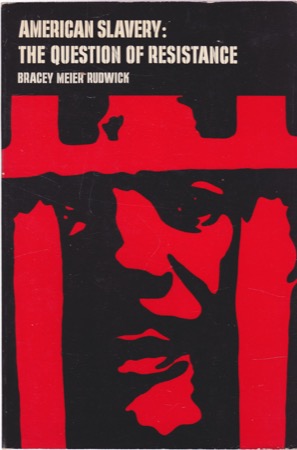
Softcover. Belmont CA, Wadsworth Publishing, 1st, 1971, Book: Very Good, Dust Jacket: None, Softcover, 202 pages. A collection of essays focusing on African American resistance, specifically (from the introduction) "on the nature and extent of the resistance of blacks to slavery in the United States." Name on front fly leaf, otherwise clean.
Softcover. University Park, Pennsylvania State University Press, 2nd pr., 2023, Book: Very Good, Dust Jacket: None, Softcover, 266 pages, b&w illustrations. INSCRIBED BY KELLEY on the title page. Lydia Hamilton Smith (1813-1884) was a prominent African American businesswoman in Lancaster, Pennsylvania, and the longtime housekeeper, life companion, and collaborator of the state's abolitionist congressman Thaddeus Stevens. In his biography of this remarkable woman, Mark Kelley reveals how Smith served the cause of abolition, managed Stevens's household, acquired property, and crossed racialized social boundaries. In the last years of Stevens's life, as his declining health threatened to short-circuit his work, Smith risked her own well-being to keep him alive while he led the drive to end slavery, impeach Andrew Johnson, and push for the ratification of the Thirteenth, Fourteenth, and Fifteenth Amendments. Clean copy.
Hardcover. Five Continents, 1st, 2018, Book: Very Good, Dust Jacket: None, Hardcover in pictorial boards. Born into slavery around 1853-4 on a cotton plantation in Benton, Alabama, Traylor has become one of the most important self-taught artists of the twentieth century, and certainly one of the most celebrated African-American artists, along with Thorton Dial and William Edmondson. The story of Bill Traylor's life and work is a remarkable one. It is a story that deserves attention both nationally and internationally. This publication, generously illustrated with full-page high-quality reproductions, provides a close examination of Traylor's recurrent themes, composition schemes, favored iconography, and contextual information related to the artist's biography, creative process and tools, visual environment, and artistic mindset. Each artwork is considered in a context beyond that of an isolated image and in response to one another, forming a series of intricate and consistent narratives, intriguingly cinematic in its development. The elements of Traylor's biography are the anchors of an individual mythology. Instead of merely being a basic depiction, the subject becomes a visual statement structuring Traylor's mind, bringing together hidden symbols from Kongo Vodou, Hoodoo, Southern Baptist, Freemasonry, and Blues sources, as well as layers of references: slavery, uncensored violence in the Jim Crow era, and turbulence within the black enclave known as 'Dark Town' in Montgomery, Alabama. Bilingual edition in French and English. Still in publisher's shrinkwrap.
Softcover. Washington DC, Howard University Press, 1994, Book: Very Good, Dust Jacket: None, Softcover, 365 pages. Maps, illustrations, bibliography, index. A comparative social overview of slavery in Britain, America, and the Caribbean during the colonial period. Walvin carefully examines the external pressures exerted on coastal communities in Africa for slaves, the gradual development of a slave trading system within Africa, and the transport of over twelve million Africans across the seas. Clean copy. Several pages with dog-ear creases.
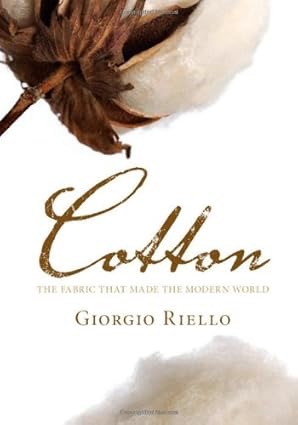
Hardcover. UK, Cambridge University Press, 1st, 2013, Book: Very Good, Dust Jacket: Very Good, Hardcover in a bright dust jacket, 407 pages. Color and b&w illustrations. Details the history of cotton and how it has impacted the textile and garment trade. Today's world textile and garment trade is valued at a staggering $425 billion. We are told that under the pressure of increasing globalisation, it is India and China that are the new world manufacturing powerhouses. However, this is not a new phenomenon: until the industrial revolution, Asia manufactured great quantities of colorful printed cottons that were sold to places as far afield as Japan, West Africa and Europe. Cotton explores this earlier globalized economy and its transformation after 1750 as cotton led the way in the industrialization of Europe. By the early nineteenth century, India, China and the Ottoman Empire switched from world producers to buyers of European cotton textiles, a position that they retained for over two hundred years. This is a fascinating and insightful story which ranges from Asian and European technologies and African slavery to cotton plantations in the Americas and consumer desires across the globe. Clean copy.
Softcover. Urbana IL, University of Illinois Press, 1st, 2015, Book: Very Good, Dust Jacket: None, Softcover, 295 pages, b&w illustrations. INSCRIBED BY BECK on the title page. A daughter of freed African American slaves, Daisy Turner became a living repository of history. The family narrative entrusted to her--"a well-polished artifact, an heirloom that had been carefully preserved"--began among the Yoruba in West Africa and continued with her own century and more of life. In 1983, folklorist Jane Beck began a series of interviews with Turner, then one hundred years old and still relating four generations of oral history. Beck uses Turner's storytelling to build the Turner family saga, using at its foundation the oft-repeated touchstone stories at the heart of their experiences: the abduction into slavery of Turner's African ancestors; Daisy's father Alec Turner learning to read; his return as a soldier to his former plantation to kill his former overseer; and Daisy's childhood stand against racism. Other stories re-create enslavement and her father's life in Vermont--in short, the range of life events large and small, transmitted by means so alive as to include voice inflections. Beck, at the same time, weaves in historical research and offers a folklorist's perspective on oral history and the hazards--and uses--of memory. Clean copy.
Hardcover. NY, Knopf, 1st, 1993, Book: Very Good, Dust Jacket: Very Good, Hardcover in a bright, unclipped dust jacket. Black & white illustrations by Leo and Diane Dillon. A history of slavery in America, written for children, and focusing on those who escaped slavery and on the Underground Railroad. Includes stories of Harriet Tubman, Frederick Douglass, Josiah Henson, and others.
Hardcover. NY, Random House, 1st, 2011, Book: Very Good, Dust Jacket: Very Good, Hardcover, color illustrations by the Dillons. SIGNED BY THE DILLONS on title page.This gorgeous picture book by Newbery Honor winner Patricia C. McKissack and two-time Caldecott Medal-winning husband-and-wife team Leo and Diane Dillon is sure to become a treasured keepsake for African American families. Set in West Africa, this a lyrical story-in-verse is about a young black boy who is kidnapped and sold into slavery, and his father who is left behind to mourn the loss of his son. Here's a beautiful, powerful, truly unforgettable story about family, memory, and freedom.
Hardcover. NY, Random House, 1st, 2011, Book: Very Good, Dust Jacket: Very Good, Hardcover, color illustrations by the Dillons. SIGNED BY THE DILLONS on title page.This gorgeous picture book by Newbery Honor winner Patricia C. McKissack and two-time Caldecott Medal-winning husband-and-wife team Leo and Diane Dillon is sure to become a treasured keepsake for African American families. Set in West Africa, this a lyrical story-in-verse is about a young black boy who is kidnapped and sold into slavery, and his father who is left behind to mourn the loss of his son. Here's a beautiful, powerful, truly unforgettable story about family, memory, and freedom.
Softcover. NY, Oxford University Press, reprint, 1992, Book: Very Good, Dust Jacket: None, Softcover in pictorial wraps, 184 pages, coloe illustrations. From before the days of Moses up through the 1960s, slavery was a fact of life in the Middle East. Pagans, Jews, Christians, and Muslims bought and sold at the slave markets for millennia, trading the human plunder of wars and slave raids that reached from the Russian steppes to the African jungles. But if the Middle East was one of the last regions to renounce slavery, how do we account for its--and especially Islam's--image of racial harmony? How did these long years of slavery affect racial relations? In Race and Slavery in the Middle East, Bernard Lewis explores these questions and others, examining the history of slavery in law, social thought, and practice over the last two millennia. Bright, clean copy.
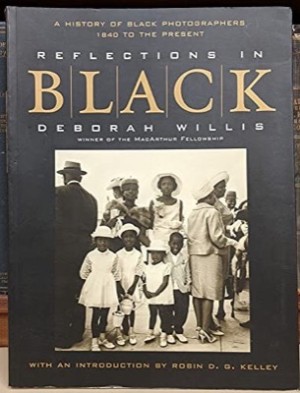
Softcover. NY, W. W. Norton & Company, 1st, 2000, Book: Very Good, Dust Jacket: None, Softcover, 348 pages. Reflections in Black, the first comprehensive history of black photographers, is a groundbreaking pictorial collection of African American life. Featuring the work of undisputed masters such as James VanDerZee, Gordon Parks, and Carrie Mae Weems among dozens of others, this book is a refutation of the gross caricature of black life that many mainstream photographers have manifested by continually emphasizing poverty over family, despair over hope. Nearly 600 images offer rich, moving glimpses of everyday black life, from slavery to the Great Migration to contemporary suburban life, including rare antebellum daguerrotypes, photojournalism of the civil rights era, and multimedia portraits of middle-class families. DUE TO WEIGHT, DOMESTIC SHIPPING ONLY.
Hardcover. Hampton, VA, Hampton Institute Press, 1st, 1927, Book: Very Good, Dust Jacket: Poor, Hardcover, dark blue cloth with gilt lettering on front cover and spine, 236 pages plus appendix. A scarce collection of traditional hymns, gospel, folk songs and "Songs of Tribulation" of the American Negro. An historical document of African-American culture and the history of slavery. Songs in musical score with lyrics. A tight, generally unmarked and clean volume with nice cloth and clear gilt, In a poor dust jacket with chipping and tape repairs. Name on front fly leaf otherwise clean.
Hardcover. NY, The New Press , 1st, 1998, Book: Very Good, Dust Jacket: Very Good, Hardcover book with a bright dust jacket in a slipcase that also includes interview tapes. A startling first-person history of slavery. Using excerpts from the thousands of interviews conducted with ex-slaves in the 1930s by researchers working with the Federal Writers' Project, the astonishing audiotapes made available the only known recordings of people who actually experienced enslavement-recordings that had gathered dust in the Library of Congress until they were rendered audible for the first time specifically for this set. Two sixty-minute audiotapes: the first is original recordings of former slaves recorded in the 1930s, the second features dramatic readings by Esther Rolle, James Earl Jones and other black artists. Foreword by Robin D. G. Kelley.
Softcover. Urbana IL, University of Illinois Press, reprint, 2003, Book: Very Good, Dust Jacket: None, Softcover, 433 pages. From the plaintive tunes of woe sung by exiled kings and queens of Africa to the spirited worksongs and "shouts" of freedmen, enslaved people created expansive forms of music from the United States to the West Indies and South America. Dena J. Epstein's classic work traces the course of early black folk music in all its guises. Anchored by groundbreaking scholarship, it redefined the study of black music in the slavery era by presenting the little-known development of black folk music in the United States. Her findings include the use of drums, the banjo, and other instruments originating in Africa; a wealth of eyewitness accounts and illustrations; in-depth look at a wide range of topics; and a collection of musical examples. This edition offers an author's preface that looks back on the twenty-five years of changes in scholarship that followed the book's original publication. Clean copy.
Softcover. UK, Cambridge University Press, Reprint, 2004, Book: Very Good, Dust Jacket: None, 236 pages. Softcover. Binding tight. Some underlining in pencil on a few pages, otherwise clean inside. A touch of foxing to top edge. Wrapper in great shape. Looks great.
Softcover. NY, The New Press, 1st, Book: Very Good, Dust Jacket: None, Softcover, 403 pages. Edited by Ira Berlin, the Bancroft Prize-winning author of Many Thousands Gone, and Leslie Harris, Slavery in New York brings together twelve new contributions by leading historians of slavery and African American life in New York. Published to accompany a major exhibit at the New York Historical Society, the book demonstrates how slavery shaped the day-to-day experience of New Yorkers, black and white, and how, as a way of doing business, it propelled New York to become the commercial and financial power it is today. Powerfully illustrated with images from the New York Historical Society exhibit, Slavery and the Making of New York will be the definitive account of New York's slave past.
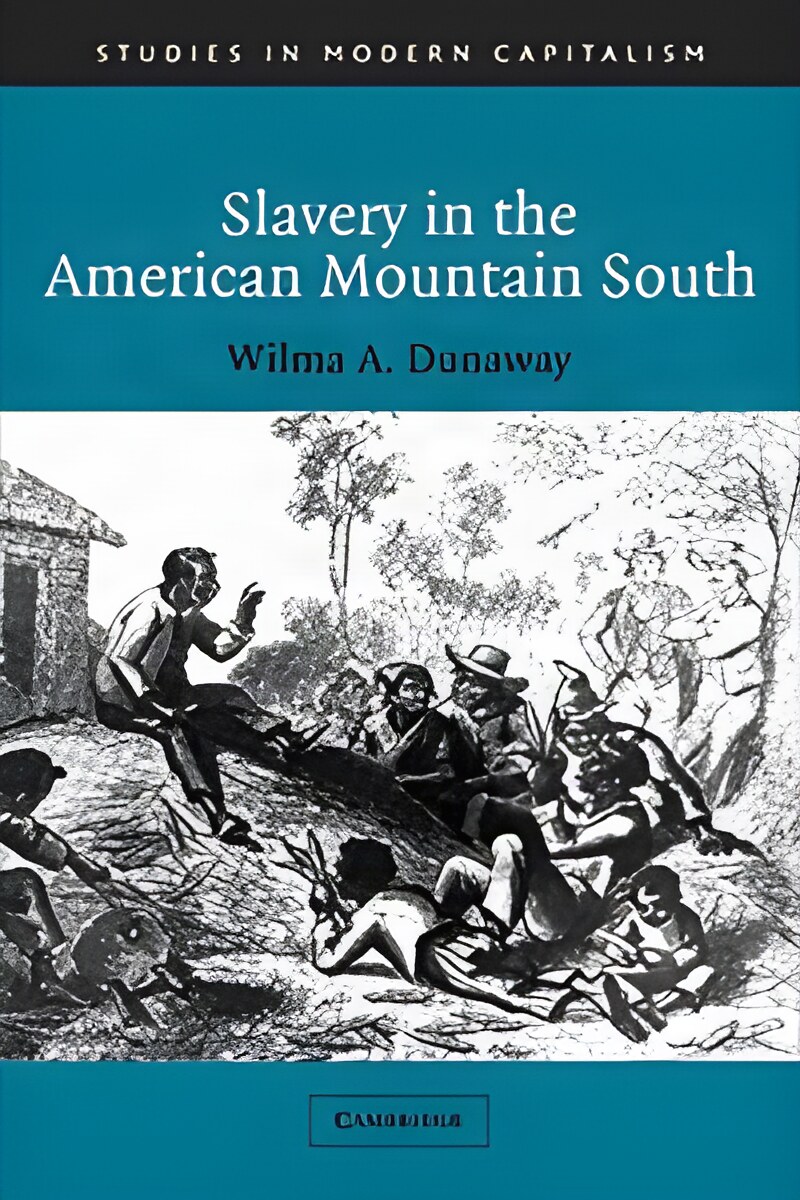
Softcover. UK, Cambridge University Press, 1st pbk, 2003, Book: Very Good, Dust Jacket: None, Softcover, 352 pages, b&w illustrations. Wilma Dunaway breaks new ground by focusing on slave experiences on small plantations in the Upper South. She argues that a region was not buffered from the political, economic, and social impacts of enslavement simply because it was characterized by low black population density and small slaveholdings. By drawing on a massive statistical data base derived from antebellum census manuscripts and county tax records of 215 counties in nine states, on a vast array of slaveholder manuscripts, and on regional slave narratives, she pinpoints several indicators that distinguished Mountain South enslavement from the Lower South. These include a higher incidence of ethnic mixing between African and Native American slaves, heavier reliance on the field labor of women and children, and more frequent assignment of slaves to non-agricultural occupations. Dunaway also calls into question the notion that large numbers were necessary before slaves could engage in community building and resistance. Clean, bright copy.
Hardcover. Westport CT, Greenwood Press, 1st, 2003, Book: Very Good, Dust Jacket: None, Hardcover, glazed pictorial boards, 177 pages. Postma draws on primary sources and current historical scholarship to offer secondary readers and researchers a comprehensive and well-written history. He covers the entire Atlantic slave trade era, from the 1400s to the final abolition of chattel slavery in the New World in 1888. The focus is on Africa and the entire New World. While he describes the many horrors of the Middle Passage, he also examines how the slave trade contributed to the development of the modern international economy. The last chapters discuss the efforts to abolish the slave trade and its legacy. Throughout, Postma documents the sources that support his discussion and conclusions. Chapter notes are supplemented by an extensive annotated bibliography that includes books, articles, films, and electronic resources. The volume concludes with biographical sketches of important people and excerpts from primary documents written by enslaved Africans and white officials. The black-and-white reproductions of period illustrations add little to the text. Clean copy.
Softcover. Madison WI, University of Wisconsin, reprint., 2005, Book: Very Good, Dust Jacket: None, Softcover in pictorial wraps, 244 pages. The Blind African Slave recounts the life of Jeffrey Brace (ne Boyrereau Brinch), who was born in West Africa around 1742. Captured by slave traders at the age of sixteen, Brace was transported to Barbados, where he experienced the shock and trauma of slave-breaking and was sold to a New England ship captain. After fighting as an enslaved sailor for two years in the Seven Years War, Brace was taken to New Haven, Connecticut, and sold into slavery. After several years in New England, Brace enlisted in the Continental Army in hopes of winning his manumission. After five years of military service, he was honorably discharged and was freed from slavery. As a free man, he chose in 1784 to move to Vermont, the first state to make slavery illegal. There, he met and married an African woman, bought a farm, and raised a family. Although literate, he was blind when he decided to publish his life story, which he narrated to a white antislavery lawyer, Benjamin Prentiss, who published it in 1810. Upon his death in 1827, Brace was a well-respected abolitionist. In this first new edition since 1810, Kari J. Winter provides a historical introduction, annotations, and original documents that verify and supplement our knowledge of Brace's life and times. Clean copy.
Hardcover. Washington DC, Counterpoint, 1999, Book: Very Good, Dust Jacket: Very Good, Hardcover, 642 pages. Hailed in 1849 as "a new department in the literature of civilization," the slave narrative forms the foundation of the African American literary tradition. From the late-eighteenth-century narratives by Africans who endured the harrowing Middle Passage, through the classic American fugitive slave narratives of the mid-nineteenth century, slave narratives have provided some of the most graphic and damning documentary evidence of the horrors of slavery. Riveting, passionate, and politically charged, the slave narrative blends personal memory and rhetorical attacks on slavery to create powerful literature and propaganda.The Civitas Anthology presents the seven classic antislavery narratives of the antebellum period in their entirety: The History of Mary Prince, a West Indian Slave , the first slave narrative published by a woman in the Americas; The Confessions of Nat Turner , written when Turner was asked to record his motivation for leading the bloodiest slave revolt in U.S. history; The Narrative of the Life of Frederick Douglass , an international bestseller and the first narrative to fashion the male fugitive slave into an African American cultural hero; The Narrative of William W. Brown , an account that explored with unprecedented realism the slave's survival ethic and the art of the slave trickster; The Narrative of the Life of Henry Bibb , the story of the struggles of the most memorable family man among the classic slave narrators; Running a Thousand Miles for Freedom , a gripping chronicle of one of the most daring and celebrated slave escapes ever recorded; and Incidents in the Life of Slave Girl , a dramatic text that exposed the sexual abuse of female slaves and pioneered the image of the fugitive slave woman as an articulate resister and survivor.Born out of lives of unparalleled suffering, the slave narrative captures all the bravery, drama, and hope that characterized the African American struggle against slavery. From these beginnings came some of the most influential novels in American literature, for the works of writers such as Harriet Beecher Stowe, Mark Twain, and Toni Morrison owe much of their power and social resonance to the slave narrative tradition. The Civitas Anthology gathers the most important narratives in this tradition into one volume for the first time, an indispensable resource for scholars, students, and general readers. Clean copy.
Softcover. UK, Cambridge University Press, 1st, 2005, Book: Very Good, Dust Jacket: None, Softcover, 317 pages, b&w illustrations. Translated from the Dutch by Diane Webb. "Rembrandt, Hals and Vermeer are still household names, even though they died over three hundred years ago. In their lifetimes they witnessed the extraordinary consolidation of the newly independent Dutch Republic and its emergence as one of the richest nations on earth. As one contemporary wrote in 1673: the Dutch were 'the envy of some, the fear of others, and the wonder of all their neighbours'. During the Dutch Golden Age, the arts blossomed and the country became a haven of religious tolerance. However, despite being self-proclaimed champions of freedom, the Dutch conquered communities in America, Africa and Asia and were heavily involved in both slavery and the slave trade on three continents." Clean copy.
Hardcover. London, Edward Arnold, 2nd pr., 1905, Book: Fair, Dust Jacket: None, Hardcover, original blue cloth covers worn with faded gilt lettering. Frontis. missing, hinges cracked, B&w photos, folding maps present. An account of the British territories in East Africa, intended as a guide for prospective colonisers, and future developers. Topics discussed include the physical geography, native peoples such as the Swahilis, the Masai, Somalis, and Nandi, vegetations and animals, slavery, the Uganda railway and more. Sir Charles Eliot was a British colonial administrator and commissioner for the Protectorate of British East Africa, now Kenya.


 "An Uncommon Woman: The Life of Lydia Hamilton Smith (INSCRIBED COPY)by: Kelley, Mark")

 "Black Ivory; A History of British Slaveryby: Walvin, James")
 "Daisy Turner's Kin: An African American Family Saga (INSCRIBED COPY)by: Beck, Jane C.")
 "Many Thousand Gone: African Americans from Slavery to Freedomby: Virginia Hamilton/Leo and Diane Dillon")
 "Never Fogotten (SIGNED BY ILLUSTRATORS)by: McKissack/ Leo and Diane Dillon, Patricia")
 "Never Fogotten (SIGNED BY ILLUSTRATORS)by: McKissack/ Leo and Diane Dillon, Patricia")

 "Religious Folk Songs of the Negro as Sung at Hampton Institute by: Dett, R. Nathaniel")
 "Remembering Slavery: African Americans Talk About Their Personal Experiences of Slavery and Emancipationby: Ira Berlin/Marc Favreau/Steven Miller")


 "Sinful Tunes and Spirituals: Black Folk Music to the Civil War Music in American Lifeby: Dena J. Epstein")
 "Slavery and African Life: Occidental, Oriental, and African Slave Tradesby: Manning, Patrick")
 "Slavery in New York by: Ira Berlin; Leslie Harris (Editors)")
 "The Atlantic Slave Tradeby: Postma, Johannes")
 "The Blind African Slave: Or Memoirs of Boyrereau Brinch, Nicknamed Jeffrey Brace by: Jeffrey Brace; Editor Kari J. Winter; Contributor Benjamin F. Prentiss")
 "The Civitas Anthology of African American Slave Narratives by: William L. Andrews; Henry Louis Gates/editors")

 "The East Africa Protectorateby: Eliot, Sir Charles")