Hardcover. NY, Harper and Row, 1st, 1988, Book: Very Good, Dust Jacket: Very Good, Hardcover in a bright, unclipped dust jacket, 244 pages. The author spent 6 weeks with a courageous and devoted group of black reporters from the Johannesburg Star. This book focuses on the dilemma of these men and women caught between the militant black community, the police who harass them mercilessly, and their white editors who, fearful of the truth and wary of government disapproval, sometimes refuse to print the stories the reporters risked their lives to get. Clean copy.
Hardcover. Hatje Cantz, 1st, 2007, Book: Very Good, Dust Jacket: None, Hardcover, 84 pages. When David Goldblatt received the world-renowned Hasselblad Award in 2006, he had been making photographs of the South African landscape and culture for more than 50 years. Born in 1930 in a gold-mining town near Johannesburg, his parents were Jewish refugees from Lithuania, and they raised him with an emphasis on tolerance and antiracism. In 1975, at the height of apartheid, Goldblatt explored white nationalist culture in Some Afrikaners Photographed, and in the 80s he observed workers on the Kwandebele-Pretoria bus, many of whom traveled eight hours every day to work and back. His late-90s solo show at New York's Museum of Modern Art focused on architectural work, and showed off Goldblatt's uncanny ability to discover a society through its buildings and landscapes. His photographs of architectural structures revealed the ways that ideology had defined his home country's landscape. No dj issued.
Hardcover. London, Fourth Estate, 2nd pr., 2002, Book: Very Good, Dust Jacket: Very Good, Hardcover, 287 pages. A very clean, tight copy. Here is the true story of the strike that upset the diamond kings, and with it, a history of the world's most acclaimed diamonds, the process by which they are cut, smuggled and stolen, legends and superstitions, and of the shadowy hand of De Beers, for whom diamonds are forever.
Hardcover. London, UK, W.H. Allen / Virgin Books, 1st UK, 1979, Book: Very Good, Dust Jacket: Very Good, Hardcover, 316 pages, SIGNED BY AUTHOR on title page. Spotless and tight copy.
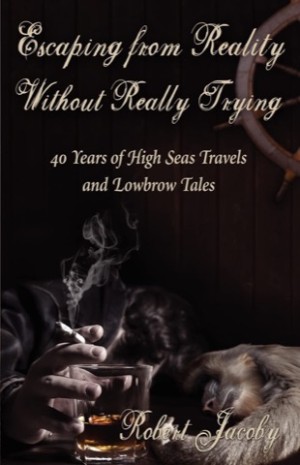
Softcover. Cloud Books, 1st, 2011, Book: Very Good, Dust Jacket: None, Softcover, 526 pages. Based on nearly 40 hours of interviews, Escaping from Reality Without Really Trying is the memoir of a 61-year-old, life-long merchant seaman re-counting his fantastic, hilarious, and politically incorrect exploits. He's a sailor-scholar and an individualist anarchist; he's read Voltaire and The Egyptian Book of the Dead. He admits to working at his hobby, sailing, to keep up his real occupation, drinking.He's lived 40 years of adventures around the world, including an incursion into Cambodia during the Vietnam War; a prison break from a Ceylon jail; a dockside fistfight in the Philippines in 1977; a 2-week stowaway run on a British merchant ship sailing around South Africa; meeting Omar Sharif in Aqaba, Jordan; an around-the-world trip (with Greg Cousins, the third mate on the Exxon Valdez, and we learn what really happened!) that ends in Alang, India and the beaching of the ship to be cut up for scrap metal; seeing the rise and fall of communism and capitalism in Africa and the newly independent states after the Soviet Union's collapse and division; and an ammunition delivery to Kuwait on the eve of the 2003 American-led invasion of Iraq.
Hardcover. NY, Prestel, 1st, 2015, Book: Very Good, Dust Jacket: None, Hardcover, 192 pages, color and b&w images. This first volume in a major new series of illustrated biographies of Magnum photographers traces the life and achievements of Eve Arnold, who captured an incredible array of subjects with remarkable clarity and compassion. Eve Arnold (1912-2012) was born to a poor immigrant family in Philadelphia and became a photographer by chance. In 1950 Arnold was a 38-year-old Long Island housewife when she enrolled in a six-week photography course that led to her groundbreaking photo essay on black fashion models in Harlem. She went on to become the first woman to join Magnum Photos and, eventually, one of the most accomplished photojournalists of her time. Filled with reproductions of Arnold's acclaimed photographs, shot in both color and black and white, as well as previously unseen archival images, this biography relates Arnold's bold images to the fascinating story of their making. Renowned for her intimate portraits of figures such as Marilyn Monroe, Malcolm X, and Queen Elizabeth, Arnold was equally comfortable documenting the lives of the poor and dispossessed. "I don't see anybody as either ordinary or extraordinary. I see them simply as people in front of my lens." To her images of migrant workers, disabled veterans, and protesters for civil rights in the US and against apartheid in South Africa, she brought an unflinching eye and a strong sense of social justice. This highly engrossing narrative tells a compelling story of an intrepid artist whose life's purpose was to report on the lives of others.
Hardcover. New York, Simon & Schuster Books, 1st, 1995, Book: Very Good, Dust Jacket: Very Good, 128 pages. Hardcover with dust jacket. Light abrasions on bottom corners. Light edgewaer to dust jacket. Clean, tight copy. Caldecott Honor Book with sticker on front. Handsomely illustrated with Brian Pinkney's color scratchboard drawings. Based on a West Indian folk-tale drawing on African, European and South American traditions.
Softcover. Chicago, University of Chicago Press, 1st, 1990, Book: Very Good, Dust Jacket: None, Softcover, 161 pages. In this overview of the origins and development of black societies in southern Africa, Martin Hall reconstructs the region's past by throughly examining both the archaeological and the historical records. Beginning with the gradual southward movement of the earliest farmers nearly two thousand years ago, Hall tracks the emergence of precolonial states such as Mapungubwe and Great Zimbabwe. Farmers, Kings, and Traders concludes with the devastating effects of colonialism. Through a close reading of the accounts of early travelers, colonialists, archaeologists, and historians, Hall places in context the often contradictory histories that have been written of this region. The result is an illuminating look at how ideas about the past have themselves changed over time. Name on front fly leaf, otherwise clean.
Softcover. Berkeley CA, University of California Press, 1st pbk, 2001, Book: Very Good, Dust Jacket: None, Softcover, 418 pages, b&w illustrations. "...chronicles the historic transition from apartheid to democracy. This compelling story is told through the lives of four pairs of South Africans from opposite sides of the racial and political divide. Taken together, the profiles provide the most intimate look yet at the social dynamics of post-apartheid South Africa." Clean copy.
Hardcover. Johannesburg SA, Penguin Books, 1st, 1987, Book: Very Good, Dust Jacket: None, 130 pages. Hardcover with no dust jacket. Clean, unmarked copy with only minor wear to boards. Some fading to spine. and laminate is bubbled in some spots. A fascinating book of photographs of mainly Black life during the 1950s in South Africa.
Hardcover. London, Reaktion Books, 1st, 2019, Book: Very Good, Dust Jacket: Very Good, Hardcover in a bright dust jacket, 256 pages illustrated in color and b&w. Meals associated with train travel have been an important aspect of railway history for more than a century - from dinners in dining cars to lunches at station buffets to foods purchased from platform vendors. For many travelers, the experience of eating on a railway journey is often a highlight of the trip, a major part of the 'romance of the rails'. Food on the Move focuses on the culinary history of these famous journeys on five continents, from the earliest days of rail travel to the present. The engaging story and vivid illustrations invite readers to discover an array of railway feasts: haute cuisine in the elegant dining carriages of the Orient Express, American steak-and-eggs on the Santa Fe Super Chief, and home-cooked regional foods along the Trans-Siberian tracks. Readers will be tempted to eat their way across Canada's vast interior and Australia's spectacular and colourful Outback; grab an infamous `British railway sandwich' to munch on the Flying Scotsman; snack on spicy samosas on the Darjeeling Himalayan `Toy Train'; dine at high speed on Japan's `Bullet Train'; and sip South African wines in a Blue Train luxury lounge car featuring windows of glass fused with gold dust. Food on the Move focuses on the culinary history of these famous journeys. Clean copy.
Hardcover. London, Chatto & Windus, 2nd pr., 1954, Book: Very Good, Dust Jacket: Good, Hardcover in a bright, lightly worn and chipped dust jacket. 320 pages, b&w photo illustrations. The Chapters are: Gambia; Sierra Leone; The Gold Coast; Nigeria: The West; The North; The Southern Cameroons; and The East; followed by an index. Clean copy.
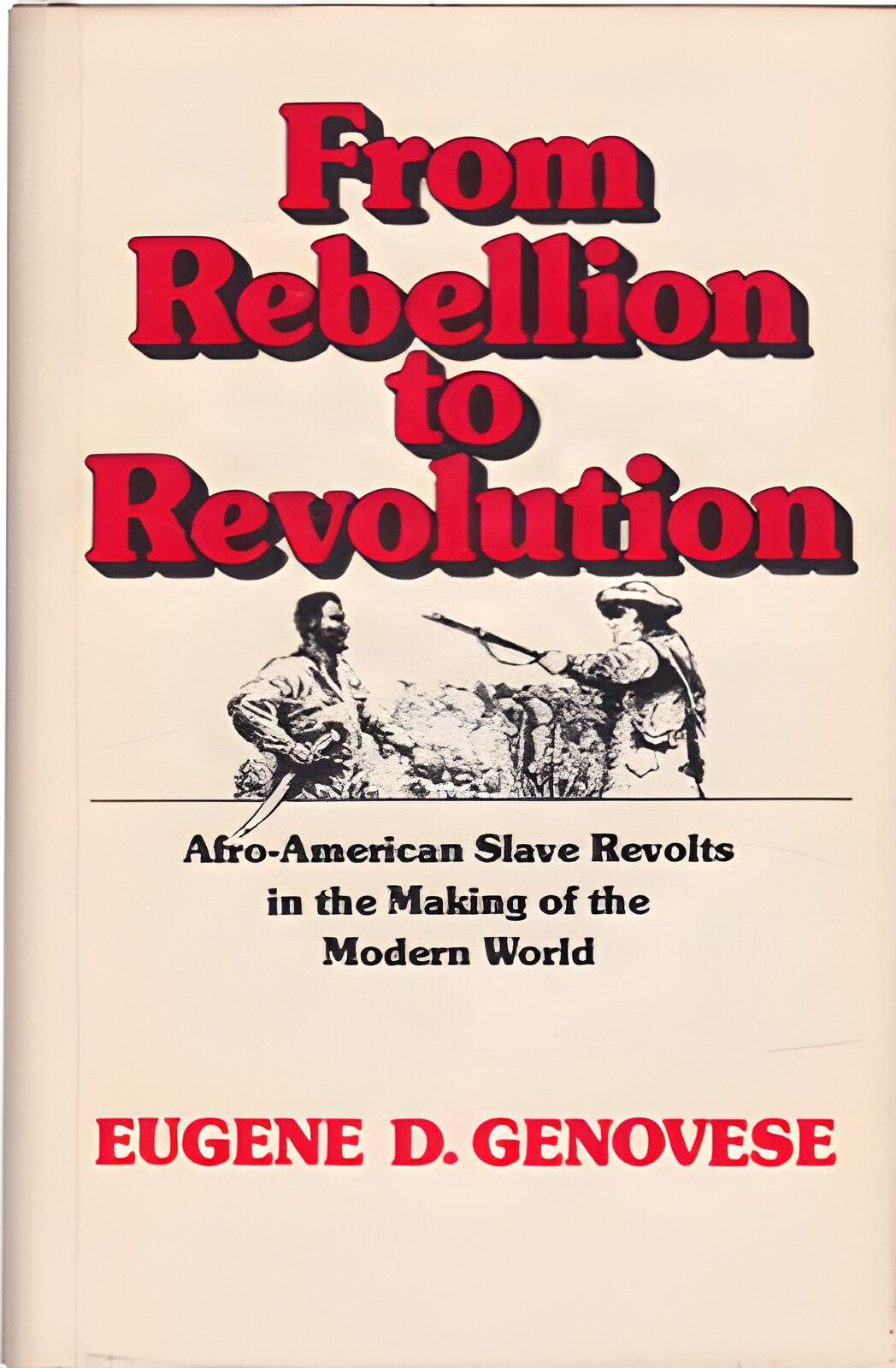
Hardcover. Baton Rouge, Louisiana State University , 1st, 1979, Book: Very Good, Dust Jacket: Very Good, Hardcover in a bright dust jacket, 173 pages. This work is a brief look at worldwide slave revolts in the 17th through 19th centuries, emphasizing their interrelations with European power struggles, which gave rebels hope of finding weak spots in the defenses of the slave powers. The French Revolution also had an influence on slave revolts, but the canny European powers used indigenous peoples to suppress slave revolts (e.g., native Americans) and took advantage of African ethnic divisions as well. American slaves stood little chance of revolt and were under constant surveillance from Southerners, who coward in fear after the successful rebellions in the Caribbean, particularly in Hispaniola, and after Nat Turner and John Brown's efforts. Genovese also brings up religion's double-edged sword: one side used to pacify slaves and the other side to inspire them to break their chains. In short, this scholarly treatise is thought-provoking as well as informative and ends with an inspirational quote from one of Frederick Douglass's lectures. Name on front fly leaf, otherwise a clean copy.
Hardcover. NY, William Morrow, 1st, 1982, Book: Very Good, Dust Jacket: Very Good, Hardcover in a bright, unclipped dust jacket, 324 pages. This provocative study touches all the bases, probing the important cases of U.S. involvement in Africa (the Congo, Angola, South Africa), laying out U.S. interests in Africa's minerals and strategic outposts, and depicting the concern of American blacks with Africa since the nineteenth century. Riding his theses rather hard, Jackson argues strongly against an ineluctable U.S. tendency to react in cold-war terms to African crises. Name on front fly lesf, otherwise clean.
Hardcover. Taschen, 1st, 2013, Book: Very Good, Dust Jacket: Very Good, Hardcover, 520 pages. Over 30 trips-traveled by foot, light aircraft, seagoing vessels, canoes, and even balloons, through extreme heat and cold and in sometimes dangerous conditions-Salgado created a collection of images showing us nature, animals, and indigenous peoples in breathtaking beauty. Mastering the monochrome with an extreme deftness to rival the virtuoso Ansel Adams, Salgado brings black-and-white photography to a new dimension; the tonal variations in his works, the contrasts of light and dark, recall the works of Old Masters such as Rembrandt and Georges de La Tour. What does one discover in GENESIS? The animal species and volcanoes of the Galapagos; penguins, sea lions, cormorants, and whales of the Antarctic and South Atlantic; Brazilian alligators and jaguars; African lions, leopards, and elephants; the isolated Zo'e tribe deep in the Amazon jungle; the Stone Age Korowai people of West Papua; nomadic Dinka cattle farmers in Sudan; Nenet nomads and their reindeer herds in the Arctic Circle; Mentawai jungle communities on islands west of Sumatra; the icebergs of the Antarctic; the volcanoes of Central Africa and the Kamchatka Peninsula; Saharan deserts; the Negro and Jurua rivers in the Amazon; the ravines of the Grand Canyon; the glaciers of Alaska... and beyond. Having dedicated so much time, energy, and passion to the making of this work, Salgado calls GENESIS "my love letter to the planet."Due to size and weight, DOMESTIC SHIPPING ONLY.
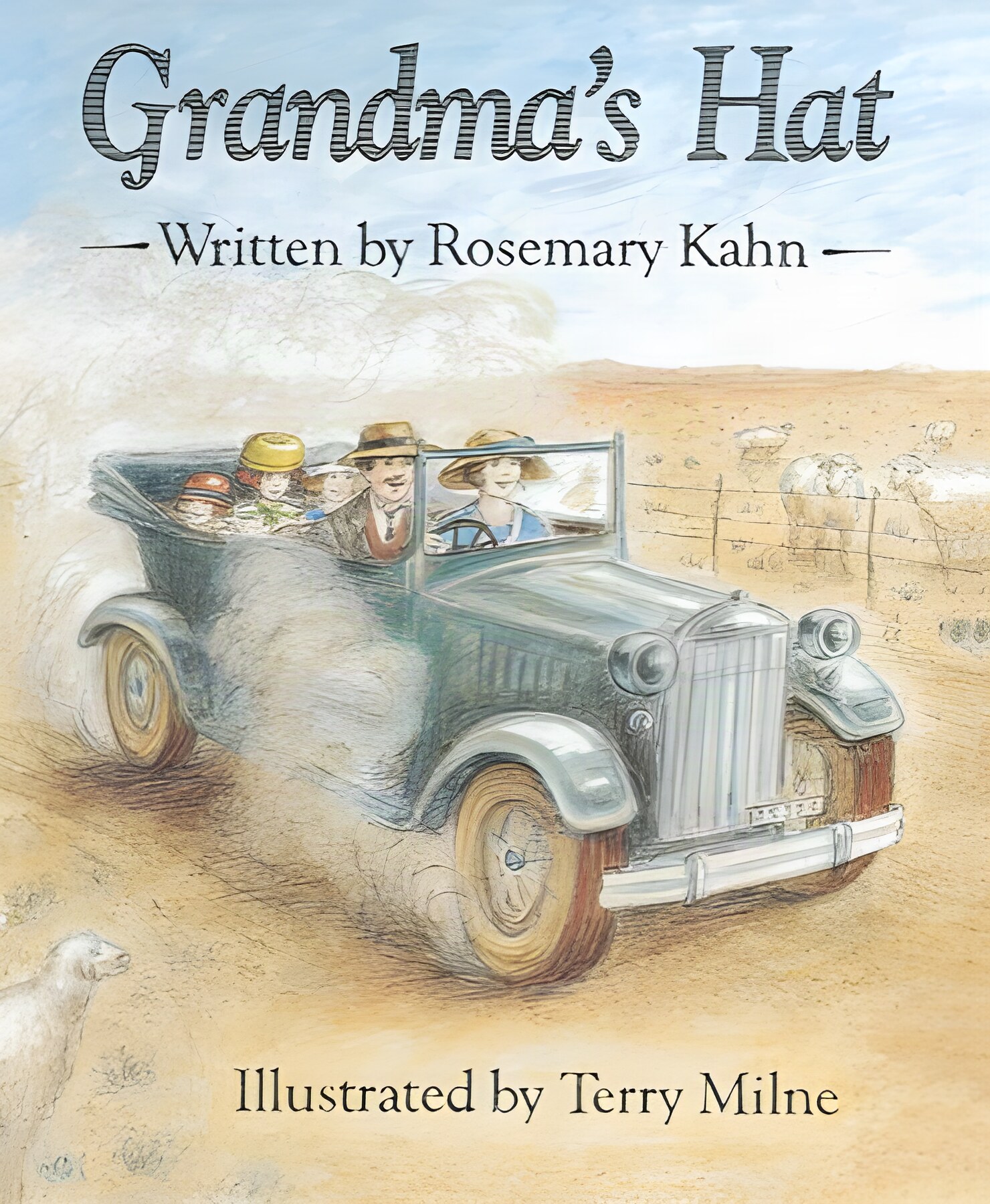
Hardcover. NY, Walker Books, 1st US, 1993, Book: Very Good, Dust Jacket: Very Good, Hardcover in a bright dust jacket. A woman tells her grandchildren about an ugly hat she once had as a young girl and what happened when she accidentally lost it. In soft pencil and watercolor, Milne's art nicely evokes the South African setting in its many details, including Papa's general store. Clean copy.
Hardcover. London, Gibbings and Co., 2nd Ed., 1896, Book: Very Good, Dust Jacket: None, 341 pages. Hardcover with blue cloth covers with black and gilt design. An ex-library but aside from spine stickers and bookplate, a remarkably clean, tight copy. Doesn't appear to be a circulating copy. Tales of hunting throughout the world, but mostly in America, from snipe shooting to wolf coursing. Includes several fishing chapters; salmon in Japan, black and striped bass, grey mullet, brook trout and muskies, with a final chapter on artificial stocking of lakes and rivers.
Hardcover. NY, Charles Scribner's Sons, 1st, 1948, Book: Good, Dust Jacket: None, Hardcover, tan cloth stamped in black, 154 pages. Numerous black & white photographs printed with the text; maps on endpapers. A survey of South African society, including much on traditional Zulu culture. The author was an Italian explorer, who wrote numerous books on sub-Saharan Africa and made documentary films of the region. Light envelope residue to rear paste-down indicating ex-lib, but no oher markings.
Hardcover. Chicago, Rand, McNally & Co., 1st, 1925, Book: Very Good, Dust Jacket: None, Hardcover, brown cloth with gilt lettering, 686 pages. Maps on endpapers, frontis. portrait of author. Profusely illustrated with b&w photos. The social attitudes of the author are typical of his time, still, an interesting picture of Africa in the 1920s. Bookplate on first blank page, small tear to top of cloth spine, otherwise very good, clean.
Hardcover. London, Macmillan Co., 2nd pr., 1898, Book: Very Good, Dust Jacket: None, Hardcover, 604 pages, 3 fold-out color maps in rear of book. Red coth covers, hinges tender, spine with fading. An account of the landscape, vegetation and wildlife of southern Africa precedes an historical survey of the non-European inhabitants and the arrival and spread of the European settlers.
Hardcover. NY, Walker Books, 1st, 2007, Book: Very Good, Dust Jacket: Very Good, Hardcover in a bright, unclipped dust jacket. Thomas Pakenham, no stranger to Africa with his award-winning books The Boer War and The Scramble for Africa, nor to remarkable trees with his bestselling Remarkable Trees of the World, combines his two interests on safari in Southern Africa. His particular quarry is the rare, the giant, the very old, the extraordinary, or the simply beautiful-from a giant baobab and a prickly quiver tree in Namibia to a glorious jacaranda in South Africa and sesame bushes attacked by elephants in Botswana. He uncovers trees written about by the great explorers of the past, or associated with magic, folklore, or ritual. The narrative accompanying each image interweaves the stories of Pakenham's own journey-at some moments scaling trees to escape from enraged wildlife, while at others standing in awe before a particular tree, connected by some primitive, atavistic bond-with those of the trees themselves, imbuing each with personality and presence. The result is a beautifully crafted blend of botany and social history, the product of a brilliant photographer, an original mind, and a superlative writer. 208 pages in color. Clean copy. DOMESTIC SHIPPING ONLY.
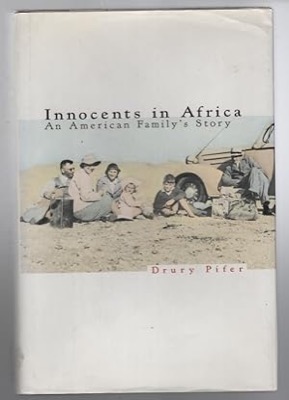
Hardcover. NY, Harcourt Brace , 1st, 1994, Book: Very Good, Dust Jacket: Very Good, Hardcover in a bright, unclipped dust jacket. Illustrated with 16 pages of black and white photographs, 338 pages. With wry humor and sharp observation, playwright Pifer elegantly mixes memory and research to reconstruct the world of his South African boyhood from 1933 to 1945. Pifer's father, an idealistic mining engineer in search of challenge and stability during the Depression, found it in Africa, but his earnest American egalitarianism soon put him in conflict with Afrikaner mine overseers, and his career under magnate Sir Ernest Oppenheimer stalled. The author deftly evokes his family--"my mother had the freedom of a disobedient daughter"--and the isolation of the desert town of Oranjemund. The book is even more resonant in its snapshots of mid-century Southern Africa: the still-simmering enmity between Afrikaners and the English; the ripples from Hitler's war in what prior to WW I had been the German territory of South West Africa (currently Namibia). Pifer's knowing account of the travails of servants--"the chasm that exists between white mistress and African maid"--still rings true today. Clean copy.
Capetown SA, Fernwood Press/Rembrandt van Rijn Art Foundation, 1st, 1995, Book: Very Good, Dust Jacket: Very Good, Hardcover in a bright dust jacket with minor edgewear 156 pages. Irma Stern (1894-1966) became a renowned artist in South Africa, the country she chose to live and paint the diversity of life and objects. She painted numerous portraits and still life and Rose to fame as one of their great artists. Herart works are exhibitted around the world, and this book is an attempt to shed some lights on Irma Stern?s life and her paintings. Printed on high quality stock, this oversized volume is jampacked with some of her finest works. Clean copy.
Hardcover. Hatje Cantz, 1st, 2008-08-01, Book: Very Good, Dust Jacket: Very Good, Hardcover, pages. Like new in publisher's shrink-wrap. In the early 1950s, Berlin-born photographer Jurgen Schadeberg captured Nelson Mandela, (then a young attorney), singer Miriam Makeba and the nightlife in Sophiatown, a dynamic black neighborhood in Johannesburg. Revealing the poverty endemic to the majority of South Africa's black population became Schadeberg's chief focus. He arrived there in 1950, at the advent of apartheid, to work for Drum, the first magazine for black readers. In 1964, when Drum was banned, Schadeberg left South Africa for Europe and the United States, creating a body of portraits unique in their ability to cut across race, class and social standing. In 1994, Schadeberg created an iconic image of Nelson Mandela, by then the first black President of South Africa, standing at the window of his former prison cell on Robben Island, where he had been detained on charges of conspiracy from 1964-1982. Schadeberg, whose work has been highly influential to younger artists, now lives and works near Paris. This substantial volume collects 250 images from across his career.


 "David Goldblatt: Photographs: Hasselblad Award 2006by: Michael Godby, David Goldblatt, et al.")
 "Diamond : The History of a Cold-Blooded Love Affairby: Hart, Matthew")
 "Dry White Season, A (SIGNED COPY)by: Brink, Andre")
 "Eve Arnold: Magnum Legacyby: Janine di Giovanni, Susan Meiselas , et al.")


 "Faithful Friend, Theby: San Souci, Robert D. and Brian Pinkney")

 "Fault Lines: Journeys into the New South Africa by: Goodman, David")
 "Finest Photos From the Old Drum, Theby: Jurgen (compiler and editor) Schadeberg")
 "Food on the Move: Dining on the Legendary Railway Journeys of the Worldby: Sharon Hudgins")



 "Gun Rod and Saddle: A Record of Personal Experiencesby: Gillmore, Parker")

 "Illustrated Africa: North Tropical Southby: Boyce, William D.")
 "Impressions of South Africaby: Bryce, James")

![Irma Stern: A Feast for the Eye by: Arnold, Marion ; Stern, Irma [Painter]](javascript:largeIMTop('https://www.browsingisarousing.com/shop/images/Irma-Stern-A-Feast-for-the-Eye_by_Arnold-Marion-Stern-Irma-Painter-379759-417403.jpg','https://www.browsingisarousing.com/shop/images/Irma-Stern-A-Feast-for-the-Eye_by_Arnold-Marion-Stern-Irma-Painter-379759-417403.jpg',0,'379759',0,'') "Irma Stern: A Feast for the Eye by: Arnold, Marion ; Stern, Irma [Painter]")
 "Jurgen Schadebergby: Schadeberg, Jurgen")