Hardcover. NY, Oxford University Press, 1st, 1999, Book: Very Good, Dust Jacket: Very Good, Hardcover in a bright, unclipped dust jacket. 455 pages, b&w illustrations. From John Hope Franklin, America's foremost African American historian, comes this groundbreaking analysis of slave resistance and escape. A sweeping panorama of plantation life before the Civil War, this book reveals that slaves frequently rebelled against their masters and ran away from their plantations whenever they could. For generations, important aspects about slave life on the plantations of the American South have remained shrouded. Historians thought, for instance, that slaves were generally pliant and resigned to their roles as human chattel, and that racial violence on the plantation was an aberration. In this precedent setting book, John Hope Franklin and Loren Schweninger demonstrate that, contrary to popular belief, significant numbers of slaves did in fact frequently rebel against their masters and struggled to attain their freedom. By surveying a wealth of documents, such as planters' records, petitions to county courts and state legislatures, and local newspapers, this book shows how slaves resisted, when, where, and how they escaped, where they fled to, how long they remained in hiding, and how they survived away from the plantation. Of equal importance, it examines the reactions of the white slaveholding class, revealing how they marshaled considerable effort to prevent runaways, meted out severe punishments, and established patrols to hunt down escaped slaves. Clean copy.
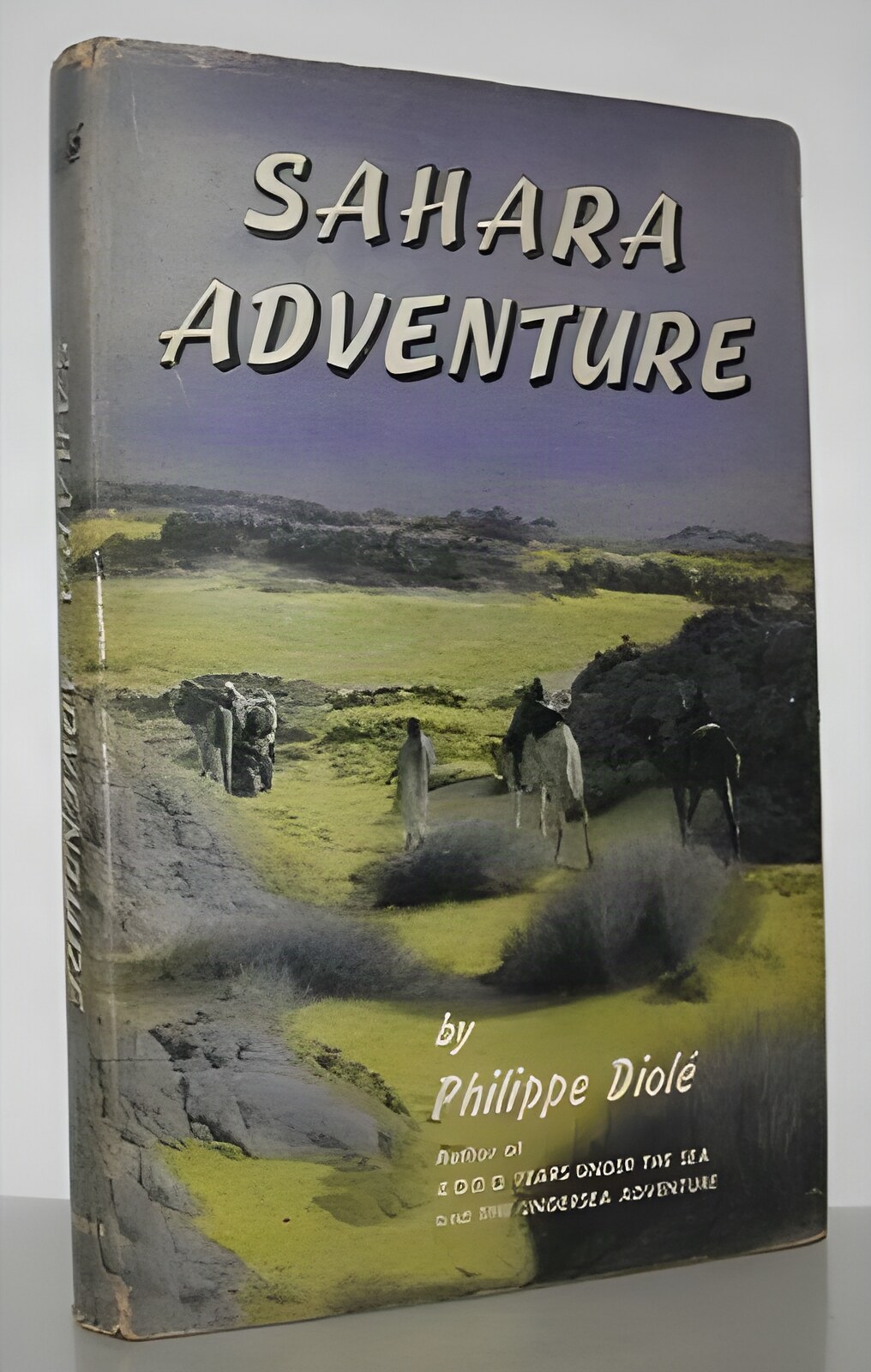
Hardcover. NY, Julian Messner, 1st, 1956, Book: Very Good, Dust Jacket: Good, Hardcover in a lightly worn, price-clipped dust jacket. Translated from the French by Katherine Woods. Engaging account of the author's camel trek across the untamed South Fezzen region of the Sahara Desert, encountering exotic vegetation and prehistoric cave paintings along the way. No markings.
Hardcover. Johannesburg, Tafelberg , 1st thus, 1972, Book: Very Good, Dust Jacket: Very Good, Hardcover in a bright dust jacket. The South African edition of Sara Whitcher's Story, SIGNED BY YATES on title page. Dutch text. B&W illustrations by Nora S. Unwin.
Hardcover. Los Angeles, CA, Taschen, 1st, 2007, Book: Very Good, Dust Jacket: Very Good, 336 pages. Hardcover with dust jacket. Very clean, unmarked copy still in publishers shrink-wrap. This book brings together Salgado's photos of Africa in three parts. The first concentrates on the southern part of the continent (Mozambique, Malawi, Angola, Zimbabwe, South Africa, Namibia), the second on the Great Lakes region (Congo, Rwanda, Burundi, Uganda, Tanzania, Kenya), and the third on the Sub-Saharan region (Burkina Faso, Mali, Sudan, Somalia, Chad, Mauritania, Senegal, Ethiopia). Texts are provided by renowned Mozambique novelist Mia Couto, who describes how today's Africa reflects the effects of colonization as well as the consequences of economic, social, and environmental crises.
Hardcover. Los Angeles, CA, Taschen, 1st, 2007, Book: Very Good, Dust Jacket: Very Good, 336 pages. Hardcover with dust jacket. Very clean, unmarked copy still in publishers shrink-wrap. This book brings together Salgado's photos of Africa in three parts. The first concentrates on the southern part of the continent (Mozambique, Malawi, Angola, Zimbabwe, South Africa, Namibia), the second on the Great Lakes region (Congo, Rwanda, Burundi, Uganda, Tanzania, Kenya), and the third on the Sub-Saharan region (Burkina Faso, Mali, Sudan, Somalia, Chad, Mauritania, Senegal, Ethiopia). Texts are provided by renowned Mozambique novelist Mia Couto, who describes how today's Africa reflects the effects of colonization as well as the consequences of economic, social, and environmental crises. NOTE: DUE TO SIZE & WEIGHT, DOMESTIC SHIPPING ONLY.
Softcover. Urbana IL, University of Illinois Press, reprint, 2003, Book: Very Good, Dust Jacket: None, Softcover, 433 pages. From the plaintive tunes of woe sung by exiled kings and queens of Africa to the spirited worksongs and "shouts" of freedmen, enslaved people created expansive forms of music from the United States to the West Indies and South America. Dena J. Epstein's classic work traces the course of early black folk music in all its guises. Anchored by groundbreaking scholarship, it redefined the study of black music in the slavery era by presenting the little-known development of black folk music in the United States. Her findings include the use of drums, the banjo, and other instruments originating in Africa; a wealth of eyewitness accounts and illustrations; in-depth look at a wide range of topics; and a collection of musical examples. This edition offers an author's preface that looks back on the twenty-five years of changes in scholarship that followed the book's original publication. Clean copy.
Hardcover. Long Beach CA, Safari Press, 1st, 2010, Book: Very Good, Dust Jacket: Very Good, Hardcover in a bright dust jacket. 336 pages, color and b/w photographs, b/w sketches by the author. Brown boards, spine titled in gilt. Fine new copy in dust-wrapper. As the longtime editor of Safari magazine, Quimby had the chance to hunt on multiple continents for all the sundry game animals found there. In this book he tells us of hunts across North and South America; South Africa, Zimbabwe, Zambia, and other parts of Africa; Spain; Mongolia; and New Zealand. Also included is Quimby's successful quest to become one of the very few to take all ten of Arizona's big-game species. Several of his hunts were memorable for what went wrong. A horse panicked and fell off a series of ledges during a hunt for a mountain lion, which led to Quimby and a friend spending a cold New Year's Eve on a ridge without shelter or fire. Then, after he had waited thirty-nine years to draw an Arizona desert sheep tag, Bill is changing a tire on the first day of hunting when a bumper jack slips and breaks his arm. (He shot his ram and completed his "Big Ten" quest twelve days later by firing his rifle one-handed.) Some other stories include the time an Indian guide fell from a boat in the Northwest Territories and drowned on the author's caribou hunt; the time a storm on a Yukon moose hunt kept Quimby and his guide snowbound in a plywood shack for nine days. Still in publisher's shrinkwrap.
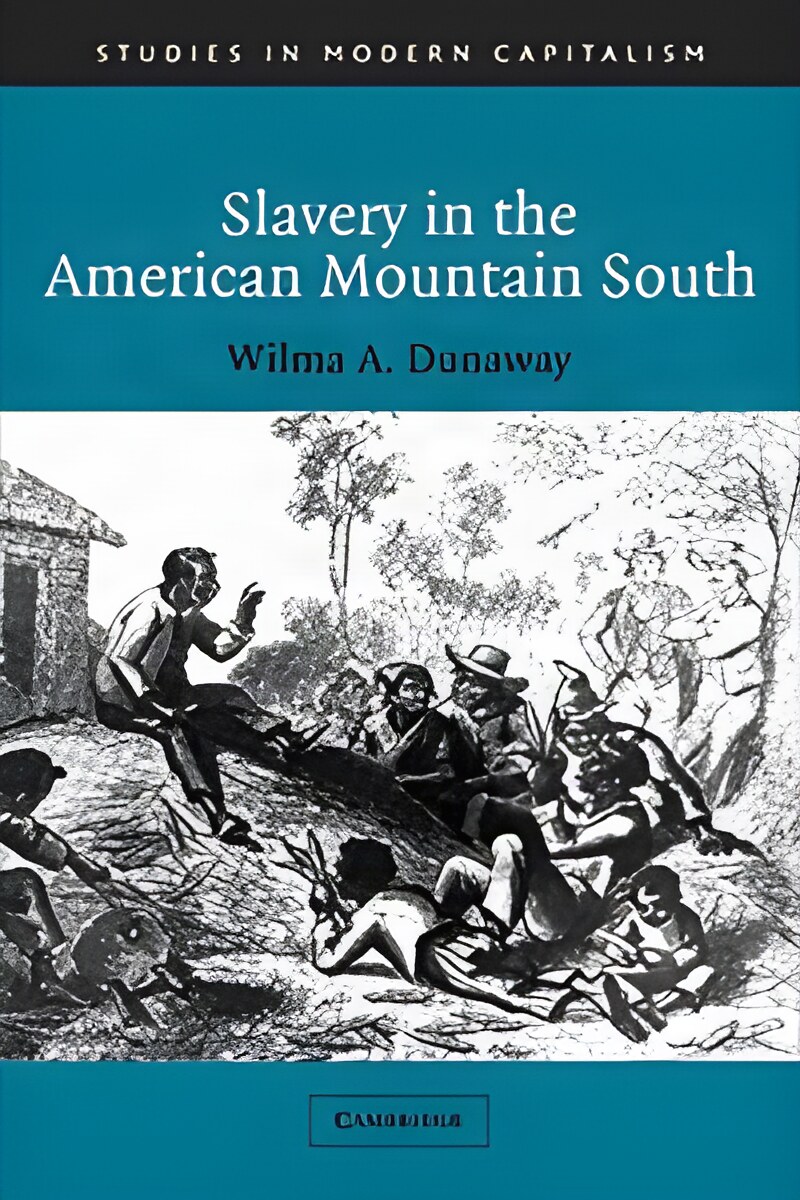
Softcover. UK, Cambridge University Press, 1st pbk, 2003, Book: Very Good, Dust Jacket: None, Softcover, 352 pages, b&w illustrations. Wilma Dunaway breaks new ground by focusing on slave experiences on small plantations in the Upper South. She argues that a region was not buffered from the political, economic, and social impacts of enslavement simply because it was characterized by low black population density and small slaveholdings. By drawing on a massive statistical data base derived from antebellum census manuscripts and county tax records of 215 counties in nine states, on a vast array of slaveholder manuscripts, and on regional slave narratives, she pinpoints several indicators that distinguished Mountain South enslavement from the Lower South. These include a higher incidence of ethnic mixing between African and Native American slaves, heavier reliance on the field labor of women and children, and more frequent assignment of slaves to non-agricultural occupations. Dunaway also calls into question the notion that large numbers were necessary before slaves could engage in community building and resistance. Clean, bright copy.
Hardcover. NY, Harper and Row, 1st US, 1976, Book: Very Good, Dust Jacket: Good, Hardcover in a lightly worn and yellowing dust jacket. Tromp Kramer, Africaner police detective, and Mickey Zondi, Bantu police sergeant, in Trekkersburg, South Africa, are featured in this fourth detective novel by McClure. Exotic dancer Eve?'s sensual act features a five-foot royal python. When she is discovered in her dressing room dead of strangulation, her dancing partner turns out to be the murder weapon.
Hardcover. East Aurora NY, The Roycrofters; Elbert Hubbard, 1st, 1901, Book: Very Good, Dust Jacket: None, Hardcover, publisher's brown suede spine and printed gray boards with title in gilt to spine. Ribbon marker, 82 pages, Initials, borders and ornaments designed by St. Gerome [Jerome Conner]. Top edge gilt, other sides deckle edge. So Here Then Are Dreams is a collection of poetic short stories that deal with the fundamental issues of life such as freedom, justice, and love. Olive Shreiner (1855-1920) South African author, suffragist, and political activist. White title on cover is partially faded, otherwise a sharp, clean copy.
Hardcover. NY, The Viking Press, 1st, 1984, Book: Very Good, Dust Jacket: Very Good, Hardcover in a bright dust jacket, 203 pages. A long novella and a collection of short stories by this South African Nobel Prize lauriate. Clean copy.
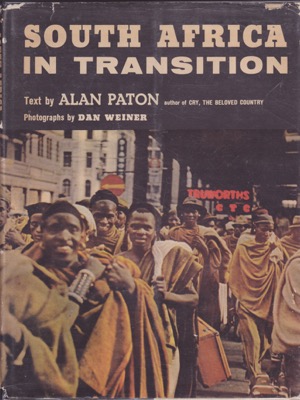
Hardcover. NY, Charles Scibner's Sons, 1st, 1956, Book: Very Good, Dust Jacket: Fair, Hardcover, color frontis, 82 black & white photos by Dan Weiner. Dust jacket with chunks gone from all edges, closed tears. Clean copy.
Hardcover. US, Mark Batty Publisher, 1st, 2011, Book: Very Good, Dust Jacket: None, 128 pages. Hardcover with no dust jacket. Clean, unmarked copy with only minor wear to covers. color and Black and white pictures throughout. Simon Weller presents his vivid photographs of these shops, their signage and their patrons alongside interviews with the proprietors, customers and the sign makers.
Hardcover. US, Mark Batty Publisher, 1st, 2011, Book: Very Good, Dust Jacket: None, 128 pages. Hardcover with no dust jacket. Clean, unmarked copy with only minor wear to covers. color and black and white pictures throughout. Simon Weller presents his vivid photographs of these shops, their signage and their patrons alongside interviews with the proprietors, customers and the sign makers.
Hardcover. London, Heinemann, 1st, 1971, Book: Very Good, Dust Jacket: Very Good, Hardcover in a bright, unclipped dust jacket. 303 pages, black & white photos and maps. Name on front fly leaf. Otherwise, clean.
Hardcover. Edinburgh, Adam & Charles Black, 1st, 1838, Book: Very Good, Dust Jacket: None, Four volumes complete, [x], 676p, [1]; [iv], 632p; [iv], 626p; 571p+Index. Full calf binding, marbled edges, spine ribbed with 6 sections, 2 with leather labels and gilt titles. Gilt edge design on all edges, ornate gilt design on spine. Bookplate of Herbert John Gladstone on inside covers. He was a British Liberal politician. The youngest son of Prime Minister William Ewart Gladstone, he was Home Secretary from 1905 to 1910 and Governor-General of the Union of South Africa from 1910 to 1914. All volumes are bright and clean. Some minor wear to spine edges.
Hardcover. NY, Alfred A. Knopf, 1st US, 1954, Book: Very Good, Dust Jacket: None, Hardcover, decorative red cloth, 370 pages, no dust jacket, Abrahams was born in the slums of Johnannesburg and later moved to England. Autobiography of author's 22 years of struggle before he left South Africa. Name on front fly leaf, otherwise tight and clean copy.
Hardcover. NY, Norton, 1st, 2010, Book: Very Good, Dust Jacket: Very Good, 752 pages. Hardcover with dust jacket. A very clean, unmarked copy with only minor wear to dust jacket edges. A tight copy. Never before has Gordimer, awarded the Nobel Prize for Literature in 1991, published such a comprehensive collection of her nonfiction. Telling Times represents the full span of her works in that field-from the twilight of white rule in South Africa to the fight to overthrow the apartheid regime, and most recently, her role over the past seven years in confronting the contemporary phenomena of violence and the dangers of HIV. The range of this book is staggering, and the work in totality celebrates the lively perseverance of the life-loving individual in the face of political tumult, then the onslaught of a globalized world. The abiding passionate spirit that informs "A South African Childhood," a youthful autobiographical piece published in The New Yorker in 1954, can be found in each of the book's ninety-one pieces that span a period of fifty-five years.
Softcover. Washington DC, National Gallery of Art , 2nd pr., 203, Book: Very Good, Dust Jacket: None, Softcover, 334 pages illustrated with 224 color plates, 86 black & white. One of America's most innovative artists, Romare Bearden (1911-1988) made colorful and passionate images that reflected his life in a time of creative ferment. His influences ranged from the old masters to African art, as well as the world around him: popular religion and ritual, jazz clubs and brothels, the history and literature of his time, and the places he lived (the rural South, Pittsburgh and Harlem, the Caribbean island of St. Martin). The resulting images are fresh and evocative, filled with quirky details and rhythmic forms. This authoritative and beautiful book, which accompanies a major retrospective opening at the National Gallery of Art in Washington, D.C., provides a provocative and absorbing look at a beloved artist. The Art of Romare Bearden showcases compelling examples of his pioneering work: complex collages and photostats; watercolors, gouaches, and oils; little-known landscapes; his only known sculpture; costume designs; and book illustrations. Mildwear to corners otherwise very good, clean copy.
Hardcover. UK, Osprey Military Books, 1st, 1999, Book: Very Good, Dust Jacket: None, Hardcover, brown cloth with gilt lettering on spine, 160 pages. The Boer War devastated the South African economy and left a legacy of bitterness. It saw the invention of the concentration camp and a new style of guerilla warfare. This history of the campaign includes artwork of maps, weapons and uniforms, with contemporary photography from the period. Clean copy. No dust jacket.
Hardcover. Boulder CO, Westview Press, 1st, 1992, Book: Very Good, Dust Jacket: Very Good, Hardcover in a bright dust jacket, 304 pages, b&w illustrations. INSCRIBED BY AUTHOR on front fly leaf to fellow anthropologist William Mitchell.Images of the Bushman--from the innocent hero of the hit movie, The Gods Must Be Crazy, to "vermin" eradicated by the colonists, to the superhuman trackers conscripted by the South African Defense Forces, and the living embodiment of prehistory for the academic--shape our perceptions rather than the actuality. Looking at this interplay between imagery, history, and policy, Robert Gordon focuses not on the Bushman but on the colonizers' image of them and the consequences of that image for the people assumed to be Bushmen. Clean copy.
Softcover. London/Berkeley, James Currey/University of California, 1989, Softcover, 422 pages, despite a quarter century of "nation building," most African states are still driven by ethnic particularism--commonly known as "tribalism." The stubborn persistence of tribal ideologies despite the profound changes associated with modernization has puzzled scholars and African leaders alike. The bloody hostilities between the tribally-oriented Zulu Inkhata movement and supporters of the African National Congress are but the most recent example of tribalism's tenacity. The studies in this volume offer a new historical model for the growth and endurance of such ideologies in southern Africa. Name on front fly leaf, underlining to Introduction, otherwise clean.
Softcover. NY, Penguin Books, reprint, 1990, Book: Very Good, Dust Jacket: None, Softcover, 363 pages. Despite ceaseless conflict between different classes and cities, Holland's rise to power was almost miraculously rapid. In a few short years a tiny country gained control of territory from Indonesia to the West Indies, from South Africa to South America. In this marvelously evocative book Professor Boxer recaptures the scenes of adventure and dissipation in the four corners of the earth , the up surge in the arts and sciences, and the sad decoines from the ' Golden Century' to the 'Periwig Period'. Few stories could be as rich and colorful, yet it was largely inspired by the ' grave and sober people of Holland', the Calvinist merchants of Amsterdam who forged a nation based on ' gain and godliness'. Such were the people whom Rembrandt painted, who debated policies of apartheid or assimilation, who founded factories and forts. The Dutch Seaborne empire offers a portrait of them all, as they made their spectacular entrance into the modern world. Clean copy.

 "Runaway Slaves: Rebels on the Plantationby: Franklin, John Hope & Schweninger, Loren")
 "Sara in die Woud (SIGNED COPY)by: Yates, Elizabeth")
 "Sebastiao Salgado: Africaby: Salgado, Sebastiao")
 "Sebastiao Salgado: Africaby: Salgado, Sebastiao")
 "Sinful Tunes and Spirituals: Black Folk Music to the Civil War Music in American Lifeby: Dena J. Epstein")

 "Snakeby: McClure, James")
 "So Here Then Are Dreamsby: Schreiner, Olive")
 "Something Out There: Storiesby: Gordimer, Nadine")

 "South African Township Barbershops & Salonsby: Weller, Simon")
 "South African Township Barbershops & Salonsby: Weller, Simon")
 "South-West Africa under German Rule 1894-1914by: Bley, Helmut")
 "Speeches of Henry Lord Brougham, upon questions relating to Public Rights, Duties and Interests; with Historical Introductions, and A Critical Dissertation upon the Eloquence of the Ancients. (Volumes 1, 2, 3, 4)")


 "Tell Freedom: Memories Of Africaby: Abrahams, Peter")
 "Telling Times: Writing and Living, 1954-2008by: Gordimer, Nadine")

 "The Bushman Myth: The Making Of A Namibian Underclass (Conflict and Social Change Series) (SIGNED COPY)by: Robert J. Gordon")
 "The Creation of Tribalism in Southern Africaby: Leroy Vail")