Hardcover. NY, William Morrow, 1st, 1961, Book: Very Good, Dust Jacket: None, Hardcover, light gray boards with a blue cloth spine, 268 pages. The author's passionate concern for Africa and for the human spirit is evident in this portrait of the "First People" of southern Africa, the Bushmen. Van der Post describes his desert travels, the splendid landscape and wildlife, and his encounters with the Bushman, an elusive culture. Drawings by Maurice Wilson. SIGNED BY VAN DER POST on the front fly leaf. No dust jacket, Clean copy.
Hardcover. London, Routledge & Kegan Paul, reprint, 1951, Book: Very Good, Dust Jacket: None, Hardcover, yellow-orange cloth with stamped gilt lettering. One of the earliest and most comprehensive ethnographical studies of the Khoisan peoples. The interior contents (xi + 450 pp.) are clean, complete, and securely bound. These contents include two rear fold-out maps and 16 b&w plates. Owner's name inside front cover otherwise clean.
Hardcover. Berkeley, University Of California Press, 1st, 1984, Book: Very Good, Dust Jacket: Very Good, Hardcover in a bright dust jacket, 278 pages. History of the Pedi's struggle to keep the land that belonged to them in South Africa. Clean copy.
Hardcover. Greenwich CT, New York Graphic Society, 1st, 1972, Book: Very Good, Dust Jacket: Very Good, Hardcover, 208 pages. Margaret Bourke-White was "a war correspondent, a compassionate witness of famine in India, a dedicated seeker of the truth, whether it be among sharecroppers, South African goldminers, American GI's or Jesuits. . All of her important work is shown in this major retrospective of her career." Tan cloth binding, illustrated dust jacket.
Hardcover. Boston, Little Brown, 1st, 1960, Hardcover, 336 pages, b&w drawings by Lea. Dust jacket with light edgewear, chipping. Novel about Hank Spurling, a Marine hero of the war in the Pacific, who returned to the Cloudrock Mountains in Wyoming. In the early days of World War II, Lea became a war correspondent for Life magazine, executing paintings of action in the North Atlantic, the South Pacific, China, North Africa, and Europe. Lea's career thereafter involved both painting and writing, on a variety of subjects but generally reflective of his roots in the Southwest. Clean copy.
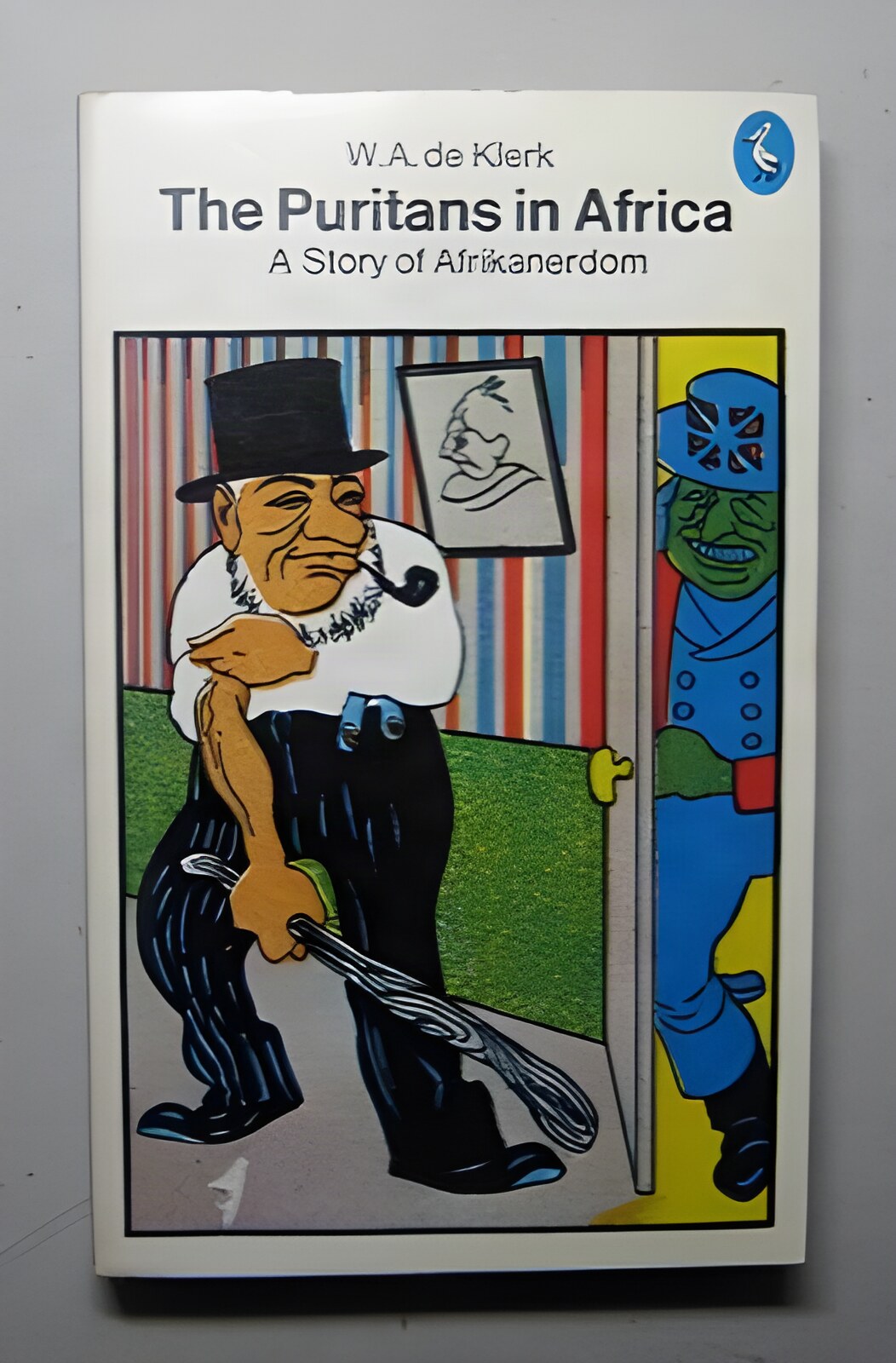
Softcover. UK, Penguin Books, reprint, 1983, Book: Very Good, Dust Jacket: None, Softcover, 317 pages. The roots of apartheid. The book relates the history of a small people, the Afrikaners, and their attempts to remake their particular world according to a rational plan from the radical Right. First published in 1975. Clean copy.
Hardcover. Chicago, University of Chicago Press, 1st, 1988, Book: Very Good, Dust Jacket: Very Good, Hardcover in a bright, unclipped dust jacket, 223 pages. The Nzema of West Africa, who inhabit a land of forest and lagoons along the Atlantic, continue a heritage untapped by anthropologists and scarcely influenced by Western civilization. Vinigi L. Grottanelli first discovered the rich culture of this southern Ghanaian tribe in 1954. Over the next three decades, intermittent sojourns enabled Grottanelli to develop friendships with the Nzema and learn about their beliefs, traditions, and practices. In twenty absorbing vignettes, The Python Killer renders a vivid portrayal of Nzema life. B&w illustrations. Clean copy.
Hardcover. Toronto, McClelland & Stewart, 1st, 1990, Book: Very Good, Dust Jacket: Very Good, Hardcover in a bright, unclipped dust jacket. 321pages, b&w illustrations. The Sharpeville Six were six South African protesters convicted of the murder of Deputy Mayor of Sharpeville, Kuzwayo Jacob Dlamini, and sentenced to death. On September 3, 1984, a protest march in Sharpeville turned violent (some of the crowd threw stones at Dlamimi's house, he responded by firing a gun and a riot ensued and the Deputy Mayor was murdered. Mojalefa Sefatsa, Theresa Ramashamola, Reid Mokoena, Oupa Diniso, Duma Khumalo and Francis Don Mokhesi were arrested in the following months, found guilty of murder under the "Common purpose" doctrine and sentenced to death by hanging on December 12, 1985. Christian Mokubung and Gideon Mokone were also sentenced to eight years in prison. All were represented by lawyer Prakash Diar, the author of this book.
Hardcover. Boston, Houghton Mifflin, 1st, 2008, Book: Very Good, Dust Jacket: Very Good, Hardcover in a bright dust jacket, 386 pages. The first narrative history of the Civil War told by the very people it freed. Groundbreaking, compelling, and poignant, The Slaves' War delivers an unprecedented vision of the nation's bloodiest conflict. An acclaimed historian of nineteenth-century and African-American history, Andrew Ward gives us the first narrative of the Civil War told from the perspective of those whose destiny it decided. Woven together from hundreds of interviews, diaries, letters, and memoirs, here is the Civil War as seen from not only battlefields, capitals, and camps, but also slave quarters, kitchens, roadsides, farms, towns, and swamps. Speaking in a quintessentially American language of wit, candor, and biblical power, army cooks and launderers, runaways, teamsters, and gravediggers bring the war to vivid life. From slaves' theories about the causes of the war to their frank assessments of such major figures as Lincoln, Davis, Lee, and Grant; from their searing memories of the carnage of battle to their often startling attitudes toward masters and liberators alike; and from their initial jubilation at the Yankee invasion of the slave South to the crushing disappointment of freedom's promise unfulfilled, The Slaves' War is a transformative and engrossing vision of America's Second Revolution. Clean copy.
Hardcover. London, Faber & Faber, 1st, 1991, Book: Very Good, Dust Jacket: Very Good, Hardcover in a bright, unclipped dust jacket, 281 pages. South African mystery featuring Afrikaner Tromp Kramer and Bantu Sergeant Zondi, set in a small town in northern Zululand in 1962. This book is a prequel to the other Kramer and Zondi mysteries - the story of how they first met each other.
Hardcover. NY, Grove Press, 1st, 1965, Book: Very Good, Dust Jacket: Very Good, Hardcover, 154 pages, in a lightly worn and price-clipped dust jacket. A novel by the African American poet and essayist set in the American South.
Hardcover. US, Hatje Cantz, 1st, 2010, Book: Very Good, Dust Jacket: None, Hardcover, 144 pages, 81 color images. Like new in publisher's shrink-wrap. In 1999, the fashion and advertising photographer Thomas Hoeffgen (born 1968) flew to Nigeria for a story on soccer. He became so interested in the culture around the game there that he spent the next several years making unusual photographs of players and spectators in Nigeria, Namibia, Botswana, Zambia, Malawi and South Africa. Hoeffgen"s pictures record the frequently improvised playing fields alongside the stadiums.
Hardcover. US, Hatje Cantz, 1st, 2010, Book: Very Good, Dust Jacket: None, Hardcover, 144 pages, 81 color images. Like new in publisher's shrink-wrap. In 1999, the fashion and advertising photographer Thomas Hoeffgen (born 1968) flew to Nigeria for a story on soccer. He became so interested in the culture around the game there that he spent the next several years making unusual photographs of players and spectators in Nigeria, Namibia, Botswana, Zambia, Malawi and South Africa. Hoeffgen"s pictures record the frequently improvised playing fields alongside the stadiums.
Hardcover. New York, American Subscription Publishing House, 1st, 1859, Book: Very Good, Dust Jacket: None, 358 pages. Black & white illustrations. Title in gilt on spine. Fading to spine, and along top 1" of front cover.
Softcover. Madison WI, University of Wisconsin Press, reprint, 1972, Book: Very Good, Dust Jacket: None, Softcover, 469 pages."One of the first histories to treat non-whites as active self conscious protagonists in twentieth-century South African affairs rather than as a dark acquiescent host before which the really important story of white South Africa unfolds. The new edition has been corrected and eight new chapters extend the coverage to the end of 1963. It is an important addition to the literature about South Africa."--The Historian. C;ean copy.
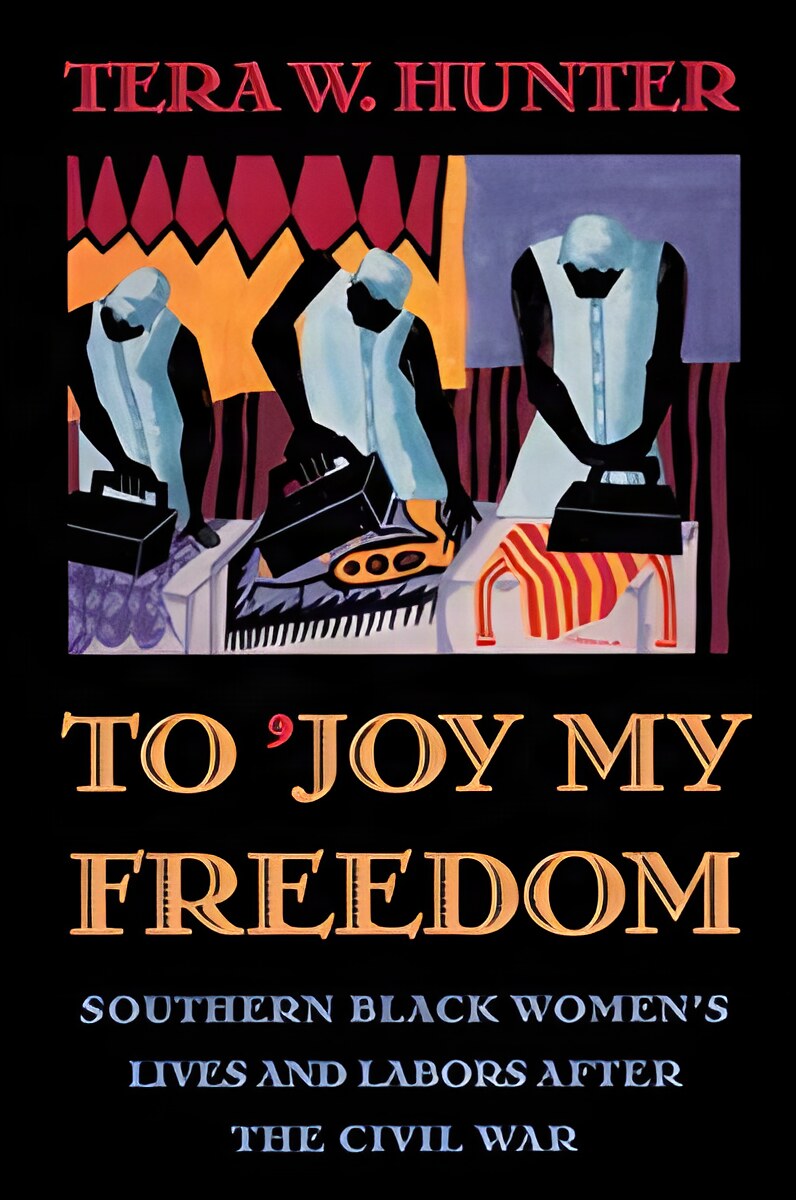
Softcover. Cambridge MA, Harvard University Press, reprint, 1998, Book: Very Good, Dust Jacket: None, Softcover, 311 pages. As the Civil War drew to a close, newly emancipated black women workers made their way to Atlanta-the economic hub of the newly emerging urban and industrial south-in order to build an independent and free life on the rubble of their enslaved past. In an original and dramatic work of scholarship, Tera Hunter traces their lives in the postbellum era and reveals the centrality of their labors to the African-American struggle for freedom and justice. Household laborers and washerwomen were constrained by their employers' domestic worlds but constructed their own world of work, play, negotiation, resistance, and community organization. Hunter follows African-American working women from their newfound optimism and hope at the end of the Civil War to their struggles as free domestic laborers in the homes of their former masters. We witness their drive as they build neighborhoods and networks and their energy as they enjoy leisure hours in dance halls and clubs. We learn of their militance and the way they resisted efforts to keep them economically depressed and medically victimized. Finally, we understand the despair and defeat provoked by Jim Crow laws and segregation and how they spurred large numbers of black laboring women to migrate north. Clean copy.
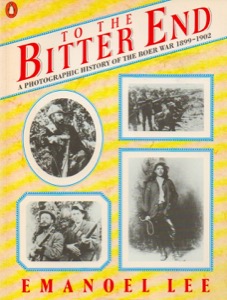
Softcover. UK, Penguin Books, 1st, 1986, Book: Very Good, Dust Jacket: None, Softcover, 226 pages, profusely illustrated in b&w. This book presents not only formal or professionally taken photos but also a fair amount of ordinary photos taken by soldiers and civilians. The history of the personal camera is tied up into the Boer War and the quality and candid nature of some of the photos are representatives of early personal use. A general pictorial overview of an ugly conflict in the waning days before WW1. Clean copy.
Hardcover. NY, Rand McNally & Co., 1st US, 1966, Book: Very Good, Dust Jacket: Very Good, Hardcover, Illustrated in 2-colors by Dugald MacDougall. The story of a 6-year old Zulu girl who has many adventures when she goes to the store alone for the first time! Includes exotic setting & details of Zulu life. Author grew up in South Africa. Light wear to dust jacket.
Hardcover. New York, Farrar Straus Giroux, 1st, 1985, Book: Very Good, Dust Jacket: Very Good, 396 pages. Hardcover with dust jacket. SIGNED BY AUTHOR on half-title page. Clean, tight copy with minor wear to covers and dust jacket.
Softcover. Philadelphia, University of Pennsylvania Press, 2nd pr., 2001, Book: Very Good, Dust Jacket: None, Softcover, 211 pages. Exposes the fact that slavery remains widespread in Sudan and is not grounded in the current civil war but on old prejudices between the Muslim north and the Christian south. A shocking account of Sudanese slavery.
Hardcover. NY, Atlantic Monthly Press, 1st, 2020, Book: Very Good, Dust Jacket: Very Good, Hardcover in a bright, unclipped dust jacket, 426 pages, illustrations. From Pulitzer Prize-winner David Zucchino comes a searing account of the Wilmington riot and coup of 1898, an extraordinary event unknown to most Americans. By the 1890s, Wilmington was North Carolina's largest city and a shining example of a mixed-race community. It was a bustling port city with a burgeoning African American middle class and a Fusionist government of Republicans and Populists that included black aldermen, police officers and magistrates. There were successful black-owned businesses and an African American newspaper, The Record. But across the state-and the South--white supremacist Democrats were working to reverse the advances made by former slaves and their progeny. In 1898, in response to a speech calling for white men to rise to the defense of Southern womanhood against the supposed threat of black predators, Alexander Manly, the outspoken young Record editor, wrote that some relationships between black men and white women were consensual. His editorial ignited outrage across the South, with calls to lynch Manly. Clean copy.
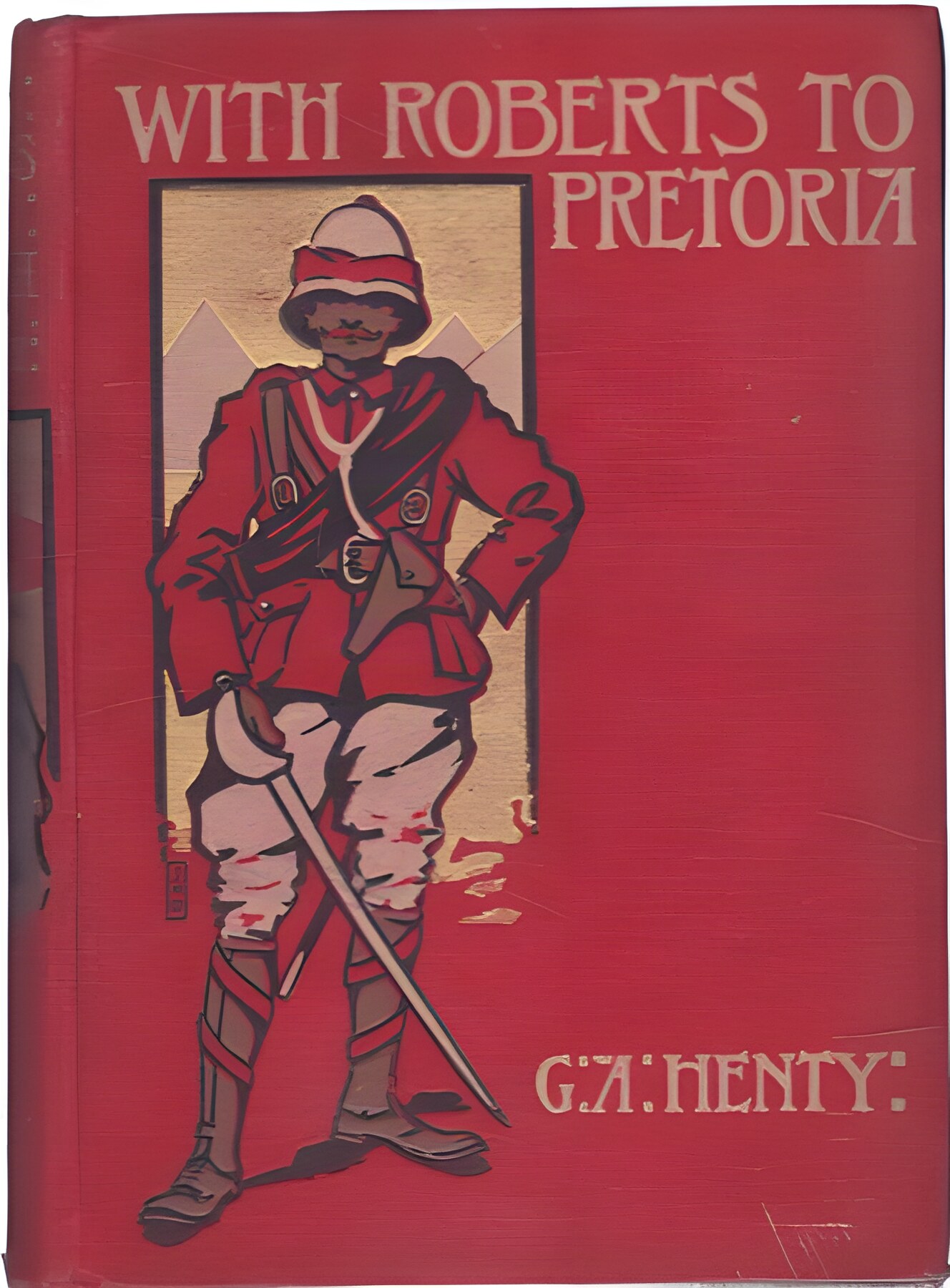
Hardcover. NY, Charles Scribner's Sons, 1st US, 1901, Book: Very Good, Dust Jacket: None, Hardcover, red cloth stamped in 3-colors plus gilt on front cover and spine, 393 pages plus publishers ads in rear. with twelve b&w illustrations by William Rainey, and a map.
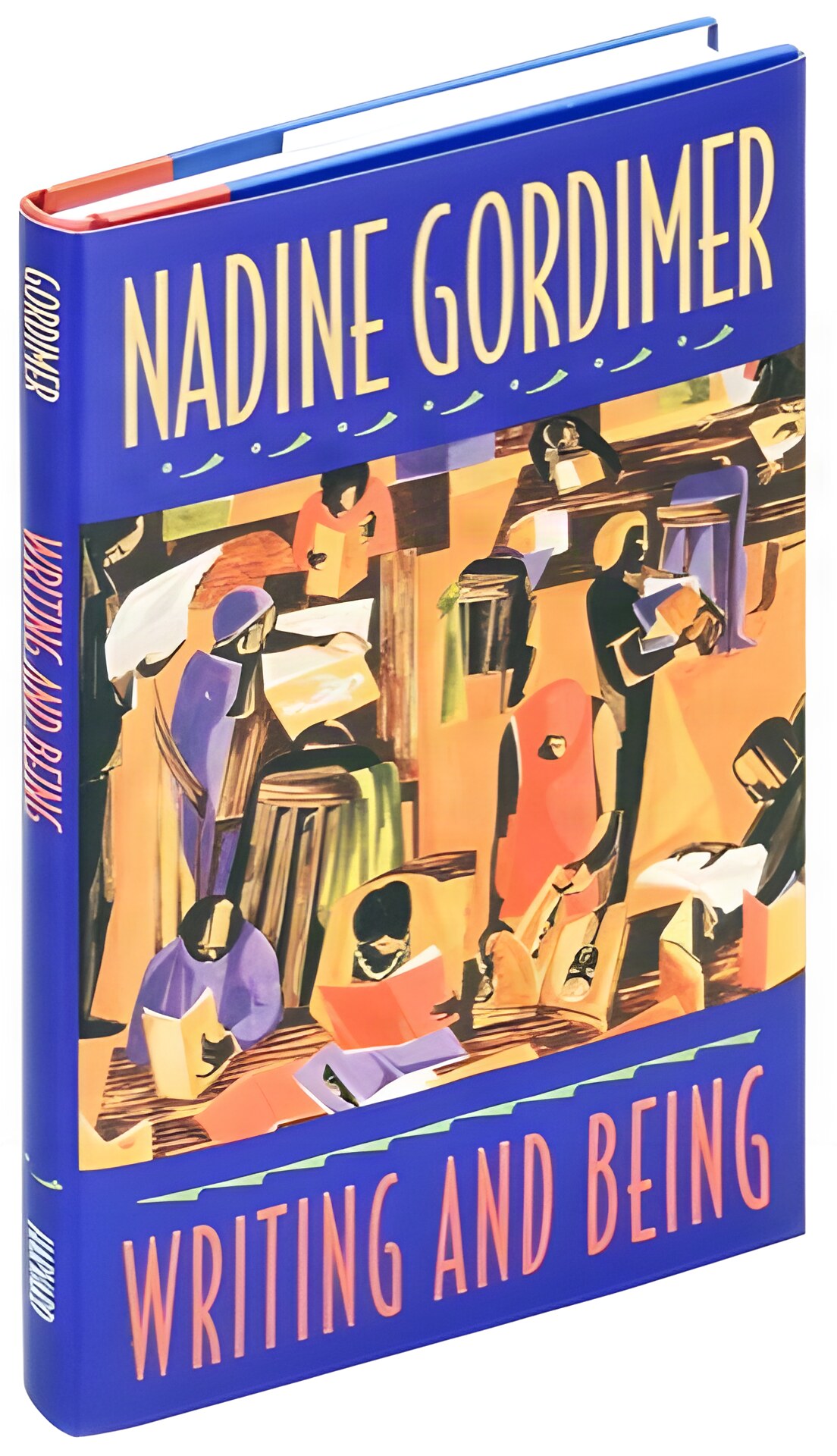
Hardcover. Cambridge MA, Harvard University Press, 1st, 1995, Book: Very Good, Dust Jacket: Very Good, Hardcover in a bright dust jacket, 145 pages. Gordimer examines the tension for a writer between life's experiences and narrative creations. She tries to unravel the mysterious process that breathes "real" life into fiction by exploring the writings of revolutionaries in South Africa and the works of Naguib Mahfouz, Chinua Achebe and Amos Oz. Ending on a personal note, Gordimer reveals her own experience of "writing her way out of" the confines of a dying colonialism.
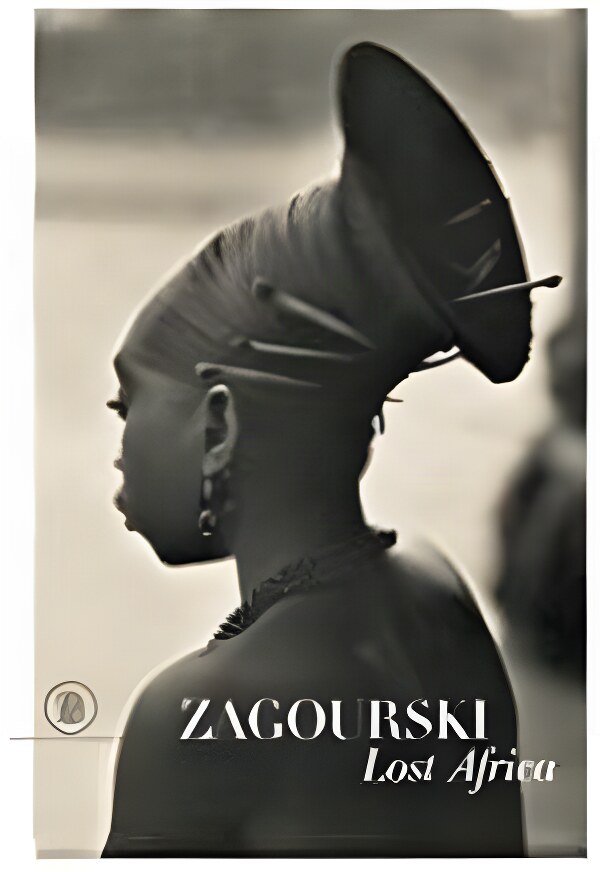
Hardcover. Milan, Skira, 1st, 2001, Book: Very Good, Dust Jacket: Very Good, Hardcover, 224 pages. An outstanding photographic monograph from the Twenties and Thirties brings back the memory of ways of living, ceremonies, adorned bodies of an Africa that be aptly defined as "lost". These extraordinary, unpublished pictures, taken with great technical skill and with a sense of great dignity of the people portrayed, constitute a monument to the African continent as it was. Kazimir Ostoja Zagourski (1880-1941) was born in Poland and moved to Congo in 1924. Zagourski was the first professional photographer to travel throughout the interior of Congo and visited also the neighboring countries, Tchad, Rwanda, Burundi, Uganda, Kenya, and South Africa. During his long stay in Africa he took hundred of pictures, 500 of which, divided in two extraordinary series on different tribes, build up to a unique historic and ethnographic survey. In a sense, Zagourski's work constitutes the first "non-European" look, devoid of the colonial overtones that characterize much contemporary work. His forays into the depths of the African continent took him into the most remote villages of Kuba, Mangbetu, Bwaka, Tutsi, Masai, etc. where he took unprecedented pictures of great ethnographic interest. he documented for example, ceremonies (initiation, circumcision, excision, masked dances, etc.), the great African creativity in body ornament (from scarification to hair dresses, from jewels to lip plugs), clothes and all utilitarian objects placed in their appropriate cultural context (musical instruments, shields, stools, knives, containers, etc.).




 "The Khoisan Peoples of South Africa: Bushmen and Hottentots by: Schapera, I.")
 "The Land Belongs to Us: The Pedi Polity the Boers and the British in the Nineteenth Century Transvaal by: Delius, Peter")
 "The Photographs of Margaret Bourke-Whiteby: Sean Callahan, Margaret Bourke-White , et al.")


 "The Sharpeville Six: South African Trial That Shocked the World by: Prakash Diar")

 "The Song Dogby: McClure, James")
 "The System of Dante's Hell by: LeRoi Jones (Baraka, Amiri)")
 "Thomas Hoeffgen: African Arenasby: Hawkey, Ian")
 "Thomas Hoeffgen: African Arenasby: Hawkey, Ian")

 "Time Longer than Rope: A History of the Black Man's Struggle for Freedom in South Africa by: Roux, Edward")
 "Tombi's Songby: Seed, Jenny")
 "True Confessions of an Albino Terrorist, The (SIGNED COPY)by: Breytenbach, Breyten")
 "War and Slavery in Sudan The Ethnography of Political Violence by: Jok, Jok Madut")