Hardcover. NY, Doubleday, 1st, 1963, Book: Very Good, Dust Jacket: Good, Hardcover in a lightly worn dust jacket, 269 pages. Photos by Norton Brown, Chase's husband. Map of Africa on end pages. An amusing and informative account of their photo-safari in East Africa. Contains meetings with Louis Leakey, Joy Adamson, and Tom Mboya. Clean copy.
Hardcover. New York , Charles Scribner's Sons, 1st, 1890, Book: Very Good, Dust Jacket: None, 490 pages, green cloth covers with black and gilt decoration. Two gravure frontispieces (of author and Henry Stanley), 21 full-page plates plus text illustrations. Folding map and facsimile of letter in envelope in rear. There is a small chunk of cloth gone from top of spine and some scuffing of cloth on spine and rear cover, otherwise very good.
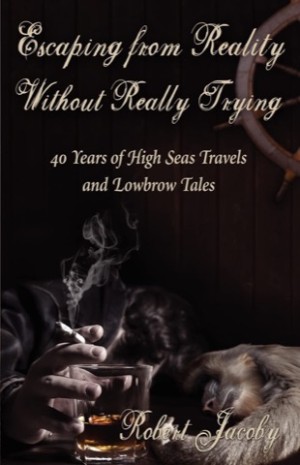
Softcover. Cloud Books, 1st, 2011, Book: Very Good, Dust Jacket: None, Softcover, 526 pages. Based on nearly 40 hours of interviews, Escaping from Reality Without Really Trying is the memoir of a 61-year-old, life-long merchant seaman re-counting his fantastic, hilarious, and politically incorrect exploits. He's a sailor-scholar and an individualist anarchist; he's read Voltaire and The Egyptian Book of the Dead. He admits to working at his hobby, sailing, to keep up his real occupation, drinking.He's lived 40 years of adventures around the world, including an incursion into Cambodia during the Vietnam War; a prison break from a Ceylon jail; a dockside fistfight in the Philippines in 1977; a 2-week stowaway run on a British merchant ship sailing around South Africa; meeting Omar Sharif in Aqaba, Jordan; an around-the-world trip (with Greg Cousins, the third mate on the Exxon Valdez, and we learn what really happened!) that ends in Alang, India and the beaching of the ship to be cut up for scrap metal; seeing the rise and fall of communism and capitalism in Africa and the newly independent states after the Soviet Union's collapse and division; and an ammunition delivery to Kuwait on the eve of the 2003 American-led invasion of Iraq.
Hardcover. NY, Thames & Hudson, 1st, 2007, Book: Very Good, Dust Jacket: Very Good, Hardcover, 208 pages, color illustrations. Introduction by Paul Theroux. This album of over 200 century-old postcards takes the reader on a magical journey across the world in five travelogues, depicting the Orient, the Arab lands, Africa, the Americas and Oceania. These haunting postcards and the people they depict strike us with a special force today, vividly expressing a deep-seated connection with the land and customs that gave them their identities. Clean, bright copy in a dust jacket.
Hardcover. Paris, Editions Place de Victoires, 1st, 2010, Book: Very Good, Dust Jacket: Very Good, Hardcover, 599 pages. Like new in publishers shrink-wrap. This vivid photo-essay on the great adventure of discovery and exploration 1860-1930 is drawn from the collection of The Royal Geographical Society in London. It begins with Stanley and Livingstone in Africa and proceeds through Asia and Oceania, the Americas, and the Middle East. The work of twenty-three intrepid photographers are included.
Hardcover. London, Andrew Dakers Limited, 1st, 1954, Book: Good, Dust Jacket: None, Hardcover, green cloth covers with uneven sun-fade, 221 pages. Endpaper maps & 60 photographic illustrations. Travels in the Congo and Ruanda-Urundi with excellent illustrations of the people, activities, artifacts, and description of the tribes, animals and natural resources.
Softcover. Chicago, University of Chicago Press, 1st, 1990, Book: Very Good, Dust Jacket: None, Softcover, 161 pages. In this overview of the origins and development of black societies in southern Africa, Martin Hall reconstructs the region's past by throughly examining both the archaeological and the historical records. Beginning with the gradual southward movement of the earliest farmers nearly two thousand years ago, Hall tracks the emergence of precolonial states such as Mapungubwe and Great Zimbabwe. Farmers, Kings, and Traders concludes with the devastating effects of colonialism. Through a close reading of the accounts of early travelers, colonialists, archaeologists, and historians, Hall places in context the often contradictory histories that have been written of this region. The result is an illuminating look at how ideas about the past have themselves changed over time. Name on front fly leaf, otherwise clean.
Hardcover. NY, National Travel Club, 1st, 1932, Book: Very Good, Dust Jacket: None, Hardcover, black cloth with gilt design on front cover, 309 pages. In 1931, Wyndham Lewis travelled to the part of Morocco, known traditionally as 'Barbary'. He set out for the majestic High Atlas and recorded the rich traditional culture of the isolated Berber tribes. Illustrated with 16 photographic plates and a small map. Clean copy.
Hardcover. London, Reaktion Books, 1st, 2019, Book: Very Good, Dust Jacket: Very Good, Hardcover in a bright dust jacket, 256 pages illustrated in color and b&w. Meals associated with train travel have been an important aspect of railway history for more than a century - from dinners in dining cars to lunches at station buffets to foods purchased from platform vendors. For many travelers, the experience of eating on a railway journey is often a highlight of the trip, a major part of the 'romance of the rails'. Food on the Move focuses on the culinary history of these famous journeys on five continents, from the earliest days of rail travel to the present. The engaging story and vivid illustrations invite readers to discover an array of railway feasts: haute cuisine in the elegant dining carriages of the Orient Express, American steak-and-eggs on the Santa Fe Super Chief, and home-cooked regional foods along the Trans-Siberian tracks. Readers will be tempted to eat their way across Canada's vast interior and Australia's spectacular and colourful Outback; grab an infamous `British railway sandwich' to munch on the Flying Scotsman; snack on spicy samosas on the Darjeeling Himalayan `Toy Train'; dine at high speed on Japan's `Bullet Train'; and sip South African wines in a Blue Train luxury lounge car featuring windows of glass fused with gold dust. Food on the Move focuses on the culinary history of these famous journeys. Clean copy.
Hardcover. London, Chatto & Windus, 2nd pr., 1954, Book: Very Good, Dust Jacket: Good, Hardcover in a bright, lightly worn and chipped dust jacket. 320 pages, b&w photo illustrations. The Chapters are: Gambia; Sierra Leone; The Gold Coast; Nigeria: The West; The North; The Southern Cameroons; and The East; followed by an index. Clean copy.
hardcover. London, Sinclair-Stevenson , 1st, 1994, Book: Very Good, Dust Jacket: Very Good, 293 pages. Hardcover. INSCRIBED BY AUTHOR on title page. Gilt titles on spine. Illustrated end papers and paste downs. Clean, unmarked copy with only minor wear to dust jacket. Novel based on a true piece of colonial history when 25 European radicals met on Lamu planning to travel inland & set up a Utopia on Mount Kenya.
Softcover. London, ABACUS/Little Brown, reprint, 1994, Book: Very Good, Dust Jacket: None, Softcover, 434 pages. Having travelled across West Africa for over ten years, Peter Biddlecombe's often hilarious account of a long and lingering liaison dangereuse with the sixty per cent of the continent that is French-speaking is a highly readable, hugely entertaining introduction to the je ne sais quoi of French Africa. In countries such as Togo, Mali and Burkina Faso, Biddlecome encounters old-fashioned camel butchers, modern witch doctors who run mail-order companies, gold smugglers and counterfeiters who send their sons to Oxford. He also experiences a delicious foie gras of places: from eerie voodoo ceremonies in the old slave port of Ouidah to Italian ice-cream parlors in the middle of the Sahara desert. And Biddlecombe reveals not only Francophone Africa's politics, often bizarre business traditions and culture, but also provides a mass of practical advice on everything from how to eat a water-rat to talking your way through a road block in the middle of an attempted coup. Clean copy.
Hardcover. Taschen, 1st, 2013, Book: Very Good, Dust Jacket: Very Good, Hardcover, 520 pages. Over 30 trips-traveled by foot, light aircraft, seagoing vessels, canoes, and even balloons, through extreme heat and cold and in sometimes dangerous conditions-Salgado created a collection of images showing us nature, animals, and indigenous peoples in breathtaking beauty. Mastering the monochrome with an extreme deftness to rival the virtuoso Ansel Adams, Salgado brings black-and-white photography to a new dimension; the tonal variations in his works, the contrasts of light and dark, recall the works of Old Masters such as Rembrandt and Georges de La Tour. What does one discover in GENESIS? The animal species and volcanoes of the Galapagos; penguins, sea lions, cormorants, and whales of the Antarctic and South Atlantic; Brazilian alligators and jaguars; African lions, leopards, and elephants; the isolated Zo'e tribe deep in the Amazon jungle; the Stone Age Korowai people of West Papua; nomadic Dinka cattle farmers in Sudan; Nenet nomads and their reindeer herds in the Arctic Circle; Mentawai jungle communities on islands west of Sumatra; the icebergs of the Antarctic; the volcanoes of Central Africa and the Kamchatka Peninsula; Saharan deserts; the Negro and Jurua rivers in the Amazon; the ravines of the Grand Canyon; the glaciers of Alaska... and beyond. Having dedicated so much time, energy, and passion to the making of this work, Salgado calls GENESIS "my love letter to the planet."Due to size and weight, DOMESTIC SHIPPING ONLY.
Hardcover. London, Gibbings and Co., 2nd Ed., 1896, Book: Very Good, Dust Jacket: None, 341 pages. Hardcover with blue cloth covers with black and gilt design. An ex-library but aside from spine stickers and bookplate, a remarkably clean, tight copy. Doesn't appear to be a circulating copy. Tales of hunting throughout the world, but mostly in America, from snipe shooting to wolf coursing. Includes several fishing chapters; salmon in Japan, black and striped bass, grey mullet, brook trout and muskies, with a final chapter on artificial stocking of lakes and rivers.
Hardcover. London, Phaidon Press, 1st, 1994, Book: Very Good, Dust Jacket: Very Good, Hardcover, 320 pages. George Rodger began his photographic career with the BBC as a stills photographer. His baptism as a photo reporter came with his appointment as a 'stringer' for Life magazine during the Blitz on London in the most threatening days of 1940. Many of his images from that time are still in constant use, because his instinct has always been to concentrate on the humanity of his subjects, even in the face of terrible adversity.It was for Life that George Rodger embarked on a series of adventures that were to take him to almost every theatre of the Second World War in Africa, the Middle East and Asia. The fulcrum of his career came with the liberation of Belsen. As for the first few days he was the only photographer present, the images he captured became crucially important in making known the depravity of the camps. 1948 he embarked on a campaign of photography rediscovering humanity, starting with an expedition from Cape Town to Cairo by road. He found in Africa tribes almost untouched by European influence and was able to create images of enormous power that quickly became world-famous.This book presents the pictures that define George Rodger's long career and a commentary on his extraordinary journey. With a Foreword by Henri Cartier-Bresson and over 260 powerful images, it represents a fitting tribute to George Rodger and a celebration of his life's work.
Hardcover. Chicago, Rand, McNally & Co., 1st, 1925, Book: Very Good, Dust Jacket: None, Hardcover, brown cloth with gilt lettering, 686 pages. Maps on endpapers, frontis. portrait of author. Profusely illustrated with b&w photos. The social attitudes of the author are typical of his time, still, an interesting picture of Africa in the 1920s. Bookplate on first blank page, small tear to top of cloth spine, otherwise very good, clean.
Hardcover. London, Macmillan Co., 2nd pr., 1898, Book: Very Good, Dust Jacket: None, Hardcover, 604 pages, 3 fold-out color maps in rear of book. Red coth covers, hinges tender, spine with fading. An account of the landscape, vegetation and wildlife of southern Africa precedes an historical survey of the non-European inhabitants and the arrival and spread of the European settlers.
Hardcover. NY, The Century Company, 1st, 1926, Book: Very Good, Dust Jacket: None, Hardcover, brown cloth decorated in red, black and gilt. Illustrated throughout with black-and-white images. Includes two fold-out color maps. The publisher's laud Powell's travel book for its "discussion of historical, religious, racial, and political questions for those contemplating a travel to French North Africa, Tunisia, Algeria and Morocco during the 1920s." Rear hinge cracked, spine with small tears/punctures otherwise clean copy.
Hardcover. NY, National Travel Club, 1929, Book: Very Good, Dust Jacket: None, Hardcover, black cloth stamped with red lettering, 298 pages. Illustrated with 88 b&w photos. A famous naturalist tells of his adventures in central Africa, accompanied by his photographs. Name and address on half-title page, otherwise clean.
Hardcover. NY, Aperture, 1st, 1998, Book: Very Good, Dust Jacket: Very Good, Hardcover, 160 pages. Michael von Graffenried, an award-winning Swiss photographer, covertly photographed civil strife in Algeria from the early 1990s through 1998. In a land where Islamic terrorists have executed over sixty journalists and photographers in the last seven years, Graffenried's very survival is remarkable. His extraordinary accomplishment, however, is these photographs, which form a composite of Algeria that is more whole than the nation itself, fractured by one segment of the population in favor of democracy and another in favor of an Islamic state. Graffenried makes his pictures secretly, using an antique Widelux panoramic camera with a hidden lens. He would risk his picture and his life were he to raise a camera to his eyes. Instead, he shoots from the hip, with his hands clasped over what looks like a pair of binoculars. In learning to frame his photographs without a viewfinder, he opens himself to a rich array of surprise and irony in his pictures, and reveals a society that has been concealed from the international community for nearly seven years.
Hardcover. Germany, Hatje Cantz, 1st, 2006, Book: Very Good, Dust Jacket: None, Hardcover, 80 pages, photos in color. Minor shelf-wear to boards, else a clean, tight copy. This book documents the two most recent works by the critically acclaimed British artist and filmmaker, Isaac Julien, both of which continue his investigation of issues of race and global politics. True North, shot in the spectacular landscapes of Iceland and Northern Sweden, is conceived around the expedition writings of the African-American explorer Matthew Henson, one of the key members of Robert E. Peary's 1909 Arctic expedition, and arguably the first person to reach the North Pole. True North's diametric counterpart, Fantome Afrique, weaves cinematic and architectural references through the rich imagery of urban Ouagadougou, Africa's cinematic center, and the arid spaces of rural Burkina Faso. The film is punctuated by archival footage from early colonial expeditions and landmark moments in African history.
Hardcover. Germany, Hatje Cantz, 1st, 2006, Book: Very Good, Dust Jacket: None, Hardcover, 80 pages, photos in color. Minor shelf-wear to boards, else a clean, tight copy. This book documents the two most recent works by the critically acclaimed British artist and filmmaker, Isaac Julien, both of which continue his investigation of issues of race and global politics. True North, shot in the spectacular landscapes of Iceland and Northern Sweden, is conceived around the expedition writings of the African-American explorer Matthew Henson, one of the key members of Robert E. Peary's 1909 Arctic expedition, and arguably the first person to reach the North Pole. True North's diametric counterpart, Fantome Afrique, weaves cinematic and architectural references through the rich imagery of urban Ouagadougou, Africa's cinematic center, and the arid spaces of rural Burkina Faso. The film is punctuated by archival footage from early colonial expeditions and landmark moments in African history.
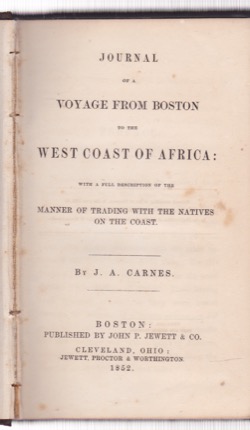
Hardcover. Boston, John P. Jewett & Co., 1st, 1852, Book: Very Good, Dust Jacket: None, Hardcover, original blind stamped cloth with gilt stamped lettering on spine. 479 pages with mild foxing to a few pages. Very good plus, no markings.
Hardcover. Koln GR, Taschen, 1st, 2001, Book: Very Good, Dust Jacket: Very Good, Hardcover, 336 pages. One remarkable woman, five remarkable careers: Leni Riefenstahl is the exception to the rule. From dancer to actress to film-maker to photographer to diver, she has excelled in each field and is one of the most important and controversial artists of the 20th century. Her contributions to the art and technique of film-making were vast, most notably in her epochal film "Olympia" (1938). Critically acclaimed during the 1930's for her work under the Hitler administration and harshly criticized after the war, Riefenstahl surged on, completing the famous "Tiefland" in 1954. In the 1960s and 70s she traveled to Africa and extensively photographed East Africa and the Nuba tribes in Sudan, publishing three books. Ready for yet another change, she took up deep-sea diving at the age of 71, beginning a new chapter as an underwater photographer. Though she has attracted much attention throughout her life and has been the subject of many books, articles, and films, Leni Riefenstahl Five Lives is the first book to showcase her entire career in pictures. Produced in collaboration with Riefenstahl herself, the book includes her most famous images as well as many previously unpublished pictures from her private archives.

 "Elephants Arrive At Half-Past Five by: Ilka Chase")
 "Emin Pasha and the Rebellion at the Equator: A Story of Nine Months Experiences in the Last of the Soudan Provincesby: Mounteney-Jephson, A. J.")
 "Exotic Postcards: The Lure of Distant Landsby: Beukers, Alan")
 "Explorations: 1860 - 1930by: Mongibeaux, Jean-Francois")
 "Fabulous Congo by: Bellotti, Felice")

 "Filibusters in Barbary by: Lewis, Wyndham")
 "Food on the Move: Dining on the Legendary Railway Journeys of the Worldby: Sharon Hudgins")

 "Freeland (SIGNED COPY)by: Jones, J. D. F.")



 "Gun Rod and Saddle: A Record of Personal Experiencesby: Gillmore, Parker")
 "Humanity and Inhumanity: The Photographic Journey of George Rodger by: BERNARD, Bruce and George Rodger")
 "Illustrated Africa: North Tropical Southby: Boyce, William D.")
 "Impressions of South Africaby: Bryce, James")


 "Inside Algeriaby: Michael von Graffenried , Mary-Jane Deeb, et al.")
 "Isaac Julien: True North Fantome Afriqueby: Anthony Appiah, Eveline Bernasconi, Lisa Bloom, Mark Nash, Cristina Albu, Isaac Julien, Veit Gorner (Foreword)")
![Isaac Julien: True North Fantome Afriqueby: Appiah, Anthony; Bernasconi, Eveline; Bloom, Lisa; Nash, Mark; Albu, Cristina; Julien, Isaac; Gorner, Veit [Foreword]](javascript:largeIMTop('https://www.browsingisarousing.com/shop/images/Isaac-Julien-True-North-Fantome-Afrique_by_Appiah-Anthony-Bernasconi-Eveline-Bloom-Lisa-Nash-Mark-Al350324-408463.jpg','https://www.browsingisarousing.com/shop/images/Isaac-Julien-True-North-Fantome-Afrique_by_Appiah-Anthony-Bernasconi-Eveline-Bloom-Lisa-Nash-Mark-Al350324-408463.jpg',0,'350324',0,'') "Isaac Julien: True North Fantome Afriqueby: Appiah, Anthony; Bernasconi, Eveline; Bloom, Lisa; Nash, Mark; Albu, Cristina; Julien, Isaac; Gorner, Veit [Foreword]")


 "Leni Riefenstahl-Five Lives: A Biography in Picturesby: Walk Ines; Leni Riefenstahl")