Hardcover. London, Chatto and Windus, 1st, 1955, Hardcover in a bright dust jacket. 288 pages, color frontis, 23 color plates, 26 black and white plates, from photos by the author, map, index. Based on the author's extensive travels, over 17,000 miles during a year in eastern and south-east Africa, where he travelled with his wife and three children, from Cape Town, Basutoland, Swaziland, through the Congo to Uganda, Kenya, Tanganyika (Tanzania), Nyasaland, Zambesi, Rhodesia (Zimbabwe), etc, with much on the wildlife, peoples, conditions.
Hardcover. Philadelphia, G.G. Evans, 1st, 1860, Book: Good, Hardcover, embossed Brown cloth cover worn with fraying to bumped corners. 442 pages, 11 b&w engravings. Gilt title on spine visible, but faded.Light dampstaining to prelim pages, frontis and title page. Interior of book clean and tight.
Hardcover. Bloomington, IN, Indiana University Press, 1st, 2016, Book: Very Good, Dust Jacket: Very Good, 152 pages. Hardcover with dust jacket. A very clean, unmarked copy with only minor wear to dust jacket edges. A tight copy. As a photographer for Life and Fortune magazines, Margaret Bourke-White traveled to Russia in the 1930s, photographed the Nazi takeover of Czechoslovakia in 1938, and recorded the liberation of Buchenwald at the end of WWII. In 1949, Life sent her to South Africa to take photographs in a country that was becoming racially polarized by white minority rule. Life published two photo-essays highlighting Bourke-White's photographs, but much of her South African work remained unpublished until now. Here, these stunning photographs collected by Alex Lichtenstein and Rick Halpern offer an unparalleled visual record of white domination in South Africa during the early days of apartheid. In addition to these powerful and historically significant photographs, Lichtenstein and Halpern include two essays that explore Bourke-White's artistic and political formation and provide background material about the cultural, political, and economic circumstances that produced the rise and triumph of Afrikaner nationalism in South Africa. This richly illustrated book brings to light a large body of photography from a major American photographer and offers a compelling history of a reprehensible system of racial conflict and social control that Bourke-White took such pains to document.
Hardcover. Paris, Arthaud, 1st, 1966, Book: Very Good, Dust Jacket: Very Good, Hardcover in a bright, lightly edgeworn dust jacket. A photographic study of Morocco and it's people. Gravure photos, mostly b&w, some color. TEXT IN FRENCH. Name on front fly leaf, otherwise clean.
Hardcover. NY, Aperture, 1st, 2000, Book: Very Good, Dust Jacket: Very Good, Hardcover in a bright, unclipped dust jacket. In Migrations, Sebastiao Salgado turns his attention to the staggering phenomenon of mass migration. Photographs taken over seven years across more than 35 countries document the epic displacement of the world's people at the close of the twentieth century. Wars, natural disasters, environmental degradation, explosive population growth and the widening gap between rich and poor have resulted in over one hundred million international migrants, a number that has doubled in a decade. This demographic change, unparalleled in human history, presents profound challenges to the notions of nation, community, and citizenship. The first extensive pictorial survey of the current global flux of humanity, Migrations follows Latin Americans entering the United States, Jews leaving the former Soviet Union, Africans traveling into Europe, Kosovars fleeing into Albania and many others. Clean copy. DOMESTIC SHIPPING ONLY.
Hardcover. NY, Aperture, 1st, 2000, Book: Very Good, Dust Jacket: Very Good, Hardcover. In Migrations, Sebastiao Salgado turns his attention to the staggering phenomenon of mass migration. Photographs taken over seven years across more than 35 countries document the epic displacement of the world's people at the close of the twentieth century. Wars, natural disasters, environmental degradation, explosive population growth and the widening gap between rich and poor have resulted in over one hundred million international migrants, a number that has doubled in a decade. This demographic change, unparalleled in human history, presents profound challenges to the notions of nation, community, and citizenship. The first extensive pictorial survey of the current global flux of humanity, Migrations follows Latin Americans entering the United States, Jews leaving the former Soviet Union, Africans traveling into Europe, Kosovars fleeing into Albania and many others. The images address suffering while revealing the dignity and courage of the subjects. With his unique vision and empathy, Salgado gives us a picture of the enormous social and political transformations now occurring in a world divided between excess and need. This is a heavy and oversized book and will require extra shipping. International customers please ask for a shipping quote before purchasing.
Hardcover. NY, Harper & Brothers, 1st, 1858, Book: Fair, Dust Jacket: None, Hardcover, embossed brown cloth with gilt lettering on spine, now faded. Livingstone describes his missionary activities and travels in South Africa from 1841 to 1853 and his first major expedition, the Trans-Africa journey of 1853-56. Livingstone also gives an accurate account of the tsetse fly and of the disease produced in cattle following its bite. Frontispiece portrait, 732 pages, [4]pp ads, 2 folding maps by Arrowsmith at the rear, 1 double page wood engraving, 1 folding diagram, many wood engraved text illustrations. Fair condition only with worn, rubbed covers, cloth split along spine edges. Interior pages clean with tight binding.
Hardcover. Cape Town, Howard Timmins, 1st, 1963, Book: Very Good, Dust Jacket: None, Hardcover, cream color cloth, black lettering on spine. 147 pages, tables, maps, charts, photographs: author spent most of his life in Portuguese East Africa and this is both a history and an authoritative study of the economic and political situation circa early 1960s. Clean copy.
Hardcover. NY, National Travel Club, reprint, 1930, Book: Very Good, Dust Jacket: None, Hardcover, black cloth stamped in gilt. 358 pages. Map endpapers, frontispiece, notes, map, appendices. Introduction by Edward Garnett. Frontispiece of the author on a horse as Sheikh Mohammed El Fasi. Mild fade to spine lettering, otherwise a tight, clean copy.
Hardcover. NY, Aperture, 1st, 2000, Book: Very Good, Dust Jacket: Very Good, Hardcover, 176 pages. In a convergence of brilliant color and compelling visual narrative, this new collection of photographs by Pascal Maitre reveals an Africa unfamiliar to most Westerners. He portrays a wide range of experience in sub-Saharan Africa: in Niger's desert, soldiers juggle goats and machine guns; within the forest, a rosary dangles from the chest of a warrior in a Bassorian initiation ceremony. In this startlingly beautiful land, ornamented by the marks of human struggle and worship, contradictions are plentiful. Rich in detail and elegant composition, Maitre's photographs immerse us in an Africa beyond the familiar media depictions. He shows an Africa living with the contradictions of tradition and modernization, of ritual headdresses and plastic flip-flops, of tribal wars and machine guns, of ancestral deities and nonbelievers. A lively preface by Cameroon-born author Calixthe Beyala.
Softcover. Washington DC, National Geographic Society, 1st, 1922, Book: Very Good, Dust Jacket: None, Original magazines July - Dec. 1922, in a maroon pebbled hardcover binding. Magazines are dated and paged, with photographs and maps, but do not have covers, advertisements, etc. Includes two supplemental fold-out maps: Africa and the World. Very good, Clean.
Hardcover. New York, Alfred Knopf, 1st, 1997, Book: Very Good, Dust Jacket: Very Good, 462 pages. Hardcover with dust jacket. Clean, tight copy with minor wear to covers and edges. A modern classic of travel literature: "Ostensibly a quest for Mokele-mbembe, the Congo dinosaur , this story of travel through the jungles and swamp forests of the northern Congo is Tolstoyan in its depth, scope and range of characters, and as vivid as Nabokov in its image and detail. A portrait of a country, it is alive with natural history: eagles and parrots, hornbills and sunbirds, forest cobras and crocodiles, gorillas and elephants. A search for the meaning of sorcery, the purpose of religion (and a celebration of the comfort and mysteries of science), it is also an adventure told with great narrative force. Of course there is a darker side to the Congo, and that too is recorded here." Kazuo Ishiguro called this a "unique messy masterpiece."
Hardcover. New York, Alfred Knopf, 2nd pr., 1997, Book: Very Good, Dust Jacket: Very Good, 462 pages. Hardcover with dust jacket. Clean, tight copy with minor wear to covers and edges.
Hardcover. London, England, Karl Baedeker, 2nd Edition, REvised and Augmented, 1894, Book: Good, Dust Jacket: None, 444 pages. Hardcover (flexible cloth). "With 17 Maps, 44 Plans, and a Panorama of Jerusalem". B/w and color illustrated maps, some fold out. Red fabric cover boards with gilt title on spine (faded) and front cover board. Banded design blind stamped on boards and spine. Fabric ribbon bookmark attached at top of spine. Age wear to covers (see images). Former library book with expected labels, marks, stamps and other identifying characteristics (see images). Decorated marbled edges. Front cover has bump to top right corner (see image). Charming, old, pocket-sized travel book that will tell you everything you ever wanted to know about turn-of-the-century Palestine and Syria.
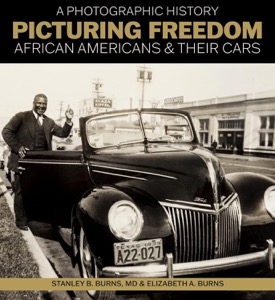
Softcover. NY, Burns Archive Press, 1st, 2022, Book: Very Good, Dust Jacket: None, Softcover, 272 pages. SIGNED BY STANLEY BURNS on title page. Picturing Freedom chronicles and celebrates the photographic history of African Americans and their cars by focusing on personal images of the pride and joy of car ownership (1900-1980+). Owning a car was a significant life-changing achievement. It offered special freedoms--the freedom to travel, the freedom to work further from home, the freedom to visit family and friends, the freedom to avoid Jim Crow laws, and the freedom to migrate. The car was unequivocal evidence of Black success and an important symbol of status in a country that had long fought their advancement in every area. Car ownership was purposely and proudly photographed. All of the photographs were taken in Black communities by a family member or a friend and reveal how African Americans represented themselves. This 2022 IPPY award-winning compilation of over 450 unique photographs is an inspiring visual narrative of American life. Clean, bright copy.
Softcover. Washington DC/NY, Infantry Journal and Penguin Books, reprint, 1944, Book: Very Good, Dust Jacket: None, Paperback, 305 pages. Frontis map. The author became the oldest Junior Subaltern (Second Lieutenant) in the British forces and became known later as the "water bloke" by building an ever-extending pipeline to furnish filtered fresh-water to the British troops pursuing Rommel's army into Tunisia. From the very beginning and especially from the Battle of El Alamein onwards, he traveled the whole 2,000 mile mine-ridden way providing life-sustaining water to the British Eighth Army who spearheaded the allied Tunisian Campaign in a dozen bitter battles that ended in victory on 13 May 1943. The Sappers retired Peter William Rainier as a Major in June 1943 just after the hostilities in Africa had ended. He is remembered as one of the few original members of The Army of the Nile (General Wavell's "thirty thousand") who survived the three long years of fighting allowing him to witness the final victory over the Axis powers in Africa. Clean, bright copy.
Hardcover. Boston, Museum of Fine Arts, 1st, 2018, Book: Very Good, Dust Jacket: Very Good, Hardcover in a bright dust jacket. , 144 pages illustrated in color and b&w. During the global postcard craze that peaked around 1900 and continued for several decades thereafter, photographers in Africa grasped the opportunity to serve a lucrative market for images of the continent, both locally and worldwide. Their picture postcards now contribute to understanding political and cultural changes in Africa at the time, as the rise of the new medium coincided with the expansion and consolidation of colonial rule. They also provide a way to reconstruct the life and work of the photographers of European, African and other backgrounds who created these images-which often survive only in postcard form-and in some cases published them as well. The cards were produced for residents and travelers in Africa, as well as for buyers and collectors who had never set foot on the continent. Their depictions of colonial administrations and the exploitation of resources and peoples, as well as images inscribing tribal identities and racial classifications, often reflect the colonizers' worldview. Yet it is also possible to recover the authorship of some of the African women and men who participated in these photographic encounters. For instance, some cards show that members of Africa's elites recognized the power of photographic images to enhance their standing and present their own narratives.
Softcover. Sheffield UK, Vertebrate Publishing Ltd , 1st, 2019, Book: Very Good, Dust Jacket: None, Softcover, 425 pages, color photos. In 1965 Tony Howard made the first British ascent of Norway's Troll Wall. He went on to found Troll Climbing Equipment but never stopped exploring. Quest into the Unknown, his autobiography, covers his extensive travels in North Africa, the Middle East, Scandinavia, Canada and much more. Clean copy.
Hardcover. NY, Harcourt Brace, 1st, 1993, Book: Very Good, Dust Jacket: Very Good, Hardcover in a bright, unclipped dust jacket. The painter, writer, and political activist returns to his native South Africa, where he was once imprisoned for working for the African National Congress, and reflects on the decline of apartheid and his own attachment to the Boer state. He describes the travail of his country riven by racial conflict. He recounts his seven-year imprisonment for treason and shares the passionate love of an exile--he resides in Paris--for his native land. In the recent period of "stability laced with blood" as De Klerk and Mandela's forces struggle to maintain a precarious political equilibrium, Breytenbach has been allowed to return for visits with his Vietnamese wife. Part travelogue and part memoir, this account offers frequent political discussions about the rivalry between the African National Congress and the Inkatha Freedom Party. A careful observer of people, their surroundings, fauna and flora, Breytenbach weaves richly colored narrative history, local lore and personal allusions. Clean copy.
Hardcover. NY, Doubleday, 1st, 2022, Book: Very Good, Dust Jacket: Very Good, Hardcover in a bright, unclipped dust jacket. SIGNED BY MILLARD on a tipped-in prlim page. The Rosetta Stone--discovered by French soldiers in 1799, seized by a British envoy, and deciphered 23 years later--set off an obsessive interest in Egypt, including by the newly established Royal Geographical Society, to find the headwaters of the Nile. Bestselling author Millard, a former writer and editor for National Geographic, offers a tense, vibrant history of several dramatic expeditions across East Africa that finally resulted in a successful discovery. Drawing on archival sources and her own multiple trips to Africa following the explorers' paths, Millard creates a palpable sense of the daunting task undertaken by three ambitious men: the magnetic, impulsive, and often combative Richard Burton; John Hanning Speke, an aristocratic infantry lieutenant and passionate hunter whose initial interest in East Africa was largely for the animals he could kill; and their devoted and resourceful native guide, Sidi Mubarak Bombay a former enslaved person whose intimate knowledge of tribes and terrain proved to be indispensable.
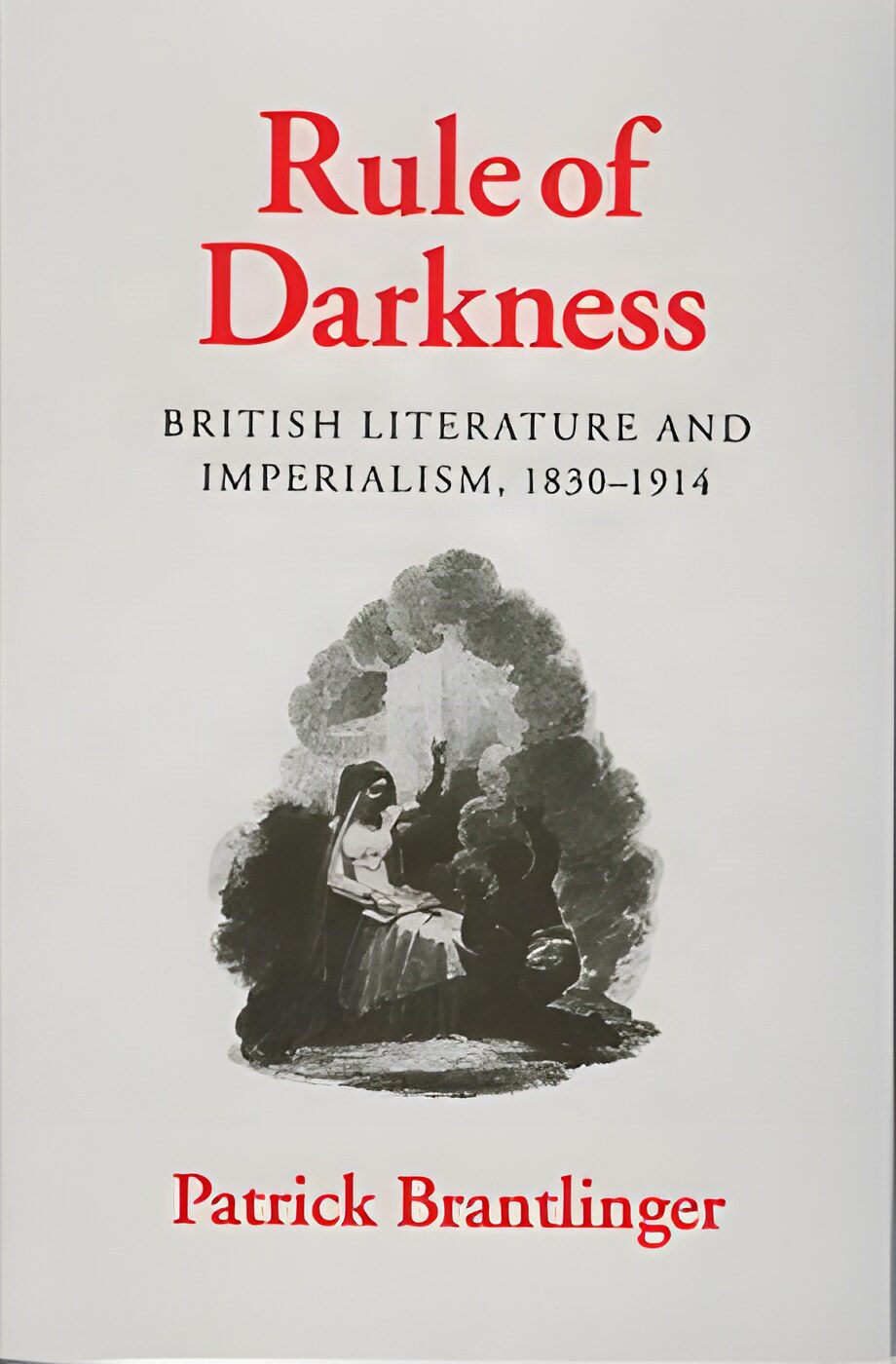
Softcover. Ithaca NY, Cornell University Press, reprint, 1990, Book: Very Good, Dust Jacket: None, Softcover, 309 pages. A major contribution to the cultural and literary history of the Victorian age, Rule of Darkness maps the complex relationship between Victorian literary forms, genres, and theories and imperialist, racist ideology. Critics and cultural historians have usually regarded the Empire as being of marginal importance to early and mid-Victorian writers. Patrick Brantlinger asserts that the Empire was central to British culture as a source of ideological and artistic energy, both supported by and lending support to widespread belief in racial superiority, the need to transform "savagery" into "civilization," and the urgency of promoting emigration. Rule of Darkness brings together material from public records, memoirs, popular culture, and canonical literature. Brantlinger explores the influence of the novels of Captain Frederick Marryat, pioneer of British adolescent adventure fiction, and shows the importance of William Makepeace Thackeray's experience of India to his novels. He treats a number of Victorian best sellers previously ignored by literary historians, including the Anglo-Indian writer Philip Meadows Taylor's Confessions of a Thug and Seeta. Brantlinger situates explorers' narratives and travelogues by such famous author-adventurers as David Livingstone and Sir Richard Burton in relation to other forms of Victorian and Edwardian prose. Through readings of works by Arthur Conan Doyle, Joseph Conrad, H. Rider Haggard, Rudyard Kipling, John Hobson, and many others, he considers representations of Africa, India, and other non-British parts of the world in both fiction and nonfiction. Clean, bright copy.
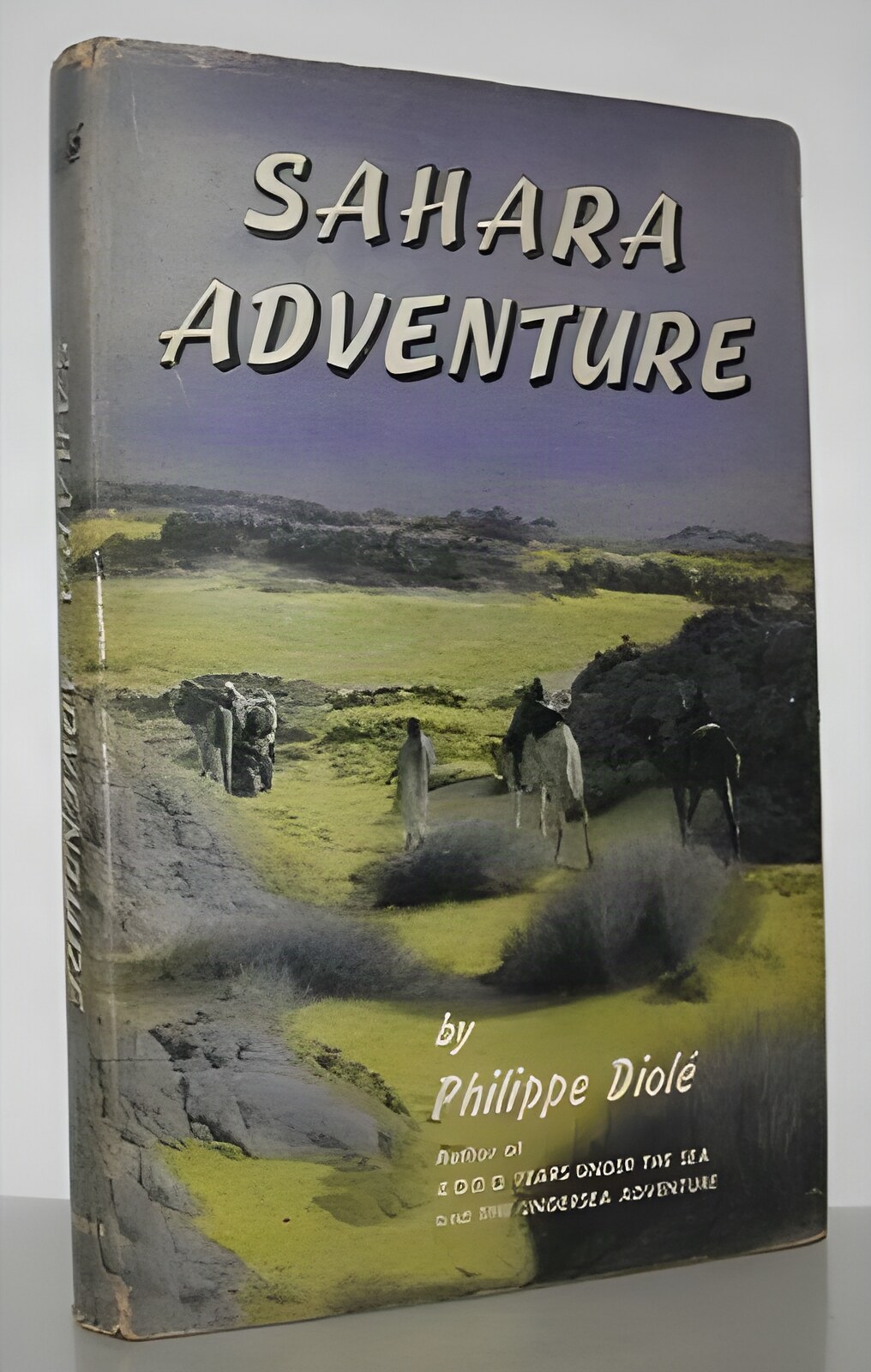
Hardcover. NY, Julian Messner, 1st, 1956, Book: Very Good, Dust Jacket: Good, Hardcover in a lightly worn, price-clipped dust jacket. Translated from the French by Katherine Woods. Engaging account of the author's camel trek across the untamed South Fezzen region of the Sahara Desert, encountering exotic vegetation and prehistoric cave paintings along the way. No markings.
Hardcover. Los Angeles, CA, Taschen, 1st, 2007, Book: Very Good, Dust Jacket: Very Good, 336 pages. Hardcover with dust jacket. Very clean, unmarked copy still in publishers shrink-wrap. This book brings together Salgado's photos of Africa in three parts. The first concentrates on the southern part of the continent (Mozambique, Malawi, Angola, Zimbabwe, South Africa, Namibia), the second on the Great Lakes region (Congo, Rwanda, Burundi, Uganda, Tanzania, Kenya), and the third on the Sub-Saharan region (Burkina Faso, Mali, Sudan, Somalia, Chad, Mauritania, Senegal, Ethiopia). Texts are provided by renowned Mozambique novelist Mia Couto, who describes how today's Africa reflects the effects of colonization as well as the consequences of economic, social, and environmental crises. NOTE: DUE TO SIZE & WEIGHT, DOMESTIC SHIPPING ONLY.
Hardcover. Los Angeles, CA, Taschen, 1st, 2007, Book: Very Good, Dust Jacket: Very Good, 336 pages. Hardcover with dust jacket. Very clean, unmarked copy still in publishers shrink-wrap. This book brings together Salgado's photos of Africa in three parts. The first concentrates on the southern part of the continent (Mozambique, Malawi, Angola, Zimbabwe, South Africa, Namibia), the second on the Great Lakes region (Congo, Rwanda, Burundi, Uganda, Tanzania, Kenya), and the third on the Sub-Saharan region (Burkina Faso, Mali, Sudan, Somalia, Chad, Mauritania, Senegal, Ethiopia). Texts are provided by renowned Mozambique novelist Mia Couto, who describes how today's Africa reflects the effects of colonization as well as the consequences of economic, social, and environmental crises.

 "Lightest Africa by: F. Spencer Chapman")
 "Livingstone's Travels and Researches in South Africa including a Sketch of Sixteen Years' Residence in the Interior of Africa and a Journey from the Cape of Good Hope to Loanda on the West Coast, Thence Across the Continent, Down the")


 "Margaret Bourke-White and the Dawn of Apartheidby: Lichtenstein, Alex")


 "Migrations: Humanity in Transitionby: Salgado, Sebastiao")
 "Missionary Travels And Researches In South Africa; Including A Sketch Of Sixteen Years Residence In The Interior Of Africa by: Livingstone, David")
 "Mocambique: East African Province of Portugulby: Spence C. F.")

 "Mon Afrique: Photographs of Sub-Saharan Africaby: Pascal Maitre and Calixthe Beyala")
 "National Geographic Magazine - Vol. XLII July - December 1922by: National Geographic Society")
 "No Mercy: A Journey to the Heart of the Congoby: O'Hanlon, Redmond")





 "Pipeline to Battle; An Engineer's Adventures with the British Eighth Army by: Rainier, Maj. Peter W.")


 "Quest into the Unknown: My life as a climbing nomadby: Tony Howard")

 "River of the Gods: Genius, Courage, and Betrayal in the Search for the Source of the Nile (SIGNED COPY)by: Millard, Candice")
 "Sebastiao Salgado: Africaby: Salgado, Sebastiao")
 "Sebastiao Salgado: Africaby: Salgado, Sebastiao")