Softcover. London/Ibadan, Nigeria, Heinemann, reprint, 1999, Book: Good, Dust Jacket: None, Softcover, 178 pages. Text augmented by 13 black and white plates, and by eight sketch maps. The first book on the Nigerian Civil War written by one of the top commanders, Obasanjo was a Colonel when the war started but he rose to become Commander of 3 Marine Commando Division, "which played a crucial role in winning the [war] for the Federal Government". A well regarded and highly authoritative book of interest to the Africa historian as well as to militarists, the author gives a detailed account of the military operations on all fronts. In later years, he became Head of State from 1976 to 1979 before handing over to an elected civilian regime, and he remains a much respected figure. Cheaply produced book but a solid copy. No marking.
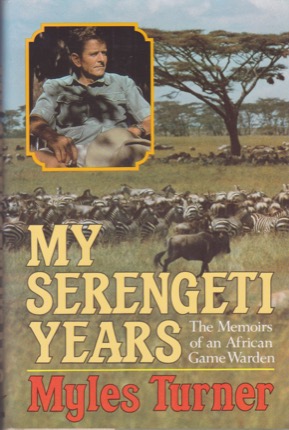
Hardcover. NY, W W Norton , 2nd pr., 1988, Book: Very Good, Dust Jacket: Very Good, Hardcover in a bright, unclipped dust jacket. Illustrations with black & white drawings by Bob Kuhn, 221 pages. Myles Turner, born in London in 1921, spent most of his life in Africa. After serving in World War Two, he worked with various companies leading tours through the African Wild. A avid consevationist, Turner began working for the Serengeti in 1956. This book is the memoirs of this time. Clean copy.
Hardcover. Boston, Houghton Mifflin , 1st, 1924, Book: Very Good, Dust Jacket: None, Hardcover, gray cloth covers with gilt and 2-color decoration, 277 pages. Sixteen b&w plates by Warwick Reynolds. Front flap copy glued to front fly leaf. This is the story of Naju, fourth son of the great African king of Nuan who is sent out to find his way in the world. Spine darkened, clean copy.
Hardcover. Boston, Little, Brown and Company, 1st, 1947, Book: Very Good, Dust Jacket: None, Hardcover, blue cloth with gilt lettering on spine. Volume VI in The History of United States Naval Operations in World War II. 297 pages, illustrated with maps (one fold-out) and b&w photos. This volume covers the operations of the United States Navy in North African waters, both on the Atlantic coast and in the Mediterranean, from the beginning of World War II through the capture of Pantelleria in June 1943. More than half the volume is devoted to the capture of bases in French Morocco, which was an all-American operation and in many respects one of the most remarkable of the war. Gilt on spine with light fading, lacks dust jacket, otherwise clean, tight copy.
Hardcover. Taschen, 1st revised, 2013, Book: Very Good, Dust Jacket: None, Hardcover, 706 pages. Photographer, collector, diarist, and writer of books Peter Beard has fashioned his life into a work of art; the illustrated diaries he kept from a young age evolved into a serious career as an artist and earned him a central position in the international art world. He was painted by Francis Bacon and painted on by Salvador Dali, he made diaries with Andy Warhol and toured with Truman Capote and the Rolling Stones--all of whom are brought to life, literally and figuratively, in his work. As a fashion photographer, he took Vogue stars like Veruschka to Africa and brought new ones--most notably Iman--back to the U.S. with him. After spending time in Kenya and striking up a friendship with the author Isak Dinesen (Karen Blixen) in the early 1960s, Beard bought a piece of land near hers. He witnessed the dawn of Kenya's population explosion, which challenged finite resources and stressed animal populations--including the starving elephants of Tsavo dying by the tens of thousands in a wasteland of eaten trees. So he documented what he saw--with diaries, photographs, and collages. He went against the wind in publishing unique and sometimes shocking books of these works. The corpses were laid bare; the facts carefully recorded, sometimes in type and often by hand. Beard uses his photographs as a canvas onto which he superimposes multi-layered contact sheets, ephemera, found objects, newspaper clippings that are elaborately embellished with meticulous handwriting, old-master inspired drawings and often swaths of animal blood used as paint. This is a heavy and oversized book and will require extra shipping. International customers please ask for a shipping quote before purchasing.
Softcover. NY, Oxford University Press, reprint, 1992, Book: Very Good, Dust Jacket: None, Softcover in pictorial wraps, 184 pages, coloe illustrations. From before the days of Moses up through the 1960s, slavery was a fact of life in the Middle East. Pagans, Jews, Christians, and Muslims bought and sold at the slave markets for millennia, trading the human plunder of wars and slave raids that reached from the Russian steppes to the African jungles. But if the Middle East was one of the last regions to renounce slavery, how do we account for its--and especially Islam's--image of racial harmony? How did these long years of slavery affect racial relations? In Race and Slavery in the Middle East, Bernard Lewis explores these questions and others, examining the history of slavery in law, social thought, and practice over the last two millennia. Bright, clean copy.
Hardcover. NY, Oxford University Press, 1st, 1999, Book: Very Good, Dust Jacket: Very Good, Hardcover in a bright, unclipped dust jacket. 455 pages, b&w illustrations. From John Hope Franklin, America's foremost African American historian, comes this groundbreaking analysis of slave resistance and escape. A sweeping panorama of plantation life before the Civil War, this book reveals that slaves frequently rebelled against their masters and ran away from their plantations whenever they could. For generations, important aspects about slave life on the plantations of the American South have remained shrouded. Historians thought, for instance, that slaves were generally pliant and resigned to their roles as human chattel, and that racial violence on the plantation was an aberration. In this precedent setting book, John Hope Franklin and Loren Schweninger demonstrate that, contrary to popular belief, significant numbers of slaves did in fact frequently rebel against their masters and struggled to attain their freedom. By surveying a wealth of documents, such as planters' records, petitions to county courts and state legislatures, and local newspapers, this book shows how slaves resisted, when, where, and how they escaped, where they fled to, how long they remained in hiding, and how they survived away from the plantation. Of equal importance, it examines the reactions of the white slaveholding class, revealing how they marshaled considerable effort to prevent runaways, meted out severe punishments, and established patrols to hunt down escaped slaves. Clean copy.
Softcover. Urbana IL, University of Illinois Press, reprint, 2003, Book: Very Good, Dust Jacket: None, Softcover, 433 pages. From the plaintive tunes of woe sung by exiled kings and queens of Africa to the spirited worksongs and "shouts" of freedmen, enslaved people created expansive forms of music from the United States to the West Indies and South America. Dena J. Epstein's classic work traces the course of early black folk music in all its guises. Anchored by groundbreaking scholarship, it redefined the study of black music in the slavery era by presenting the little-known development of black folk music in the United States. Her findings include the use of drums, the banjo, and other instruments originating in Africa; a wealth of eyewitness accounts and illustrations; in-depth look at a wide range of topics; and a collection of musical examples. This edition offers an author's preface that looks back on the twenty-five years of changes in scholarship that followed the book's original publication. Clean copy.
Softcover. London, James Currey, 1st, 1995, Book: Very Good, Dust Jacket: None, Softcover, pictorial green wrappers, 211 pages. This work is an attempt to look at some of the realities of Zimbabwe's liberation war and at what happened afterwards, rather than at the comfortable myths. Both heroic and terrible deeds are recorded. Zimbabwe: University of Zimbabwe Publications
Hardcover. NY, Viking Press, 1st US, 1975, Book: Very Good, Dust Jacket: Good, Hardcover in a worn dust jacket, 398 pages, b&w illustrations, maps. About the Boer War and the rescue of the garrison at Ladysmith, Natal, under siege by 5,000 Boer farmers. One map with bottom corner torn, affecting several words on caption, otherwise very good, clean copy.
Softcover. Norman OK, University of Oklahoma Press , reprint, 1996, Book: Very Good, Dust Jacket: None, Softcover, 167 pages. After nearly 200,000 African-American soldiers fought in the Civil War, Congress enacted legislation to authorize regiments of cavalry and infantry for service in the West. The Ninth and Tenth cavalries won fame as "buffalo soldiers" in the Indian wars, nearly overshadowing the critical support role of the Twenty-fourth and Twenty-fifth infantries. Now Arlen L. Fowler brings to light the story of African-American infantry service from 1869 to 1891 in Texas, Indian Territory, the Dakotas, Montana, and Arizona.
Softcover. Madison WI, University of Wisconsin, reprint., 2005, Book: Very Good, Dust Jacket: None, Softcover in pictorial wraps, 244 pages. The Blind African Slave recounts the life of Jeffrey Brace (ne Boyrereau Brinch), who was born in West Africa around 1742. Captured by slave traders at the age of sixteen, Brace was transported to Barbados, where he experienced the shock and trauma of slave-breaking and was sold to a New England ship captain. After fighting as an enslaved sailor for two years in the Seven Years War, Brace was taken to New Haven, Connecticut, and sold into slavery. After several years in New England, Brace enlisted in the Continental Army in hopes of winning his manumission. After five years of military service, he was honorably discharged and was freed from slavery. As a free man, he chose in 1784 to move to Vermont, the first state to make slavery illegal. There, he met and married an African woman, bought a farm, and raised a family. Although literate, he was blind when he decided to publish his life story, which he narrated to a white antislavery lawyer, Benjamin Prentiss, who published it in 1810. Upon his death in 1827, Brace was a well-respected abolitionist. In this first new edition since 1810, Kari J. Winter provides a historical introduction, annotations, and original documents that verify and supplement our knowledge of Brace's life and times. Clean copy.
Hardcover. UK, Osprey Military Books, 1st, 1999, Book: Very Good, Dust Jacket: None, Hardcover, brown cloth with gilt lettering on spine, 160 pages. The Boer War devastated the South African economy and left a legacy of bitterness. It saw the invention of the concentration camp and a new style of guerilla warfare. This history of the campaign includes artwork of maps, weapons and uniforms, with contemporary photography from the period. Clean copy. No dust jacket.
Hardcover. NY, Basic Books, 4th pr., 2017, Book: Very Good, Dust Jacket: Very Good, Hardcover in a bright dust jacket, 710 pages. We think of the Cold War as a clash of two superpowers, the United States and the Soviet Union. But in The Cold War, award-winning historian Odd Arne Westad argues that the war must be understood as a global confrontation, with roots in the Industrial Revolution and ongoing repercussions around the world. The Cold War may have begun on the perimeters of Europe, but it had its deepest reverberations in Asia, Africa, and the Middle East. Stunning in its breadth and revelatory in its perspective, The Cold War expands our understanding of the Cold War both geographically and chronologically, and offers a new history of how today's world was creased. Clean copy.
Hardcover. Boston, Little, Brown and Company, 1st US, 1943, Book: Very Good, Dust Jacket: None, Hardcover, red cloth covers lettered in gold with black letterbox, 322 pages. Contains speeches throughout 1942. This year was a low point of the war, full of setbacks and disappointments across the globe for the British. Throughout the year Churchill's speeches conveyed sober, resolved, and eloquent defiance - with of course an occasional sparkle of Churchillian wit, even in the dark hours of the war. The title of this volume comes from Churchill's 10 November 1942 speech at the Lord Mayor's Day Luncheon in London at a time when fortune finally favored the British with victories in North Africa: "The Germans have received back again that measure of fire and steel which they have so often meted out to others. Now this is not the end. It is not even the beginning of the end. But it is, perhaps, the end of the beginning." Light marking to front endpapers.
Hardcover. Chicago, University of Chicago Press , 1st, 2015, Book: Very Good, Dust Jacket: Very Good, Hardcover in a bright dust jacket. 280 pages. Preface by Geoff Dyer. Essay by David Van Reybrouck. Includes 20 color plates and 80 halftones. Still in publisher's shrinkwrap. The First World War presents a startlingly different perspective, one based on rare glass plate photographs, that reveals the war with previously unseen, even uncanny, clarity. Scanned from the original plates, with scratches and other flaws expertly removed, these oversized reproductions offer a wealth of unusual moments, including scenes of men in training, pictures of African colonial troops on the Western front, landscapes of astonishing destruction, and postmortem portraits of Belgian soldiers killed in action. Readers previously familiar with only black-and-white or sepia-toned prints of the hostilities will be riveted by the book's many authentic color photographs, products of the early autochrome method. From children playing war games to a wrenching deathbed visit, these images are extraordinary not only for their subject matter, but also for the wide range of emotions they evoke.
Hardcover. NY, Prentice Hall, 1st, 1991, Book: Very Good, Dust Jacket: Very Good, Hardcover in a bright, unclipped dust jacket. Describes the author's experiences traveling through Africa, meeting and talking with warriors, activists, and poachers. 334 pages, clean copy.
Hardcover. NY, Pantheon, 1st US, 1999, Book: Very Good, Dust Jacket: Very Good, Hardcover in a bright, unclipped dust jacket. A magisterial achievement: part biography, part history, part moral meditation on the resurrection of torture as an instrument of political power in the twentieth century, The Good Listener tells the story of Helen Bamber, a good but complex woman now in her seventies, who has spent her life battling to bring the dark side of history into the light. In almost every situation in our century where mankind has demonstrated its capacity to intensify evil--during the Nazi Holocaust, in Algeria, Chile, Africa, the USSR, and Israel, as well as in postwar Britain and Germany--Bamber has served as a witness, an expert, or a reproach, as well as a repository of our collective memory of debasement. Her father, a Polish Jew, had been so obsessed by the Fascist threat that he would read to Helen from Goebbels' speeches, teaching her how corrupting and manipulative language can be. She went to Bergen-Belsen after World War II had ended, and upon her return to London she dedicated herself to caring for the young survivors of the camp. So began Bamber's brave devotion to the grim and dangerous task of undoing the work of the torturer--culminating, after her participation as a central force in Amnesty International, in her establishment in England of the Foundation for the Care of Victims of Torture. Because Bamber's uncanny openness to others has been one of her great skills, Clean copy.
Hardcover. Greenwich CT, New York Graphic Society, 1st, 1972, Book: Very Good, Dust Jacket: Very Good, Hardcover, 208 pages. Margaret Bourke-White was "a war correspondent, a compassionate witness of famine in India, a dedicated seeker of the truth, whether it be among sharecroppers, South African goldminers, American GI's or Jesuits. . All of her important work is shown in this major retrospective of her career." Tan cloth binding, illustrated dust jacket.
Hardcover. Boston, Little Brown, 1st, 1960, Hardcover, 336 pages, b&w drawings by Lea. Dust jacket with light edgewear, chipping. Novel about Hank Spurling, a Marine hero of the war in the Pacific, who returned to the Cloudrock Mountains in Wyoming. In the early days of World War II, Lea became a war correspondent for Life magazine, executing paintings of action in the North Atlantic, the South Pacific, China, North Africa, and Europe. Lea's career thereafter involved both painting and writing, on a variety of subjects but generally reflective of his roots in the Southwest. Clean copy.
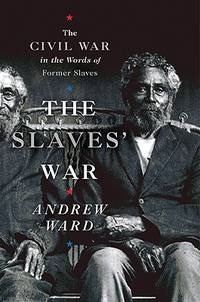
Hardcover. Boston, Houghton Mifflin, 1st, 2008, Book: Very Good, Dust Jacket: Very Good, Hardcover in a bright dust jacket, 386 pages. The first narrative history of the Civil War told by the very people it freed. Groundbreaking, compelling, and poignant, The Slaves' War delivers an unprecedented vision of the nation's bloodiest conflict. An acclaimed historian of nineteenth-century and African-American history, Andrew Ward gives us the first narrative of the Civil War told from the perspective of those whose destiny it decided. Woven together from hundreds of interviews, diaries, letters, and memoirs, here is the Civil War as seen from not only battlefields, capitals, and camps, but also slave quarters, kitchens, roadsides, farms, towns, and swamps. Speaking in a quintessentially American language of wit, candor, and biblical power, army cooks and launderers, runaways, teamsters, and gravediggers bring the war to vivid life. From slaves' theories about the causes of the war to their frank assessments of such major figures as Lincoln, Davis, Lee, and Grant; from their searing memories of the carnage of battle to their often startling attitudes toward masters and liberators alike; and from their initial jubilation at the Yankee invasion of the slave South to the crushing disappointment of freedom's promise unfulfilled, The Slaves' War is a transformative and engrossing vision of America's Second Revolution. Clean copy.
Hardcover. London, Secker & Warburg, reprint, 1955, Book: Very Good, Dust Jacket: Fair, Hardcover in a very worn, chipped dust jacket, 255 pages, fold-out chart in rear. A blow by blow account of the Mau Mau leader's trial that lasted for over 100 days, "one of the most dramatic and important this century". In 1952, Kenyatta was arrested in Kenya by the British colonial authorities and charged with masterminding the anti-colonial Mau Mau Uprising. Although protesting his innocence, a view shared by later historians, he was convicted. He remained imprisoned at Lokitaung until 1959 and was then exiled to Lodwar until 1961. Appears to be a book club edition. Overall clean copy but cheap paper is tanning.
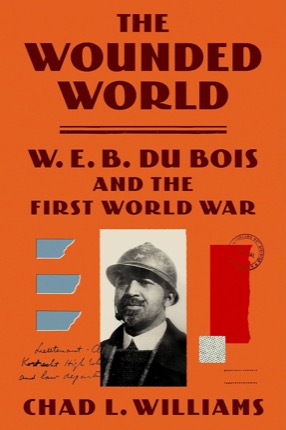
Hardcover. NY, Farrar Straus Giroux, 1st, 2023, Book: Very Good, Dust Jacket: Very Good, Hardcover in a bright, unclipped dust jacket. 530 pages, b&w illustrations. The dramatic story of W. E. B. Du Bois's reckoning with the betrayal of Black soldiers during World War I-and a new understanding of one of the great twentieth-century writers. When W. E. B. Du Bois, believing in the possibility of full citizenship and democratic change, encouraged African Americans to "close ranks" and support the Allied cause in World War I, he made a decision that would haunt him for the rest of his life. Seeking both intellectual clarity and personal atonement, for more than two decades Du Bois attempted to write the definitive history of Black participation in World War I. His book, however, remained unfinished. In The Wounded World, Chad Williams offers the dramatic account of Du Bois's failed efforts to complete what would have been one of his most significant works. The surprising story of this unpublished book offers new insight into Du Bois's struggles to reckon with both the history and the troubling memory of the war, along with the broader meanings of race and democracy for Black people in the twentieth century. Drawing on a broad range of sources, most notably Du Bois's unpublished manuscript and research materials, Williams tells a sweeping story of hope, betrayal, disillusionment, and transformation, setting into motion a fresh understanding of the life and mind of arguably the most significant scholar-activist in African American history. In uncovering what happened to Du Bois's largely forgotten book, Williams offers a captivating reminder of the importance of World War I, why it mattered to Du Bois, and why it continues to matter today. Remainder mark on top edhge, otherwise clean.
Hardcover. Philadelphia, J.B. Lippincott , 1st, 1963, Book: Very Good, Dust Jacket: None, Hardcover, pale green cloth, 210 pages. Great Battles Series. No dust jacket. Related clipping laid in. Mild fading to gilt lettering on spine. Clean copy.

 "My Command-An Account of the Nigerian Civil War 1967-1970by: General Olusegun Obasanjo (Former Head of State)")

 "Operations in North African Waters: October 1942-June 1943 - (History of the United States Naval Operations in World War II; Vol. 2)by: Morison, Samuel Eliot")


 "Runaway Slaves: Rebels on the Plantationby: Franklin, John Hope & Schweninger, Loren")
 "Sinful Tunes and Spirituals: Black Folk Music to the Civil War Music in American Lifeby: Dena J. Epstein")
 "Soldiers in Zimbabwe's Liberation War by: Bhebe, Ngwabi (Editor), and Ranger, T O (Editor)")

 "The Black Infantry in the West, 1869")
 "The Blind African Slave: Or Memoirs of Boyrereau Brinch, Nicknamed Jeffrey Brace by: Jeffrey Brace; Editor Kari J. Winter; Contributor Benjamin F. Prentiss")


 "The First World War: Unseen Glass Plate Photographs of the Western Front by Carl De Keyzerby: Carl De Keyzer/David Van Reybrouck")
 "The Frozen Leopard: Hunting My Dark Heart in Africaby: Aaron Latham")

 "The Photographs of Margaret Bourke-Whiteby: Sean Callahan, Margaret Bourke-White , et al.")