Hardcover. London, Faber and Faber, 1st UK, 1976, Book: Very Good, Dust Jacket: None, Hardcover, black cloth with gilt and red title block on spine. 422 pages, b&w map. Light bump to top corner otherwise very good, clean copy. "An analysis That carries an indictment of the whole colonial system."
Hardcover. NY, William Morrow, 1st, 1982, Book: Very Good, Dust Jacket: Very Good, Hardcover in a bright, unclipped dust jacket, 324 pages. This provocative study touches all the bases, probing the important cases of U.S. involvement in Africa (the Congo, Angola, South Africa), laying out U.S. interests in Africa's minerals and strategic outposts, and depicting the concern of American blacks with Africa since the nineteenth century. Riding his theses rather hard, Jackson argues strongly against an ineluctable U.S. tendency to react in cold-war terms to African crises. Name on front fly lesf, otherwise clean.
Hardcover. Safari Press, 1st, 2012, Book: Very Good, Dust Jacket: Very Good, Hardcover in a bright dust jacket, 254 pages. Great African Trophies is a photographic showcase of some of the greatest game trophies ever taken on the Dark Continent, and it includes elephants, buffaloes, the big cats, spiral-horned antelopes, and dozens of other magnificent animals. The focus is on animals that rank in the top five of each species in the Safari Club International and Rowland Ward record books, but also included are historic, unlisted, and little-known trophies, along with their stories. This book is a feast for the eyes for anyone who loves African wildlife, and it contains the best available historical and modern photos of superlative African game animals, as well as the tales--many never before told--of the hunters who were fortunate to connect with them. The photos are accompanied by a description of where, when, and how the animal was taken, and the book provides, if possible, the details of the hunt and how it unfolded. Clean copy still in publisher's shrinkwrap.
Hardcover. Naperville IL, Sourcebooks MediaFusion, 1st, 2006, Book: Very Good, Dust Jacket: Very Good, Hardcover in a bright dust jacket. 502 pages, b&w illustrations. For three decades after World War I, Harlem was the site of burgeoning racial and cultural awareness and ambitions among African Americans. In the opening section of this book, Wintz provides the historical context for what became known as the Harlem Renaissance. In separate sections devoted to poetry, music, politics, art, and the phenomenon of the New Negro, contributors profile many of the era's major figures, including Langston Hughes, Zora Neale Hurston, Bessie Smith, Ethel Waters, Josephine Baker, W. E. B. DuBois, Paul Robeson, A. Phillip Randolph, and Marcus Garvey. The essays place the Harlem Renaissance in the broader context of an awakening of black culture throughout the U.S. The book contains references to the accompanying CD, which offers 60 minutes of music, poetry, interviews, performances, and speeches, giving voice to the vibrant life of Harlem. Photographs, drawings, book covers, and posters add to the richness of this collection. A fabulous resource on the Harlem Renaissance.
Hardcover. Washington DC, Brassey's , 1st, 2003, Book: Very Good, Dust Jacket: Very Good, Hardcover in a bright, unclipped dust jacket, b&w illustrations, 293 pages. The 369th became one of the few U.S. units that American commanding general John J. Pershing agreed to let serve under French command. Donning French uniforms and taking up French rifles, the men of the 369th fought valiantly alongside French Moroccans and held one of the widest sectors on the Western Front. The entire regiment was awarded the Croix de Guerre, the French government's highest military honor. Clean copy.
Hardcover. NY, NYU Press, 1st, 2011, Book: Very Good, Dust Jacket: Very Good, Hardcover in a bright dust jacket, 281 pages, b&w illustrations. Before Liz Smith and Perez Hilton became household names in the world of celebrity gossip, before Rush Limbaugh became the voice of conservatism, there was Hedda Hopper. In 1938, this 52-year-old struggling actress rose to fame and influence writing an incendiary gossip column, "Hedda Hopper's Hollywood," that appeared in the Los Angeles Times and other newspapers throughout Hollywood's golden age. Often eviscerating moviemakers and stars, her column earned her a nasty reputation in the film industry while winning a legion of some 32 million fans, whose avid support established her as the voice of small-town America. Yet Hopper sought not only to build her career as a gossip columnist but also to push her agenda of staunch moral and political conservatism, using her column to argue against U.S. entry into World War II, uphold traditional views of sex and marriage, defend racist roles for African Americans, and enthusiastically support the Hollywood blacklist. Clean copy.
Hardcover. London, Phaidon Press, 1st, 1994, Book: Very Good, Dust Jacket: Very Good, Hardcover, 320 pages. George Rodger began his photographic career with the BBC as a stills photographer. His baptism as a photo reporter came with his appointment as a 'stringer' for Life magazine during the Blitz on London in the most threatening days of 1940. Many of his images from that time are still in constant use, because his instinct has always been to concentrate on the humanity of his subjects, even in the face of terrible adversity.It was for Life that George Rodger embarked on a series of adventures that were to take him to almost every theatre of the Second World War in Africa, the Middle East and Asia. The fulcrum of his career came with the liberation of Belsen. As for the first few days he was the only photographer present, the images he captured became crucially important in making known the depravity of the camps. 1948 he embarked on a campaign of photography rediscovering humanity, starting with an expedition from Cape Town to Cairo by road. He found in Africa tribes almost untouched by European influence and was able to create images of enormous power that quickly became world-famous.This book presents the pictures that define George Rodger's long career and a commentary on his extraordinary journey. With a Foreword by Henri Cartier-Bresson and over 260 powerful images, it represents a fitting tribute to George Rodger and a celebration of his life's work.
Hardcover. Philadelphia, Pennsylvania Academy of the Fine Arts/Universe Publishing, 1st, 1993, Book: Very Good, Dust Jacket: Very Good, Hardcover, 210 pages, 191 illustrations most in color. Bibliography and index. One of the foremost African-American artists of the twentieth century, Horace Pippin came to prominence in the late 1930s between the heyday of the American Scene painters and the ascendancy of Abstract Expressionism. An unschooled painter who was a disabled World War I veteran, Pippin is represented in public and private collections across America. I Tell My Heart features over 110 Pippin paintings including many never before reproduced nor shown in public since the artist's lifetime, as well as many black and white archival photographs of Pippin and his contemporaries.
Hardcover. NY, Walker Books, 1st, 2007, Book: Very Good, Dust Jacket: Very Good, Hardcover in a bright, unclipped dust jacket. Thomas Pakenham, no stranger to Africa with his award-winning books The Boer War and The Scramble for Africa, nor to remarkable trees with his bestselling Remarkable Trees of the World, combines his two interests on safari in Southern Africa. His particular quarry is the rare, the giant, the very old, the extraordinary, or the simply beautiful-from a giant baobab and a prickly quiver tree in Namibia to a glorious jacaranda in South Africa and sesame bushes attacked by elephants in Botswana. He uncovers trees written about by the great explorers of the past, or associated with magic, folklore, or ritual. The narrative accompanying each image interweaves the stories of Pakenham's own journey-at some moments scaling trees to escape from enraged wildlife, while at others standing in awe before a particular tree, connected by some primitive, atavistic bond-with those of the trees themselves, imbuing each with personality and presence. The result is a beautifully crafted blend of botany and social history, the product of a brilliant photographer, an original mind, and a superlative writer. 208 pages in color. Clean copy. DOMESTIC SHIPPING ONLY.
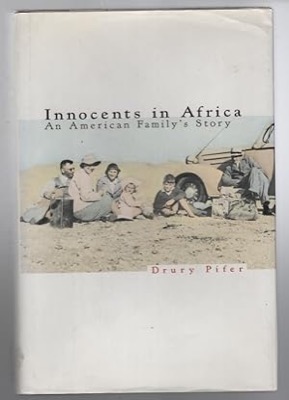
Hardcover. NY, Harcourt Brace , 1st, 1994, Book: Very Good, Dust Jacket: Very Good, Hardcover in a bright, unclipped dust jacket. Illustrated with 16 pages of black and white photographs, 338 pages. With wry humor and sharp observation, playwright Pifer elegantly mixes memory and research to reconstruct the world of his South African boyhood from 1933 to 1945. Pifer's father, an idealistic mining engineer in search of challenge and stability during the Depression, found it in Africa, but his earnest American egalitarianism soon put him in conflict with Afrikaner mine overseers, and his career under magnate Sir Ernest Oppenheimer stalled. The author deftly evokes his family--"my mother had the freedom of a disobedient daughter"--and the isolation of the desert town of Oranjemund. The book is even more resonant in its snapshots of mid-century Southern Africa: the still-simmering enmity between Afrikaners and the English; the ripples from Hitler's war in what prior to WW I had been the German territory of South West Africa (currently Namibia). Pifer's knowing account of the travails of servants--"the chasm that exists between white mistress and African maid"--still rings true today. Clean copy.
Hardcover. New Haven CT, Yale University Press;, 1st, 2009, Book: Very Good, Dust Jacket: Very Good, Hardcover, 180 pages. John Gutmann (1905-1998) was one of America's most distinctive photographers. Born in Germany where he trained as an artist and art teacher, he fled the Nazis in 1933 and settled in San Francisco, reinventing himself as a photo-reporter. Gutmann captured images of American culture, celebrating signs of a vibrant democracy, however imperfect. His own status as an outsider--a Jew in Germany, a naturalized citizen in the United States--informed his focus on individuals from the Asian-American, African-American, and gay communities, as well as his photography in India, Burma, and China during World War II. This handsome book acknowledges Gutmann's place in the history of photography. Drawing on his archive of photographs and papers at the Center for Creative Photography, it presents both unfamiliar works and little-known contexts for his imagery, linking his photography to his passionate interest in painting and filmmaking, his collections of non-Western art and artifacts, and his pedagogy. In addition to a major essay by Sally Stein, the volume includes an introduction by Douglas R. Nickel, and an overview of the Gutmann archive by Amy Rule.
Hardcover. New Haven CT, Yale University Press;, 1st, 2009, Book: Very Good, Dust Jacket: Very Good, Hardcover, 180 pages. John Gutmann (1905-1998) was one of America's most distinctive photographers. Born in Germany where he trained as an artist and art teacher, he fled the Nazis in 1933 and settled in San Francisco, reinventing himself as a photo-reporter. Gutmann captured images of American culture, celebrating signs of a vibrant democracy, however imperfect. His own status as an outsider--a Jew in Germany, a naturalized citizen in the United States--informed his focus on individuals from the Asian-American, African-American, and gay communities, as well as his photography in India, Burma, and China during World War II. This handsome book acknowledges Gutmann's place in the history of photography. Drawing on his archive of photographs and papers at the Center for Creative Photography, it presents both unfamiliar works and little-known contexts for his imagery, linking his photography to his passionate interest in painting and filmmaking, his collections of non-Western art and artifacts, and his pedagogy. In addition to a major essay by Sally Stein, the volume includes an introduction by Douglas R. Nickel, and an overview of the Gutmann archive by Amy Rule.
Hardcover. Nairobi, The English Press,, 1st, 1954, Book: Good, Dust Jacket: None, Hardcover, blue cloth with black title on front, 117 pages + postscript. The Mau Mau, the black challenge to white supremacy and the need for British rule to remain in Kenya. Name on front fly leaf, light marking to margins on some pages.
Hardcover. NY, W. W. Norton & Company, 1st, 2008, Book: Very Good, Dust Jacket: Very Good, Hardcover, 320 pages. Extraordinary photographs, along with extensive captions, document the transition from a barely explored paradise to a modern nation. This stunning collection of 720 photographs, many of them drawn from family archives and scrapbooks and all carefully restored, is one of the most important visual records of Africa in the late nineteenth and early twentieth centuries ever to have been published. The early photographers captured the beauty and dangerous allure of life on this spectacular frontier: the ceremonies and traditional attire of the native people, the fantastic machinery used in construction of the Uganda Railway, the gradual development of trade on the coast and in the country's interior, the hardships of the East African Campaign during World War I, and the pioneering spirit of early European settlers and farmers. Many of the most famous names and places connected with Africa appear in these pages, including Karen Blixen's farm and Ernest Hemingway and Theodore Roosevelt on safari.
Hardcover. Koln GR, Taschen, 1st, 2001, Book: Very Good, Dust Jacket: Very Good, Hardcover, 336 pages. One remarkable woman, five remarkable careers: Leni Riefenstahl is the exception to the rule. From dancer to actress to film-maker to photographer to diver, she has excelled in each field and is one of the most important and controversial artists of the 20th century. Her contributions to the art and technique of film-making were vast, most notably in her epochal film "Olympia" (1938). Critically acclaimed during the 1930's for her work under the Hitler administration and harshly criticized after the war, Riefenstahl surged on, completing the famous "Tiefland" in 1954. In the 1960s and 70s she traveled to Africa and extensively photographed East Africa and the Nuba tribes in Sudan, publishing three books. Ready for yet another change, she took up deep-sea diving at the age of 71, beginning a new chapter as an underwater photographer. Though she has attracted much attention throughout her life and has been the subject of many books, articles, and films, Leni Riefenstahl Five Lives is the first book to showcase her entire career in pictures. Produced in collaboration with Riefenstahl herself, the book includes her most famous images as well as many previously unpublished pictures from her private archives.
Softcover. NY, Ballantine Books, reprint, 1989, Book: Very Good, Dust Jacket: None, Softcover, 242 pages, b&w illustrations. Describes the causes and background of the Zulu War, recounts the experiences of British and Zulu survivors, and looks at the strategies and tactics of the war. Clean copy.
Hardcover. NY, Holiday House, 1st, 2013, Book: Very Good, Dust Jacket: None, Hardcover, glossy pictorial boards. Look! An elephant eats. Look! Giraffes drink. Look! A warthog digs. A gorilla hides, wild dogs listen, zebras run, monkeys sit, hippos splash, and a rhino naps. Each line of text is illustrated by a two-page spread with a beautiful painting of an animal Ted Lewin has seen on his journeys to Africa. At the end of the story, a boy reads, plays, and dreams, surrounded by toy animals that represent each of the real ones. Clean copy.
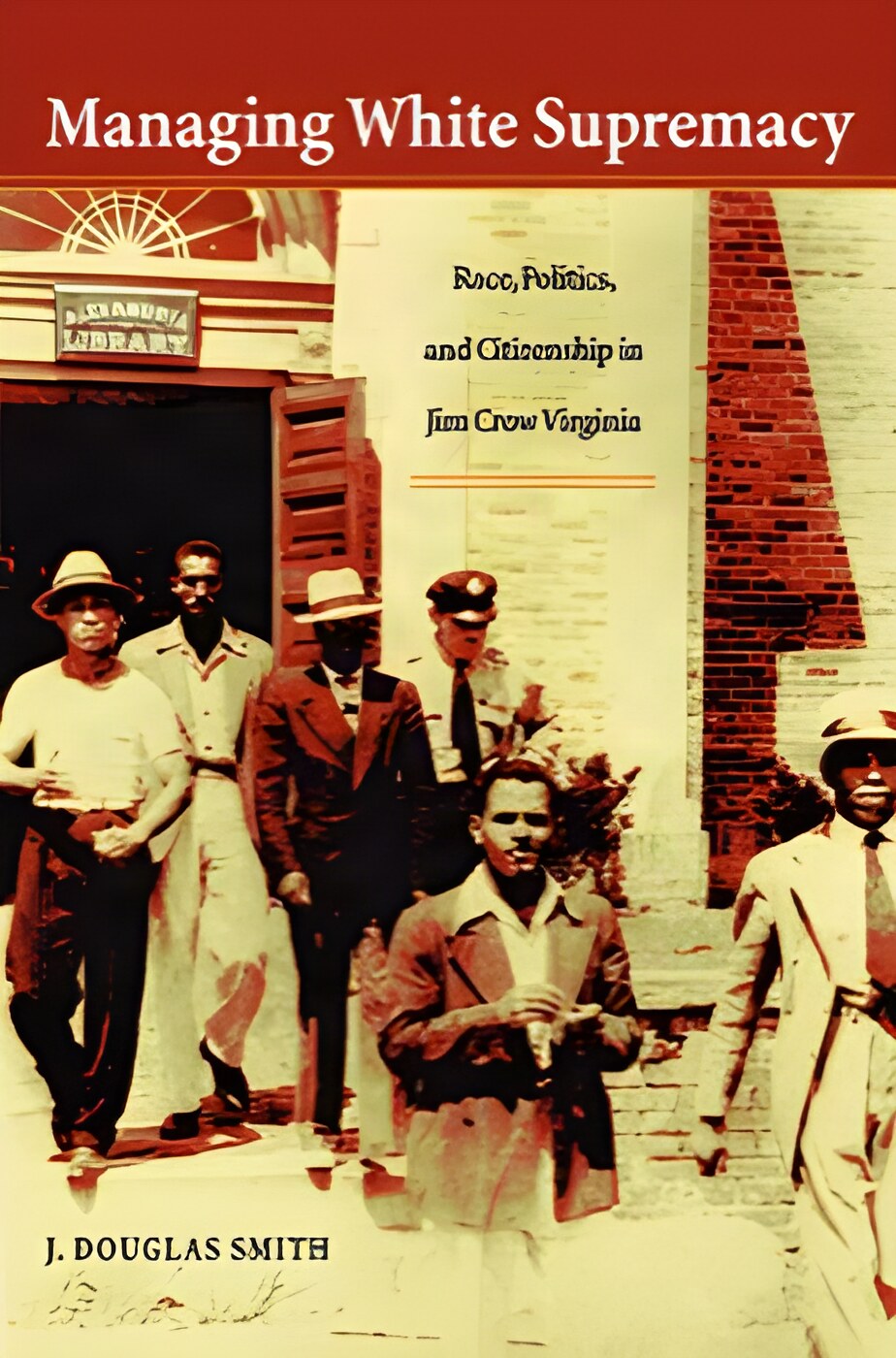
Softcover. Chapel Hill, University of North Carolina Press, 1st pbk, 2002, Book: Very Good, Dust Jacket: None, Softcover, 411 pages, b&w illustrations. Tracing the erosion of white elite paternalism in Jim Crow Virginia, Douglas Smith reveals a surprising fluidity in southern racial politics in the decades between World War I and the Supreme Court's 1954 Brown v. Board of Education decision. Smith draws on official records, private correspondence, and letters to newspapers from otherwise anonymous Virginians to capture a wide and varied range of black and white voices. African Americans emerge as central characters in the narrative, as Smith chronicles their efforts to obtain access to public schools and libraries, protection under the law, and the equitable distribution of municipal resources. This acceleration of black resistance to white supremacy in the years before World War II precipitated a crisis of confidence among white Virginians, who, despite their overwhelming electoral dominance, felt increasingly insecure about their ability to manage the color line on their own terms. Exploring the everyday power struggles that accompanied the erosion of white authority in the political, economic, and educational arenas, Smith uncovers the seeds of white Virginians' resistance to civil rights activism in the second half of the twentieth century. Light marking to 10 pages, otherwise clean, very good.
Softcover. Lincoln NE, iUniverse, 1st, 2001, Book: Very Good, Dust Jacket: None, Softcover, 236 pages. "Forward! Double-Quick!" and away we all rushed toward the fort... capturing two brass field pieces, one of which the rebels left loaded." A true account of Vermont men of color in battle during the Civil War. A barely known fact is that the tiny state of Vermont provided over one hundred and fifty African American soldiers to fight for the Union and by doing so, free millions of their own race. This is their story. Derived from historical archives and through their own words. Clean copy. Hastily signed by the author on the half-title page.
Hardcover. NY, Aperture, 1st, 2000, Book: Very Good, Dust Jacket: Very Good, Hardcover in a bright, unclipped dust jacket. In Migrations, Sebastiao Salgado turns his attention to the staggering phenomenon of mass migration. Photographs taken over seven years across more than 35 countries document the epic displacement of the world's people at the close of the twentieth century. Wars, natural disasters, environmental degradation, explosive population growth and the widening gap between rich and poor have resulted in over one hundred million international migrants, a number that has doubled in a decade. This demographic change, unparalleled in human history, presents profound challenges to the notions of nation, community, and citizenship. The first extensive pictorial survey of the current global flux of humanity, Migrations follows Latin Americans entering the United States, Jews leaving the former Soviet Union, Africans traveling into Europe, Kosovars fleeing into Albania and many others. Clean copy. DOMESTIC SHIPPING ONLY.
Hardcover. NY, Aperture, 1st, 2000, Book: Very Good, Dust Jacket: Very Good, Hardcover. In Migrations, Sebastiao Salgado turns his attention to the staggering phenomenon of mass migration. Photographs taken over seven years across more than 35 countries document the epic displacement of the world's people at the close of the twentieth century. Wars, natural disasters, environmental degradation, explosive population growth and the widening gap between rich and poor have resulted in over one hundred million international migrants, a number that has doubled in a decade. This demographic change, unparalleled in human history, presents profound challenges to the notions of nation, community, and citizenship. The first extensive pictorial survey of the current global flux of humanity, Migrations follows Latin Americans entering the United States, Jews leaving the former Soviet Union, Africans traveling into Europe, Kosovars fleeing into Albania and many others. The images address suffering while revealing the dignity and courage of the subjects. With his unique vision and empathy, Salgado gives us a picture of the enormous social and political transformations now occurring in a world divided between excess and need. This is a heavy and oversized book and will require extra shipping. International customers please ask for a shipping quote before purchasing.
Hardcover. NY, Aperture, 1st, 2000, Book: Very Good, Dust Jacket: Very Good, Hardcover, 176 pages. In a convergence of brilliant color and compelling visual narrative, this new collection of photographs by Pascal Maitre reveals an Africa unfamiliar to most Westerners. He portrays a wide range of experience in sub-Saharan Africa: in Niger's desert, soldiers juggle goats and machine guns; within the forest, a rosary dangles from the chest of a warrior in a Bassorian initiation ceremony. In this startlingly beautiful land, ornamented by the marks of human struggle and worship, contradictions are plentiful. Rich in detail and elegant composition, Maitre's photographs immerse us in an Africa beyond the familiar media depictions. He shows an Africa living with the contradictions of tradition and modernization, of ritual headdresses and plastic flip-flops, of tribal wars and machine guns, of ancestral deities and nonbelievers. A lively preface by Cameroon-born author Calixthe Beyala.
Hardcover. Syracuse NY, Syracuse University Press, 1st, 2010, Book: Very Good, Dust Jacket: Very Good, Hardcover in a bright dust jacket, 142 pages, b&w illustrations. In 1950, future Hall of Famer Earl Lloyd became the first African American to play in a National Basketball Association game. A warm and gracious man, widely loved and respected, Lloyd has lived what he describes as an 'incredible journey' and has spent eighty years gathering passionate lessons from that experience. He was born in Virginia, a state he describes as 'the cradle of segregation', only sixty-two years after the end of the Civil War. Nicknamed 'Moonfixer' in college, Lloyd led West Virginia State to two CIAA Conference and Tournament Championships and was named All-American twice. One of three African Americans to enter the NBA at that time, Lloyd played seven games for the Washington Capitals before the team folded. He joined the Syracuse Nationals for six seasons and later played for the Detroit Pistons before he retired in 1961. Throughout his career, he quietly endured the overwhelming slights and exclusions that went with being black in America. Yet he has also lived to see basketball - a demonstration of art, power, and pride - become the black national pastime and to witness the inauguration of Barack Obama. In a series of extraordinary conversations with Sean Kirst, Lloyd reveals his fierce determination to succeed, his frustration with the plight of many young black men, and his sincere desire for the nation to achieve true equality among its citizens. CLEAN COPY.




 "Harlem Speaks: A Living History of the Harlem Renaissance (with CD)by: Cary D. Wintz")
 "Harlem's Hell Fighters: The African-American 369th Infantry in World War I by: Stephen L. Harris")

 "History of United States Navel Operations in World War II: Operations in North African Waters October 1942-June 1943: Vol. IIby: Morison, Samuel Eliot")
 "Humanity and Inhumanity: The Photographic Journey of George Rodger by: BERNARD, Bruce and George Rodger")
 "I Tell My Heart: The Art of Horace Pippinby: Stein, Judith E.")

 "John Gutmann: The Photographer at Workby: Sally Stein , Douglas R. Nickel, et al.")
 "John Gutmann: The Photographer at Workby: Sally Stein , Douglas R. Nickel, et al.")
 "Kenya's Warning: The Challenge to White Supremacy in Our British Colonyby: Wilson, Christopher")
 "Kenya: A Country in the Making, 1880-1940by: Pavitt, Nigel")
 "Leni Riefenstahl-Five Lives: A Biography in Picturesby: Walk Ines; Leni Riefenstahl")


 "Men of Color, to Arms!: Vermont African-Americans in the Civil Warby: Fuller, James")

 "Migrations: Humanity in Transitionby: Salgado, Sebastiao")
 "Mon Afrique: Photographs of Sub-Saharan Africaby: Pascal Maitre and Calixthe Beyala")