Hardcover. Toronto, Canada, George Brown, Rebound 1st Edition, 1864, Book: Good, Dust Jacket: None, 376 pages. Hardcover. Rebound edition. Domestic shipping only. Previous owner's bookplate on front endpapers. Previous owner's name and date of acquisition on preliminary page in pencil. Bright blue bound cover boards. Some light tanning to pages and edges from age. Binding very good. Pages unmarked. Spine straight.
Softcover. Charleston SC, Arcadia Publishing, 1st, 2004, Book: Very Good, Dust Jacket: None, Softcover, 96 pages, profusely illustrated with b&w historical photos. The history of Chester County, the fastest developing county in Pennsylvania, is revealed by the uses of the land through the years, from the agriculture and industries of the nineteenth century to the specialty agriculture and service industries of today. Chester County visits the landscape and community that has endeared generations of residents. Rediscover Saturday night movies at the Warner Theatre in West Chester and root-beer floats at the Guernsey Cow in Exton. Visit the industries that built a strong economy in Chester County, such as Lukens Steel and the Sharples Separator Company, and learn about the site of a paper mill that is now a nature preserve for rare Brandywine bluebells. Clean copy.
Hardcover. Albany NY, New York Agricultural Society, 1st, 1834, Book: Very Good, Dust Jacket: None, 192 pages, the first 12 issues of this early farming periodical, each 16 pages. Issues start with March 1834 and continue through February 1835. Bound in linen covered boards with a calf spine. Nice condition, minor foxing.
Hardcover. Chicago, American Sheep Breeder Compny, 1st, 1910, Book: Good, Dust Jacket: None, Hardcover, green cloth covers with gilt lettering, 96 pages plus ads in rear. b&w illustrations. Gilt faded on cover and spine, clean copy. The book provides a comprehensive overview of the different types of cheese made in America, specifically focusing on cheeses made from cow, sheep, and goat milk. The author delves into the history of cheese-making in America, discussing the various techniques and methods used to produce cheese. The book also includes detailed descriptions of different cheese varieties, their flavors, textures, and uses. It is a valuable resource for cheese enthusiasts, historians, and anyone interested in the history and culture of cheese-making in America.
Softcover. Chicago, University of Chicago Press, 1st, 1990, Book: Very Good, Dust Jacket: None, Softcover, 161 pages. In this overview of the origins and development of black societies in southern Africa, Martin Hall reconstructs the region's past by throughly examining both the archaeological and the historical records. Beginning with the gradual southward movement of the earliest farmers nearly two thousand years ago, Hall tracks the emergence of precolonial states such as Mapungubwe and Great Zimbabwe. Farmers, Kings, and Traders concludes with the devastating effects of colonialism. Through a close reading of the accounts of early travelers, colonialists, archaeologists, and historians, Hall places in context the often contradictory histories that have been written of this region. The result is an illuminating look at how ideas about the past have themselves changed over time. Name on front fly leaf, otherwise clean.
Softcover. Philadelphia, University of Pennsylvania Press, reprint, 2003, Book: Very Good, Dust Jacket: None, Softcover, 338 pages. In North America industrial agriculture has now virtually displaced diversified family farming. The prevailing system depends heavily on labor supplied by migrants and immigrants, and its reliance on monoculture raises environmental concerns. In this book Jane Adams and contributors--anthropologists and political scientists among them--analyze the political dynamics that have transformed agriculture in the United States and Canada since the 1920s. The contributors demonstrate that people become politically active in arenas that range from the state to public discourse to relations between growers and their contractors or laborers, and that politics is a process that is intimately local as well as global. The farm financial crisis of the 1980s precipitated rapid consolidation of farms and a sharp decline in rural populations. It brought new actors into the political process, including organic farmers and environmentalists. Fighting for the Farm: Rural America Transformed considers the politics of farm policy and the consequences of the increasing alignment of agricultural interests with the global economy. The first section of the book places North American agriculture in the context of the world system; the second, a series of case studies, examines the foundations of current U.S. policy; subsequent sections deal with the political implications for daily life and the politics of the environment.
Hardcover. Berkeley, University of California, 1st US, 1966, Book: Very Good, Dust Jacket: Very Good, Hardcover in a bright, price-clipped dust jacket. 258 pages, b&w illustrations. Written in 1929, when Marc Bloch was 42 years young, page after page of this book infects with the exhuberance of a difficult project turning out well. Bloch chose to write a history of the social impact of economic events on everyday life. Back then that meant to take a long and winding road through uncharted territory. For documentary evidence on how the common people lived by working the land - on "oxen, wheeled ploughs or crop rotations" - was scarce and much of it had to be drawn from neighbouring disciplines. Considered a classic in it's field, this is the first US edition, translated from the French by Janet Sondheimer. Dust jacket spine faded, otherwise a clean, tight copy.
Hardcover. NY, Nesterman Publishing., 1st, 1943, Book: Very Good, Dust Jacket: None, Hardcover, maroon cloth stamped in gilt. 263 pages, b/w illustrations by Al Coleman. SIGNED BY BOTH AUTHORS on the front fly leaf. A memoir of growing up on farms in central and western New York before the turn of the century. A hilarious account that recalls all the joys and a few of the mishaps that accompanied Horse and Buggy days on the farm. Clean, tight copy.
Hardcover. Chicago, International Harvester Company, 1st, 1949, Book: Very Good, Dust Jacket: None, Hardcover in green cloth with light yellow lettering on front cover, 259 pages, b&w photos. A report by the International Harvester Company that followed a trip to China. The Chinese government invited 25 American firms to help advance the country's agriculture programs. Clean, bright copy.
Hardcover. Princeton NJ, Princeton University Press, 1st, 1992, Book: Very Good, Dust Jacket: Very Good, Hardcover in a bright dust jacket, 281 pages, b&w illustrations. "For, Lo! We live in an Iron Age--In the age of Steam and Fire!" wrote a poet mesmerized by the engines that were transforming American transportation, agriculture, and industry during his lifetime. Indeed, by the nineteenth century fire had become America's leitmotif--for good and for ill. "Keeping the flame" was deadly serious: even the slightest lapse of attention could convert a fire from friendly ally to ravaging destroyer. To examine the cultural context of fire in "combustible America," Margaret Hazen and Robert Hazen gather more than a hundred illustrations, most never before published, together with anecdotes and information from hundreds of original sources, including newspapers, diaries, company records, popular fiction, art, and music. What results is an immensely entertaining and encyclopedic history that ranges from stories of the tragic "great fires" of the century to fire imagery in folktales and popular literature. Dealing more with technology than with fire in nature, the book provides a vast amount of information on fire manipulation and prevention in urban life. Hazen and Hazen discuss the people who worked with fire--or against it. Founders, gaffers, blacksmiths, boilers at saltworks, and housewives knew how to "read" a fire and employ it for their purposes. A few dedicated investigators inquired about the scientific nature of heat and flame. And firefighters gradually progressed from "bucket brigades" to "using fire to fight fire" with the newly invented steam engine. The colorful stories of these Americans--the risks they took and the rewards they received--will fascinate not only social historians but also a broad audience of general readers. Clean copy.
Softcover. NY, King's Crown Press, 1st, 1946, Book: Very Good, Dust Jacket: None, Softcover, gray wrappers, 287 pages. Local government bodies known as county councils were the landlords for 25,000 small farmers, market gardeners, and part-time agriculturalists in England and Wales in 1935. Clean copy.
Hardcover. Brattleboro VT, Green Place Books , 1st, 2020, Book: Very Good, Dust Jacket: None, Hardcover in paper-covered boards, 264 pages. SIGNED BY CO-AUTHOR BILL MARES on title page. Land of Milk and Honey: A History of Vermont Beekeeping follows the trials and tribulations of beekeepers in Vermont. This dramatic history begins in the early 1800's following the life and times of inspired beekeepers that are the advance guard of a line of notable beekeepers that is to stretch through the centuries into modern times. Readers will discover a beekeeping lineage born and raised within a single Vermont county, and establishes a continuity of beekeeping knowledge and skill spanning more than a century. The lineage of beekeeping concludes in the present day as apiculturists throughout the world face some of the most challenging times in over 200 years with the possibility of honey bee extinction rearing its ugly head. Is it possible that by reflecting on the history of Vermont's beekeepers we can find clues about what is needed to help the honey bee thrive today and well into the future? Land of Milk and Honey will also explore the relationship between the people of Vermont and the countryside they inhabit: a land and people that shift and change through the centuries in ways that directly impact the health and well-being of bees and its beekeepers.
Hardcover. Baltimore MD, Johns Hopkins University Press, 1st, 1998, Book: Very Good, Dust Jacket: Very Good, Hardcover in a bright dust jacket, 356 pages, b&w illustrations. Starrs offers a detailed and comprehensive look at one of America's most enduring institutions. Richly illustrated with 130 photographs and maps, the book combines the authentic detail of an insider's view (Starrs spent six years working cattle on the high desert Great Basin range) with a scholar's keen eye for objective analysis. Tracing the geography and history of ranching in the United States, Starrs tells how Anglo settlers first encountered the open grasslands of the West - an environment alien to most of the European experience." Clean copy.
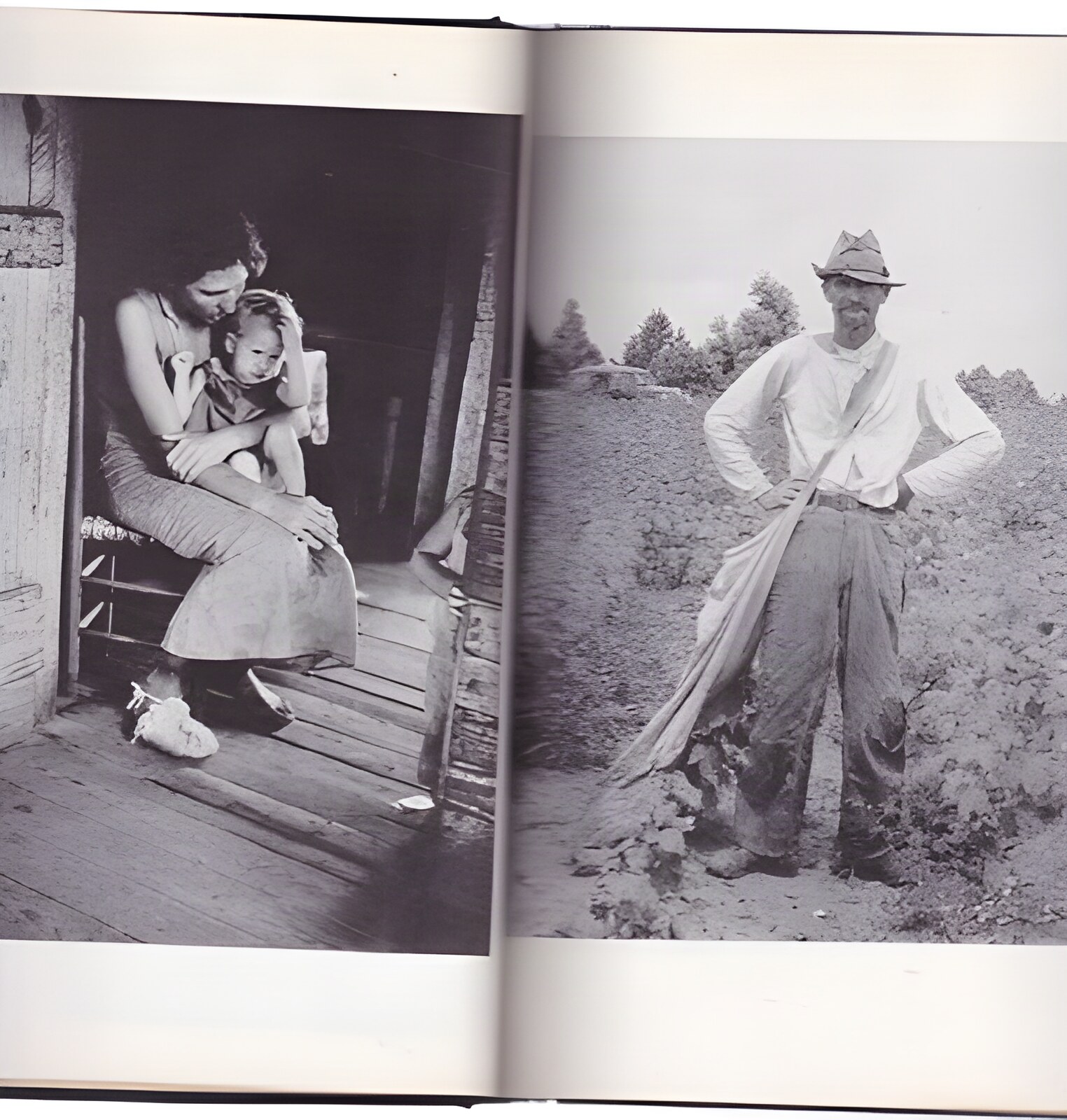
Hardcover. Boston, Houghton Mifflin, 3rd pr., 1960, Book: Very Good, Dust Jacket: None, Hardcover, black cloth with gilt lettering on spine. 471 pages, Walker Evans photos up front. In the summer of 1936, Agee and Evans set out on assignment for "Fortune" magazine to explore the daily lives of sharecroppers in the South. Their journey would prove an extraordinary collaboration and a watershed literary event when in 1941. "Let Us Now Praise Famous Men" was first published to enormous critical acclaim. This unsparing record of place, of the people who shaped the land, and of the rhythm of their lives today stands as one of the most influential books of the twentieth century. The time is the mid-1930s, in the depths of the Great Depression. Tenant farmers down South are struggling with deepening debt, chronic illnesses in their families (NO health care), land suffering from drought and the hopeless, grinding poverty much of America suffered through in that era. Clean copy. Lacks the dust jacket.
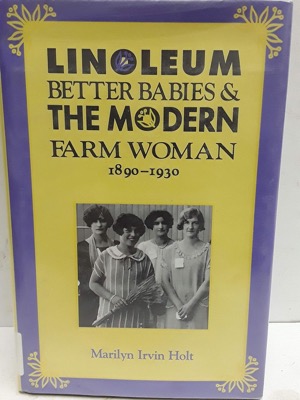
Hardcover. Albuquerque, University of New Mexico Press, 1st, 1995, Book: Very Good, Dust Jacket: Very Good, Hardcover in a bright dust jacket. 250 pages. b&w illustrations. The Progressive Era promoted a vision of America united by an emphasis on science and progressive reform. The zeal to modernize business, government and social relations extended to farm families and the ways women defined their roles. In this study of the expert advice offered by the domestic economy movement, Holt argues that women were not passive receptors of these views. Seeing their place in agriculture as multi-faceted and important, they eagerly accepted improved education and many modern appliances but often rejected suggestions conflicting with their own views of the rewards and values of farm life. Progressive reform inevitably left a mixed legacy; science and technology did not perfect rural society. But many programs such as 4-H and Master Homemaker still exist and are still shaped by women's desire to preserve and pass on the possibilities of rural life. Clean copy.
Hardcover. NY, Basic Books, 1st, 2004, Book: Very Good, Dust Jacket: Very Good, Hardcover in a bright dust jacket, unclipped. INSCRIBED BY AUTHOR on the title page. Throughout the nineteenth century, swarms of locusts regularly swept across the continent, turning noon into dusk, demolishing farm communities, and bringing trains to a halt as the crushed bodies of insects greased the rails. In 1876, the U.S. Congress declared the locust "the single greatest impediment to the settlement of the country." From the Dakotas to Texas, from California to Iowa, the swarms pushed thousands of settlers to the brink of starvation, prompting the federal government to enlist some of the greatest scientific minds of the day and thereby jumpstarting the fledgling science of entomology. Over the next few decades, the Rocky Mountain locust suddenly--and mysteriously--vanished.A century later, Jeffrey Lockwood set out to discover why. Unconvinced by the reigning theories, he searched for new evidence in musty books, crumbling maps, and crevassed glaciers, eventually piecing together the elusive answer: A group of early settlers unwittingly destroyed the locust's sanctuaries just as the insect was experiencing a natural population crash. Drawing on historical accounts and modern science, Locust brings to life the cultural, economic, and political forces at work in America in the late-nineteenth century, even as it solves one of the greatest ecological mysteries of our time. 294 pages, clean copy.
Hardcover. London, Hutchinson, 1st, 1967, Book: Very Good, Dust Jacket: None, Hardcover, green cloth with gilt lettering on spine. 246 pages, b&w plates. Very good, clean. No dust jacket.
Hardcover. New York, Norton, 1st, 2007, Book: Very Good, Dust Jacket: Very Good, Hardcover, 160 pages. Like new in publisher's shrink-wrap. For over twenty-five years Tim Barnwell has explored the southern Appalachian region, documenting the farm culture, visiting with and photographing the people of its isolated mountain enclaves. The photographs in this collection provide a window onto a world that is quickly fading. Barnwell honors the richness and rhythms of everyday life-people in their homes and at work in the fields-and captures the beauty of the North Carolina mountains. These intimate portraits are complemented by oral histories, derived from conversations between the author and his subjects, through which individual stories unfold, rich in humor, joy, loss, and wisdom. 100 duotone photographs
Softcover. Washington, D.C., Library of Congress, 1st, 2011, Book: Very Good, Dust Jacket: None, 51 pages. Hardcover. Extensive b&w photographs throughout by Carl Mydans throughout. Clean, unmarked copy with only minor wear to wrappers.
Hardcover. Albany NY, Luther Tucker & Son, 1st, 1866, Book: Good, Dust Jacket: None, Hardcover, spine ends worn. 12mo; 338 pages. Brown cloth with gilt stamping, fading to spine, tiny holes to cloth along spine, illustrated with 400 engravings. Volume 4 only, covers 1864-5-6.Covers all aspects of agriculture and rural life. Previous owner's signature on front fly leaf otherwise clean internally.
Hardcover. Montclair NJ, Allanheld, Osmun, 1st US, 1980, Book: Very Good, Dust Jacket: Very Good, Hardcover in a lightly worn dust jacket, 266 pages. Illustrated with maps and tables, this study describes and analyse the social and ecological destruction of the 1968-78 Sahel drought and famine, during which more than 100,000 W. Africans died of starvation and hunger related diseases, and livestock herds and agricultural production were critically reduced. It traces the history of this disaster to the impact of French colonial government policy on the fragile ecology of the region and the effects of food and export regulations on agriculture and on the social structure and interrelationships of the tribes. Clean copy.
Softcover. Paris, Mouton & Co., 1st, 1969, Book: Good, Dust Jacket: None, Softcover, 495 pages. FRENCH TEXT. 10 black-and-white plates. Some creasing along spine. Minor edge wear. Binding a little cracked where plates begin and end. Good, unmarked copy. (Agrarian Systems and Agricultural Progress: Three-Field Crop Rotation in Russia in the 18th and 19th Centuries).
Hardcover. Oxford UK, Oxford University Press, 1st, 2006, Book: Very Good, Dust Jacket: Very Good, Hardcover in a bright dust jacket, 598 pages. This book addresses one of the most debated and least understood revolutions in the history of our species, the change from hunting and gathering to farming. Graeme Barker takes a global view, integrating an array of information from archaeology and other disciplines including anthropology, botany, climatology, genetics, linguistics, and zoology. Spine with a slight cock. Clean copy.



 "Cultivator, The: A Monthly Publication devoted to Agricultureby: New York State Agricultural Society")


 "Fighting for the Farm: Rural America Transformedby: Jane Adams (Ed.)")

 "Growing Up in the Horse and Buggy Days (SIGNED COPY)by: Ladd, C. E. and Eastman, E. R.")


 "How The Farm Pays The Experiences of Forty Years of Successful Farming & Gardening by: Crozier, William & Peter Henderson")



 "Keepers of the Flame: The Role of Fire in American Culture, 1775-1925by: Margaret Hindle and Robert M Hazen")
 "Land for the Small Man English and Welsh Experience With Publicly-Supplied Small Holdings, 1860-1937by: Smith, Newlin R.")
 "Land of Milk and Honey: A History of Beekeeping in Vermont (SIGNED COPY)by: Bill Mares, Ross Conrad")
 "Let the Cowboy Ride: Cattle Ranching in the American Westby: Paul F. Starrs")

 "Ninety years of Family Farming: The Story of Lord Rayleigh's and Strutt & Parker Farmby: Gavin, Sir William")
 "On earth's furrowed brow: the Appalachian farm in photographsby: Barnwell, Tim")
 "Photographs of Carl Mydans, Theby: Mydans, Carl")
 "Rural Affairs: A Practical And Copiously Illustrated Register Of Rural Economy and Rural Taste, Including Country Dwellings, Improving and Planting Grounds, Fruits and Flowers, Domestic Animals, and all Farm and Garden Processes - V")
 "Seeds of Famine: Ecological Destruction and the Development Dilemma in the West African Sahelby: Richard W Franke and Barbara H Chasin")