Softcover. Albuquerque NM, University of New Mexico, 1st, 1989, Book: Very Good, Dust Jacket: None, Softcover, 58 pages, black and white photographs throughout. Foreword by Cornell Capa. Clean copy.
Softcover. Washington CT, Craftsbury Common, 1st, 1980, Book: Very Good, Dust Jacket: None, Softcover, 88 pages. Illustrated with b&w photographs by Hubbard, taken while traveling throughout America, reminiscent of the Farm Security Administration photographers of the 1930s. INSCRIBED BY PHOTOGRAPHER on the inside front cover. Clean copy.
Softcover. Washington DC, Island Press, reprint, 1988, Book: Very Good, Dust Jacket: None, Softcover, 353 pages. The book that started the worldwide revolution in grassland management, thought and theory. Originally published in 1959. Like new, clean.
Hardcover. New York, Basic Books, 1st, 1981, Book: Very Good, Dust Jacket: Very Good, 217 pages. Hardcover with dust jacket. A very clean, unmarked copy with only minor wear to dust jacket edges. A tight copy. Price clipping to dust jacket.
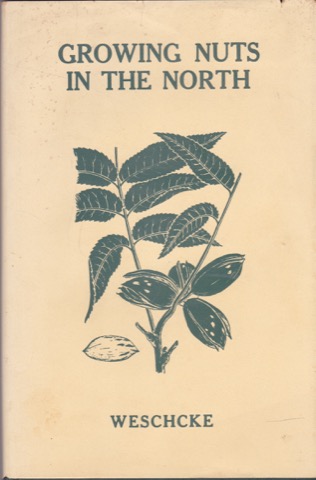
Hardcover. St. Paul MN, Webb Publishing Co., 1st, 1953, Book: Very Good, Dust Jacket: Very Good, Hardcover. Dark green pictorial cloth stamped in gilt. 124 pages with numerous photos & diagrams in text. A bright copy with a similar dust jacket. Clean copy. "A personal story of the author's experience of 33 years with nut culture in Minnesota and Wisconsin. Includes his failures as well as final successes."
Hardcover. NY, Nesterman Publishing., 1st, 1943, Book: Very Good, Dust Jacket: None, Hardcover, maroon cloth stamped in gilt. 263 pages, b/w illustrations by Al Coleman. SIGNED BY BOTH AUTHORS on the front fly leaf. A memoir of growing up on farms in central and western New York before the turn of the century. A hilarious account that recalls all the joys and a few of the mishaps that accompanied Horse and Buggy days on the farm. Clean, tight copy.
Softcover. Washington DC, United States Department of Agriculture, 1929, Book: Very Good, Dust Jacket: None, Softcover Original black and white stapled wrapper with black lettering and a black and white photograph on the front cover. 5 3/4 X 9 inches. 84 pages. Copy contains 65 black and white photographs. Contents in this issue, Hardy perennial plants, use of herbaceous perennials, arrangement, culture, propagation, kinds to use, regions with similar growing conditions, adaptability of different kinds of plants, index of common names.
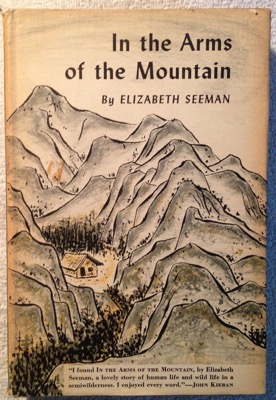
Hardcover. NY, Crown Publishers, 1st, 1961, Book: Very Good, Dust Jacket: Very Good, Hardcover in a bright dust jacket, 251 pages. An true account of a couple's settling in the Great Smokey Mountains after living in the big city. Very detailed depiction of Appalachian life and written with humor. B&w illustrations by Glen Rounds.Clean copy.
Hardcover. Chicago, International Harvester Company, 1st, 1949, Book: Very Good, Dust Jacket: None, Hardcover in green cloth with light yellow lettering on front cover, 259 pages, b&w photos. A report by the International Harvester Company that followed a trip to China. The Chinese government invited 25 American firms to help advance the country's agriculture programs. Clean, bright copy.
Hardcover. NY, Thames & Hudson, 1st, 2012, Book: Very Good, Dust Jacket: None, Hardcover, 152 pages. A fabulous facsimile of an almost unknown masterpiece by Joseph Cornell, presented in a box, along with a volume of essays and an interactive DVD One of Joseph Cornell's favorite pastimes was to meander through the used bookstalls of lower Manhattan, sorting through old books, magazines, postcards, photos, and other ephemera in search of items to spark his creative impulses. Sometime in the early 1930s he came upon the Journal d'Agriculture Practique (Volume 21, 1911), a voluminous handbook of advice for farmers. Though he was very much an urban creature, he adored French culture of that period, and the book was filled with charming black and white engraving and photographs of pigs, horses, vegetables, and farm machinery. Over time Cornell altered and reinvented many of the pages in the Journal. He inserted collages, photomontages, and occasional drawings; he crossed out words in the text and made French puns with others. Hand-colored engravings, cutouts, and lift-ups intricately transport the reader from page to page. The dazzling elegance of Cornell's work on the Journal has rarely been viewed. It was discovered in his basement studio soon after his death in 1972 and is now in the collection of the Philadelphia Museum of Art. Due to its fragility, the work is not well known, even among Cornell scholars. Now, in a unique venture, sixty of the most extraordinary pages have been re-created in virtual facsimile, with cutouts, glue-ons, and other unique handmade details. Included in a specially designed box are a DVD of the entire work, including pop-up commentaries, and a volume of illustrated essays on the Journal and Cornell's artistic practice. 103 illustrations
Hardcover. Princeton NJ, Princeton University Press, 1st, 1992, Book: Very Good, Dust Jacket: Very Good, Hardcover in a bright dust jacket, 281 pages, b&w illustrations. "For, Lo! We live in an Iron Age--In the age of Steam and Fire!" wrote a poet mesmerized by the engines that were transforming American transportation, agriculture, and industry during his lifetime. Indeed, by the nineteenth century fire had become America's leitmotif--for good and for ill. "Keeping the flame" was deadly serious: even the slightest lapse of attention could convert a fire from friendly ally to ravaging destroyer. To examine the cultural context of fire in "combustible America," Margaret Hazen and Robert Hazen gather more than a hundred illustrations, most never before published, together with anecdotes and information from hundreds of original sources, including newspapers, diaries, company records, popular fiction, art, and music. What results is an immensely entertaining and encyclopedic history that ranges from stories of the tragic "great fires" of the century to fire imagery in folktales and popular literature. Dealing more with technology than with fire in nature, the book provides a vast amount of information on fire manipulation and prevention in urban life. Hazen and Hazen discuss the people who worked with fire--or against it. Founders, gaffers, blacksmiths, boilers at saltworks, and housewives knew how to "read" a fire and employ it for their purposes. A few dedicated investigators inquired about the scientific nature of heat and flame. And firefighters gradually progressed from "bucket brigades" to "using fire to fight fire" with the newly invented steam engine. The colorful stories of these Americans--the risks they took and the rewards they received--will fascinate not only social historians but also a broad audience of general readers. Clean copy.
Softcover. Dixfield ME, Coburn Press, reprint, 1999, Book: Very Good, Dust Jacket: None, Softcover, 282 pages. Originally published in the early 1970s as The Cow Economy and reprinted many times over, Keeping a Family Cow has launched thousands of holistic small-scale dairy farmers and families raising healthy cows in accordance with their true nature. The book offers answers to frequently asked questions like, 'Should I get a cow?' and 'How Much Space do I need?' in addition to extensive information.
Hardcover. Stanford University Press, reprint, 1940, Book: Very Good, Dust Jacket: None, Hardcover, blue cloth covers with gilt lettering on spine. 327 pages, b&w illustrations. Clean copy.
Softcover. NY, King's Crown Press, 1st, 1946, Book: Very Good, Dust Jacket: None, Softcover, gray wrappers, 287 pages. Local government bodies known as county councils were the landlords for 25,000 small farmers, market gardeners, and part-time agriculturalists in England and Wales in 1935. Clean copy.
Hardcover. Brattleboro VT, Green Place Books , 1st, 2020, Book: Very Good, Dust Jacket: None, Hardcover in paper-covered boards, 264 pages. SIGNED BY CO-AUTHOR BILL MARES on title page. Land of Milk and Honey: A History of Vermont Beekeeping follows the trials and tribulations of beekeepers in Vermont. This dramatic history begins in the early 1800's following the life and times of inspired beekeepers that are the advance guard of a line of notable beekeepers that is to stretch through the centuries into modern times. Readers will discover a beekeeping lineage born and raised within a single Vermont county, and establishes a continuity of beekeeping knowledge and skill spanning more than a century. The lineage of beekeeping concludes in the present day as apiculturists throughout the world face some of the most challenging times in over 200 years with the possibility of honey bee extinction rearing its ugly head. Is it possible that by reflecting on the history of Vermont's beekeepers we can find clues about what is needed to help the honey bee thrive today and well into the future? Land of Milk and Honey will also explore the relationship between the people of Vermont and the countryside they inhabit: a land and people that shift and change through the centuries in ways that directly impact the health and well-being of bees and its beekeepers.
Hardcover. Hamilton, Hancock County IL, Chas. Dadant & Son, 6th Ed., 1902, Book: Very Good, Dust Jacket: None, Hardcover, dark green cloth over boards, decorated on spine and front w/ gold varied titles, bees, honeyomb design. Two frontis. author portraits., one an etching the other a photo. With full plate illustrations in black and white, and throughout with textual line drawings and etchings. A wonderful book production published by the Dadant family, the pioneering firm that produced bee-keeping supplies and bee-related products since 1863. Lorenzo Lorraine Langstroth, the father of American apiculture, was also a clergyman and teacher, and is celebrated as the father of American beekeeping. First published in 1888. Rear hinge cracked otherwise clean and bright.
Hardcover. Baltimore MD, Johns Hopkins University Press, 1st, 1998, Book: Very Good, Dust Jacket: Very Good, Hardcover in a bright dust jacket, 356 pages, b&w illustrations. Starrs offers a detailed and comprehensive look at one of America's most enduring institutions. Richly illustrated with 130 photographs and maps, the book combines the authentic detail of an insider's view (Starrs spent six years working cattle on the high desert Great Basin range) with a scholar's keen eye for objective analysis. Tracing the geography and history of ranching in the United States, Starrs tells how Anglo settlers first encountered the open grasslands of the West - an environment alien to most of the European experience." Clean copy.
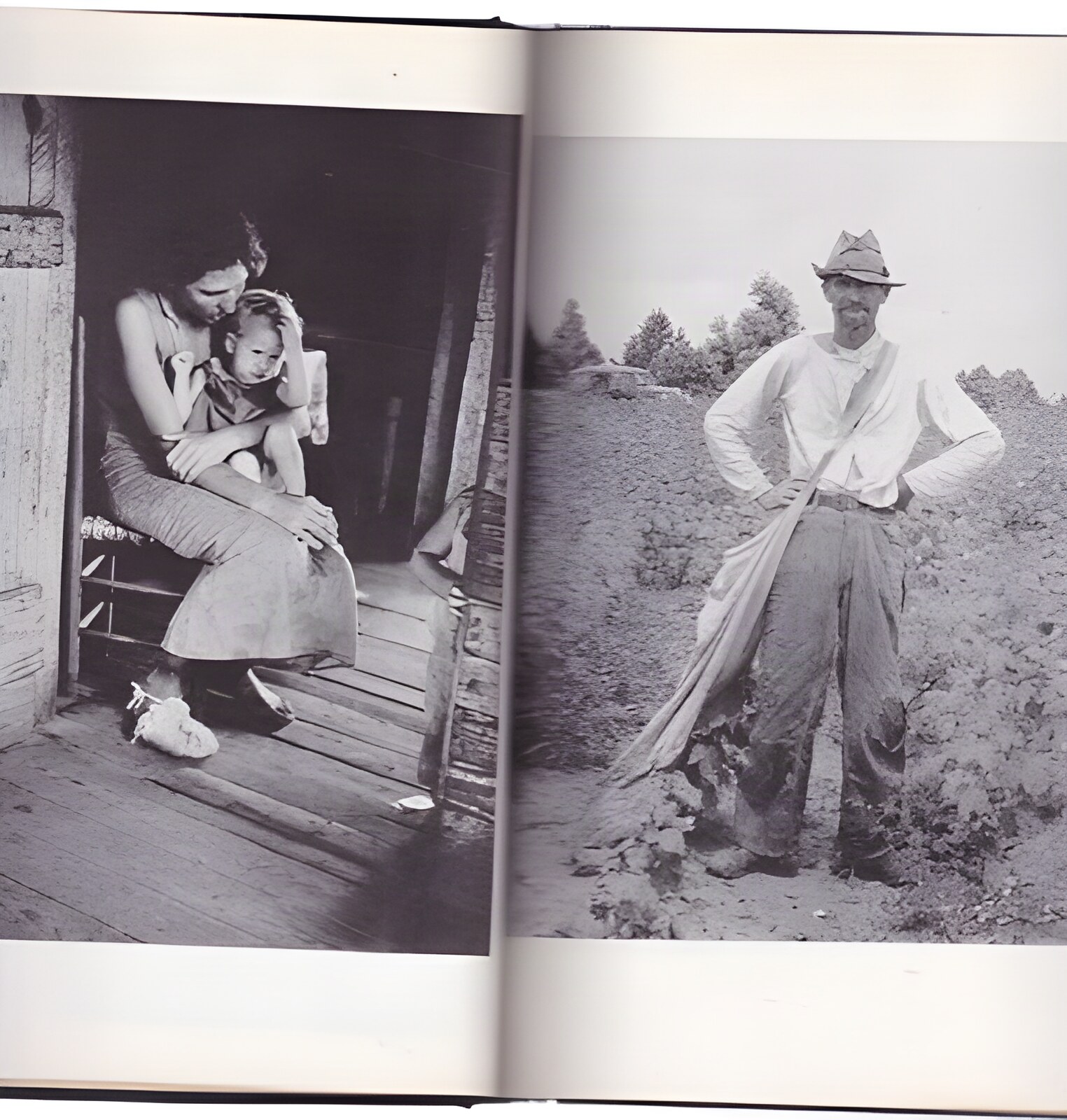
Hardcover. Boston, Houghton Mifflin, 3rd pr., 1960, Book: Very Good, Dust Jacket: None, Hardcover, black cloth with gilt lettering on spine. 471 pages, Walker Evans photos up front. In the summer of 1936, Agee and Evans set out on assignment for "Fortune" magazine to explore the daily lives of sharecroppers in the South. Their journey would prove an extraordinary collaboration and a watershed literary event when in 1941. "Let Us Now Praise Famous Men" was first published to enormous critical acclaim. This unsparing record of place, of the people who shaped the land, and of the rhythm of their lives today stands as one of the most influential books of the twentieth century. The time is the mid-1930s, in the depths of the Great Depression. Tenant farmers down South are struggling with deepening debt, chronic illnesses in their families (NO health care), land suffering from drought and the hopeless, grinding poverty much of America suffered through in that era. Clean copy. Lacks the dust jacket.
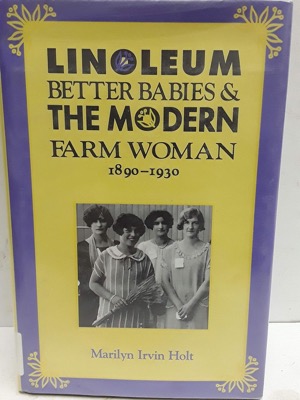
Hardcover. Albuquerque, University of New Mexico Press, 1st, 1995, Book: Very Good, Dust Jacket: Very Good, Hardcover in a bright dust jacket. 250 pages. b&w illustrations. The Progressive Era promoted a vision of America united by an emphasis on science and progressive reform. The zeal to modernize business, government and social relations extended to farm families and the ways women defined their roles. In this study of the expert advice offered by the domestic economy movement, Holt argues that women were not passive receptors of these views. Seeing their place in agriculture as multi-faceted and important, they eagerly accepted improved education and many modern appliances but often rejected suggestions conflicting with their own views of the rewards and values of farm life. Progressive reform inevitably left a mixed legacy; science and technology did not perfect rural society. But many programs such as 4-H and Master Homemaker still exist and are still shaped by women's desire to preserve and pass on the possibilities of rural life. Clean copy.
Hardcover. NY, Basic Books, 1st, 2004, Book: Very Good, Dust Jacket: Very Good, Hardcover in a bright dust jacket, unclipped. INSCRIBED BY AUTHOR on the title page. Throughout the nineteenth century, swarms of locusts regularly swept across the continent, turning noon into dusk, demolishing farm communities, and bringing trains to a halt as the crushed bodies of insects greased the rails. In 1876, the U.S. Congress declared the locust "the single greatest impediment to the settlement of the country." From the Dakotas to Texas, from California to Iowa, the swarms pushed thousands of settlers to the brink of starvation, prompting the federal government to enlist some of the greatest scientific minds of the day and thereby jumpstarting the fledgling science of entomology. Over the next few decades, the Rocky Mountain locust suddenly--and mysteriously--vanished.A century later, Jeffrey Lockwood set out to discover why. Unconvinced by the reigning theories, he searched for new evidence in musty books, crumbling maps, and crevassed glaciers, eventually piecing together the elusive answer: A group of early settlers unwittingly destroyed the locust's sanctuaries just as the insect was experiencing a natural population crash. Drawing on historical accounts and modern science, Locust brings to life the cultural, economic, and political forces at work in America in the late-nineteenth century, even as it solves one of the greatest ecological mysteries of our time. 294 pages, clean copy.
Hardcover. Post Mills VT, Chelsea Green, 1st, 1992, Book: Very Good, Dust Jacket: Very Good, Hardcover in a bright, unclipped dust jacket. INSCRIBED BY HELEN NEARING on the title page. illustrated with black and white photographs covering the many years of Helen and Scott Nearing. Here for the first time, Helen Nearing writes about a relationship with the young Krishnamurti, and when she went to Scott Nearing at the age of 24, he was 45; and their move to Vermont in 1932. Then in 1953, their move to Maine. Helen's memoir of their life together and an inspiring testimony to the ideals they stood for: self-sufficiency, simplicity, social justice, and peace. Clean copy.
Hardcover. Norwich, Conn., Henry Bill Publishing, reprint, 1890, Book: Very Good, Dust Jacket: None, 715 pages, with over 350 engravings and maps, gilt decorated cover and spine on green cloth, all edges marbled. Minor corner and edge wear, otherwise, very clean and tight copy.

 "Fruit Tramps: A Family of Migrant Farmworkersby: Emmet, Herman Leroy")
 "Good Folks, Good Country.by: Ethan Hubbard")


 "Grass Productivity (Conservation Classics)by: Voisin, Andre")









 "Land Drainage and Flood Protectionby: Etcheverry, Bernard A.")


 "Langstroth on the Hive and Honey Bee; Revised Enlarged and Completed by Chas. Dadant & Son by: LANGSTROTH Rev. Lorenzo Lorraine/Dadant Chas. & Son")




 "Marvels of the New West - A Vivid Portrayal of the Stupendous Marvels in the Vast Wonderland West of the Missouri River - Six Books in One Volume, Comprising: Marvels of Nature, Marvels of Race, Marvels of Enterprise, Marvels of Mini")