Hardcover. New Haven, Yale University Press, 1st, May 11, 2000, Book: Very Good, Dust Jacket: Very Good, Hardcover, 303 pages, illustrated throughout. Very clean and tight copy. Although lumped together with Pop artists such as Roy Liechtenstein and Andy Warhol, and often the movement's spokesperson, Indiana and his paintings actually have an uneasy fit in Pop company, mostly because his work isn't grounded in the commodity-oriented (Campbell Soup) realism of most Pop Art. Instead, his work engages with literature and poetry and with the popular rhetoric of the American dream-all permeated by the particularities of his upbringing and life. Ryan's dual accomplishments are in articulating the dynamics of Indiana's art-especially the connections between the artworks and the sources of imagery and themes in his own biography-and in rendering a sophisticated and judicious roundup of the Pop Art movement.
Hardcover. NY, Thomas Y. Crowell , 2nd pr., 1967, Book: Very Good, Dust Jacket: Very Good, Hardcover, 178 pages, with illustrations by the author and photographs throughout. Minor dust jacket edge wear, otherwise, very clean and tight.
Softcover. Montclair, NJ, Montclair Art Museum, 1st, 2005, Book: Very Good, Dust Jacket: None, Paperback. 90 pages, color and b&w illustrations. An exhibition catalog, not published in hardcover.
Hardcover. NY, Doubleday Doran, 1st, 1928, Book: Very Good, Dust Jacket: Good, 279 pages. Hardcover with dust jacket. Color, black & white illustrations by Will Crawford. Dust jacket with some heavy chipping.
Hardcover. Norman OK, University of Oklahoma Press, 1st, 1961, Book: Very Good, Dust Jacket: Good, Hardcover, in a edgeworn dust jacket, 270 pages. Color frontis, 115 b&w plates. Considers the life and work of American artist (and soldier) Seth Eastman (1808-1875). Follows his dual career at the Military Academy, and in Florida, Minnesota, Texas, and Washington. Includes a chronology and a fairly well-detailed checklist of works - oils, water colors, drawings, and lithographs and engravings after Eastman. The authoritative work on this fascinating artist.
Softcover. New York, Hudson Hills, 1st, 1987, Book: Very Good, Dust Jacket: None, Softcover, 130 pages, color and b&w photographs. Exhibition catalogue dedicated to the contemporary Navajo artist and her weaving of Chant Rugs; a majority of the 83 textiles (shown in color plates) that have been selected are a well-balanced demonstration of the very finest weaving skills of any period in Navajo history.
Hardcover. NY, Rizzoli, 1st, 2008, Book: Very Good, Dust Jacket: Very Good, Hardcover in a bright dust jacket, 240 pages. A survey of the most original Southwestern Indian jewelers -- from traditional and contemporary silversmiths to exquisite lapidary artists to metalsmiths who create wearable art and objects.. Color photos by Addison Doty.
Hardcover. New York, William Morrow & Co, 1st, 1992, Book: Very Good, Dust Jacket: Very Good, 160 pages. Hardcover with dust jacket. Very clean, unmarked copy with some minor shelfwear to dust jacket. This beautiful book is a spectacular overview of McCarthy's exciting Western work, presenting colorful paintings from his fine art career. Color illustrations throughout.
Hardcover. Washington DC, Counterpoint, 1999, Book: Very Good, Dust Jacket: Very Good, Hardcover, 642 pages. Hailed in 1849 as "a new department in the literature of civilization," the slave narrative forms the foundation of the African American literary tradition. From the late-eighteenth-century narratives by Africans who endured the harrowing Middle Passage, through the classic American fugitive slave narratives of the mid-nineteenth century, slave narratives have provided some of the most graphic and damning documentary evidence of the horrors of slavery. Riveting, passionate, and politically charged, the slave narrative blends personal memory and rhetorical attacks on slavery to create powerful literature and propaganda.The Civitas Anthology presents the seven classic antislavery narratives of the antebellum period in their entirety: The History of Mary Prince, a West Indian Slave , the first slave narrative published by a woman in the Americas; The Confessions of Nat Turner , written when Turner was asked to record his motivation for leading the bloodiest slave revolt in U.S. history; The Narrative of the Life of Frederick Douglass , an international bestseller and the first narrative to fashion the male fugitive slave into an African American cultural hero; The Narrative of William W. Brown , an account that explored with unprecedented realism the slave's survival ethic and the art of the slave trickster; The Narrative of the Life of Henry Bibb , the story of the struggles of the most memorable family man among the classic slave narrators; Running a Thousand Miles for Freedom , a gripping chronicle of one of the most daring and celebrated slave escapes ever recorded; and Incidents in the Life of Slave Girl , a dramatic text that exposed the sexual abuse of female slaves and pioneered the image of the fugitive slave woman as an articulate resister and survivor.Born out of lives of unparalleled suffering, the slave narrative captures all the bravery, drama, and hope that characterized the African American struggle against slavery. From these beginnings came some of the most influential novels in American literature, for the works of writers such as Harriet Beecher Stowe, Mark Twain, and Toni Morrison owe much of their power and social resonance to the slave narrative tradition. The Civitas Anthology gathers the most important narratives in this tradition into one volume for the first time, an indispensable resource for scholars, students, and general readers. Clean copy.
Softcover. Santa Fe, Museum of New Mexico Press, 1st revised, 2003, Book: Very Good, Dust Jacket: None, Softcover, pages. Maria, the potter of San Ildefonso (1887-1981), is not only the most famous of Pueblo Indian potters but ranks among the best of international potters. Her work Is collected and exhibited around the world, and more than any other artist, Maria Martinez brought "signatures" to Indian art. She and other members of her family revived a dying art form and kindled a renaissance in pottery for all the Pueblos. She raised this regional art to one of international acclaim. This lavishly illustrated book draws from Spivey's 1979 classic work. Featuring entirely new photography and 120 added pots as well as a significantly expanded text, this volume considers the entirety of this artist's immense oeuvre and important works and developments in her collaboration with Julian, and after his death, with her daughter-in-law Santana, son Popovi Da, and grandson Tony Da, bringing the legacy of Maria into the bright future of Pueblo ceramics.
Hardcover. Norman OK, University of Oklahoma Press, 8th pr., 1970, Book: Very Good, Dust Jacket: Very Good, Hardcover in a lightly worn dust jacket, 220 pages with black & white illustrations. A thorough study of the art of the Indian silversmiths of the Southwest. Includes the history of the craft as well as names and localities of pioneer artisans. Bookplate on inside front cover, otherwise clean.
Hardcover. San Francisco, Chronicle Books, 1st thus, 2003, Book: Very Good, Hardcover, illustrated in color by Christopher Bing. A remarkable celebration from the Caldecott Honor-winning artist! A clever young boy outwits a band of voracious tigers and returns home in triumph to a splendid feast of a yard-high stack of pancakes. The story, penned by Helen Brodie Bannerman for her two daughters in 1889, has captured the imagination of readers around the world and across many generations. But the pictures which accompanied her text were crudely stereotypical and hurtful to many. Caldecott Honor-winning artist Christopher Bing has spent almost fifteen years rediscovering the joy and energy of the original story. He respects that Bannerman was writing in an Indian setting and with Indian animals-after all, there are no tigers in Africa-and faithfully adheres to the original text. However, recognizing that the image of Sambo has been used as a symbol of repression of Africans and African-Americans, Christopher Bing celebrates Sambo as proudly African, a child of beauty and joy, wit and resourcefulness.
Softcover. Bloomington IN, Indiana University Press, 2nd pr., 2008, Book: Very Good, Dust Jacket: None, Softcover, 200 pages, color & BW illus., two fold-outs. Considers the art and the work that American artist Thomas Hart Benton (1889-1975) put into his series of Indiana murals for Chicago's "Century of Progress" World's Fair in 1933. Now these murals appear in an auditorium at Indiana University. With thematic illustrated essays by Kathleen A. Foster, Nanette Esseck Brewer, and Margaret Contompasis. Two fold-outs shows the murals; then the catalogue addresses each in detail, one by one. Clean, bright copy.
Hardcover. Glendale CA, Arthur H. Clark Co., 1st, 1951, Book: Very Good, Dust Jacket: None, Hardcover, dark blue cloth with gilt lettering on the spine, 340 pages. A biography of Thomas Pownall (1757 - 1760) who was governor of the Massachusetts Bay colony during the French and Indian War and later a member of Parliament (1767 - 1780). Pownall had sympathies for the colonial grievances and institutions. This biography is based on a study of widely scattered documentary materials and provides insight into a man of complex and contradictory ideas and actions during the pre-Revolutionary period. Includes bibliography and index. Stamping to endpapers, from an academic library.
Softcover. Berkeley CA, University of California Press, 1st pbk., 1990, Book: Very Good, Dust Jacket: None, Softcover, 273 pages, b&w illustrations. The first in-depth analysis of the rich spiritual and artistic traditions of the Carib-speaking Yekuana Indians of Venezuela, who live in the dense rain forest of the upper Orinoco. Within their homeland of Ihuruna, the Yekuana have succeeded in maintaining the integrity and unity of their culture, resisting the devastating effects of acculturation that have befallen so many neighboring groups. Yet their success must be attributed to more than natural barriers of rapids and waterfalls, to more than lack of "contact" with our "modern" world. The ethnographic history recounted here includes not only the Spanish discovery of the Yekuana but detailed indigenous accounts of the entire history of Yekuana contact with Western culture, revealing an adaptive technique of mythopoesis by which the symbols of a new and hostile European ideology have been consistently defused through their incorporation into traditional indigenous structures. Clean copy.
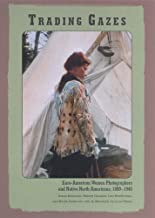
Softcover. NJ, Rutgers University Press, 1st, 2003, Book: Very Good, Dust Jacket: None, Softcover, 244 pages. The story of westering Americans in the late nineteenth and early twentieth centuries has been told most notably through photographs of American Indians. Unlike this vast archive, produced primarily by male photographers, which depicted American Indians as either vanishing or domesticated, the lesser-known images by the women featured in Trading Gazes provide new ways of seeing the intersecting histories of colonial expansion and indigenous resistance. Four unconventional women-Jane Gay, who documented land allotment to the Nez Perces; Kate Cory, an artist who lived for years in a Hopi community; Grace Nicholson, who purchased cultural items from the Karuk and other northern California tribes; and Mary Schaffer, who traveled among the Stoney and Metis of Alberta, Canada-used cameras to document their cross-cultural encounters. Trading Gazes reconstructs the rich biographical and historical contexts explaining these women's presence in different Native communities of the North American West. Their photographs not only record the unprecedented opportunities available for Euro-American women eager to shed gender restrictions, but also reveal how women's newfound mobility depended on the increasing restrictions placed on Native Americans in this era.
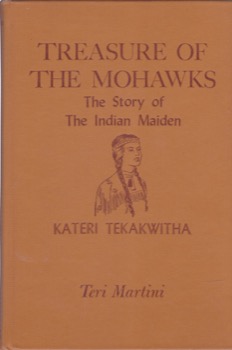
Hardcover. Paterson NJ, St. Anthony Guild Press, 1st, 1956, Book: Very Good, Dust Jacket: None, Hardcover in light tan cloth stamped in brown, 113 pages. Illustrated in 2-colors by Robert Bradbury. A tale of an orphaned American Indian girl who was worthy of sainthood in the eyes of her admirers. Remnants of color dust jacket and related article laid in. Clean copy.
Hardcover. Chicago, IL, Center for American Places, 1st, 2010, Book: Very Good, Dust Jacket: Very Good, 184 pages. Hardcover with dust jacket. A very clean, unmarked copy with only minor wear to dust jacket edges. Includes CD. The product of several visits to the Pine Ridge Indian Reservation, Views from the Reservation is meant to open our eyes, minds, and hearts to the life, culture, and conditions of the Oglala Lakota people. With his insightful and complex images Willis enlists several other voices to offer a more complete story: writer Kent Nerburn, who contributes an original essay; Lakota elders and Pine Ridge High School students, who offer poems; Emil Her Many Horses, the associate curator of the National Museum of the American Indian, Kevin Gover, the Assistant Secretary of the Interior for Indian Affairs, and Oglala Lakota artist Dwayne Wilcox. Accompanying the book is Heartbeat of the Rez, a compact disc collecting traditional songs compiled by the author, the elders, and KILI, the radio station of the reservation.
Softcover. Omaha, Nebraska, Center for Western Studies, Joslyn Art Museum, 1st, 1984, Book: Very Good, Dust Jacket: None, Softcover exhibition catalogue featuring art by Karl Bodmer dedicated to the American Western frontier and its exploration by the German Prince Maximilian of Wied. 103 pages with 69 illustrations, 34 of which are color plates. Very good condition, light rubbing on the covers, otherwise a very bright, clean copy.
Hardcover. Indianapolis IN, Eiteljorg Museum of American Indian and Western Art, 1st, 1993, Book: Very Good, Dust Jacket: Very Good, Hardcover in a bright dust jacket, 212 pages with 129 color plates. Foreword by James K. Ballinger. Wonderful work by the Arizona artist who started his career as an illustrator in New York for magazines like the Saturday Evening Post. The subject is primarily the American Indian. Clean copy.
Hardcover. Newtown CT, The Taunton Press, 1st, 2006, Book: Very Good, Dust Jacket: Very Good, Hardcover in a bright dust jacket, 266 pages. The past has left behind only scattered clues that, on their own, provide little insight into how the people of early America lived and the details of their daily lives. The photographs in this book, the deeply informed narrative that accompanies them, and the eyewitness accounts of daily life that the author weaves throughout, provide a fresh perspective on our early American ancestors and the places they called home. This book is about how their houses and their life in them, from the wealthy to the impoverished, from New York City to the small farms and plantations of the South, from coastal fishing towns to the Western frontier of Indiana and Kentucky. The stories focus on the remarkably vivid differences from one part of the country to the next, class and culture, and the realities of everyday life for American families. These stories twine around a wide selection of HABS photographs of early houses, covering the variety and evolutions of house styles -- not by labeling the style but by explaining the style in the context of everyday life. Richly illustrated with handsome black-and-white photography of old houses from the Library of Congress Historic American Building Survey (HABS) collection and supplemented with period woodcuts, engravings, drawings, paintings, artifacts, and maps, the book is printed on a 4-color press for a depth of tone. Sidebar excerpts from diaries, journals, and letters inject graphic eyewitness descriptions, adding an additional layer of insight. The book also includes sidebars called Still Standing that traces the history of specific houses, from their origins to the present and includes information on the original family, how the house has evolved over the centuries, and how it's used today.
Hardcover. NY, Grosset & Dunlap, 1st, 1934, Book: Very Good, Dust Jacket: Fair, Hardcover in a bright, unclipped dust jacket with soil, major chipping, tape repair. 128 pages. Frontispiece illustrated by Lee Haynes. Many illustrations in b/w, a few indicate B. Stevenson as artist, the rest are not specifically identified. Illustrated end papers. Seventeen chapters telling of the growth and experiences of a young American Indian boy.- his adventures are closely interwoven with the habits, customs and beliefs of his people.

 "Robert Indiana: Figures of Speechby: Ryan, Professor Susan Elizabeth")
 "Roy Lichtenstein - American Indian Encountersby: Stavitsky, Gail and Twig Johnson")
 "Rumbling Wings and Other Indian Talesby: Parker, Arthur C.")
 "Seth Eastman: Pictorial Historian of The Indian by: McDermott, John Francis")
 "Song of the Loom, The/ New Traditions in Navajo Weavingby: Dockstader, Frederick")
 "Southwestern Indian Jewelry: Crafting New Traditionsby: Cirillo, Dexter")
 "The Art of Frank C. McCarthyby: Kelton, Elmer")
 "The Civitas Anthology of African American Slave Narratives by: William L. Andrews; Henry Louis Gates/editors")
 "The Legacy of Maria Poveka Martinezby: Richard L. Spivey , Maria Montoya Martinez, et al.")

 "To Image and to See: Crow Indian Photographs by Edward S. Curtis and Richard Throssel 1905-1910 by: Northern Tamara; Brown Wendi Starr")

![Vestiges of a Proud Nation the Ogden B. Read Northern Plains Indian Collectionby: Markoe, Glenn J. [Ed.]](javascript:largeIMTop('https://www.browsingisarousing.com/shop/images/Vestiges-of-a-Proud-Nation-the-Ogden-B.-Read-Northern-Plains-Indian-Collection_by_Markoe-Glenn-J.-Ed378701-411947.jpg','https://www.browsingisarousing.com/shop/images/Vestiges-of-a-Proud-Nation-the-Ogden-B.-Read-Northern-Plains-Indian-Collection_by_Markoe-Glenn-J.-Ed378701-411947.jpg',0,'378701',0,'') "Vestiges of a Proud Nation the Ogden B. Read Northern Plains Indian Collectionby: Markoe, Glenn J. [Ed.]")
 "Views from the Reservation - Center Books on American Placesby: Willis, John")
 "Views of a Vanishing Frontierby: Ewers, Gallagher, Hunt, & Porter, John C., Marsha V., David C., & Joseph C.")


 "White Otter (Little Indian Series) by: Cory, David")