Hardcover. Seattle, Fantagraphics Books, 1st, 2016, Book: Very Good, Dust Jacket: None, Hardcover, pictorial boards, 696 pages illustrated in color, b&w. Tells of Fantagraphics Books' key role in helping build and shape an art movement around a discredited, ignored and fading expression of Americana the way insiders share the saga with one another other: in anecdotal form, in the words of the people who lived it and saw it happen. Comics historian and critic Tom Spurgeon and longtime Comics Journal editor Michael Dean assemble an all-star cast of industry figures, critics, cartoonists, art objects, curios, and groundbreaking publications to bring you a detailed account of Fantagraphics' first 40 years.
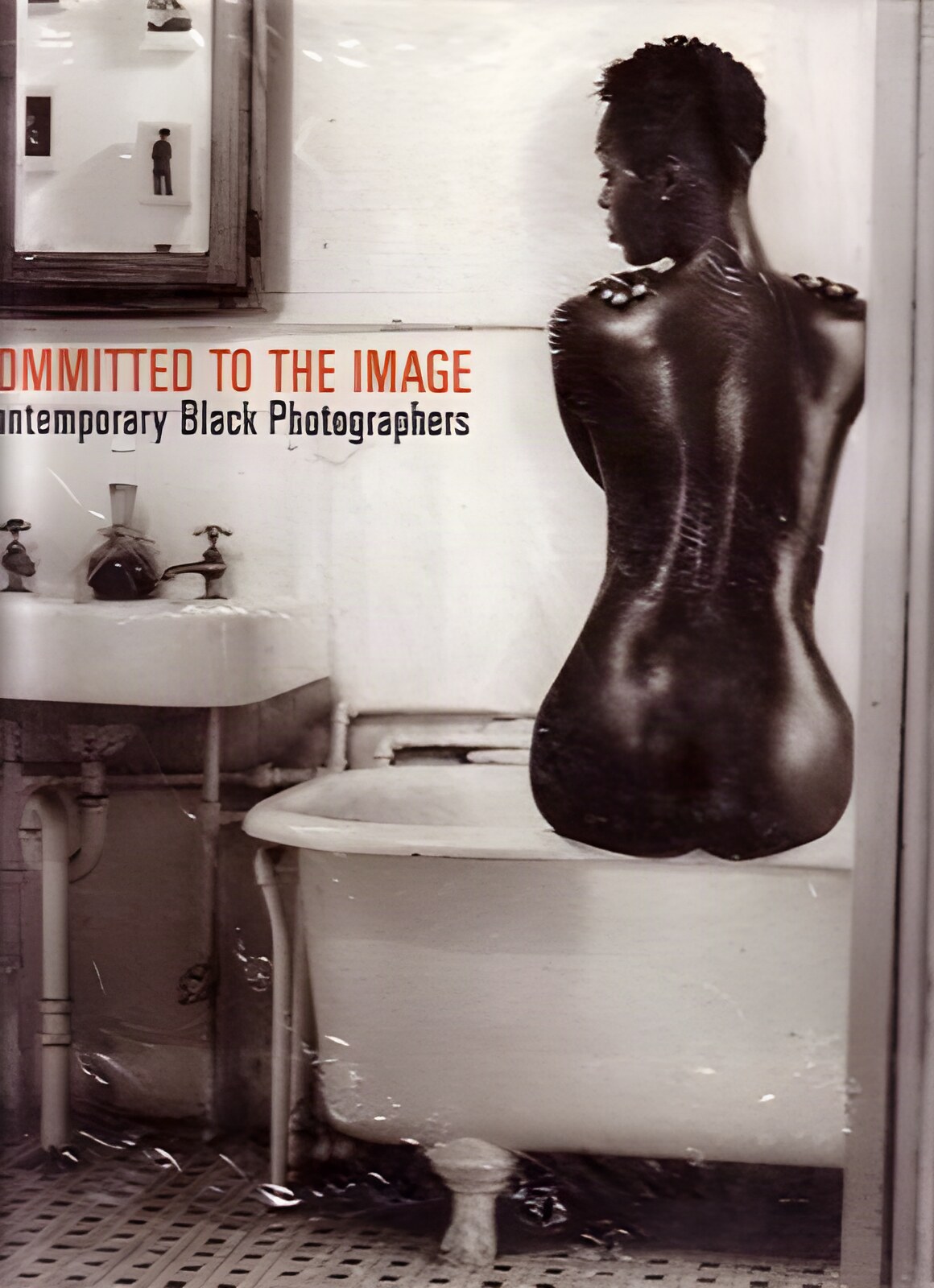
Softcover. London, Merrell Publishers, 1st pbk, 2001, Book: Very Good, Dust Jacket: None, Softcover, 240 pages, mostly b&w photos, some color. Catalogue of an exhibition held at the Brooklyn Museum of Art, New York, Feb. 16 - Apr. 29, 2001. The 94 African American photographers whose works appear in this volume, have used their equipment as tools of social commentary and personal and artistic exploration, bearing witness to the changes in American society over the past 50 years. Clean copy.
Hardcover. Cleveland, Ohio, The Arthur H. Clark Company, reprint, 1910, Book: Very Good, Dust Jacket: None, Hardcover, blue cloth, 434 pages. Minor cover corner and spine edge wear. Gilt top edge and titles on spine. Tissue guard on frontispiece portrait of Commodore Rodgers. Very clean and tight copy.
Softcover. Seattle WA, Fantagraphics Books, reprint, 2009, Book: Very Good, Dust Jacket: None, 126 pages. Softcover. Extensive color and b&w illustrations by R. Crumb throughout. Clean, unmarked copy with only minor wear to wrappers.
Hardcover. NY, Museum of Modern Art, 1st, 1966, Book: Very Good, Dust Jacket: Good, Hardcover in a lightly soiled, edgeworn dust jacket with $4.95 on flap, 135 pages. Translated into 16 languages, this remarkable book has become an essential document of architectural literature. A "gentle manifesto for a nonstraightforward architecture," Venturi's Complexity and Contradiction in Architecture expresses in the most compelling and original terms the postmodern rebellion against the purism of modernism. Three hundred and fifty architectural illustrations serve as historical comparisons and illuminate the author's ideas on creating and experiencing architecture. Complexity and Contradiction in Architecture was the winner of the Classic Book Award at the AIA's Seventh Annual International Architecture Book Awards. Robert Charles Venturi Jr. (June 25, 1925-September 18, 2018) was an American architect, founding principal of the firm Venturi, Scott Brown and Associates. Together with his wife and partner, Denise Scott Brown, he helped shape the way that architects, planners and students experience and think about architecture and the built environment. Foreword by Arthur Drexler. Introduction by Vincent Scully. No markings.
Hardcover. Los Angeles Times, 1st, 1993, Book: Very Good, Dust Jacket: Very Good, Hardcover in a bright, unclipped dust jacket, 208 pages. Profusely illustrated with the best work of one of the leading political cartoonists of the 20th century, Paul Conrad (1923-2010). This extraordinary retrospective collection, containing more than 300 cartoons, from 1963 to the present, displays the wit, strong opinion and skillful drawing that have won Conrad three Pulitzer prizes and numerous other awards for excellence in journalism. The cartoons, arranged by decade, represent the work of a man who has become a legend in cartooning and an institution in American journalism. The book is very good. The DJ has some light edge wear.
Hardcover. New Haven, CT, Yale University Press, 1st, 2015, Book: Very Good, Dust Jacket: None, 304 pages. Hardcover with no dust jacket. Very clean, unmarked copy with still in publishers shrink wrap. Visions of an American Dreamland highlights more than 200 images from Coney Island's history, including paintings, drawings, photographs, prints, posters, film stills, architectural artifacts, and carousel animals.
Hardcover. Kent, OH, The Kent State University Press, 1st, 1998, Book: Very Good, Dust Jacket: Very Good, 348 pages. Hardcover with dust jacket. Very clean, unmarked copy still in publishers shrink-wrap. Conrad Wise Chapman (1842-1910) is unique among Civil War artists: he painted and sketched while on duty as a Confederate soldier who served in three theaters of the war. Chapman's first-hand knowledge is evident in his work. Ben Bassham has written both a critical study of Chapman's art and a biography, incorporating Chapman's correspondence and Civil War memoirs.
Hardcover. NY, Da Capo Press, reprint, 1969, Book: Very Good, Dust Jacket: None, Maroon boards, [vi] 270 pages, no illustrations. Series: Library of American Art. This is the 1969 Da Capo reprint of the 1895 original; made possible by the Kennedy Galleries. This version is an unabridged republication of the first edition. No dust jacket, as issued. Light wear to lower edges and spine, overall a very clean, tight copy.
Softcover. NY, Basic Books, reprint, 2007, Book: Very Good, Dust Jacket: None, Softcover, 359 pages. Stanley Crouch-MacArthur "genius" award recipient, co-founder of Jazz at Lincoln Center, National Book Award nominee, and perennial bull in the china shop of black intelligentsia- has been writing about jazz and jazz artists for over thirty years. His reputation for controversy is exceeded only by a universal respect for his intellect and passion. As Gary Giddons notes: "Stanley may be the only jazz writer out there with the kind of rhinoceros hide necessary to provoke and outrage and then withstand the fulminations that come back." Now, in a long-awaited collection, Crouch collects fifteen of his most influential, and most controversial pieces (published in Jazz Times, The New Yorker, the Village Voice, and elsewhere), and includes two new essays as well. The pieces range from the introspective "Jazz Criticism and its Effect on the Art Form" to a rollicking debate with Amiri Baraka, to vivid, intimate portraits of the legendary performers Crouch has known. The first, autobiographical essay reflects on his life in jazz as a drummer, a promoter, a critic, and most of all a lover of this quintessentially American art form. And the closing essay, about a young Italian saxophonist, expresses undaunted optimism for the worldwide vibrancy of jazz.Throughout, Crouch's work reminds us not only of why he is one of the world's most important living jazz critics, but also of why jazz itself remains, against all odds, an elemental component of our cultural identity. Clean, bright copy.
Hardcover. New York, National Academy of Design, 1st, 2001, Book: Very Good, Dust Jacket: Very Good, Hardcover, 246 pages. 62 B&w illustrations and 77 plates in full color. Black leatherette. silver lettering to spine. Pictorial dust jacket. Like new.
Hardcover. NY, Grove Press, 1st, 2018, Book: Very Good, Dust Jacket: Very Good, Hardcover in a bright, unclipped dust jacket. Chris Offutt is an outstanding literary talent, whose work has been called "lean and brilliant" (New York Times Book Review) and compared by reviewers to Tobias Wolff, Ernest Hemingway, and Raymond Carver. He's been awarded the Whiting Writers Award for Fiction/Nonfiction and the American Academy of Arts and Letters Fiction Award, among numerous other honors. His first work of fiction in nearly two decades, Country Dark is a taut, compelling novel set in rural Kentucky from the Korean War to 1970. Tucker, a young veteran, returns from war to work for a bootlegger. He falls in love and starts a family, and while the Tuckers don't have much, they have the love of their home and each other. But when his family is threatened, Tucker is pushed into violence, which changes everything. The story of people living off the land and by their wits in a backwoods Kentucky world of shine-runners and laborers whose social codes are every bit as nuanced as the British aristocracy, Country Dark is a novel that blends the best of Larry Brown and James M. Cain, with a noose tightening evermore around a man who just wants to protect those he loves.
Hardcover. New York, Powerhouse Books, 1st, 2005, Book: Very Good, Dust Jacket: None, 128 pages, b&w photographs of rodeo performers. In publisher's shrinkwrap. After reading a front-page article in The New York Times about the Cheyenne Frontier Days Rodeo, Arthur Frank took a week off from work to travel around Wyoming, photographing whatever rodeos he could find. Once there, he found the culture of the American cowboy very much alive and kicking. Although their practical skills remain essential to modern ranching, it is the rodeo where their trade is praised, perpetuating the myth and mystique of America?s rough and rugged icon?the cowboy. Cowboy Up, Frank?s first monograph, presents photographs taken at more than fifty rodeos?including high school, college, and women?s competitions in addition to professional rodeos?in Wyoming, Colorado, South Dakota, Nevada,Arizona, Calgary, Alberta, even Binghamton, New York. As a former football and rugby player from New York City, Frank approached the roundup with an athlete?s understanding, while his profession provided distance from the cliches associated with the sport. With photographs that capture the vigorous physicality of one of the world?s most erratic and dangerous sports, Cowboy Up delves deeply into the modern cowboy?s life, capturing riders during the jittery wait before the roundup, and back at the ranch, engaging in work that tamed the Wild West. Frank?s outsider perspective and insider access combine to provide a humanistic yet dynamic and inspiring view into a lifestyle that has become an American legend.
Hardcover. New York, Funk Wagnalls, 4th pr., 1967, Book: Very Good, Dust Jacket: Fair, Hardcover, 110 pages. Black & white illustrations by Eric Sloane. Dust jacket heavily chipped. Dust jacket is protected by a mylar cover.
Hardcover. San Francisco, Chronicle Books, 1st, 2004, Book: Very Good, Dust Jacket: Very Good, Hardcover, 156 pages. Create and Be Recognized is the first survey of a compelling, always surprising art form -- outsider photography. Presented here is the work of seventeen largely self-taught artists who have used photography or photographic elements in their creations, including such luminaries as Adolf Wolfli, Howard Finster, and Henry Darger, as well as discoveries from little known, equally dramatic artists. As with most outsider art, the work here is fuelled by singular passions, marginalized mindsets, and extreme circumstances, falling outside mainstream picture-making. Employing collage (affixing photos or reproductions to a background), photocollage (photographs cut and pasted together to form a new whole), and tableaux (works based on manipulation and staging), the artists here present work that is, by turns, lyrical and frightening, and always fascinating. Published to coincide with a major touring exhibition of the same name originating at San Francisco's Yerba Buena Center for the Arts, Create and Be Recognized documents an emerging and important facet of contemporary photography.
Hardcover. NY, Shoemaker and Hoard, 1st, 2005, Book: Very Good, Dust Jacket: Very Good, Hardcover in a bright, unclipped dust jacket, 222 pages. INSCRIBED BY CASTRONOVO on the title page. Edmund Wilson, 20th century America's most direct and readable critic of literature and society, was a man of many loves. In his half century as a major force in American letters he had an outsize romantic career that reflected the complex depths of his personality. Each woman whom he came to love was an alluring interpretative problem, an erotic and analytic challenge, a presence that fired his imagination. They came from the Greenwich Village of the 1920s, from his own upper middle class world of privilege, from New York's working class, from the high reaches of literary New York as well as from the workaday world of Talcottville in upper New York State. Who were they? Poet Edna St. Vincent Millay; actress Mary Blair; friends and drinking buddies Dorothy Parker, Louise Bogan, Dawn Powell, and Elinor Wylie; poet Leonie Adams; writer and intellectual Mary McCarthy; Mamaine Paget, later the wife of Arthur Koestler; and screenwriter and journalist Penelope Gilliatt were the best known. They appear here as personalities in their own right as well as in the roles they play in Wilson's biography. His Rabelaisian appetites, ardors and vulnerabilities, and conceptions of love and sex are a story in themselves. Clean copy.
Hardcover. New York, Arno Press, reprint, 1976, Book: Very Good, Dust Jacket: None, Hardcovers, 2 volumes complete. 331 + 404 pages with 354 plates. Originally printed by Doubleday, Doran in 1929. In this edition the color illustrations are reproduced in black-and-white.. Cream colored boards. Light smudging to covers and edges. Else a very clean, tight copy.
Hardcover. Vista CA, Ibis Publishing, 1st, 1997, Book: Very Good, Dust Jacket: Very Good, Hardcover in a bright dust jacket, 315 pages. As Financial Advisor to China, Arthur N. Young had an intimate insight as an on-the-spot observer of events during the critical 18 years leading to the fall of the Nationalists and the Communist takeover. Along with Generalissimo Chiang Kai-shek, Dr. Young worked closely with the highest-ranking officials of the National Government in carrying out monetary and fiscal reforms prior to World War II, and stayed through the war to aid with problems of war finance, including procurement of American aid. As the Pacific Rim gains increasing international prominence, this book will prove to be of particular importance to students, scholars, business and political leaders with an interest in Asian affairs. Clean copy.
Hardcover. Austin, TX, University of Texas, 1st, 1984, Book: Very Good, Dust Jacket: Very Good, Hardcover, 143 pages. b&w and color illustrations throughout. Captures the best of Windberg's work with 50 of his finest paintings splendidly reproduced and illustrates the tranquity of the hillsides, meadows, harbors and shores of his beloved Lone Star State. Brown leather-like cover, gilt lettering to spine. Beautiful pictorial dust jacket with some edgewear. Very clean, tight and crisp copy.
Softcover. Urbana IL, University of Illinois Press, 1st, 2015, Book: Very Good, Dust Jacket: None, Softcover, 295 pages, b&w illustrations. INSCRIBED BY BECK on the title page. A daughter of freed African American slaves, Daisy Turner became a living repository of history. The family narrative entrusted to her--"a well-polished artifact, an heirloom that had been carefully preserved"--began among the Yoruba in West Africa and continued with her own century and more of life. In 1983, folklorist Jane Beck began a series of interviews with Turner, then one hundred years old and still relating four generations of oral history. Beck uses Turner's storytelling to build the Turner family saga, using at its foundation the oft-repeated touchstone stories at the heart of their experiences: the abduction into slavery of Turner's African ancestors; Daisy's father Alec Turner learning to read; his return as a soldier to his former plantation to kill his former overseer; and Daisy's childhood stand against racism. Other stories re-create enslavement and her father's life in Vermont--in short, the range of life events large and small, transmitted by means so alive as to include voice inflections. Beck, at the same time, weaves in historical research and offers a folklorist's perspective on oral history and the hazards--and uses--of memory. Clean copy.
Hardcover. Bew Haven CT, Yale/Fine Arts Museums of San Francisco, 1st, 2016, Book: Very Good, Dust Jacket: Very Good, Hardcover in a bright dust jacket. Coming of age in the 1960s, the photographer Danny Lyon (b. 1942) distinguished himself with work that emphasized intimate social engagement. In 1962 Lyon traveled to the segregated South to photograph the civil rights movement. Subsequent projects on biker culture, the demolition and redevelopment of lower Manhattan, and the Texas prison system, and more recently on the Occupy movement and the vanishing culture in China's booming Shanxi Province, share Lyon's signature immersive approach and his commitment to social and political issues that concern those on the margins of society. Lyon's photography is paralleled by his work as a filmmaker and a writer. Danny Lyon: Message to the Future is the first in-depth examination of this leading figure in American photography and film, and the first publication to present his influential bodies of work in all media in their full context. Lead essayists Julian Cox and Elisabeth Sussman provide an account of Lyon's five-decade career. Alexander Nemerov writes about Lyon's work in Knoxville, Tennessee; Ed Halter assesses the artist's films; Danica Willard Sachs evaluates his photomontages; and Julian Cox interviews Alan Rinzler about his role in publishing Lyon's earliest works. With extensive back matter and illustrations, this publication will be the most comprehensive account of this influential artist's work. Clean copy. Still in publisher's shrinkwrap.
Hardcover. Bew Haven CT, Yale/Fine Arts Museums of San Francisco, 1st, 2016, Book: Very Good, Dust Jacket: Very Good, Hardcover in a bright dust jacket. Coming of age in the 1960s, the photographer Danny Lyon (b. 1942) distinguished himself with work that emphasized intimate social engagement. In 1962 Lyon traveled to the segregated South to photograph the civil rights movement. Subsequent projects on biker culture, the demolition and redevelopment of lower Manhattan, and the Texas prison system, and more recently on the Occupy movement and the vanishing culture in China's booming Shanxi Province, share Lyon's signature immersive approach and his commitment to social and political issues that concern those on the margins of society. Lyon's photography is paralleled by his work as a filmmaker and a writer. Danny Lyon: Message to the Future is the first in-depth examination of this leading figure in American photography and film, and the first publication to present his influential bodies of work in all media in their full context. Lead essayists Julian Cox and Elisabeth Sussman provide an account of Lyon's five-decade career. Alexander Nemerov writes about Lyon's work in Knoxville, Tennessee; Ed Halter assesses the artist's films; Danica Willard Sachs evaluates his photomontages; and Julian Cox interviews Alan Rinzler about his role in publishing Lyon's earliest works. With extensive back matter and illustrations, this publication will be the most comprehensive account of this influential artist's work. Clean copy. Still in publisher's shrinkwrap.
Hardcover. New York , Nan A. Talese, 1st US, 2014-11-11, Book: Very Good, Dust Jacket: Very Good, 430 pages, illustrations in color and b&w. Clean, unmarked copy with only minor wear to dust jacket.

 "Comics as Art: We Told You Soby: Spurgeon, Tom; Dean, Michael")
 "Commodore John Rodgers: Captain, Commodore, and Senior Officer of the American Navy 1773-1838, A Biographyby: Paullin, Charles Oscar")
 "Complete Crumb Comics Vol. 4 by: Crumb, Robert")
 "Complexity and Contradiction in Architecture by: Robert Venturi")
 "Conartist: 30 Years with the Los Angeles Timesby: Conrad/Norman Corwin, Paul")
 "Coney Island: Visions of an American Dreamland, 1861-2008by: Frank, Robin Jaffee")
 "Conrad Wise Chapman: Artist and Solider of the Confederacyby: Bassham, Ben")
 "Considerations on Painting by: John La Farge")

 "Cos Cob Art Colony, The: Impressionists on the Connecticut Shoreby: Larkin, Susan")
 "Country Darkby: Chris Offutt")
 "Cowboy Upby: Frank/ Dirk Johnson (Introduction) , Arthur")
 "Cowboy Upby: Introduction: Johnson, Dirk, Photographer: Frank, Arthur")
 "Cracker Barrel, Theby: Sloane, Eric")
 "Create and Be Recognized: Photography on the Edgeby: John Turner and Deborah Klochko")
 "Critic in Love: A Romantic Biography of Edmund Wilson (INSCRIBED COPY)by: David Castronovo; Janet Groth")
 "Currier and Ives: Printmakers to the American People (2 Vols.)by: Peters, Harry T.")

 "Dahlhart Windberg; Artist of Texasby: Potter, Jerry Allen")
 "Daisy Turner's Kin: An African American Family Saga (INSCRIBED COPY)by: Beck, Jane C.")






 "David Hockney: The Biography, 1975-2012by: Sykes, Christopher Simon")