Hardcover. Berkeley CA, University of California, 1st, 2001, Book: Very Good, Dust Jacket: Very Good, Hardcover, 275 pages, b&w photos. In a bright, unclipped dust jacket. Lawyer, educator, novelist, radio and television scriptwriter, film director and screenwriter, wartime intelligence operative, and full-time radical romantic, Abraham Lincoln Polonsky was blacklisted in Hollywood for refusing to be an informer. This biography helps us understand the relationship between art and politics in American culture.
Softcover. Cambridge MA, The MIT Press, 1st, 1997, Book: N, Softcover, 119 pages. Ultimately, Viewing Olmsted is a savvy and thought-provoking, yet diminutive picture book. The collaboration of three brilliant photographers under the sponsorship of the Canadian Centre for Architecture, it guides the reader down three highly personal, present day tours of legendary parks designed by Olmsted, the patron saint of American landscape architecture. Happily, though, its readers are left to intellectually fend for themselves as to meanings or implications of Frederick Olmsted's work, genius, and lasting influence as the man who designed such famous spaces as Central Park. Academics and artists will appreciate the fresh visual perspectives offered on the man's legacy, the sometimes soothing, sometimes haunting nature-by-design retreats for the urban soul. Those with more than a passing interest in the ways in which man interacts with his `natural' surroundings will appreciate vistas evocative of place rather than time. To the authors' credit, the book raises more questions than it answers, and is of a scale to fit neatly into a travel case. Far from definitive, the book is, nevertheless, a must have for architects, landscape architects, photographers, and Olmsted aficionados.
Hardcover. Chicago, IL, Center for American Places, 1st, 2010, Book: Very Good, Dust Jacket: Very Good, 184 pages. Hardcover with dust jacket. A very clean, unmarked copy with only minor wear to dust jacket edges. Includes CD. The product of several visits to the Pine Ridge Indian Reservation, Views from the Reservation is meant to open our eyes, minds, and hearts to the life, culture, and conditions of the Oglala Lakota people. With his insightful and complex images Willis enlists several other voices to offer a more complete story: writer Kent Nerburn, who contributes an original essay; Lakota elders and Pine Ridge High School students, who offer poems; Emil Her Many Horses, the associate curator of the National Museum of the American Indian, Kevin Gover, the Assistant Secretary of the Interior for Indian Affairs, and Oglala Lakota artist Dwayne Wilcox. Accompanying the book is Heartbeat of the Rez, a compact disc collecting traditional songs compiled by the author, the elders, and KILI, the radio station of the reservation.
Softcover. Omaha, Nebraska, Center for Western Studies, Joslyn Art Museum, 1st, 1984, Book: Very Good, Dust Jacket: None, Softcover exhibition catalogue featuring art by Karl Bodmer dedicated to the American Western frontier and its exploration by the German Prince Maximilian of Wied. 103 pages with 69 illustrations, 34 of which are color plates. Very good condition, light rubbing on the covers, otherwise a very bright, clean copy.
Hardcover. GR, Hatje Cantz, 1st, 2010, Book: Very Good, Dust Jacket: Very Good, Hardcover, 272 pages. Illustrated in b&w. Walker Evans (1903-1975) is, without doubt, one of the most influential American photographers ever, and many of his images have become fixed in the collective memory. But while Evans' uncompromising depiction of poverty during the Great Depression of the 1930s, the subject of a series commissioned by the Farm Security Administration, has become a key chapter in the history of photography, his equally innovative images from later decades have generally commanded less attention. Back in print, this bilingual monograph attempts to redress the balance by examining Evans' complete body of work, and features many rarely seen photographs, including his final works, a sequence of Polaroids shot in the early 1970s (a sequence made possible by an unlimited supply of film from its manufacturer). Evans' re-ascendancy in the 1970s and his relationship with legendary Museum of Modern Art curator John Szarkowski are also closely examined, in this essential and definitive volume on a great photographer who certainly achieved his aim to produce pictures that were "literate, authoritative, transcendent."
Hardcover. New York , Pantheon, 1st US, 1989, Book: Very Good, Dust Jacket: Very Good, 111 pages, illustrated throughout in b&w. Light edgewear and rubbing to dust jacket. Faint foxing to top edge, otherwise a clean, tight copy. In April 1933 an editor at Lippincott asked Evans to take photographs for a polemical book by Carlton Beals, a leftist writer who was very critical of the then Cuban dictator Gerardo Machado and anxious to show how American support of Machado had created an economic catastrophe in Cuba. Evans agreed after acceptance of his conditions that he have complete freedom to choose the photographs for publication and that they be collected at the end of the book so that they appeared to be an independent entity and not simply illustration of the text. Indeed, according to legend, Evans had not read Beals's text when he went to Havana in May 1933. He was in Cuba for three weeks. When his personal funds ran out, his way was paid for by Ernest Hemingway; the two had never met before, but Hemingway was eager for the company of someone equally qualified in literary conversation and in drinking. In the end, Evans contributed thirty-one photographs to the published "The Crime of Cuba". This book, WALKER EVANS: HAVANA 1933, contains seventy of the photographs Evans took in Cuba, including most of the photographs he selected for "The Crime of Cuba". The volume is introduced by an excellent essay by Gilles Mora that gives the historical background and discusses the place of Evans's Cuban photographs in his overall body of work. The photographs were selected by Mora and by John T. Hill, who also was responsible for the sequencing of their presentation. (One of Mora's points is that Evans attached a great deal of significance to the sequencing of his photographs, any collection of which he viewed as a composite artistic/documentary statement and, as such, more important than any single photograph.)
Hardcover. Princeton NJ, Princeton University Press, 1st, 2020, Book: Very Good, Dust Jacket: Very Good, Hardcocer in a bright dust jacket, 257 pages plus 143 b&w pages of photographs in the front of the book. Walker Evans (1903-75) was a great American artist photographing people and places in the United States in unforgettable ways. He is known for his work for the Farm Security Administration, addressing the Great Depression, but what he actually saw was the diversity of people and the damage of the long Civil War. In Walker Evans, renowned art historian Svetlana Alpers explores how Evans made his distinctive photographs. Delving into a lavish selection of Evans's work, Alpers uncovers rich parallels between his creative approach and those of numerous literary and cultural figures, locating Evans within the wide context of a truly international circle. Alpers demonstrates that Evans's practice relied on his camera choices and willingness to edit multiple versions of a shot, as well as his keen eye and his distant straight-on view of visual objects. Illustrating the vital role of Evans's dual love of text and images, Alpers places his writings in conversation with his photographs. She brings his techniques into dialogue with the work of a global cast of important artists--from Flaubert and Baudelaire to Elizabeth Bishop and William Faulkner--underscoring how Evans's travels abroad in such places as France and Cuba, along with his expansive literary and artistic tastes, informed his quintessentially American photographic style.
Hardcover. NY, Museum of Modern Art, 1st, 1971, Book: Very Good, Dust Jacket: Very Good, Hardcover, 192 pages, 106 illustrations. Light edgewear and rubbing to dust jacket. Clean, tight copy.
Softcover. NY, Museum of Modern Art, 3rd pr., 1979, Book: Very Good, Dust Jacket: None, Softcover, 192 pages, 106 illustrations. Clean, tight copy. A reprint of the classic 1971 monograph. Introduction by John Szarkowski.
Softcover. New York, The Metropolitan Museum of Art, 1st, 2000, Book: Very Good, Dust Jacket: Very Good, Softcover, 318 pages. B+W and color photographs throughout. Clean and tight copy. Large exhibition catalog. Although his work has received many awards, been enshrined in the best museums, and been exhibited on several continents, Evans's total corpus is only now being fully examined. This important book revises our appreciation of Evans by presenting previously unknown material in an accessible context. Essays by Maria Morris Hambourg, Jeff L. Rosenheim, Doug Eklund, and Mia Fineman offer novel insights into the sources and legacy of Evans's work. The result is a superb exploration of what was achieved by one of our finest, mostly deeply American artists.
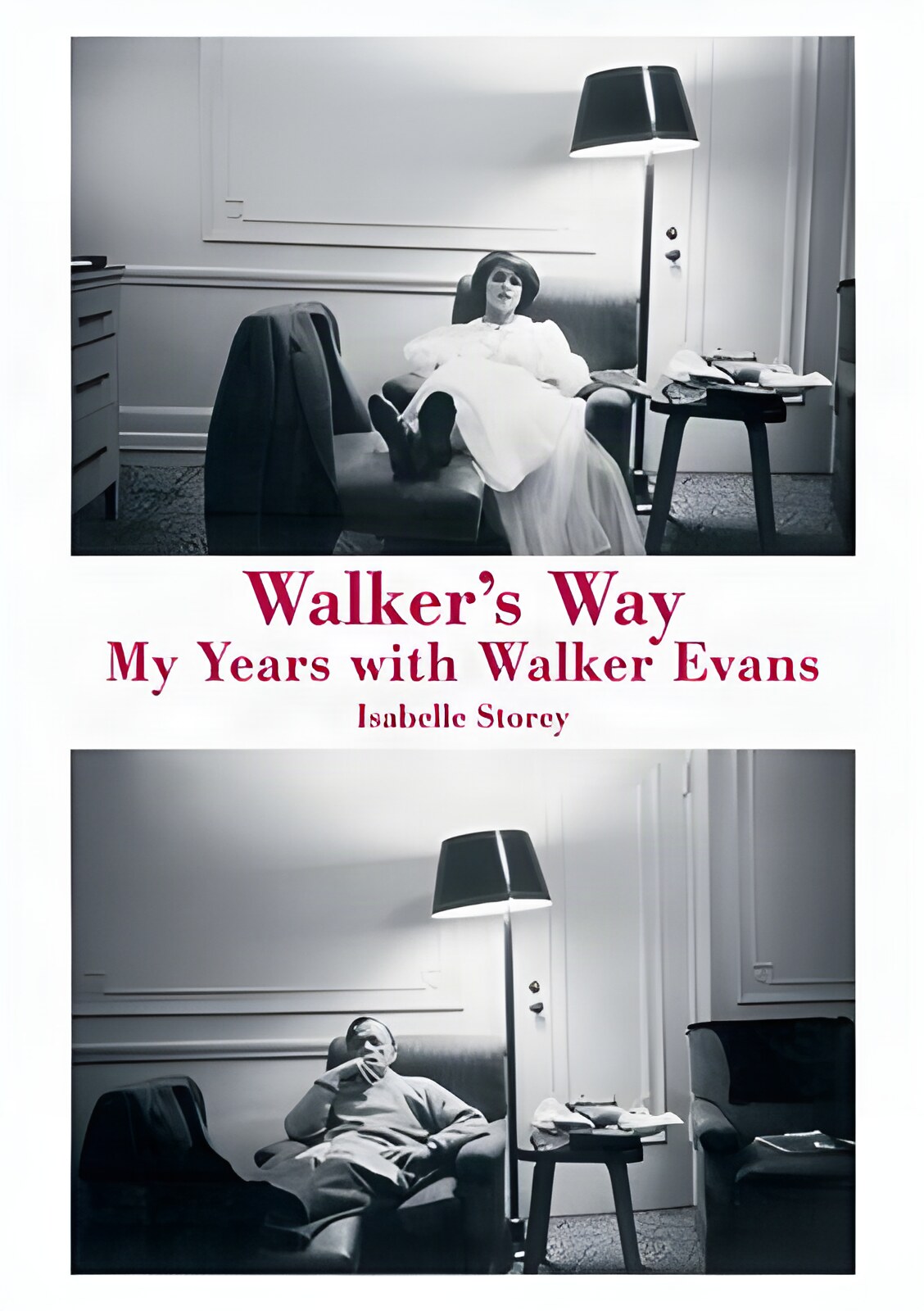
Hardcover. NY, PowerHouse Books, 1st, 2007, Book: Very Good, Dust Jacket: Very Good, Hardcover in a bright dust jacket, 263 pages. Personal history and intimate memoir by the wife of the great American artist. 50 duotone photographs and over a dozen by Walker Evans. Storey's memoir of her ten-year marriage to Walker Evans, is the story of an elegant young woman's infatuation with a great American artist--with the man himself, with what he stood for aesthetically, and with his artistic and social circle--and how her initial passion gradually cooled into disenchantment. Isabelle and Walker were married in 1960. Evans, already a prominent figure in the world of photography, introduced Isabelle to Robert Frank, Lee Friedlander, Helen Levitt, Robert Penn Warren, Alfred Kazin, William H. Whyte, and a host of other luminaries. Clean copy.
Hardcover. Montreal, Drawn and Quarterly, 1st, 2010, Book: Very Good, Dust Jacket: Very Good, Nonpaginated. Hardcover. Color and b&w illustrations by Frank King throughout. Gilt titles on spine. Blind stamp on cover. Illustrated end papers and pastedowns. Include appendix of historical sketches. Clean, unmarked copy with only minor wear to dust jacket.
Hardcover. Weldon Owen, 1st, 2024, Book: Very Good, Dust Jacket: None, Hardcover, pictorial boards. Personal Art and Artifacts from The Walt Disney Family Museum chronicles the legacy of the legendary American artist, storyteller, filmmaker, and visionary through iconic objects that represent his life and career. Profusely illustrated with over 250 images in color and b&w. Like new in publisher's shrinkwrap.
Hardcover. Seattle, Fantagraphics, 1st, 2025, Book: Very Good, Dust Jacket: None, Hardcover in pictorial boards. Carl Barks' very first Donald Duck stories! This is where it all started, as Carl Barks took control of Donald Duck's comic book adventures and began a series of clever, creative, complex, and comedic stories that would continue under his cartooning brilliance for more than 20 years -- and guarantee his place in comics history. Volume 1 in The Complete Carl Barks Disney Library is, naturally, filled with firsts: Barks' first comic book story (starring Pluto), the first Donald Duck story created for an American comic book (and also the first to see Donald and his nephews go on a treasure hunt), Barks' first Donald 10-pager, Barks' first truly solo Donald Duck story, and Barks' first solo longer-form Donald Duck adventure ("The Mummy's Ring"). More than 200 pages of story and art, each meticulously restored and newly colored, Clean, bright copy.
Hardcover. Seattle, WA, Fantagraphics Books, 1st, 2015, Book: Very Good, Dust Jacket: None, 288 pages. Hardcover. Extensive color illustrations by various artists throughout. Illustrated end papers and paste downs. Clean, unmarked copy in excellent condition.
Hardcover. NY, Skira, 1st, 2013, Book: Very Good, Dust Jacket: Very Good, Hardcover in a bright dust jacket, 224 pages. A splendid monograph on an unconventional photographer who developed a unique and deeply personal vision of the world surrounding him. Walter Chappell (1925-2000) is considered one of the foremost figures in twentieth-century American photography. His thinking and vision of the world were closely connected with the intimistic, spiritual explorations undertaken between the 1950s and the 1970s by artists like Minor White and Paul Caponigro. While Chappell photographed various subjects, his inner eye was stimulated in particular by the form of the human body and landscapes as well as the combination of both, through which he endeavored to perceive the creative flow, the energy that runs through and connects all things. Produced to accompany the first major European retrospective of Walter Chappell's work, this catalog presents over 130 photographs, all originals, as well as the unfinished and previously unpublished album World of Flesh, which the photographer intended as the primary publication on his work. Clean copy.
Softcover. New York, St. Martins Press , 1st US, 1975, Book: Very Good, Dust Jacket: None, 122 pages. Softcover. Small marking to front cover. Otherwise clean copy with minor edgewear. 107 illustrations, including 16 in color. Walter Crane, artist of Kensington, was a man of many talents, but is possibly best known for his original and charmingly executed designs which made him the leading illustrator of children's books of the Aesthetic Movement period. In the face of the commercial vulgarity and ugliness of Victorian industrialised society, he created a delicate and escapist fairy world which, with its emphasis on spontaneity and mobility of line, and its clever use of background and colour, popularised a completely new style of tasteful book designs, and brought them within reach of everyone. The influence of Crane's work and his highly novel theories of design make him an important figure in nineteenth century art history. Rodney Engen, American-born painter and lecturer, discusses Crane's style and ideas in a study delightfully arranged after Crane's own rules and book design.
Softcover. New York, Grey Art Gallery and Study Center, 1st, 1980, Book: Very Good, Dust Jacket: None, Softcover, 117 pages, b&w illustrations. Very light edge wear; else a very clean, tight copy. 10 color, 99 bw plates. Issued in conjunction with a 1980 exhibition featuring works of American artist Walter Gay (1856-1937). With a substantial illustrated essay by Gary A. Reynolds, a brief chronology and selected bibliography. The annotated and illustrated catalogue addresses 90 pieces.
Hardcover. Pennsylvania, Schiffer Publishing Ltd., 1st, 1984, Book: Near Fine, Dust Jacket: Near Fine, 176 pages. Light green cloth cover with gilt lettering to spine, color illustrated dust jacket, decorated endpapers, over 250 large glossy photographs, 10 in color. Extremely light wear to dust jacket; a very tight, clean copy.
Softcover. NY, New American Library, 1st, 1989, Book: Very Good, Dust Jacket: None, Softcover, 128 pages. Over one hundred photos of Warhol, his friends and activities. Name on front fly leaf. otherwise clean.
Hardcover. New York, Prestel Publishing, 1st, 2011, Book: Very Good, Dust Jacket: Very Good, Hardcover, 214 pages, color plates. Like new in publisher's shrink-wrap. Catalog of an exhibition held at the National Gallery of Art, Washington, D.C., and three other institutions between Sept. 25, 2011 and Jan. 6, 2013.
Softcover. Seattle , Fantagraphics Books, 1st, 1994, Book: Very Good, Dust Jacket: None, Softcover, 88 pages. The Friedman brothers go after Tor Johnson, Leave It to Beaver, Bela Lugosi, Joey Heatherton, comic shop clerks, and ugly white guys. A thrilling, appalling trip through the backwaters of American culture.
Hardcover. Chicago, University of Chicago Press, 1st, 1948 , Book: Very Good, Dust Jacket: Very Good, 234 pages. Green cover with small gilt head silhouette to cover and lettering to spine, acetate-protected dust jacket, "Sally and Rockwell Kent" bookplate - formerly owned by the famous illustrator Rockwell Kent. Color frontispiece, 59 b&w plates of Allston's paintings. Light wear and chipping evident to dust jacket under acetate cover; overall, a clean, tight copy.

 "Very Dangerous Citizen, A: Abraham Lincoln Polonsky and the Hollywood Leftby: Buhle, Paul, and Wagner, Dave")
![Vestiges of a Proud Nation the Ogden B. Read Northern Plains Indian Collectionby: Markoe, Glenn J. [Ed.]](javascript:largeIMTop('https://www.browsingisarousing.com/shop/images/Vestiges-of-a-Proud-Nation-the-Ogden-B.-Read-Northern-Plains-Indian-Collection_by_Markoe-Glenn-J.-Ed378701-411947.jpg','https://www.browsingisarousing.com/shop/images/Vestiges-of-a-Proud-Nation-the-Ogden-B.-Read-Northern-Plains-Indian-Collection_by_Markoe-Glenn-J.-Ed378701-411947.jpg',0,'378701',0,'') "Vestiges of a Proud Nation the Ogden B. Read Northern Plains Indian Collectionby: Markoe, Glenn J. [Ed.]")
 "Viewing Olmsted: Photographs by Robert Burley, Lee Friedlander, and Geoffrey Jamesby: Lambert, Phyllis")
 "Views from the Reservation - Center Books on American Placesby: Willis, John")
 "Views of a Vanishing Frontierby: Ewers, Gallagher, Hunt, & Porter, John C., Marsha V., David C., & Joseph C.")
 "Walker Evans: Decade by Decadeby: Crump and Walker Evans, James")
 "Walker Evans: Havana 1933by: Mora, Gilles")


 "Walker Evansby: Evans, Walker")
 "Walker Evansby: Evans, Walker")
 "Walker Evansby: Hambourg, Maria Morris and others")
 "Walt and Skeezix: Book Four: 1927-1928by: King, Frank")

![Walt Disney's Mickey Mouse. [Volume 7], The Tomorrow Warsby: Gottfredson, Floyd](javascript:largeIMTop('https://www.browsingisarousing.com/shop/images/Walt-Disneys-Mickey-Mouse.-Volume-7-The-Tomorrow-Wars_by_Gottfredson-Floyd352376-393133.jpg','https://www.browsingisarousing.com/shop/images/Walt-Disneys-Mickey-Mouse.-Volume-7-The-Tomorrow-Wars_by_Gottfredson-Floyd352376-393133.jpg',0,'352376',0,'') "Walt Disney's Mickey Mouse. [Volume 7], The Tomorrow Warsby: Gottfredson, Floyd")
 "Walter Crane as a Book Illustratorby: Crane, Walter")
 "Walter Gay: A Retrospectiveby: Grey Art Gallery and Study Center")
 "Walter Launt Palmer, Poetic Realityby: Mann, Maybelle")

 "Warhol: Headlinesby: Donovan, Molly")
 "Warts and Allby: Drew Friedman , Josh Alan Friedman , et al.")
 "Washington Allston: The Biography of a Pioneer of American Art and a Study of Romantic Art in Americaby: Richardson, Edgar P.")