Hardcover. New York, Watson-Guptill Publications, 1st, 1971, Book: Very Good, Dust Jacket: Good, Hardcover, 87 pages, illustrated throughout in color and b&w. Gray cloth with gilt titles to front and spine. Pictorial dust jacket, slight wear to edges, closed tear to front cover, Upper edge of spine worn and torn, else a very nice, tight copy.
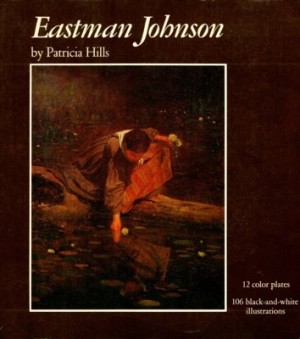
Hardcover. NY, Watson - Guptill, 1st , 1971, Book: Very Good, Dust Jacket: Good, Hardcover, 88 pages. Brown cloth cover with very little wear. Dust jacket has some wear to corners and edges. 32 full-page color reproductions, and b&w illustrations throughout. A bright, clean copy.
Hardcover. New York, Crown Publishers, 1st, 1942, Book: Very Good, Dust Jacket: Good, Hardcover, 112 pages. 64 b&w illustrations and 8 plates in full color. Red cloth, gilt lettering to spine and front cover. Pictorial dust jacket with some wear and small tears to spine,light sun-fading to front cover, still overall a very nice, clean, tight copy.
Softcover. NY, Parke Bernet Galleries Inc. , 1st, 1941, Book: Very Good, Dust Jacket: None, Softcover, blue paper wrappers, auction catalog. Items in catalog listed for public sale on Saturday, April 5th, 1941. With b&w photographs throughout. Front cover torn slightly along edge, else a nice, clean copy.
Hardcover. New York, Benjamin Blom, reprint, 1972, Book: Fine, Dust Jacket: None, Hardcover, 65 pages. Reissue of rare 1930 first edition. Brown cloth covers with gilt titles to spine, illustrated profusely with over 50 b&w plates. Copy still packaged in original shrinkwrap, never opened; in excellent condition.
Hardcover. New York, Da Capo Press, Reprint, 1971, Book: Very Good, Dust Jacket: None, Hardcover. (Library of American Art Series) 1971 reprint of the original 1926 edition. 110 pages. b&w illustrations. Brown cloth, gilt lettering to spine and front cover. Light wear and unfortunate paper-clip impressions to upper edge of some pages. Still a nice, tight copy.
Hardcover. Athens, Georgia, The University of Georgia Press, 1st, 1986, Book: Very Good, Dust Jacket: Very Good, 246 pages, b&w illustrations throughout. AN important study of early gravestone carvers in Georgia and South Carolina and the influences of their likes from New England. Black cloth with silver lettering to spine. Gray pictorial dust jacket with minor wear to edges of spine, else like new.
Hardcover. Santa Fe, Museum of New Mexico Press, 1st, 2011, Book: Very Good, Dust Jacket: Very Good, Hardcover in a bright, unclipped dust jacket, 188 pages, color and b&w photos. Since its invention, photography has been used to document and interpret the landscape. Survey photographers in the 1860s were the first environmental advocates, arguing for the U.S. national park system. During the first half of the 20th century photographers Ansel Adams and Eliot Porter were central figures in influencing American attitudes toward wilderness and conservation. This book traces the development of environmental photography beginning with Adams, Porter and others, and the next generation of landscape photographers - Robert Adams, Richard Misrach, Robert Glenn Ketchum, Patrick Nagatani, Mark Klett, whose works confronted the issues of landscape and the environment in less idealised terms. Shifting from the historical framework, the book presents new work by twenty-three photographers working in the U.S., the next wave of artists using the camera to engage the environmental issues of the day. Clean copy.
Softcover. NY, Whitney Museum of American Art, 1st, 1973, Book: Very Good, Dust Jacket: None, Softcover, pictorial wraps. Beautiful reproductions of paintings and drawings throughout, with 12 color plates. Pages are crisp and clean, binding is tight. 126 pages. Catalogue of the exhibition held March 28 to May 14, 1972, at the Whitney Museum of American Art.
Hardcover. New Haven CT, Yale University Press, 1st, 2019, Book: Very Good, Dust Jacket: None, Hardcover, pictorial boards, 232 pages. The question "What is American art?" might conjure the hyperrealism of Raphaelle Peale and William Harnett, the bold graphic style of Stuart Davis and Jacob Lawrence, or the Precisionist forms of Charles Sheeler. Little known, however, is that such notions of American art are significantly owed to a Russian Jewish immigrant named Edith Halpert. The founder of the Downtown Gallery in New York, Halpert shaped an identity for American art, declaring that its thrilling heterogeneity and democratic values were what most distinguished it from the European avant-garde. For forty-plus years, Halpert's gallery brought recognition and market success to now-legendary American artists--among them Arthur Dove, Marsden Hartley, and Georgia O'Keeffe, in addition to the artists mentioned above. She relentlessly championed nonwhite, female, and unknown artists and was a formative advisor in the shaping of many of the nation's most celebrated art museums and collections, from San Francisco to Boston. Not content with those achievements, she also pioneered the appreciation and collecting of American folk art. Richly illustrated with works that passed through her groundbreaking gallery, this book tells the extraordinary and largely overlooked story of her career and legacy. The artists Halpert launched into the American canon are household names--and this book compellingly argues that hers should be, as well. In publisher's shrinkwrap.
Hardcover. Hingham, MA, Pierce Galleries, 1st, 1980, Book: Near Fine, Dust Jacket: Near Fine, Hardcover, 253 pages. b&w illustrations and color plates throughout. Documents Tarbell's journey from being labeled "just a Boston painter" to being one of the most sought-after, outspoken, teachers in the country. Black leatherette, gilt lettering to spine and front cover. In mint condition. Looks brand new.
Hardcover. New York, Abbeville Press, 1st, 1985, Book: Near Fine, Dust Jacket: Near Fine, 276 pages illustrated throughout in color and b&w. Gray cloth with dark green title to spine. Pictorial dust jacket. Beautiful copy. Like new. Edward Hicks (1780-1849), itinerant Quaker preacher and painter of coaches, signs and his own pictures, viewed Paine and Spinoza as devils, considered slavery a moral but not a political issue, and abhorred the temperance movement. When not torturing himself with guilt for being an artist or for leaving his wife and children in order to preach, he produced some masterpiecesnotably The Peaceable Kingdom, whose 50 or so variants dramatize Isaiah's biblical prophecies. Fifty color plates and 100 halftones show Hicks's folk renditions of William Penn, Noah's ark, David and Jonathan, along with his pastoral landscapes.
Hardcover. NY, Henry Holt and Co. , 1st, 2014, Book: Very Good, Dust Jacket: Very Good, SIGNED BY AUTHOR AND ILLUSTRATOR on half title page. Light edgewear to dust jacket, else a clean, tight copy. As a boy, Edward Hopper knew exactly what he wanted to be when he grew up: on the cover of his pencil box, he wrote the words EDWARD HOPPER, WOULD-BE ARTIST. He traveled to New York and to Paris to hone his craft. And even though no one wanted to buy his paintings for a long time, he never stopped believing in his dream to be an artist. He was fascinated with painting light and shadow and his works explore this challenge. In this striking picture book biography, Robert Burleigh and Wendell Minor invite young readers into the world of a truly special American painter (most celebrated for his paintings "Nighthawks" and "Gas").
Hardcover. NY, Rizzoli, Revised Ed., 2007, Book: Very Good, Dust Jacket: None, Hardcover, 777 pages. In the art of Edward Hopper (1882-1967), tense, unhappy men and women, in whom we recognize something of our neighbors and ourselves, play out mysterious dramas in silent, stripped-down spaces - stages raked by an unrelenting and revealing light. These paintings, and Hopper's equally evocative landscapes and houses, make us wonder: what kind of man had this haunting vision, and what kind of life engendered this art? No one is better qualified to answer these questions than the art historian Gail Levin, author of the major studies of Hopper's work (including the catalogue raisonne) and curator of many exhibitions that explored his development and cultural context. Delving deeply into his art and into a rich archive of unpublished letters and diaries, she now constructs "An Intimate Biography, " which reveals the true nature and personality of the man himself - and of the woman who shared his life and helped to shape his art. Jo Hopper's diaries permit an intimate look at the interactions of an indissolubly bonded couple, revealing for the first time the personal tensions that lie behind some of Hopper's most haunting works. Lacks dust jacket but a clean, bright copy.
Softcover. NY, Christie's, 2013, Book: Very Good, Dust Jacket: None, Softcover, illustrated wraps, 34 pages. BW & color illus. Issued in conjunction with an auction of Edward Hopper's painting "Blackwell's Island." Offers historical background with substantial text and archival and contemporary photographs Includes related works by fellow artists Robert Henri, Georgia O'Keeffe, George Wesley Bellows, and additional paintings by Hopper. Clean, bright copy.
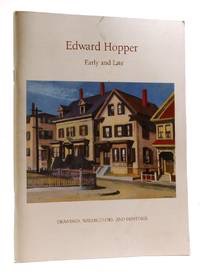
Softcover. NY, Hirschl & Adler Galleries, 1st, 1987, Book: Very Good, Dust Jacket: None, Softcover, 40 pages illustrated in color and b&w. 6 color, 32 b&w plates, frontispiece. Showcases select artwork by Edward Hopper. With an essay by Douglas Dreishpoon. Many of these works were included in a traveling exhibition entitled "Edward Hopper: The Early Years", and held Mar. 14 to Apr. 18, 1987. The exhibition checklist cites 81 pieces, and about 40 are shown here. Clean copy.
Softcover. NY, Hirschl & Adler Galleries, 1st, 1988, Book: Very Good, Dust Jacket: None, Softcover, 60 pages, 67 illustrations (13 color). Catalogue of 106 paintings, watercolors, etchings and drawings, with notes on selected works. Essay by Peter Schjeldahl. Includes a collection of drawings, forming the basis of the exhibition, bequeathed by the artist's widow Jo Hopper to her friend Mrs. Mary R. Schiffenhaus. Clean, bright copy.
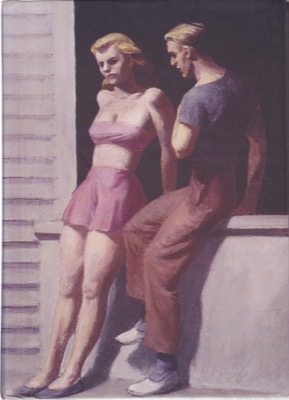
Hardcover. NY, W.W Norton/Whitney Museum, 7th pr., Book: Very Good, Dust Jacket: Very Good, Hardcover in a bright, unclipped dust jacket. Hopper is generally considered the major twentieth-century realist. Such paintings as House by the Railroad, Early Sunday Morning, and Nighthawks seem to embody the very character of our time. Yet few people have penetrated the mask of Hopper's public image. Here, Gail Levin has gone beyond the standard evaluations of the man and his work to investigate the authentic identity of the artist and the way his personality informed his art. She has uncovered aspects of Hopper's life (and even unknown works) that provide the first comprehensive view of the artists early development. The fascinating and often poignant story of Hopper's long struggle for recognition gives new insight into his later pessimism. A complex man is revealed, introspective and intellectual, yet romantic, illuminating the many levels of meaning in the paintings of his maturity. In addition to Hopper's watercolors and oil paintings, there are study drawings for his major works and documentary photographs illuminating all phases of his life. 280 color and 220 black-and-white illustrations.
Hardcover. New York, Harry N Abrams, 1st, 1989, Book: Very Good, Dust Jacket: Very Good, Oversize, heavy hardcover. 306 pages, b&w illustrations, color tipped-in plates. Light edge wear, rubbing to dust jacket. Foxing to fly leaves and bottom edge. Small stain on top edge. Else a very clean, tight copy.
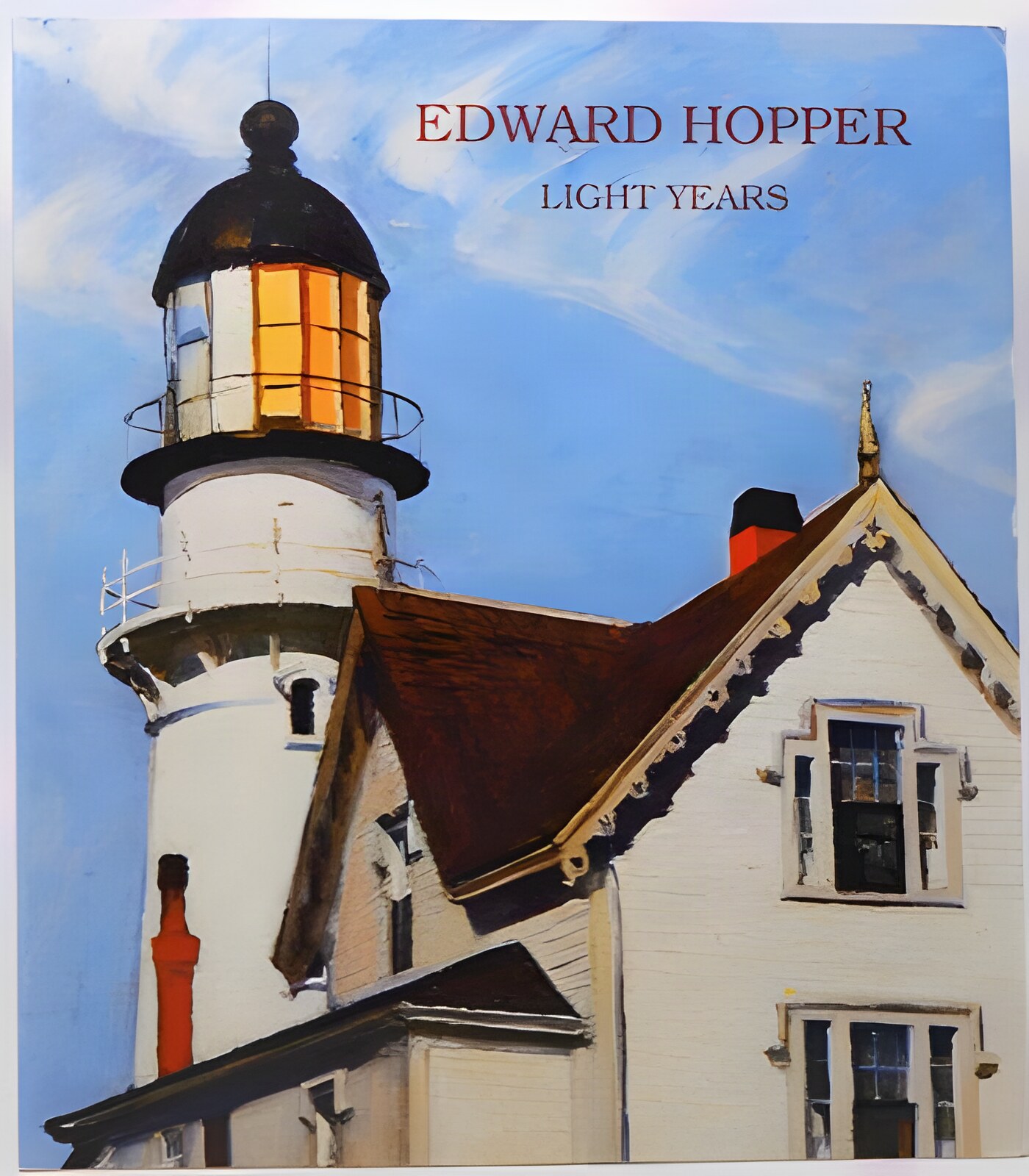
Hardcover. New York, Harry N. Abrams, 1st, 1975, Book: Very Good, Dust Jacket: Very Good, 306 pages. Green cloth hardcover with gilt illustration of lighthouse on front cover and gilt lettering on spine. In a lightly worn dust jacket. Green endpapers and color frontispiece. Edited by Milton S. Fox, book design by Nai Y. Chang. Numerous b/w and color plates (246 reproductions of Hopper's work, 88 in full color).
Hardcover. Berkeley, University of California Press, 1st, 1990, Book: Very Good, Dust Jacket: Very Good, Hardcover in a bright dust jacket, 480 pages. Although he is referred to as a "genius" more often than any other scholar of his period, Edward Sapir has received no full-scale biography since his death in 1939. At long last, Regna Darnell provides a comprehensive assessment of the life, ideas, and wide-ranging interests of this remarkable man. Sapir, the foremost linguist and anthropologist of his generation, contributed substantially to the professionalization of linguistics as an independent discipline. He was the first to apply comparative Indo-European methods to the study of American Indian languages, on which he conducted extensive fieldwork. His theoretical work on the relationship of the individual personality to culture remains fundamental to culture theory in anthropology, as does his insistence on the symbolic nature of culture and the importance of culture as understood by its members, in their own words.Sapir became the first professional anthropologist in Canada and teacher of a whole generation of linguists and anthropologists at Chicago and Yale. Holding to a humanistic view of anthropology (his own work included poetry and literary criticism), he was the most articulate spokesman for the interdisciplinary social science of the late 1920s and 1930s. In both linguistics and anthropology Sapir is a revered master whose ideas continue to inspire discussion and research. A sixteen-volume Collected Works is now in progress. Clean copy.
Hardcover. Oxford UK, Clio Press, 1st, 1996, Book: Very Good, Dust Jacket: Very Good, Hardcover in a bright dust jacket, maroon boards with gilt lettering along spine. Binding and hinges tight and square. 1996 publication, in like-new condition with no wear or distress. 202 pages including extensive bibliography; has black & white illustrations. A collection of writings by and about American photographer Steichen (1879-1973) who set new standards for advertising photography, helped pioneer aerial reconnaissance during the First World War and photography as a tool of propaganda during the Second, and served as the first Director of the Department of Photography at the Museum of Modern Art in New York.
Hardcover. NY, Merrell, 1st, 2017, Book: Very Good, Dust Jacket: Very Good, Hardcover, 160 pages. Over the course of his fifty-year career, American photographer Edward Weston (1886-1958) blazed a path into Photo-Modernism rendering portraits, landscapes, still-lifes and nudes. In 1902, a sixteen-year-old Weston took up photography in Highland Park, Illinois, where he worked as an amateur for five years. In 1907, at the age of twenty-one, Weston moved to Tropico, California, now the city of Glendale in Los Angeles County, where he constructed his first studio and set about with great purpose to become a photographic artist. Examining Weston's earliest sharp- and soft-focus photographs reveals that the young artist had already formed a perfect sense of composition that was to be the hallmark of his later work. Presenting Weston's earliest work from a recently discovered family album, Edward Weston: Portrait of the Young Man as an Artist compares the artist's naive first artistic efforts with his latest masterworks to show the persistence and evolution of his singular vision to find essential form in the vernacular with an ever-increasing intensity. As a young man deeply intuitive and original in his creative expression, Edward Weston demonstrates that his teenage work, beginning with his amateur snapshots, embrace the same significant form as the later work for which he is now considered a master.
Softcover. London, Sotheby's, 1st, 2004, Book: Very Good, Dust Jacket: None, Softcover, cream wraps with color illustration; blue spine with white lettering. Unpaginated, approx 50 pages. 15 color plates and additional images, 1 fold-out. Auction catalogue for sale 21 June 2004. Lots 21-35, sale L04007.

 "Eakins Watercolorsby: Hoopes , Donelson F.")
 "Eakins Watercolorsby: Hoopes, Donelson F.")
 "Eakinsby: McKinney, Roland")
 "Early American Furniture with English Eighteenth Century Examples: The Andrew V. Stout Collection of Important English Resist Lustrewareby: Parke-Bernet Galleries")
 "Early American Portraitureby: Sherman, Frederic Fairchild")
 "Early American Wall Paintings, 1710-1850by: Allen, Edward B.")
 "Early Gravestone Art in Georgia and South Carolinaby: Combs , Diana Williams")

 "Edith Halpert: The Downtown Gallery and the Rose of American Artby: Shaykin, Rebecca")
 "Edmund C. Tarbell and the Boston School of Painting (1889-1980)by: Pierce, Patricia Jobe")
 "Edward Hicks: His Life and Artby: Ford, Alice")
 "Edward Hopper Paints His World (SIGNED COPY)by: Burleigh, Robert/Wendell Minor")



 "Edward Hopper: The Art and the Artistby: Gail Levin")
 "Edward Hopperby: Goodrich, Lloyd")
 "Edward Hopperby: Goodrich, Lloyd")
 "Edward Sapir. Linguist Anthropologist Humanistby: Darnell, Regna")
 "Edward Steichen: Selected texts and bibliography (World Photographers Reference) by: Ronald J. Gedrim")


 "Edward Weston: Portrait of the Young Man as an Artistby: Graham Howe and R.D. Beth Warren")
 "Egon Schiele: Fifteen Works from a Private American Collection. June 21, 2004. Sale 7470 by: Sotheby's")