Hardcover. NY, Liveright, 1st, 2021, Book: Very Good, Dust Jacket: Very Good, Hardcover in a bright, unclipped dust jacket. 375 pages. Pulitzer Prize-winning historian Joseph J. Ellis offers an epic account of the origins and clashing ideologies of America's revolutionary era, recovering a war more brutal, and more disorienting, than any in our history, save perhaps the Civil War. For more than two centuries, historians have debated the history of the American Revolution, disputing its roots, its provenance, and above all, its meaning. These questions have intrigued Ellis-one of our most celebrated scholars of American history-throughout his entire career. With this much-anticipated volume, he at last brings the story of the revolution to vivid life, with "surprising relevance" (Susan Dunn) for our modern era. Clean copy.
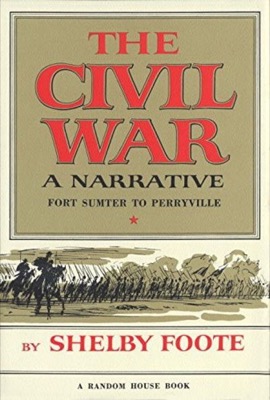
Hardcover. NY, Random House, reprint, 1974, Book: Very Good, Dust Jacket: Very Good, Hardcover in a bright, unclipped dust jacket. The Civil War: A Narrative, Vol. 2 focuses on the pivotal year of 1863, as Shelby Foote's masterful narrative history brings to life the Battle of Gettysburg and Grant's Vicksburg campaign and covers some of the most dramatic and important moments in the Civil War. Endpaper maps. First published in 1963, this appears to be a 70s reprint ($40 price on dust jacket). Clean copy.
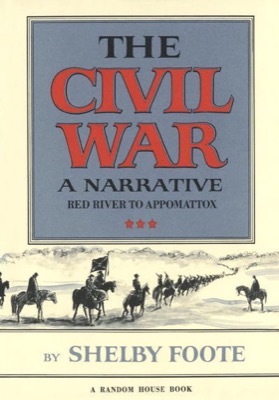
Hardcover. NY, Random House, reprint, 1974, Book: Very Good, Dust Jacket: Very Good, Hardcover in a bright, unclipped dust jacket. The Civil War: A Narrative. In the third -- and last -- volume of this vivid history, Foote brings to a close the story of four years of turmoil and strife which altered American life forever. Here, told in vivid narrative and as seen from both sides, are those climactic struggles, great and small, on and off the field of battle, which finally decided the fate of this nation. "Red River to Appomattox" opens with the beginning of the two final, major confrontations of the war: Grant against Lee in Virginia, and Sherman pressing Johnston in North Georgia. While the Virginia-Georgia fighting is in progress, Kearsarge sinks the Alabama and Forrest gains new laurels at Brice's Crossroads.With Grant and Lee deadlocked at Petersburg, Sherman takes Atlanta -- assuring Lincoln's reelection, together with the certainty that the war will be fought (not negotiated) to a finish. These events are followed by Hood's bold northward strike through middle Tennessee while Sherman sets out on his march to the sea, to be opposed at its end by the ghost of the Army of Tennessee. Endpaper maps. First published in 1974, this appears to be a reprint (no price on dust jacket). Newspaper obituary of Foote laid in. Clean copy.
Hardcover. NY, Random House, reprint, 1974, Book: Very Good, Dust Jacket: Very Good, Hardcover in a bright, unclipped dust jacket. The Civil War: A Narrative, Vol. 1 begins one of the most remarkable works of history ever fashioned. All the great battles are here, of course, from Bull Run through Shiloh, the Seven Days Battles, and Antietam, but so are the smaller ones: Ball's Bluff, Fort Donelson, Pea Ridge, Island Ten, New Orleans, and Monitor versus Merrimac. The word "narrative" is the key to this extraordinary book's incandescence and its truth. The story is told entirely from the point of view of the people involved in it. One learns not only what was happening on all fronts but also how the author discovered it during his years of exhaustive research. This first volume in Shelby Foote's comprehensive history is a must-read for anyone interested in one of the bloodiest wars in America's history. Endpaper maps. First published in 1958, this appears to be a 70s reprint ($40 price on dust jacket). Clean copy.
Hardcover. Lexington KY, University of Kentucky Press, 1st, 1968, Book: Very Good, Dust Jacket: None, Hardcover, light green cloth, 307 pages. This volume of Eaton's selected writings forms a rich and provocative mosaic of southern life from the years of Thomas Jefferson to the close of the Civil War. These selections, perceptively edited by Albert D. Kinvan, show the wide range of Eaton's interests, including the impact of slavery, the influence of religion, and the art of politics, and they demonstrate the depth of his insight into the civilization of the Old South. Name on front fly leaf, otherwise clean.
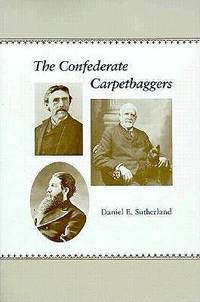
Hardcover. Baton Rouge LA, Louisiana State University Press, 1st, 1988, Book: Very Good, Dust Jacket: Very Good, Hardcover in a bright dust jacket. 360 pages, b&w illustrations. Following the American Civil War, many former Confederates fled their southern homeland. Some left the United States, some moved to the western territories. Still others moved north to northeastern and midwestern towns and cities, believing that northern economic and educational opportunities offered the quickest means of rebuilding shattered fortunes and lives. Sutherland provides a detailed and illuminating account of the contributions these displaced southerners made to the financial, literary, artistic, and political life of the nation. Very nice copy.
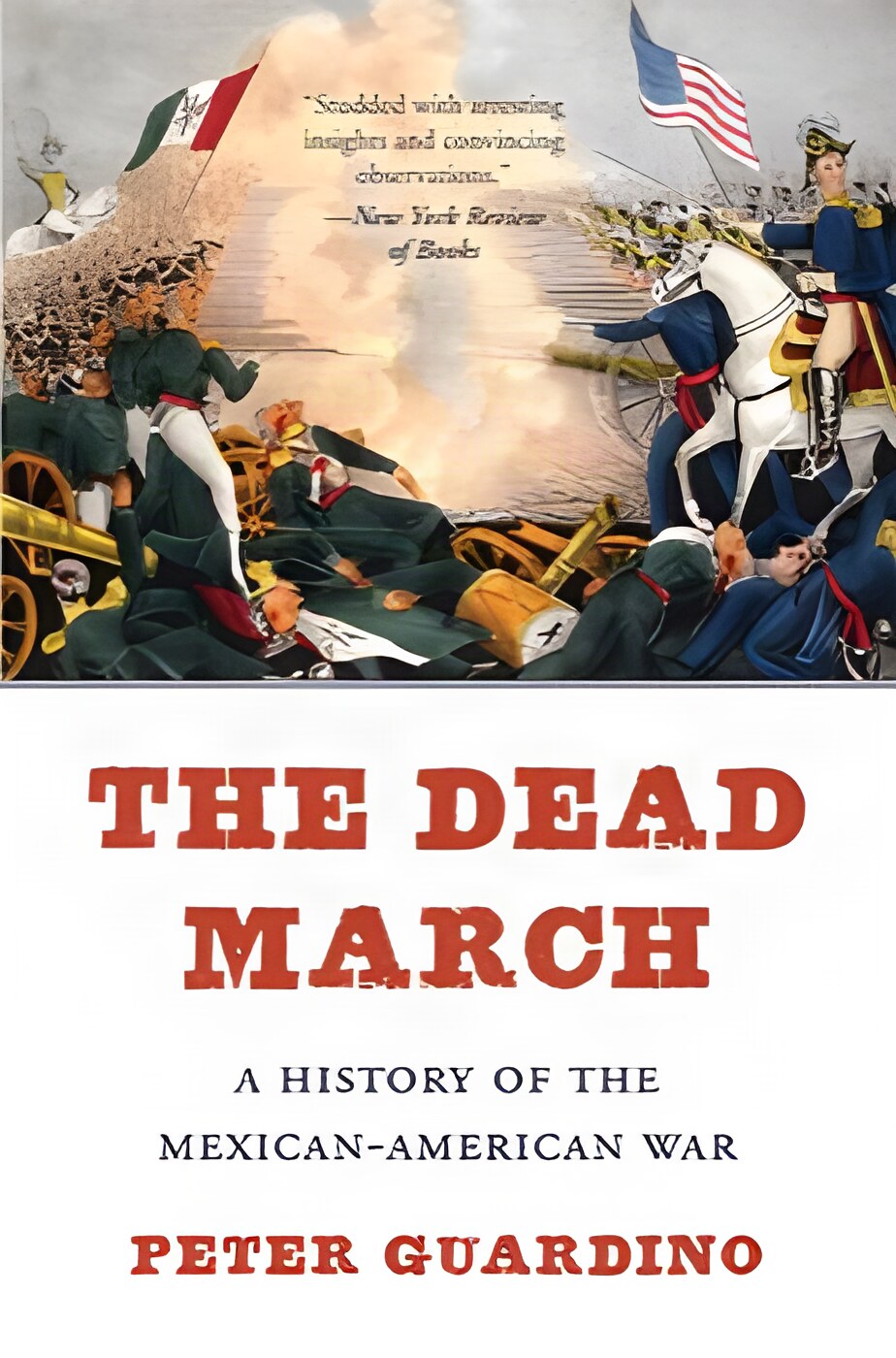
Hardcover. Cambridge MA, Harvard University Press, 2nd pr., 2017, Book: Very Good, Dust Jacket: Very Good, Hardcover in a bright dust jacket, 502 pages, b&w illustrations. "Superb...A remarkable achievement, by far the best general account of the war now available. It is critical, insightful, and rooted in a wealth of archival sources; it brings far more of the Mexican experience than any other work...and it clearly demonstrates the social and cultural dynamics that shaped Mexican and American politics and military force." -Journal of American History It has long been held that the United States emerged victorious from the Mexican-American War because its democratic system was more stable and its citizens more loyal. But this award-winning history shows that Americans dramatically underestimated the strength of Mexican patriotism and failed to see how bitterly Mexicans resented their claims to national and racial superiority. Their fierce resistance surprised US leaders, who had expected a quick victory with few casualties. By focusing on how ordinary soldiers and civilians in both countries understood and experienced the conflict, The Dead March offers a clearer picture of the brief, bloody war that redrew the map of North America. Clean copy.
Hardcover. London, Eyre & Spottiswoode, 1st UK, 1965, Book: Very Good, Dust Jacket: Fair, Hardcover in a worn dust jacket with pieces gone, 229 pages plus index. A study of the controversial period in America which followed the Civil War examining the political situation in the South.
NY, Simon & Schuster, 1st, 2021, Book: Very Good, Dust Jacket: Very Good, Hardcover in a bright, unclipped dust jacket. 609 pages, b&w illustrations. They say that history is written by the victors. But not in the case of the most famous dissenter on the Supreme Court. Almost a century after his death, John Marshall Harlan's words helped end segregation and gave us our civil rights and our modern economic freedom. But his legacy would not have been possible without the courage of Robert Harlan, a slave who John's father raised like a son in the same household. After the Civil War, Robert emerges as a political leader. With Black people holding power in the Republican Party, it is Robert who helps John land his appointment to the Supreme Court. At first, John is awed by his fellow justices, but the country is changing. Northern whites are prepared to take away black rights to appease the South. Giant trusts are monopolizing entire industries. Against this onslaught, the Supreme Court seemed all too willing to strip away civil rights and invalidate labor protections. So as case after case comes before the court, challenging his core values, John makes a fateful decision: He breaks with his colleagues in fundamental ways, becoming the nation's prime defender of the rights of Black people, immigrant laborers, and people in distant lands occupied by the US. Harlan's dissents, particularly in Plessy v. Ferguson, were widely read and a source of hope for decades. Thurgood Marshall called Harlan's Plessy dissent his "Bible"--and his legal roadmap to overturning segregation. In the end, Harlan's words built the foundations for the legal revolutions of the New Deal and Civil Rights eras.
Hardcover. NY, Burdick Brothers, reprint, 1857, Book: Very Good, Dust Jacket: None, Hardcover, embossed brown cloth with gilt lettering on spine. Ninth thousand. The Impending Crisis is often considered the only popular antislavery work by a southern author prior to the outbreak of the Civil War. Helper (1829-1909)'s argument that "slavery was economically unsound" caused this work to be "officially banned in the South"; in the North, it "vied in popularity and influence with Uncle Tom's Cabin" (Howes). The book stoked fears among southern slaveholders that the "North would promote a class conflict among southern whites," and helped drive many towards secessionism. Bookplate on inside front cover, front fly leaf missing. Otherwise a clean copy in exceptionally nice condition.
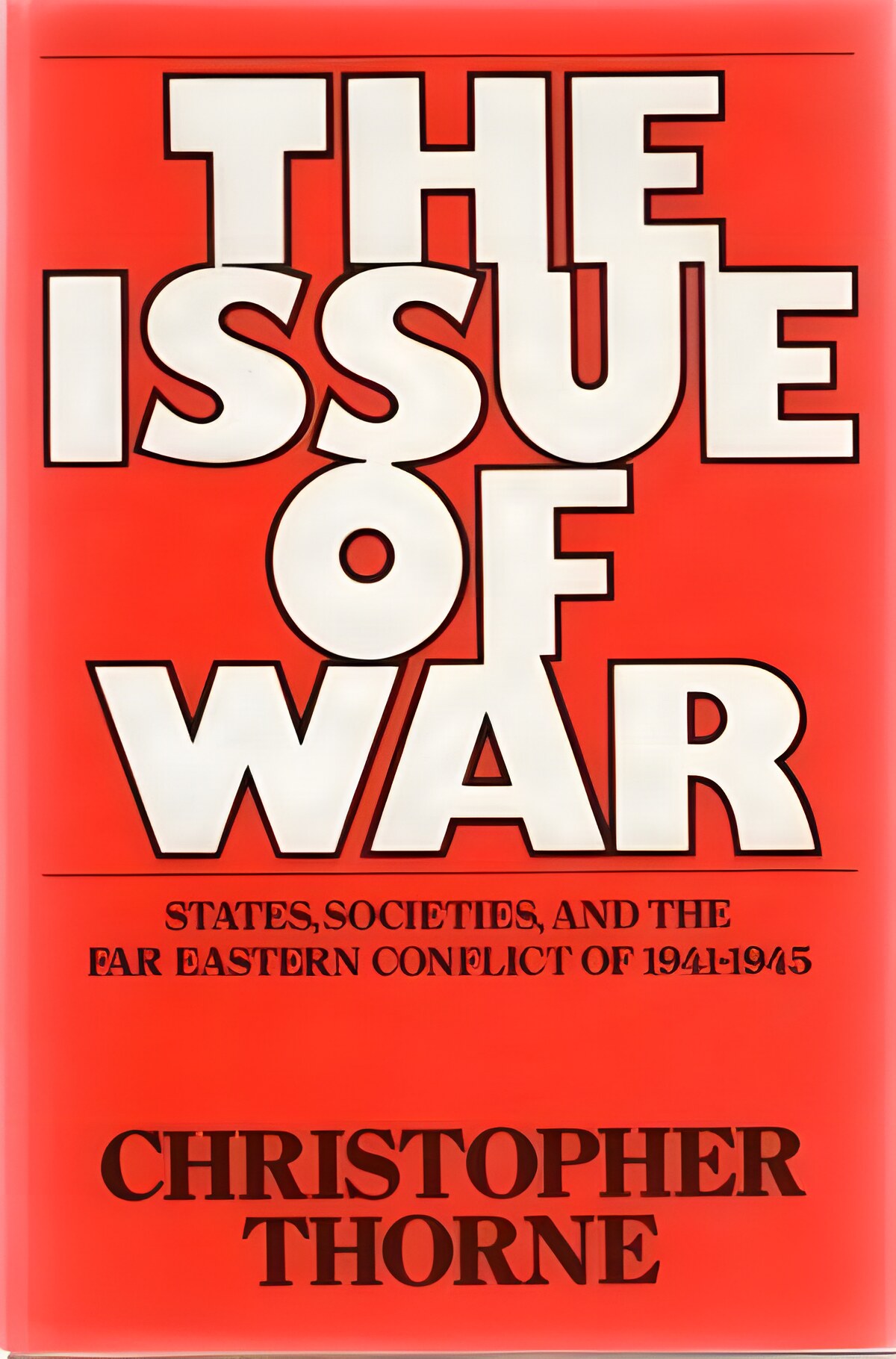
Hardcover. NY, Oxford University Press, 1st, 1985, Book: Very Good, Dust Jacket: Very Good, Hardcover in a bright, unclipped dust jacket, 364 pages. The Second World War's Pacific conflict was one of the most complex in history. It embrioled peoples from opposite sides of the globe; it was fought in China, across the expanses of the Pacific, and in the jungles of Southeast Asia; and it was devastating in its consequences for civilians and servicemen alike. It saw the first use of atomic weapons, hastened the end of the Western empires in Asia, and marked America's rise to the position of the most powerful nation in the world. Christopher Thorne, whose previous studies of the war in the Pacific have become landmarks in the field, here weaves together both the entire network of international relations surrounding the war and the impact the war had on all the societies involved--Indian as well as American; Australian and New Zealand as well as Japanese; Korean, Chinese, and Southeast Asian as well as British, French, and Dutch. The Issue of War draws on material gathered over many years in the Far East, Western Europe, and the U.S.--material including wartime films, broadcasts, and newspapers,as well as countless private and offical papers. Representing a synthesis of military, diplomatic, economic, intellectual, and social history, it not only places the war in the context of developments before 1941, but illuminates various patterns that cut across the familiar distinctions between Asia and the West or between Japan and the Allies. Name on front fly leaf, otherwise clean.
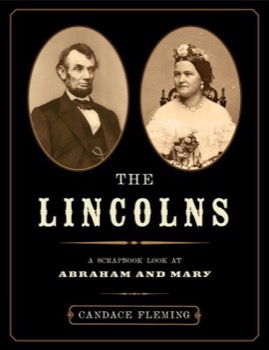
Hardcover. NY, Schwartz & Wade Books, 2nd pr, 2008, Book: Very Good, Dust Jacket: Very Good, Hardcover in a bright dust jacket, 180 pages. Profusely illustrated in b&w. Here are the extraordinary lives of Abraham and Mary, from their disparate childhoods and tumultuous courtship, through the agony of the Civil War, to the loss of three of their children, and finally their own tragic deaths. Readers can find Mary's recipe for Abraham's 'favorite cake' and bake it themselves; hear what Abraham looked like as a toddler; see a photo of the Lincoln's dog; discover that the Lincoln children kept goats at the White House; see the Emancipation Proclamation written in Lincoln's own hand. Perfect for reluctant readers as well as history lovers, The Lincolns provides a living breathing portrait of a man, a woman, and a country. Clean copy.
Hardcover. NY, Liveright, 1st, 2012, Book: Very Good, Dust Jacket: Very Good, Hardcover in a bright, unclipped dust jacket. In the summer of 1862, after a year of protracted fighting, Abraham Lincoln decided on a radical change of strategy-one that abandoned hope for a compromise peace and committed the nation to all-out war. The centerpiece of that new strategy was the Emancipation Proclamation: an unprecedented use of federal power that would revolutionize Southern society. In The Long Road to Antietam, Richard Slotkin, a renowned cultural historian, reexamines the challenges that Lincoln encountered during that anguished summer 150 years ago. In an original and incisive study of character, Slotkin re-creates the showdown between Lincoln and General George McClellan, the "Young Napoleon" whose opposition to Lincoln included obsessive fantasies of dictatorship and a military coup. He brings to three-dimensional life their ruinous conflict, demonstrating how their political struggle provided Confederate General Robert E. Lee with his best opportunity to win the war, in the grand offensive that ended in September of 1862 at the bloody Battle of Antietam. 10 illustrations; 8 maps.
Hardcover. Chapel Hill , University of North Carolina, 1st, 1949, Book: Very Good, Dust Jacket: None, Hardcover, dark green cloth, gilt lettering, design on spine, 280 pages. "The story of a Confederate childhood, a Reconstruction boyhood, and the education of a medical pioneer in the new South." This book is first of all a personal narrative that is alternately dramatic, thoughtful, and hilariously funny. It is also a vivid picture of plantation life before and during the Civil War and the beginnings of the building of a New South. Clean copy, spine a bit darkened.
Hardcover. NY, The Century Co., 1st, 1917, Book: Good, Dust Jacket: None, Hardcover, green cloth stamped in gilt. 346 pages. Frontis. portrait, illustrated with b&w plates and folding facsimile documents. "Authoritative information as to how the soldiers of the Allies are transported, housed and trained, how a battle is prepared for in advance, etc. " Author observed British Postal Censorship and war, including trench-fighting, during WWI. Eric Fisher Wood, Sr. (1889 1962) was an American civil engineer, architect, author, and officer in the United States Army, retiring with the rank of Brigadier General. Book shows mild shelf wear, name and stamp to front endpapers, otherwise clean. Good plus.
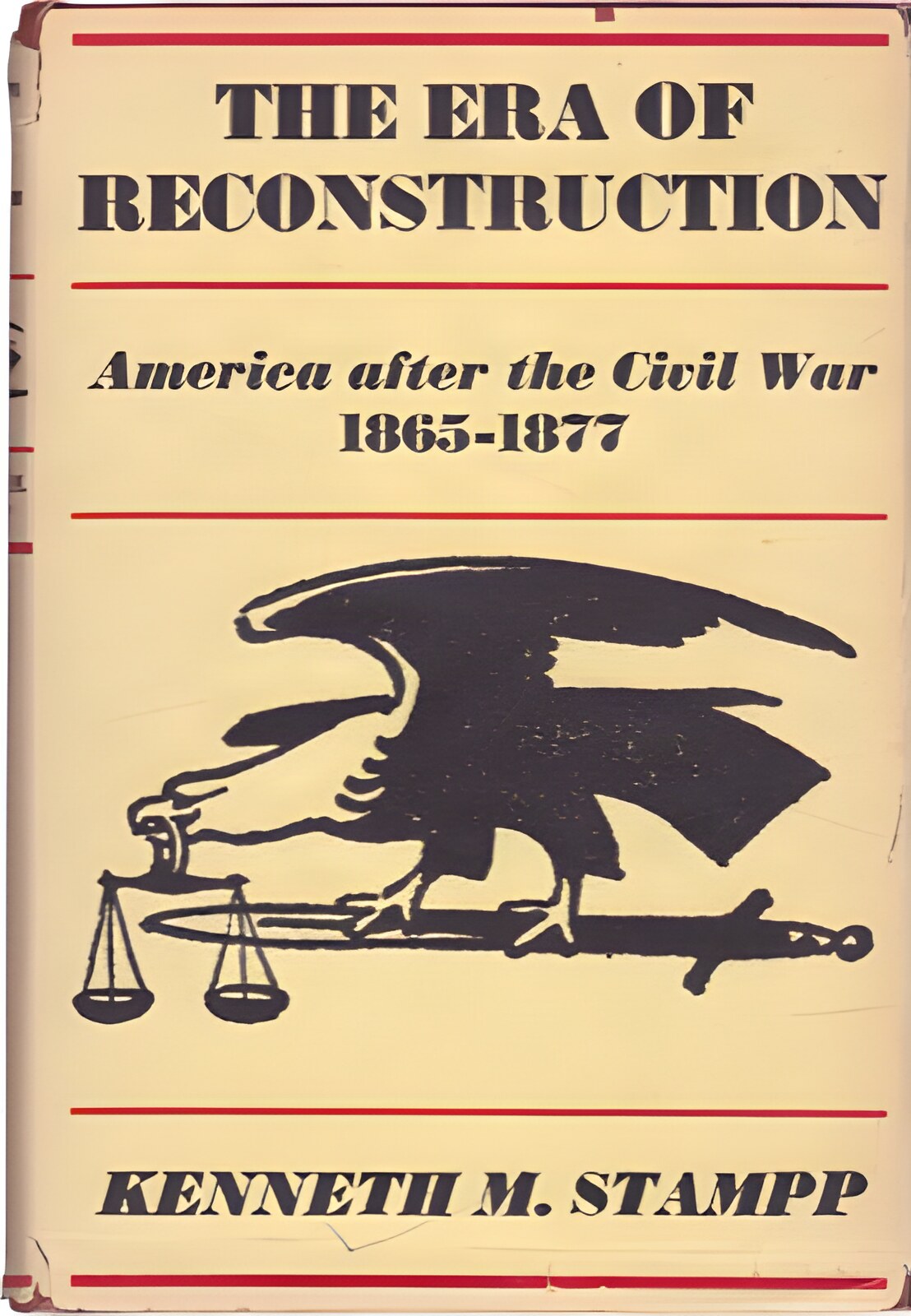
Softcover. NY, Harcourt, Brace & World, reprint, 1963, Book: Very Good, Dust Jacket: None, Softcover, 760 pages. This is a frank and insightful analysis of the political and economic influences in the United States during the Reconstruction Era, covering the years immediately after the Civil War and the death of Abraham Lincoln, and ending shortly before the Spanish-American War. Originally published in 1938. Name on front fly leaf, otherwise clean.
Hardcover. NY, Atheneum, 3rd pr., 1974, Book: Very Good, Dust Jacket: Very Good, Hardcover in a lightly worn dust jacket, 369 pages. Evans "tells of his grandparents' debate to leave Lithuania for America, the first few years in the Baltimore slums, and their decision to gamble on the South. He writes about the family store, and describes his boyhood in Durham, in the North Carolina tobacco belt, where his father was mayor from 1950 to 1962 during the stormiest years of the Civil Rights era. " Also a history of earlier German & Sephardic Jewish communities in the South & the role of Southern Jews in the Civil War & Reconstruction. Previous owner's inscription on front fly leaf otherwise clean.
Hardcover. NY, Oxford University Press, 1st, 1999, Book: Very Good, Dust Jacket: Very Good, Hardcover in a bright dust jacket, 1248 pages, illustations. The political home of Henry Clay, Daniel Webster, Horace Greeley, and the young Abraham Lincoln, the American Whig Party was involved at every level of American politics--local, state, and federal--in the years before the Civil War, and controlled the White House for eight of the twenty-two years that it existed. Now, in The Rise and Fall of the American Whig Party, Michael F. Holt gives us the only comprehensive history of the Whigs ever written--a monumental history covering in rich detail the American political landscape from the Age of Jackson to impending disunion. In Michael Holt's hands, the history of the Whig Party becomes a political history of the United States during the tumultuous Antebellum period. He offers a panoramic account of a time when a welter of parties (Whig, Democratic, Anti-Mason, Know Nothing, Free Soil, Republican) and many extraordinary political statesmen (including Andrew Jackson, John C. Calhoun, William Seward, Daniel Webster, Martin Van Buren, and Henry Clay) struggled to control the national agenda as the U.S. inched towards secession. It was an era when Americans were passionately involved in politics, when local concerns drove national policy, and when momentous political events rocked the country, including the Nullification Controversy, the Panic of 1837, the Annexation of Texas, the Compromise of 1850, and the Kansas-Nebraska Act. Holt captures all of this as he shows that, amid this contentious political activity, the Whig Party continuously strove to unite North and South, repeatedly trying to find a compromise position. Indeed, the Whig Party emerges as the nation's last great hope to prevent secession and civil war.
Hardcover. Boston, Houghton Mifflin, 1st, 2008, Book: Very Good, Dust Jacket: Very Good, Hardcover in a bright dust jacket, 386 pages. The first narrative history of the Civil War told by the very people it freed. Groundbreaking, compelling, and poignant, The Slaves' War delivers an unprecedented vision of the nation's bloodiest conflict. An acclaimed historian of nineteenth-century and African-American history, Andrew Ward gives us the first narrative of the Civil War told from the perspective of those whose destiny it decided. Woven together from hundreds of interviews, diaries, letters, and memoirs, here is the Civil War as seen from not only battlefields, capitals, and camps, but also slave quarters, kitchens, roadsides, farms, towns, and swamps. Speaking in a quintessentially American language of wit, candor, and biblical power, army cooks and launderers, runaways, teamsters, and gravediggers bring the war to vivid life. From slaves' theories about the causes of the war to their frank assessments of such major figures as Lincoln, Davis, Lee, and Grant; from their searing memories of the carnage of battle to their often startling attitudes toward masters and liberators alike; and from their initial jubilation at the Yankee invasion of the slave South to the crushing disappointment of freedom's promise unfulfilled, The Slaves' War is a transformative and engrossing vision of America's Second Revolution. Clean copy.
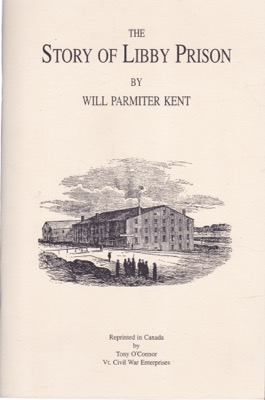
Softcover. Newprt VT, Tony O'Connor Civil War Enterprises, reprint, Book: Very Good, Dust Jacket: None, Softcover in stapled wrappers, 60 pages, b&w illustrations. Second Edition. Originally published in 1891 this is a modern reprint. Libby Prison was a Confederate prison at Richmond, Virginia, during the American Civil War. It gained an infamous reputation for the overcrowded and harsh conditions under which officer prisoners from the Union Army were kept. Prisoners suffered from disease, malnutrition and a high mortality rate. Clean copy.
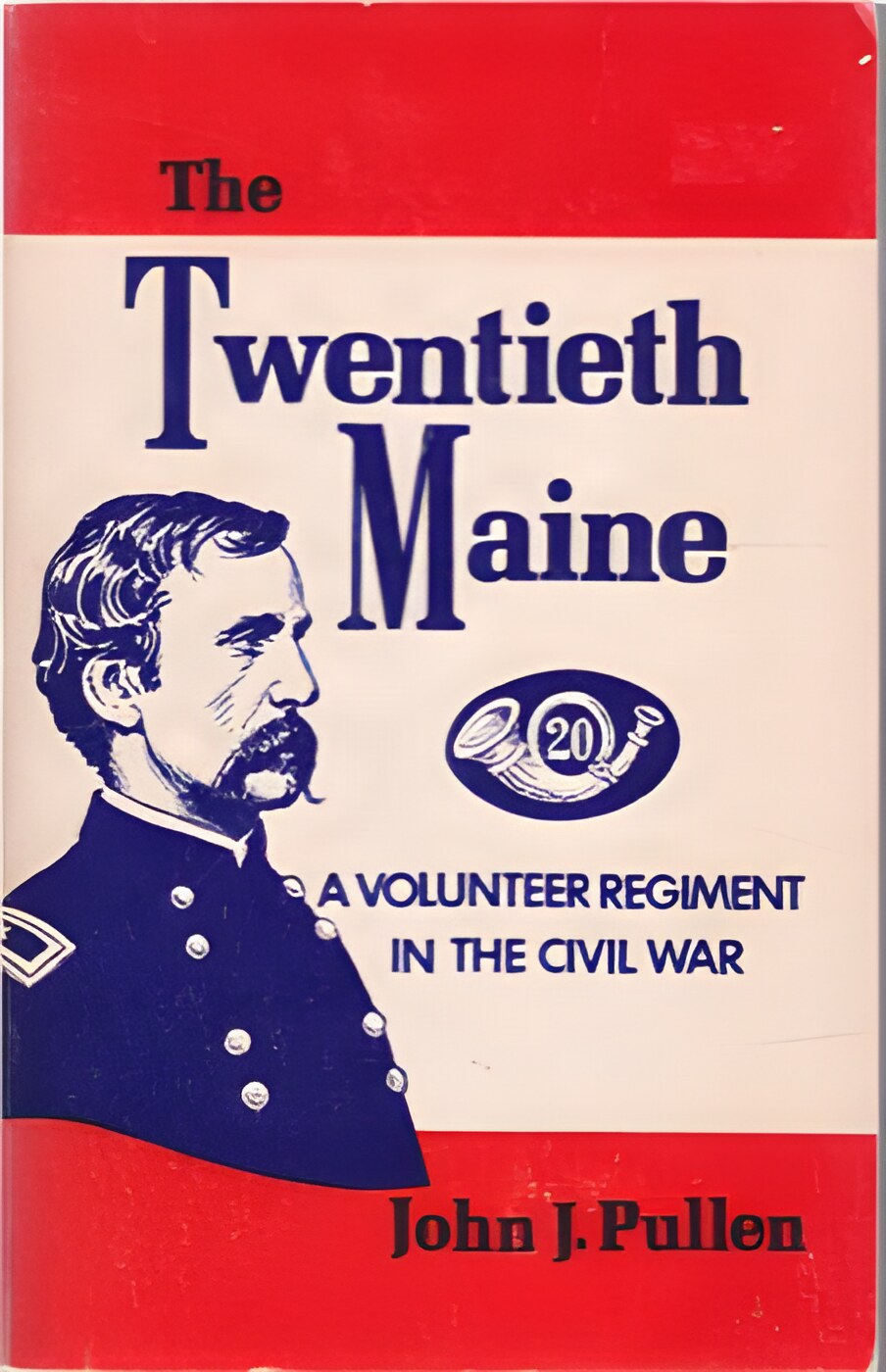
Hardcover. Philadelphia/NY, J.P. Lippincott, 1st, 1957, Book: Very Good, Dust Jacket: None, Hardcover in blue cloth covers stamped in black and gilt. Stated First Edition, SIGNED BY PULLEN on a prelim page. Pullen's classic and highly acclaimed book tells how Chamberlain and his men fought at Antietam, Fredericksburg, and Chancellorsville on their way to the pivotal battle of Gettysburg. Small ownership sticker on the front fly leaf, otherwise clean.
Softcover. Dayton OH, Morningside Bookshop, reprint, 1983, Book: Very Good, Dust Jacket: None, Softcover, 338 pages, b&w illustrations. Reprint of 1957 Edition. "Mr. Pullen...has gone to the letters, diaries and memoirs of the participants with the thoroughness and care of a good historian...He can also describe battle action with much distinction, his account of the 20th's fight at Gettysburg is as good a piece of battle writing as you are likely to find anywhere." - Bruce Catton. Clean copy.
Hardcover. New York, Oxford, 1st, 1993, Book: Very Good, Dust Jacket: Very Good, Hardcover, 201 pages. Beautiful copy in clear brodart cover. Like new.

 "The Cause: The American Revolution and its Discontents, 1773-1783by: Joseph J. Ellis")

 "The Great Dissenter: The Story of John Marshall Harlan, America's Judicial Heroby: Peter S. Canellos")



 "The Long Road To Antietam: How the Civil War Became a Revolutionby: Richard Slotkin")
 "The Natural Bent:The Memoirs of Dr. Paul B. Barringer by: Barringer, Paul B.")
 "The Rise and Fall of the American Whig Party: Jacksonian Politics and the Onset of the Civil War by: Michael F. Holt")


 "The Vacant Chair: The Northern Soldier Leaves Homeby: Mitchell, Reid")