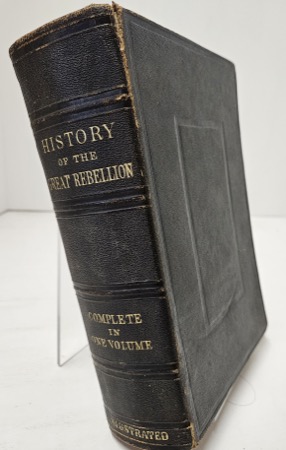
Hardcover. Hartford CT, L. Stebbins, 1st thus, 1866, Book: Very Good, Dust Jacket: None, Giving an Account of its Origin, the Secession of the Southern States and the Formation of the Confederate Government, the Concentration of the Military and Financial Resources of the Federal Fovernment, [...] From Official Sources. Hardcover, dark brown embossed cloth, gilt lettering on the spine. 778 pages plus 5 pages of publishers addenda at rear. ("Military Terms" 4 pp., "To Canvassing Agents", 2 pp. ("We want every person in the United States to have a chance to purchase Kettell's One Volume History of the Great Rebellion."). Marbled endpapers, many steel plate engravings with tissue guards, b&w maps. Front spine edge starting, tissue guards have tanned but pages and plates are bright and clean. Copyright page states 1865, title page has a 1866 date. A Civil War history that was written, and issued, in installments as the War proceeded, cumulating to three volumes in all -- here gathered into one for the first time. Clean, no markings.
Hardcover. Vermont, Tenth Vermont Regimental Association, 1st, 1870, Book: Very Good, Dust Jacket: None, 249 pages, green cover, small gilt design to front cover, gilt lettering on spine. Previous owner's bookplate to front endpaper, light wear to cover, small date stamp to corner of rear endpaper; otherwise book in great condition. Includes a complete roster of the regiment & details of Virginia actions.
Hardcover. Burlington, VT, Chauncey Goodrich, Early reprint with appendix added, 1853, Book: Fair, Dust Jacket: None, 716 pages. Hardcover. "...With a New (fold-out) Map of the State, and 200 (b/w) Engravings." Significant foxing and tanning to volume from age, as well as some moisture damage to bottom of fore-edge. Leather bound with bands and gilt title on spine. Fading to covers. Binding surprisingly tight. Cover boards slightly warped. In fair condition.
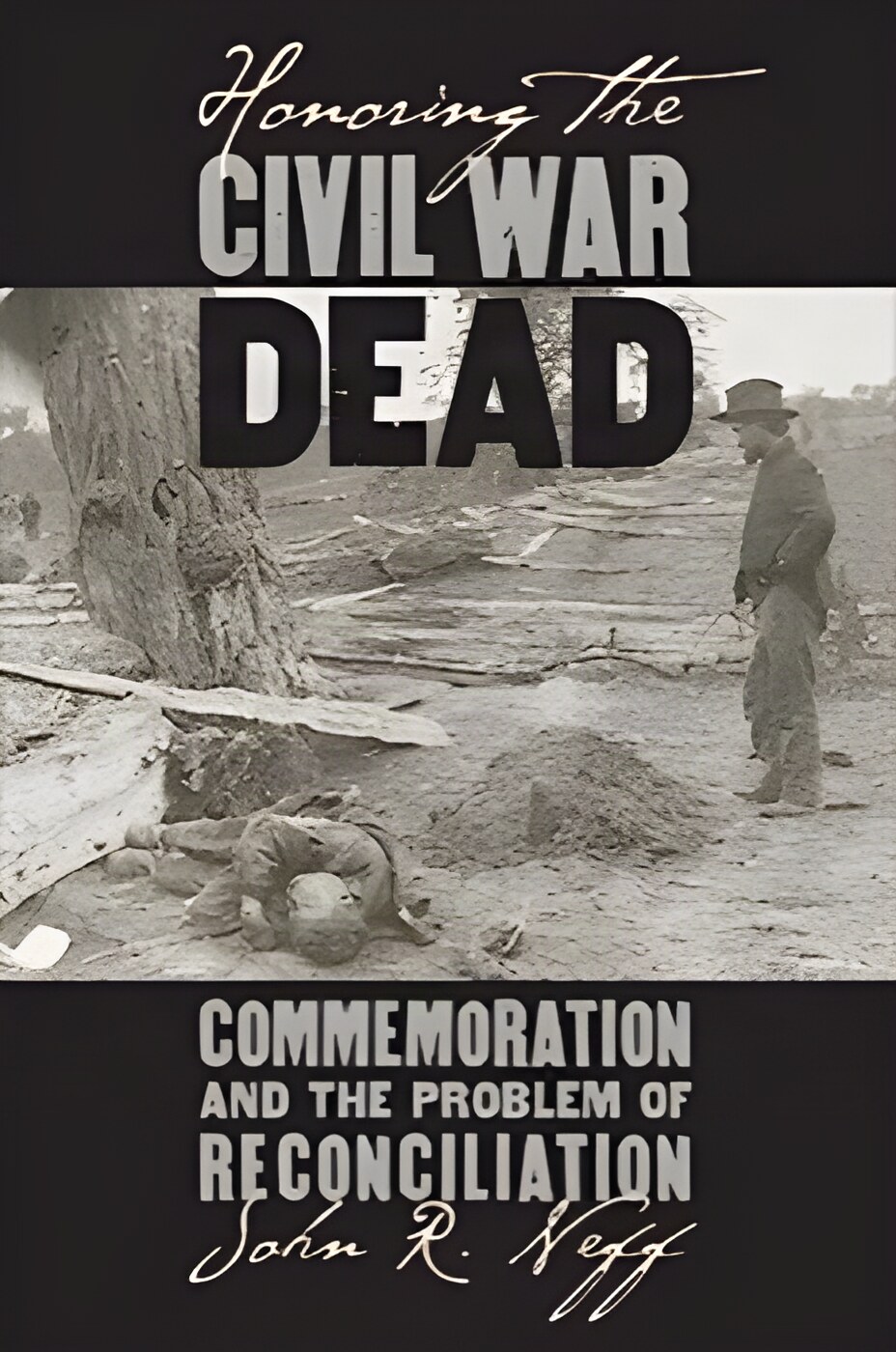
Hardcover. Lawrence KS, University Press of Kansas, 1st, Book: Very Good, Dust Jacket: Very Good, Hardcover in a bright dust jacket, 328 pages. By the end of the Civil War, fatalities from that conflict had far exceeded previous American experience, devastating families and communities alike. As John Neff shows, commemorating the 620,000 lives lost proved to be a persistent obstacle to the hard work of reuniting the nation, as every memorial observation compelled painful recollections of the war. Neff contends that the significance of the Civil War dead has been largely overlooked and that the literature on the war has so far failed to note how commemorations of the dead provide a means for both expressing lingering animosities and discouraging reconciliation. Clean copy.
Hardcover. New York, The Free Press, 1st, 2001, Book: Very Good, Dust Jacket: Very Good, 263 pages. Hardcover. Dust jacket unclipped. Color illustrations throughout. Gilt title on spine. A touch of foxing on spine, otherwise clean inside. Binding tight, in great shape.
Hardcover. NY, Time Life, reprint, 1983, Book: Very Good, Dust Jacket: None, 335 pages. Hardcover with no dust jacket. Dark blue leather bound with gilt titles to front cover and spine. Embossed decoration on front cover. Gilt text block edges, red ribbon marker. Clean, tight copy.
Hardcover. New York, Publishers Company, 2nd edition, 1968, Book: Very Good, Dust Jacket: None, 5 volumes: 291, 291, 317, 304, and 306 pages. Light brown cloth covers, with silver and black titles, profusely illustrated with b&w plates. Slight rubbing to covers, small brown stain to spines of Theater and Civil War volumes, previous owner's embossed stamp to all title pages, ex-lib bookplates to all copyright pages, pages very crisp and unmarked, tight binding; overall, volumes are in clean, tight condition. NOTE: DUE TO WEIGHT AND SIZE, DOMESTIC SHIPPING ONLY.
Hardcover. NY, Oxford University Press, 1st, 1967, Book: Very Good, Dust Jacket: Very Good, Hardcover in a lightly worn dust jacket, 228 pages. "The period from Andrew Jackson's presidency to the Civil War has traditionally been considered the age of democracy triumphant in the United States. This book sharply contradicts that assumption, contending that while democracy advanced substantially in the political sense, social and economic distinctions became, if anything, more marked. Powerful forces, especially in the economic field, were working toward the stratification of society." Name on the front fly leaf, otherwise clean.
Hardcover. GR, Steidl , 1st, 2014, Book: Very Good, Dust Jacket: Very Good, Hardcover in a bright, unclipped dust jacket. "James Karales (1930-2002) was big-time in the best time but is not as well-known as he should be," argues photographic historian Vicki Goldberg. This book will change that. Early in his career, Karales began a photo-essay documenting Rendville, Ohio, an important stop on the Underground Railroad during the Civil War and one of the few racially integrated communities in America in the late 1950s. These pictures demonstrate his striking ability to capture the essential qualities of a community, are reminiscent of images made for the Farm Security Administration in the 1930s, and reflect Karales' state of mind as he grappled with the racial issues that were to preoccupy him and America for many years to come. Karales worked for Look from 1960 until it ceased publication in 1971. Among many important assignments for the magazine, Karales documented Martin Luther King and the fifty-mile, five-day Selma (Alabama) march in 1965. Fifteen minutes before the end of the march, the sky darkened and Karales' wide-angle shot of the protesters silhouetted against the horizon has since become an emblem of the march and has insured the photographer's place in this tumultuous period of American history. In this new publication we discover that Karales' stature as a photojournalist and social documentary photographer par excellence is based on much more than one iconic image.
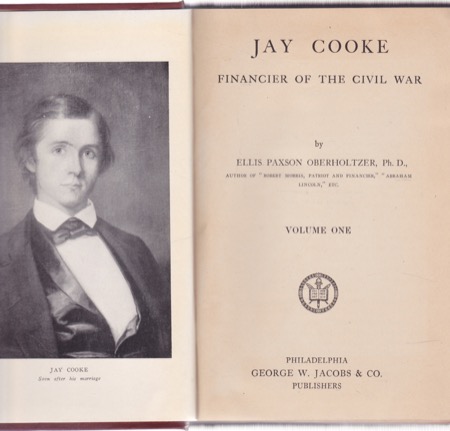
Hardcover. Philadelphia, George W. Jacobs & Co., 1907, Book: Very Good, Dust Jacket: None, Two matching hardcover volumes in maroon cloth with gilt-lettered spine titles. [1], xi, [1 blank], 658; [2], vi, 590 pages, as issued, with plates and folding maps. Jay Cooke was an American financier who helped finance the Union war effort during the American Civil War and the postwar development of railroads in the northwestern United States. He is generally acknowledged as the first major investment banker in the United States and creator of the first wire house firm. Over 75 illustrations, including foldouts. NOTE: Unlike most sets offered online, this one does not have blue cloth or top edge gilt. The copyright page states Published October, 1907. No other printings noted. No date on title page, so suspected reprint. Bookplate on inside front covers, otherwise clean and tight set.
Softcover. Athens GA, University of Georgia Press, reprint, 2001, Softcover, clean, unmarked pages. 415 pages, followed by a short Index. Fanny Kemble offers a gripping, first-hand account of life on a Southern plantation before the Civil War. Combining a keen observational style with a candid narrative voice, Kemble lays bare the complexities of plantation life, including the stark realities of slavery and the socio-economic hierarchies of antebellum Georgia. The journal entries provide an intimate glimpse into the daily lives of both the enslaved and the plantation owners, reflecting her deep moral convictions and growing abolitionist sentiments against a backdrop of genteel Southern culture. Fanny Kemble, a British actress and writer, was thrust into the world of the Southern elite through her marriage to a plantation owner, which provided her with unprecedented access to the intricacies of plantation management and its social fabric.
Hardcover. Baltimore, Johns Hopkins University Press, 1st, 2003, Book: Very Good, Dust Jacket: Very Good, Hardcover in a bright dust jacket with a small closed tear to front panel. INSCRIBED BY HUDDLESTON on the dedication page. Huddleston has paired archival images of the first modern war with his own, contemporary color shots of the same locations, at the same time of year, at the same time of day. Some sites of suicidal charges have become Kmarts, mini-malls or swamps strewn with metal and plastic trash. The juxtapositions possess surprising power. In an overexposed and damaged archival shot of the Confederate prisoner of war camp at Andersonville, Ga., a filthy crowd of anonymous men packs the frame, while on the facing page Huddleston presents his own fine-tuned image of a muted, borderless sky. Office buildings, grocery stores and fast food franchises have sprouted where Union Major General George H. Thomas and Confederate General John Bell Hood slugged it out for December days in Nashville 141 years ago. Near the site of some of the heaviest fighting between blue and gray, a KFC sign now advertises discounts on the colonel's secret recipe. Clean copy.
Hardcover. NY, Time Life, reprint, 1983, Book: Very Good, Dust Jacket: None, 456 pages. Hardcover with no dust jacket. Dark blue leather bound with gilt titles to front cover and spine. Embossed decoration on front cover. Gilt text block edges, red ribbon marker. Clean, tight copy. In 1861 William Watson, a native Scot who had established himself as a Louisiana businessman, enlisted in the Confederate forces although still a British subject. In 1887 he penned his memoirs "to give", he said, "a simple narrative of my experience in a war campaign". Far from simple, Watson's work clearly and forcefully describes his experiences with the 3rd Louisiana infantry in battles at Wilson's Creek and Pea Ridge while depicting the mundane aspects of camp life and providing delightful and colorful character sketches of fellow soldiers and officers, including the legendary General Ben McCulloch. But Watson offers much more than the story of a soldier's life. He also provides an excellent depiction of southern society undergoing the crisis of secession and the tumultuous early years of the Civil War.
Hardcover. NY, Farrar, Straus and Giroux, 1st, 1971, Hardcover in a bright dust jacket, 378 pages. From dust jacket notes: "For most Americans, the Second World War started on December 7, 1941, and much of the fighting took place in strange, faraway places. For the British, the war started on September 3, 1939, and much of the action took place in the skies over England. In the spring of 1940, after months of uneasy calm, Germany invaded the Lowlands and conquered France within a few days, leaving England without her only meaningful ally on the Continent. A year would pass before the Soviet Union was drawn into the war, and eighteen months before the Japanese attacked Pearl Harbor. The United Kingdom, with a land area about the size of Wyoming, was alone, all alone, with only the Straits of Dover separating the island from Hitler's war machine. For six years Mollie Panter-Downes covered the war for The New Yorker magazine from her native England. Even at the height of the air war over London, when 'all that is best in the good life of civilized effort appears to be slowly and painfully keeling over,' she continued to file her fortnightly reports in an understated but dramatic fashion that reflected the fortitude of her fellow countrymen: 'The announcements of the first air-raid deaths are beginning to appear in the obituary columns of the morning papers. No mention is made of the cause of death, but the conventional phrase "very suddenly" is always used.' William Shawn, editor of The New Yorker, has assembled Miss Panter-Downes' 'Letter from London' columns into a consecutive, on-the-spot chronicle of the war in England."
Hardcover. Boston, Massachusetts, Harry N. Abrams, 1st, 1992, Book: Very Good, Dust Jacket: Very Good, 470 pages. Brown cloth cover, color illustrated dust jacket, 113 color and 206 illustrations. Still in original shrink wrap; book in excellent condition. American artists have been inspired by Italy since the 1760s, when Benjamin West, the first American painter to travel there, was drawn to the ancient Roman ruins and magnificent Renaissance architecture, statuary, and frescoes. This intriguing, superbly illustrated book is the first to explore the fascination Italy held for the American artist from West's time to the eve of World War I.The unique sense of the past found in Italy, where tangible evidence exists of a continual civilization from antiquity to the present, lured countless American artists to its cities, towns, and countryside. Painters from West and Copley in the eighteenth century to Cole, Inness, Whistler, Sargent, and Prendergast in the nineteenth century were inspired to create many of their finest works in Italy, as were American sculptors such as Hiram Powers and Harriet Hosmer and writers from Washington Irving to Henry James. This in-depth study includes 319 illustrations, of which 113 are reproduced in full color, many of works that have not previously been published. Theodore E. Stebbins, Jr., John Moors Cabot Curator of American Paintings at the Museum of Fine Arts, Boston, and Professor of Art History at Boston University, provides a broad overview of the American perception of Italy and the unique role that Italy played in the formation of American art.
Hardcover. Boston, Massachusetts, Harry N. Abrams, 1st, 1992, Book: Very Good, Dust Jacket: Very Good, 470 pages. Brown cloth cover, color illustrated dust jacket, 113 color and 206 illustrations. Still in original shrink wrap; book in excellent condition. American artists have been inspired by Italy since the 1760s, when Benjamin West, the first American painter to travel there, was drawn to the ancient Roman ruins and magnificent Renaissance architecture, statuary, and frescoes. This intriguing, superbly illustrated book is the first to explore the fascination Italy held for the American artist from West's time to the eve of World War I.The unique sense of the past found in Italy, where tangible evidence exists of a continual civilization from antiquity to the present, lured countless American artists to its cities, towns, and countryside. Painters from West and Copley in the eighteenth century to Cole, Inness, Whistler, Sargent, and Prendergast in the nineteenth century were inspired to create many of their finest works in Italy, as were American sculptors such as Hiram Powers and Harriet Hosmer and writers from Washington Irving to Henry James. This in-depth study includes 319 illustrations, of which 113 are reproduced in full color, many of works that have not previously been published. Theodore E. Stebbins, Jr., John Moors Cabot Curator of American Paintings at the Museum of Fine Arts, Boston, and Professor of Art History at Boston University, provides a broad overview of the American perception of Italy and the unique role that Italy played in the formation of American art.
Hardcover. Boston, Museum of Fine Arts, 1st, 1962, Book: Very Good, Dust Jacket: None, Two hardcover volumes, quarto, 337 + 352 pages., indices, well illustrated in color and b&w. Organized by academic artists, folk artists, visiting foreign artists and artists of the Civil War, with detail biographical information on the artists, this has become an indispensable reference work. near fine copies in gilt decorated gray boards with terra-cotta cloth spines. Clean copies.
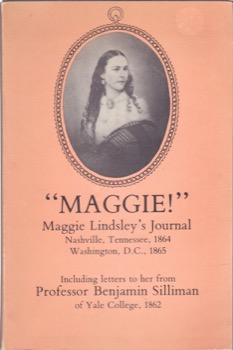
Softcover. Southbury CT, privately printed, 1st, 1977, Book: Very Good, Dust Jacket: None, Including letters written to her in 1862 from Professor Benjamin Silliman of Yale College. Softcover, 129 pages, b&w illustrations. Published by Muriel Davies McKenzie in Southbury, Connecticut. Clean copy.
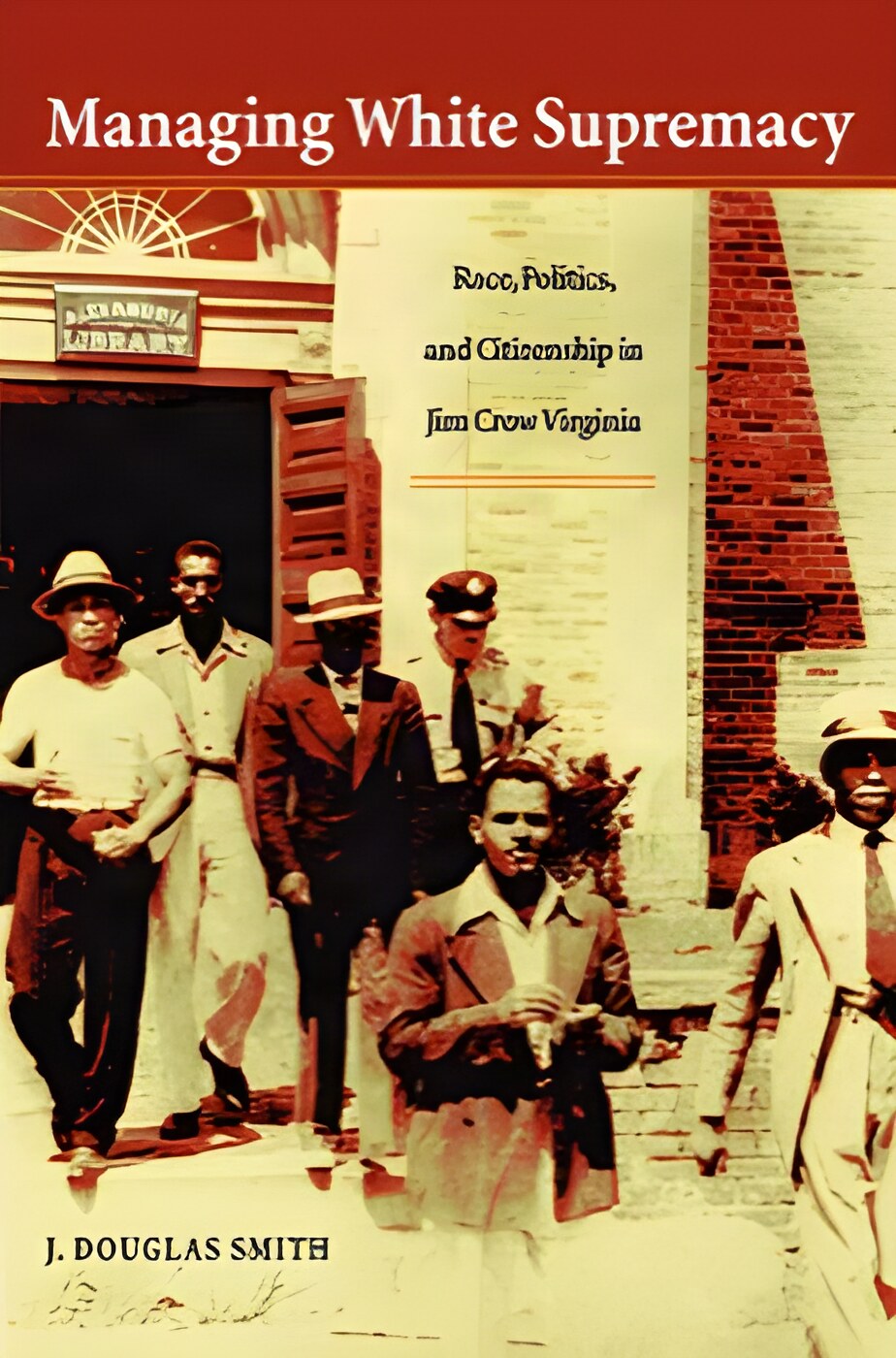
Softcover. Chapel Hill, University of North Carolina Press, 1st pbk, 2002, Book: Very Good, Dust Jacket: None, Softcover, 411 pages, b&w illustrations. Tracing the erosion of white elite paternalism in Jim Crow Virginia, Douglas Smith reveals a surprising fluidity in southern racial politics in the decades between World War I and the Supreme Court's 1954 Brown v. Board of Education decision. Smith draws on official records, private correspondence, and letters to newspapers from otherwise anonymous Virginians to capture a wide and varied range of black and white voices. African Americans emerge as central characters in the narrative, as Smith chronicles their efforts to obtain access to public schools and libraries, protection under the law, and the equitable distribution of municipal resources. This acceleration of black resistance to white supremacy in the years before World War II precipitated a crisis of confidence among white Virginians, who, despite their overwhelming electoral dominance, felt increasingly insecure about their ability to manage the color line on their own terms. Exploring the everyday power struggles that accompanied the erosion of white authority in the political, economic, and educational arenas, Smith uncovers the seeds of white Virginians' resistance to civil rights activism in the second half of the twentieth century. Light marking to 10 pages, otherwise clean, very good.
Hardcover. Boston, Walker, Fuller, and Company, 1st, 1866, Book: Good, Dust Jacket: None, Hardcover, brown cloth binding with gilt lettering and gilt illustrations on front board and spine, 688 pages + ads in front of title-page. Black & white plates with tissue guards. Tissue guard on frontispiece removed. Foxing to pages. Hinge once separated from binding, now reglued at front endpaper. Spotting, fade to spine. Small hole to spine binding. Edgewear to bottom edges. No markings.
Hardcover. New York, Simon & Schuster, 1st, 2009, Book: Very Good, Dust Jacket: Very Good, 416 pages. Hardcover. Dust jacket unclipped. B/w illustrations throughout. Gilt title on spine. Binding tight, in excellent shape. Clean inside and out.
Hardcover. Newport, VT, Civil War Enterprises, Reprint, Book: Very Good, Dust Jacket: None, 77 pages. Hardcover. Reprint, original publishing date 1868. In excellent shape, clean inside and out. Binding tight. From title page: "The Memorial Record of the Soldiers Who Enlisted from Greensboro, Vermont, to Aid in Subduing the Great Rebellion of 1861-5, Accompanied by a brief History of Each Regiment that Left the state."
Hardcover. NY, Time Life, reprint, 1985, Book: Very Good, Dust Jacket: None, 336 pages. Hardcover with no dust jacket. Dark blue leather bound with gilt titles to front cover and spine. Embossed decoration on front cover. Gilt text block edges, red ribbon marker. Clean, tight copy.
Softcover. Lincoln NE, iUniverse, 1st, 2001, Book: Very Good, Dust Jacket: None, Softcover, 236 pages. "Forward! Double-Quick!" and away we all rushed toward the fort... capturing two brass field pieces, one of which the rebels left loaded." A true account of Vermont men of color in battle during the Civil War. A barely known fact is that the tiny state of Vermont provided over one hundred and fifty African American soldiers to fight for the Union and by doing so, free millions of their own race. This is their story. Derived from historical archives and through their own words. Clean copy. Hastily signed by the author on the half-title page.

 "History of the Tenth Regiment, Vermont Volunteers with Biographical Sketchesby: Haynes, E. M.")
 "History of Vermont, Natural, Civil and Statistical, In Three Partsby: Thompson, Zadock")


 "Images From the Storm: 300 Civil War Images by the Author of Eye of the Stormby: Sneden, Private Robert Knox (Author/Illustrator), Charles F. Bryan, Jr., James c. Kel")
 "In and Out of Rebel Prisons (Collector's Library of the Civil War)by: Cooper, Alonzo")
 "International Library of Negro Life and History, (5 volumes): Historical Negro Biographies, Negro Americans in the Civil War, The History of the Negro in Medicine, The Negro in Music and Art, Anthology of the American Negro in the T")

 "James Karalesby: James Karales")



 "Killing Ground: The Civil War and the Changing American Landscape (INSCRIBED COPY)by: John Huddleston")
 "Life in the Confederate Army: Being the Observations and Experiences of an Alien in the South During the American Civil War (Collector's Library of the Civil War)by:")
 "London War Notes 1939-1945by: Mollie Panter Downes")
 "Lure of Italy, The: American Artists and The Italian Experience, 1760 - 1914by: Stebbins, Theodore E. Et al.")
 "Lure of Italy, The: American Artists and The Italian Experience, 1760 - 1914by: Stebbins, Theodore E. Et al.")
 "M & M Karolik Collection of American Watercolors & Drawings, 1800-1875 (2 Volumes)by: M & M Karolik")
 "Massachusetts in the Rebellion a Record of the Historical Position of the Commonwealth, and the Services of the Leading Statesmen, the Military, the and the People, in the Civil War of 1861-65 by:")
 "Master of War: The Life of General George H. Thomasby: Bobrick, Benson")
 "Memorial Record of the Soldiers of Greensboro, Vermont, By E.E. Rollins 1868, Theby: Rollins, E. E.")
 "Memories: A Record of Personal Experience and Adventure During Four Years of War (Collector's Library of the Civil War)by: Beers, Fannie A.")
 "Men of Color, to Arms!: Vermont African-Americans in the Civil Warby: Fuller, James")