Hardcover. NY, Time Life, reprint, 1982, Book: Very Good, Dust Jacket: None, 288 pages. Hardcover with no dust jacket. Dark blue leather bound with gilt titles to front cover and spine. Embossed decoration on front cover. Gilt text block edges, red ribbon marker. Light scuffing to fore edge gilt. Otherwise, clean, tight copy. A History of the Andrews Railroad Raid into Georgia in 1862, Embracing a Full and Accurate Account of the Secret Journey to the Heart of the Confederacy, the Capture of a Railway Train in a Confederate Camp, the Terrible Chase that Followed, and the Subsequent Fortunes of the Leader and His Party. Reprint of the 1877 edition.
Hardcover. NY, Time Life, reprint, 1983, Book: Very Good, Dust Jacket: None, 274 pages. Hardcover with no dust jacket. Dark blue leather bound with gilt titles to front cover and spine. Embossed decoration on front cover. Gilt text block edges, red ribbon marker. Clean, tight copy. This memoir by Confederate General Richard Taylor is usually considered one of the best and least biased by a general officer. The work is full of considered analysis on both the strategy of the war and the personalities of his fellow officers. Taylor is always fair in his criticism and seems to have no real scores to settle. While he makes little mention of his own talents, his tactical brilliance and strategic insight does shine through. Many contemporaries said Richard Taylor was one of the best soldiers of the war, but he is comparatively little known due to his posting to peripheral theaters. While he was a man of his time, the work (with the exception of some of his Reconstruction writings) is much less tainted by Lost Cause polemics than most Confederate memoirs.
Hardcover. NY, Time Life, reprint, 1982, Book: Very Good, Dust Jacket: None, 224 pages. Hardcover with no dust jacket. Dark blue leather bound with gilt titles to front cover and spine. Embossed decoration on front cover. Gilt text block edges, red ribbon marker. Clean, tight copy. This Civil War classic of soldiering in the ranks debunks all the romantic notions of war. Like his Northern counterpart, the Confederate soldier fought against bullets, starvation, miserable weather, disease, and mental strain. But the experience was perhaps even worse for Johnny Reb because of the odds against him. Never as well equipped and provisioned as the Yankee, he nevertheless performed heroically. Carlton McCarthy, a private in the Army of Northern Virginia, describes the not-always-regular rations, various improvisations in clothing and weaponry, etc.
Hardcover. New York, Walker & Company , 1st, 2005, Book: Very Good, Dust Jacket: Very Good, 434 pages. Hardcover. Dust jacket unclipped. B/w illustrations throughout. Gilt title on spine. Dust jacket has just a touch of shelf wear to very top of spine. In excellent shape. Binding tight, seems barely read. Clean and unmarked inside and out.
Hardcover. NY, Oxford University Press, 1st, 1992, Book: Very Good, Dust Jacket: Very Good, Hardcover in a bright dust jacket, 418 pages. The first book to show how the Civil War transformed gender roles and attitudes toward sexuality among Americans. This unique volume brings together a wide spectrum of critical viewpoints by newly emerging scholars as well as distinguished authors in the field to show how gender became a prism through which the political tensions of antebellum America were filtered and focused. Through the course of the book, many fascinating subjects are explored, from new "manly" responsibilities both black and white men had thrust upon them as soldiers, to women's roles in the guerrilla fighting, to the wartime dialogue on interracial sex. In addition, an incisive introduction by Pulitzer Prize-winning historian James McPherson helps place these various subjects within an overall historical context. Copyright page states first edition, but no price on dj says Book Club. Clean, bright copy.
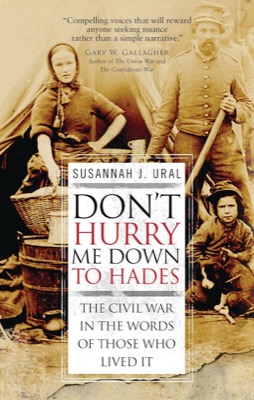
Hardcover. NY/UK, Osprey Publishing, 2nd pr., 2013, Book: Very Good, Dust Jacket: Very Good, Hardcover in a bright dust jacket, 244 pages illustrated in b&w and color. The story of families enduring the whirlwind of the Civil War, told through the words of famous and ordinary citizens and ranging from the battlefield to the home front, from presidential councils to frontier revivals. The book reveals how Americans on both sides of the Mason and Dixon line withstood four years of brutal, unrelenting conflict. Of the hundreds of thousands of books published on the American Civil War, this is one of the few to approach the nation's defining conflict from this powerful perspective. Grounded in rare family letters and diaries, Don't Hurry Me Down to Hades captures Americans' wide-ranging reactions to the war and their astonishing perseverance. Some of the accounts are entirely unknown to readers, while better-known events are told from unusual perspectives. Abraham Lincoln's assassination, for example, is shared from the viewpoint of Major Henry Rathbone and his fiancee (and stepsister) Clara Harris, while Lewis Powell's attempt on Secretary of State William Seward's life is seen through the terrified eyes Fanny Seward, who was seated next to her father when Powell burst into the room. Madison and Lizzie Bowler help readers understand how the war brought a Minnesota couple together in marriage and then nearly drove them apart when Madison insisted that his first duty was to his nation while Lizzie believed it was to her and their newborn daughter. A thousand miles to the south, two Texas families also suffered through their soldiers' absence and tried to explain to their young children why father had "gone to war" with "Santaclause." And to the north in Kentucky, a runaway slave won freedom for himself and his family by joining the Union Army only to face prejudice as brutal and destructive as the life he'd left behind. Clean copy.
Hardcover. NY, Farrar, Straus And Giroux, 1st, 2024, Book: Very Good, Dust Jacket: Very Good, Hardcover in a bright dust jacket, 464 pages. A personal exploration of the American West and the work of one of America's greatest photographers. Timothy O'Sullivan is America's most famous war photographer. You know his work even if you don't know his name: A Harvest of Death, taken at Gettysburg, is an icon of the Civil War. He was also among the first photographers to elevate what was then a trade to the status of fine art. The images of the American West he made after the war, while traveling with the surveys led by Clarence King and George Wheeler, display a prescient awareness of what photography would become; years later, Ansel Adams would declare his work 'surrealistic and disturbing.' At the same time, we know very little about O'Sullivan himself. Nor do we know-really know-much more about the landscapes he captured. Robert Sullivan's Double Exposure sets off in pursuit of these two enigmas. This book documents the author's own road trip across the West in search of the places, many long forgotten or paved over, that O'Sullivan pictured. It also stages a reckoning with how the changes wrought on the land were already under way in the 1860s and '70s, and how these changes were a continuation of the Civil War by other means.
Softcover. NY, Oxford University Press, reprint, 2012, Book: Very Good, Dust Jacket: None, Softcover, 592 pages. Two-time Lincoln Prize-winning historian Allen C. Guelzo offers a marvelous portrait of the Civil War and its era, covering not only the major figures and epic battles, but also politics, religion, gender, race, diplomacy, and technology. And unlike other surveys of the Civil War era, it extends the reader's vista to include the postwar Reconstruction period and discusses the modern-day legacy of the Civil War in American literature and popular culture. Guelzo also puts the conflict in a global perspective, underscoring Americans' acute sense of the vulnerability of their republic in a world of monarchies. He examines the strategy, the tactics, and especially the logistics of the Civil War and brings the most recent historical thinking to bear on emancipation, the presidency and the war powers, the blockade and international law, and the role of intellectuals, North and South. Clean copy.
Softcover. NY, Riverhead Books, 1st wraps, 2017, Book: Very Good, Dust Jacket: None, Hardcover, 308 pages. A collection of short stories from the winner of the National Book Award 1n 2013. The stories in Five-Carat Soul--none of them ever published before--spring from the place where identity, humanity, and history converge. They're funny and poignant, insightful and unpredictable, imaginative and authentic--all told with McBride's unrivaled storytelling skill and meticulous eye for character and detail. McBride explores the ways we learn from the world and the people around us. An antiques dealer discovers that a legendary toy commissioned by Civil War General Robert E. Lee now sits in the home of a black minister in Queens. Five strangers find themselves thrown together and face unexpected judgment. An American president draws inspiration from a conversation he overhears in a stable. And members of The Five-Carat Soul Bottom Bone Band recount stories from their own messy and hilarious lives.
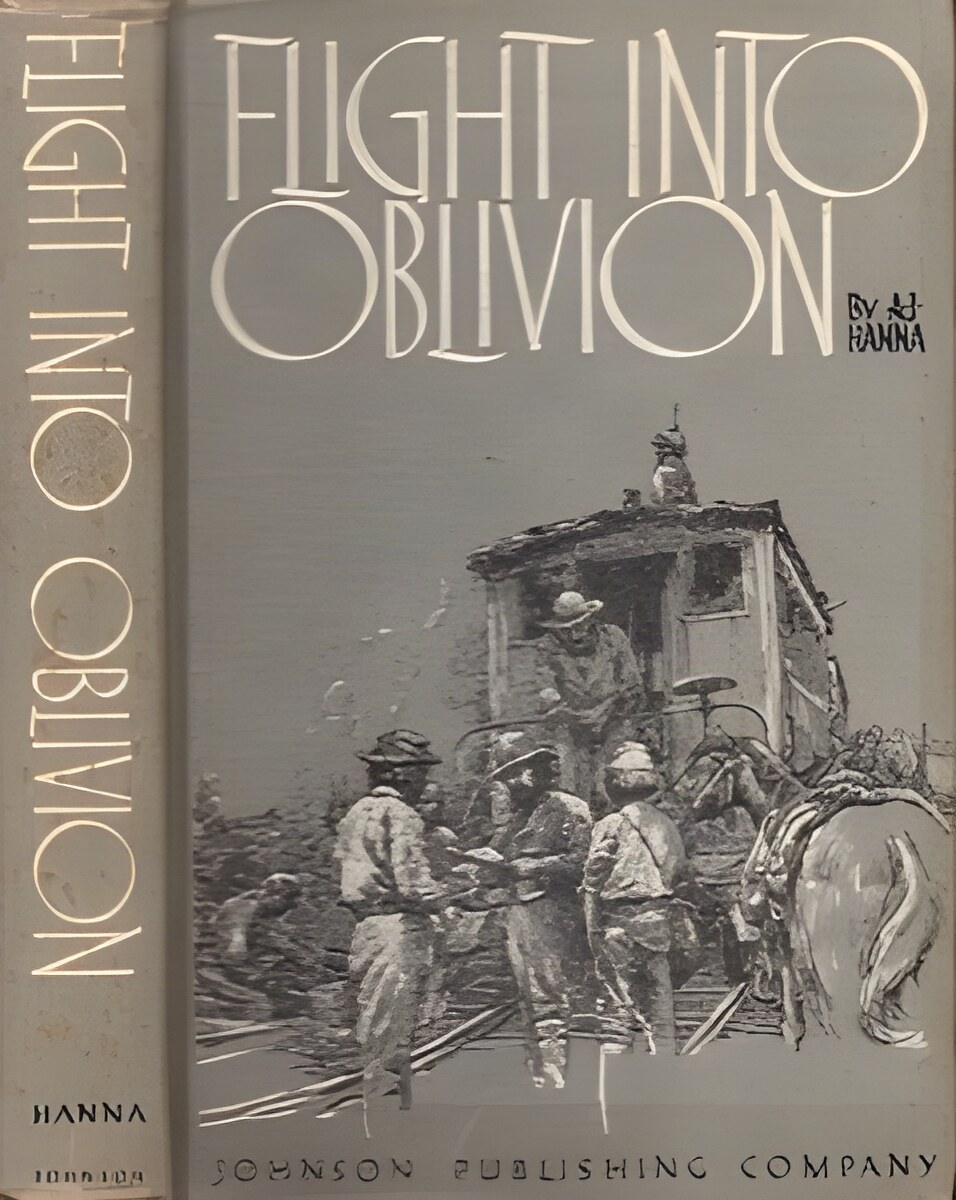
Hardcover. Richmond VA, Johnson Publishing Co., 1st, 1938, Book: Very Good, Dust Jacket: None, Hardcover, gray illustrated cloth, 306 pages with index. B&w illustrations by John Rae, several maps including endpapers. INSCRIBED BY HANNA on the front fly leaf. "The major, detailed study of the exodus of the Confederate government from Richmond; thoroughly researched and well-written." [Martin Abbott]. minor bumps to cloth covers, name tipped-in on dedication page, otherwise clean.
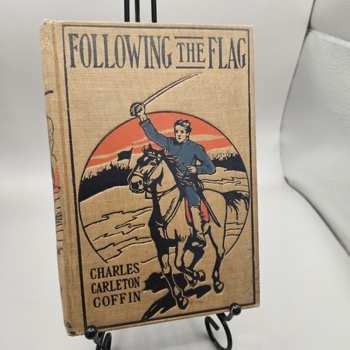
Hardcover. NY, Hurst & Company, reprint, Book: Very Good, Dust Jacket: None, Hardcover, beige cloth with 3-color pictorial cover, 286 pages. An historical book written by Charles Carleton Coffin and originally published in 1865. The book is a detailed account of Coffin's experiences as a war correspondent during the American Civil War, specifically with the Union Army of the Potomac. Coffin provides a firsthand account of the battles and events that took place during the period of August 1861 to November 1862. He describes the conditions and hardships faced by the soldiers, the tactics and strategies employed by the Union army, and the personalities of the commanders and soldiers he encountered. Clean copy.
Hardcover. NY, Time Life, reprint, 1983, Book: Very Good, Dust Jacket: None, 376 pages. Hardcover with no dust jacket. Dark blue leather bound with gilt titles to front cover and spine. Embossed decoration on front cover. Gilt text block edges, red ribbon marker. Clean, tight copy.
Hardcover. Hartford CT, O.D. Case and Company, 1st, 1865, Book: Good, Dust Jacket: None, Hardcover, brown cloth covers with gilt title on spine faded. 450 pages, coated brown endpapers and pastedowns. Illustrated with a frontispiece and with eight plates (all in black and white). Completing the title page: "Including the author's capture at Vicksburg, May 3, 1863, while running the rebel batteries; his imprisonment at Vicksburg, Jackson, Atlanta, Richmond, and Salisbury; his escape and perilous journey of four hundred miles to the Union Lines at Knoxville." Light foxing throughout. No markings.
Hardcover. Kent OH, Kent State University Press, 1st, 2001, Book: Very Good, Dust Jacket: Very Good, 387 pages, b&w illustrations. Clean, unmarked in a bright dust jacket. The Lincoln images, originally appearing in such publications as Budget of Fun, Comic Monthly, New York Illustrated News, Phunny Phellow, Southern Punch, and Yankee Notions, significantly expand our understanding of the evolution of public opinion toward Lincoln, the complex dynamics of Civil War, popular art and culture, the media, political caricature, and presidential politics. Lincoln, appealed to illustrators because of his distinctive physical features. (One could scarcely conceive of a similar book on James Buchanan, his immediate predecessor.) Despite ever-improving techniques, Lincoln pictorial prominence competed favorably with any succeeding president in the nineteenth century.
Hardcover. Baltimore MD, Johns Hopkins University Press, 3rd pr., 1987, Book: Very Good, Dust Jacket: None, Hardcover, gray cloth, 411 pages, b&w illustrations. Ex-lib with light stamping, residue to rear inside cover. Otherwise a clean, tight copy. David Hounshell explores the development of the 'American system' of manufacturing in the half century before the Civil War and the transition of this system into the 'mass production' of the 20th century. Hounshell explores the important role of individuals in the diffusion and development of production technology and the central place of marketing strategy in the success of selected American manufactures. While Ford Motor company was the seabed of the assembly line revolution, General Motors initiated the new era of annual model change. With the new marketing strategy, the technology of 'the changeover' became of paramount importance. Hounshell chronicles how painfully Ford learned this lesson with the change from the Model T to the Model A and then to the V-8 in 1932.
Hardcover. Detroit, Wayne State University Press , 1st, 1959, Book: Very Good, Dust Jacket: Very Good, Hardcover, 405 pages, b&w illustrations. Gray cloth covers with blue decoration and lettering. Dust jacket price-clipped otherwise very good.
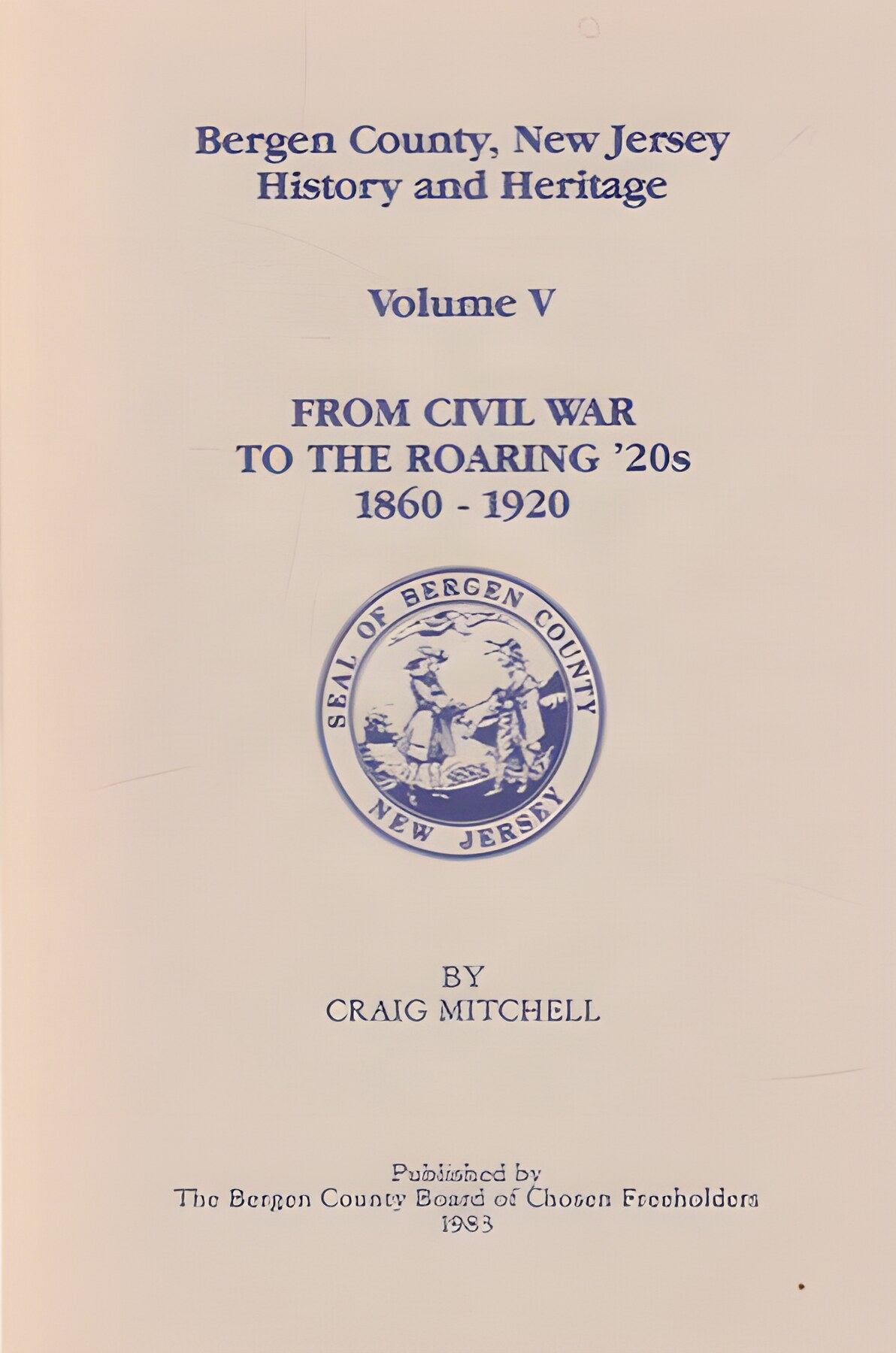
Softcover. New Jersey, Bergen County Board, 1st, 1983, Book: Very Good, Dust Jacket: None, Softcover, 101 pages. Volume five of a seven volume set on the history and heritage of Bergen County. Clean, like new..
Hardcover. 2013, Alfred A. Knopf, First Edition, 2013, Book: Very Good, Dust Jacket: Very Good, 632 pages. Hardcover. Grey & navy cloth boards with gilt titles to spine. Illustrations in bw throughout. Bright dust jacket in very good condition. Clean & unmarked.
Hardcover. Hartford CT, J. B. Burr & Company, 1st, 1868, Book: Good, Dust Jacket: None, Hardcover in polished calf, black spine label with gilt lettering. Frontis portrait of Grant, additional full page engravings, 631 pages plus publisher's ads. Both cover hinges cracked but holding, and text block is solid. No foxing in text.
Hardcover. Boston, MA, Da Capo Press, 1st, 2011, Book: Very Good, Dust Jacket: Very Good, 288 pages. Hardcover. Dust jacket unclipped. Gilt title on spine. B/w illustrations throughout. In excellent condition, binding tight, clean and unmarked inside and out. Looks barely read.
Hardcover. NY, Walker Books, 1st, 1997, Book: Very Good, Dust Jacket: Very Good, Hardcover in a bright, unclipped dust jacket, 214 pages. Over the past couple of decades, our national debt has become a favorite political football for Democrats and Republicans alike. Yet few Americans seem aware that the debt has a long and (mostly) honorable history. Alexander Hamilton considered it a kind of political Krazy Glue, which would also spur American industry by keeping taxes high. This borrowing power enabled the North to win the Civil War without wrecking its economy and rescued us from the Great Depression. John Steele Gordon doesn't deny the dangers of an entire nation living on credit; indeed, he believes that our fiscal affairs are a mess. But he puts this mess in fascinating perspective. And he's quick to see the human side of economic behavior: "One problem," he writes, "is that human nature predisposes us to recognize depression easily and quickly, but prosperity, like happiness, is most easily seen in retrospect." Name on front fly leaf, otherwise clean.
Hardcover. NY, Time Life, reprint, 1982, Book: Very Good, Dust Jacket: None, 402 pages. Hardcover with no dust jacket. Dark blue leather bound with gilt titles to front cover and spine. Embossed decoration on front cover. Gilt text block edges, red ribbon marker. Clean, tight copy. Most histories of the Civil War focus on battles and top brass. Hardtack and Coffee is one of the few to give a vivid, detailed picture of what ordinary soldiers endured every dayaEUR"in camp, on the march, at the edge of a booming, smoking hell. John D. Billings of Massachusetts enlisted in the Army of the Potomac and curvived the conditions he recorded. The authenticity of his book is heightened by the many drawings that a comrade, Charles W. Reed, made in the field. This is the story of how the Civil War soldier was recruited, provisioned, and disciplined. Described here are the types of men found in any outfit; their not very uniform uniforms; crowded tents and makeshift shelters; difficulties in keeping clean, warm, and dry; their pleasure in a cup of coffee; food rations, dominated by salt pork and the versatile cracker or hardtack; their brave pastimes in the face of death; punishments for various offenses; treatment in sick bay; firearms and signals and modes of transportation. Comprehensive and anecdotal, Hardtack and Coffee is striking for the pulse of life that runs through it.
Hardcover. NY, Harper and Brothers, 1963, Book: Very Good, Dust Jacket: None, Hardcover, bound volume of every issue for 1863. Profusely illustrated, Exceptional condition. Clean. Extra shipping charges may apply. DUE TO WEIGHT, DOMESTIC SHIPPING ONLY.

 "Daring and Suffering: A History of the Great Railroad Adventure (Collector's Library of the Civil War)by: Pittenger, William")
 "Destruction and Reconstruction - Personal experiences of the late war (Collector's Library of the Civil War)by: Taylor, Richard")
 "Detailed Minutiae of Soldier Life in the Army of Northern Virginia, 1861-1865 (Collector's Library of the Civil War)by: McCarthy, Carlton")
 "Devil's Own Work, The: The Civil War Draft Riots and the Fight to Reconstruct Americaby: Schecter, Barnet")
![Divided Houses: Gender and the Civil Warby: Clinton, Catherine /Silber, Nina [Editors]](https://www.browsingisarousing.com/shop/images/397501.jpg "Divided Houses: Gender and the Civil Warby: Clinton, Catherine /Silber, Nina [Editors]")
 "Double Exposure: Resurveying the West with Timothy O'Sullivan America's Most Mysterious War Photographer by: Robert Sullivan")
 "Ethan Allen and the Green-Mountain Heroes of '76by: De Puy, Henry W.")


 "Five-Carat Soulby: McBride, James")
 "Four Years in Rebel Capitals (Collector's Library of the Civil War)by: DeLeon, Thomas Cooper")


 "From Rail-Splitter to Icon: Lincoln's Image in Illustrated Periodicals, 1860-1865by: Bunker, Gary L.")

 "From the Cannon's Mouth: The Civil War Letters of General Alpheus S. Williamsby: Quaife (Ed.), Milo M.")
 "Gettysburg - The Last Invasionby: Guelzo, Allen C.")


 "Grant's Final Victory: Ulysses S. Grant's Heroic Last Yearby: Flood, Charles Bracelen")

 "Hard Tack and Coffee, or The Unwritten Story of Army Life (Collector's Library of the Civil War)by: Billings, John D./Charles W. Reed")
 "Harper's Weekly: Journal of Civilization Vol. VII For the Year 1863by: N/A")