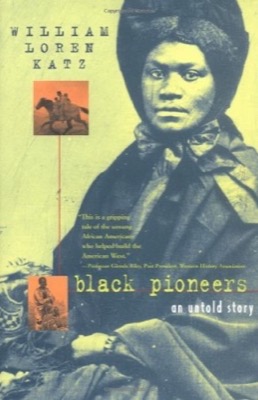
Hardcover. NY, Atheneum, 3rd pr., 1999, Book: Very Good, Dust Jacket: Very Good, Hardcover in a bright, unclipped dust jacket. In a clear, straightforward style, Katz describes the settlement of the Ohio and Mississippi Valleys (covering Ohio, Indiana, Illinois, Michigan, Wisconsin, Minnesota, Iowa, Kansas, and Missouri) by African Americans seeking freedom, including biographical sketches of men and women who formed churches, started schools, or were politically active in their region. Some of these settlers were fugitive slaves; several set up stations on the Underground Railroad with the aid of the Quakers; others were farmers, poets, and soldiers. In several states, they helped form black regiments in the Civil War. Chronologically arranged, the book introduces many lesser-known personages not found in most collective biographies and places them in a broader context of U.S. history as a whole.
Hardcover. NY, Norton, 1st, 2019, Book: Very Good, Dust Jacket: Very Good, Hardcover in a bright, unclipped dust jacket, 339 pages, b&w illustrations. The little-known story of an iconic photographer, whose work captured--and influenced--a critical moment in American history. Ernest Withers took some of the most legendary images of the 1950s and '60s: Martin Luther King, Jr., riding a newly integrated bus in Montgomery, Alabama; Emmett Till's uncle pointing an accusatory finger across the courtroom at his nephew's killer; scores of African-American protestors carrying a forest of signs reading "i am a man." But at the same time, Withers was working as an FBI informant. In this gripping narrative history, Preston Lauterbach examines the complicated political and economic forces that informed Withers's seeming betrayal of the people he photographed, and "does a masterful job of telling the story of civil rights in Memphis in the 1960s" (Ed Ward, Financial Times), including the events surrounding Dr. King's tumultuous final march in Memphis. Small remainder dot to top edge.
Hardcover. NY, Alfred A. Knopf, 1st, 1966, Book: Very Good, Dust Jacket: None, Hardcover, dark blue cloth with gilt lettering on spine, 371 pages plus index. B&w illustrations. A study of the Civil War's effects on the "development" of women 1861-65 and how this led to further advances in the women's movement in later years. Name on front fly leaf, page 133 wrinkled. No dust jacket.
Hardcover. NY, Amistad/HarperCollins, 3rd pr., 2005, Book: Very Good, Dust Jacket: Very Good, Hardcover in a bright, unclipped dust jacket. 540 pages, b&w illustrations, index. An important book of epic scope on America's first racially integrated, religiously-inspired political movement for change-The Underground Railroad, a movement peopled by daring heroes and heroines, and everyday folk For most, the mention of the Underground Railroad evokes images of hidden tunnels, midnight rides, and hairsbreadth escapes. Yet the Underground Railroad's epic story is much more morally complex and politically divisive than even the myths suggest. Against a backdrop of the country's westward expansion,which brought together Easterners who had engaged in slavery primarily in the abstract alongside slaveholding Southerners and their slaves, arose a clash of values that evolved into a fierce fight for nothing less than the country's soul. Beginning six decades before the Civil War, freedom-seeking blacks and pious whites worked together to save tens of thousands of lives, often at the risk of great physical danger to themselves. Not since the American Revolution had the country engaged in an act of such vast and profound civil disobedience that not only subverted federal law but also went against prevailing mores.
Hardcover. Chapel Hill, University of North Carolina, 1st, 1991, Book: Very Good, Dust Jacket: Very Good, Hardcover, 514 pages, b&w illustrations, in a bright dust jacket. Biography of Union general Ambrose Burnside, reassessing his reputation as an "incompetent leader" by viewing his entire career as a soldier during the war: along the Carolina coast, at Antietam, and his capture of Knoxville in East Tennessee, while still recognizing the debacle at Fredericksburg.
Hardcover. White Hall, VA, Shoe Tree Press, 1st, 1991, Book: Near Fine, Dust Jacket: None, 95 pages. Hardcover. (INSCRIBED BY AUTHOR)B/w illustrations throughout. Decorated cover boards. Pages clean and bright. Spine straight. Binding tight. The excitement in the barracks on the night of May 10, 1864 was electric. At last, the cadets of the Virginia Military Institute were going to war!
Hardcover. NY, Time Life, reprint, 1981, Book: Very Good, Dust Jacket: None, 546 pages. Hardcover with no dust jacket. Dark blue leather bound with gilt titles to front cover and spine. Embossed decoration on front cover. Gilt text block edges, red ribbon marker. Clean, tight copy.In 1863 Horace Porter, then a captain, met Ulysses S. Grant as Grant commenced the campaign that would break the Confederate siege at Chattanooga. After a brief stint in Washington, Porter rejoined Grant, who was now in command of all Union forces, and served with him as a staff aide until the end of the war. Porter was at Appomattox as a brevet brigadier general, and this work, written from notes taken in the field, is his eyewitness account of the great struggle between Lee and Grant that led to the defeat of the Confederacy.
Hardcover. NY, Time Life, reprint, 1982, Book: Very Good, Dust Jacket: None, Hardcover with no dust jacket. Dark blue leather bound with gilt titles to front cover and spine. Embossed decoration on front cover. Gilt text block edges, red ribbon marker. Clean, tight copy. Facsimilie reprint of the 1866 edition.
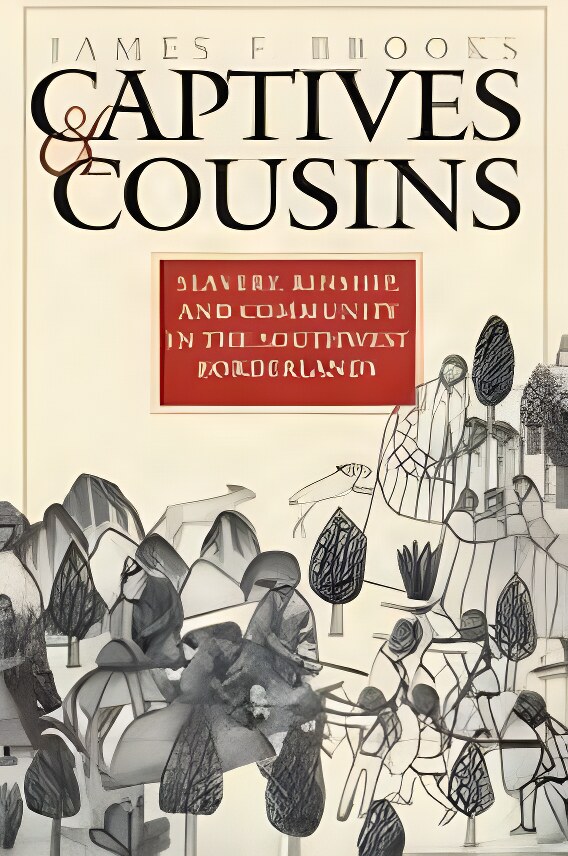
Softcover. Chapel Nill NC, University of North Carolina Press , 1st, 2002, Book: Very Good, Dust Jacket: None, Softcover, 419 pages. This sweeping, richly evocative study examines the origins and legacies of a flourishing captive exchange economy within and among native American and Euramerican communities throughout the Southwest Borderlands from the Spanish colonial era to the end of the nineteenth century. Indigenous and colonial traditions of capture, servitude, and kinship met and meshed in the borderlands, forming a "slave system" in which victims symbolized social wealth, performed services for their masters, and produced material goods under the threat of violence. Slave and livestock raiding and trading among Apaches, Comanches, Kiowas, Navajos, Utes, and Spaniards provided labor resources, redistributed wealth, and fostered kin connections that integrated disparate and antagonistic groups even as these practices renewed cycles of violence and warfare. Always attentive to the corrosive effects of the "slave trade" on Indian and colonial societies, the book also explores slavery's centrality in intercultural trade, alliances, and "communities of interest" among groups often antagonistic to Spanish, Mexican, and American modernizing strategies. The extension of the moral and military campaigns of the American Civil War to the Southwest in a regional "war against slavery" brought differing forms of social stability but cost local communities much of their economic vitality. Clean copy.
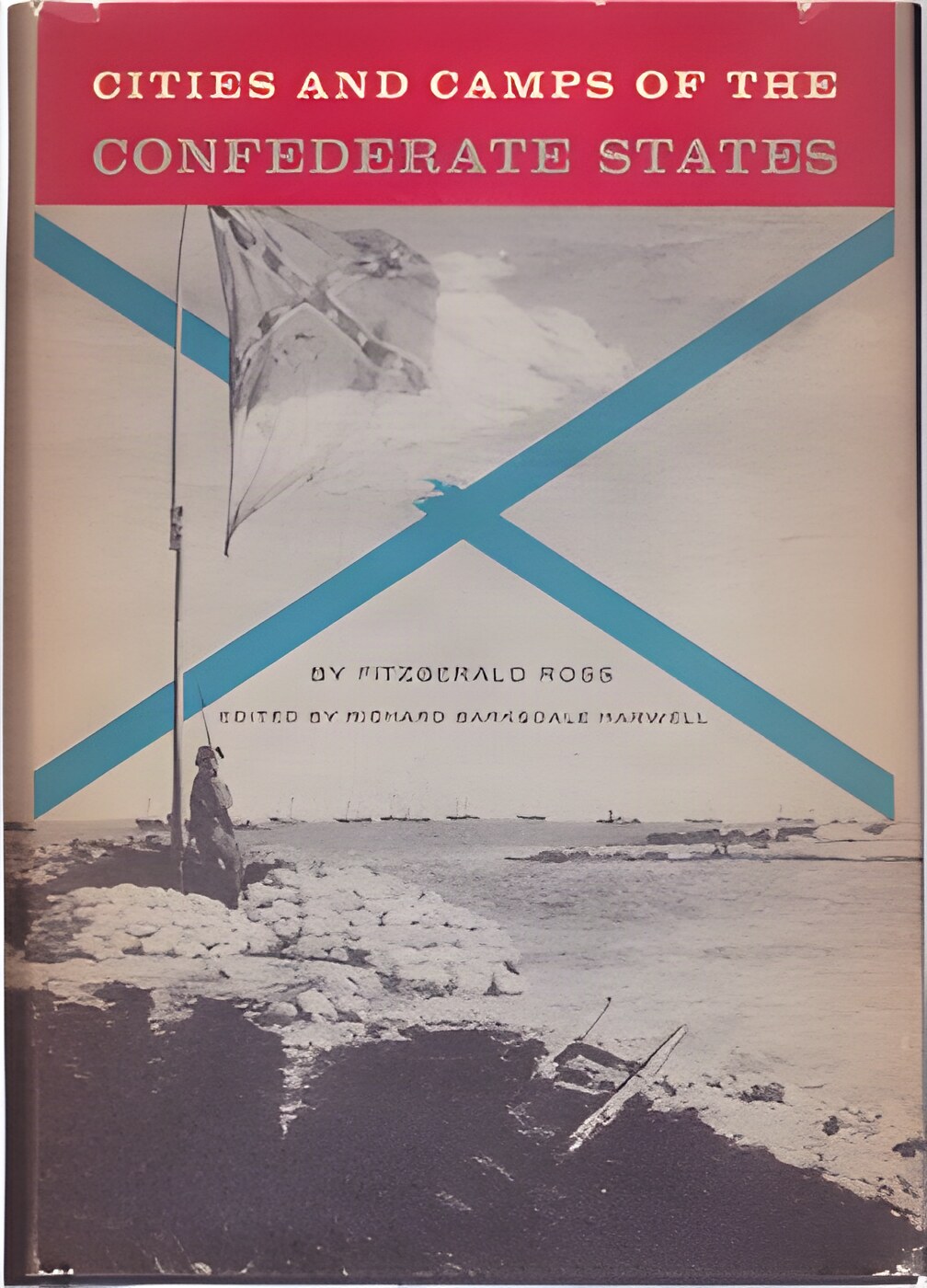
Hardcover. Urbana IL, University of Illinois Press, 1st, 1958, Book: Very Good, Dust Jacket: Very Good, Hardcover in a lightly worn dust jacket, 262 pages, b&w illustrations. A studied volume by an English military man and on-site witness to many of the events of the American Civil War enhanced with 16 pages of contemporary B&W photographs and drawings. The book was originally published in the 1860s and is one of the finest and most informative of the few records left by outside observers of the Confederacy in its own time. Name on front fly leaf otherwise clean.
Hardcover. NY, Time Life, reprint, 1983, Book: Very Good, Dust Jacket: None, 401 pages. Hardcover with no dust jacket. Dark blue leather bound with gilt titles to front cover and spine. Embossed decoration on front cover. Gilt text block edges, red ribbon marker. Clean, tight copy. This is one of the more impressive (and unfortunately little known) records of the American Civil War. John Beatty was a lawyer from Ohio who joined the Union Army when the South seceded. He started his service in western Virginia under General George B. McClellan. Although McClellan would later become one of the most well-known generals of the war, it was here that he first achieved the prominence that would lead to Lincoln promoting him to head Union forces on two separate occasions. Beatty, however, was clearly not enamored of McClellan. His journal opens with a description of arriving in one of the local railroad communities and subsequent entries describe the minutiae of camp life. Beatty is relatively unique among memoirists in that his book is largely a transcription of his original diary. As a result, his recollections are of recent events and have a degree of candor not present in many post-bellum narratives.
Softcover. Freetown MA, Freetown Historical Society, 1st, 2005, Book: Very Good, Dust Jacket: None, Softcover, light gray wrappers, 327 pages. John Milton Deane (January 8, 1840 - September 2, 1914), was an American Civil War Medal of Honor recipient and a major in the United States Army. Deane was born in Assonet, Massachusetts to John and Lydia (Andros) Deane. The diary he kept is here type-written out in chronological order. B&w photo of Deane as a Lieutenant in 1863. Clean, like new.
Hardcover. Knoxville, University of Tennessee Press , 1st, 1980, Book: Very Good, Dust Jacket: Very Good, Hardcover in a bright dust jacket, 149 pages. The chief nurse of the Union Hospital in Washington, D.C., describes life and stress in the hospital and comments on notable persons of power. Her heretofore unpublished diary and letters comprise a fresh, highly significant document concerning the medical history of the Civil War and the contributions of women nurses in the Northern military hospitals. This book is edited, with Introduction and Commentary, by John R. Brumgardt.
Hardcover. Freeport, NY, Books for Libraries Press, reprint, 1970, Book: Very Good, Dust Jacket: None, 165 pages. Blue cloth cover, very light wear to corners and edges, bottom edge slightly bumped. Some foxing and shadowing on front and rear endpages, otherwise inside is bright and clean. Three pages have light markings by previous owner, otherwise inside in unmarked. A nice, tight copy.
Hardcover. NY, Mallard Press, 1st, 1990, Book: Very Good, Dust Jacket: Very Good, Hardcover in a bright dust jacket. 220 pages, color illustrations by Michael Codd.
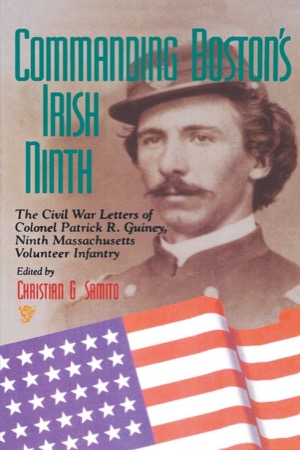
Hardcover. NY, Fordham University Press, 1st, 1997, Book: Very Good, Dust Jacket: Very Good, Hardcover in a bright dust jacket. 280 pages. The Ninth Massachusetts Infantry, which saw duty with the Army of the Potomac, was composed primarily of Irish immigrants and their descendants who hailed from Boston. One officer, Patrick R. Guiney, eventually rose to command the regiment as a colonel prior to suffering a service-ending wound in 1864. He left a full record of his men's activities in his letters to his wife, Jeannette; the letters also reveal that Guiney's political views, which leaned toward Lincoln and the Republicans, were not shared by most of his fellow officers or men. Editor Samito has provided a rather detailed prolog and annotation for the letters, which tell us as much about Guiney as a husband as they do about matters at the front. Among the numerous collections of Civil War letters that appear in print, these are distinguished for the author's forthright discussion of political and military affairs. Clean copy.
Hardcover. NY, Time Life, reprint, 1984, Book: Very Good, Dust Jacket: None, 480 pages. Hardcover with no dust jacket. Dark blue leather bound with gilt titles to front cover and spine. Embossed decoration on front cover. Gilt text block edges, red ribbon marker. Clean, tight copy. A well written and well thought out story of the Confederate Secret Service. Headley tells the little known and forgotten story of Confederate operations in Canada.
Hardcover. Washington, DC, Congressional Globe Office, 1st, 1860, Book: Good, Dust Jacket: None, 992 pages, hardcover. Half leather over marbled boards. A bound copy of 55 issues of The Congressional Globe from the weeks and months leading up to the Civil War. Extensively indexed. Edgewear to boards, mostly along top edge. Bumping to corners. Water staining to front and rear panels, lower fore edge. Staining to interior copy is minimal; damage ends at half title page. Previous owner's bookplate on front end paper. Unmarked. A tight copy.
Hardcover. Princeton NJ, Princeton University Press, 1st, 1988, Book: Very Good, Dust Jacket: Very Good, Hardcover in a bright dust jacket, 250 pages. This book examines the "constitutional faith" that has, since 1788, been a central component of American "civil religion." By taking seriously the parallel between wholehearted acceptance of the Constitution and religious faith, Sanford Levinson opens up a host of intriguing questions about what it means to be American. While some view the Constitution as the central component of an American religion that serves to unite the social order, Levinson maintains that its sacred role can result in conflict, fragmentation, and even war. To Levinson, the Constitution's value lies in the realm of the discourse it sustains: a uniquely American form of political rhetoric that allows citizens to grapple with every important public issue imaginable. Clean copy.
Hardcover. New York, Oxford University Press, 1st, 2002, Book: Very Good, Dust Jacket: None, Hardcover, black leather with red gilt lettering on spine. 203 pages, gilt all edges, SIGNED BY AUTHOR on title page. It seemed that foreign governments were on the verge of recognizing the Confederacy and legitimizing its cause, and the Emancipation Proclamation had been shelved indefinitely. America's most eminent Civil War historian, James M. McPherson argues that the Union victory at Antietam sharply reversed all that. He paints a masterful account of this pivotal battle, the events that led up to it, and its aftermath. Spotless and tight copy.
Hardcover. Philadelphia, J.B. Lippincott, 2nd Ed., 1865, Book: Very Good, Dust Jacket: None, Hardcover, dark green pebbled cloth with gilt lettering on spine, 4" x 6 1/4", 303 pages including index. A detailed instructional guide for the Civil War era soldier. Copyright page states 1964, title page says 1865. Probably a second edition. Still scarce in this nice condition. A few pages with dog ears, previous owner's pencil signature on front fly leaf. Otherwise clean, tight copy.
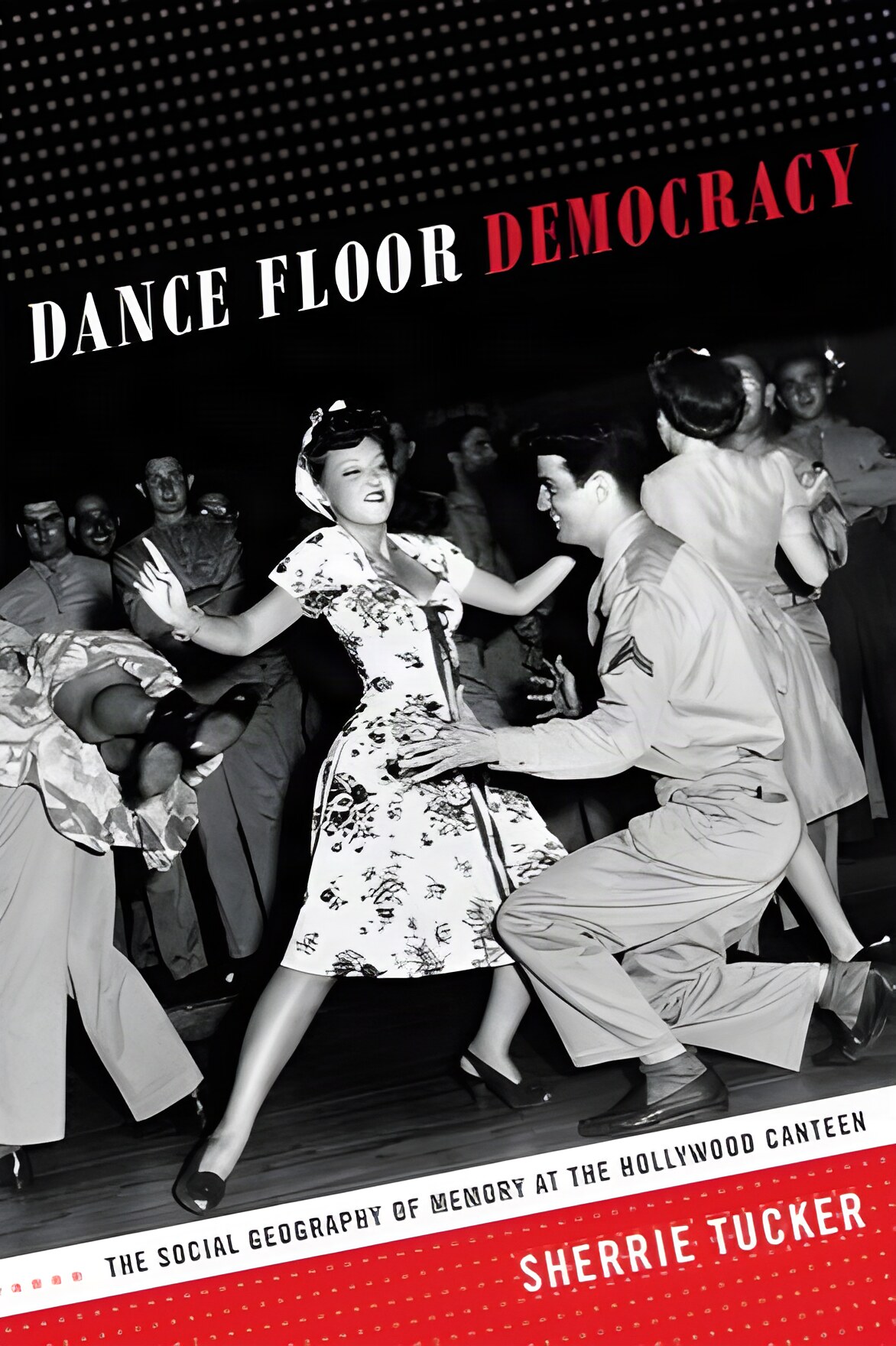
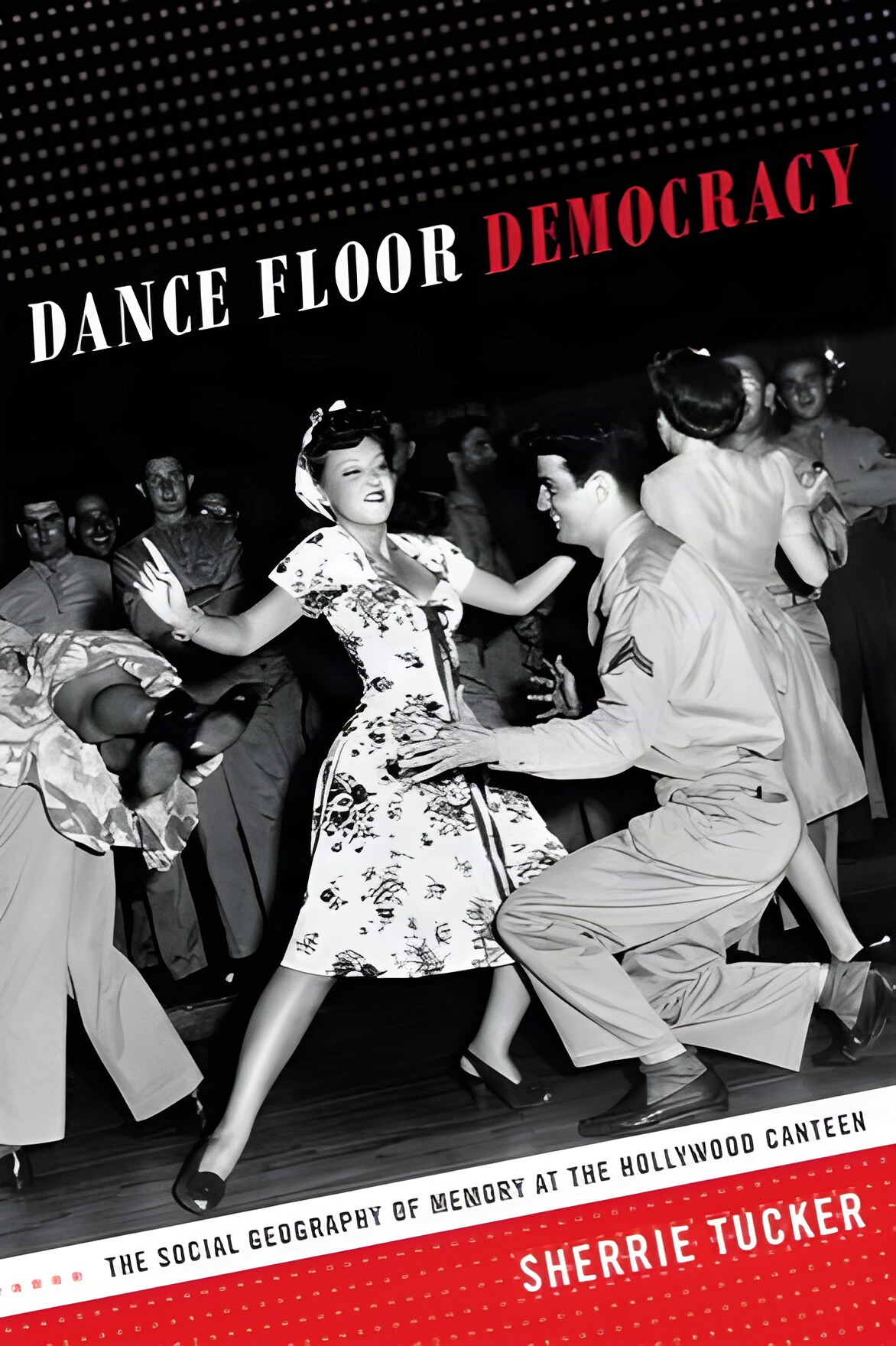
Softcover. Durham NC, Duke University Press, 1st, 2014, Book: Very Good, Dust Jacket: None, Softcover, 416 pages. Open from 1942 until 1945, the Hollywood Canteen was the most famous of the patriotic home front nightclubs where civilian hostesses jitterbugged with enlisted men of the Allied Nations. Since the opening night, when the crowds were so thick that Bette Davis had to enter through the bathroom window to give her welcome speech, the storied dance floor where movie stars danced with soldiers has been the subject of much U.S. nostalgia about the 'Greatest Generation.' Drawing from oral histories with civilian volunteers and military guests who danced at the wartime nightclub, Sherrie Tucker explores how jitterbugging swing culture has come to represent the war in U.S. national memory. Yet her interviewees' varied experiences and recollections belie the possibility of any singular historical narrative. Some recall racism, sexism, and inequality on the nightclub's dance floor and in Los Angeles neighborhoods, dynamics at odds with the U.S. democratic, egalitarian ideals associated with the Hollywood Canteen and the 'Good War' in popular culture narratives. Clean copy in publisher's shrinkwrap.
Softcover. Durham NC, Duke University Press, 1st, 2014, Book: Very Good, Dust Jacket: None, Softcover, 416 pages. Open from 1942 until 1945, the Hollywood Canteen was the most famous of the patriotic home front nightclubs where civilian hostesses jitterbugged with enlisted men of the Allied Nations. Since the opening night, when the crowds were so thick that Bette Davis had to enter through the bathroom window to give her welcome speech, the storied dance floor where movie stars danced with soldiers has been the subject of much U.S. nostalgia about the 'Greatest Generation.' Drawing from oral histories with civilian volunteers and military guests who danced at the wartime nightclub, Sherrie Tucker explores how jitterbugging swing culture has come to represent the war in U.S. national memory. Yet her interviewees' varied experiences and recollections belie the possibility of any singular historical narrative. Some recall racism, sexism, and inequality on the nightclub's dance floor and in Los Angeles neighborhoods, dynamics at odds with the U.S. democratic, egalitarian ideals associated with the Hollywood Canteen and the 'Good War' in popular culture narratives. Clean copy in publisher's shrinkwrap.

 "Bluff City: The Secret Life of Photographer Ernest Withersby: Preston Lauterbach")

 "Bound for Canaan: The Underground Railroad and the War for the Soul of America by: Bordewich, Fergus")
 "Burnsideby: Marvel, William")


 "Campaigning with Grant (Collector's Library of the Civil War)by: Porte, Horace")
 "Campaigns of a Non-Combatant, and His Romaunt Abroad During the War (Collector's Library of the Civil War)by: Townsend, George Alfred")


 "Citizen-Soldier, The; Or, Memoirs of a Volunteer (Collector's Library of the Civil War)by: Beatty, John")
 "Civil War Diaries of Major John M. Deane: 1861-1865by: John Milton Deane")
 "Civil War Nurse: The Diary and Letters of Hannah Ropesby: Hannah Ropes /John R. Brumgardt (Editor)")
 "Civil War: A Narrative - 3 Volumes, Theby: Foote, Shelby")

 "Combat Uniforms of the Civil Warby: Lloyd, Mark")
 "Confederate Operations in Canada and New York (Collector's Library of the Civil War)by: Headley, John W.")
 "Congressional Globe, The: 36th Congress 2nd Session, Dec. 3, to Feb. 18, 1860-1861by: Rives, John C.")
 "Constitutional Faithby: Levinson, Sanford")
 "Crossroads of Freedom: Antietam (SIGNED COPY)by: McPherson, James M.")
 "Customs Of Service for Non Commissioned Officers and Soldiers as Derived from Law and Regulations and Practised in the Army of the United States by: Kautz, August V.")