Softcover. New York, ILR Press, 1st, 2009, Book: Very Good, Dust Jacket: None, 170 pages. Softcover with light edgewear to wrappers. Color pictures throughout. "Career waitresses do more than just serve food. They are part psychiatrist, part grandmother, part friend, and they serve every walk of American life: from the retired and the widowed, to the wounded and the lonely, and from the working class to the wealthy. The classic diner waitress is an icon of American culture.... This book takes a moment to honor and recognize waitresses' contribution to our communities. Doing this project has helped me to redefine my perspective on life, work, and happiness. It has made me reevaluate the myth of the American dream that says you need to have an 'important' job to be happy."
Softcover. NY, ILR Press, 1st, 2009, Book: Very Good, Dust Jacket: None, 170 pages. Softcover with light edgewear to wrappers. Color pictures throughout. "Career waitresses do more than just serve food. They are part psychiatrist, part grandmother, part friend, and they serve every walk of American life: from the retired and the widowed, to the wounded and the lonely, and from the working class to the wealthy. The classic diner waitress is an icon of American culture.... This book takes a moment to honor and recognize waitresses' contribution to our communities. Doing this project has helped me to redefine my perspective on life, work, and happiness. It has made me reevaluate the myth of the American dream that says you need to have an 'important' job to be happy."
Hardcover. New York, Powerhouse Books, 1st, 2005, Book: Very Good, Dust Jacket: None, 128 pages, b&w photographs of rodeo performers. In publisher's shrinkwrap. After reading a front-page article in The New York Times about the Cheyenne Frontier Days Rodeo, Arthur Frank took a week off from work to travel around Wyoming, photographing whatever rodeos he could find. Once there, he found the culture of the American cowboy very much alive and kicking. Although their practical skills remain essential to modern ranching, it is the rodeo where their trade is praised, perpetuating the myth and mystique of America?s rough and rugged icon?the cowboy. Cowboy Up, Frank?s first monograph, presents photographs taken at more than fifty rodeos?including high school, college, and women?s competitions in addition to professional rodeos?in Wyoming, Colorado, South Dakota, Nevada,Arizona, Calgary, Alberta, even Binghamton, New York. As a former football and rugby player from New York City, Frank approached the roundup with an athlete?s understanding, while his profession provided distance from the cliches associated with the sport. With photographs that capture the vigorous physicality of one of the world?s most erratic and dangerous sports, Cowboy Up delves deeply into the modern cowboy?s life, capturing riders during the jittery wait before the roundup, and back at the ranch, engaging in work that tamed the Wild West. Frank?s outsider perspective and insider access combine to provide a humanistic yet dynamic and inspiring view into a lifestyle that has become an American legend.
Hardcover. Fort Worth TX, Amon Carter Museum, 1st, 1998, Book: Very Good, Dust Jacket: Very Good, 48 pages. Hardcover with dust jacket. Clean, unmarked copy. Like new in publisher's shrink-wrap. This beautifully made and designed collection of the turn-of-the-century photos by cowboy-photographer Erwin E. Smith covers everything you always wanted to know about cowboys and more. Worcester, who tells the story in Smith's voice, ties the pictures to details of the Wild West world--how cowboys came to be, the ins and outs of roping cattle, and more--and profiles colorful characters, from wranglers to cooks to broncobusters. The frequently overlooked African Americans and Hispanics who contributed greatly to cowboy culture are considered as well. Also included are atmospheric tidbits about the roguish and glorious cowboy life. However, it's Smith's authentic photos that steal the show: the day-to-day routine at camps, the excitement of rodeos, and the ambience of the sweeping dusty plains are a pleasure to behold.
Hardcover. Hoboken, John Wiley & Sons, Inc., First Edition, 2006, Book: Very Good, Dust Jacket: Very Good, 272 pages. Hardcover. Black cloth covered boards with red printed titles to spine. Dust jacket in very good condition. Illustrations in bw throughout. Clean & unmarked copy.
Hardcover. Chicago, University of Chicago Press, 1st, 2020, Book: Very Good, Dust Jacket: Very Good, Hardcover in a bright, unclipped dust jacket. In Crap: A History of Cheap Stuff in America, Wendy A. Woloson takes seriously the history of objects that are often cynically-made and easy to dismiss: things not made to last; things we don't really need; things we often don't even really want. Woloson does not mock these ordinary, everyday possessions but seeks to understand them as a way to understand aspects of ourselves, socially, culturally, and economically: Why do we--as individuals and as a culture--possess these things? Where do they come from? Why do we want them? And what is the true cost of owning them? Woloson tells the history of crap from the late eighteenth century up through today, exploring its many categories: gadgets, knickknacks, novelty goods, mass-produced collectibles, giftware, variety store merchandise. As Woloson shows, not all crap is crappy in the same way--bric-a-brac is crappy in a different way from, say, advertising giveaways, which are differently crappy from commemorative plates. Taking on the full brilliant and depressing array of crappy material goods, the book explores the overlooked corners of the American market and mindset, revealing the complexity of our relationship with commodity culture over time.
Hardcover. Ithaca NY, Cornell University Press, 1st, 1990, Book: Very Good, Dust Jacket: Very Good, Hardcover in a bright dust jacket, 191 pages. Matthews Hamabata got off to an unpromising start when he first arrived in Japan to study influential business families. An unmarried, third-generation Japanese-American graduate student, he was there to learn about business executives in their roles as male principals and heads of households. In this engaging and personal narrative, we watch Hamabata in the first disappointing six months of his fieldwork as he attempts to map the boundaries of culture, class, and sexuality. "I became my own biggest fieldwork problem," he writes. "Was I inside or out? When I thought I was in, I was actually out, but when I acknowledged the fact that I was out, I was let in." He soon recognized the importance of marital and filial relations in transmitting power in the business world, and he began to direct his study to examining the social and emotional lives of all members of the Japanese ie (household) and the way they affect business activity and ownership. He takes us behind the scenes of the family enterprise to see how the multiple "layers of reality"-biological, social, religious, emotional, and symbolic-relate and cause dilemmas for ie members. (Names, locations, and other details have been altered for the sake of anonymity.) Clean copy.
Hardcover. Pound Press, 1st, 2009, Book: Very Good, Dust Jacket: Very Good, Hardcover in a bright dust jacket. Photographing the intersection between culture and nature for over 25 years, Virginia Beahan creates luminous and finely detailed images with an 8x10 view camera that describe the complexities of this relationship in diverse geographic settings. Her eight-year project in the waning years of Fidel Castro's revolutionary Cuba resulted in a major 2009 monograph entitled CUBA singing with bright tears. The images depict a country both tragic and beautiful, struggling beneath the weight of history. Larger-than-life images of revolutionary heroes Che Guevara and Jose Marti populate the island. The Bay of Pigs is sublime and treacherous; an atmospheric body of water rimmed with jagged black coral is the same unwelcoming shore that greeted invading CIA-trained Cuban exiles over forty-seven years ago. On a billboard, Fidel Castro reminds us that the US might invade again, and if so, he "will die fighting." Virginia Beahan's work falls within the tradition of great American photographers such as Walker Evans and Robert Adams. Her luminous and detailed large-format photographs reveal a landscape imbued with nuanced stories of culture shaped by geography and human action. Cuba's long and complicated relationship with the United States is part of this unfolding drama. Clean, bright copy.
Softcover. Durham NC, Duke University Press, 1st, 1993, Book: Very Good, Dust Jacket: None, Softcover, 672 pages. Pointing to a glaring blind spot in the basic premises of the study of American culture, leading critics and theorists in cultural studies, history, anthropology, and literature reveal the "denial of empire" at the heart of American Studies. Challenging traditional definitions and periodizations of imperialism, this volume shows how international relations reciprocally shape a dominant imperial culture at home and how imperial relations are enacted and contested within the United States.Drawing on a broad range of interpretive practices, these essays range across American history, from European representations of the New World to the mass media spectacle of the Persian Gulf War. The volume breaks down the boundary between the study of foreign relations and American culture to examine imperialism as an internal process of cultural appropriation and as an external struggle over international power. Clean copy.
Softcover. Durham NC, Duke University Press, 1st, 1993, Book: Very Good, Dust Jacket: None, Softcover, pages. Cultures of United States Imperialism represents a major paradigm shift that will remap the field of American Studies. Pointing to a glaring blind spot in the basic premises of the study of American culture, leading critics and theorists in cultural studies, history, anthropology, and literature reveal the "denial of empire" at the heart of American Studies. Challenging traditional definitions and periodizations of imperialism, this volume shows how international relations reciprocally shape a dominant imperial culture at home and how imperial relations are enacted and contested within the United States. Light shelf wear.
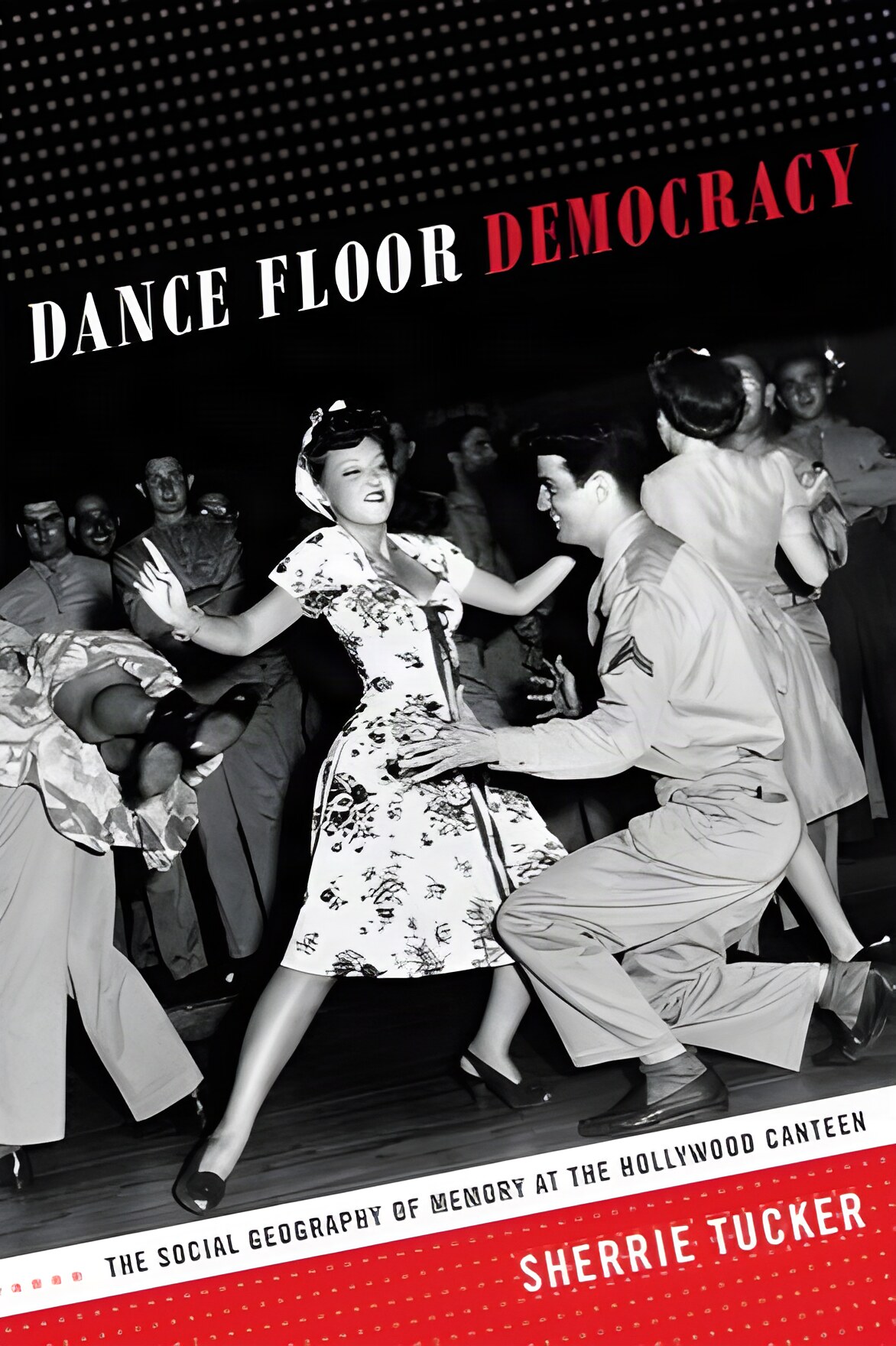
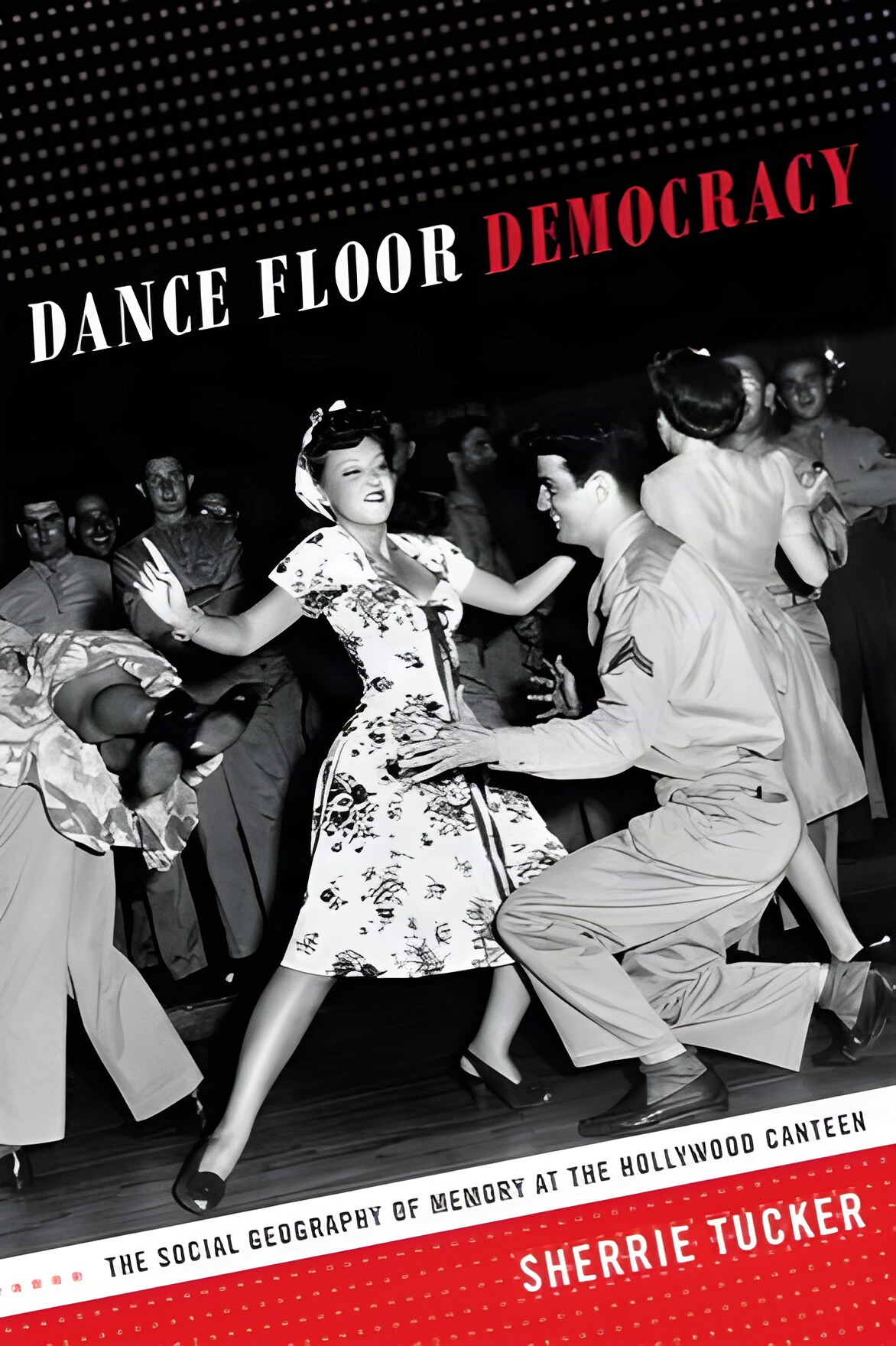
Softcover. Durham NC, Duke University Press, 1st, 2014, Book: Very Good, Dust Jacket: None, Softcover, 416 pages. Open from 1942 until 1945, the Hollywood Canteen was the most famous of the patriotic home front nightclubs where civilian hostesses jitterbugged with enlisted men of the Allied Nations. Since the opening night, when the crowds were so thick that Bette Davis had to enter through the bathroom window to give her welcome speech, the storied dance floor where movie stars danced with soldiers has been the subject of much U.S. nostalgia about the 'Greatest Generation.' Drawing from oral histories with civilian volunteers and military guests who danced at the wartime nightclub, Sherrie Tucker explores how jitterbugging swing culture has come to represent the war in U.S. national memory. Yet her interviewees' varied experiences and recollections belie the possibility of any singular historical narrative. Some recall racism, sexism, and inequality on the nightclub's dance floor and in Los Angeles neighborhoods, dynamics at odds with the U.S. democratic, egalitarian ideals associated with the Hollywood Canteen and the 'Good War' in popular culture narratives. Clean copy in publisher's shrinkwrap.
Softcover. Durham NC, Duke University Press, 1st, 2014, Book: Very Good, Dust Jacket: None, Softcover, 416 pages. Open from 1942 until 1945, the Hollywood Canteen was the most famous of the patriotic home front nightclubs where civilian hostesses jitterbugged with enlisted men of the Allied Nations. Since the opening night, when the crowds were so thick that Bette Davis had to enter through the bathroom window to give her welcome speech, the storied dance floor where movie stars danced with soldiers has been the subject of much U.S. nostalgia about the 'Greatest Generation.' Drawing from oral histories with civilian volunteers and military guests who danced at the wartime nightclub, Sherrie Tucker explores how jitterbugging swing culture has come to represent the war in U.S. national memory. Yet her interviewees' varied experiences and recollections belie the possibility of any singular historical narrative. Some recall racism, sexism, and inequality on the nightclub's dance floor and in Los Angeles neighborhoods, dynamics at odds with the U.S. democratic, egalitarian ideals associated with the Hollywood Canteen and the 'Good War' in popular culture narratives. Clean copy in publisher's shrinkwrap.
Hardcover. Bew Haven CT, Yale/Fine Arts Museums of San Francisco, 1st, 2016, Book: Very Good, Dust Jacket: Very Good, Hardcover in a bright dust jacket. Coming of age in the 1960s, the photographer Danny Lyon (b. 1942) distinguished himself with work that emphasized intimate social engagement. In 1962 Lyon traveled to the segregated South to photograph the civil rights movement. Subsequent projects on biker culture, the demolition and redevelopment of lower Manhattan, and the Texas prison system, and more recently on the Occupy movement and the vanishing culture in China's booming Shanxi Province, share Lyon's signature immersive approach and his commitment to social and political issues that concern those on the margins of society. Lyon's photography is paralleled by his work as a filmmaker and a writer. Danny Lyon: Message to the Future is the first in-depth examination of this leading figure in American photography and film, and the first publication to present his influential bodies of work in all media in their full context. Lead essayists Julian Cox and Elisabeth Sussman provide an account of Lyon's five-decade career. Alexander Nemerov writes about Lyon's work in Knoxville, Tennessee; Ed Halter assesses the artist's films; Danica Willard Sachs evaluates his photomontages; and Julian Cox interviews Alan Rinzler about his role in publishing Lyon's earliest works. With extensive back matter and illustrations, this publication will be the most comprehensive account of this influential artist's work. Clean copy. Still in publisher's shrinkwrap.
Hardcover. Bew Haven CT, Yale/Fine Arts Museums of San Francisco, 1st, 2016, Book: Very Good, Dust Jacket: Very Good, Hardcover in a bright dust jacket. Coming of age in the 1960s, the photographer Danny Lyon (b. 1942) distinguished himself with work that emphasized intimate social engagement. In 1962 Lyon traveled to the segregated South to photograph the civil rights movement. Subsequent projects on biker culture, the demolition and redevelopment of lower Manhattan, and the Texas prison system, and more recently on the Occupy movement and the vanishing culture in China's booming Shanxi Province, share Lyon's signature immersive approach and his commitment to social and political issues that concern those on the margins of society. Lyon's photography is paralleled by his work as a filmmaker and a writer. Danny Lyon: Message to the Future is the first in-depth examination of this leading figure in American photography and film, and the first publication to present his influential bodies of work in all media in their full context. Lead essayists Julian Cox and Elisabeth Sussman provide an account of Lyon's five-decade career. Alexander Nemerov writes about Lyon's work in Knoxville, Tennessee; Ed Halter assesses the artist's films; Danica Willard Sachs evaluates his photomontages; and Julian Cox interviews Alan Rinzler about his role in publishing Lyon's earliest works. With extensive back matter and illustrations, this publication will be the most comprehensive account of this influential artist's work. Clean copy. Still in publisher's shrinkwrap.
Hardcover. New Haven CT, Yale University Press, 1st, 2005, Book: Very Good, Dust Jacket: Very Good, Hardcover, 320 pages. From the 1920s through the 1950s, two individuals, Joseph Urban and Norman Bel Geddes, did more, by far, to create the image of "America" and make it synonymous with modernity than any of their contemporaries. Urban and Bel Geddes were leading Broadway stage designers and directors who turned their prodigious talents to other projects, becoming mavericks first in industrial design and then in commercial design, fashion, architecture, and more. The two men gave shape to the most quintessential symbols of the modern American lifestyle, including movies, cars, department stores, and nightclubs, along with private homes, kitchens, stoves, fridges, magazines, and numerous household furnishings.Illustrated with more than 130 photographs of their influential designs, this book tells the engrossing story of Urban and Bel Geddes. Christopher Innes shows how these two men with a background in theater lent dramatic flair to everything they designed and how this theatricality gave the distinctive modernity they created such wide appeal. If the American lifestyle has been much imitated across the globe over the past fifty years, says Innes, it is due in large measure to the designs of Urban and Bel Geddes. Together they were responsible for creating what has been called the "Golden Age" of American culture.
Softcover. NY, Praeger, reprint, 1998, Book: Very Good, Dust Jacket: None, Softcover, 189 pages, b&w illustrations. This ground-breaking work brings dance into current discussions of the African presence in American culture. Dixon Gottschild argues that the Africanist aesthetic has been invisibilized by the pervasive force of racism. This book provides evidence to correct and balance the record, investigating the Africanist presence as a conditioning factor in shaping American performance, onstage and in everyday life. She examines the Africanist presence in American dance forms particularly in George Balanchine's Americanized style of ballet, (post)modern dance, and blackface minstrelsy. Hip hop culture and rap are related to contemporary performance, showing how a disenfranchised culture affects the culture in power. Clean copy.
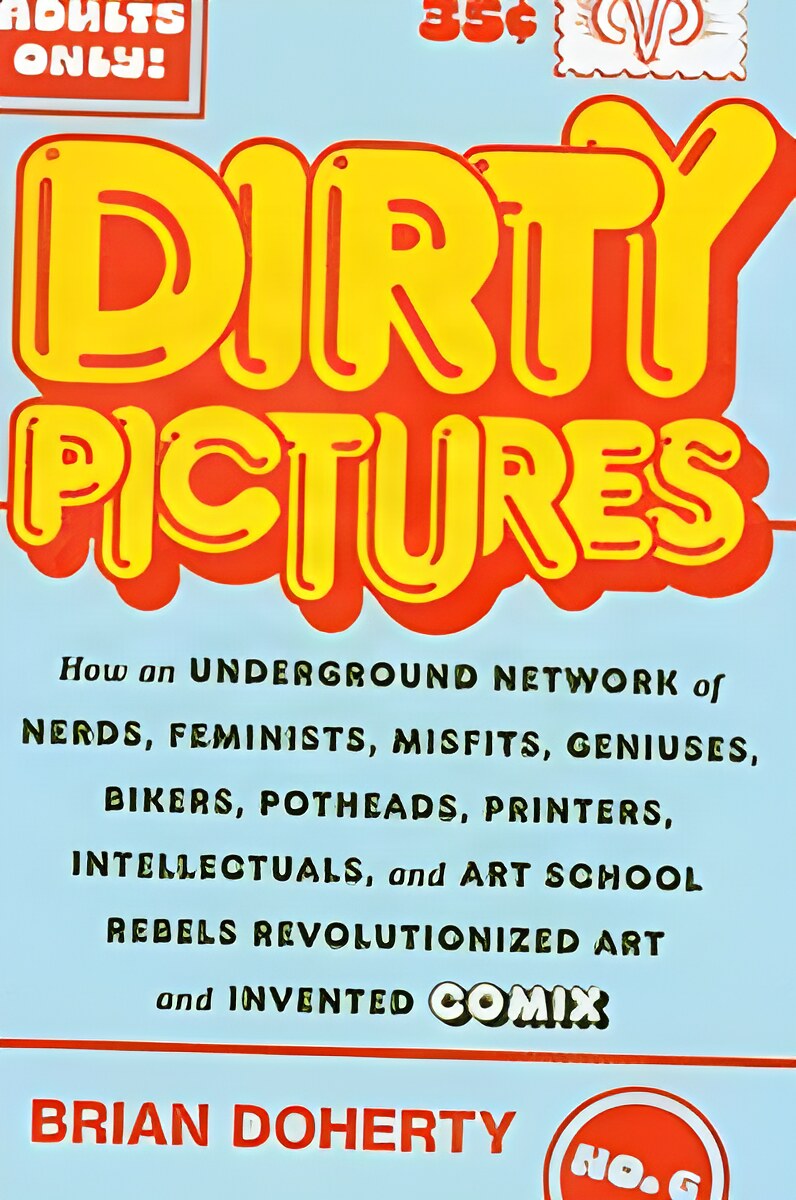
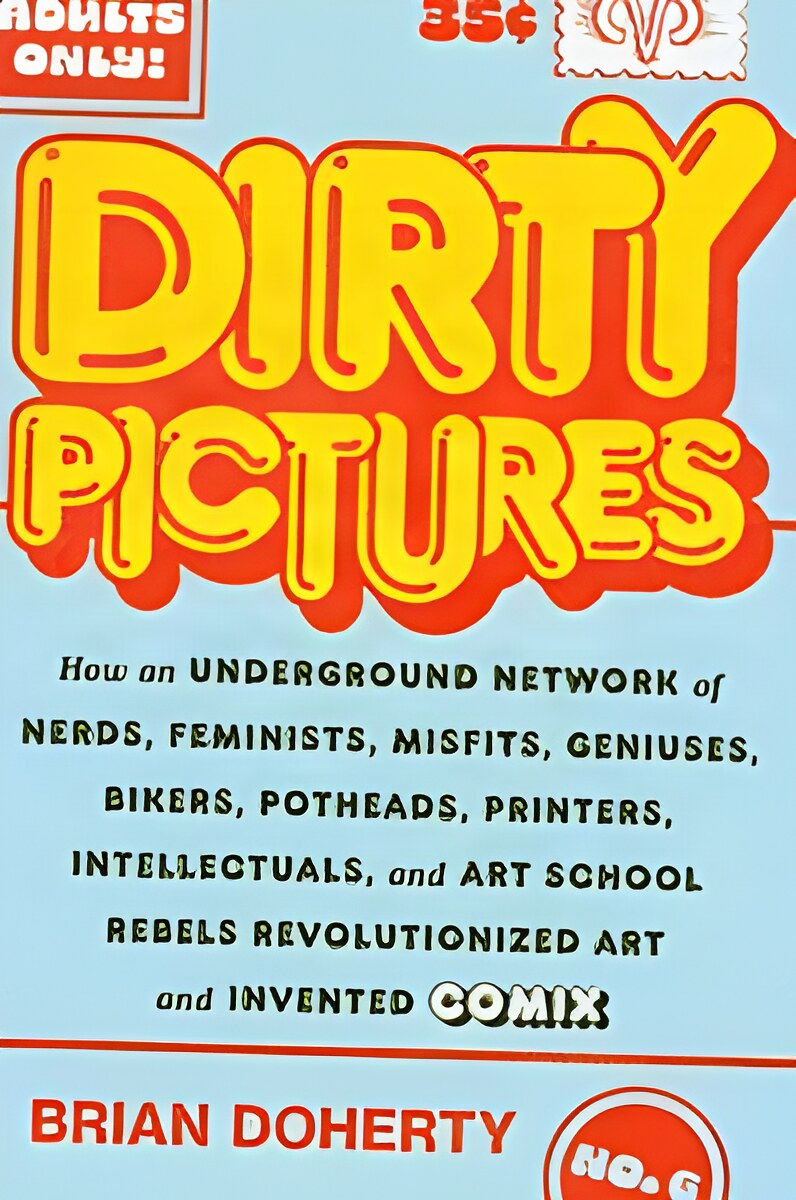
Hardcover. NY, Abrams Press, 1st, 2023, Book: Very Good, Dust Jacket: Very Good, Hardcover in a bright, unclipped dust jacket, 439 pages. In the 1950s, comics meant POW!BAM! superheroes, family-friendly gags, and Sunday funnies, but in the 1960s, inspired by these strips and the satire of MAD magazine, a new generation of creators set out to subvert the medium, and with it, American culture. Their "comix"--spelled that way to distinguish the work from their dime-store contemporaries--presented tales of taboo sex, casual drug use, and a transgressive view of society. Embraced by hippies and legions of future creatives, this subgenre of comic books and strips often ran afoul of the law, but that would not stop them from casting cultural ripples for decades to come, eventually moving the entire comics form beyond the gutter and into fine-art galleries. Brian Doherty weaves together the stories of R. Crumb, Art Spiegelman, Trina Robbins, Spain Rodriguez, Harvey Pekar, and Howard Cruse, among many others, detailing the complete narrative history of this movement. Through dozens of new interviews and archival research, he chronicles the scenes that sprang up around the country in the 1960s and '70s, beginning with the artists' origin stories and following them through success and strife, and concluding with an examination of these creators' legacies. Dirty Pictures is the essential exploration of a truly American art form that recontextualized the way people thought about war, race, sex, gender, and expression.
Hardcover. NY, Abrams Press, 1st, 2023, Book: Very Good, Dust Jacket: Very Good, Hardcover in a bright, unclipped dust jacket, 439 pages. In the 1950s, comics meant POW!BAM! superheroes, family-friendly gags, and Sunday funnies, but in the 1960s, inspired by these strips and the satire of MAD magazine, a new generation of creators set out to subvert the medium, and with it, American culture. Their "comix"--spelled that way to distinguish the work from their dime-store contemporaries--presented tales of taboo sex, casual drug use, and a transgressive view of society. Embraced by hippies and legions of future creatives, this subgenre of comic books and strips often ran afoul of the law, but that would not stop them from casting cultural ripples for decades to come, eventually moving the entire comics form beyond the gutter and into fine-art galleries. Brian Doherty weaves together the stories of R. Crumb, Art Spiegelman, Trina Robbins, Spain Rodriguez, Harvey Pekar, and Howard Cruse, among many others, detailing the complete narrative history of this movement. Through dozens of new interviews and archival research, he chronicles the scenes that sprang up around the country in the 1960s and '70s, beginning with the artists' origin stories and following them through success and strife, and concluding with an examination of these creators' legacies. Dirty Pictures is the essential exploration of a truly American art form that recontextualized the way people thought about war, race, sex, gender, and expression.
Softcover. Berkeley CA, Counterpoint, 1st, 2015, Book: Very Good, Dust Jacket: None, Softcover, 288 pages. In 1969 Gary Snyder returned from a long residence in Japan to northern California, to a homestead in the Sierra foothills where he intended to build a house and settle on the land with his wife and young sons. He had just published his first book of essays, Earth House Hold. A few years before, after a long absence, Wendell Berry left New York City to return to land near his grandfather's farm in Port Royal, Kentucky, where he built a small studio and lived there with his wife as they restored an old house on their newly acquired homestead. In 1969 Berry had just published Long-Legged House. These two founding members of the counterculture and of the new environmental movement had yet to meet, but they knew each other's work, and soon they began a correspondence. Neither man could have imagined the impact their work would have on American political and literary culture, nor could they have appreciated the impact they would have on one another. Clean copy.
Hardcover. New York, Harper Design, 1st, 2014, Book: Very Good, Dust Jacket: Very Good, 256 pages. Hardcover with dust jacket. Color photographs. Clean, unmarked copy with only minor wear to dust jacket. A lavish, gorgeously designed full-color collection that showcases the designs of Dorothy and Otis Shepard, two groundbreaking giants of early twentieth-century American advertising. Dorothy and Otis Shepard are the unsung heroes of early twentieth-century North American visual culture. Together, they were the first American graphic designers to work in multiple mediums and scales with equal skill and vision, and their work remains brilliant; yet their names are little known today. Dorothy and Otis chronicles their story in detail for the first time. It explores the Shepards' penchant for abstraction and modernism, and shows how the advent of billboard advertising inspired their creativity--large campaigns that matched the grandeur of their lifestyle. Throughout, it demonstrates how their influence touched all aspects of consumer culture--from collaborating on the packaging for Wrigley's Gum and designing uniforms and logos for the Chicago Cubs to planning and promoting the resort island Catalina, where Stan Laurel, Oliver Hardy, Clark Gable, and other celebrities frequented.
Hardcover. NY, Abrams, 1st, 2018, Book: Very Good, Dust Jacket: Very Good, Hardcover, 352 pages, b&w illustrations. In a bright, unclipped dust jacket. The 1960s to early '70s was a pivotal time for American culture, and New York City was ground zero for seismic shifts in music, theater, art, and film-making. The Downtown Pop Underground takes a kaleidoscopic tour of Manhattan during this era and shows how deeply interconnected all the alternative worlds and personalities were that flourished in the basement theaters, dive bars, concert halls, and dingy tenements within one square mile of each other. Author Kembrew McLeod links the artists, writers, and performers who created change, and while some of them didn't become everyday names, others, like Patti Smith, Andy Warhol, and Debbie Harry, did become icons. Ambitious in scope and scale, the book is fueled by the actual voices of many of the key characters who broke down the entrenched divisions between high and low, gay and straight, and art and commerce -- and changed the cultural landscape of not just the city but the world.
Hardcover. New York, Seven Stories Press, 1st, 2008, Book: Very Good, Dust Jacket: Very Good, Hardcover, 127 pages, very clean and tight copy. With America ever under global scrutiny, Russell Banks contemplates the questions of our origins, values, heroes, conflicts, and contradictions. He writes with conversational ease and emotional insight, drawing on contemporary politics, literature, film, and his knowledge of American history.

 "Counter Culture: The American Coffee Shop Waitressby: Taylor, Candacy A.")
 "Counter Culture: The American Coffee Shop Waitressby: Taylor, Candacy A.")
 "Cowboy Upby: Frank/ Dirk Johnson (Introduction) , Arthur")
 "Cowboy With a Camera: Erwin E. Smith, Cowboy Photographerby: Worcester, Donald Emmet")
 "Cradle of Violence - How Boston's Waterfront Mobs Ignited the American Revolutionby: Bourne, Russell")
 "Crap: A History of Cheap Stuff in Americaby: Woloson, Wendy A.")
 "Creating the Commonwealth: The Economic Culture of Puritan New Englandby: Innes, Stephen")

 "CUBA: singing with bright tearsby: Virginia Beahan; Contributor Jon Lee Anderson/Pico Iyer")
 "Cultures of United States Imperialism by: Kaplan, Amy and Donald E Pease (Editors)")
 "Cultures of United States Imperialismby: Editors: Amy Kaplan; Donald E. Pease")






 "Designing Modern America: Broadway to Main Street by: Innes, Christopher")
 "Digging the Africanist Presence in American Performance: Dance and Other Contextsby: Brenda D. Gottschild")

 "Dorothy and Otis: Designing the American Dreamby: Hathaway, Norman")


 "Downtown Pop Underground: New York City and the literary punks, renegade artists, DIY filmmakers, mad playwrights, and rock 'n' roll glitter queens who revolutionized culture by:")
 "Downtown Pop Underground: New York City and the literary punks, renegade artists...and rock 'n' roll glitter queens who revolutionized cultureby: McLeod, Kembrew")
 "Dreaming Up Americaby: Banks, Russell")