Hardcover. NY, WW Norton & Co, 1st, 2016, Book: Very Good, Dust Jacket: Very Good, Hardcover in a bright, unclipped dust jacket. 580 pages, 16 pages of illustrations. Eternity Street tells the story of a violent place in a violent time: the rise of Los Angeles from its origins as a small Mexican pueblo. In a masterful narrative, John Mack Faragher relates a dramatic history of conquest and ethnic suppression, of collective disorder and interpersonal conflict. Eternity Street recounts the struggle to achieve justice amid the turmoil of a loosely governed frontier, and it delivers a piercing look at the birth of this quintessentially American city. In the 1850s, the City of Angels was infamous as one of the most murderous societies in America. Saloons teemed with rowdy crowds of Indians and Californios, Mexicans and Americans. Men ambled down dusty streets, armed with Colt revolvers and Bowie knives. A closer look reveals characters acting in unexpected ways: a newspaper editor advocating lynch law in the name of racial justice; hundreds of Latinos massing to attack the county jail, determined to lynch a hooligan from Texas. Murder and mayhem in Edenic southern California. "There is no brighter sun...no country where nature is more lavish of her exuberant fullness," an Angeleno wrote in 1853. "And yet, with all our natural beauties and advantages, there is no country where human life is of so little account. Men hack one another to pieces with pistols and other cutlery as if God's image were of no more worth than the life of one of the two or three thousand ownerless dogs that prowl about our streets and make night hideous." Like-new.
Hardcover. Albuquerque, University of New Mexico, 1st, 1971, Book: Very Good, Dust Jacket: Good, Hardcover in a lightly worn, chipped dust jacket. 253 pages, INSCRIBED BY TAYLOR on the title page. Previous owner's inscription on half-title page, otherwise clean. First Mail West recounts the colorful history of stagecoach lines on the Santa Fe Trail during the height of overland traffic from 1850 to 1879. Desert, rain, snow, wind, outlaws, Indians, buffalo stampedes, and business competitors challenged, and sometimes scuttled, the operation of stage lines between Missouri and New Mexico. The author describes the topography, roads, rolling stock, stations, accommodations, and natural and human dangers along the trail, and analyzes the fierce competition between independent lines for passenger traffic and federal mail contracts.
Softcover. Charleston, SC, Arcadia Publishing, 1st, 2004, Book: Very Good, Dust Jacket: None, Softcover, 128 pages, b&w photos throughout. At the foot of the Huachuca Mountains, the U.S. Army founded one of the most crucial military posts for American expansion into the southwest frontier. Soldiers had been stationed in the region for decades, but in 1877 Fort Huachuca became the symbolic cornerstone of America's western domain. The Native American word huachuca, meaning "place of thunder," described the sporadic but marvelous electrical storms in the area, but the skies would not be the only thing booming. During the tumultuous campaigns to resolve American and Indian disputes, the U.S. infantry and famed Buffalo Soldiers faced off with Geronimo and his Apache nation in both tense negotiations and bitter combat. As time marched on, the fort developed into a permanent installation with barracks, modern training grounds, and other facilities to accommodate troop rotations and eventually became the innovative Center for Military Intelligence. Clean copy.
Hardcover. New York, Crown Publishers, 1st Thus, 1971, Book: Very Good, Dust Jacket: Very Good, 239 pages. Hardcover. Black & white illustrations. Dust jacket in protective clear plastic cover. Clean, unmarked text.
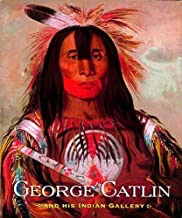
Hardcover. Norton/Smithsonian, 1st, 2002, Book: Very Good, Dust Jacket: Very Good, Hardcover, 288 pages. From the foremost collection of the artist's work, a remarkable portrait of Native American life. In 1832, George Catlin-showman, entrepreneur, and artist-made the first of four trips into Indian country, painting as he went, in a wonderfully spontaneous, if somewhat naive style. His ambition was to paint every tribe. He fell short. But what he did achieve, and the subject of this splendid volume, is a remarkable look into the faces and daily activities of Native Americans before their lands and their numbers were so radically diminished. And while Catlin was clearly influenced by the idea that Indians were Noble Savages (rapidly acquiring the vices of the white man while losing their "savage" virtues), his passion for his work is evidence of a profound respect and affection for his subjects, clearly demonstrated in this magnificent book. 275 illustrations, 150 in color.
Hardcover. Washington DC, Government Printing Office, 1st, 1948, Book: Very Good, Dust Jacket: None, Hardcover, olive green cloth hardcover with gilt lettering on spine. 986 pages, includes drawings, photographs, maps (some fold-out) and an extensive bibliography. Super condition with just a small ownership sticker on inside front cover, otherwise a clean, tight copy. DUE TO WEIGHT, DOMESTIC SHIPPING ONLY.
Hardcover. Washington DC, Government Printing Office, 1st, 1949, Book: Very Good, Dust Jacket: None, Hardcover, olive green cloth hardcover with gilt lettering on spine. This is Smithsonian Institution Bureau of American Ethnology Bulletin 143; 818 pages, includes drawings, photographs, maps and an extensive bibliography. Super condition with just a small ownership sticker on inside front cover, otherwise a clean, tight copy. DUE TO WEIGHT, DOMESTIC SHIPPING ONLY.
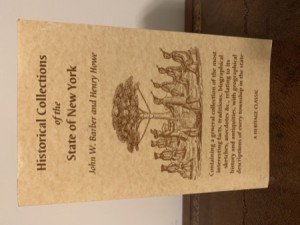
Softcover. Bowie MD, Heritage Books, reprint, 1999, Book: Very Good, Dust Jacket: None, Softcover, 608 pages, b&w illustrations, fold-out map in front. Includes Preface; Counties, Townships, Villages; and Index. Illustrated with 230 engravings, double-page map of New York, and engraved frontispiece portraits. "This wonderful volume belongs in the bookcase of all New York historians. More than 150 years old, this ancient text is rich in historical perspective and information that is no longer available to the modern researcher. The work begins with a general outline of New York history. Thereafter, the book is arranged alphabetically by county. Dictionary-like entries for each town are listed alphabetically within each county section. The entries give the location and history of each town, including date of settlement, famous and notable residents, important events, population statistics, number of dwellings, churches and schools, local Indians, and so on. Comprehensively annotated and profusely illustrated with engravings of towns, historic structures and distinctive natural features. Contains an index of counties, townships and villages plus a separate index of subjects and full names. Facsimile reprint of the 1842 edition. Clean, like new.
Hardcover. Troy NY, William H. Young, 1st, 1876, Book: Good, Dust Jacket: None, 400 pages. Hardcover. Previous owners name on inside front cover. Features black & white illustrations and fold-out maps. Short tear and wrinkle along bottom of fold-out map ('View from corner of Second & Congress Streets 1824') between pages 144-145. Leather covers with rubbing and peeling along edges. Bit of chipping to title label on spine. Clean, unmarked text.
Hardcover. Bloomington IN, Indiana University Press, 1st, 1993, Book: Very Good, Dust Jacket: Very Good, Hardcover in a bright dust jacket. 263 pages,16 BW illus., 16 color plates. Takes us into the mind of American abstract painter Ethel Schwabacher (1903-1984). "Comparable to such important literary journals as those of Virginia Woolf and Anais Nin, Schwabacher's record will become a valuable resource for research into the creative process as well as the art history and theory of our time." Clean copy.
Softcover. Seattle, University of Washington Press, 1st, 2000, Book: Very Good, Dust Jacket: None, Softcover. Like new in publishers shrink-wrap. Chief Joseph's exhausted words of surrender, 'Hear me, my chiefs, I am tired; my heart is sick and sad. From where the sun now stands, I will fight no more forever', are the accepted end of the Nez Perce War of 1877, in which several bands of Nez Perce attempting to find a new home outside their diminished Idaho reservation clashed with the U.S. military (and occasionally other Indians) along the Clearwater and Big Hole Rivers, and finally at the foot of the Bear Paw Mountains. However, a number of Nez Perce escaped transportation to Indian Territory with Joseph and continued their flight to Canada, with perhaps a hundred eventually joining Sitting Bull's Lakota."I Will Tell of My War Story" reproduces, describes, and discusses a remarkable series of drawings by an anonymous Indian artist who fought with Chief Joseph and later reached Canada. The drawings, in red, blue, and black pencil, include portraits of principal participants in the war, battle scenes, and views of Nez Perce camp life and celebrations during the war and after. The drawings are preserved in a small pocket ledger labeled 'Cash Book' on the front, which was acquired by Indian Agent Charles D. Warner in the 1880s. It was willed by him to a family living in northern Idaho, and is now in the collection of the Idaho State Historical Society. Scott Thompson worked closely both with the owners and with members of the Nez Perce community in preparing his manuscript. Thompson's detective work and research methods to identify Nez Perce and other parties pictured in the Cash Book make fascinating reading. He is careful to point out what is speculation and what has been documented or attested to by experts on dress, weapons, ceremony, and other aspects of Native culture. The Cash Book drawings are unique in several ways. They are one of very few firsthand pictorial records of the Nez Perce War, representing an even scarcer record of this war as seen from the Indian viewpoint. They contain invaluable historical and ethnographic information not only explicit in the form of military and Native dress, regalia, and quite graphic battle scenes, but also implicit. The drawings reveal an important stage of cultural adaptation as shown by the mixture of white and Native goods combined in Nez Perce material culture during the 1870s and 1880s, and by the artist's assimilation of white/European drawing techniques such as texture and perspective. The artist combined these drawing techniques with Native art traditions to make exceptionally effective pictorial communications. Scott M. Thompson is an art teacher at Chase Middle School in Spokane, Washington.
Softcover. Seattle WA, University of Washington Press, 1st, 2000-06-01, Book: Very Good, Dust Jacket: None, Softcover, 122 pages. Like new in publishers shrink-wrap.
Hardcover. New York, George Braziller, 1st, 1974, Book: Very Good, Dust Jacket: Good, 189 pages. Hardcover. Black & white illustrations. Dust jacket with spine fading, light wear at corners, edges. Clean, tight copy.
Barre, MA, Barre Publishers, 1st, 1972, Book: Very Good, Dust Jacket: Very Good, Hardcover, 152 pages, photographs by Curtis. Introduction and commentary by Don D. Fowler. One hundred and eighteen superb representative photographs have been selected from Curtis's monumental work and reproduced in this book by The Meriden Gravure Company. Don Fowler describes Curtis the photographer and ethnographer, and the Indian groups depicted, commenting on the unique cultural characteristics of each tribe.
Softcover. NY, Viking Press, Uncorr. proof, 1983, Book: Very Good, Dust Jacket: None, Softcover, yellow wrappers. Unrevised and unpublished proofs. Page numbers hand written, 562 pages. SIGNED BY MATTHIESSEN on half-title page: "With best wishes/Peter Matthiessen". The author's controversial and suppressed book about the confrontation between American Indian activists and the FBI in the early 1970s at Pine Ridge Reservation near Wounded Knee. Clean, bright copy.
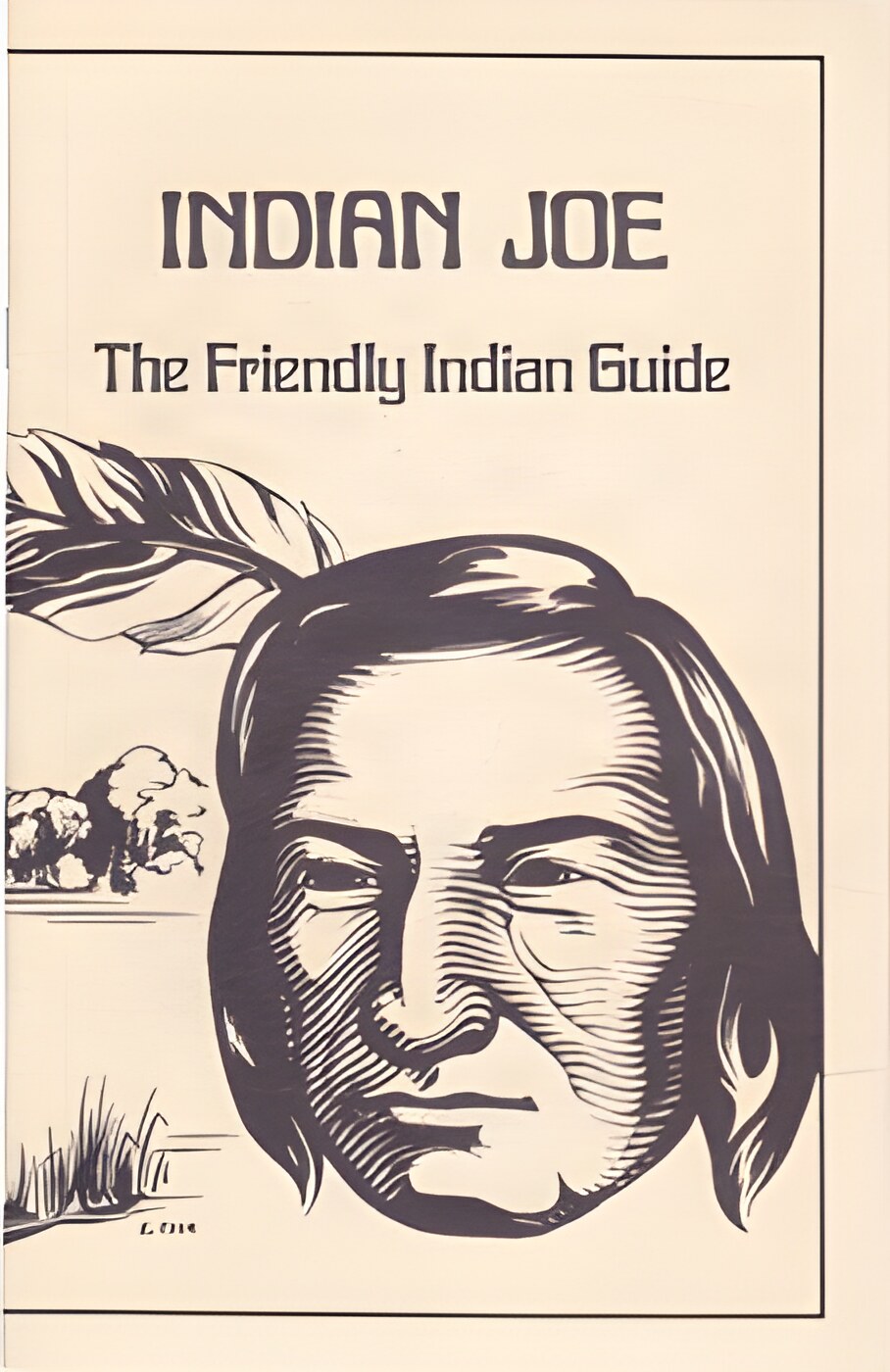
Softcover. West Danville VT, United Methodist Church, 1st, 1976, Book: Very Good, Dust Jacket: None, Softcover booklet, stapled wrappers, 16 pages. Indian Joe was a Native American guide active in the early conflicts and settlement of Vermont in the 1700s. B&w illustrations, photo of his tomb in the Oxbow cemetery in Newbury, Vermont. Clean copy.
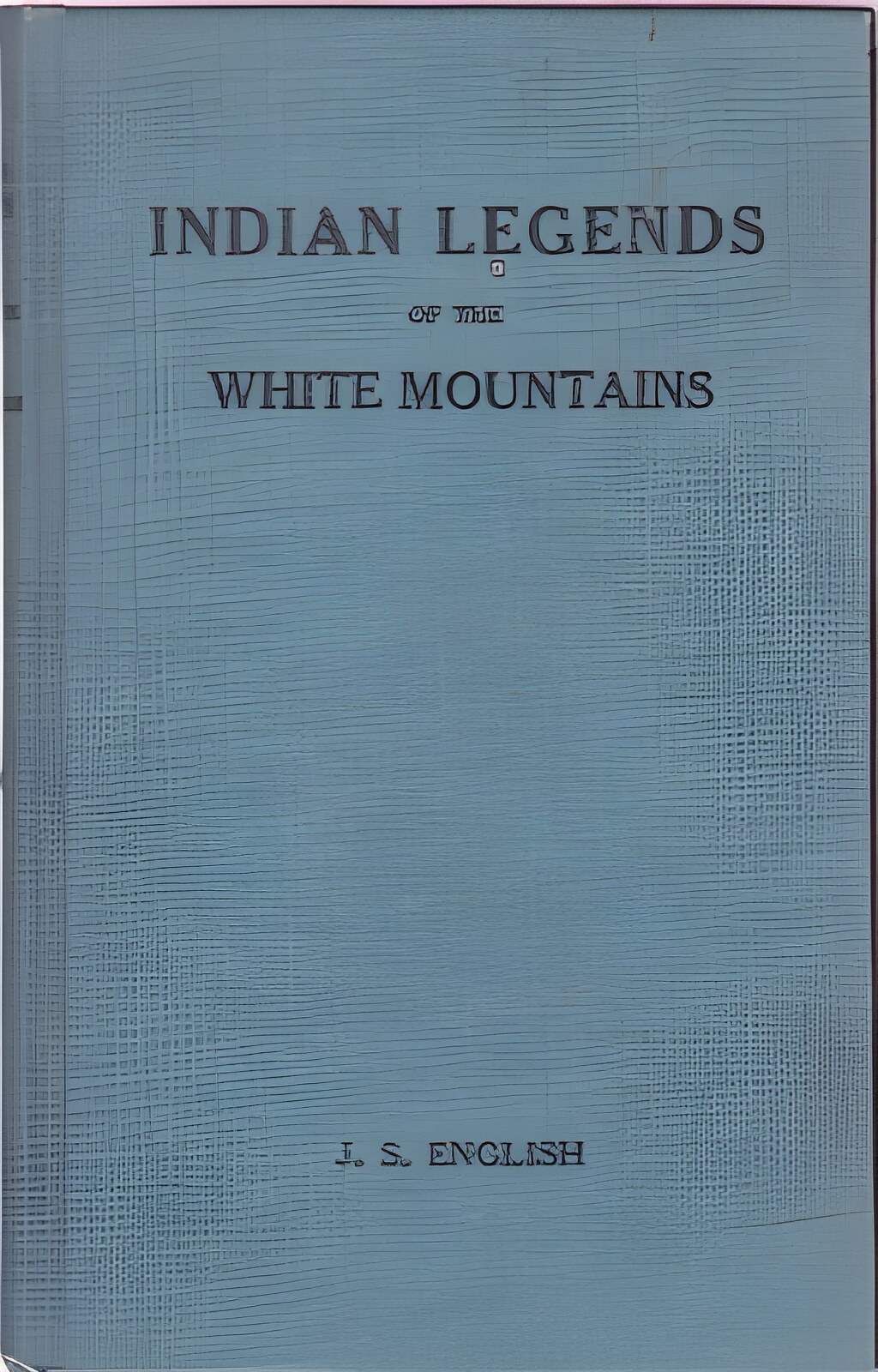
Hardcover. Boston, Rand Avery Company, 1st, 1915, Book: Very Good, Dust Jacket: None, Hardcover, blue cloth with black lettering, 92 pages, 7 b&w plates. A collection of folklore from in and around the "Crystal Hills" of New Hampshire gathered from tales of old settlers and records in historical societies and town libraries. Clean copy.
Hardcover. Hartfort CT, privately printed, 1st, 1881, Book: Very Good, Dust Jacket: None, Hardcover, 11 page introduction plus 93 pages, green cloth with black rules, lettering. One of only 250 copies. Previous owner's bookplate on inside front cover, otherwise very good.
Hardcover. Hartford CT, Hurlbut, Scranton & Co., 1st, 1864, Book: Very Good, Dust Jacket: None, Hardcover, 763 pages, illustrated with many full-page plates, most hand-colored (including second title page). Leather bound with some splitting along spine edges. Black spine label with gilt lettering. Internally very good, minor foxing.
Softcover. Bloomington, Indiana University, 1st, 2010, Book: Very Good, Dust Jacket: None, Softcover, 443 pages, b&w illustrations, index. Traces the origins of American cinema's century-long fascination with Italy and Italian immigrants to the popularity of the pre-photographic aesthetic - the picturesque. "To read Bertellini's superb book is to enter into an intense, rich, and intricately layered experience of Italian immigrant culture in the New York of the 1900's and 1910's." Clean copy.
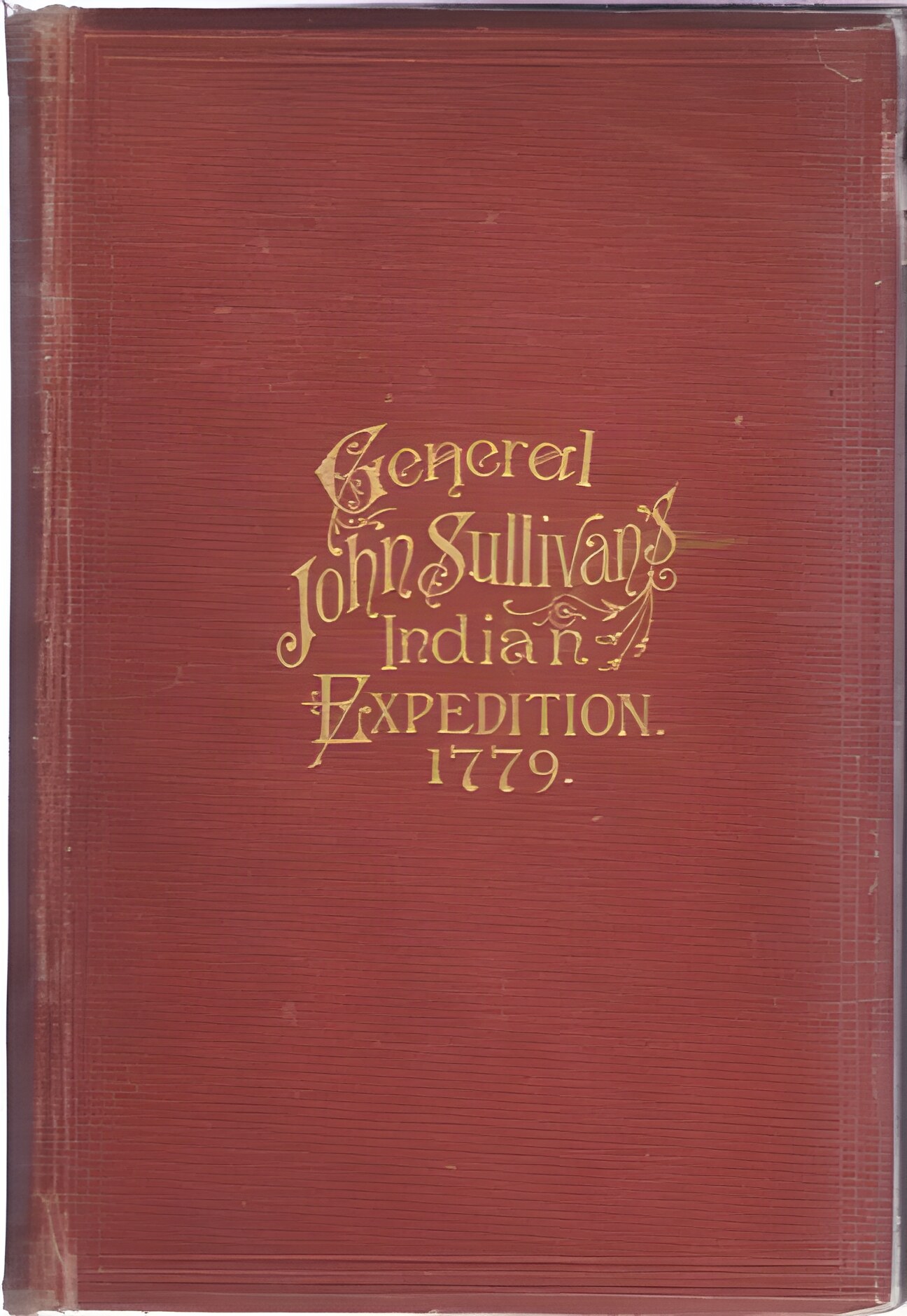
Hardcover. Auburn NY, Knapp, Peck and Thomson, 1st, 1887, Book: Fair, Dust Jacket: None, Hardcover, original red cloth, gilt titles and rules, blind-stamped double border. 581 pages including Errata leaf. Includes several fold-out maps, plus pockets inside the front and rear boards containing maps and plans. Engraved frontispiece of Sullivan, engraved portraits in text of Brigadier General James Clinton, Colonel Peter Gansevoort (from a portrait by Gilbert Stuart, famous for his portrait of George Washington), and Colonel Philip Van Cortlandt. John Sullivan was an American general in the Revolutionary War and a delegate in the Continental Congress. Sullivan served as a major general in the Continental Army and as Governor (or 'President') of New Hampshire. He is most famous for leading the Sullivan Expedition in 1779, a scorched earth campaign against the Iroquois towns that had taken up arms against the American revolutionaries. This volume contains journals by 27 officers present during the campaign, and has become the authoritative primary source of the event. Both front and rear hinges cracked with spine cloth loose, battlefield map at page 288 has a tear but no loss, front signature with title page loose but whole. All other maps present in envelopes and in very good condition. Covers worn.
Hardcover. Fort Worth, TCU Press, Reprint, 1981, Book: Very Good, Dust Jacket: Very Good, Two hardcover volumes,. Volume 1 - 164 pages. Ceremonial Dance, Ritual and Song. Full color and black & white illustrations. Dust jacket in clear plastic protective cover. Clean, tight copy. Volume 2 - 323 pages. Myths, Legends and Folktales. Full color and black & white illustrations. Dust jacket in clear protective cover. Clean, tight copy.
Softcover. New York, Princeton Architectural Press, 1st, 2006, Book: Very Good, Dust Jacket: None, 192 pages. Softcover. A very clean, unmarked copy with only minor wear to edges. Black and white portraits of citizens of Indiana, taken over 4 decades.


 "Facing West: The Metaphysics of Indian-Hating and Empire-Building: A Major Investigation of the Historical Link Between American Racism and Expansionism (INSCRIBED BY AUTHOR)by:")


 "Fort Huachuca by: Price, Ethel Jackson")
 "Fourth World of the Hopis, Theby: Courlander, Harold")
 "HANDBOOK OF SOUTH AMERICAN INDIANS Volume 3: The Tropical Forest Tribes by: Steward Julian H. (ed.)")
 "HANDBOOK OF SOUTH AMERICAN INDIANS Volume 5: The Comparative Ethnology of South American Indians by: Steward Julian H. (ed.)")


 "History of the City of Troy, from the Expulsion of the Mohegan Indians to the Present Centennial Year of the Independence of the United States of America, 1876by: Wei")

 "I Will Tell of My War Story: A Pictorial Account of the Nez Perce War (Samuel and Althea Stroum Book)by: Thompson, Scott M.")
 "I Will Tell of My War Story: A Pictorial Account of the Nez Perce War (Samuel and Althea Stroum Book)by: Thompson, Scott M.")
 "Image of the Indian and the Black Man in American Art, 1590-1900, Theby: Parry, Ellwood")
 "In a Sacred Manner We Live: Photographs of the North American Indianby: Curtis, Edward S.")
 "In the Spirit of Crazy Horse (SIGNED PROOF)by: Matthiessen, Peter")


 "Indian Names of Places etc., and on the borders of Connecticut with interpretations of some of themby: Trumbull, J. Hammond")
 "Indian Races of North and South America, The: Including the Late Sioux War and Indian Massacre in Minnesotaby: Brownell, Charles de Wolf")

 "Kiowa Voices (2 Vol Set); Vol. 1: Ceremonial Dance, Ritual and Song; Vol. 2: Myths, Legends and Folktales,by: Boyd, Maurice/Linn Pauahty")
 "Laporte, Indianaby: Bitner, Jason")