Softcover. Berkeley CA, University of California Press, 1st pbk., 1990, Book: Very Good, Dust Jacket: None, Softcover, 273 pages, b&w illustrations. The first in-depth analysis of the rich spiritual and artistic traditions of the Carib-speaking Yekuana Indians of Venezuela, who live in the dense rain forest of the upper Orinoco. Within their homeland of Ihuruna, the Yekuana have succeeded in maintaining the integrity and unity of their culture, resisting the devastating effects of acculturation that have befallen so many neighboring groups. Yet their success must be attributed to more than natural barriers of rapids and waterfalls, to more than lack of "contact" with our "modern" world. The ethnographic history recounted here includes not only the Spanish discovery of the Yekuana but detailed indigenous accounts of the entire history of Yekuana contact with Western culture, revealing an adaptive technique of mythopoesis by which the symbols of a new and hostile European ideology have been consistently defused through their incorporation into traditional indigenous structures. Clean copy.
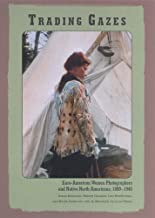
Softcover. NJ, Rutgers University Press, 1st, 2003, Book: Very Good, Dust Jacket: None, Softcover, 244 pages. The story of westering Americans in the late nineteenth and early twentieth centuries has been told most notably through photographs of American Indians. Unlike this vast archive, produced primarily by male photographers, which depicted American Indians as either vanishing or domesticated, the lesser-known images by the women featured in Trading Gazes provide new ways of seeing the intersecting histories of colonial expansion and indigenous resistance. Four unconventional women-Jane Gay, who documented land allotment to the Nez Perces; Kate Cory, an artist who lived for years in a Hopi community; Grace Nicholson, who purchased cultural items from the Karuk and other northern California tribes; and Mary Schaffer, who traveled among the Stoney and Metis of Alberta, Canada-used cameras to document their cross-cultural encounters. Trading Gazes reconstructs the rich biographical and historical contexts explaining these women's presence in different Native communities of the North American West. Their photographs not only record the unprecedented opportunities available for Euro-American women eager to shed gender restrictions, but also reveal how women's newfound mobility depended on the increasing restrictions placed on Native Americans in this era.
Softcover. Lincoln NE, Bison Books, reprint, 2004, Book: Very Good, Dust Jacket: None, Softcover, 368 pages. Documents the generations of Native peoples who for twelve millennia have moved through and eventually settled along the rocky coast, rivers, lakes, valleys, and mountains of a region now known as Maine. Arriving first to this area were Paleo-Indian peoples, followed by maritime hunters, more immigrants, then a revival of maritime cultures. Beginning in the sixteenth century, Native peoples in northern New England became tangled in the far-reaching affairs of European explorers and colonists. Twelve Thousand Years reveals how Penobscots, Abenakis, Passamaquoddies, Maliseets, Micmacs, and other Native communities both strategically accommodated and overtly resisted European and American encroachments. Clean copy.
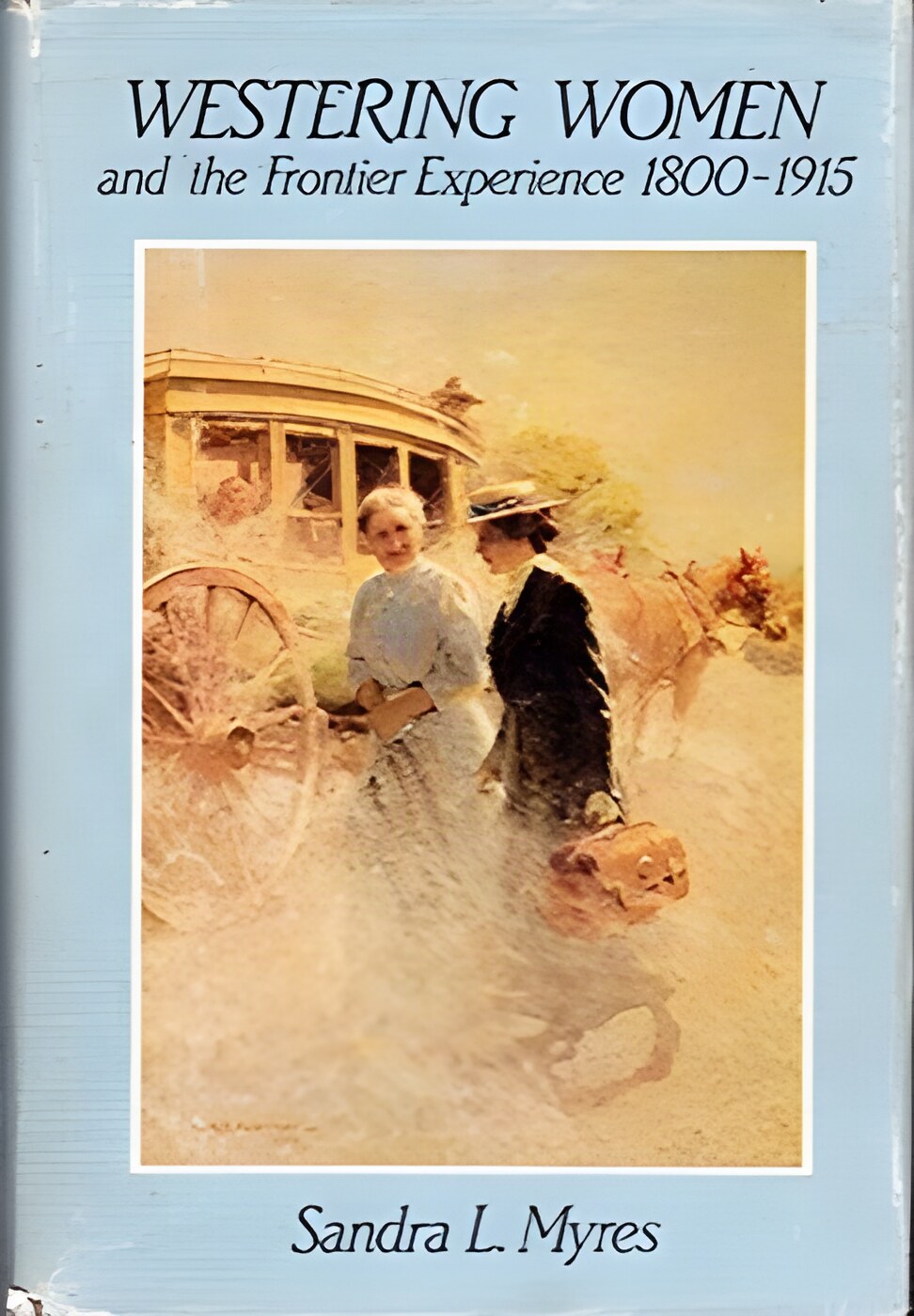
Softcover. Albuquerque NM, University of New Mexico Press, reprint, 1993, Book: Very Good, Dust Jacket: None, Softcover, 365 pages, b&w illustrations. Professor Myres gives frontier women a voice they never had. She uses extensive source material by and about women ( letters, journals, and reminiscences from over 400 collections ) to study the impact of the frontier on women's lives and the role of women in the West. She offers a major reinterpretation of the experience of pioneer women, including that of Indian, Mexican, French, black, and Anglo-American women. The account recreates in detail the frontier experience of all these women, beginning with their physical and intellectual responses to the trek West, and concluding with their struggle for political suffrage and economic opportunity. Clean copy.
Hardcover. Newtown CT, The Taunton Press, 1st, 2006, Book: Very Good, Dust Jacket: Very Good, Hardcover in a bright dust jacket, 266 pages. The past has left behind only scattered clues that, on their own, provide little insight into how the people of early America lived and the details of their daily lives. The photographs in this book, the deeply informed narrative that accompanies them, and the eyewitness accounts of daily life that the author weaves throughout, provide a fresh perspective on our early American ancestors and the places they called home. This book is about how their houses and their life in them, from the wealthy to the impoverished, from New York City to the small farms and plantations of the South, from coastal fishing towns to the Western frontier of Indiana and Kentucky. The stories focus on the remarkably vivid differences from one part of the country to the next, class and culture, and the realities of everyday life for American families. These stories twine around a wide selection of HABS photographs of early houses, covering the variety and evolutions of house styles -- not by labeling the style but by explaining the style in the context of everyday life. Richly illustrated with handsome black-and-white photography of old houses from the Library of Congress Historic American Building Survey (HABS) collection and supplemented with period woodcuts, engravings, drawings, paintings, artifacts, and maps, the book is printed on a 4-color press for a depth of tone. Sidebar excerpts from diaries, journals, and letters inject graphic eyewitness descriptions, adding an additional layer of insight. The book also includes sidebars called Still Standing that traces the history of specific houses, from their origins to the present and includes information on the original family, how the house has evolved over the centuries, and how it's used today.
Softcover. Chapel Hill, University of North Carolina, reprint, 2002, Book: Very Good, Dust Jacket: None, Softcover, 378 pages. Namias shows that visual, literary, and historical accounts of the capture of Euro-Americans by Indians are commentaries on the uncertain boundaries of gender, race, and culture during the colonial Indian Wars, the American Revolution, and the Civil War. She compares the experiences and representations of male and female captives over time and on successive frontiers and examines the narratives of captives Jane McCrea, Mary Jemison, and Sarah Wakefield. Clean copy.
Hardcover. NY, Holt, Rinehart and Winston, 1st, 1967, Book: Very Good, Dust Jacket: Good, Hardcover in a worn, chipped dust jacket. Dark blue cloth, 274 pages. Fully illustrated with reproductions of Father Point's paintings and drawings, most in full color. DOMESTIC SHIPPING ONLY.
Softcover. Norman OK, University of Oklahoma Press, 1st, 1997, Book: Very Good, Dust Jacket: None, Softcover, 656 pages. In mythic sagas of the American West, the wide western range offered boundless opportunity to a limited cast of white men. Buffalo roamed, deer and antelope played, and women's voices were never heard. Writing the Range allows us to hear many long-silenced women: Spanish-Mexican settlers and American Indians on New Spain's northern frontiers; Chinese, Basque, Japanese, Korean, Vietnamese, Slavic, and Irish immigrants; film stars Dolores del Rio and Lupe Velez; Navajos and African Americans who moved to western cities during World War II; and the activist Mothers of East Los Angeles, who organized to resist environmental dangers to their community. A valuable introduction to the rapidly changing field of western history, Writing the Range explains clearly how race, class, and culture are constructed and connected. The first section examines issues raised by more than a decade of multicultural western women's histories; following are six chronological sections spanning four centuries. Each section offers a short introduction connecting is essays and placing them in analytic and historical perspective. Clean copy.
Softcover. Caldwell ID, Caxton Press, reprint, Book: Very Good, Dust Jacket: None, Softcover, 328 pages. illustrated frontispiece. Extensive b&w photographs throughout. The Nez Perce campaign is among the most famous in the brief and bloody history of the Indian wars of the West. Yellow Wolf was a contemporary of Chief Joseph and a leader among his own men. His story is one that had never been told and will never be told again. A first person account, through author L.V. McWhorter of the Nez Perce's ill-fated battle for land and freedom. Clean copy.
Hardcover. Los Angeles, Reel Art Press, 1sr, 2013, Book: Very Good, Dust Jacket: Very Good, Hardcover. Like new in publishers shrink-wrap. The first anthology dedicated to one of the greatest American photographers of the 20th century, Dennis Stock, during his most celebrated period of the 1950s-1970s. Undisputedly one of America's greatest photographers, in early 1955 Dennis Stock captured one of the iconic images of the 20th century: the black-and-white image of the unknown James Dean walking across a deserted Times Square, trademark cigarette in hand, a brooding and introspective figure hunched into his oversized coat, braced against the rain and set against the backdrop of the Manhattan skyline. Stock took a series of photographs in New York, Hollywood and in Dean's hometown of Fairmount, Indiana. Stock went on to photograph Marlon Brando, Marilyn Monroe, Audrey Hepburn resting her head on a car window on the cusp of fame, JFK on the campaign trail. His catalogue of work throughout this period reflects his ability to empathize with his subjects but not become subservient to them. In the late 1950s, Stock's focus shifted to the leading jazz musicians and performers of the day; this book contains some of the best photographs ever taken of artists such as Duke Ellington, Billie Holiday, Charlie Parker, Miles Davies and Louis Armstrong. This book is a beautiful tribute to Stock's timeless legacy and complete access to the Stock Archive was granted for this stunning 288-page edition.


 "Twelve Thousand Years: American Indians in Maine by: Bruce J. Bourque")




 "Dennis Stock: American Coolby: Nourmand, Tony")