Hardcover. Lincoln NE, University of Nebraska Press , 2nd pr., 1995, Book: Very Good, Dust Jacket: Very Good, Hardcover, 139 pages of b&w photographs. Originally published in 1985, this first book devoted to Butcher and his photographs presents a unique visual chronicle of Great Plains settlement and established Butcher"s place in frontier photography. Previous owner's inscription on title page otherwise clean, bright copy.
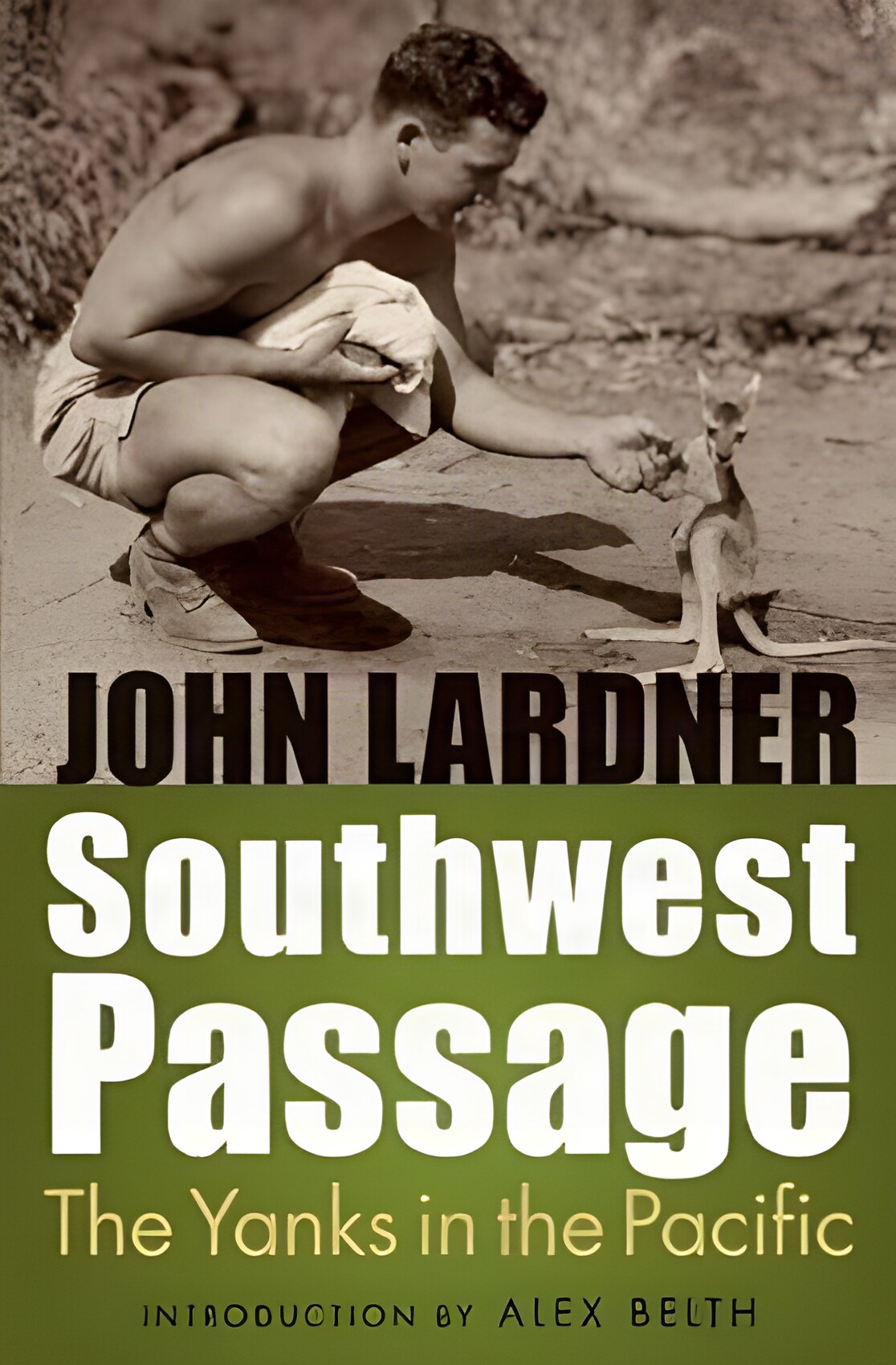
Softcover. Lincoln NE, University of Nebraska Press, 1st, 2013, Book: Very Good, Dust Jacket: None, Softcover. At a time when few Americans had visited Australia, journalist John Lardner sailed down under with the U.S. armed forces as one of the first American war correspondents in the Pacific theater. With his excellent sense of humor and gift for narrative, Lardner penned vignettes of MacArthur's arrival and his reception in Melbourne and a flight with the daring Dutch flier Capt. Hans Smits. More frequently, Lardner wrote about the ordinary day and the average person. Traveling throughout the country, in Southwest Passage Lardner offers a glimpse of Australia in the 1940s and generates warmth and admiration for World War II fighters in the Pacific, whether Australian, New Zealander, aboriginal, or American. Clean copy.
Hardcover. NY, Oxford University Press, 1973, Book: Very Good, Dust Jacket: Very Good, Hardcover in a bright, lightly worn dust jacket, 993 pages. A biography of the "Little Giant from Illinois", Lincoln's highly influential opponent for the Presidency in 1860. Name on front fly leaf, otherwise clean.
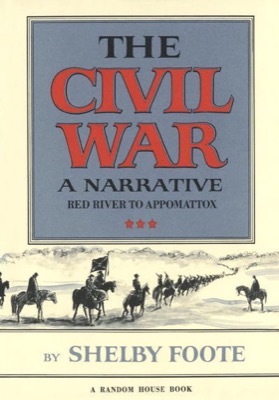
Hardcover. NY, Random House, reprint, 1974, Book: Very Good, Dust Jacket: Very Good, Hardcover in a bright, unclipped dust jacket. The Civil War: A Narrative. In the third -- and last -- volume of this vivid history, Foote brings to a close the story of four years of turmoil and strife which altered American life forever. Here, told in vivid narrative and as seen from both sides, are those climactic struggles, great and small, on and off the field of battle, which finally decided the fate of this nation. "Red River to Appomattox" opens with the beginning of the two final, major confrontations of the war: Grant against Lee in Virginia, and Sherman pressing Johnston in North Georgia. While the Virginia-Georgia fighting is in progress, Kearsarge sinks the Alabama and Forrest gains new laurels at Brice's Crossroads.With Grant and Lee deadlocked at Petersburg, Sherman takes Atlanta -- assuring Lincoln's reelection, together with the certainty that the war will be fought (not negotiated) to a finish. These events are followed by Hood's bold northward strike through middle Tennessee while Sherman sets out on his march to the sea, to be opposed at its end by the ghost of the Army of Tennessee. Endpaper maps. First published in 1974, this appears to be a reprint (no price on dust jacket). Newspaper obituary of Foote laid in. Clean copy.
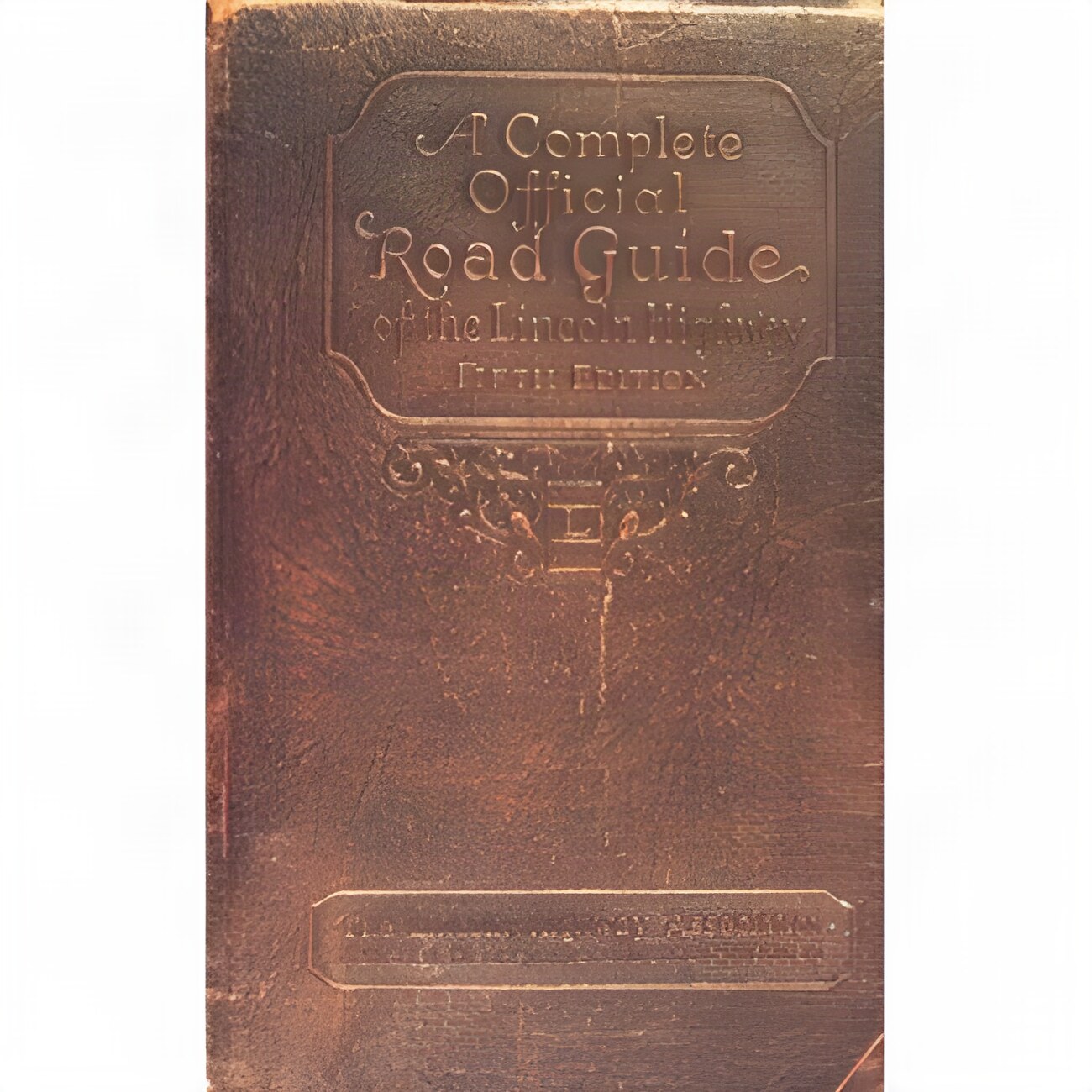
Softcover. Tucson AZ, Patrice Press, reprint, 1993, Book: Very Good, Dust Jacket: None, Softcover, 536 pages. This is a facsimile printing of the 1924 edition, profusely illustrated including original advertisements. The book gives detailed information on the 414 cities and towns through which the famous highway passed, from Times Square in New York City to San Francisco's Lincoln Park, on the Pacific Ocean. Advice to readers includes "Don't forget the colored goggles," and "Don't stop to cool motor at top of a hill, put car in gear and coast down to cool motor." The trip was thrilling in 1924. The book is thrilling today. Mild nick to top of rear cover otherwise clean and bright copy.
Hardcover. NY, Derby & Miller, 1st, 1865, Book: Very Good, Dust Jacket: None, Hardcover embossed brown cloth with bright gilt title and decoration on spine. 808 pages plus 6 pages of ads. Beautiful steel engraving frontispiece of Lincoln engraved by A. H. Ritchie. Illustrated with 15 additional engravings. The book is tight and square. Raymond was the Editor of the New York Times and he brought this volume out with amazing dispatch after the assassination of Lincoln. Frank B. Carpenter, who had lived in the White House for an extended period , added a section , "Anecdotes And Personal Reminiscences Of President Lincoln." Mild wear to rear cover, clean copy.
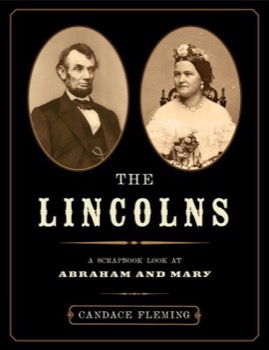
Hardcover. NY, Schwartz & Wade Books, 2nd pr, 2008, Book: Very Good, Dust Jacket: Very Good, Hardcover in a bright dust jacket, 180 pages. Profusely illustrated in b&w. Here are the extraordinary lives of Abraham and Mary, from their disparate childhoods and tumultuous courtship, through the agony of the Civil War, to the loss of three of their children, and finally their own tragic deaths. Readers can find Mary's recipe for Abraham's 'favorite cake' and bake it themselves; hear what Abraham looked like as a toddler; see a photo of the Lincoln's dog; discover that the Lincoln children kept goats at the White House; see the Emancipation Proclamation written in Lincoln's own hand. Perfect for reluctant readers as well as history lovers, The Lincolns provides a living breathing portrait of a man, a woman, and a country. Clean copy.
Hardcover. NY, Liveright, 1st, 2012, Book: Very Good, Dust Jacket: Very Good, Hardcover in a bright, unclipped dust jacket. In the summer of 1862, after a year of protracted fighting, Abraham Lincoln decided on a radical change of strategy-one that abandoned hope for a compromise peace and committed the nation to all-out war. The centerpiece of that new strategy was the Emancipation Proclamation: an unprecedented use of federal power that would revolutionize Southern society. In The Long Road to Antietam, Richard Slotkin, a renowned cultural historian, reexamines the challenges that Lincoln encountered during that anguished summer 150 years ago. In an original and incisive study of character, Slotkin re-creates the showdown between Lincoln and General George McClellan, the "Young Napoleon" whose opposition to Lincoln included obsessive fantasies of dictatorship and a military coup. He brings to three-dimensional life their ruinous conflict, demonstrating how their political struggle provided Confederate General Robert E. Lee with his best opportunity to win the war, in the grand offensive that ended in September of 1862 at the bloody Battle of Antietam. 10 illustrations; 8 maps.
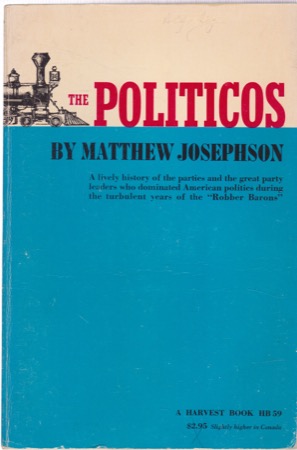
Softcover. NY, Harcourt, Brace & World, reprint, 1963, Book: Very Good, Dust Jacket: None, Softcover, 760 pages. This is a frank and insightful analysis of the political and economic influences in the United States during the Reconstruction Era, covering the years immediately after the Civil War and the death of Abraham Lincoln, and ending shortly before the Spanish-American War. Originally published in 1938. Name on front fly leaf, otherwise clean.
Softcover. Lincoln NE, Bison Books/University of Nebraska Press, 1st, 2011, Book: Very Good, Dust Jacket: None, Softcover, 247 pages, b&w illustrations. In the spring of 1968, the Omaha Central High School basketball team made history with its first all-black starting lineup. Their nickname, the Rhythm Boys, captured who they were and what they did on the court. Led by star center Dwaine Dillard, the Rhythm Boys were a shoo-in to win the state championship. But something happened on their way to glory. In early March, segregationist George Wallace, in a third-party presidential bid, made a campaign stop in Omaha. By the time he left town, Dillard was in jail, his coach was caught between angry political factions, and the city teetered on the edge of racial violence. So began the Nebraska state high school basketball tournament the next day, caught in the vise of history. The Rhythm Boys of Omaha Central tells a true story about high school basketball, black awakening and rebellion, and innocence lost in a watershed year. The drama of civil rights in 1968 plays out in this riveting social history of sports, politics, race, and popular culture in the American heartland.
Hardcover. NY, Oxford University Press, 1st, 1999, Book: Very Good, Dust Jacket: Very Good, Hardcover in a bright dust jacket, 1248 pages, illustations. The political home of Henry Clay, Daniel Webster, Horace Greeley, and the young Abraham Lincoln, the American Whig Party was involved at every level of American politics--local, state, and federal--in the years before the Civil War, and controlled the White House for eight of the twenty-two years that it existed. Now, in The Rise and Fall of the American Whig Party, Michael F. Holt gives us the only comprehensive history of the Whigs ever written--a monumental history covering in rich detail the American political landscape from the Age of Jackson to impending disunion. In Michael Holt's hands, the history of the Whig Party becomes a political history of the United States during the tumultuous Antebellum period. He offers a panoramic account of a time when a welter of parties (Whig, Democratic, Anti-Mason, Know Nothing, Free Soil, Republican) and many extraordinary political statesmen (including Andrew Jackson, John C. Calhoun, William Seward, Daniel Webster, Martin Van Buren, and Henry Clay) struggled to control the national agenda as the U.S. inched towards secession. It was an era when Americans were passionately involved in politics, when local concerns drove national policy, and when momentous political events rocked the country, including the Nullification Controversy, the Panic of 1837, the Annexation of Texas, the Compromise of 1850, and the Kansas-Nebraska Act. Holt captures all of this as he shows that, amid this contentious political activity, the Whig Party continuously strove to unite North and South, repeatedly trying to find a compromise position. Indeed, the Whig Party emerges as the nation's last great hope to prevent secession and civil war.
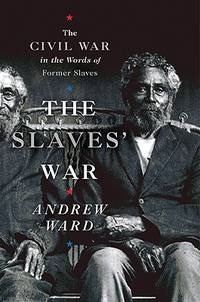
Hardcover. Boston, Houghton Mifflin, 1st, 2008, Book: Very Good, Dust Jacket: Very Good, Hardcover in a bright dust jacket, 386 pages. The first narrative history of the Civil War told by the very people it freed. Groundbreaking, compelling, and poignant, The Slaves' War delivers an unprecedented vision of the nation's bloodiest conflict. An acclaimed historian of nineteenth-century and African-American history, Andrew Ward gives us the first narrative of the Civil War told from the perspective of those whose destiny it decided. Woven together from hundreds of interviews, diaries, letters, and memoirs, here is the Civil War as seen from not only battlefields, capitals, and camps, but also slave quarters, kitchens, roadsides, farms, towns, and swamps. Speaking in a quintessentially American language of wit, candor, and biblical power, army cooks and launderers, runaways, teamsters, and gravediggers bring the war to vivid life. From slaves' theories about the causes of the war to their frank assessments of such major figures as Lincoln, Davis, Lee, and Grant; from their searing memories of the carnage of battle to their often startling attitudes toward masters and liberators alike; and from their initial jubilation at the Yankee invasion of the slave South to the crushing disappointment of freedom's promise unfulfilled, The Slaves' War is a transformative and engrossing vision of America's Second Revolution. Clean copy.
Softcover. Lincoln NE, Bison Books, reprint, 2004, Book: Very Good, Dust Jacket: None, Softcover, 368 pages. Documents the generations of Native peoples who for twelve millennia have moved through and eventually settled along the rocky coast, rivers, lakes, valleys, and mountains of a region now known as Maine. Arriving first to this area were Paleo-Indian peoples, followed by maritime hunters, more immigrants, then a revival of maritime cultures. Beginning in the sixteenth century, Native peoples in northern New England became tangled in the far-reaching affairs of European explorers and colonists. Twelve Thousand Years reveals how Penobscots, Abenakis, Passamaquoddies, Maliseets, Micmacs, and other Native communities both strategically accommodated and overtly resisted European and American encroachments. Clean copy.
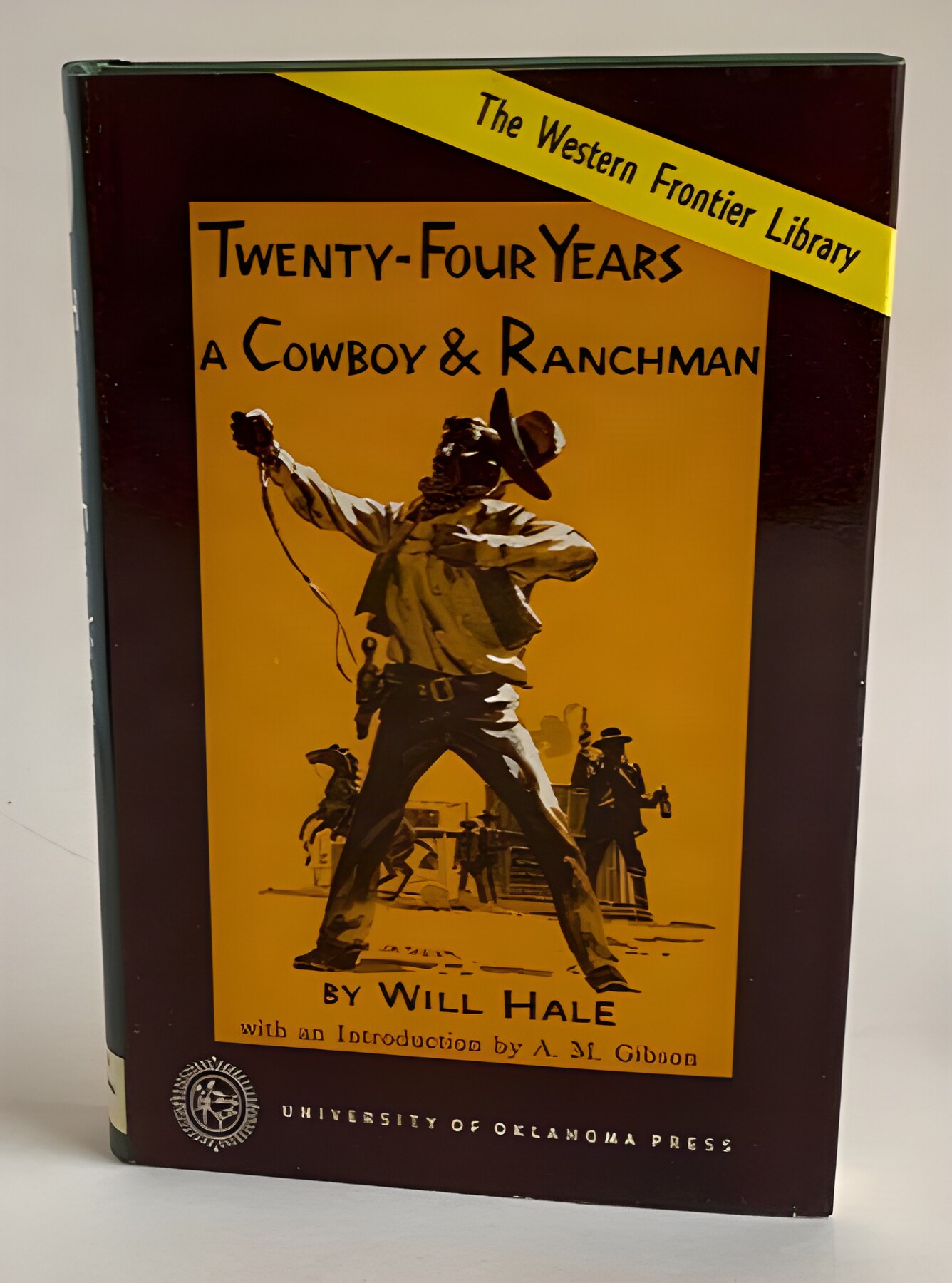
Hardcover. Norman OK, University of Oklahoma Press, 1st, 1959, Book: Very Good, Dust Jacket: Very Good, Hardcover in a bright dust jacket, 183 pages. The Western Frontier Library, Vol. 12. B&w illustrations. The timeframe extends from the Mexican War to the 1880's. Much on the Comanches in Texas, cattle raids and killings on both sides of the Rio Grande by both Mexican and American cowboys, the murder of a Pinkerton detective, the Lincoln County cattle war, and the pursuit of Billy the Kid. Clean copy.
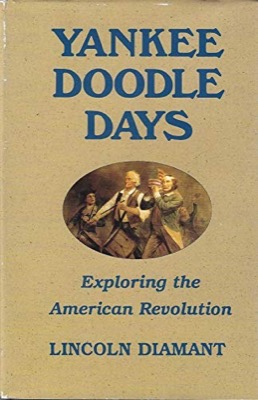
Hardcover. Fleischmanns NY, Purple Mountain Press, 1st, 1996, Book: Very Good, Dust Jacket: Very Good, Hardcover in a bright, unclipped dust jacket. 178 pages.Award-winning biographer and historian Lincoln Diamant introduces a diverse group of men and women who contributed in unique ways to the eight-year American Revolution. . . . Among them are soldiers and civilians, veteran generals and three-week militiamen, patriots and spies, a host of Native American and African-American volunteers, and more than a few courageous women. Clean copy.

 "Solomon D. Butcher: Photographing the American Dreamby: Carter, John")

 "The Long Road To Antietam: How the Civil War Became a Revolutionby: Richard Slotkin")
 "The Rhythm Boys of Omaha Central: High School Basketball at the '68 Racial Divide by: Marantz, Steve")
 "The Rise and Fall of the American Whig Party: Jacksonian Politics and the Onset of the Civil War by: Michael F. Holt")
 "Twelve Thousand Years: American Indians in Maine by: Bruce J. Bourque")