Hardcover. New York, Harper Collins, 1st, 2007, Book: Very Good, Dust Jacket: Very Good, Hardcover in a very good dust jacket. Non-paginated. SIGNED BY ILLUSTRATOR WENDELL MINOR ON TITLE PAGE. Full color illustrations. Clean, bright copy.
Hardcover. Edmonton CA, Hurtig , 1st, 1973, Book: Very Good, Dust Jacket: Very Good, Hardcover, 221 pages, b&w photographs, map end papers. Edge wear, rubbing, small tears to dust jacket. Else a clean, tight copy.
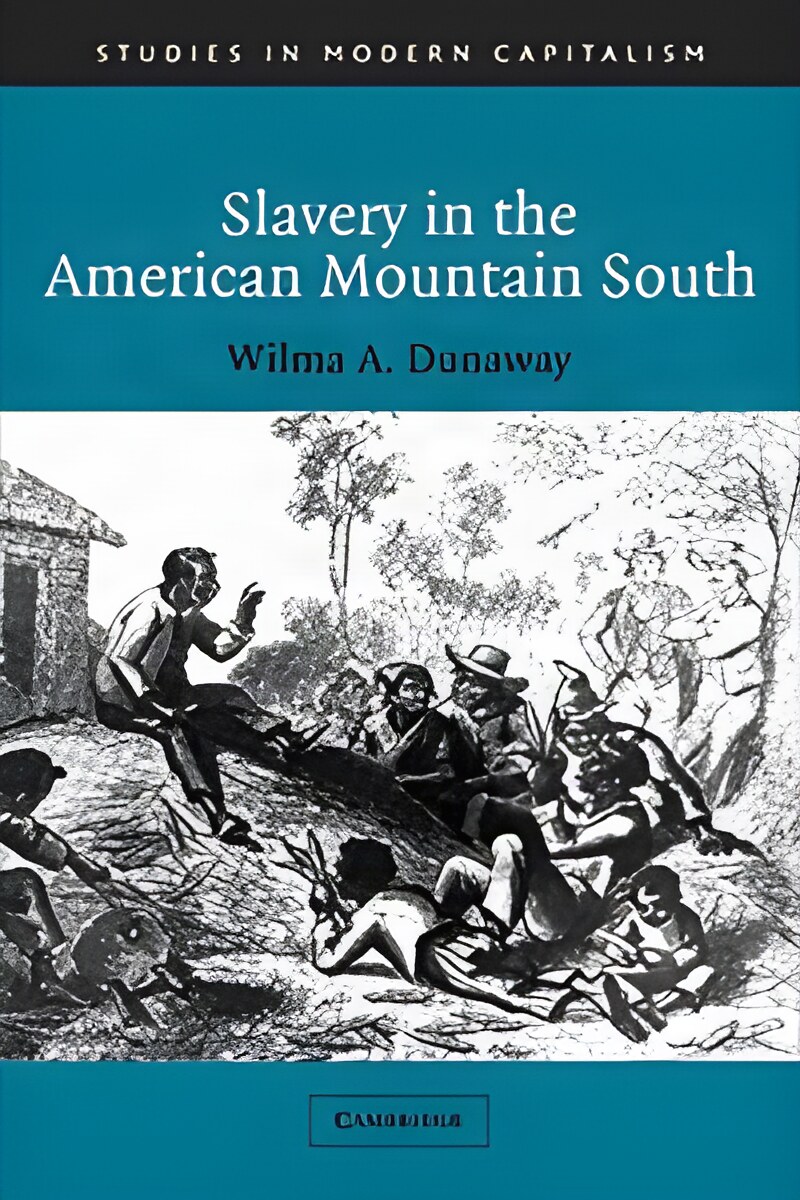
Softcover. UK, Cambridge University Press, 1st pbk, 2003, Book: Very Good, Dust Jacket: None, Softcover, 352 pages, b&w illustrations. Wilma Dunaway breaks new ground by focusing on slave experiences on small plantations in the Upper South. She argues that a region was not buffered from the political, economic, and social impacts of enslavement simply because it was characterized by low black population density and small slaveholdings. By drawing on a massive statistical data base derived from antebellum census manuscripts and county tax records of 215 counties in nine states, on a vast array of slaveholder manuscripts, and on regional slave narratives, she pinpoints several indicators that distinguished Mountain South enslavement from the Lower South. These include a higher incidence of ethnic mixing between African and Native American slaves, heavier reliance on the field labor of women and children, and more frequent assignment of slaves to non-agricultural occupations. Dunaway also calls into question the notion that large numbers were necessary before slaves could engage in community building and resistance. Clean, bright copy.
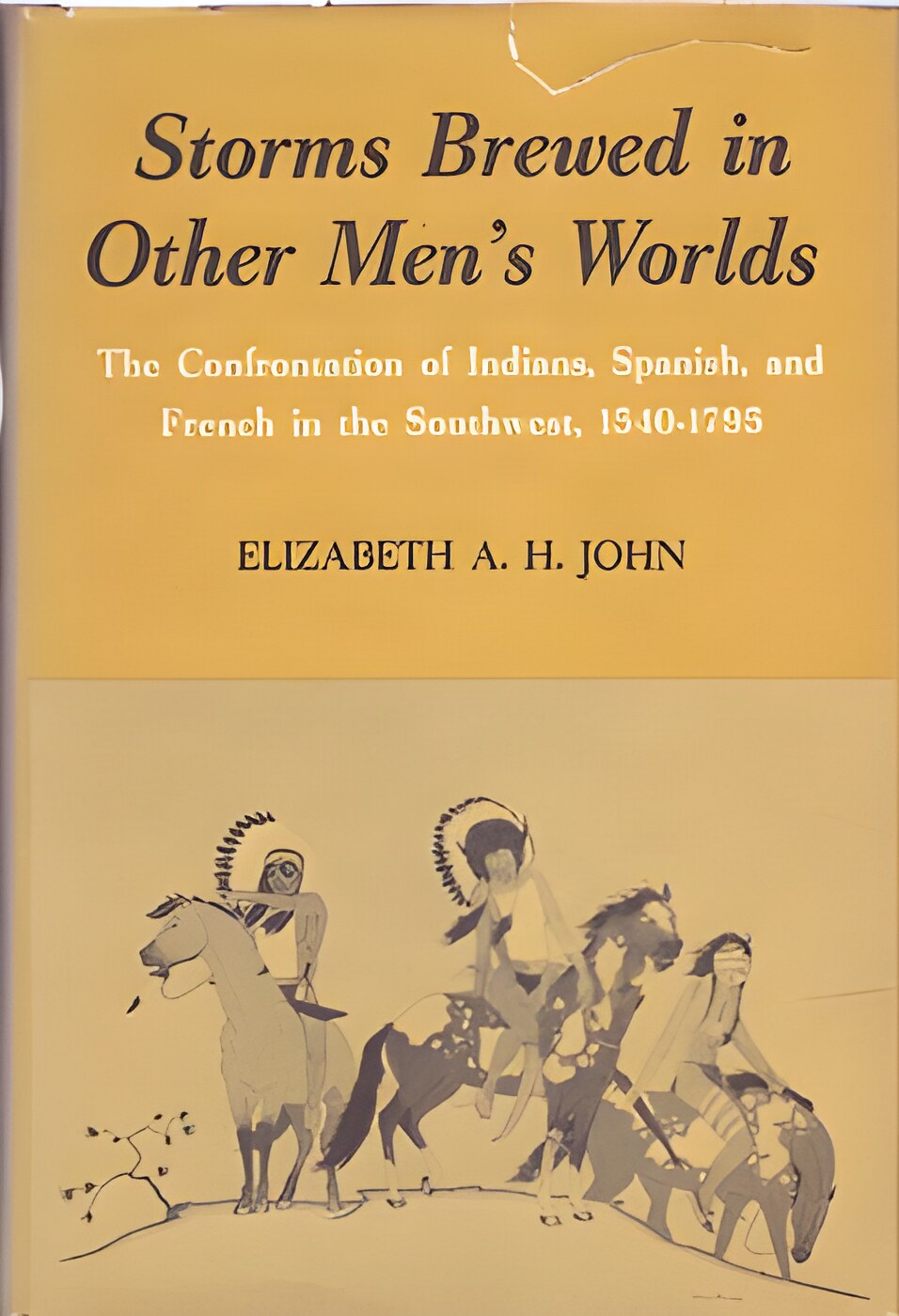
Hardcover. College Station, Texas A&M University Press, 1st, 1975, Book: Very Good, Dust Jacket: Very Good, Hardcover in a bright dust jacket with a small tape repair, 805 pages. The Confrontation of Indians, Spanish, and French in the Southwest, 1540-1795. Spanning two and a half centuries, from the earliest contacts in the 1540s to the crumbling of Spanish power in the 1790s. Storms Brewed in Other Men's Worlds is a panoramic view of Indian peoples and Spanish and French intruders in the early Southwest. The primary focus is the world of the American Indian, ranging from the Caddos in the east to the Hopis in the west, and including the histories of the Pueblo, Apache, Navajo, Ute, and Wichita peoples. Within this region, from Texas to New Mexico, the Comanches played a key, formative role, and no less compelling is the story of the Hispanic frontier peoples who weathered the precarious, often arduous process of evolving coexistence with the Indians on the northern frontier of New Spain. Clean copy.
Hardcover. Washington, Government Printing Office, 1st, 1893, Book: Good, Dust Jacket: None, 822 pages, b&w illustrations, several color plates. Olive green cloth covers w/ gilt lettering on spine, gilt design of Native American bust on front cover. Clear plastic dust jacket. Light wear to edges and corners; rubbing to rear cover. Rear hinge cracked and separating. Foxing to edges. Else pages clean and tight.
Hardcover. New York, William Morrow & Co, 1st, 1992, Book: Very Good, Dust Jacket: Very Good, 160 pages. Hardcover with dust jacket. Very clean, unmarked copy with some minor shelfwear to dust jacket. This beautiful book is a spectacular overview of McCarthy's exciting Western work, presenting colorful paintings from his fine art career. Color illustrations throughout.
Softcover. McGill-Queen's University Press, reprint, 1987, Book: Very Good, Dust Jacket: None, Softcover, 913 pages, b&w illustrations, maps. Trigger's work integrates insights from archaeology, history, ethnology, linguistics, and geography. This wide knowledge allows him to show that, far from being a static prehistoric society quickly torn apart by European contact and the fur trade, almost every facet of Iroquoian culture had undergone significant change in the centuries preceding European contact. He argues convincingly that the European impact upon native cultures cannot be correctly assessed unless the nature and extent of precontact change is understood. His study not only stands Euro-American stereotypes and fictions on their heads, but forcefully and consistently interprets European and Indian actions, thoughts, and motives from the perspective of the Huron culture. The Children of Aataentsic revises widely accepted interpretations of Indian behaviour and challenges cherished myths about the actions of some celebrated Europeans during the "heroic age" of Canadian history. In a new preface, Trigger describes and evaluates contemporary controversies over the ethnohistory of eastern Canada.
Hardcover. NY, Columbia University Press, 1st, 1993, Book: Very Good, Dust Jacket: Very Good, Hardcover in a bright dust jacket, 894 pages. Edited by Jay Parini and with poetry and poetry criticism by Anne Bradstreet and Edward Taylor by Francis Murphy, Early African American Poetry, by Carolivia Herron, The Epic in the Nineteenth Century, by John McWilliams, Longfellow in the Aftermath of Modernism, by Dana Gioia, The Transcendentalist Poets by Lawrence Buell, Emily Dickinson, Cynthia Griffin Wolff, Walt Whitman, by Donald Pease and many others, such as Dana Gioia, Gregory Orr, Ann Charters, William Pritchard, Helen Vendler, Edward Hirsch, and the work of Ezra Pound, William Carlos Williams, the Beat poets and Native American poets and others. SIGNED BY PARINI on the title page. Bright, clean copy.
Hardcover. NY, Printed for I. Riley and Co, 2nd Ed., 1806, Book: Very Good, Dust Jacket: None, The First Settlers of Virginia, an Historical Novel, Exhibiting a View of the Rise and Progress of the Colony at James Town, a Picture of Indian Manners, the Countenance of the Country, and its Natural Productions. Hardcover, Second edition, considerably enlarged. Contemporary calf over boards. Octavo. xii, [13]-284 pages. PLEASE NOTE: No frontispiece engraving of Pocahontas rescuing John Smith. No signs of extraction, so probably never bound in. A reproduction of the frontis laid in. This is one of the earliest American romantic novels about Native Americans. Davis was an English immigrant with literary aspirations who lived in Philadelphia at the beginning of the 19th century. He was acquainted with the likes of Thomas Jefferson and Aaron Burr. He originally adapted this material from his 1803 "Travels of Four Years and a Half in the United States of America" and published it in 1805 as "Captain Smith and Princess Pocahontas: An Indian Tale." This expanded version includes Davis's autobiography, "A Memoir of the Author" (pp. {275]-284). Includes "Errata" on page [274]. Clean, no markings.
Hardcover. NY, McGraw Hill, 1st, 1966, Book: Very Good, Dust Jacket: Very Good, Hardcover in a bright, unclipped dust jacket. The American Trails Series, edited by A.B. Guthrie, Jr. 383 pages, includes a two-page map. This book offers an account of the route between Siberia and Alaska that continues southward along the Rockies all the way to Mexico and beyond. Cushman details the stories of the many groups who have traversed parts of the route from prehistoric peoples to Native Americans, Spanish explorers, fur traders, cowboys, and whiskey runners of the Prohibition era. A clean and pristine copy of the first printing,
Hardcover. NY, Alfred A. Knopf, 1st, 2010, Book: Very Good, Dust Jacket: Very Good, Hardcover in a bright, unclipped dust jacket. He was the greatest Indian warrior of the nineteenth century. His victory over General Custer at the battle of Little Bighorn in 1876 was the worst defeat inflicted on the frontier Army. And the death of Crazy Horse in federal custody has remained a controversy for more than a century. The Killing of Crazy Horse pieces together the many sources of fear and misunderstanding that resulted in an official killing hard to distinguish from a crime. A rich cast of characters, whites and Indians alike, passes through this story, including Red Cloud, the chief who dominated Oglala history for fifty years but saw in Crazy Horse a dangerous rival; No Water and Woman Dress, both of whom hated Crazy Horse and schemed against him; the young interpreter Billy Garnett, son of a fifteen-year-old Oglala woman and a Confederate general killed at Gettysburg; General George Crook, who bitterly resented newspaper reports that he had been whipped by Crazy Horse in battle; Little Big Man, who betrayed Crazy Horse; Lieutenant William Philo Clark, the smart West Point graduate who thought he could "work" Indians to do the Army's bidding; and Fast Thunder, who called Crazy Horse cousin, held him the moment he was stabbed, and then told his grandson thirty years later, "They tricked me! They tricked me!" With the Great Sioux War as background and context, drawing on many new materials as well as documents in libraries and archives, Thomas Powers recounts the final months and days of Crazy Horse's life not to lay blame but to establish what happened.
Hardcover. NY, Macmillan, 5th pr., 1966, Book: Very Good, Dust Jacket: Good, Hardcover in a edgeworn, price-clipped dust jacket. 371 pages with index. A vivid, swiftly paced account of the dispossession of the Plains Indians during the half century after 1840. Epic in sweep, magnificent in detail - here is the tragedy of the Indians who once roamed and hunted on the Great Plains. Included in this great saga are the names one expects: Red Cloud of the Sioux, Black Kettle of the Cheyennes, Generals Sheridan, Sherman, and Custer, Colonel Miles, Crazy Horse, Sitting Bull, and Chief Joseph of the Nez Perces. No marking.
Hardcover. Boston, Bradbury Soden & Co., 1st thus, 1844, Book: Good, Dust Jacket: None, Hardcover, 336 pages, frontispiece engraving with tissue guard, extra engraved title page, many b&w text illustrations. Brown cloth with black leather spine stamped in gilt. Pages with tanning to edges, light water stain to bottom corners of most pages, affecting text and images, but not horrible. Covers show mottling, discoloration to foredges, front and rear. Interior clean, binding tight.
Softcover. Indiana Historical Society, 1st, 1996, Book: Very Good, Dust Jacket: None, Softcover in pictorial wraps, 358 pages, 2 maps, b/w photos, appendices, notes, important dates, bibliography, index. Explores the history and culture of the Miami Indians, who have fought for many years to gain tribal status from the U.S. government. Clean copy.
Hardcover. NY, Kraus Reprint, reprint, 1977, Book: Very Good, Dust Jacket: None, Hardcover, brown cloth, 341 pages. A reprint of a book first published in 1856. No dust jacket issued.
Hardcover. Norman OK, University of Oklahoma Press, 8th pr., 1970, Book: Very Good, Dust Jacket: Very Good, Hardcover in a lightly worn dust jacket, 220 pages with black & white illustrations. A thorough study of the art of the Indian silversmiths of the Southwest. Includes the history of the craft as well as names and localities of pioneer artisans. Bookplate on inside front cover, otherwise clean.
Softcover. Wellesley MA, Branden Books, 1st, 2014, Book: Very Good, Dust Jacket: None, Softcover, 276 pages, several b&w illustrations. SIGNED BY POTVIN on title page. Clean copy.
Softcover. Urbana, University of Illinois Press , 1st, 1993, Book: Very Good, Dust Jacket: None, Softcover, 361 pages, b&w illustrations. The Stonemans is an eye-opening slice of Americana---a trip through nearly twenty years of country music history following a single family from their native Blue Ridge Mountains to the slums of Washington, D.C., and the glitter of Nashville. As early as 1924 Ernest V. "Pop" Stoneman realized the potential of what is now known as country music, and he tried to carve a career from it. Successful as a recording artist from 1925 through 1929, Stoneman foundered during the Great Depression. He, his wife, and their nine children went to Washington in 1932, struggling through a decade of hardship and working to revive the musical career Pop still believed in. The Stoneman Family won the Country Music Association's Vocal Group of the Year Award in 1967. After Pop's death a year later, some of the children scattered to pursue their own careers. Ivan Tribe relies on extensive interviews with the Stonemans and their friends in this chronicle of a family whose members have clung to their musical heritage through good times and bad.
Hardcover. NY, Oxford University Press, 1st, 2011, Book: Very Good, Dust Jacket: Very Good, Hardcover in a bright, unclipped dust jacket. 336 pages, b&w illustrations. Author Larry Hamberlin guides us through this large but oft-forgotten repertoire of operatic novelties, and brings to life the rich humor and keen social criticism of the era. In the early twentieth-century, when new social forces were undermining the view that our European heritage was intrinsically superior to our native vernacular culture, opera-that great inheritance from our European forebearers-functioned in popular discourse as a signifier for elite culture. Tin Pan Opera shows that these operatic novelty songs availed this connection to a humorous and critical end. Combining traditional, European operatic melodies with the new and American rhythmic verve of ragtime, these songs painted vivid images of immigrant Americans, liberated women, and upwardly striving African Americans, striking emblems of the profound transformations that shook the United States at the beginning of the American century. Clean copy.
Softcover. NJ, Rutgers University Press, 1st, 2003, Book: Very Good, Dust Jacket: None, Softcover, 244 pages. The story of westering Americans in the late nineteenth and early twentieth centuries has been told most notably through photographs of American Indians. Unlike this vast archive, produced primarily by male photographers, which depicted American Indians as either vanishing or domesticated, the lesser-known images by the women featured in Trading Gazes provide new ways of seeing the intersecting histories of colonial expansion and indigenous resistance. Four unconventional women-Jane Gay, who documented land allotment to the Nez Perces; Kate Cory, an artist who lived for years in a Hopi community; Grace Nicholson, who purchased cultural items from the Karuk and other northern California tribes; and Mary Schaffer, who traveled among the Stoney and Metis of Alberta, Canada-used cameras to document their cross-cultural encounters. Trading Gazes reconstructs the rich biographical and historical contexts explaining these women's presence in different Native communities of the North American West. Their photographs not only record the unprecedented opportunities available for Euro-American women eager to shed gender restrictions, but also reveal how women's newfound mobility depended on the increasing restrictions placed on Native Americans in this era.
Softcover. Lincoln NE, Bison Books, reprint, 2004, Book: Very Good, Dust Jacket: None, Softcover, 368 pages. Documents the generations of Native peoples who for twelve millennia have moved through and eventually settled along the rocky coast, rivers, lakes, valleys, and mountains of a region now known as Maine. Arriving first to this area were Paleo-Indian peoples, followed by maritime hunters, more immigrants, then a revival of maritime cultures. Beginning in the sixteenth century, Native peoples in northern New England became tangled in the far-reaching affairs of European explorers and colonists. Twelve Thousand Years reveals how Penobscots, Abenakis, Passamaquoddies, Maliseets, Micmacs, and other Native communities both strategically accommodated and overtly resisted European and American encroachments. Clean copy.
Hardcover. NY, Atria Books, 1st, 2021, Book: Very Good, Dust Jacket: Very Good, Hardcover in a bright, unclipped dust jacket, 368 pages, illustrated in color and b&w. The definitive biography that unlocks the remarkable story of Vivian Maier, the nanny who lived secretly as a world-class photographer, featuring nearly 400 of her images, many never seen before, placed for the first time in the context of her life. Vivian Maier, the photographer nanny whose work was famously discovered in a Chicago storage locker, captured the imagination of the world with her masterful images and mysterious life. Before posthumously skyrocketing to global fame, she had so deeply buried her past that even the families she lived with knew little about her. No one could relay where she was born or raised, if she had parents or siblings, if she enjoyed personal relationships, why she took photographs and why she didn't share them with others. Now, in this definitive biography, Ann Marks uses her complete access to Vivian's personal records and archive of 140,000 photographs to reveal the full story of her extraordinary life. Based on meticulous investigative research, Vivian Maier Developed reveals the story of a woman who fled from a family with a hidden history of illegitimacy, bigamy, parental rejection, substance abuse, violence, and mental illness to live life on her own terms. Left with a limited ability to disclose feelings and form relationships, she expressed herself through photography, creating a secret portfolio of pictures teeming with emotion, authenticity, and humanity. With limitless resilience she knocked down every obstacle in her way, determined to improve her lot in life and that of others by tirelessly advocating for the rights of workers, women, African Americans, and Native Americans. No one knew that behind the detached veneer was a profoundly intelligent, empathetic, and inspired woman--a woman so creatively gifted that her body of work would become one of the greatest photographic discoveries of the century.
Hardcover. Gretna LA, Pelican Publishing, 1st, 2003, Book: Very Good, Dust Jacket: Very Good, Hardcover in a bright dust jacket. In June 1892, a thirty-year-old shoemaker named Homer Plessy bought a first-class railway ticket from his native New Orleans to Covington, north of Lake Pontchartrain. The two-hour trip had hardly begun when Plessy was arrested and removed from the train. Though Homer Plessy was born a free man of color and enjoyed relative equality while growing up in Reconstruction-era New Orleans, by 1890 he could no longer ride in the same carriage with white passengers. Plessy's act of civil disobedience was designed to test the constitutionality of the Separate Car Act, one of the many Jim Crow laws that threatened the freedoms gained by blacks after the Civil War. This largely forgotten case mandated separate-but-equal treatment and established segregation as the law of the land. It would be fifty-eight years before this ruling was reversed by Brown v. Board of Education. Keith Weldon Medley brings to life the players in this landmark trial, from the crusading black columnist Rodolphe Desdunes and the other members of the Comite des Citoyens to Albion W. Tourgee, the outspoken writer who represented Plessy, to John Ferguson, a reformist carpetbagger who nonetheless felt that he had to judge Plessy guilty. Clean copy.

 "Sitting Bull Remembers (SIGNED BY ILLUSTRATOR)by: Turner, Ann/Wendell Minor")

 "Tenth Annual Report of the Bureau of Ethnology to the Secretary of the Smithsonian Institution, 1888-'89by: Powell, J. W.")
 "The Art of Frank C. McCarthyby: Kelton, Elmer")

![The Columbia History of American Poetry (SIGNED COPY)by: Parini, Jay [Editor]](https://www.browsingisarousing.com/shop/images/399544.jpg "The Columbia History of American Poetry (SIGNED COPY)by: Parini, Jay [Editor]")
![The First Settlers of Virginia, an Historical Novel, Exhibiting a View of the Rise and Progress of the Colony at James Town...by: [Davis, John (1774-1854)]](https://www.browsingisarousing.com/shop/images/The-First-Settlers-of-Virginia-an-Historical-Novel-Exhibiting-a-View-of-the-Rise-and-Progress-of-the398264-451892.jpg "The First Settlers of Virginia, an Historical Novel, Exhibiting a View of the Rise and Progress of the Colony at James Town...by: [Davis, John (1774-1854)]")
![The First Settlers of Virginia, an Historical Novel, Exhibiting a View of the Rise and Progress of the Colony at James Town...by: [Davis, John (1774-1854)]](https://www.browsingisarousing.com/shop/images/The-First-Settlers-of-Virginia-an-Historical-Novel-Exhibiting-a-View-of-the-Rise-and-Progress-of-the398264-451892_50_th.jpg)
![The First Settlers of Virginia, an Historical Novel, Exhibiting a View of the Rise and Progress of the Colony at James Town...by: [Davis, John (1774-1854)]](https://www.browsingisarousing.com/shop/images/The-First-Settlers-of-Virginia-an-Historical-Novel-Exhibiting-a-View-of-the-Rise-and-Progress-of-the398264-451893_50_th.jpg)

 "The Long Death; The Last Days of the Plains Indianby: Andrist, Ralph K.")
 "The manners, customs, and antiquities of the Indians of North and South America (Parley's Cabinet Library)by: Goodrich, Samuel G.")



 "The Scalp Hunters: Abenaki Ambush at Lovewell Pond 1725by: Kayworth Alfred E; Potvin Raymond G")
 "The Stonemans: An Appalachian Family and the Music That Shaped Their Livesby: Tribe, Ivan M.")
 "Tin Pan Opera: Operatic Novelty Songs in the Ragtime Eraby: Larry Hamberlin")
 "To Image and to See: Crow Indian Photographs by Edward S. Curtis and Richard Throssel 1905-1910 by: Northern Tamara; Brown Wendi Starr")

 "Twelve Thousand Years: American Indians in Maine by: Bruce J. Bourque")
 "Vivian Maier Developed: The Untold Story of the Photographer Nanny by: Ann Marks")
 "We As Freemen: Plessy v. Fergusonby: Keith Weldon Medley")