Softcover. Seattle, University of Washington Press, 1st, 2000, Book: Very Good, Dust Jacket: None, Softcover. Like new in publishers shrink-wrap. Chief Joseph's exhausted words of surrender, 'Hear me, my chiefs, I am tired; my heart is sick and sad. From where the sun now stands, I will fight no more forever', are the accepted end of the Nez Perce War of 1877, in which several bands of Nez Perce attempting to find a new home outside their diminished Idaho reservation clashed with the U.S. military (and occasionally other Indians) along the Clearwater and Big Hole Rivers, and finally at the foot of the Bear Paw Mountains. However, a number of Nez Perce escaped transportation to Indian Territory with Joseph and continued their flight to Canada, with perhaps a hundred eventually joining Sitting Bull's Lakota."I Will Tell of My War Story" reproduces, describes, and discusses a remarkable series of drawings by an anonymous Indian artist who fought with Chief Joseph and later reached Canada. The drawings, in red, blue, and black pencil, include portraits of principal participants in the war, battle scenes, and views of Nez Perce camp life and celebrations during the war and after. The drawings are preserved in a small pocket ledger labeled 'Cash Book' on the front, which was acquired by Indian Agent Charles D. Warner in the 1880s. It was willed by him to a family living in northern Idaho, and is now in the collection of the Idaho State Historical Society. Scott Thompson worked closely both with the owners and with members of the Nez Perce community in preparing his manuscript. Thompson's detective work and research methods to identify Nez Perce and other parties pictured in the Cash Book make fascinating reading. He is careful to point out what is speculation and what has been documented or attested to by experts on dress, weapons, ceremony, and other aspects of Native culture. The Cash Book drawings are unique in several ways. They are one of very few firsthand pictorial records of the Nez Perce War, representing an even scarcer record of this war as seen from the Indian viewpoint. They contain invaluable historical and ethnographic information not only explicit in the form of military and Native dress, regalia, and quite graphic battle scenes, but also implicit. The drawings reveal an important stage of cultural adaptation as shown by the mixture of white and Native goods combined in Nez Perce material culture during the 1870s and 1880s, and by the artist's assimilation of white/European drawing techniques such as texture and perspective. The artist combined these drawing techniques with Native art traditions to make exceptionally effective pictorial communications. Scott M. Thompson is an art teacher at Chase Middle School in Spokane, Washington.
Barre, MA, Barre Publishers, 1st, 1972, Book: Very Good, Dust Jacket: Very Good, Hardcover, 152 pages, photographs by Curtis. Introduction and commentary by Don D. Fowler. One hundred and eighteen superb representative photographs have been selected from Curtis's monumental work and reproduced in this book by The Meriden Gravure Company. Don Fowler describes Curtis the photographer and ethnographer, and the Indian groups depicted, commenting on the unique cultural characteristics of each tribe.
Softcover. NY, Viking Press, Uncorr. proof, 1983, Book: Very Good, Dust Jacket: None, Softcover, yellow wrappers. Unrevised and unpublished proofs. Page numbers hand written, 562 pages. SIGNED BY MATTHIESSEN on half-title page: "With best wishes/Peter Matthiessen". The author's controversial and suppressed book about the confrontation between American Indian activists and the FBI in the early 1970s at Pine Ridge Reservation near Wounded Knee. Clean, bright copy.
Hardcover. New York, Viking Press, First Thus, 1983, Book: Very Good, Dust Jacket: Very Good, 628 pages. Hardcover. Bright dust jacket with light sun fading to spine. Clean & unmarked text. A nice copy.
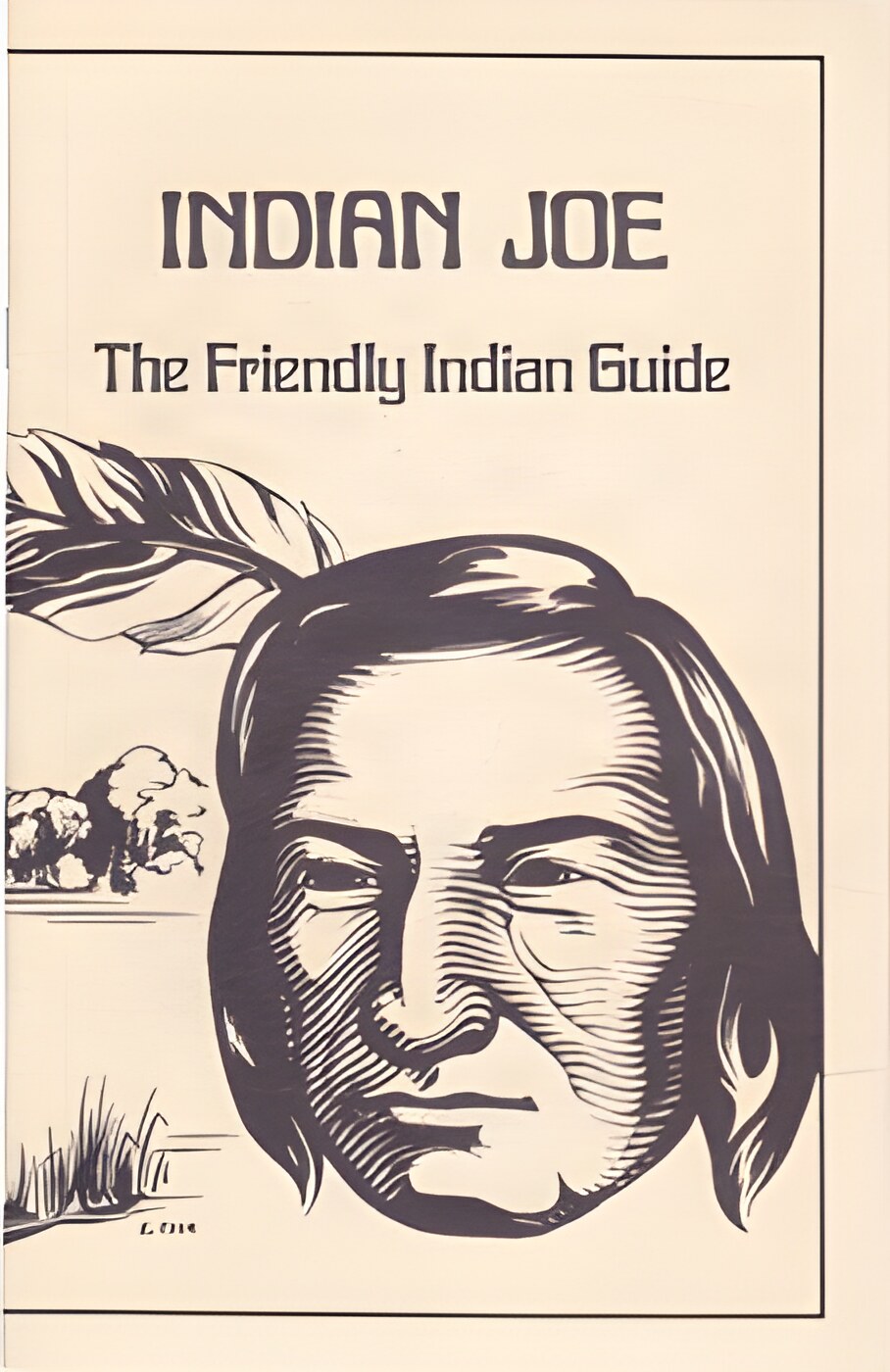
Softcover. West Danville VT, United Methodist Church, 1st, 1976, Book: Very Good, Dust Jacket: None, Softcover booklet, stapled wrappers, 16 pages. Indian Joe was a Native American guide active in the early conflicts and settlement of Vermont in the 1700s. B&w illustrations, photo of his tomb in the Oxbow cemetery in Newbury, Vermont. Clean copy.
Hardcover. Boston, Rand Avery Company, 1st, 1915, Book: Very Good, Dust Jacket: None, Hardcover, blue cloth with black lettering, 92 pages, 7 b&w plates. A collection of folklore from in and around the "Crystal Hills" of New Hampshire gathered from tales of old settlers and records in historical societies and town libraries. Clean copy.
Hardcover. Hartford CT, Hurlbut, Scranton & Co., 1st, 1864, Book: Very Good, Dust Jacket: None, Hardcover, 763 pages, illustrated with many full-page plates, most hand-colored (including second title page). Leather bound with some splitting along spine edges. Black spine label with gilt lettering. Internally very good, minor foxing.
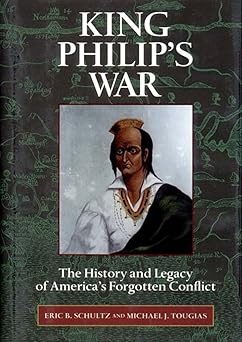
Hardcover. Woodstock VT, Countryman Press, 4th pr., 1999, Book: Very Good, Dust Jacket: Very Good, Hardcover in a bright, price-clipped dust jacket, 416 pages, b&w illustrations. Now largely forgotten, the massacres of 1675 to 1676, known as King Philip's War, ended the harmonious relations that had existed between native Americans and the colonists since their arrival at Plymouth Rock in 1620. Tensions had been rising as the number of settlers grew, and the pillaging of an outlying farm by affronted young braves escalated into open hostilities. Pitched battles were fought from Rhode Island to Maine. Hundreds of English died as farmers fled and cowered behind stockades or in the few port towns. Thousands of natives were slaughtered and the rest dispersed or sold into slavery in the West Indies. The savagery resulted in the clearing of the native populations from southern New England and the unopposed expansion of the New England colonies. It also became the brutal model on which the United States came to deal with its native peoples. King Philip's War tells the story with such close attention to detail that each ambush, each burned-out farm, becomes a vivid image. The authors make abundant use of maps and photographs of old sites to enable the reader to follow the course of the war: the book forms an exhaustive guide for the armchair historian or anyone wishing to visit the monuments and battlefields today. Clean copy.
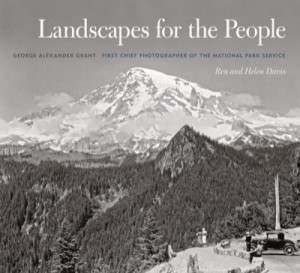
Hardcover. Athens GA, University of Georgia Press, 1st, 2015, Book: Very Good, Dust Jacket: Very Good, Hardcover in a bright dust jacket. 254 pages, b&w illustrations. George Alexander Grant is an unknown elder in the field of American landscape photography. Just as they did the work of his contemporaries Ansel Adams, Edward Weston, Eliot Porter, and others, millions of people viewed Grant's photographs; unlike those contemporaries, few even knew Grant's name. Landscapes for the People shares his story through his remarkable images and a compelling biography profiling patience, perseverance, dedication, and an unsurpassed love of the natural and historic places that Americans chose to preserve. A Pennsylvania native, Grant was introduced to the parks during the summer of 1922 and resolved to make parks work and photography his life. Seven years later, he received his dream job and spent the next quarter century visiting the four corners of the country to produce images in more than one hundred national parks, monuments, historic sites, battlefields, and other locations. He was there to visually document the dramatic expansion of the National Park Service during the New Deal, including the work of the Civilian Conservation Corps. Grant's images are the work of a master craftsman. His practiced eye for composition and exposure and his patience to capture subjects in their finest light are comparable to those of his more widely known contemporaries. Nearly fifty years after his death, and in concert with the 2016 centennial of the National Park Service, it is fitting that George Grant's photography be introduced to a new generation of Americans.
Hardcover. Cincinnati OH, George Conclin, 6th Ed., 1841, Book: Very Good, Dust Jacket: None, Hardcover, 288 pages, 9 b&w woodcut illustrations. Sixth edition, first published in 1838. Tan cloth, paper label on spine, label is chipped, worn in areas. Covers with light soil. Still, internally a tight, clean copy with light foxing.
Hardcover. NY, Time Life, reprint, 1983, Book: Very Good, Dust Jacket: None, 456 pages. Hardcover with no dust jacket. Dark blue leather bound with gilt titles to front cover and spine. Embossed decoration on front cover. Gilt text block edges, red ribbon marker. Clean, tight copy. In 1861 William Watson, a native Scot who had established himself as a Louisiana businessman, enlisted in the Confederate forces although still a British subject. In 1887 he penned his memoirs "to give", he said, "a simple narrative of my experience in a war campaign". Far from simple, Watson's work clearly and forcefully describes his experiences with the 3rd Louisiana infantry in battles at Wilson's Creek and Pea Ridge while depicting the mundane aspects of camp life and providing delightful and colorful character sketches of fellow soldiers and officers, including the legendary General Ben McCulloch. But Watson offers much more than the story of a soldier's life. He also provides an excellent depiction of southern society undergoing the crisis of secession and the tumultuous early years of the Civil War.
Hardcover. US, Combined Books, 1st, 1993, Book: Very Good, Dust Jacket: Very Good, Hardcover, 312 pages, b&w illustrations. Light shelf-wear to dust jacket, else a clean, tight copy. The destruction of George Armstrong Custer's command at Little Bighorn by the Sioux and Northern Cheyenne on 25 June, 1876 has been etched in the national memory and has remained one of America's longest lingering controversies. The Little Bighorn Campaign penetrates the mysteries of Custer's disaster as well as the broader context of the 1876 campaign against the Sioux.
Hardcover. NY, Farrar, Straus and Giroux, 1st, 1971, Hardcover in a bright dust jacket, 378 pages. From dust jacket notes: "For most Americans, the Second World War started on December 7, 1941, and much of the fighting took place in strange, faraway places. For the British, the war started on September 3, 1939, and much of the action took place in the skies over England. In the spring of 1940, after months of uneasy calm, Germany invaded the Lowlands and conquered France within a few days, leaving England without her only meaningful ally on the Continent. A year would pass before the Soviet Union was drawn into the war, and eighteen months before the Japanese attacked Pearl Harbor. The United Kingdom, with a land area about the size of Wyoming, was alone, all alone, with only the Straits of Dover separating the island from Hitler's war machine. For six years Mollie Panter-Downes covered the war for The New Yorker magazine from her native England. Even at the height of the air war over London, when 'all that is best in the good life of civilized effort appears to be slowly and painfully keeling over,' she continued to file her fortnightly reports in an understated but dramatic fashion that reflected the fortitude of her fellow countrymen: 'The announcements of the first air-raid deaths are beginning to appear in the obituary columns of the morning papers. No mention is made of the cause of death, but the conventional phrase "very suddenly" is always used.' William Shawn, editor of The New Yorker, has assembled Miss Panter-Downes' 'Letter from London' columns into a consecutive, on-the-spot chronicle of the war in England."
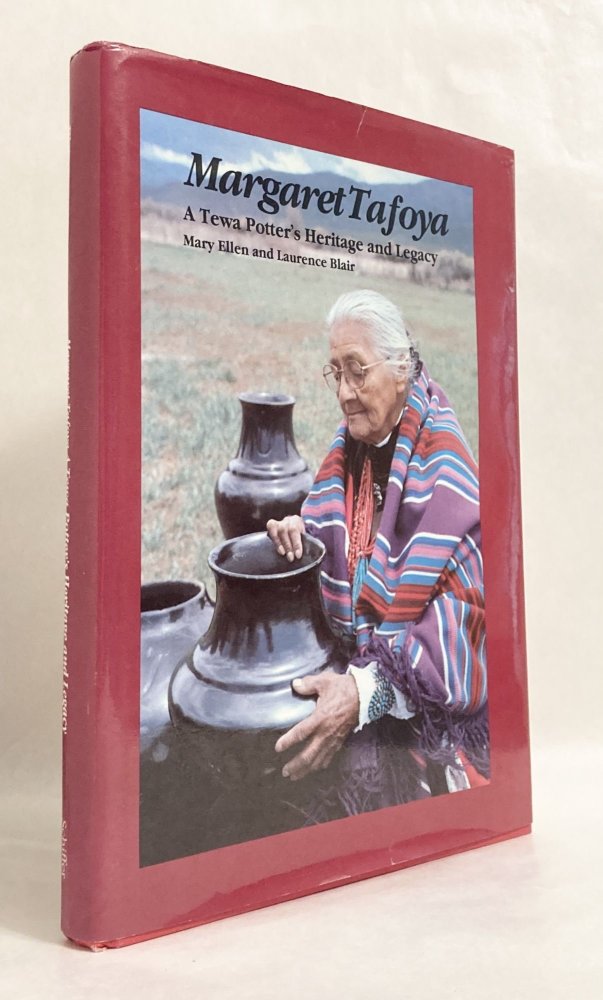
Hardcover. West Chester PA, Schiffer Publishing, 1st, 1986, Book: Very Good, Dust Jacket: Very Good, Hardcover in a bright dust jacket, 199 pages. SIGNED BY THE ARTIST/POTTER MARGARET TAFOYA on the title page. Foreword by Rick Dillingham. Illustrated throughout with black & white and color photography. Bibliography. Index. This beautiful book presented in large format tells the story of Margaret Tafoya and her contributions to Tewa Pueblo pottery. The book explores her life, pottery making techniques, the Tafoya family and descendants, and the history of the Pueblo people. clean copy.
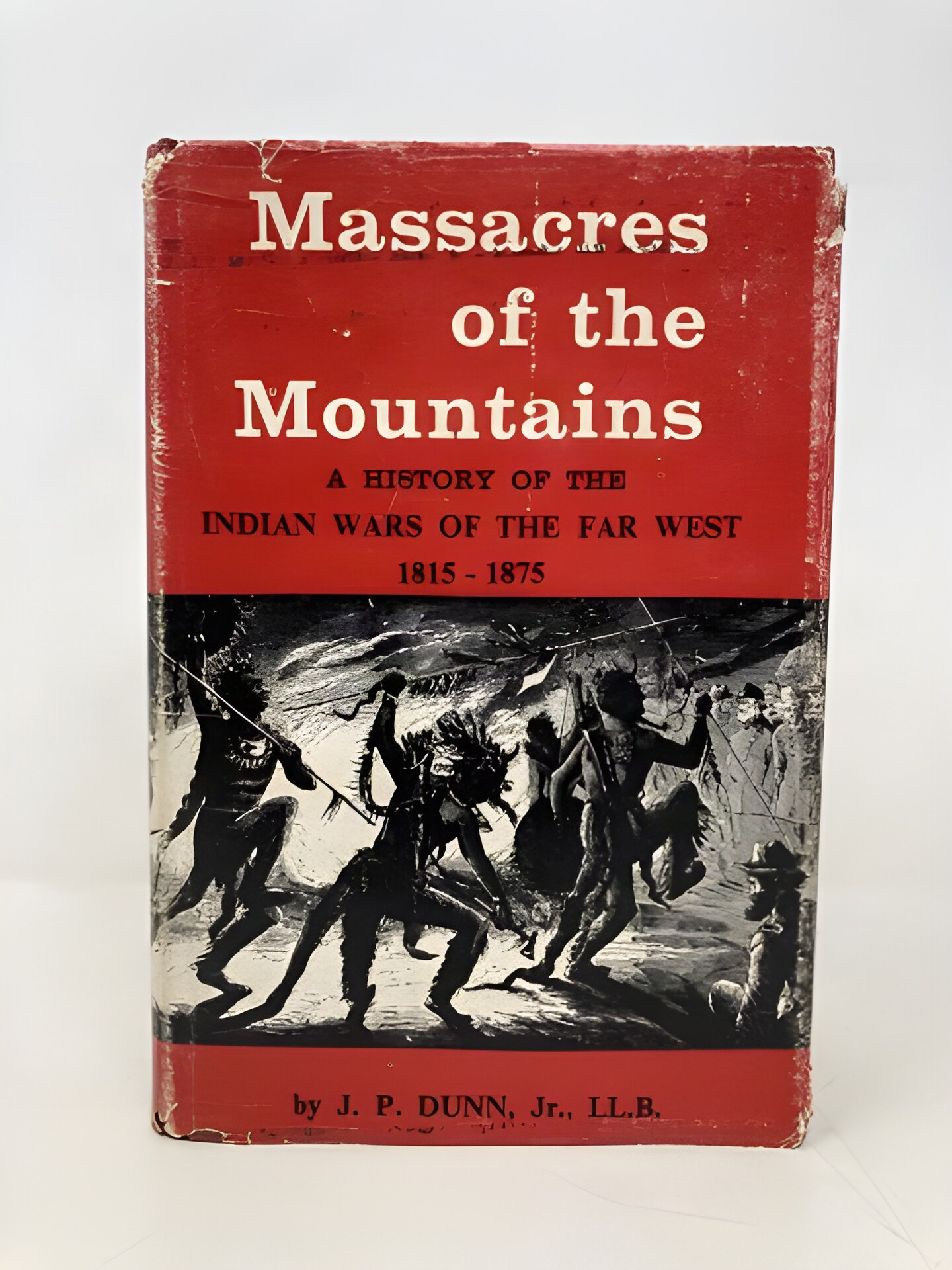
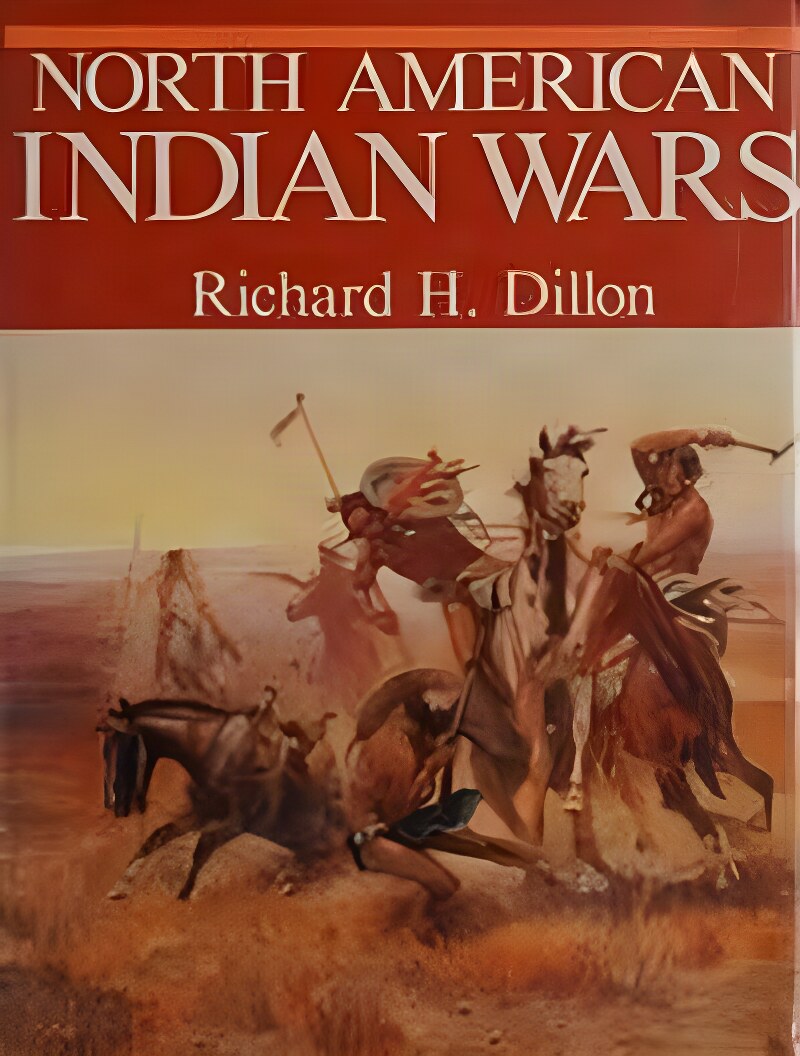
Hardcover. NY, Archer House, reprint, 1958, Book: Very Good, Dust Jacket: Good, Hardcover in a lightly worn dust jacket, 110 b/w illustrations. 669 pages. This is a facsimile reprint of edition first published in 1886. Covering 60 years of merciless bloody conflict, it documents in detail every major Indian battle between 1815 and 1876. Dust jacket spine faded, otherwise a clean, very good copy.
Hardcover. NY, Time Life, reprint, 1982, Book: Very Good, Dust Jacket: None, 389 pages. Hardcover with no dust jacket. Dark blue leather bound with gilt titles to front cover and spine. Embossed decoration on front cover. Gilt text block edges, red ribbon marker. Clean, tight copy. The commander of a Georgia regiment through much of the Civil War mused later in his memoirs that the heaviest burden fell not upon the man at the front, but upon the woman who waited and prayed for victory: "While the men were carried away with the drunkenness of the war, she dwelt in the stillness of her desolate home." Sallie Brock Putnam spoke for Southern womanhood. She was a native of Madison County, Virginia, and seems to have come from a family of good social standing. The book contains an unexpectedly full history of the Civil War; the author exhibits a strong grasp of strategy and tactics. But at its heart is an incisive eyewitness account of life in a capital that was swollen to four times its normal population by the exigencies of war. Brock's descriptions of Jefferson Davis' inauguration and the Richmond Bread Riot of 1863 are dramatic, but no more so than her accounts of nameless refugees, race relations, opportunistic merchants and blockade runners. Confederate prisons and family matters. In contrast to other female Southern writers of the period, she was more sober and factual, less gossipy and speculative. She wrote with shrewdness and maturity, and with a remarkable lack of self-pity and exaggeration. Yet the reader cannot miss her courage, sacrifice and suffering. Sallie Brock Putnam died in 1911.
Hardcover. Washington, D.C., Government Printing Office, 1st, 1903, Book: Very Good, Dust Jacket: None, 347 pages. Includes Natick to English, and English to Natick dictionaries. Dark green cloth covers, introduction by Edward Everett Hale, section of abbreviations. Rubbing and light edgewear to covers, pages crisp and unmarked, stiff binding; overall, a very clean, tight copy in great condition.
Hardcover. Lincoln NE, University of Nebraska Press, 1st, 1993, Book: Very Good, Dust Jacket: Very Good, Hardcover in a bright dust jacket, 391 pages, b&w illustrations. An excellent study of a military commander who transformed the American Frontier and the West. Based on a wide range of sources, including materials only recently made available to researchers, this first complete, carefully documented biography of Miles skillfully delineates the brilliant, abrasive, and controversial tactician whose career in many respects epitomized the story of the Old Army. Nelson A. Miles was probably the best Indian fighter produced by the U.S. Army between 1865 and 1890, figuring prominently in some of the most famous and significant conflicts between whites and Native Americans. This carefully documented biography of Miles skillfully delineates the brilliant, abrasive, and controversial tactician whose career in many respects epitomized the story of the Old Army. Clean copy.
Hardcover. Secaucus NJ, Chartwell Books, 1993, Book: Very Good, Dust Jacket: Very Good, Hardcover, 255 pages, illustrated throughout in color and b&w. Folio. Light edgewear to dust jacket, else a clean, tight copy.
Hardcover. Jackson MS, University Press of Mississippi, reprint, 1996, Book: Very Good, Dust Jacket: Very Good, Hardcover, 115 pages illustrated throughout in b&w. Light edgewear to dust jacket, else a clean, tight copy. An Anniversary Edition of a book first published in 1971. New introduction by William Maxwell. Photodocumentation of the noted author's personal selection of images made in her native Mississippi soon after her return from college and as publicity agent for the state's Works Progress Administration office.
Softcover. London, 1849, Book: Very Good, Dust Jacket: None, This is 64 page extract from a larger volume (pages 443 - 506), possibly London Magazine. This is the original printing and features 4 fold-out plans and illustrations, all in excellent condition. Bound in a clear acetate folder.
Hardcover. London, Merrill Holberton, 1st, 1998, Book: Very Good, Dust Jacket: Very Good, Hardcover, 160 pages. Black & white photography. Clean, tight copy. These largely unpublished photographs, some only recently discovered, were taken by Aby Warburg on his trip to the American frontier in 1895. Neither a photographer nor a native tourist, Warburg was a scholar with a camera. As seen though his own cultural and psychological perspective on art, these insightful photographs are significant not only to the study of Native American and frontier life, but also to an understanding of Warburg's unique vision of cultural history. 80 duotone photos.
Hardcover. NY, Time Life, reprint, 1983, Book: Very Good, Dust Jacket: None, 389 pages. Hardcover with no dust jacket. Dark blue leather bound with gilt titles to front cover and spine. Embossed decoration on front cover. Gilt text block edges, red ribbon marker. Clean, tight copy. The commander of a Georgia regiment through much of the Civil War mused later in his memoirs that the heaviest burden fell not upon the man at the front, but upon the woman who waited and prayed for victory: "While the men were carried away with the drunkenness of the war, she dwelt in the stillness of her desolate home." Sallie Brock Putnam spoke for Southern womanhood. She was a native of Madison County, Virginia, and seems to have come from a family of good social standing. The book contains an unexpectedly full history of the Civil War; the author exhibits a strong grasp of strategy and tactics. But at its heart is an incisive eyewitness account of life in a capital that was swollen to four times its normal population by the exigencies of war. Brock's descriptions of Jefferson Davis' inauguration and the Richmond Bread Riot of 1863 are dramatic, but no more so than her accounts of nameless refugees, race relations, opportunistic merchants and blockade runners. Confederate prisons and family matters. In contrast to other female Southern writers of the period, she was more sober and factual, less gossipy and speculative. She wrote with shrewdness and maturity, and with a remarkable lack of self-pity and exaggeration. Yet the reader cannot miss her courage, sacrifice and suffering. Sallie Brock Putnam died in 1911.
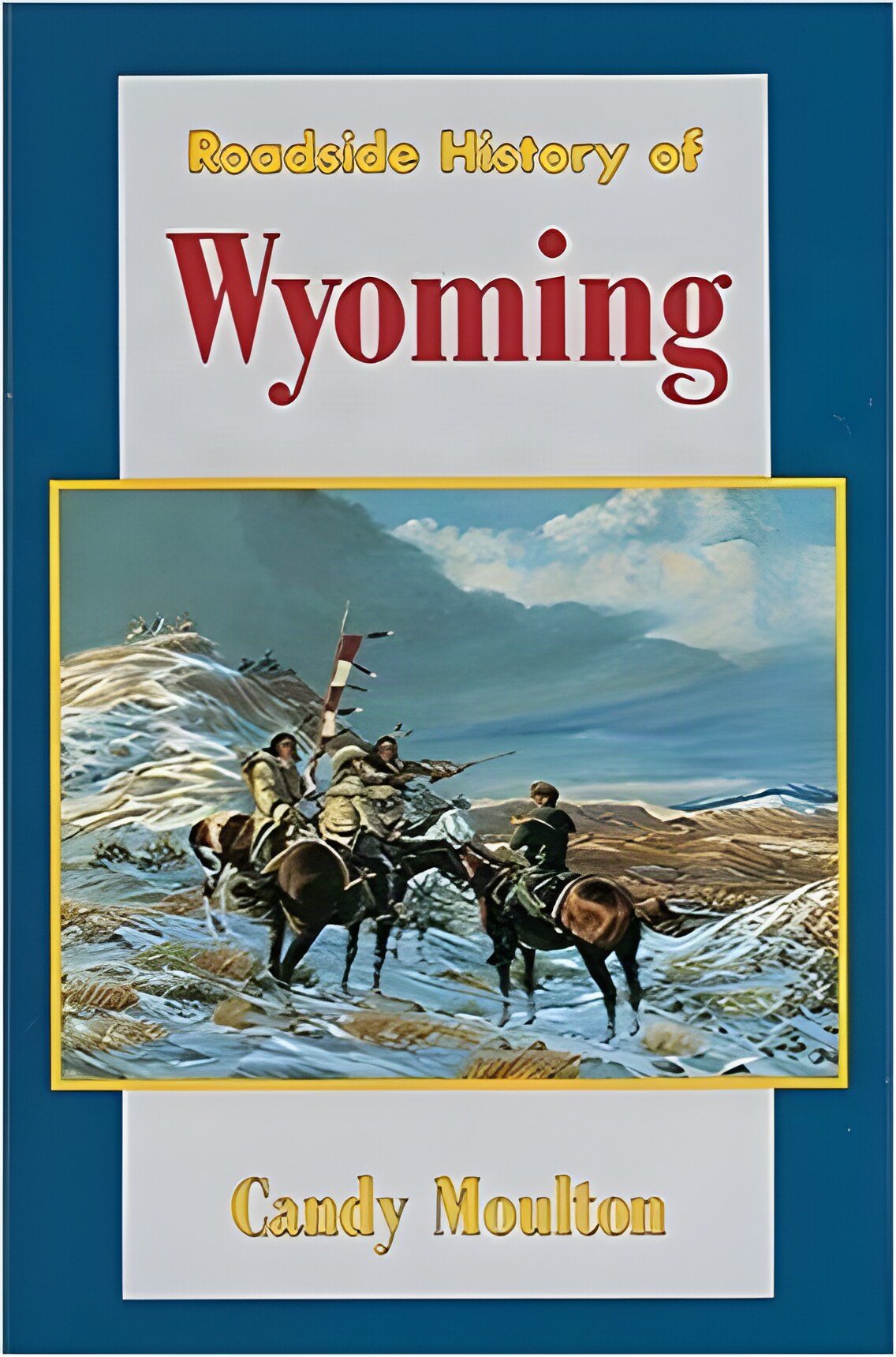
Softcover. Missoula MT, Mountain Press, 1st, 1995, Book: Very Good, Dust Jacket: None, Softcover, pages, b&w illustrations. In Roadside History of Wyoming readers will learn about Native Americans who struggled to adapt to many sudden changes, mountain men who braved the wilderness, emigrants who suffered untold hardships, cattle and sheep drovers who took advantage of the open range, miners who sought wealth below the ground, and many others whose deeds help define the state's rich history. Clean copy.

 "I Will Tell of My War Story: A Pictorial Account of the Nez Perce War (Samuel and Althea Stroum Book)by: Thompson, Scott M.")
 "In a Sacred Manner We Live: Photographs of the North American Indianby: Curtis, Edward S.")
 "In the Spirit of Crazy Horse (SIGNED PROOF)by: Matthiessen, Peter")


 "In the Spirit of Crazy Horseby: Matthiessen, Peter")


 "Indian Races of North and South America, The: Including the Late Sioux War and Indian Massacre in Minnesotaby: Brownell, Charles de Wolf")
 "Life in the Confederate Army: Being the Observations and Experiences of an Alien in the South During the American Civil War (Collector's Library of the Civil War)by:")
 "Little Bighorn Campaign, The : March-September 1876 (Great Campaigns Series)by: Sarf, Wayne Michael")
 "London War Notes 1939-1945by: Mollie Panter Downes")
 "Mosby's Rangers (Collector's Library of the Civil War)by: Williamson, James J.")
 "Natick Dictionaryby: Trumbull, James Hammond")
 "Nelson A. Miles and the Twilight of the Frontier Army by: Robert Wooster")
 "One Time, One Place: Mississippi in the Depressionby: Welty, Eudora")
 "Papers Relating to the First Settlement and Capture of Fort Oswego 1727-1756 (WITH FOLD-OUTS)by: O'Callaghan, E.B.")
 "Photographs at the Frontier - Aby Warburg in America 1895-1896by: Cestelli Guidi (ed), Benedetta and Nicholas Mann")
 "Richmond During the War; Four Years of Personal Observation By a Richmond Lady (Leather Bound Hardcover) by: Putnam, Sallie B.")