Softcover. NY, Schocken Books, reprint, 1973, Book: Very Good, Dust Jacket: None, Softcover, 439 pages. Reprint of a work first published in 1875, b&w illustrations. Name on front fly leaf, otherwise clean. An historical account written during the late 19th century. The book explores various communistic communities in the United States, documenting their origins, practices, and social structures. Nordhoff's investigation is based on personal visits and observations, aiming to provide insights into how these societies operate and their contributions to the labor question.
Softcover. Stanford CA, Stanford University Press, 3rd pr., 1999, Book: Very Good, Dust Jacket: None, Softcover, 493 pages. This book is about ending guerrilla conflicts in Latin America through political means. It is about peace processes, aimed at securing an end to military hostilities in the context of agreements that touch on some of the principal political, economic, social, and ethnic imbalances that led to conflict in the first place. The book presents a carefully structured comparative analysis of six Latin American countries--Nicaragua, El Salvador, Guatemala, Mexico, Colombia, and Peru--which experienced guerrilla warfare that outlasted the end of the Cold War. The book explores in detail the unique constellation of national and international events that allowed some wars to end in negotiated settlement, one to end in virtual defeat of the insurgents, and the others to rage on. The aim of the book is to identify the variables that contribute to the success or failure of a peace dialogue. Clean copy.
Hardcover. Princeton NJ, Princeton University Press, 1st, 1988, Book: Very Good, Dust Jacket: Very Good, Hardcover in a bright dust jacket, 250 pages. This book examines the "constitutional faith" that has, since 1788, been a central component of American "civil religion." By taking seriously the parallel between wholehearted acceptance of the Constitution and religious faith, Sanford Levinson opens up a host of intriguing questions about what it means to be American. While some view the Constitution as the central component of an American religion that serves to unite the social order, Levinson maintains that its sacred role can result in conflict, fragmentation, and even war. To Levinson, the Constitution's value lies in the realm of the discourse it sustains: a uniquely American form of political rhetoric that allows citizens to grapple with every important public issue imaginable. Clean copy.
Hardcover. NY, W. W. Norton & Company, 1st, 2015, Book: Very Good, Dust Jacket: Very Good, Hardcover in a bright, unclipped dust jacket. 402 pages. Remarkable study of smuggling, which illustrates how Americans related to the world from the Founding to World War I. From the beginning, the United States sought to build nationalism by limiting their own ability to trade with foreigners. But at the same time, Americans like Charles L. Lawrence defied customs authorities, insisting that trade be free. The government responded by building a potent army of customs inspectors and treasury agents, who profiled Jews, Asians, and women in the pursuit of tariff revenues. Beautifully written, the author uses the stories of smugglers like Jean Lafitte, Charles L. Lawrence, and Rose Eytinge to illustrate not only the history of Protectionism, but also the rise of American empire and the development of the modern social safety net. He shows that the tariff was far from an unpopular relic, but rather the foundation of the nineteenth century state. Clean copy.
Softcover. US, University of South Carolina Press, 1st, 2013, Book: Very Good, Dust Jacket: None, Softcover, 125 pages, illustrated throughout in b&w. Remainder mark to bottom edge. Clean, tight copy.
Hardcover. Hoboken, John Wiley & Sons, Inc., First Edition, 2006, Book: Very Good, Dust Jacket: Very Good, 272 pages. Hardcover. Black cloth covered boards with red printed titles to spine. Dust jacket in very good condition. Illustrations in bw throughout. Clean & unmarked copy.
Hardcover. Cambridge MA, Harvard University Press , 1st, 2017, Book: Very Good, Dust Jacket: Very Good, Hardcover in a bright, unclipped dust jacket. 586 pages, b&w illustrations. Cuba's Revolutionary World examines in forensic detail how the turmoil that rocked a small Caribbean nation in the 1950s became one of the twentieth century's most transformative events. Initially, Castro's revolution augured well for democratic reform movements gaining traction in Latin America. But what had begun promisingly veered off course as Castro took a heavy hand in efforts to centralize Cuba's economy and stamp out private enterprise. Embracing the Soviet Union as an ally, Castro and his lieutenant Che Guevara sought to export the socialist revolution abroad through armed insurrection. Castro's provocations inspired intense opposition. Cuban anticommunists who had fled to Miami found a patron in the CIA, which actively supported their efforts to topple Castro's regime. The unrest fomented by Cuban-trained leftist guerrillas lent support to Latin America's military castes, who promised to restore stability. Brazil was the first to succumb to a coup in 1964; a decade later, military juntas governed most Latin American states. Thus did a revolution that had seemed to signal the death knell of dictatorship in Latin America bring about its tragic opposite. Clean copy.
Softcover. Durham NC, Duke University Press, 1st, 1993, Book: Very Good, Dust Jacket: None, Softcover, 672 pages. Pointing to a glaring blind spot in the basic premises of the study of American culture, leading critics and theorists in cultural studies, history, anthropology, and literature reveal the "denial of empire" at the heart of American Studies. Challenging traditional definitions and periodizations of imperialism, this volume shows how international relations reciprocally shape a dominant imperial culture at home and how imperial relations are enacted and contested within the United States.Drawing on a broad range of interpretive practices, these essays range across American history, from European representations of the New World to the mass media spectacle of the Persian Gulf War. The volume breaks down the boundary between the study of foreign relations and American culture to examine imperialism as an internal process of cultural appropriation and as an external struggle over international power. Clean copy.
Hardcover. NY, Dodd, Mead & Co., 1st, 1976, Book: Very Good, Dust Jacket: Very Good, Hardcover in a bright dust jacket, 466 pages, b&w illustrations. Name on front fly leaf, minor wear to dj. Otherwise a clean, tight copy.
Softcover. Indianapolis/NY, Bobbs Merrill, 2nd pr., 1966, Book: Very Good, Dust Jacket: None, Softcover, 452 pages. This book covers the Massachusetts Convention of 1820-21; New York State Convention of 1821; and the Virginia State Convention of 1829-1830, along with numerous tables. Clean, tight copy.
Softcover. NY, Columbia University Press, reprint, Book: Very Good, Dust Jacket: None, Softcover, 666 pages. Name on front fly leaf, title-page. Otherwise a tight, clean copy.
Hardcover. Montgomery AL, Elliot & Clark Publishing, 1st, 1996, Book: Very Good, Dust Jacket: Very Good, Hardcover in a bright dust jacket, 164 pages, b&w cartoons throughout. Chronicles the nation's highs and lows in an extensive collection of cartoons that span the entire history of American political cartooning. The authors note that not all cartoonists have worn white hats many have perpetuated demeaning ethnic stereotypes, slandered honest politicians, and oversimplified complex issues. Nonetheless, most cartoonists pride themselves on attacking honestly, if ruthlessly. This collection humorously recounts some direct hits, recalling the discomfort of the cartoon's targets and the delight of their readers. Spine label otherwise clean.
Hardcover. New York, Coward, McCann & Geoghegan, Inc. , 1st Edition, 1975, Book: Good, Dust Jacket: Fair, 510 pages. Hardcover. Decorated endpapers. Red cover boards, white quarter cloth, gilt title on spine and front cover board, agewear to covers. Dust jacket has edgewear (see image). Binding good. Spine straight. Pages unmarked. A historical narrative about WWI in the United States.
Hardcover. NY/London, Macmillan / Collier Macmillan, 1st, 1975, Book: Very Good, Dust Jacket: Very Good, Hardcover in a bright, unclipped dust jacket, 517 pages, b&w illustrations. Life of the signer of the Declaration of Independence, first US Attorney General, and second Secretary of State. Clean copy.
Hardcover. NY, W. W. Norton, 1st, 1967, Book: Very Good, Dust Jacket: Very Good, Hardcover in a worn, chipped dust jacket, 119 pages, maps, index. As WWII ground to a close, whose forces would be the first to reach Berlin? General Dwight David Eisenhower, supreme commander of the British and American armies, chose to halt at the Elbe River and leave Berlin to the Red Army. Could he have beaten the Russians to Berlin? If so, why didn't he? If he had, would the Berlin question have arisen? Would Germany have been divided as it was? Name on front fly leaf, otherwise clean.
Hardcover. Chicago, Ivan R. Dee, 1st, 2000, Book: Very Good, Dust Jacket: Very Good, Hardcover in a bright, unclipped dust jacket. General Dwight D. Eisenhower's decision to campaign for the presidency in 1952 was a pivotal even in America's cold war years-- it influenced almost a decade of foreign and domestic policy. Based on recently discovered letters and diaries, William Pickett provides the first complete account of Eisenhower's decision to run, with surprising new conclusions. Clean, unread copy.
Hardcover. Lawrence KS, University Press of Kansas, 1st, 2007, Book: Very Good, Dust Jacket: Very Good, Hardcover in a bright dust jacket, 274 pages. With the landmark election of Franklin Delano Roosevelt in 1932, decades of Republican ascendancy gave way to a half century of Democratic dominance. It was nothing less than a major political realignment, as the direction of federal policy shifted from conservative to liberal-and liberalism itself was redefined in the process. Electing FDR is the first book in seventy years to examine in its entirety the 1932 presidential election that ushered in the New Deal. Award-winning historian Donald Ritchie looks at how candidates responded to the nation's economic crisis and how voters evaluated their performance. More important, he explains how the Democratic Party rebuilt itself after three successive Republican landslides: where the major shifts in party affiliation took place, what contingencies contributed to FDR's victory, and why the new coalition persisted as long as it did. Ritchie challenges prevailing assumptions that the Depression made Roosevelt's election inevitable. He shows that FDR came close to losing the nomination to contenders who might have run to the right of Hoover, and discusses the role of newspapers and radio in presenting the candidates to voters. He also analyzes Roosevelt's campaign strategies, recounting his attempts to appeal to disaffected voters of all ideological stripes, often by altering his positions to broaden his popularity. With the advent of the New Deal, Americans came to enjoy a wide federal safety net that provided everything from old age pensions to rural electricity-government innovations so embraced by voters that even later conservative presidents recognized their importance. Ritchie traces this legacy through the Reagan and Bush years, but he relates how FDR in 1932 was often vague about the specifics of his program and questions whether voters really knew what they were in for with the New Deal. Clean copy.
Hardcover. Berkeley CA, University of California Press, 1st, 1974, Book: Very Good, Dust Jacket: Good, Hardcover in a lightly worn dust jacket, 205 pages. Name on front fly leaf otherwise clean. Small hole on dj front.
Hardcover. NY, W. W. Norton & Company, 1st, 1976, Book: Very Good, Dust Jacket: Very Good, Hardcover in a lightly worn dust jacket, 332 pages, b&w illustrations. Clean, tight copy.
Softcover. Berkeley CA, University of California Press, reprint, 1966, Book: Very Good, Dust Jacket: None, Softcover, 151 pages. Deals with the parliamentary group in England which claimed the Whig tradition during the American Revolution. The Americans asserted rights that were essentially Whig, but at the same time repudiated the authority of parliament, the stronghold of Whig tradition. Fading to spine, name on front fly leaf, otherwise clean.
Hardcover. Austin TX, University of Texas Press, 1stt, 1969, Book: Very Good, Dust Jacket: Very Good, Hardcover in a bright dust jacket. Three essays (on the Shelterbelt Project, New Deal critics, and FDR's attempt to expand the Supreme Court) make up the second annual Walter Prescott Webb Memorial Lectures; foreword by C. B. Smith; edited by Harold M. Hollingsworth and William F. Holmes. Bound in bright green cloth-covered boards with silver lettering on the front board and spine.
Hardcover. Urbana IL, University of Illinois Press, 1st, 1990, Book: Very Good, Dust Jacket: Very Good, Hardcover in a bright, unclipped dust jacket. Power was at the heart of FDR's relationship with the media: the power of the nation's chief executive to control his public messages versus the power of the free press to act as an independent watchdog over the president and the government. This compelling study points to Roosevelt's consummate news management as a key to his political artistry and leadership legacy.
Hardcover. NY, NYU Press , 1st, 2014, Book: Very Good, Dust Jacket: None, Hardcover, illustrated boards, no dust jacket issued, 272 pages. Returning Vietnam veterans had every reason to expect that the government would take care of their readjustment needs in the same way it had done for veterans of both World War II and Korea. But the Vietnam generation soon discovered that their G.I. Bills fell well short of what many of them believed they had earned. Mark Boulton's groundbreaking study provides the first analysis of the legislative debates surrounding the education benefits offered under the Vietnam-era G.I. Bills. Specifically, the book explores why legislators from both ends of the political spectrum failed to provide Vietnam veterans the same generous compensation offered to veterans of previous wars. Clean copy.


 "Constitutional Faithby: Levinson, Sanford")
 "Contraband: Smuggling and the Birth of the American Centuryby: Cohen, Andrew Wender")
 "Controversy and Hope: The Civil Rights Photographs of James Karalesby: Julian Cox; James H. Karales; Rebekah Jacob; Monica Karales")
 "Cradle of Violence - How Boston's Waterfront Mobs Ignited the American Revolutionby: Bourne, Russell")
 "Creating the Commonwealth: The Economic Culture of Puritan New Englandby: Innes, Stephen")

 "Cultures of United States Imperialism by: Kaplan, Amy and Donald E Pease (Editors)")

![Democracy Liberty and Property: The State Constitutional Conventions of the 1820's by: Peterson, Merrill D. [Editor]](https://www.browsingisarousing.com/shop/images/Democracy-Liberty-and-Property-The-State-Constitutional-Conventions-of-the-1820s_by_Peterson-Merrill397449-449118.jpg "Democracy Liberty and Property: The State Constitutional Conventions of the 1820's by: Peterson, Merrill D. [Editor]")
![Democracy Liberty and Property: The State Constitutional Conventions of the 1820's by: Peterson, Merrill D. [Editor]](https://www.browsingisarousing.com/shop/images/Democracy-Liberty-and-Property-The-State-Constitutional-Conventions-of-the-1820s_by_Peterson-Merrill397449-449118_50_th.jpg)
![Democracy Liberty and Property: The State Constitutional Conventions of the 1820's by: Peterson, Merrill D. [Editor]](https://www.browsingisarousing.com/shop/images/Democracy-Liberty-and-Property-The-State-Constitutional-Conventions-of-the-1820s_by_Peterson-Merrill397449-449119_50_th.jpg)

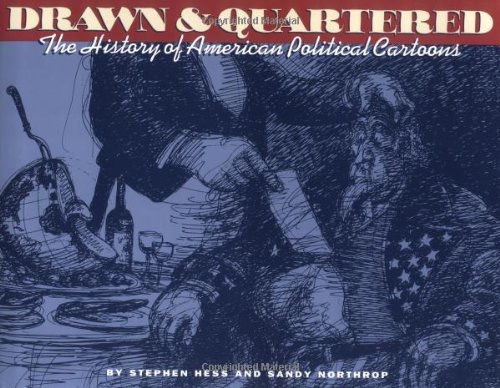
 "Echoes of Distant Thunder: Life in the United states 1914-1918by: Ellis, Edward Robb")


 "Edmund Randolph: A Biography by: John J. Reardon")
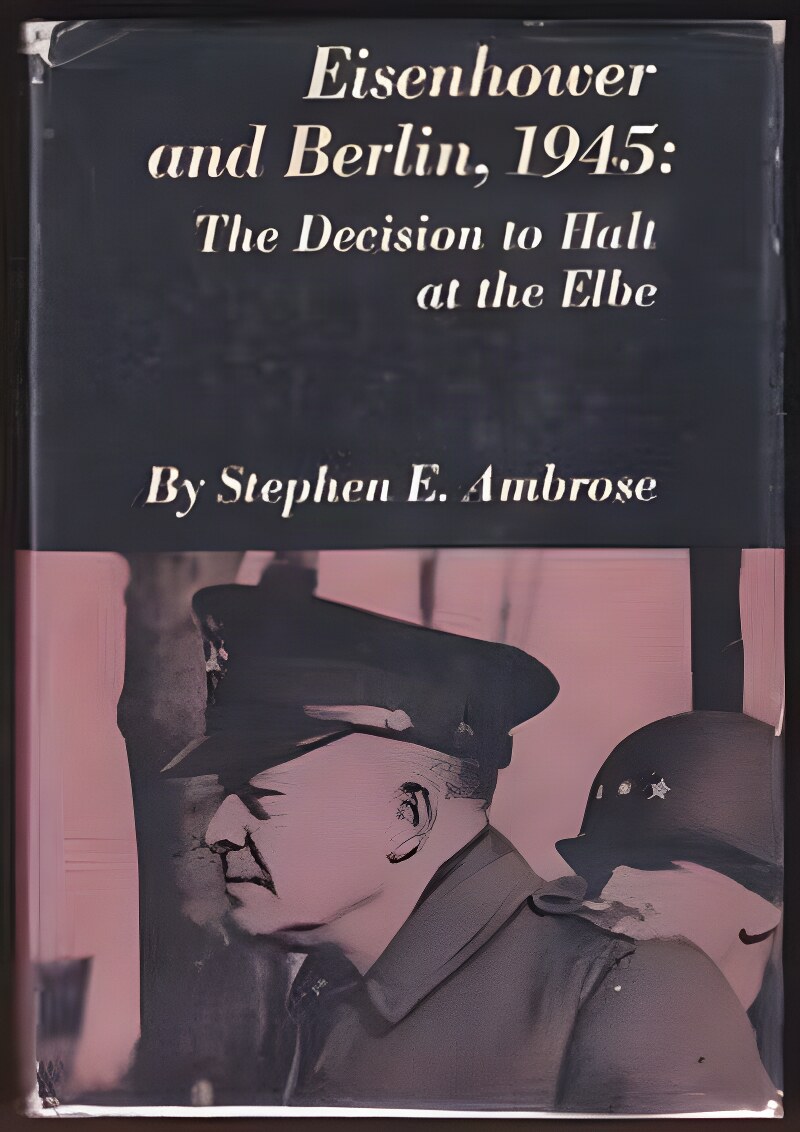
 "Eisenhower Decides to Run: Presidential Politics and Cold War Strategyby: Pickett, William B.")
 "Electing FDR: The New Deal Campaign of 1932by: Donald A. Ritchie")


 "English Whiggism and the American Revolution by: G. H. Guttridge")
 "Essays on the New Dealby: William E. Leuchtenburg William H. Droze, George Wolfskill")
 "F.D.R. and the News Mediaby: Betty Houchin Winfield")
 "Failing Our Veterans: The G.I. Bill and the Vietnam Generationby: Mark Boulton")