Hardcover. Boston, Little, Brown and Company, 1st, 1929, Book: Very Good, Dust Jacket: None, Hardcover, bright green cloth with gilt and black stamping, 548 pages. Illustrated from photographs, facsimiles, plates. Study of Jefferson's mind based on contributions of "French thinkers" on his political philosophy. Inscription on inside front cover, otherwise a clean, tight copy.
Hardcover. Philadelphia, Childs & Peterson , 1st, 1860, Book: Very Good, Dust Jacket: None, Hardcover, embossed brown cloth, 245 pages plus publishers ads. Gilt on spine faded. A fascinating work of history by Francis J. Grund, exploring the link between Europe and the United States of America. Very scarce. An interesting work of world history, explore the current state of Europe in the mid-19th century and the subsequent impact on the United States of America. This work of global history is written by Francis J. Grund, the noted journalist who published numerous works in relation to the socio-politcal climate of America. Bookplate on inside front cover, otherwise tight and clean.
Hardcover. NY, Knopf, 1st, 2003, Book: Very Good, Dust Jacket: Very Good, Hardcover in a bright dust jacket. 185 pages, color and b&w illustrations. With these character sketches of key figures of the American Revolution and illuminating probes of its circumstances, Bernard Bailyn reveals the ambiguities, complexities, and uncertainties of the founding generation as well as their achievements. Using visual documentation--portraits, architecture, allegorical engravings--as well as written sources, Bailyn, one of our most esteemed historians, paints a complex picture of that distant but still remarkably relevant world. He explores the powerfully creative effects of the Founders' provincialism and lays out in fine detail the mingling of gleaming utopianism and tough political pragmatism in Thomas Jefferson's public career, and the effect that ambiguity had on his politics, political thought, and present reputation. And Benjamin Franklin emerges as a figure as cunning in his management of foreign affairs and of his visual image as he was amiable, relaxed, and amusing in his social life. Bailyn shows, too, why it is that the Federalist papers--polemical documents thrown together frantically, helter-skelter, by Alexander Hamilton, James Madison, and John Jay in a fierce political battle two hundred years ago--have attained canonical status, not only as a penetrating analysis of the American Constitution but as a timeless commentary on the nature of politics and constitutionalism.
Hardcover. Westport CT, Greenwood Press, 1st, 2003, Book: Very Good, Dust Jacket: None, Hardcover, maroon cloth covers stamped in silver, 242 pages. Previous owner's inscription on front fly leaf, otherwise clean. Over the course of the American Occupation of Japan, the U.S. attitude toward the Japanese Communist Party (JCP) gradually shifted from one of friendly cooperation to one of mutual opposition. This new study examines the initial approach toward communism in Japan; internal and external factors that affected American attitudes; the various phases of the relationship; and how Japan ultimately became a democratic nation. Oinas-Kukkonen investigates American information gathering techniques used at the time to determine possible links with the Soviet Union. He also discusses the possibility that Nosaka Sanzo, one of the main leaders of the JCP, was an American spy. Using previously secret records of General MacArthur's intelligence staff and plentiful archival materials on the Occupation, this study explores how the United States originally sought to utilize the JCP to assist in the democratization process. It identifies the perceived threat of a revolution in March 1947 as a key turning point in U.S. attitudes. Involved in a delicate balancing act with multiple Japanese interests, some American officials feared that elements of the extreme left might even evolve into extreme right-wing terrorists. In this comprehensive account, Oinas-Kukkonen includes information on the indirect role of the Europeans in this affair, as well as the roles of outsider groups such as the outcaste burakumin and the Koreans residing in Japan.
Hardcover. Cambridge MA, Harvard University Press, 1st, 1967, Book: Very Good, Dust Jacket: Very Good, Hardcover in a lightly worn dust jacket, 336 pages. Discusses the British Acts of Trade and Navigation as enforced in colonial America. Name on front fly leaf, otherwise a clean, tight copy.
hardcover. NY, Worker's Library, 1st, 1934, Book: Very Good, Dust Jacket: Very Good, Hardcover. Foreward by John Dos Passos. A study of the Bonus Marches of the Thirties. Light edgewear.
Hardcover. NY, Times Books, 1st, 1987, Book: Very Good, Dust Jacket: Very Good, Hardcover in a bright dust jacket, 533 pages. Traces the history of the Marcos regime, examines U.S. policy towards the Philippines, and argues that U.S. support of dictators is counterproductive. Bookplate on inside front cover, name on front fly leaf, otherwise clean.
Hardcover. Hamden CT, Archon Books, reprint, 1970, Book: Very Good, Dust Jacket: Good, Hardcover in a lightly worn dust jacket, 243 pages, b&w portrait frontis. A biography of the Virginia cavalier and landowner who lavished his wealth in the building of Westover where he lived on an almost feudal estate and gathered the most valuable library in the colonies. Originally published in 1932.
Hardcover. Chapel Hill NC, University of North Carolina Press, reprint, Book: Very Good, Dust Jacket: None, Hardcover, black cloth, 292 pages, b&w plates. ISBN number on copyright page denotes a reprint. Clean, bright copy, lacks dust jacket.
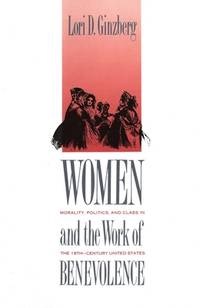
Hardcover. New Haven CT, Yale University Press, 1st, 1990, Book: Very Good, Dust Jacket: Very Good, Hardcover, 230 pages. Minor edgewear and soil to dust jacket with slight sticker-scar to rear cover. Pencil check marks in margin on a few pages. Overall, a tight clean copy.
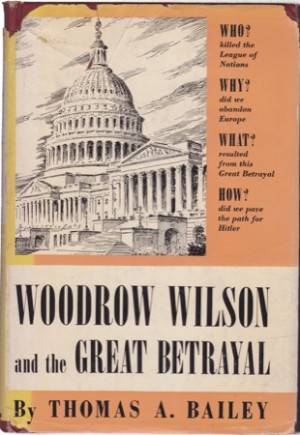
Hardcover. NY, The Macmillan Company, 1st, 1945, Book: Very Good, Dust Jacket: Poor, Hardcover in a very worn, chipped dust jacket, 429 pages. Maroon cloth with light blue lettering on spine. Bailey contends that Wilson's wartime isolationism, as well as his peace proposals at WWl's end were seriously flawed. Highlighting the fact that American delegates encountered staunch opposition to Wilson's proposed League of Nations, Bailey concluded that the president and his diplomatic staff essentially sold out, compromising American ideals to secure mere fragments of Wilson's progressive vision. Bookplate on inside front cover. Book very good, clean. Dust jacket poor.
Hardcover. London, Cambridge University Press, 1st, 2010, Book: Very Good, Dust Jacket: Very Good, Hardcover in a bright, unclipped dust jacket. This revisionist study of Allied diplomacy from 1941 to 1946 challenges Americocentric views of the period and highlights Europe's neglected role. Fraser J. Harbutt, drawing on international sources, shows that in planning for the future Churchill, Roosevelt, Stalin, and others self-consciously operated into 1945, not on "East/West" lines but within a "Europe/America" political framework characterized by the plausible prospect of Anglo-Russian collaboration and persisting American detachment. Harbutt then explains the destabilizing transformation around the time of the pivotal Yalta conference of February 1945, when a sudden series of provocative initiatives, manipulations, and miscues interacted with events to produce the breakdown of European solidarity and the Anglo-Soviet nexus, an evolving Anglo-American alignment, and new tensions that led finally to the Cold War. This fresh perspective, stressing structural, geopolitical, and traditional impulses and constraints, raises important new questions about the enduringly controversial transition from World War II to a cold war that no statesman wanted. Clean copy.
Hardcover. NY, Random House , 1st, 2021, Book: Very Good, Dust Jacket: Very Good, Hardcover in a bright, unclipped dust jacket. 532 pages. The first definitive account of the rise and fall of the Secret Service, from the Kennedy assassination to the alarming mismanagement of the Obama and Trump years, right up to the insurrection at the Capitol on January 6--by the Pulitzer Prize winner.




 "To Begin the World Anew: The Genius and Ambiguities of the American Foundersby: Bernard Bailyn")
 "Tolerance, Suspicion, and Hostility: Changing U.S. Attitudes toward the Japanese Communist Movement, 1944-1947by: Oinas-Kukkonen, Henry")

 "Veterans on the Marchby: Douglas, Jack")
 "Waltzing with a Dictator: The Marcoses and the Making of American Policyby: Raymond Bonner")
 "William Byrd of Westoverby: Richmond Croom Beatty")

 "Yalta 1945: Europe and America at the Crossroadsby: Fraser J. Harbutt")
 "Zero Fail: The Rise and Fall of the Secret Service by: Carol Leonnig")