Hardcover. NY, Farrar, Straus and Giroux, 1st Ltd Ed., 1983, Book: Very Good, Dust Jacket: None, Hardcover, Burgundy cloth, gilt spine and front facsimile signature; signed by author in black ink to limitation page, copy #310/500; 2 sections of black & white photographs; tan paper covered slipcase. Zbigniew Brzezinski was a political scientist, geostrategist, and statesman who served as a counselor to Lyndon B. Johnson from 1966-1968 and held the position of United States National Security Advisor to President Jimmy Carter from 1977 to 1981. Clean, bight copy.
Hardcover. Ithaca NY, Cornell University Press, 2nd pr., 1975, Book: Very Good, Dust Jacket: Good, Hardcover in a lightly worn, rubbed dust jacket, 576 pages. Name on front fly leaf, otherwise clean.
Hardcover. Cambridge MA, Harvard University Press, 1st, 2011, Book: Very Good, Dust Jacket: Very Good, Hardcover in a bright, unclipped dust jacket. Tracing the history of isolationist and internationalist ideas from the 1890s through the 1930s, Nichols reveals unexpected connections among individuals and groups from across the political spectrum who developed new visions for America's place in the world. From Henry Cabot Lodge and William James to W. E. B. Du Bois and Jane Addams to Randolph Bourne, William Borah, and Emily Balch, Nichols shows how reformers, thinkers, and politicians confronted the challenges of modern society--and then grappled with urgent pressures to balance domestic priorities and foreign commitments.
Hardcover. Ithaca NY, Cornell University Press, 1st, 2004, Book: Very Good, Dust Jacket: Very Good, Hardcover in a bright dust jacket, 260 pages. From the dawn of the twentieth century to the early 1960s, public-sector unions generally had no legal right to strike, bargain, or arbitrate, and government workers could be fired simply for joining a union. Public Workers is the first book to analyze why public-sector labor law evolved as it did, separate from and much more restrictive than private-sector labor law, and what effect this law had on public-sector unions, organized labor as a whole, and by extension all of American politics. Joseph E. Slater shows how public-sector unions survived, represented their members, and set the stage for the most remarkable growth of worker organization in American history. Slater examines the battles of public-sector unions in the workplace, courts, and political arena, from the infamous Boston police strike of 1919, to teachers in Seattle fighting a yellow-dog rule, to the BSEIU in the 1930s representing public-sector janitors, to the fate of the powerful Transit Workers Union after New York City purchased the subways, to the long struggle by AFSCME that produced the nation's first public-sector labor law in Wisconsin in 1959. Slater introduces readers to a determined and often-ignored segment of the union movement and expands our knowledge of working men and women, the institutions they formed, and the organizational obstacles they faced.
Hardcover. Princeton NJ, D. Van Nostrand Co., 1st, 1964, Book: Very Good, Dust Jacket: Very Good, Hardcover in a lightly worn dust jacket. 125 pages, endpapers map, 'The New Jersey Historical Series, Volume 12'. A look at radicalism from colonial days forward. Mild soil to dust jacket.
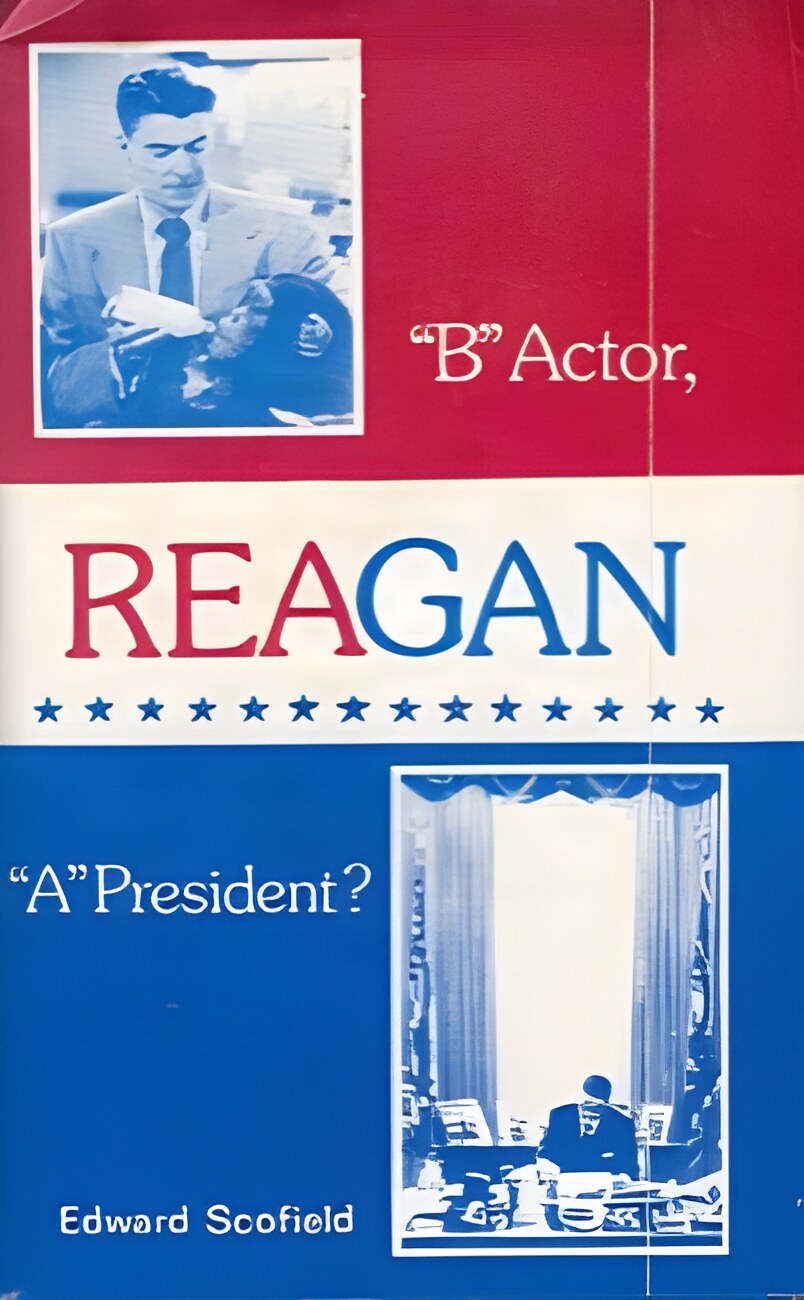
Softcover. Hollywood CA, American Progress Enterprises, 1st, 1983, Book: Very Good, Dust Jacket: None, Softcover, 255 pages. A rambling discourse about America, it's problems and future prospects by a former publicist for Warner Brothers. The author wrote this book to elucidate problems caused by governmental blunders and to ferret out solutions, emphasizing the science of psychology. This book contains copies of correspondence between the author and President Reagan as well as copies of other supporting documents. Lots of advice for the President, Clean, bright copy.
Hardcover. Chicago, University of Chicago Press, 1st, 2006, Book: Very Good, Dust Jacket: Very Good, Hardcover in bright, unclipped dust jacket. 575 pages, b&w illustrations. Stephen Kercher here provides the first comprehensive look at the satiric humor that flourished in the United States during the 1950s and early 1960s. Focusing on an impressive range of comedy--not just standup comedians of the day but also satirical publications like MAD magazine, improvisational theater groups such as Second City, the motion picture Dr. Strangelove, and TV shows like That Was the Week That Was--Kercher reminds us that the postwar era saw varieties of comic expression that were more challenging and nonconformist than we commonly remember. His history of these comedic luminaries shows that for a sizeable audience of educated, middle-class Americans who shared such liberal views, the period's satire was a crucial mode of cultural dissent. For such individuals, satire was a vehicle through which concerns over the suppression of civil liberties, Cold War foreign policies, blind social conformity, and our heated racial crisis could be productively addressed. Clean copy.
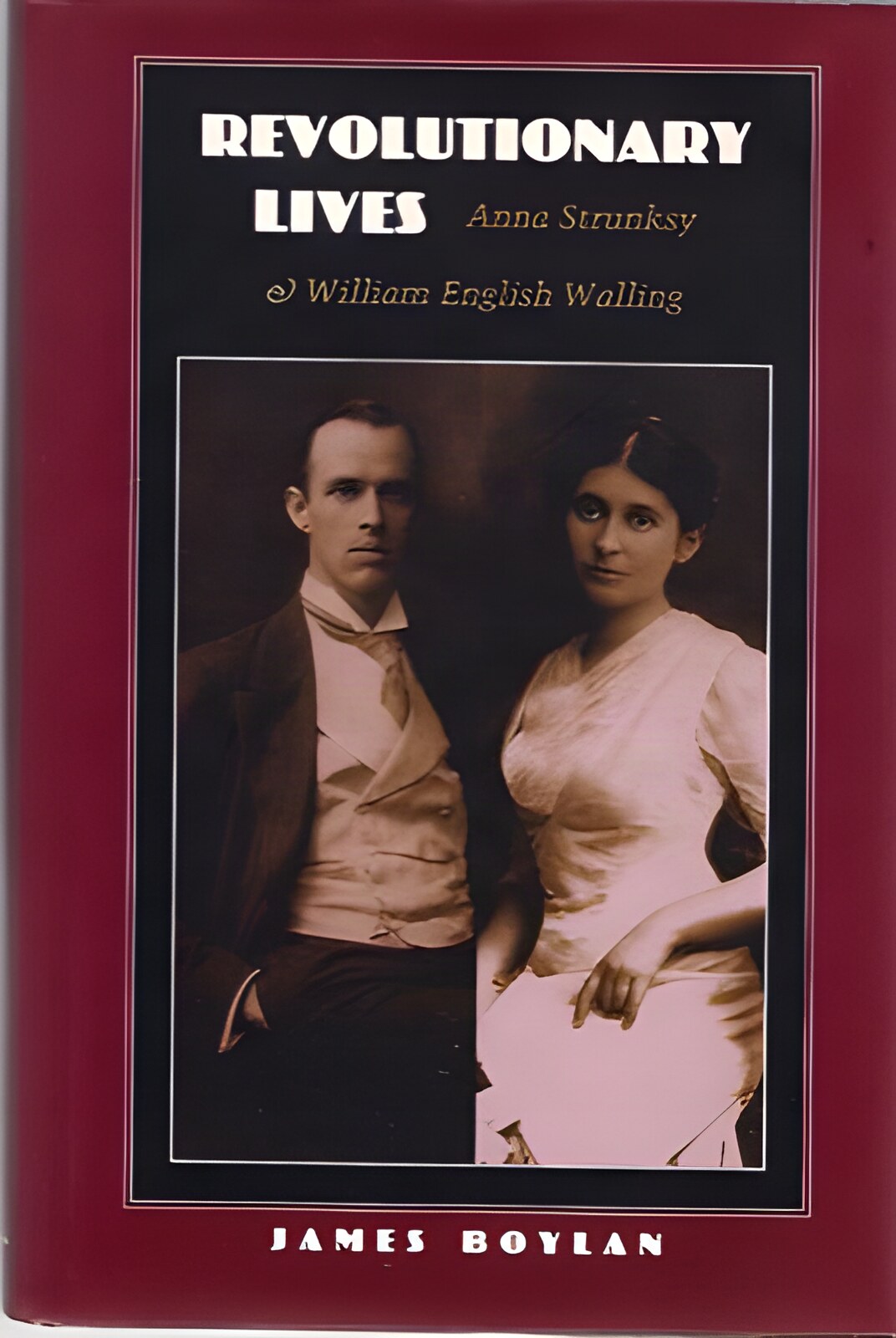
Hardcover. Amherst MA, University of Massachusetts Press, 1st, 1999, Book: Very Good, Dust Jacket: Very Good, Hardcover in a bright dust jacket, 334 pages, b&w illustrations. Relying on original historical materials, an illustrated biography traces the lives of an influential pair of American socialists--he a wealthy journalist-activist, she an aspiring novelist. When they fell in love amid the tumult of the 1905 Russian revolution, they believed they were destiny's match: William English Walling, a wealthy American journalist-activist from the Midwest, an Anna Strunsky, an aspiring novelist from San Francisco. Vowing to dedicate themselves to socialist ideals, they soon became celebrities who moved in an elite circle of writers, journalist, and reformers. ultimately, both their marriage and their political commitment faltered, but not before they had participated in some of the most urgent social causes of their day. Drawing on archival sources and family materials, James Boylan creates engaging portraits of two striking figures. He reveals the details of Strunsky's intesnse involvement with Jack London and their troubled literary collaboration. He describes the creation of Walling's "revolutionary news bureau" in Russia under scrutiny of the czarist police, and Strunsky's harrowing journey to report on a pogrom. He also recounts the couple's dash to cover a race riot in Illinois, Walling's pivotal role in creating the NAACP and the disasterous schism between Strunksky's pacifism and Walling's bellicosity during World War I. Clean copy.
Hardcover. NY, Pantheon Books, 1st, 1985, Book: Very Good, Dust Jacket: Very Good, Hardcover in a bright, price-clipped dust jacket, 402 pages. SIGNED BY THE AUTHOR on the title page. Worster presents a picture of a technological empire based on vast water projects, designed by engineers and controlled by a small managerial elite. This reality, he argues, considerably limited the West's fabled freedom, the claims of promoters, hack writers, and self-serving local historians notwithstanding . this is a major theoretical work, well-argued and generally well-written, a must for any bookshelf that seeks thoroughness in matters western. Chapter five "The Grapes of Wealth," is focused on irrigation in the Central Valley of California and the Central Valley Project. Donald Worster (born 1941) is a prize-winning American academic, one of the founders of, and leading figures in, the field of environmental history. Clean copy.
Hardcover. London, John Murray, 1st, 1965, Book: Very Good, Dust Jacket: Good, Hardcover in a lightly worn dust jacket, 236 pages. Name on front fly leaf otherwise clean.
Hardcover. NY, Wilfred Funk, 1st, 1942, Book: Very Good, Dust Jacket: None, Hardcover, light tan cloth, gilt lettering on spine. 634 pages, mild shelf wear. An incredible chronologically arranged, unedited and indexed collection of FDR's Foreign Policy, National Defense Policy, Public Letters & Papers, Messages to Congress, Executive Orders, Proclamations, Fireside Chats & Public Addresses. Bookplate on inside front cover. Otherwise a clean copy.
Hardcover. NY, Random House, 2nd pr., 1969, Book: Very Good, Dust Jacket: Good, Hardcover in a pric-clipped dust jacket that has a bright red cover but fading to spine. 372 pages, clean copy. Describes the influence of Cesar Chavez, leader of the United Farm Workers. The growth of that influence among Mexican-Americans and many other concerned Americans. The years when Chavez called for boycotts, and the greatest agricultural labor strike in U.S. and the greatest agricultural labor strike in U.S. history, the struggle for justice and a means to reverse the order of the system. A book about the man. Cesar Chavez.
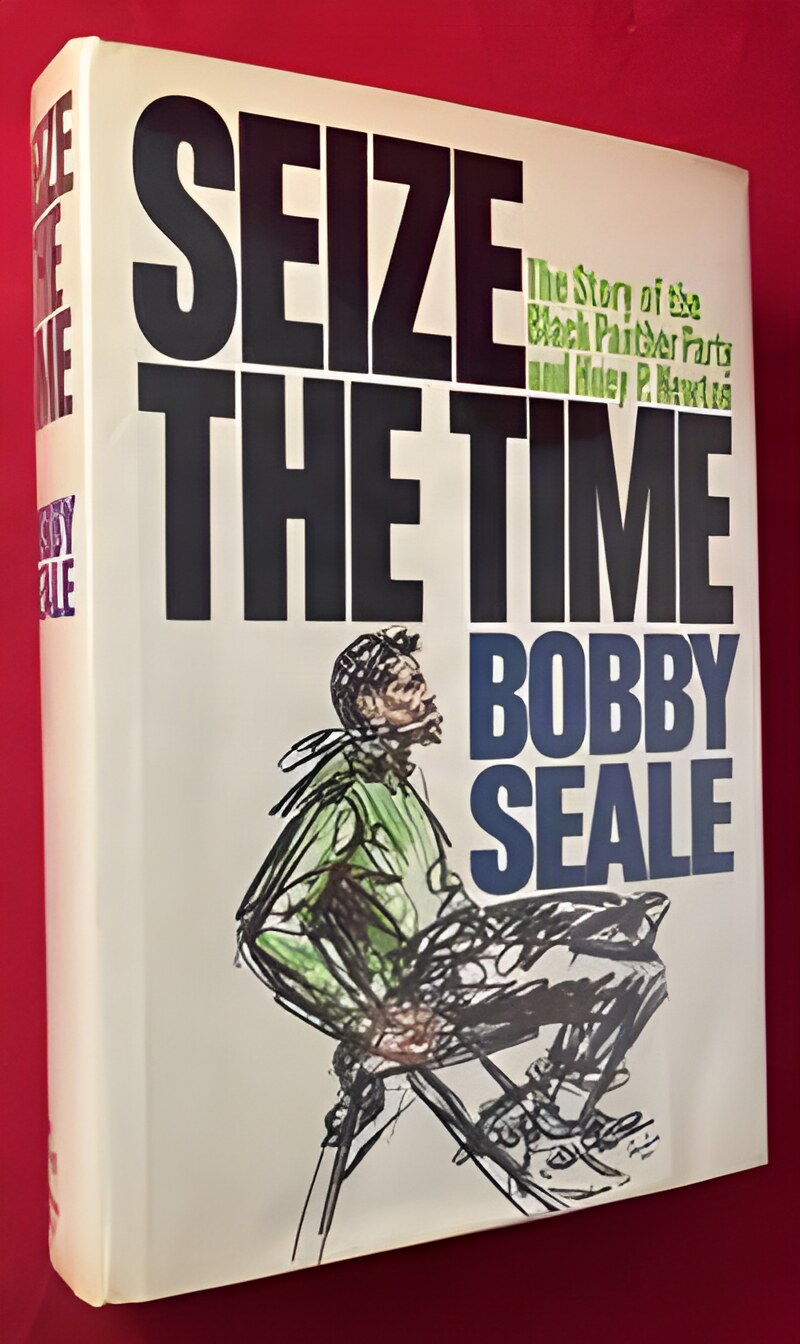
Hardcover. NY, Random House, 1st, 1970, Book: Very Good, Dust Jacket: Very Good, Hardcover in a bright, unclipped dust jacket, 429 pages. Brown cloth with embossed red image of Seale gagged and bound in the courtroom during the Chicago 8 Trial. A gorgeous copy of Bobby Seale's narration of the Black Panther Party's origins and his relationship with Huey P Newton. Written as Seale was on trial as part of the Panther 14 in New Haven and during the Chicago 8/7 Conspiracy trial. Dust jacket is bright with original $6.95 price intact and unclipped. Stated First Edition on copyright page. Clean copy.
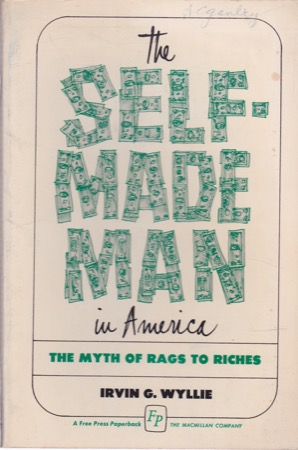
Softcover. NY, The Free Press, 1st pbk, 1966, Book: Very Good, Dust Jacket: None, Softcover, 210 pages. With scholarly detachment, clarity, and taste the author presents a history and analysis of American ideals of success. Clean copy.
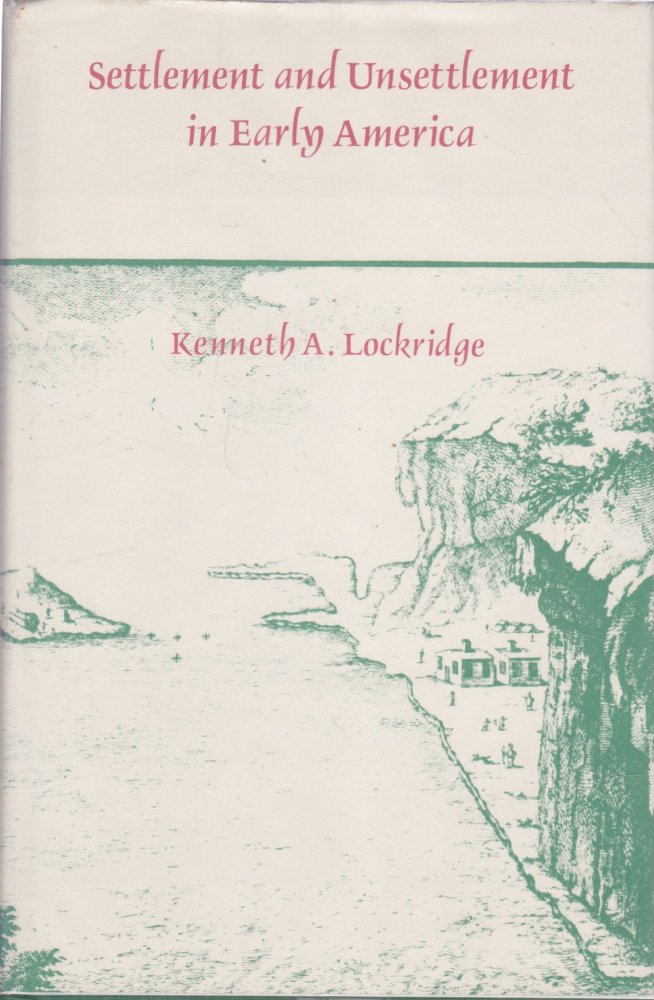
Hardcover. NY/UK, Cambridge University Press , 1st, 1981, Book: Very Good, Dust Jacket: Very Good, Hardcover in a bright dust jacket, 134 pages. Kenneth Lockridge portrays a society divided against itself and unable to arrive at a generally acceptable basis for political order. The special circumstances of American life eroded the foundations of social and political stability, and continued to do so until long after the Revolution. The original stream of emigration deposited in the New World a great many people unwilling to accept any person, principle, or institution as a legitimate source of authority. The claims of would-be American gentlemen were subjected to unyielding scrutiny. Rejecting all claims to higher social, political, and religious authority. A highly mobile populace kept its distance from putative hierarchs by venturing again and again beyond the perimeters of settled social institutions. This recurring process of settlement and unsettlement encouraged an active scepticism regarding all pretensions to hierarchy, and it reaffirmed a commitment to local authorities, locally legitimated. Faint residue on front fly leaf, clean copy.
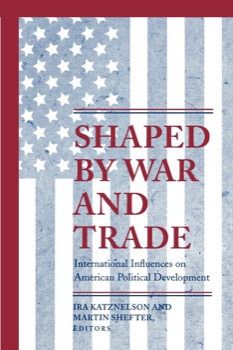
Softcover. Princeton NJ, Princeton University Press, 1st, 2002, Book: Very Good, Softcover, 372 pages. Ten leading scholars explore how, over the past two centuries, the changing positions of the United States in the world economy and in the international political order have shaped U.S. political institutions and domestic politics. Ira Katznelson, Aristide R. Zolberg, and Robert O. Keohane demonstrate the central role that efforts to contend with foreign military and economic competition played in forming the major institutions of U.S. government from the framing of the Constitution through the Civil War. Clean copy.
Hardcover. New York, Doubleday, 1st, 1962, Book: Very Good, Dust Jacket: Good, Hardcover, 460 pages, gray cloth covers. Dust jacket with light edgewear, chipping. SIGNED BY NIXON on tipped-in page. Xerox of dealer's letter laid in on the authenticity of Nixon's autograph. (He suggests it's authentic).
Hardcover. NY, Knopf, 1st, 2012, Book: Very Good, Dust Jacket: Very Good, Hardcover in a bright, unclipped dust jacket. 418 pages, b&w illustrations. From the author of the best-selling One Minute to Midnight, a riveting account of the pivotal six-month period spanning the end of World War II, the dawn of the nuclear age, and the beginning of the Cold War. When Roosevelt, Stalin, and Churchill met in Yalta in February 1945, Hitler's armies were on the run and victory was imminent. The Big Three wanted to draft a blueprint for a lasting peace--but instead set the stage for a forty-four-year division of Europe into Soviet and western spheres of influence. After fighting side by side for nearly four years, their political alliance was rapidly fracturing. By the time the leaders met again in Potsdam in July 1945, Russians and Americans were squabbling over the future of Germany and Churchill was warning about an "iron curtain" being drawn down over the Continent. These six months witnessed some of the most dramatic moments of the twentieth century: the cataclysmic battle for Berlin, the death of Franklin Roosevelt, the discovery of the Nazi concentration camps, Churchill's electoral defeat, and the dropping of atomic bombs on Japan. While their armies linked up in the heart of Europe, the political leaders maneuvered for leverage: Stalin using his nation's wartime sacrifices to claim spoils, Churchill doing his best to halt Britain's waning influence, FDR trying to charm Stalin, Truman determined to stand up to an increasingly assertive Soviet superpower.
Hardcover. Urbana IL, University of Illinois Press, 1st, 1964, Book: Very Good, Dust Jacket: Good, Hardcover in a dust jacket with two small holes to front cover, 227 pages with index. "Slavery was a social and an economic institution of such power that it sustained and extended an economic system whose demands went far to determine the domestic and foreign policy of the "agrarian" party in our early history. For the agrarian politics of Jefferson, while possibly benefiting the small freeholder, very closely served the interests of the plantation system, at least as the planters conceived their interests." Name on front fly leaf, otherwise clean.
Hardcover. Baltimore, Johns Hopkins Press, 1st, 1906, Book: Good, Dust Jacket: None, Hardcover, brown cloth covers with gilt lettering on spine, 95 pages. Ex-lib with residue, stamping to endpapers. Interior clean, probably a rebound softcover published in 1906.
Paperback. NY, Random House, 1st wraps, 1952, Book: Good, Dust Jacket: None, Softcover, 128 pgs. A collection of political speeches with a four page intro by Steinbeck. Fading to color on wraps with some shallow creases.
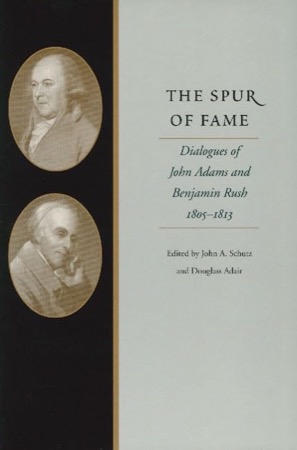
Softcover. Indianapolis, Liberty Fund, reprint, 2001, Book: Very Good, Dust Jacket: None, Softcover, 325 pages. John Adams and Benjamin Rush were two remarkably different men who shared a devotion to liberty. Their dialogues on the implications of fame for their generation prove remarkably timely--even for the twenty-first century. Adams and Rush championed very different views on the nature of the American Revolution and of the republic established with the United States Constitution; yet they shared one of the most important correspondences of their time. John Adams and Benjamin Rush met in 1774 as members of the Continental Congress--Adams from Massachusetts, Rush from Pennsylvania. In 1805, after Adams was defeated in his quest of a second term as the new republic's second President, the two men self-consciously commenced an exchange of letters. Their recurring subject was fame. This emphasis on fame was crucial, Adams and Rush believed, because on the fame attached to individual leaders of the Revolutionary generation would depend the view of the Revolution and of the Constitution and republican government that would be embraced by generations to come, including our own. The Liberty Fund edition of The Spur of Fame reproduces a text originally published by the Huntington Library.



 "Promise and Peril: America at the Dawn of a Global Ageby: Nichols, Christopher McKnight")


 "Revel with a Cause: Liberal Satire in Postwar Americaby: Stephen E. Kercher")
 "Roosevelt and Wilson: A Comparative Study by: D. H. Elletson")

 "Sal Si Puedes: Cesar Chavez and the New American Revolutionby: Matthiessen, Peter")
 "Senator Fulbright: Portrait of a Public Philosopherby: Coffin, Tristram")
 "Six Crises (SIGNED COPY)by: Nixon, Richard M.")
 "Six Months in 1945: FDR, Stalin, Churchill, and Truman--from World War to Cold Warby: Michael Dobbs")

 "Speeches of Adlai Stevensonby: Steinbeck, John")