Softcover. Berkeley CA, University of California Press, 1st, 1997, Book: Very Good, Dust Jacket: None, Softcover, 234 pages. Behind all of the statistics on downsizing, the shrinking of our industrial base, and the folly of short-sighted management is the human drama of working women and men and their unions, struggling for dignity, fairness, and security. In Farewell to the Factory, Ruth Milkman tells us the stories of workers in a New Jersey auto plant. Milkman's scholarship makes a valuable contribution to the national conversation on restoring the American Dream for working families. Clean copy.
Hardcover. NY, Da Capo Press, 1st, 2012, Book: Very Good, Dust Jacket: Very Good, Hardcover in a bright, unclipped dust jacket. When the wartime 1944 presidential election campaign geared up late that spring, Franklin D. Roosevelt had already occupied the White House years longer than any other president. Sensing likely weakness, the Republicans mounted an energetic and expensive campaign, hitting hard at FDR's liberal domestic policies and the war's ongoing cost. Despite gravely deteriorating health, FDR and his feisty running mate, the unexpected Harry Truman, campaigned vigorously against young governor Thomas E. Dewey of New York and old-line Ohio governor John Bricker. Roosevelt's charm and wit, as well as the military successes in Europe and the Pacific, contributed to his sweeping electoral victory. But the hard-fought campaign would soon take its toll on America's only four-term president. Preeminent historian and biographer Stanley Weintraub recaptures FDR's striking "last campaign" and the year's momentous events, from the rainy city streets where Roosevelt, his legs paralyzed by polio since 1922, rode in an open car, to the battlefronts where the commander-in-chief's forces were closing in on Hitler and Hirohito.
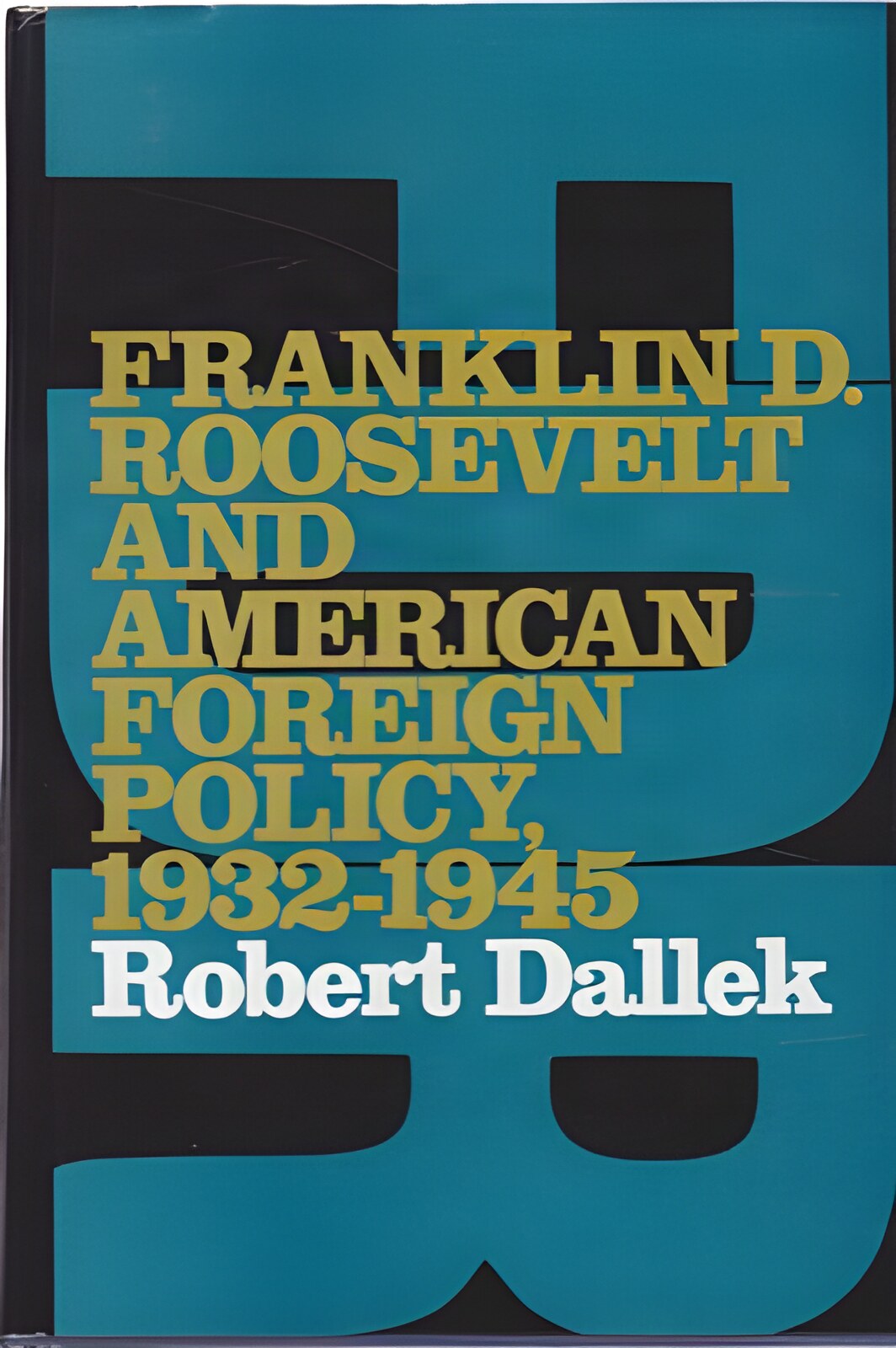
Hardcover. NY, Oxford University Press, 2nd pr., 1980, Book: Very Good, Dust Jacket: Very Good, Hardcover in a bright, unclipped dust jacket, 657 pages. Robert Dallek vigorously and convincingly defends Roosevelt's foreign policy. He emphasizes how Roosevelt operated as a master politician in maintaining a national consensus for his foreign policy throughout his presidency and how he brilliantly achieved his policy and military goals. Name on half-title page otherwise a clean copy.
Hardcover. NY, Houghton Mifflin Harcourt, 1st, 2018, Book: Very Good, Dust Jacket: Very Good, Hardcover in a bright, unclipped dust jacket. In 2008, when Michael McFaul was asked to leave his perch at Stanford and join an unlikely presidential campaign, he had no idea that he would find himself at the beating heart of one of today's most contentious and consequential international relationships As President Barack Obama's adviser on Russian affairs, McFaul helped craft the United States' policy known as "reset" that fostered new and unprecedented collaboration between the two countries And then, as US ambassador to Russia from 2012 to 2014, he had a front-row seat when this fleeting, hopeful moment crumbled with Vladimir Putin's return to the presidency This riveting inside account combines history and memoir to tell the full story of US-Russia relations from the fall of the Soviet Union to the new rise of the hostile, paranoid Russian president From the first days of McFaul's ambassadorship, the Kremlin actively sought to discredit and undermine him, hassling him with tactics that included dispatching protesters to his front gates, slandering him on state media, and tightly surveilling him, his staff, and his family. 506 pages, illustrations, clean copy.
Hardcover. Kent OH, Kent State University Press, 1st, 2001, Book: Very Good, Dust Jacket: Very Good, 387 pages, b&w illustrations. Clean, unmarked in a bright dust jacket. The Lincoln images, originally appearing in such publications as Budget of Fun, Comic Monthly, New York Illustrated News, Phunny Phellow, Southern Punch, and Yankee Notions, significantly expand our understanding of the evolution of public opinion toward Lincoln, the complex dynamics of Civil War, popular art and culture, the media, political caricature, and presidential politics. Lincoln, appealed to illustrators because of his distinctive physical features. (One could scarcely conceive of a similar book on James Buchanan, his immediate predecessor.) Despite ever-improving techniques, Lincoln pictorial prominence competed favorably with any succeeding president in the nineteenth century.
Hardcover. NY, William Morrow, 1st, 1982, Book: Very Good, Dust Jacket: Very Good, Hardcover in a bright, unclipped dust jacket, 324 pages. This provocative study touches all the bases, probing the important cases of U.S. involvement in Africa (the Congo, Angola, South Africa), laying out U.S. interests in Africa's minerals and strategic outposts, and depicting the concern of American blacks with Africa since the nineteenth century. Riding his theses rather hard, Jackson argues strongly against an ineluctable U.S. tendency to react in cold-war terms to African crises. Name on front fly lesf, otherwise clean.
Hardcover. New Haven CT, Yale University Press, 1st, 1950, Book: Very Good, Dust Jacket: None, Hardcover. The Chronicles of America Vol. 51. 388 pages, b&w illustrations. Red gilt-decorated cloth, top edge gilt, no dust jacket as issued. A very nice, tight, clean copy in excellent condition.
Hardcover. Boston, Houghton Mifflin, 1st, 1994, Book: Very Good, Dust Jacket: Very Good, Hardcover on a lightly worn dust jacket, 641 pages, b&w illustrations. This is the first full-length biography of the man historian Michael Beschloss calls the keystone figure in the history of American intelligence. Allen Dulles (1893-1969) served in the Office of Strategic Services in Europe during WWII and was named director of the Central Intelligence Agency in 1953, serving under Eisenhower and Kennedy. In an overlong, sometimes tedious narrative, Grose (Israel in the Mind of America) describes how Dulles oversaw the firm establishment of the CIA in the Washington power structure during the Eisenhower years (his older brother, John Foster Dulles, was then the Secretary of State), only to be forced out after the CIA's failure in the 1961 Bay of Pigs invasion. Later appointed to the Warren Commission to investigate the assassination of President Kennedy, Dulles became its most diligent member, according to Grose, and a supporter of the view that Lee Harvey Oswald acted alone. Other controversial issues explored include Dulles's exploitation of ex-Nazi Reinhard Gehler's spy network in the early years of the Cold War, and whether JFK authorized, or even knew about, CIA attempts to liquidate Castro. Grose delves unenlighteningly into Dulles's shortcomings as husband and father; he kept a mistress or two and spent little time at home.
Hardcover. NY, Hawthorn Books, 1st, 1973, Book: Very Good, Dust Jacket: Good, Hardcover in a worn, lightly soiled dust jacket, 243 pages. Name on front fly leaf, otherwise clean.
Hardcover. Columbia SC, University of South Carolina Press, 1st, 1970, Book: Very Good, Dust Jacket: Very Good, Hardcover in a lightly worn, unclipped dust jacket, 311 pages. To illustrate the changing conception of colonies and the tensions with London, the author selected 50+ revealing documents that explore the economic and political relationships between Great Britain and her American Colonies from 1607 to 1763. Name on front fly leaf, otherwise clean.
Hardcover. NY, Henry Holt, 1st, 2003, Book: Very Good, Dust Jacket: Very Good, Hardcover in a bright dust jacket, 320 pages. Money has always been at the heart of the American experience. Paper money, invented in Boston in 1698, was a classic of American ingenuity-and American disregard for authority and tradition. With the wry and admiring eye of a modern Tocqueville, Jason Goodwin has written a biography of the dollar, giving us the story of its astonishing career through the wilds of American history. Clean copy.
Hardcover. NY, Walker Books, 1st, 1997, Book: Very Good, Dust Jacket: Very Good, Hardcover in a bright, unclipped dust jacket, 214 pages. Over the past couple of decades, our national debt has become a favorite political football for Democrats and Republicans alike. Yet few Americans seem aware that the debt has a long and (mostly) honorable history. Alexander Hamilton considered it a kind of political Krazy Glue, which would also spur American industry by keeping taxes high. This borrowing power enabled the North to win the Civil War without wrecking its economy and rescued us from the Great Depression. John Steele Gordon doesn't deny the dangers of an entire nation living on credit; indeed, he believes that our fiscal affairs are a mess. But he puts this mess in fascinating perspective. And he's quick to see the human side of economic behavior: "One problem," he writes, "is that human nature predisposes us to recognize depression easily and quickly, but prosperity, like happiness, is most easily seen in retrospect." Name on front fly leaf, otherwise clean.
Hardcover. NY, Knopf, 1st, 1999, Book: Very Good, Dust Jacket: Very Good, Hardcover in a bright dust jacket, 599 pages. Don't pick up this fascinating, deeply eccentric book expecting to find a conventional biography of Eugene V. Debs (1855-1926). The fiery American labor leader who founded the Socialist Party of America is not so much the subject as the central figure in a group portrait of utopian dreamers--including Karl Marx, Brigham Young, abolitionist Wendell Phillips, poet James Whitcomb Riley, and detective-agency founder Allan Pinkerton--from the time of the French Revolution through the dawn of the 20th century. Author Marguerite Young is a legendary Greenwich Village bohemian who died in 1995. She devoted the last 25 years of her life to this volume, which was intended as a recapitulation of the issues that had engaged Debs - justice for workers, peace for everyone, racial equality - and continued to galvanize America in the 1960s and beyond. Young doesn't provide a lot of straight factual information about Debs's life, but takes instead a snapshot of his soul as it was formed by reading and experience. The narrative closes (sort of) with the national railroad strike of 1877, a bitter defeat for labor that turned railroad worker and union activist Debs toward greater radicalism. Though not a work for the traditionally minded, Young's genre-bending book will thrill students of American social and socialist history. Clean copy.
Hardcover. NY, David Mckay, 1st, 1964, Book: Very Good, Dust Jacket: Very Good, Hardcover in a lightly worn dust jacket, 329 pages. "This volume puts together as a continuous narrative the diary of Rutherford B. Hayes from March, 1875 to March 1881 - covering his nomination as the Republican candidate, the campaign of 1876, the disputed election and its compromise, and his Presidency. It is based on a typed copy of the original manuscript supplied by The Rutherford B. Hayes Library of Fremont, Ohio, and its director, Watt P. Marchman. Hayes was an inveterate diary keeper from his youth to his old age. In this record of the presidential years the diary is reproduced virtually in facsimile form. All misspellings, errors in punctuation, and other eccentricities have been retained, as have the deletions and gaps in the original copy." Name on front fly leaf, otherwise clean.
Hardcover. NY, Cambridge University Press, 1st, 2005, Book: Very Good, Dust Jacket: Very Good, Hardcover, 346 pages, b&w photographs. This book shows how Henry Robinson Luce used his famous magazines to advance his interventionist agenda in Cold War China, Korea, Japan, and above all, Vietnam. This is the first balanced work on Luce and his influence, using hitherto undiscovered or inaccessible sources. Luce saw the American Century as the heir to the fading British Empire; he failed to see the hubris and cultural blindness that would lead to disaster in Vietnam - a disaster for which his magazines paved the way. Remainder mark on top edge. Else a very clean, tight copy.
Hardcover. NY, Funk & Wagnalls , 1st, 1893, Book: Very Good, Dust Jacket: None, Hardcover, maroon cloth. b&w frontis. portrait, 541 page biography, works of the great nineteenth century American preacher, lecturer, orator, and journalist. From the American Reformers Series. Spine is sunned, gilt lettering on the cover. Ex-lib with endpapers marked, stamped. Interior clean.
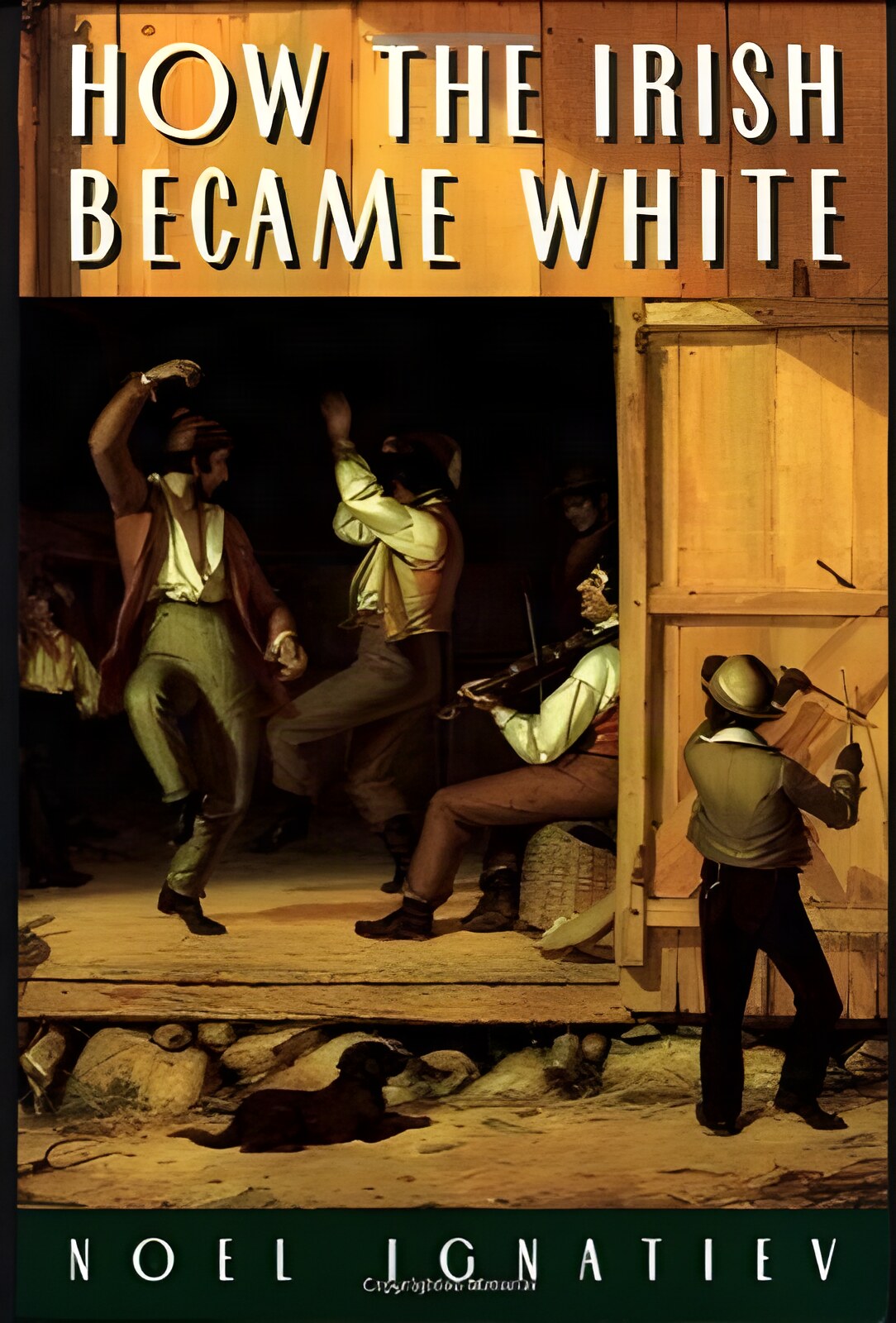
Softcover. NY/London, Routledge, 1st, 1995, Book: Very Good, Dust Jacket: None, Softcover in pictorial wrappers, 233 pages. Ignatiev traces the tattered history of Irish and African-American relations, revealing how the Irish used labor unions, the Catholic Church and the Democratic party to succeed in American. He uncovers the roots of conflict between Irish-Americans and African-Americans and draws a powerful connection between the embracing of white supremacy and Irish "success" in 19th century American society. Clean copy.
Hardcover. NY, Alfred A. Knopf, 1st, 1955, Book: Very Good, Dust Jacket: Good, Hardcover in a worn, chipped dust jacket. 172 pages plus index. "The exciting story of the Democratic Presidential Convention of 1952; a record of what occurred, how it occurred, and why; Told by a leader of the draft movement, who is also a prominent American historian." Clean copy.
Hardcover. NY, Knopf, 2nd pr., 1969, Book: Very Good, Dust Jacket: None, Hardcover, 884 pages, b&w photos, index. No dust jacket. Clean, tight copy in blue cloth covers. Biography of the controversial Huey Pierce "The Kingfish" Long(1893-1935), Louisiana's 40th governor(1928-1932) and American Senator from 1932 until his assassination in 1935 as he aspired to run for president in alliance with the far-right radio commentator Father Charles Coughlin. Long's Share Our Wealth plan was established on February 23, 1934 with the motto "Every Man a King."
Hardcover. Lawrence KS, University Press of Kansas, 1st, 1984, Book: Very Good, Dust Jacket: Very Good, Hardcover in a bright, lightly worn dust jacket, 211 pages. Small in notations to front fly leaf, otherwise clean.
Hardcover. NY, Alfred A. Knopf, 1st, 1986, Book: Very Good, Dust Jacket: Very Good, Hardcover in a bright, unclipped dust jacket. 550 pages. A fascinating historical study using newly-declassified documents from the time the British were in Indochina through the end of the war. A detailed, specific history of the debacle. Clean copy.
Softcover. Emeryville CA, Seal Press, 1st pbk, 2006, Softcover, 549 pages, b&w illustrations. Set amidst the political upheaval of the McCarthy trials, the Vietnam War, and the rise of the women's movement, Intimate Politics is a courageous and uncompromising account of one woman's personal and political transformation, and a fascinating portrayal of a key chapter in our nation's history. At eight years old, Bettina Aptheker watched her family's politics play out in countless living rooms across the country when her father, historian and U.S. Communist Party leader Herbert Aptheker, testified on television in front of the House on Un-American Activities Committee in 1953. Born into one of the most influential U.S. Communist families whose friends included W. E. B. Du Bois, Paul Robeson, and Elizabeth Gurley Flynn, Bettina lived her parents' politics witnessing first-hand one of the most dramatic upheavals in American history. She also lived with a terrible secret: incest at the hands of her famous father and a frightening and lonely life lived inside a home wrought with family tensions. Light marking to ten pages, otherwise a clean, bright copy.
Hardcover. NY, Oxford University Press, 1st, 1991, Book: Very Good, Dust Jacket: Very Good, Hardcover in a bright, price-clipped dust jacket, 268 pages. Focusing mainly on the nine months from November 1964 to July 1965 VanDeMark describes how the Johnson administration progressed along a seemingly inevitable path to double the number of ground troops in Vietnam, polarize the American people, and destroy Johnson's presidency in the short term. Mining a wealth of recently opened material at the Lyndon Baines Johnson Library and elsewhere, Brian VanDeMark vividly depicts the painful unfolding of a national tragedy. Name on front fly leaf otherwise clean.
Hardcover. NY, Oxford University Press, 1st, 1967, Book: Very Good, Dust Jacket: Very Good, Hardcover in a lightly worn dust jacket, 228 pages. "The period from Andrew Jackson's presidency to the Civil War has traditionally been considered the age of democracy triumphant in the United States. This book sharply contradicts that assumption, contending that while democracy advanced substantially in the political sense, social and economic distinctions became, if anything, more marked. Powerful forces, especially in the economic field, were working toward the stratification of society." Name on the front fly leaf, otherwise clean.

 "Farewell to the Factory: Auto Workers in the Late Twentieth Century by: Ruth Milkman")
 "Final Victory: FDR's Extraordinary World War II Presidential Campaignby: Stanley Weintraub")

 "From Rail-Splitter to Icon: Lincoln's Image in Illustrated Periodicals, 1860-1865by: Bunker, Gary L.")


 "Gentleman Spy: The Life of Allen Dullesby: Peter Grose")





 "Henry R. Luce, Time, and the American Crusade in Asiaby: Herzstein, Robert E.")


 "Huey Long, A Biographyby: Williams, T. Harry")
![Ike's Letters to a Friend 1941-1958by: Griffith, Robert W. [Editor]](javascript:largeIMTop('https://www.browsingisarousing.com/shop/images/Ikes-Letters-to-a-Friend-1941-1958_by_Griffith-Robert-W.-Editor-378839-417094.jpg','https://www.browsingisarousing.com/shop/images/Ikes-Letters-to-a-Friend-1941-1958_by_Griffith-Robert-W.-Editor-378839-417094.jpg',0,'378839',0,'') "Ike's Letters to a Friend 1941-1958by: Griffith, Robert W. [Editor]")


