Hardcover. New York, Doubleday, Page, and Company, 1st, 1925, Book: Fair, Dust Jacket: None, Volume to accompany the American Wing of the Metropolitan Museum of Art in New York. 302 pp. Features 20 color plates in addition to 217 other black/white illustrations (mostly photographs). Covers beginnings of New England through the Early Days of the Republic. Development of Interior Architecture and House Decoration from craftsmen influenced by old world style and the evolution.Shows significant wear due to age and water damage. Discoloration throughout, though text still entirely legible and color still vivid in the plates. Edges show significant wear as well. Prior owner's name and date (1929) written in ink twice inside the cover.
Hardcover. Mendota IL, The Wayside Press, 1st, 1964, Book: Very Good, Dust Jacket: Very Good, Hardcover in a bright dust jacket with light edgewear, chipping. A superb, anecdotal and personal (Gardner was a great Alger collector) biography of Alger and history of the Alger juveniles, with superb color plates of rare Alger items and a descriptive bibliography. Clean copy.
Hardcover. New York, George Braziller, 1st, 1974, Book: Very Good, Dust Jacket: Good, 189 pages. Hardcover. Black & white illustrations. Dust jacket with spine fading, light wear at corners, edges. Clean, tight copy.
Hardcover. Hartfort CT, privately printed, 1st, 1881, Book: Very Good, Dust Jacket: None, Hardcover, 11 page introduction plus 93 pages, green cloth with black rules, lettering. One of only 250 copies. Previous owner's bookplate on inside front cover, otherwise very good.
Hardcover. Germany, Hatje Cantz, 1st, 2006, Book: Very Good, Dust Jacket: None, Hardcover, 80 pages, photos in color. Minor shelf-wear to boards, else a clean, tight copy. This book documents the two most recent works by the critically acclaimed British artist and filmmaker, Isaac Julien, both of which continue his investigation of issues of race and global politics. True North, shot in the spectacular landscapes of Iceland and Northern Sweden, is conceived around the expedition writings of the African-American explorer Matthew Henson, one of the key members of Robert E. Peary's 1909 Arctic expedition, and arguably the first person to reach the North Pole. True North's diametric counterpart, Fantome Afrique, weaves cinematic and architectural references through the rich imagery of urban Ouagadougou, Africa's cinematic center, and the arid spaces of rural Burkina Faso. The film is punctuated by archival footage from early colonial expeditions and landmark moments in African history.
Hardcover. Germany, Hatje Cantz, 1st, 2006, Book: Very Good, Dust Jacket: None, Hardcover, 80 pages, photos in color. Minor shelf-wear to boards, else a clean, tight copy. This book documents the two most recent works by the critically acclaimed British artist and filmmaker, Isaac Julien, both of which continue his investigation of issues of race and global politics. True North, shot in the spectacular landscapes of Iceland and Northern Sweden, is conceived around the expedition writings of the African-American explorer Matthew Henson, one of the key members of Robert E. Peary's 1909 Arctic expedition, and arguably the first person to reach the North Pole. True North's diametric counterpart, Fantome Afrique, weaves cinematic and architectural references through the rich imagery of urban Ouagadougou, Africa's cinematic center, and the arid spaces of rural Burkina Faso. The film is punctuated by archival footage from early colonial expeditions and landmark moments in African history.
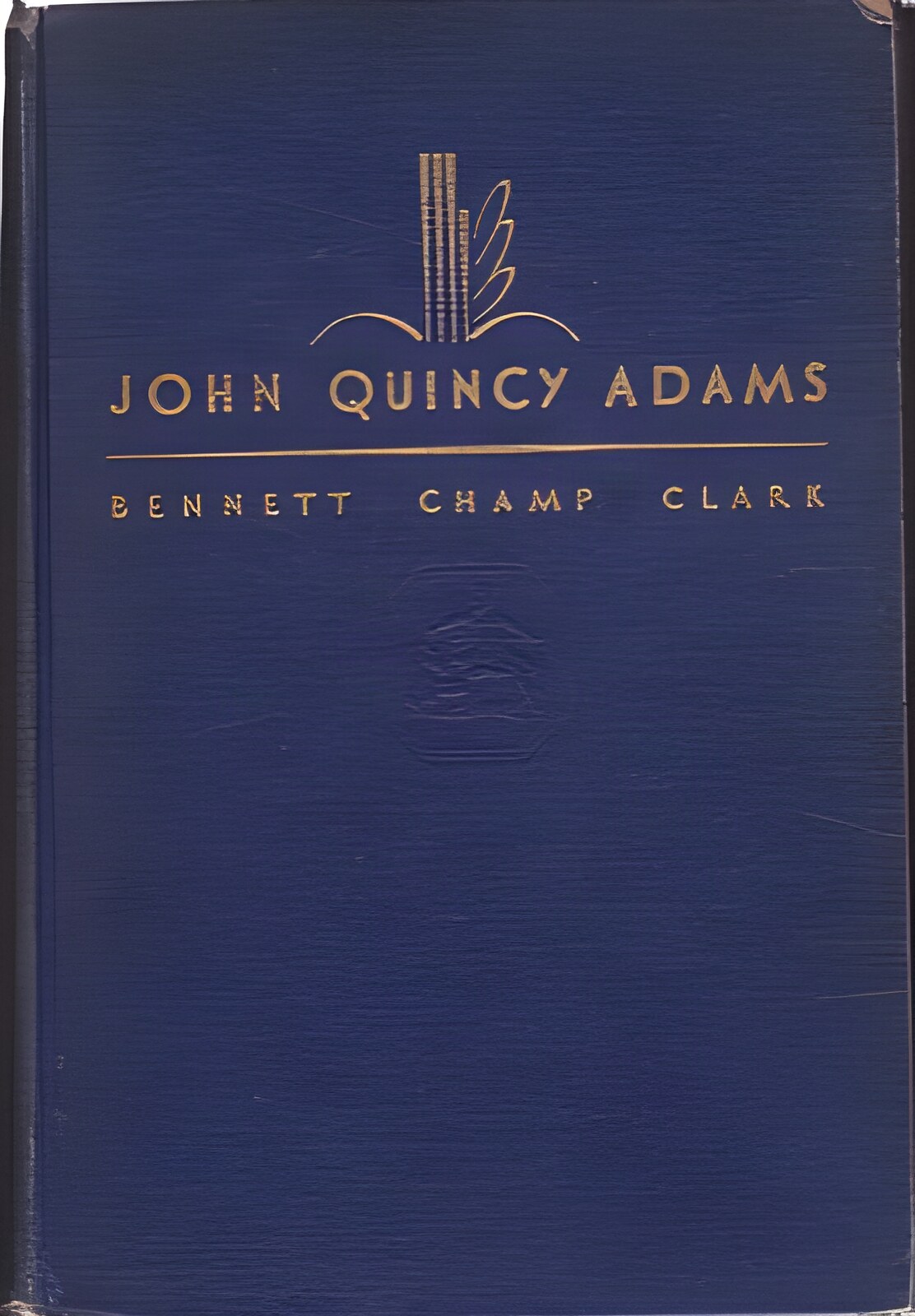
Hardcover. Boston, Little, Brown, and Company, 1st, 1932, Book: Good, Dust Jacket: None, Hardcover, dark blue cloth with gilt design and lettering, 437 pages. Includes [9] leaves of plates, illustrations, portraits, bibliographical references, and index. A fine biography on America's sixth President, and the second Adams to hold that office. Clark gives equal attention to Adams' early diplomatic career, his time in State politics, in the U.S. Senate, as Secretary of State, and of his extensive career as an elder-statesman after his Presidency. Spine gilt faded, corners worn, name on front endpapers, otherwise clean.
Hardcover. Novato CA, Newton K. Gregg, reprint, 1972, Book: Very Good, Dust Jacket: Very Good, Hardcover, large folio, reprint of the 1906 First Edition with 5,148 illustrations. Definitions, photographs, illustrations, and diagrams which designate American railroad locomotives, their parts, attachments and details of construction. 523 pages plus 46 pages of ads in the rear. DUE TO SIZE, DOMESTIC SHIPPING ONLY.
Hardcover. Boston, Museum of Fine Arts, 1st, 1962, Book: Very Good, Dust Jacket: None, Two hardcover volumes, quarto, 337 + 352 pages., indices, well illustrated in color and b&w. Organized by academic artists, folk artists, visiting foreign artists and artists of the Civil War, with detail biographical information on the artists, this has become an indispensable reference work. near fine copies in gilt decorated gray boards with terra-cotta cloth spines. Clean copies.
Hardcover. NY, Robert Ensko, 1st, 1915, Book: Very Good, Dust Jacket: None, Hardcover, green cloth with silver lettering, 46 pages. A slim volume listing all known silvermakers, both by name and locations where they worked. Covers a little worn. A clean, important reference for collectors.
Hardcover. Houndmills, Palgrave Macmillan, 1st, 2001, Book: Very Good, Dust Jacket: Very Good, 214 pages. Minor shelf-wear to dust jacket, else a clean, tight copy in excellent condition.
Hardcover. Munich, Williams College Museum of Art/Prestel, 1st, 1990, Book: Very Good, Dust Jacket: Very Good, Hardcover, 812 pages. Blue cloth slip case, 2193 illustrations including 100 color plates. Book still in shrink wrap, in excellent condition. If you think that Maurice Prendergast (1858-1924) only produced decorative park and beach scenes rendered in an abstract style, these two new volumes will set the record straight. Thanks in large part to the generosity of the Eugenie Prendergast Foundation, Mathews has produced a splendid exhibition catalog that surveys the career of the American Impressionist. She also labored for over six years as part of a team of art historians to create a monumental, ten-pound, slip-cased tome that documents the total artistic output of the two Prendergast brothers, Maurice and Charles, A Catalogue Raisonne. A good balance has been struck between the books. The exhibition catalog, of interest to both lay people and scholars, offers a chronological discussion of Maurice's ever-evolving style along with selected works represented by 130 glorious color plates. In contrast, the comprehensive catalogue raisonne , with its highly detailed essays by eight art historians, features 2200 illustrations, 100 of which are in color. All works discussed are represented by an image and catalog entry and range from the sketchbooks, monotypes, and applied graphics of Maurice to the carved and painted panels and sculpture of Charles (1863-1948). A Herculean achievement, the catalogue raisonne will long serve as a cornerstone in the arena of American art history reference.
Hardcover. Boston, Thomas and Andrews, Abridged, 1798, Book: Fair, Dust Jacket: None, 388 pages. Hardcover. Printing date: June, 1798. "An Abridgment of the American Gazetteer..." Previous owners name on rear endpaper. All pages darkened with varied amounts of foxing. Fold-out map at front separated at fold. Leather covers with heavy wear, chipped at top and bottom of spine. Corners rubbed, bumped.
Hardcover. Washington, D.C., Government Printing Office, 1st, 1903, Book: Very Good, Dust Jacket: None, 347 pages. Includes Natick to English, and English to Natick dictionaries. Dark green cloth covers, introduction by Edward Everett Hale, section of abbreviations. Rubbing and light edgewear to covers, pages crisp and unmarked, stiff binding; overall, a very clean, tight copy in great condition.
Hardcover. Baltimore, The Johns Hopkins University Press, 2nd printing, 1995, Book: Very Good, Dust Jacket: Very Good, Hardcover, 348 pages, illustrated throughout in b&w. Light shelf-wear to dust jacket. Overall, a tight clean copy. "In this original and authoritative work, Vance argues that the railroad in North America is a distinct indigenous creation and not an importation from Britain and Europe. His combined familiarity with railroading, routes and cities, facilities, and North American geography is unsurpassed and the result is quite unlike anything in the historical or specialist literature."--Donald Meinig, Syracuse University "No previous book has presented the over-all picture of the development of the North American railroad network with Vance's emphasis on the reciprocal relationships among the economic and technological conditions on the one hand and the geographic aspects of development on the other. The scope of the presentation is virtually encyclopedic -- and there is no doubt that the book will quickly become a standard reference on the subject." -- Harold M. Mayer, University of Wisconsin, Milwaukee
Softcover. Washington and Lee University, 1st, 2005, Book: Very Good, Dust Jacket: None, Softcover, 100 pages. The 2005 issue, Volume 12, of Perspectives in Vernacular Architecture: The Journal of the Vernacular Architecture Forum contains the articles: "Selling Domestic Space: The Boarding House in the Southern Mountains" by Michael Ann Williams; "La Casa Alamense: The Mexican Hacienda as Urban Dwelling" by John Messina; "Unraveling the Benjamin Deyerle Legend: An Analysis of Mid-Nineteenth-Century Brickwork in the Roanoke Valley of Virginia" by Michael J. Pulice; "Orson S. Fowler and a Home for All: The Octagon House in the Midwest" by Rebecca Lawin McCarley; and "Roadside Shrines and Granite Sketches: Diversifying the Vernacular Landscape of Memory" by David Charles Sloane.
Hardcover. New York, American Book Company, Reprint, 1899, Book: Very Good, Dust Jacket: None, 252 pages. Hardcover. Color (maps) and b/w illustrations throughout. Brown leather boards, black designs and gilt on spine and front cover board. Decorated edges.
Hardcover. Newport VT, Vermont Civil War Enterprises, Reprint, Book: Very Good, Dust Jacket: None, 2 Hardcover Volumes. Reprint from early 2000's. Volume 1 - 455 pages. Hardcover. Imitation red leather covers. Gilt titles on spine and cover. Related article laid in. Previous owner's pencil inscription on front end paper has been erased. Otherwise clean, tight copy. Volume 2 - 408 pages. Hardcover. Imitation red leather covers. Gilt titles on spine and cover. Previous owner's pencil inscription on front end paper has been erased. Some pencil markings throughout. Otherwise clean, tight copy.
Softcover. NY, Harcourt Brace and World, 1st pbk, 1966, Book: Good, Dust Jacket: None, Softcover, 261 pages. For whom was slavery profitable? Did it aid the slave, slaveowner, nonslaveholder, the South or all America? The readings here seek to clarify such questions. Front cover with light wear to fore-edge otherwise clean.
Hardcover. NY, The Grolier Club, 1st, 2012, Book: Very Good, Dust Jacket: None, Hardcover, cream colored boards with a red cloth spine, 195 pages. Limited to 500 copies. This excellent catalogue includes introductory essays by Martino Marazzi, Francesco Durante, and Robert Viscusi. It contains a bibliography of over 800 primary and secondary Italian-language works printed in America. Signed & inscribed by James Periconi to the previous owner on title page. Light fade to boards at top edge, Clean copy.
Hardcover. Chicago, University of Chicago Press;, 1st, 2002, Book: Very Good, Dust Jacket: None, Hardcover, 272 pages. One of Chicago's great cultural achievements, the Institute of Design was among the most important schools of photography in twentieth-century America. It began as an outpost of experimental Bauhaus education and was home to an astonishing group of influential teachers and students, including Lazlo Moholy-Nagy, Harry Callahan, and Aaron Siskind. To date, however, the ID's enormous contributions to the art and practice of photography have gone largely unexplored. Taken by Design is the first publication to examine thoroughly this remarkable institution and its lasting impact. With nearly 300 illustrations, including many never-before published photographs, Taken by Design examines the changing nature of photography over this critical period in America's midcentury. It starts by documenting the experimental nature of Moholy's Bauhaus approach and photography's new and enhanced role in training the "complete designer." Next it traces the formal and abstract camera experiments under Harry Callahan and Aaron Siskind, which aimed at achieving a new kind of photographic subjectivity. Finally, it highlights the ID's focus on conscious references to the processes of the photographic medium itself. In addition to photographs by Moholy, Callahan, and Siskind, the book showcases works by Barbara Crane, Yasuhiro Ishimoto, Joseph Jachna, Kenneth Josephson, Gyorgy Kepes, Nathan Lerner, Ray K. Metzker, Richard Nickel, Arthur Siegel, Art Sinsabaugh, and many others. Major essays from experts in the field, biographies, a chronology, and reprints of critical essays are also included, making Taken by Design an essential work for anyone interested in the history of American photography.
Hardcover. Dallas TX, Taylor Publishing, 1st, 1993, Book: Very Good, Dust Jacket: Very Good, Hardcover, in a bright, unclipped dust jacket. 168 pages. A brief history with some 300 color and b&w illustrations of covers, posters, publicity shots of detective and spy stories, TV, and cinema.
Softcover. Stanford CA, Stanford University Press;, reprint, 1992, Book: Very Good, Dust Jacket: None, Softcover, 584 pages. The only field guide to cover all North American butterfly species, this monumental work is also a complete natural history, fully describing the biological and ecological world of butterflies in general. It is without question the most important book on butterflies in several decades, and the most complete treatment of a major butterfly faun ever published. The book is written at several levels of detail, most of it accessible to anyone, and employs the minimum of technical terms necessary for ensuring scientific accuracy. Extensive introductory material-a book in itself-stresses butterfly biology and ecology: structure, flight, metamorphosis, hibernation, physiology, roosting, migration, mating, egg laying, intelligence, social behavior, larval and adult foods, enemies, mimicry, variation, evolution, habitats, distribution, and conservation. The main text is arranged in phylogenetic sequence, and characteristics or behavior common to all members of a family, subfamily, or tribe are discussed at those levels. The skippers, a large group often excluded, are treated in full. Several unique features make identification easier and more certain than with any other field guide. First, every species (and many subspecies) of butterfly ever recorded north of Mexico (or in Bermuda or Hawaii) is treated at length and illustrated in color. Over 1,800 butterflies representing all 679 species (males, females, uppersides, undersides, subspecies, etc.) are illustrated on 42 full-page plats. Another 136 color photographs illustrate the various life forms in natural habitat: eggs, larvae, pupae, and the more familiar and more spectacular adults.
Hardcover. Winchester UK, St. Paul's Bibliographies, 1st, 1987, Book: Very Good, Dust Jacket: Very Good, Hardcover, 142 pages. Mary Elliott (then Mary Belson) began writing for children in 1809, at a time when increasing literacy and wealth and more progressive understanding of the reading needs of children were creating a growing demand for more and more books for young people. Beginning with two books in verse - one a lively tale about town and country mice, the other, an anthology including many of her own poems - she went on to produce a stream of books on a variety of subjects. Her stories, some eventful and exciting, were mostly about real children learning to tackle the everyday circumstances and difficulties which they encountered in the world around them. These books were made all the more attractive by her publisher, William Darton, who provided them with entertaining illustrations, many of them interesting today for their depiction of contemporary scenes and fashions. Mary Elliott's books soon spread across the Atlantic, and American publishers reissued many of them, sometimes adapting the text to local circumstances. Although her books are now forgotten, they cannot be disregarded by researchers into the history of childhood and of children's literature. This bibliography contains about 470 entries. Clean.

 "Homes of Our Ancestors, Theby: Halsey & Tower, R. T. H. & Elizabeth")

 "Image of the Indian and the Black Man in American Art, 1590-1900, Theby: Parry, Ellwood")
 "Indian Names of Places etc., and on the borders of Connecticut with interpretations of some of themby: Trumbull, J. Hammond")
 "Isaac Julien: True North Fantome Afriqueby: Anthony Appiah, Eveline Bernasconi, Lisa Bloom, Mark Nash, Cristina Albu, Isaac Julien, Veit Gorner (Foreword)")
![Isaac Julien: True North Fantome Afriqueby: Appiah, Anthony; Bernasconi, Eveline; Bloom, Lisa; Nash, Mark; Albu, Cristina; Julien, Isaac; Gorner, Veit [Foreword]](javascript:largeIMTop('https://www.browsingisarousing.com/shop/images/Isaac-Julien-True-North-Fantome-Afrique_by_Appiah-Anthony-Bernasconi-Eveline-Bloom-Lisa-Nash-Mark-Al350324-408463.jpg','https://www.browsingisarousing.com/shop/images/Isaac-Julien-True-North-Fantome-Afrique_by_Appiah-Anthony-Bernasconi-Eveline-Bloom-Lisa-Nash-Mark-Al350324-408463.jpg',0,'350324',0,'') "Isaac Julien: True North Fantome Afriqueby: Appiah, Anthony; Bernasconi, Eveline; Bloom, Lisa; Nash, Mark; Albu, Cristina; Julien, Isaac; Gorner, Veit [Foreword]")

 "M & M Karolik Collection of American Watercolors & Drawings, 1800-1875 (2 Volumes)by: M & M Karolik")
 "Makers of Early American Silverby: Ensko, Robert")

 "Maurice Brazil Prendergastby: Prendergast, Charles")
 "Morse's Gazetter - An Abridgment of the American Gazetteerby: Morse, Jedidiah")
 "Natick Dictionaryby: Trumbull, James Hammond")
 "North American Railroad, The : Its Origin, Evolution, and Geographyby: Vance Jr., James E.")
 "Perspectives in Vernacular Architecture: The Journal of the Vernacular Architecture Forum - Volume 12by: Pamela Simpson (editors) Jennings, Jan (Author)")



 "Revised Roster of Vermont Volunteers in the War Of Rebellion and Lists of Vermonters Who Served in the Army and Navy of the United States During the War of the Rebellion 1861-66 - Field Edition - Volume 1 & 2")


 "The American Detective: An Illustrated History by: Siegel, Jeff")