Hardcover. College Station TX, Texas A & M University Press, 1st, 2000, Book: Very Good, Dust Jacket: Very Good, Hardcover, 174 pages, b&w photos. The show traveled in West Texas, Kansas, Oklahoma and Eastern Colorado from 1920 to 1945. Clean copy in a bright dust jacket.
Hardcover. NY, Doubleday, 1st, 2002, Book: Very Good, Dust Jacket: Very Good, Hardcover in a bright, unclipped dust jacket. The discovery of gold by a team of Mormon mill workers in 1848 sparked a frenzy that shook the world. People swarmed to California from as far as China and Australia. They came from England and France, from Ireland and Chile, leaving behind their families and everything they owned in the hope of making their fortunes in the new world. They came by ship and overland, braving Tierra del Fuego and the pestilences of Panama, lured by the promise of gold. In a spellbinding narrative that spans several continents, Brands brings the fervour and excitement of the gold rush vividly to life. The Age of Gold is narrative history at its best -- the astonishing tale of one of the most extraordinary speculative frenzies in history, told by a master historian. 547 pages, clean copy.
Hardcover. New York, William Morrow & Co, 1st, 1992, Book: Very Good, Dust Jacket: Very Good, 160 pages. Hardcover with dust jacket. Very clean, unmarked copy with some minor shelfwear to dust jacket. This beautiful book is a spectacular overview of McCarthy's exciting Western work, presenting colorful paintings from his fine art career. Color illustrations throughout.
Hardcover. Westport CT, Greenwood Press, 1st, 2003, Book: Very Good, Dust Jacket: None, Hardcover, glazed pictorial boards, 177 pages. Postma draws on primary sources and current historical scholarship to offer secondary readers and researchers a comprehensive and well-written history. He covers the entire Atlantic slave trade era, from the 1400s to the final abolition of chattel slavery in the New World in 1888. The focus is on Africa and the entire New World. While he describes the many horrors of the Middle Passage, he also examines how the slave trade contributed to the development of the modern international economy. The last chapters discuss the efforts to abolish the slave trade and its legacy. Throughout, Postma documents the sources that support his discussion and conclusions. Chapter notes are supplemented by an extensive annotated bibliography that includes books, articles, films, and electronic resources. The volume concludes with biographical sketches of important people and excerpts from primary documents written by enslaved Africans and white officials. The black-and-white reproductions of period illustrations add little to the text. Clean copy.
Softcover. Norman OK, University of Oklahoma Press , reprint, 1996, Book: Very Good, Dust Jacket: None, Softcover, 167 pages. After nearly 200,000 African-American soldiers fought in the Civil War, Congress enacted legislation to authorize regiments of cavalry and infantry for service in the West. The Ninth and Tenth cavalries won fame as "buffalo soldiers" in the Indian wars, nearly overshadowing the critical support role of the Twenty-fourth and Twenty-fifth infantries. Now Arlen L. Fowler brings to light the story of African-American infantry service from 1869 to 1891 in Texas, Indian Territory, the Dakotas, Montana, and Arizona.
Hardcover. Norman OK, University of Oklahoma Press, Revised Ed., 2003, Book: Very Good, Dust Jacket: Very Good, Hardcover in a bright dust jacket, 319 pages. B&w illustrations. A well-researched and authoritative study of 'negro' soldiers who wished to remain in the United States Army following the Civil War. They were eventually organized into the Ninth and Tenth Cavalry Regiments their service in controlling Indians on the Great Plains during the next twenty years was as invaluable as it was unpraised. With Bibliography and Index. Clean copy.
Hardcover. Westholme Publishing, 1st, 2012, Book: Very Good, Dust Jacket: Very Good, Hardcover in a bright dust jacket, 374 pages, b&w illustrations. Bright, clean. INSCRIBED BY AUTHOR on title page. "Early in the afternoon of May 22, 1856, ardent pro-slavery Congressman Preston S. Brooks of South Carolina strode into the United States Senate Chamber in Washington, D.C., and began beating renowned anti-slavery Senator Charles Sumner with a cane until it splintered and the helpless Massachusetts senator lay unconscious and covered in blood. One of the most shocking and provocative events in American history, the caning convinced each side that the gulf between them was unbridgeable and that they could no longer discuss their vast differences of opinion regarding slavery on any reasonable level."
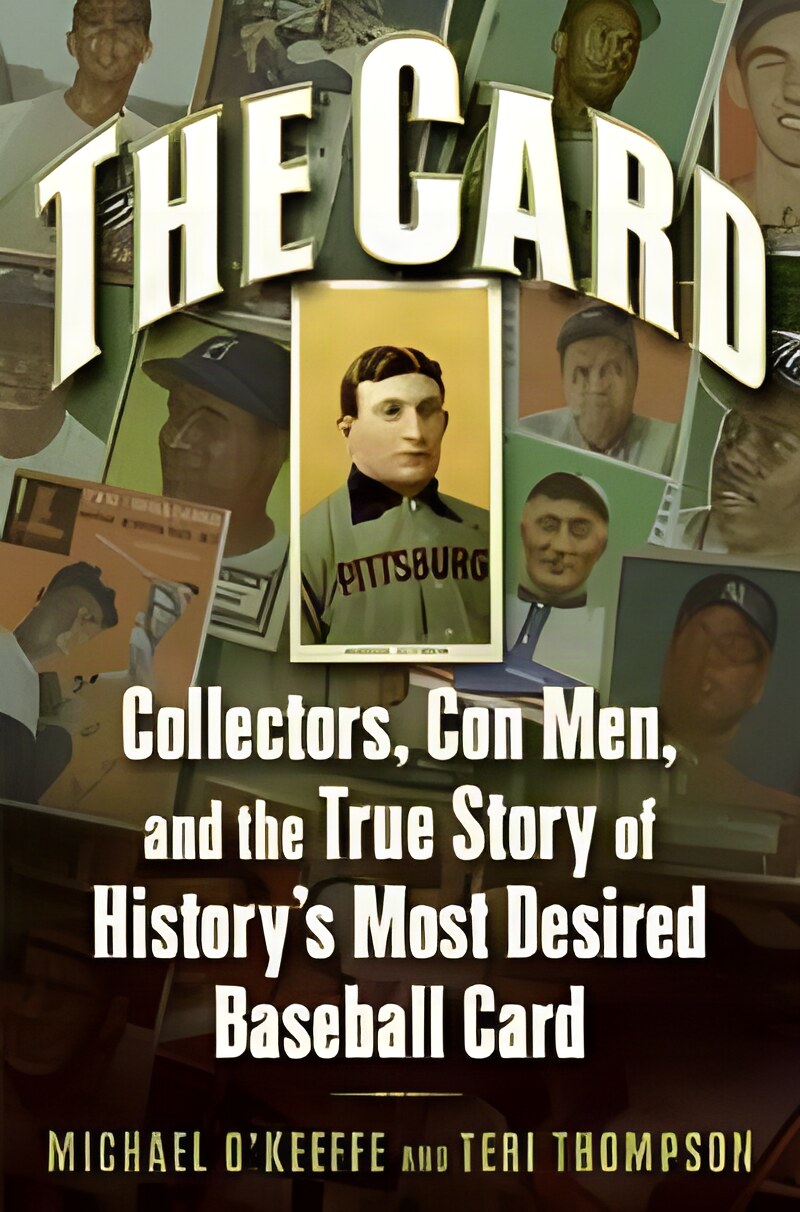
Hardcover. NY, William Morrow, 1st, 2007, Book: Very Good, Dust Jacket: Very Good, Hardcover in a bright, unclipped dust jacket, 245 pages, b&w illustrations. Only a few dozen T206 Wagners are known to still exist, having been released in limited numbers just after the turn of the twentieth century. Most, with their creases and stains, look like they've been around for nearly one hundred years. But one -- The Card --appears to have defied the travails of time. Its sharp corners and still-crisp portrait make it the single-most famous -- and most desired -- baseball card on the planet, valued today at more than two million dollars. It has transformed a simple hobby into a billion-dollar industry that is at times as lawless as the Wild West. Everything about The Card, which has made men wealthy as well as poisoned lifelong relationships, is fraught with controversy -- from its uncertain origins to the nagging possibility that it might not be exactly as it seems. In this intriguing, eye-opening, and groundbreaking look at a uniquely American obsession, award-winning investigative reporters Michael O'Keeffe and Teri Thompson follow The Card's trail from a Florida flea market to the hands of the world's most prominent collectors.
Hardcover. Washington DC, Counterpoint, 1999, Book: Very Good, Dust Jacket: Very Good, Hardcover, 642 pages. Hailed in 1849 as "a new department in the literature of civilization," the slave narrative forms the foundation of the African American literary tradition. From the late-eighteenth-century narratives by Africans who endured the harrowing Middle Passage, through the classic American fugitive slave narratives of the mid-nineteenth century, slave narratives have provided some of the most graphic and damning documentary evidence of the horrors of slavery. Riveting, passionate, and politically charged, the slave narrative blends personal memory and rhetorical attacks on slavery to create powerful literature and propaganda.The Civitas Anthology presents the seven classic antislavery narratives of the antebellum period in their entirety: The History of Mary Prince, a West Indian Slave , the first slave narrative published by a woman in the Americas; The Confessions of Nat Turner , written when Turner was asked to record his motivation for leading the bloodiest slave revolt in U.S. history; The Narrative of the Life of Frederick Douglass , an international bestseller and the first narrative to fashion the male fugitive slave into an African American cultural hero; The Narrative of William W. Brown , an account that explored with unprecedented realism the slave's survival ethic and the art of the slave trickster; The Narrative of the Life of Henry Bibb , the story of the struggles of the most memorable family man among the classic slave narrators; Running a Thousand Miles for Freedom , a gripping chronicle of one of the most daring and celebrated slave escapes ever recorded; and Incidents in the Life of Slave Girl , a dramatic text that exposed the sexual abuse of female slaves and pioneered the image of the fugitive slave woman as an articulate resister and survivor.Born out of lives of unparalleled suffering, the slave narrative captures all the bravery, drama, and hope that characterized the African American struggle against slavery. From these beginnings came some of the most influential novels in American literature, for the works of writers such as Harriet Beecher Stowe, Mark Twain, and Toni Morrison owe much of their power and social resonance to the slave narrative tradition. The Civitas Anthology gathers the most important narratives in this tradition into one volume for the first time, an indispensable resource for scholars, students, and general readers. Clean copy.
Hardcover. NY, Metropolitan Museum of Art/ The Viking Press, 1st, 1978, Book: Very Good, Dust Jacket: Very Good, Hardcover in a lightly worn dust jacket. In addition to being one of the preeminent American photographers of the late 19th and early 20th centuries, Alfred Stieglitz was an avid collector of the works of other photographers. From 1894-1910, he collected over 650 prints from a variety of photographers. He donated 400 of these to the Metropolitan Museum of Art in 1939, and the balance was given in a bequest to the museum in 1949. Photographers included in the collection include Edward Steichen, Gertrude Kasebier, Baron de Meyer, Ansel Adams, Eliot Porter, and Julia Margaret Cameron. This substantial volume was produced by Weston Naef, who was Associate Curator of Prints and Photographs at The Metropolitan Museum of Art. It includes a black-and-white reproduction of all the photographs in the Stieglitz Collection, some full-page and many in smaller size. It also includes details about, and portraits and signatures of each of the painters. Small closed tears to dust jacket, otherwise a clean, bright copy.
Hardcover. Baton Rouge LA, Louisiana State University Press, 1st, 1988, Book: Very Good, Dust Jacket: Very Good, Hardcover in a bright dust jacket. 360 pages, b&w illustrations. Following the American Civil War, many former Confederates fled their southern homeland. Some left the United States, some moved to the western territories. Still others moved north to northeastern and midwestern towns and cities, believing that northern economic and educational opportunities offered the quickest means of rebuilding shattered fortunes and lives. Sutherland provides a detailed and illuminating account of the contributions these displaced southerners made to the financial, literary, artistic, and political life of the nation. Very nice copy.
Hardcover. NY, Alfred A Knopf, 1960, Book: Very Good, Dust Jacket: Very Good, Hardcover in a lightly worn, unclipped dust jacket, 324 pages plus index. Illustrated with 17 halftone reproductions from various sources and with line drawings by Nick Eggenhofer. A comprehensive history of the slaughter of the buffalo, the battles between the hunters and Indians. Also tells of the buffalo hunting for sport by Washington Irving and the Russian Prince Alexis. Describes Buffalo Bill's killing buffaloes to feed the men who were building a railroad across the plains. Most of the book, however chronicles the hide hunters who swarmed over the ranges in 1871 and reduced the herds of nearly forty million buffaloes to fewer than one-thousand, taking the hides and leaving the meat to rot. Bookplate on inside front cover, otherwise clean.
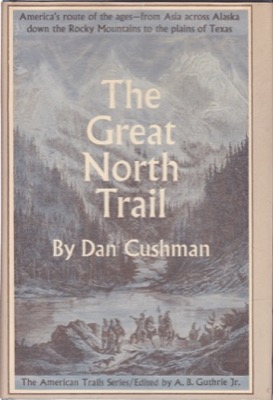
Hardcover. NY, McGraw Hill, 1st, 1966, Book: Very Good, Dust Jacket: Very Good, Hardcover in a bright, unclipped dust jacket. The American Trails Series, edited by A.B. Guthrie, Jr. 383 pages, includes a two-page map. This book offers an account of the route between Siberia and Alaska that continues southward along the Rockies all the way to Mexico and beyond. Cushman details the stories of the many groups who have traversed parts of the route from prehistoric peoples to Native Americans, Spanish explorers, fur traders, cowboys, and whiskey runners of the Prohibition era. A clean and pristine copy of the first printing,
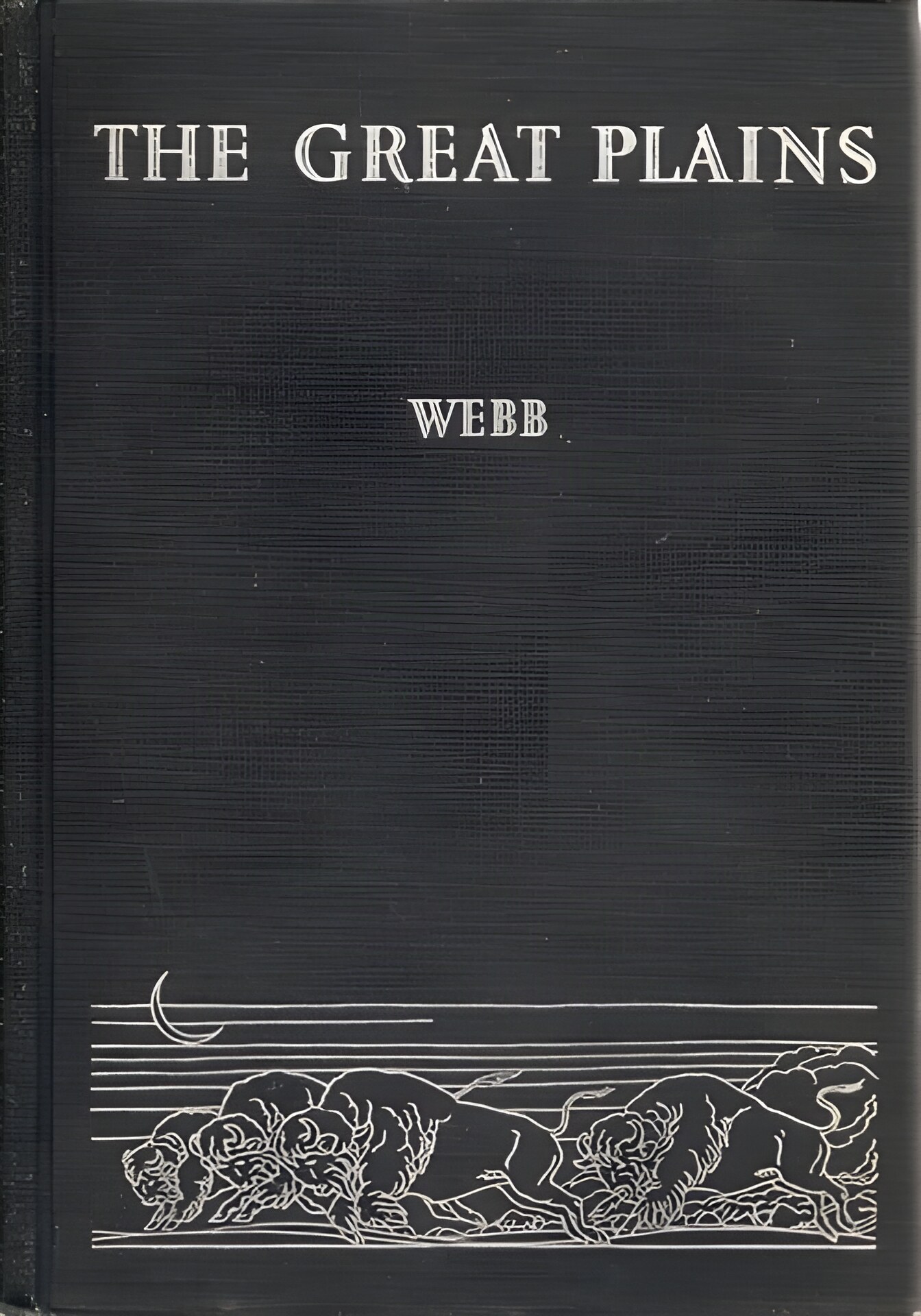
Hardcover. Boston, Ginn and Company, reprint, Book: Very Good, Dust Jacket: None, Hardcover, black cloth with silver lettering, 525 pages with index. B&w maps, illustrations. A historical interpretation of the semi-arid Short grass Country, the so called Cattle Kingdom. A well written book with a long chapter on the cattle industry. Copyright page states 1931, but titles listed in front date to 1937. Name on front fly leaf, mild musty odor.
Hardcover. Edison NJ, Chartwell Books, 1st, 2007, Hardcover in a bright, unclipped dust jacket. Large heavy volume. With over 400 high quality maps, plans, and photographs this book brings the subject to life, revealing all aspects of rail transportation and technology. It maps the spread of the networks across the country, showing the stations and important intersections, the layout and location of major bridges and tunnels, and much more. It examines railroad technology, from the early steam engines, through diesel and electric locomotives. It also details the building of stations, railroad constructions and factories that grew up around the railroad network. Social history is explored, covering the movement of people, farm produce and manufactured goods, giving a real insight into the role that rail transportation played. Clean copy.
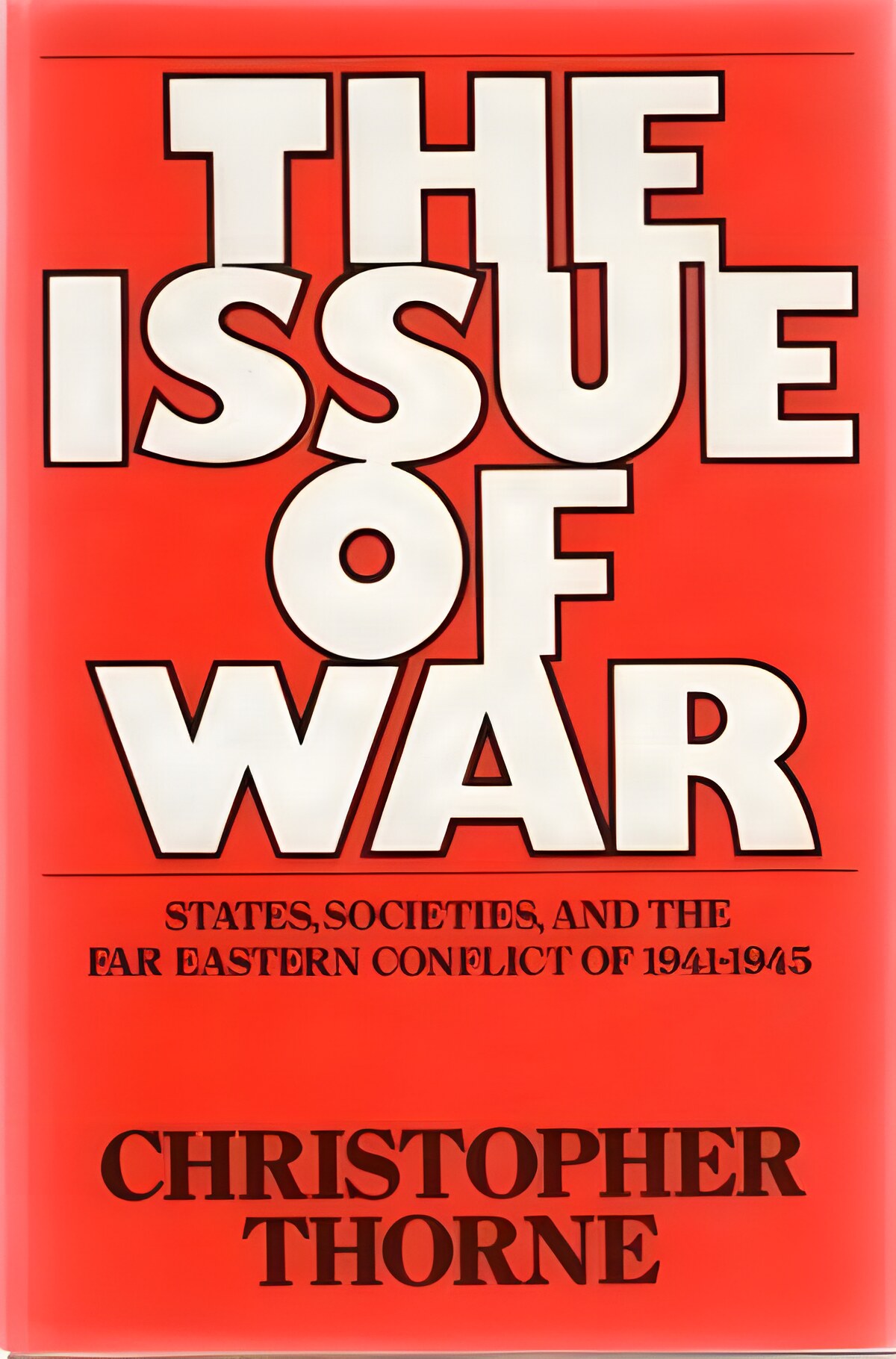
Hardcover. NY, Oxford University Press, 1st, 1985, Book: Very Good, Dust Jacket: Very Good, Hardcover in a bright, unclipped dust jacket, 364 pages. The Second World War's Pacific conflict was one of the most complex in history. It embrioled peoples from opposite sides of the globe; it was fought in China, across the expanses of the Pacific, and in the jungles of Southeast Asia; and it was devastating in its consequences for civilians and servicemen alike. It saw the first use of atomic weapons, hastened the end of the Western empires in Asia, and marked America's rise to the position of the most powerful nation in the world. Christopher Thorne, whose previous studies of the war in the Pacific have become landmarks in the field, here weaves together both the entire network of international relations surrounding the war and the impact the war had on all the societies involved--Indian as well as American; Australian and New Zealand as well as Japanese; Korean, Chinese, and Southeast Asian as well as British, French, and Dutch. The Issue of War draws on material gathered over many years in the Far East, Western Europe, and the U.S.--material including wartime films, broadcasts, and newspapers,as well as countless private and offical papers. Representing a synthesis of military, diplomatic, economic, intellectual, and social history, it not only places the war in the context of developments before 1941, but illuminates various patterns that cut across the familiar distinctions between Asia and the West or between Japan and the Allies. Name on front fly leaf, otherwise clean.
Hardcover. NY, Alfred A. Knopf, 1st, 2010, Book: Very Good, Dust Jacket: Very Good, Hardcover in a bright, unclipped dust jacket. He was the greatest Indian warrior of the nineteenth century. His victory over General Custer at the battle of Little Bighorn in 1876 was the worst defeat inflicted on the frontier Army. And the death of Crazy Horse in federal custody has remained a controversy for more than a century. The Killing of Crazy Horse pieces together the many sources of fear and misunderstanding that resulted in an official killing hard to distinguish from a crime. A rich cast of characters, whites and Indians alike, passes through this story, including Red Cloud, the chief who dominated Oglala history for fifty years but saw in Crazy Horse a dangerous rival; No Water and Woman Dress, both of whom hated Crazy Horse and schemed against him; the young interpreter Billy Garnett, son of a fifteen-year-old Oglala woman and a Confederate general killed at Gettysburg; General George Crook, who bitterly resented newspaper reports that he had been whipped by Crazy Horse in battle; Little Big Man, who betrayed Crazy Horse; Lieutenant William Philo Clark, the smart West Point graduate who thought he could "work" Indians to do the Army's bidding; and Fast Thunder, who called Crazy Horse cousin, held him the moment he was stabbed, and then told his grandson thirty years later, "They tricked me! They tricked me!" With the Great Sioux War as background and context, drawing on many new materials as well as documents in libraries and archives, Thomas Powers recounts the final months and days of Crazy Horse's life not to lay blame but to establish what happened.
Hardcover. NY, Macmillan, 5th pr., 1966, Book: Very Good, Dust Jacket: Good, Hardcover in a edgeworn, price-clipped dust jacket. 371 pages with index. A vivid, swiftly paced account of the dispossession of the Plains Indians during the half century after 1840. Epic in sweep, magnificent in detail - here is the tragedy of the Indians who once roamed and hunted on the Great Plains. Included in this great saga are the names one expects: Red Cloud of the Sioux, Black Kettle of the Cheyennes, Generals Sheridan, Sherman, and Custer, Colonel Miles, Crazy Horse, Sitting Bull, and Chief Joseph of the Nez Perces. No marking.
Hardcover. University of Nebraska Press, 1st, 2016, Book: Very Good, Dust Jacket: Very Good, Hardcover, 512 pages. Historians, biographers, and scholars of John James Audubon and natural history have long been mystified by Audubon's 1843 Missouri River expedition, for his journals of the trip were thought to have been destroyed by his granddaughter Maria Rebecca Audubon. Daniel Patterson is the first scholar to locate and assemble three important fragments of the 1843 Missouri River journals, and here he offers a stunning transcription and critical edition of Audubon's last journey through the American West. Patterson's new edition of the journals--unknown to Audubon scholars and fans--offers a significantly different understanding of the very core of Audubon's life and work. Readers will be introduced to a more authentic Audubon, one who was concerned about the disappearance of America's wild animal species and yet also loved to hunt and display his prowess in the wilderness. This edition reveals that Audubon's famous late conversion to conservationism on this expedition was, in fact, a literary fiction. Maria Rebecca Audubon created this myth when she rewrote her grandfather's journals for publication to make him into a visionary conservationist. In reality the journals detail almost gratuitous hunting predations throughout the course of Audubon's last expedition.
Hardcover. NY, Atlantic Monthly Press, 1st, 2010, Book: Very Good, Dust Jacket: Very Good, Hardcover in a bright, unclipped dust jacket. 218 pages, b&w illustrations. When gold rush fever gripped the globe in 1849, thousands of Chinese immigrants came through San Francisco on their way to seek their fortunes. They were called sojourners, for they never intended to stay. Polly, a young Chinese concubine, was brought by her owner to a remote mining camp in the highlands of Idaho. There he lost her in a poker game. Polly found her way with her new owner to an isolated ranch on the banks of the Salmon River in central Idaho. As the gold rush receded, it took with it the Chinese miners-or their bones, which were disinterred and shipped back to their homeland in accordance with Chinese custom. But it left behind Polly, who would make headlines. Clean copy.
Hardcover. NY, Pantheon, 1st, 1994, Book: Very Good, Dust Jacket: Very Good, Hardcover in a bright, unclipped dust jacket, 450 pages. Map endpapers. Ever since the appearance of his groundbreaking The Question of Palestine, Edward Said has been America's most outspoken advocate for Palestinian self-determination. As these collected essays amply prove, he is also our most intelligent and bracingly heretical writer on affairs involving not only Palestinians but also the Arab and Muslim worlds and their tortuous relations with the West. In The Politics of Dispossession Said traces his people's struggle for statehood through twenty-five years of exile, from the PLO's bloody 1970 exile from Jordan through the debacle of the Gulf War and the ambiguous 1994 peace accord with Israel. As frank as he is about his personal involvement in that struggle, Said is equally unsparing in his demolition of Arab icons and American shibboleths. Stylish, impassioned, and informed by a magisterial knowledge of history and literature, The Politics of Dispossession is a masterly synthesis of scholarship and polemic that has the power to redefine the debate over the Middle East. Clean copy.
Tulsa OK, Thomas Gilcrease Museum, 1st, 1986, Book: Very Good, Dust Jacket: None, Hardcover. light gray cloth with black lettering, 255 pages, b&w plates throughout. Thomas Moran (1837-1926) from Bolton, England was an American painter & printmaker of the Hudson River School in New York whose work often featured the Rocky Mountains. This catalog features 129 prints with extensive notes. Bibliography and index. Bright, clean copy.
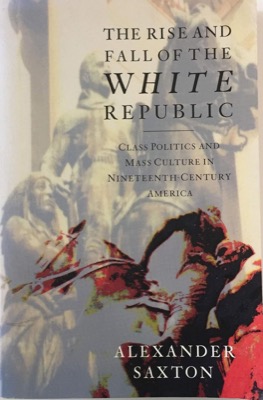
Softcover. London/NY, Verso, 1st, 1990, Softcover, 397 pages. In this acclaimed historical study, Alexander Saxton establishes the centrality of white racism to American politics and culture. Examining images of race at a popular level - from blackface minstrels to the construction of the Western hero, from grassroots political culture to dime novels - as well as the philosophical constructions of the political elite, it is a powerful and comprehensive account of the ideological forces at work in the formation of modern America. Clean copy.

 "Tent Show: Arthur Names and His 'Famous' Players by: Whisenhunt, Donald W.")
 "The Age of Gold: The California Gold Rush and the New American Dream by: Brands, H.W.")
 "The Art of Frank C. McCarthyby: Kelton, Elmer")
 "The Atlantic Slave Tradeby: Postma, Johannes")
 "The Black Infantry in the West, 1869")
 "THE BUFFALO SOLDIERS: A Narrative of the Black Cavalry in the Westby: Leckie William H. & Leckie Shirley A.")
 "The Caning: The Assault That Drove America to Civil War (SIGNED COPY)by: Puleo, Stephen")
 "The Civitas Anthology of African American Slave Narratives by: William L. Andrews; Henry Louis Gates/editors")
 "The Collection of Alfred Stieglitz: Fifty Pioneers of Modern Photography by: Naef, Weston")

 "THE HISTORICAL ATLAS OF NORTH AMERICAN RAILROADS. 400 Maps And Photographs Chart The Network That Spanned A Continent by: Westwood, John & Ian Wood")
 "The Long Death; The Last Days of the Plains Indianby: Andrist, Ralph K.")
 "The Missouri River Journals of John James Audubonby: John James Audubon and Daniel Patterson")




 "The Prose Works of William Byrd of Westover: Narratives of a Colonial Virginianby: Wright, Louis B {Edited by}")