Hardcover. Boston, Little, Brown and Company, reprint, 1950, Book: Very Good, Dust Jacket: None, Hardcover, blue cloth with gilt lettering on spine. Volume III in The History of United States Naval Operations in World War II. 411 pages, illustrated with maps and b&w photos. Gilt on spine with light fading, lacks dust jacket, otherwise clean, tight copy.
Hardcover. Boston, Little, Brown and Company, reprint, 1950, Book: Very Good, Dust Jacket: None, Hardcover, blue cloth with gilt lettering on spine. Volume V in The History of United States Naval Operations in World War II. 389 pages, illustrated with maps (one fold-out) and b&w photos. Gilt on spine with light fading, lacks dust jacket, otherwise clean, tight copy.
Hardcover. NY, E. P. Dutton, reprint, 1977, Book: Very Good, Dust Jacket: Very Good, Hardcover in a bright dust jacket. David Irving's The Trail of the Fox is the best work on Rommel ever written. The circumstances around Rommel's involvement with the attempt on Hitler's life, which is the most speculated aspect of Rommel's life, and how the Gestapo came to believe Rommel was involved, have not been made clear in most of the historiography on Rommel. Irving pieces together what really happened most effectively. There are so many strengths of this book, of which the greatest is probably the fact Irving had access to Rommel's dairy and many of his letters, which he got permission from the family to view. Other items he found in collections in the United States, England, and Germany. Since he worked on this in the 1970's he also was able to interview a number of German officers who were still alive that knew and served with Rommel. The whole work is the way historical research should be done; totally reliant on primary source material, and ignores secondary sources that often use conjecture or just repeat incorrect narratives from earlier books. Every source is from people who fought the war; Germans, Italians, British, French and American officers who were in these campaigns and had either first hand observation of Rommel or were major participants like Eisenhower, Churchill, Goebbels, etc. Clean copy.
Hardcover. NY, Simon & Schuster, 1st, 2002, Book: Very Good, Dust Jacket: Very Good, Hardcover in a bright dust jacket, 352 pages. Alfred Lee Loomis (1887-1975) made his fortune in the 1920s by investing in public utilities, but science was his first love. In 1928, he established a premier research facility in Tuxedo Park, N.Y., that attracted such brilliant minds as Einstein, Bohr and Fermi and became instrumental in the Allies' WWII victory. Conant, a magazine writer, draws on studies, family papers and interviews with Loomis's friends, family and colleagues (she's a relative of two scientists who worked with Loomis) to trace the story of the tycoon's professional and social life (the latter fairly racy). At the Tuxedo Park lab, Loomis attracted top-flight scientists who experimented with sound, time measurement and brain waves. During WWII, he established a laboratory at MIT (the "rad lab") where radar was developed. He also served as a conduit between civilian scientists and Roosevelt's military establishment. Although he lost some of his top people to the Manhattan Project, the "rad lab" was a major contributor to the allies' defense. In his well-publicized personal life, Loomis angered family members by trying to have his emotionally unstable wife institutionalized while he pursued an affair with another woman. Through Conant's spare, unobtrusive prose and well-paced storytelling, Loomis emerges as a contradictory man who craved scientific accomplishment and influence, but rarely took credit for himself.
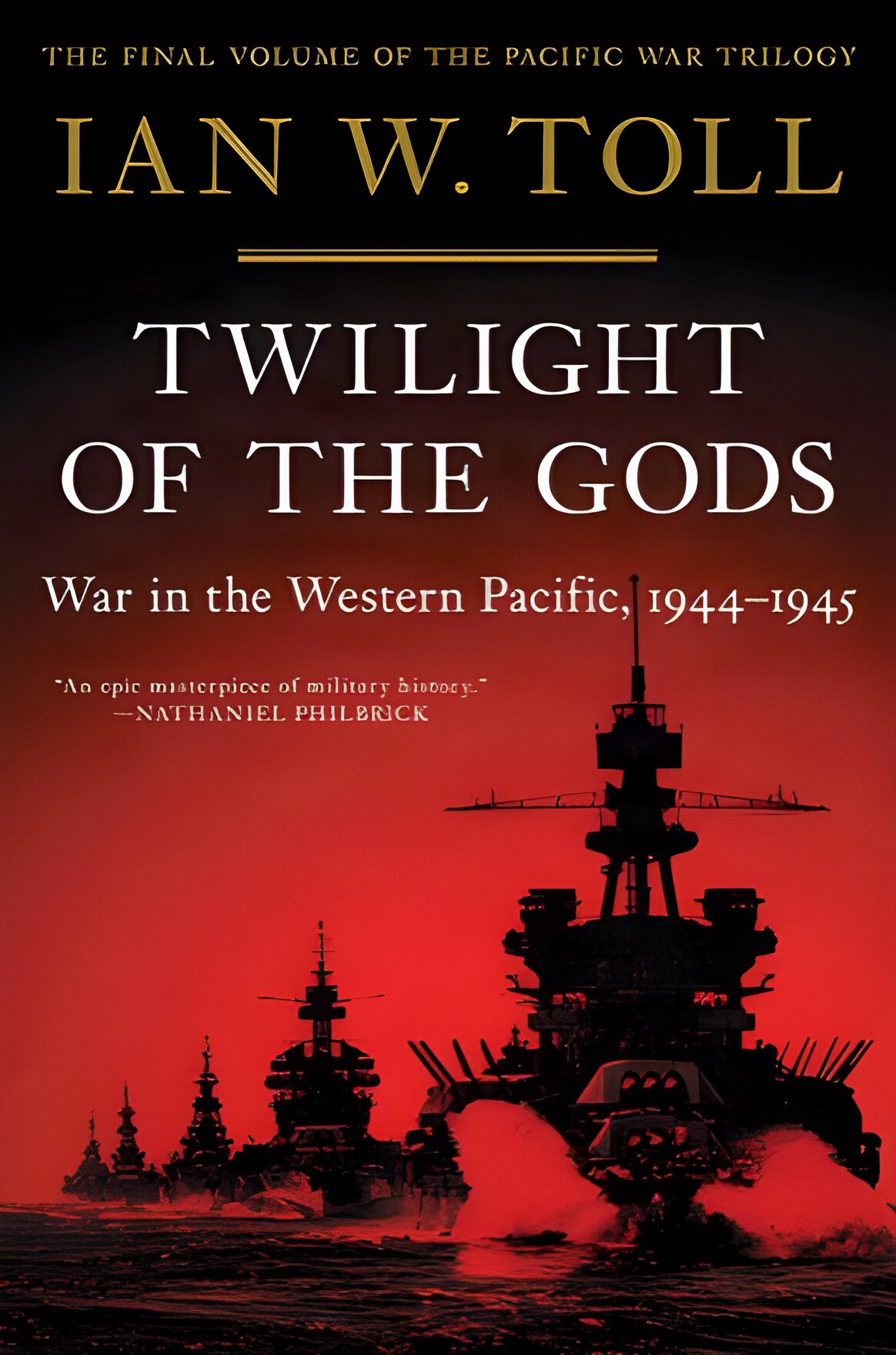
Hardcover. NY, W. W. Norton & Company, 2nd pr., 2020, Book: Very Good, Dust Jacket: Very Good, Hardcover in a bright dust jacket, 926 pages, illustrations. In June 1944, the United States launched a crushing assault on the Japanese navy in the Battle of the Philippine Sea. The capture of the Mariana Islands and the accompanying ruin of Japanese carrier airpower marked a pivotal moment in the Pacific War. No tactical masterstroke or blunder could reverse the increasingly lopsided balance of power between the two combatants. The War in the Pacific had entered its endgame. Beginning with the Honolulu Conference, when President Franklin Delano Roosevelt met with his Pacific theater commanders to plan the last phase of the campaign against Japan, Twilight of the Gods brings to life the harrowing last year of World War II in the Pacific, when the U.S. Navy won the largest naval battle in history; Douglas MacArthur made good his pledge to return to the Philippines; waves of kamikazes attacked the Allied fleets; the Japanese fought to the last man on one island after another; B-29 bombers burned down Japanese cities; and Hiroshima and Nagasaki were vaporized in atomic blasts. Ian W. Tolls narratives of combat in the air, at sea, and on the beaches are as gripping as ever, but he also reconstructs the Japanese and American home fronts and takes the reader into the halls of power in Washington and Tokyo, where the great questions of strategy and diplomacy were decided. Clean copy.
Hardcover. Boston, Little, Brown and Company, 2nd pr., 1960, Book: Very Good, Dust Jacket: None, Hardcover, blue cloth with gilt lettering on spine. Volume XIV in The History of United States Naval Operations in World War II. 407 pages, illustrated with maps (one fold-out) and b&w photos. Gilt on spine with light fading, lacks dust jacket, dj flap pasted to inside front cover, otherwise clean, tight copy.
Hardcover. NY, Houghton Mifflin Harcourt, 1st, 2019, Book: Very Good, Dust Jacket: Very Good, Hardcover in a bright, unclipped dust jacket. Nigel Hamilton's celebrated trilogy culminates with a story of triumph and tragedy. Just as FDR was proven right by the D-day landings he had championed, so was he found to be mortally ill in the spring of 1944. He was the architect of a victorious peace that he would not live to witness. Using hitherto unpublished documents and interviews, Hamilton rewrites the famous account of World War II strategy given by Winston Churchill in his memoirs. Seventy-five years after the D-day landings we finally get to see, close-up and in dramatic detail, who was responsible for rescuing, and insisting upon, the great American-led invasion of France in June 1944, and why the invasion was led by Eisenhower. As FDR's D-day triumph turns to personal tragedy, we watch with heartbreaking compassion the course of the disease, and how, in the months left him as US commander in chief, the dying president attempted at Hawaii, Quebec, and Yalta to prepare the United Nations for an American-backed postwar world order. Now we know: even on his deathbed, FDR was the war's great visionary.
Hardcover. New Haven CT, Yale University Press, 1st thus, 1950, Book: Very Good, Dust Jacket: None, Hardcover. The Chronicles of America Vol. 54. 364 pages, b&w illustrations. Red gilt-decorated cloth, top edge gilt, no dust jacket as issued. Details the campaigns of the U.S. Armed Forces in all theaters of World War II, including Tunisia, France, Italy, the Philippines, and Guadalcanal. A very nice, tight, clean copy in excellent condition.
Hardcover. Mechanicsburg PA, Stackpole Books, 1st, 2010, Book: Very Good, Dust Jacket: Very Good, Hardcover, 227 pages, b&w photos. Light scratching to dust jacket front cover. Clean, tight copy. They shot some of the most iconic footage of World War II while risking their lives, yet the stories--and sheer guts--of the U.S. Marine Corps combat cameramen have been overshadowed by the heroism of the men with the rifles. War Shots brings these photographers into sharp focus through the career of Norm Hatch, a true American character whose skill with a camera and knack for being in the right place at the right time thrust him to the fore of the effort to record the Marines at war in the Pacific.
Hardcover. Mechanicsburg PA, Stackpole Books, 1st, 2010, Book: Very Good, Dust Jacket: Very Good, Hardcover, 227 pages, b&w photos. Light scratching to dust jacket front cover. Clean, tight copy. They shot some of the most iconic footage of World War II while risking their lives, yet the stories--and sheer guts--of the U.S. Marine Corps combat cameramen have been overshadowed by the heroism of the men with the rifles. War Shots brings these photographers into sharp focus through the career of Norm Hatch, a true American character whose skill with a camera and knack for being in the right place at the right time thrust him to the fore of the effort to record the Marines at war in the Pacific.
Hardcover. Baltimore, Gateway Press, 1st, 1990, Book: Very Good, Dust Jacket: Good, Hardcover in a lightly worn dust jacket, 335 pages, b&w illustrations. INSCRIBED BY THE AUTHOR on the title page to the previous owner, a Major in the US Air Force Reserve. His ownership signature on the front fly leaf. Otherwise clean.
Hardcover. NY, Atlantic Monthly Press , 1st, 2020, Book: Very Good, Dust Jacket: Very Good, Hardcover in a bright, unclipped dust jacket. In 1911, famed cartoonist Winsor McCay debuted one of the first animated cartoons, based on his sophisticated newspaper strip "Little Nemo in Slumberland," itself inspired by Freud's recent research on dreams. McCay is largely forgotten today, but he unleashed an art form, and the creative energy of artists from Otto Messmer and Max Fleischer to Walt Disney and Warner Bros.' Chuck Jones. Their origin stories, rivalries, and sheer genius, as Reid Mitenbuler skillfully relates, were as colorful and subversive as their creations-from Felix the Cat to Bugs Bunny to feature films such as Fantasia-which became an integral part and reflection of American culture over the next five decades. Pre-television, animated cartoons were aimed squarely at adults; comic preludes to movies, they were often "little hand grenades of social and political satire." Early Betty Boop cartoons included nudity; Popeye stories contained sly references to the injustices of unchecked capitalism. "During its first half-century," Mitenbuler writes, "animation was an important part of the culture wars about free speech, censorship, the appropriate boundaries of humor, and the influence of art and media on society." During WWII it also played a significant role in propaganda. The Golden Age of animation ended with the advent of television, when cartoons were sanitized to appeal to children and help advertisers sell sugary breakfast cereals.
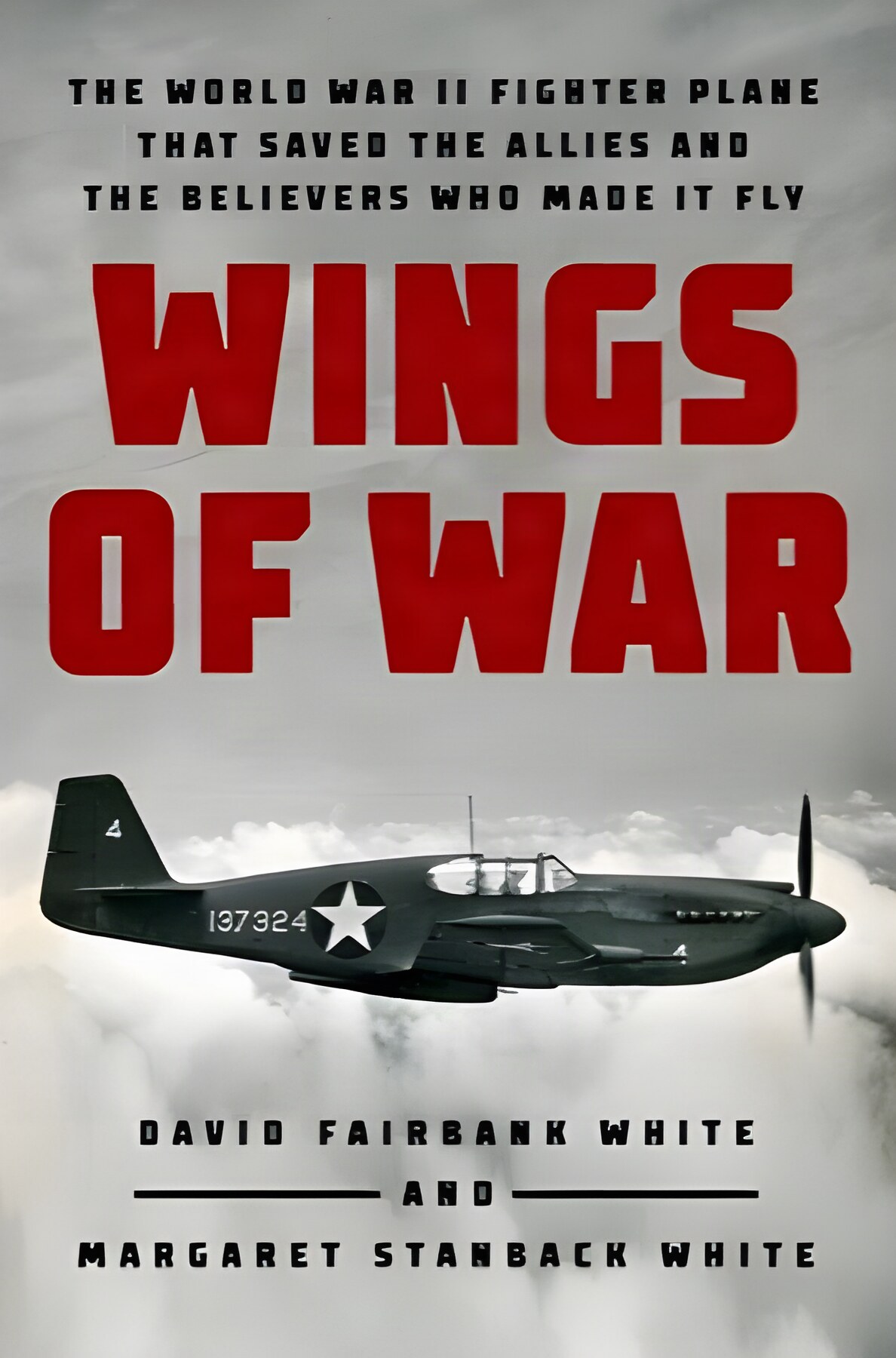
Hardcover. NY, Dutton Caliber, 1st, 2022, Book: Very Good, Dust Jacket: Very Good, Hardcover in a bright dust jacket, 324 pages, b&w illustrations. When the P-51 Mustang began tearing across European skies in early 1944, the Allies had been losing the air war for years. Staggering numbers of bomber crews, both British and American, had been shot down and killed thanks to the Luftwaffe's superior fighter force. Not only did the air war appear grim, but any landing of troops in France was impossible while German fighters hunted overhead. But behind the scenes, a team of visionaries had begun to design a bold new type of airplane, one that could outrun and outmaneuver Germany's best. Wings of War is the incredible true story of the P-51 Mustang fighter and the unlikely crew of designers, engineers, test pilots, and army officers who brought it from the drafting table to the skies over World War II. This is hardly a straightforward tale of building an airplane--for years, the team was stymied by corruption within the defense industry and stonewalled by the Army Air Forces, who failed to understand the Mustang's potential. But when squadrons of Mustangs were finally unleashed over Hitler's empire, the Luftwaffe was decimated within months, clearing the skies for D-Day. Clean copy.
Hardcover. London, Cambridge University Press, 1st, 2010, Book: Very Good, Dust Jacket: Very Good, Hardcover in a bright, unclipped dust jacket. This revisionist study of Allied diplomacy from 1941 to 1946 challenges Americocentric views of the period and highlights Europe's neglected role. Fraser J. Harbutt, drawing on international sources, shows that in planning for the future Churchill, Roosevelt, Stalin, and others self-consciously operated into 1945, not on "East/West" lines but within a "Europe/America" political framework characterized by the plausible prospect of Anglo-Russian collaboration and persisting American detachment. Harbutt then explains the destabilizing transformation around the time of the pivotal Yalta conference of February 1945, when a sudden series of provocative initiatives, manipulations, and miscues interacted with events to produce the breakdown of European solidarity and the Anglo-Soviet nexus, an evolving Anglo-American alignment, and new tensions that led finally to the Cold War. This fresh perspective, stressing structural, geopolitical, and traditional impulses and constraints, raises important new questions about the enduringly controversial transition from World War II to a cold war that no statesman wanted. Clean copy.

 "The Rising Sun in Pacific, 1931-April 1942: History of United States Naval Operations in World War II, Volume 3 by: Morison, Samuel Eliot")
 "The Struggle for Guadalcanal: August 1942-February 1943 (History of United States Naval Operations in World War Ii, Volume 5) by: Morison, Samuel Eliot")
 "The Trail of the Fox: The Search for the True Field Marshal Rommel by: David Irving")


 "Victory in the Pacific 1945; History of United States Naval Operations in World War II, Volume 14 by: Morison, Samuel Eliot")
 "War And Peace: FDR's Final Odyssey: D-Day to Yalta, 1943")

 "War Shots: Norm Hatch and the U.S. Marine Corps Combat Cameramen of World War IIby: Jones, Charles")
 "War Shots: Norm Hatch and the U.S. Marine Corps Combat Cameramen of World War IIby: Jones, Charles")
 "Wild Minds: The Artists and Rivalries That Inspired the Golden Age of Animation by: Reid Mitenbuler")
 "Yalta 1945: Europe and America at the Crossroadsby: Fraser J. Harbutt")