Hardcover. Northampton MA, Betty Allen Chapter Daughters of the American Revolution, 1st, 1914, Book: Very Good, Dust Jacket: None, Hardcover, 233 pages, b&w illustrations. Blue cloth with gilt lettering, light fading to edges, spine. Previous owner's signature, address on front fly leaf.
Hardcover. Iola, Wisconsin, Krause Publications, inc., 3rd Expanded, 1990, Book: Very Good, Dust Jacket: None, 482 pages, illustrated throughout in color and b&w. Pictorial paper boards, no dust jacket. Slight wear and rubbing along edges, else a very nice, tight copy.
Hardcover. New York, Coward, McCann & Geoghegan, Inc. , 1st Edition, 1975, Book: Good, Dust Jacket: Fair, 510 pages. Hardcover. Decorated endpapers. Red cover boards, white quarter cloth, gilt title on spine and front cover board, agewear to covers. Dust jacket has edgewear (see image). Binding good. Spine straight. Pages unmarked. A historical narrative about WWI in the United States.
Softcover. Berkeley CA, University of California Press, 1st, Book: Very Good, Dust Jacket: None, Softcover. 314 pages, b&w illustrations. In 1930 the Olmsted Brothers and Harland Bartholomew & Associates submitted a report, "Parks, Playgrounds, and Beaches for the Los Angeles Region," to the Los Angeles Chamber of Commerce. After a day or two of coverage in the newspapers, the report dropped from sight. The plan set out a system of parks and parkways, children's playgrounds, and public beaches. It is a model of ambitious, intelligent, sensitive planning commissioned at a time when land was available, if only the city planners had had the fortitude and vision to act on its recommendations. "Parks, Playgrounds, and Beaches" has become a highly valued but difficult-to-find document. In this book, Greg Hise and William Deverell examine the reasons it was called for, analyze why it failed, and open a discussion about the future of urban public space. In addition to their introduction and a facsimile reproduction of the report, Eden by Design includes a dialogue between Hise, Deverell, and widely admired landscape architect Laurie Olin that illuminates the significance of the Olmsted-Bartholomew report and situates it in the history of American landscape planning. Clean copy.
Hardcover. New Haven CT, Yale University Press, 1st, 2019, Book: Very Good, Dust Jacket: None, Hardcover, pictorial boards, 232 pages. The question "What is American art?" might conjure the hyperrealism of Raphaelle Peale and William Harnett, the bold graphic style of Stuart Davis and Jacob Lawrence, or the Precisionist forms of Charles Sheeler. Little known, however, is that such notions of American art are significantly owed to a Russian Jewish immigrant named Edith Halpert. The founder of the Downtown Gallery in New York, Halpert shaped an identity for American art, declaring that its thrilling heterogeneity and democratic values were what most distinguished it from the European avant-garde. For forty-plus years, Halpert's gallery brought recognition and market success to now-legendary American artists--among them Arthur Dove, Marsden Hartley, and Georgia O'Keeffe, in addition to the artists mentioned above. She relentlessly championed nonwhite, female, and unknown artists and was a formative advisor in the shaping of many of the nation's most celebrated art museums and collections, from San Francisco to Boston. Not content with those achievements, she also pioneered the appreciation and collecting of American folk art. Richly illustrated with works that passed through her groundbreaking gallery, this book tells the extraordinary and largely overlooked story of her career and legacy. The artists Halpert launched into the American canon are household names--and this book compellingly argues that hers should be, as well. In publisher's shrinkwrap.
Hardcover. NY/London, Macmillan / Collier Macmillan, 1st, 1975, Book: Very Good, Dust Jacket: Very Good, Hardcover in a bright, unclipped dust jacket, 517 pages, b&w illustrations. Life of the signer of the Declaration of Independence, first US Attorney General, and second Secretary of State. Clean copy.
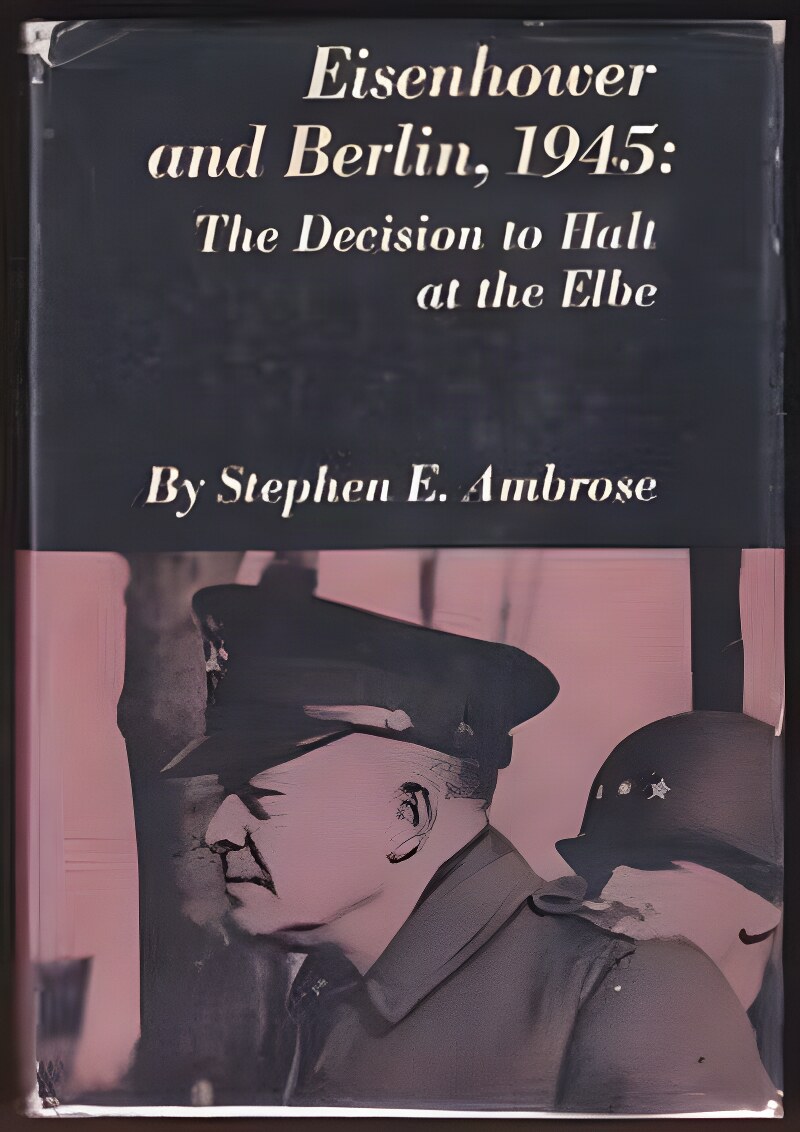
Hardcover. NY, W. W. Norton, 1st, 1967, Book: Very Good, Dust Jacket: Very Good, Hardcover in a worn, chipped dust jacket, 119 pages, maps, index. As WWII ground to a close, whose forces would be the first to reach Berlin? General Dwight David Eisenhower, supreme commander of the British and American armies, chose to halt at the Elbe River and leave Berlin to the Red Army. Could he have beaten the Russians to Berlin? If so, why didn't he? If he had, would the Berlin question have arisen? Would Germany have been divided as it was? Name on front fly leaf, otherwise clean.
Hardcover. Chicago, Ivan R. Dee, 1st, 2000, Book: Very Good, Dust Jacket: Very Good, Hardcover in a bright, unclipped dust jacket. General Dwight D. Eisenhower's decision to campaign for the presidency in 1952 was a pivotal even in America's cold war years-- it influenced almost a decade of foreign and domestic policy. Based on recently discovered letters and diaries, William Pickett provides the first complete account of Eisenhower's decision to run, with surprising new conclusions. Clean, unread copy.
Hardcover. Lawrence KS, University Press of Kansas, 1st, 2007, Book: Very Good, Dust Jacket: Very Good, Hardcover in a bright dust jacket, 274 pages. With the landmark election of Franklin Delano Roosevelt in 1932, decades of Republican ascendancy gave way to a half century of Democratic dominance. It was nothing less than a major political realignment, as the direction of federal policy shifted from conservative to liberal-and liberalism itself was redefined in the process. Electing FDR is the first book in seventy years to examine in its entirety the 1932 presidential election that ushered in the New Deal. Award-winning historian Donald Ritchie looks at how candidates responded to the nation's economic crisis and how voters evaluated their performance. More important, he explains how the Democratic Party rebuilt itself after three successive Republican landslides: where the major shifts in party affiliation took place, what contingencies contributed to FDR's victory, and why the new coalition persisted as long as it did. Ritchie challenges prevailing assumptions that the Depression made Roosevelt's election inevitable. He shows that FDR came close to losing the nomination to contenders who might have run to the right of Hoover, and discusses the role of newspapers and radio in presenting the candidates to voters. He also analyzes Roosevelt's campaign strategies, recounting his attempts to appeal to disaffected voters of all ideological stripes, often by altering his positions to broaden his popularity. With the advent of the New Deal, Americans came to enjoy a wide federal safety net that provided everything from old age pensions to rural electricity-government innovations so embraced by voters that even later conservative presidents recognized their importance. Ritchie traces this legacy through the Reagan and Bush years, but he relates how FDR in 1932 was often vague about the specifics of his program and questions whether voters really knew what they were in for with the New Deal. Clean copy.
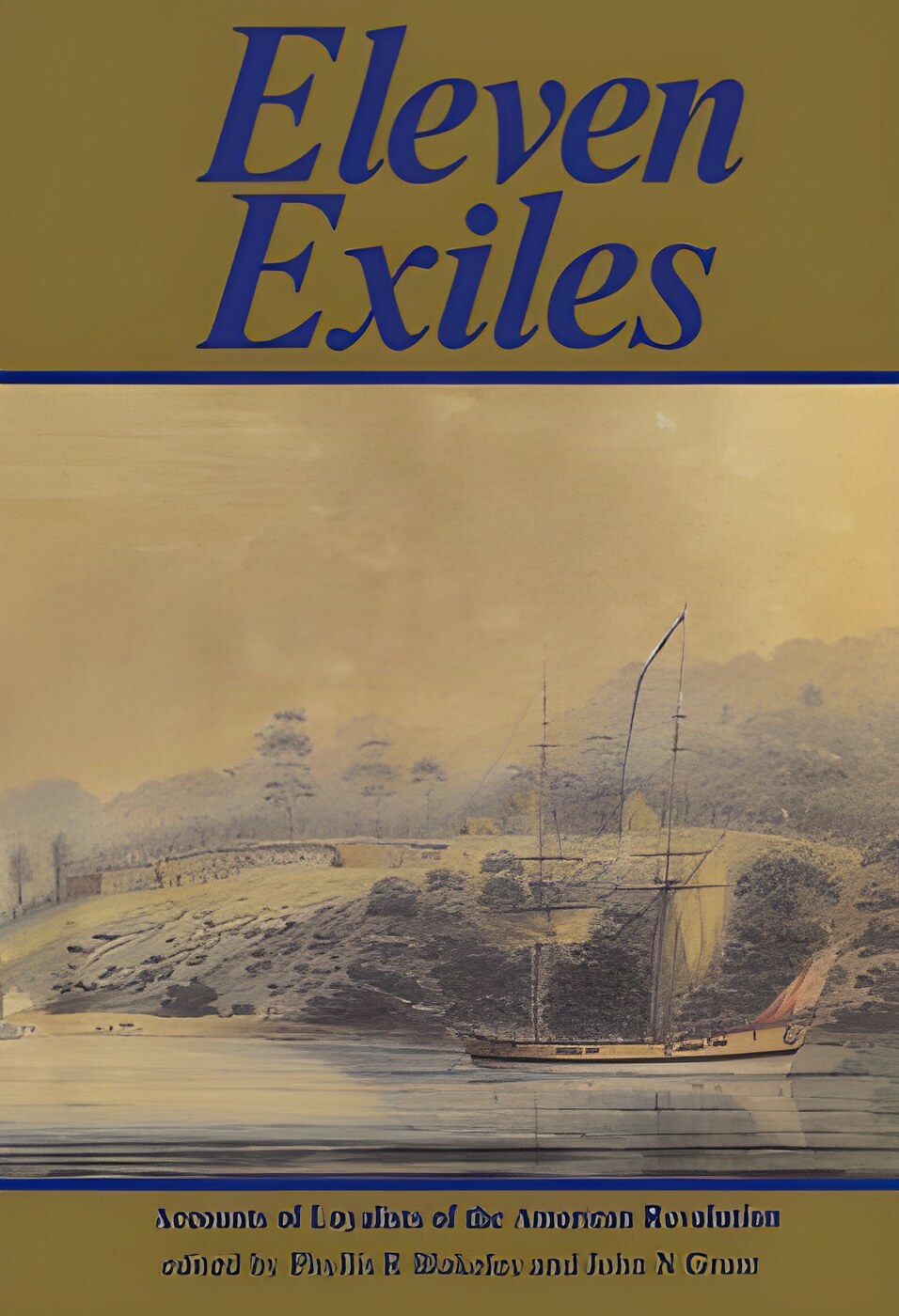
Softcover. Toronto, Dundurn Press, 1st, 1982, Book: Very Good, Dust Jacket: None, Softcover, 336 pages. Includes table of contents, bibliography, index, maps and b&w photographs and illustrations. The 11 exiles were: John Howe, Printer; Francis Green; Joseph Durfee, Shelburne Pioneer; Molly Brant, Mohawk Heroine; Ward Chipman, founding father of New Brunswick; William Schurman of Prince Edward Island; Sir John Johnson; Ranna Cossit; Sarah Sherwood; Boston King and William Jarvis.
Softcover. Philadelphia, J.B. Lippincott, reprint, 1970, Book: Very Good, Dust Jacket: None, Softcover, 186 pages. A detailed study of the politics underlying British policies of mercantilism in the American colonies. Focusing on the political activity of interest groups in the British Empire of the eighteenth century, Professor Kammen relates political influence in Georgian England to American colonial history, to the early history of the industrial revolution, to the incredible flood of writings in the later eighteenth century on political economy, and to the dynamics of Anglo-American political society, public life, and the empire. Name on front fly leaf otherwise clean.
Hardcover. Berkeley CA, University of California Press, 1st, 1974, Book: Very Good, Dust Jacket: Good, Hardcover in a lightly worn dust jacket, 205 pages. Name on front fly leaf otherwise clean. Small hole on dj front.
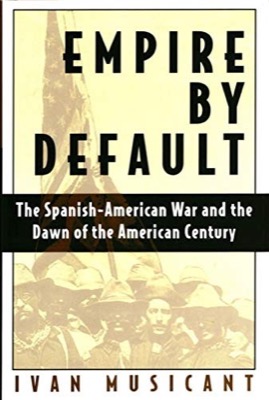
Hardcover. NY, Henry Holt , 1st, 1998, Book: Very Good, Dust Jacket: Very Good, Hardcover in a bright, unclipped dust jacket, 740 pages. Historian Musicant offers a detailed examination of the American war that catapulted the nation to imperial status. Musicant offers a portrait of a nation increasingly torn between the desire for isolation and the yearning for a place on the international stage. That conflict was at first fought out in the nation's newspapers, which managed to gradually sway public opinion toward involvements abroad. The sinking of the American warship Maine in the harbor of Havana pushed America over the edge, and McKinley was compelled to declare war on Spain. The war itself lasted less than a year and featured only a few large-scale battles, but Musicant is able to wring considerable drama from this thorough narrative of events. Clean copy.
Hardcover. NY, W. W. Norton & Company, 1st, 1976, Book: Very Good, Dust Jacket: Very Good, Hardcover in a lightly worn dust jacket, 332 pages, b&w illustrations. Clean, tight copy.
Softcover. NY, Da Capo Press, reprint, 2000, Book: Very Good, Dust Jacket: None, Softcover, 307 pages, b&w illustrations. In 1978, more than 2,500 letters written over a 30 year friendship between First Lady Eleanor Roosevelt and reporter Lorena Hickok were discovered by archivists. The find created a controversy over the nature of the women's relationship. Streitmatter transcribed and annotated more than 300 of these letters, published here for the first time, and placed them within the context of these two women's extraordinary lives. Roosevelt is surprisingly sarcastic and funny, tender and vulnerable, and even, at times, judgmental and petty. Clean copy.
Softcover. Berkeley CA, University of California Press, reprint, 1966, Book: Very Good, Dust Jacket: None, Softcover, 151 pages. Deals with the parliamentary group in England which claimed the Whig tradition during the American Revolution. The Americans asserted rights that were essentially Whig, but at the same time repudiated the authority of parliament, the stronghold of Whig tradition. Fading to spine, name on front fly leaf, otherwise clean.
Hardcover. London, George Routledge & Sons, 3rd pr., 1924, Book: Very Good, Dust Jacket: None, Hardcover, dark blue cloth with gilt design on spine, 480 pages. Ten b&w illustrations including frontispiece. Previous owner's signature on front flyleaf. Binding slightly cocked. Some marking to edges. Rubbing and light edgewear to cover. Else a clean, tight copy.
Hardcover. Lawrence KS, Coronado Press, 1st, 1972, Book: Very Good, Dust Jacket: None, 217 pages, green cloth over boards. Limited to 400 copies. The author was a scholar on the banking business in the early American west, especially Kansas.
Hardcover. Austin TX, University of Texas Press, 1stt, 1969, Book: Very Good, Dust Jacket: Very Good, Hardcover in a bright dust jacket. Three essays (on the Shelterbelt Project, New Deal critics, and FDR's attempt to expand the Supreme Court) make up the second annual Walter Prescott Webb Memorial Lectures; foreword by C. B. Smith; edited by Harold M. Hollingsworth and William F. Holmes. Bound in bright green cloth-covered boards with silver lettering on the front board and spine.
Hardcover. NY, W. W. Norton & Company, 1st, 2016, Book: Very Good, Dust Jacket: Very Good, Hardcover in a bright, unclipped dust jacket, 580 pages, b&w illustrations. Los Angeles is a city founded on blood. Once a small Mexican pueblo teeming with Californios, Indians, and Americans, all armed with Bowie knives and Colt revolvers, it was among the most murderous locales in the Californian frontier. In Eternity Street: Violence and Justice in Frontier Los Angeles, "a vivid, disturbing portrait of early Los Angeles" (Publishers Weekly), John Mack Faragher weaves a riveting narrative of murder and mayhem, featuring a cast of colorful characters vying for their piece of the city. These include a newspaper editor advocating for lynch laws to enact a crude manner of racial justice and a mob of Latinos preparing to ransack a county jail and murder a Texan outlaw. In this "groundbreaking" (True West) look at American history, Faragher shows us how the City of Angels went from a lawless outpost to the sprawling metropolis it is today. A riveting popular history of Los Angeles's bloody beginnings. Clean copy.
Hardcover. NY, WW Norton & Co, 1st, 2016, Book: Very Good, Dust Jacket: Very Good, Hardcover in a bright, unclipped dust jacket. 580 pages, 16 pages of illustrations. Eternity Street tells the story of a violent place in a violent time: the rise of Los Angeles from its origins as a small Mexican pueblo. In a masterful narrative, John Mack Faragher relates a dramatic history of conquest and ethnic suppression, of collective disorder and interpersonal conflict. Eternity Street recounts the struggle to achieve justice amid the turmoil of a loosely governed frontier, and it delivers a piercing look at the birth of this quintessentially American city. In the 1850s, the City of Angels was infamous as one of the most murderous societies in America. Saloons teemed with rowdy crowds of Indians and Californios, Mexicans and Americans. Men ambled down dusty streets, armed with Colt revolvers and Bowie knives. A closer look reveals characters acting in unexpected ways: a newspaper editor advocating lynch law in the name of racial justice; hundreds of Latinos massing to attack the county jail, determined to lynch a hooligan from Texas. Murder and mayhem in Edenic southern California. "There is no brighter sun...no country where nature is more lavish of her exuberant fullness," an Angeleno wrote in 1853. "And yet, with all our natural beauties and advantages, there is no country where human life is of so little account. Men hack one another to pieces with pistols and other cutlery as if God's image were of no more worth than the life of one of the two or three thousand ownerless dogs that prowl about our streets and make night hideous." Like-new.
Hardcover. Jefferson NC, McFarland, 1st, 1999, Book: Very Good, Dust Jacket: None, Hardcover, 223 pages, b&w photos. Eugene Jackson became a child star in 1924 playing "Pineapple" in the original "Our Gang" comedy shorts. Join him as he shares his life story -- a story that preserves the history of vaudeville and early Hollywood as well as chronicles the African American experience in the entertainment business.
Hardcover. NY, Scribner & Welford, 1st US, Book: Very Good, Dust Jacket: None, Hardcover, color pictorial boards with a green cloth spine. Illustrated throughout in color by Seeley. The history of the inhabitants of Brandon Hall is told from the planting of a mulberry tree brought to England by Sir Francis Drake until the reign of Queen Victoria. No date but appears to be the first American edition. Originally published in London in 1881. Very nice copy, bright and clean.

 "Early Northamptonby: N/A")
 "Early Paper Money of America, The by: Newman, Eric P.")
 "Echoes of Distant Thunder: Life in the United states 1914-1918by: Ellis, Edward Robb")


 "Edith Halpert: The Downtown Gallery and the Rose of American Artby: Shaykin, Rebecca")
 "Edmund Randolph: A Biography by: John J. Reardon")





 "Empty Without You The Intimate Letters of Eleanor Roosevelt and Lorena Hickok by: Streitmatter, Rodger (Ed.)")
 "English Whiggism and the American Revolution by: G. H. Guttridge")
 "Esquemeling: The Buccaneers of Americaby: Esquemeling, John")
 "Essays on the History of Bankingby: Anderson, George L.")



 "Ethan Allen and the Green-Mountain Heroes of '76by: De Puy, Henry W.")


