Softcover. Chicago, University of Chicago Press, reprint, 2005, Book: Very Good, Dust Jacket: None, Softcover, 311 pages. After decades of bloodshed and political terror, many lament the rise of the left in Latin America. Since the triumph of Castro, politicians and historians have accused the left there of rejecting democracy, embracing communist totalitarianism, and prompting both revolutionary violence and a right-wing backlash. Through unprecedented archival research and gripping personal testimonies, Greg Grandin powerfully challenges these views in this classic work. In doing so, he uncovers the hidden history of the Latin American Cold War: of hidebound reactionaries holding on to their power and privilege; of Mayan Marxists blending indigenous notions of justice with universal ideas of equality; and of a United States supporting new styles of state terror throughout the region. With Guatemala as his case study, Grandin argues that the Latin American Cold War was a struggle not between political liberalism and Soviet communism but two visions of democracy--one vibrant and egalitarian, the other tepid and unequal--and that the conflict's main effect was to eliminate homegrown notions of social democracy.
Hardcover. NY, Frederick Ungar, 1st thus, 1974, Book: Very Good, Dust Jacket: Very Good, Hardcover in a lightly worn dust jacket, 263 pages. 1st American Edition of this Abridged Translation. This is Kraus's masterpiece, with half of Europe as its stage. It is presented here in English for the first time, in an abridged version that preserves the essence of the 800-page original. Its influence on Brecht, Ionesco, and other playwrights is acknowledged. Mingling actual quotations, news reports, and government orders with Kraus's own satiric dialogue, this immense drama (never meaning to be performed) offers a vast fresco of events at the front and at home during, as it prophesied, the last days of the Austro-Hungarian Empire. Indeed, Kraus anticipated the development of atomic warfare and its threat to all mankind. Some of Kraus is untranslatable, but, as Stanley Kauffmann wrote in his New Republic review, "Ungar has done us a benefit at least by bringing us a bit closer to this sharp-eyed, angry, prickly, lover-hater of mankind." INSCRIBED BY FREDERICK UNGAR, the editor and publisher on the half-title page. He also wrote the 14 page introduction. Clean copy.
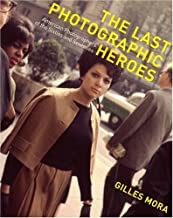
Hardcover. NY, Abrams, 1st, 2007, Book: Very Good, Dust Jacket: Very Good, Hardcover, 200 pages. The photography that Americans invented in the 1960s and ?70s was as fresh and vital as their music. Photographers of those years believed in their medium?s unlimited capacities of expression. Between the publication of Robert Frank?s The Americans (1958) and the coming of post-modernism, the photographers featured in this book embarked on their own personal quests. Whether they roamed the world, like Lee Friedlander and Garry Winogrand, or sought out its dark corners, like Larry Clark and Nan Goldin, they shared a fierce devotion to their medium and its unique qualities. The generation that created this work knew it was remarkable. Today, with Gilles Mora as a guide, we can look back on it with even greater appreciation, since we know that these were indeed the last photographic heroes. Also includes work by Joel Meyerowitz, William Eggleston, and many others.
Hardcover. NY, Abrams, 1st, 2007, Book: Very Good, Dust Jacket: Very Good, Hardcover, 200 pages. The photography that Americans invented in the 1960s and ?70s was as fresh and vital as their music. Photographers of those years believed in their medium?s unlimited capacities of expression. Between the publication of Robert Frank?s The Americans (1958) and the coming of post-modernism, the photographers featured in this book embarked on their own personal quests. Whether they roamed the world, like Lee Friedlander and Garry Winogrand, or sought out its dark corners, like Larry Clark and Nan Goldin, they shared a fierce devotion to their medium and its unique qualities. The generation that created this work knew it was remarkable. Today, with Gilles Mora as a guide, we can look back on it with even greater appreciation, since we know that these were indeed the last photographic heroes. Also includes work by Joel Meyerowitz, William Eggleston, and many others.
Hardcover. NY, Appleton-Century-Crofts, 1st, Book: Very Good, Dust Jacket: None, Hardcover, tan cloth with gilt lettering on black title blocks, 650 pages. "This is the only complete history of the Latin American Republics that takes into account the important subject of inter-American relations in the present war {World War II}. It brings Latin American history down to the conferences in which Under-Secretary of State Sumner Welles helped to cement North and South solidarity." The book presents, in separate chapters, the history of each of the twenty Latin American nations since independence. Bookplate and name on front endpapers, otherwise a clean, tight copy.
Hardcover. Birmingham AL, The Legal Classics Library, reprint, 1982, Book: Very Good, Dust Jacket: None, Hardcover, 72 pages. Quarto [30.5 cm] Maroon leather with raised bands, a gilt stamped title on the spine, and decorative gilt stamped designs on the spine and covers. All edges gilt. Marbled endsheets. Very good. There is a former owner's bookplate on the inside of front cover. The Laws and Liberties of Massachusetts is one of the seminal documents in the development of the American legal system. It is believed to be the precursor to the General Laws of Massachusetts and the Massachusetts Constitution. An influence on the U.S. Constitution, it contains provisions that were incorporated in the Bill of Rights.
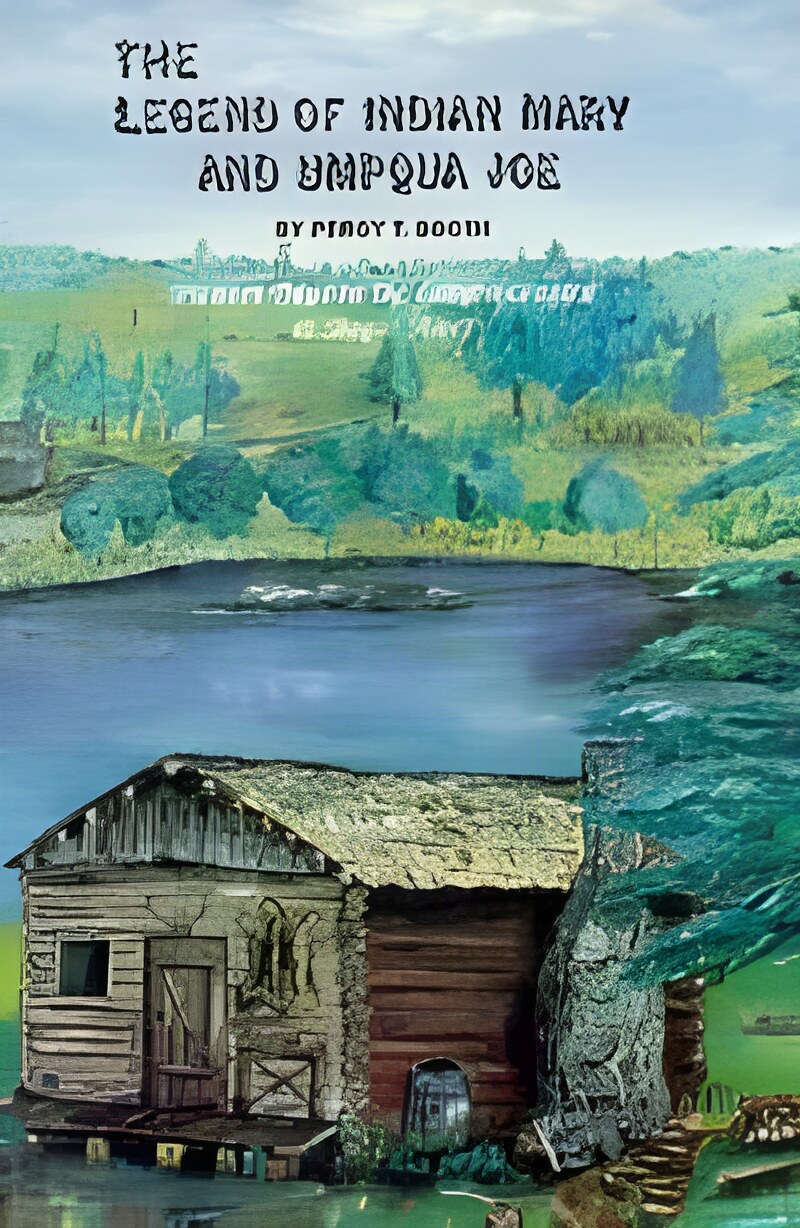
Softcover. Coos Bay OR, B&B Publishing, reprint, 1994, Book: Very Good, Dust Jacket: None, Softcover, 60 pages, illustrated in b&w. Originally published by the Josephine County Historical Society in Grants Pass, Oregon. Clean copy.
NY, Random House, 1st, 2013, Book: Very Good, Dust Jacket: Very Good, Hardcover in a bright, unclipped dust jacket. An advisor to presidents, two-time Pulitzer Prize winner, and tireless champion of progressive government, Arthur Schlesinger, Jr., was also an inveterate letter writer. Indeed, the term "man of letters" could easily have been coined for Schlesinger, a faithful and prolific correspondent whose wide range of associates included powerful public officials, notable literary figures, prominent journalists, Hollywood celebrities, and distinguished fellow scholars. The Letters of Arthur Schlesinger, Jr. reveals the late historian's unvarnished views on the great issues and personalities of his time, from the dawn of the Cold War to the aftermath of September 11. Here is Schlesinger's correspondence with such icons of American statecraft as Harry Truman, Adlai Stevenson, Hubert Humphrey, Henry Kissinger, Bill Clinton, and, of course, John and Robert Kennedy (including a detailed critique of JFK's manuscript for Profiles in Courage). There are letters to friends and confidants such as Eleanor Roosevelt, John Kenneth Galbraith, Gore Vidal, William Styron, and Jacqueline Kennedy (to whom Schlesinger sends his handwritten condolences in the hours after her husband's assassination), and exchanges with such unlikely pen pals as Groucho Marx, Sammy Davis, Jr., and Bianca Jagger. Finally, there are Schlesinger's many thoughtful replies to the inquiries of ordinary citizens, in which he offers his observations on influences, issues of the day, and the craft of writing history.
Hardcover. NY, Derby & Miller, 1st, 1865, Book: Very Good, Dust Jacket: None, Hardcover embossed brown cloth with bright gilt title and decoration on spine. 808 pages plus 6 pages of ads. Beautiful steel engraving frontispiece of Lincoln engraved by A. H. Ritchie. Illustrated with 15 additional engravings. The book is tight and square. Raymond was the Editor of the New York Times and he brought this volume out with amazing dispatch after the assassination of Lincoln. Frank B. Carpenter, who had lived in the White House for an extended period , added a section , "Anecdotes And Personal Reminiscences Of President Lincoln." Mild wear to rear cover, clean copy.
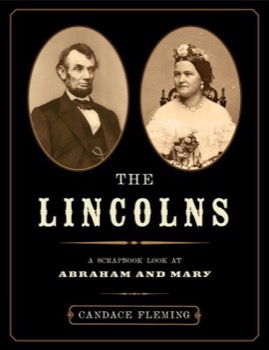
Hardcover. NY, Schwartz & Wade Books, 2nd pr, 2008, Book: Very Good, Dust Jacket: Very Good, Hardcover in a bright dust jacket, 180 pages. Profusely illustrated in b&w. Here are the extraordinary lives of Abraham and Mary, from their disparate childhoods and tumultuous courtship, through the agony of the Civil War, to the loss of three of their children, and finally their own tragic deaths. Readers can find Mary's recipe for Abraham's 'favorite cake' and bake it themselves; hear what Abraham looked like as a toddler; see a photo of the Lincoln's dog; discover that the Lincoln children kept goats at the White House; see the Emancipation Proclamation written in Lincoln's own hand. Perfect for reluctant readers as well as history lovers, The Lincolns provides a living breathing portrait of a man, a woman, and a country. Clean copy.
Hardcover. NY, G. P. Putnam's Sons, 1st, 1996, Book: Very Good, Dust Jacket: Very Good, Hardcover in a bright, unclipped dust jacket, 64 pages. Yarbrough weaves a beautiful story in picture-book format about the role of music in the lives of Africans and shows how it was transformed on American and Caribbean soil. The tale revolves around a "Roots of Rhythm and Blues" concert attended by a sister and brother and their parents, great grandmother, and elderly neighbor. At the park, the father tells his children about slavery and the "culture baggage" the slaves carried with them from Africa. With a compelling delivery that echoes the rhythmic chanting of the griot, the man speaks about concepts such as spirit power and the tree of life that at first are hard for his young son to grasp. The performance begins with a song of praise for the strength and endurance of a transplanted people. By the end, the youngsters understand more about their heritage and the role spirituals played and continue to play in it. Geter's pencil-and-charcoal illustrations are richly imaginative, evoking images of Africa, slavery, roots, and soaring trees. Clean copy.
Hardcover. NY, Macmillan, 5th pr., 1966, Book: Very Good, Dust Jacket: Good, Hardcover in a edgeworn, price-clipped dust jacket. 371 pages with index. A vivid, swiftly paced account of the dispossession of the Plains Indians during the half century after 1840. Epic in sweep, magnificent in detail - here is the tragedy of the Indians who once roamed and hunted on the Great Plains. Included in this great saga are the names one expects: Red Cloud of the Sioux, Black Kettle of the Cheyennes, Generals Sheridan, Sherman, and Custer, Colonel Miles, Crazy Horse, Sitting Bull, and Chief Joseph of the Nez Perces. No marking.
Hardcover. NY, Liveright, 1st, 2012, Book: Very Good, Dust Jacket: Very Good, Hardcover in a bright, unclipped dust jacket. In the summer of 1862, after a year of protracted fighting, Abraham Lincoln decided on a radical change of strategy-one that abandoned hope for a compromise peace and committed the nation to all-out war. The centerpiece of that new strategy was the Emancipation Proclamation: an unprecedented use of federal power that would revolutionize Southern society. In The Long Road to Antietam, Richard Slotkin, a renowned cultural historian, reexamines the challenges that Lincoln encountered during that anguished summer 150 years ago. In an original and incisive study of character, Slotkin re-creates the showdown between Lincoln and General George McClellan, the "Young Napoleon" whose opposition to Lincoln included obsessive fantasies of dictatorship and a military coup. He brings to three-dimensional life their ruinous conflict, demonstrating how their political struggle provided Confederate General Robert E. Lee with his best opportunity to win the war, in the grand offensive that ended in September of 1862 at the bloody Battle of Antietam. 10 illustrations; 8 maps.
Hardcover. NY, Macmillan, 1st, 1942, Book: Very Good, Dust Jacket: Fair, Hardcover in a worn, chipped dust jacket. 291 pages illustrated by John O'Hara Cosgrave II.
Hardcover. NY, Simon & Schuster, Book Club Ed., 1955, Book: Very Good, Dust Jacket: Good, Hardcover in a lightly worn and chipped dust jacket, 695 pages. Journal/diary kept by cabinet member Ickes during the beginning of the outbreak of WWII. He wrote of quiet changes that shifted the United States and the American people from a position of neutrality bordering on isolationism to one of deep and committed involvement with the foreign world. Name on front fly leaf otherwise clean.
Hardcover. Gloucester MA, Peter Smith, reprint, 1959, Book: Very Good, Dust Jacket: None, Hardcover, light blue cloth with dark blue lettering on spine. 360 pages. Originally published in 1902. The author looks at the formation of the Tory or Loyalist party in the American Revolution, its persecution, the banishment (or death) of over 100,000 of these most conservative and respectable Americans, and the consequences of their banishment. In numbers, historically it is only comparable to the fates of the Moors of Spain and the Huguenots of France. This was the first book by the famous historian Claude Halstead van Tyne (1869-1930), who was a Michigan and Pennsylvania professor and author who wrote extensively on the American Revolution. Name on front fly leaf, otherwise a bright, clean copy.
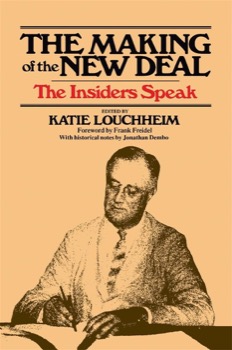
Hardcover. Cambridge MA, Harvard University Press, 1st, 1983, Book: Very Good, Dust Jacket: Good, Hardcover in lightly worn dust jacket with sunning to spine, 368 pages. There has never been a phenomenon in American life to equal the invasion of Washington by the young New Dealers, hundreds of men and women still in their twenties and thirties, brilliant and dedicated, trained in the law, economics, public administration, technology, pouring into public life to do nothing less than restructure American society. They proposed new programs, drafted legislation, staffed the new agencies. They were active in the Administration, the Congress, the courts, the news media. They fanned out all over America to discover the facts, plan ways of easing the pain of their foundering country, and report on the results. Many of them went on to be rich, famous, and powerful, but their early experience in Washington was perhaps the most inspiriting of their lives. Katie Louchheim was among those who arrived in Washington in the 1930s, and being a keen writer as well as the wife of a member of the SEC, she had a front-row seat for the spectacle of social progress. Now, a half-century later, she has gathered reminiscences from her old friends and colleagues, interviewed others, and woven them together into a lively, informal word-picture of that exciting time. Name on front fly leaf, otherwise clean.
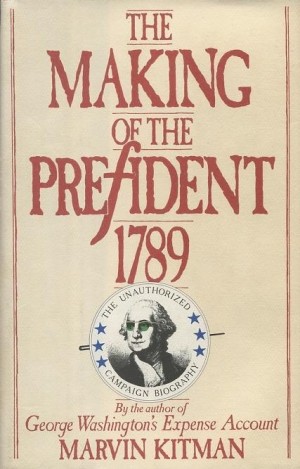
Hardcover. NY, Harper & Row, 1st, 1989, Book: Very Good, Dust Jacket: Very Good, Hardcover in a bright, unclipped dust jacket, 358 pages. Satirical analysis of the election of the first president running unopposed. A well researched commentary on the politics of the early republic. Includes notes, bibliography & index. Name on front fly leaf, otherwise clean.
Hardcover. Boston, Bradbury Soden & Co., 1st thus, 1844, Book: Good, Dust Jacket: None, Hardcover, 336 pages, frontispiece engraving with tissue guard, extra engraved title page, many b&w text illustrations. Brown cloth with black leather spine stamped in gilt. Pages with tanning to edges, light water stain to bottom corners of most pages, affecting text and images, but not horrible. Covers show mottling, discoloration to foredges, front and rear. Interior clean, binding tight.
Hardcover. NY, Oxford University Press, Book Club, 1991, Book: Very Good, Dust Jacket: Very Good, Hardcover in a lightly worn dust jacket, 502 pages. Bookplate on front fly leaf, otherwise clean.
Hardcover. Hoboken NJ, John Wiley, 1st, 2002, Book: Very Good, Dust Jacket: Very Good, Hardcover in a bright dust jacket, 367 pages, with illustrations. Like Morgan, Rockefeller, Carnegie, Marshall Field was one of the overlords of capitalism in the Gilded Age of the late 19th C. His wealth and philanthropy masked a disastrous personal life. Alienated from his children, deserted by his wife, he left a legacy of immense wealth and misery. This multigenerational saga of money, madness, and mystery tells a Jekyll-and-Hyde story of American capitalism--a tale of drive and nerve and moral stumbles. Clean copy.
Softcover. Indiana Historical Society, 1st, 1996, Book: Very Good, Dust Jacket: None, Softcover in pictorial wraps, 358 pages, 2 maps, b/w photos, appendices, notes, important dates, bibliography, index. Explores the history and culture of the Miami Indians, who have fought for many years to gain tribal status from the U.S. government. Clean copy.
Hardcover. Brooklyn NY, Handprint, 1st, 2001, Book: Very Good, Dust Jacket: None, Hardcover with illustrated boards, 40 pages. n his magnificent interpretation of Henry Wadsworth Longfellow s poem, Christopher Bing seamlessly weaves history and imagination into a rich portrait of an American hero. A meticulous researcher, Bing includes material that provides texture to history, maps that follow the British campaign to quell the rebellious citizenry, as well as the patriot s ride into the Massachusetts night of April, 1775. Documents firmly affixed into the book, including the British general s orders to his troops and Revere s own deposition relating the events, give the reader not only a visual experience but a tactile one as well. Far more than a brilliantly presented history lesson, this book represents a tour de force of coherent artistic vision. In an extraordinary series of rich and moody engravings, from the mysteriously shimmering rigging of the British sloop, The Somerset, looming in a moonlit Boston harbor to the taut urgency of a man and his horse galloping at a combustible moment in the American experience, this book illuminates our country s past unlike any other. Small inscription on inside front cover, otherwise clean.


 "The Last Days of Mankind: A Tragedy in Five Acts by: Kraus, Karl; /Ungar, Frederick(Ed.) /Wright, E Sue (transl.)")








 "The Long Ships Passing: The Story of the Great Lakes by: Walter Havighurst")


 "The manners, customs, and antiquities of the Indians of North and South America (Parley's Cabinet Library)by: Goodrich, Samuel G.")