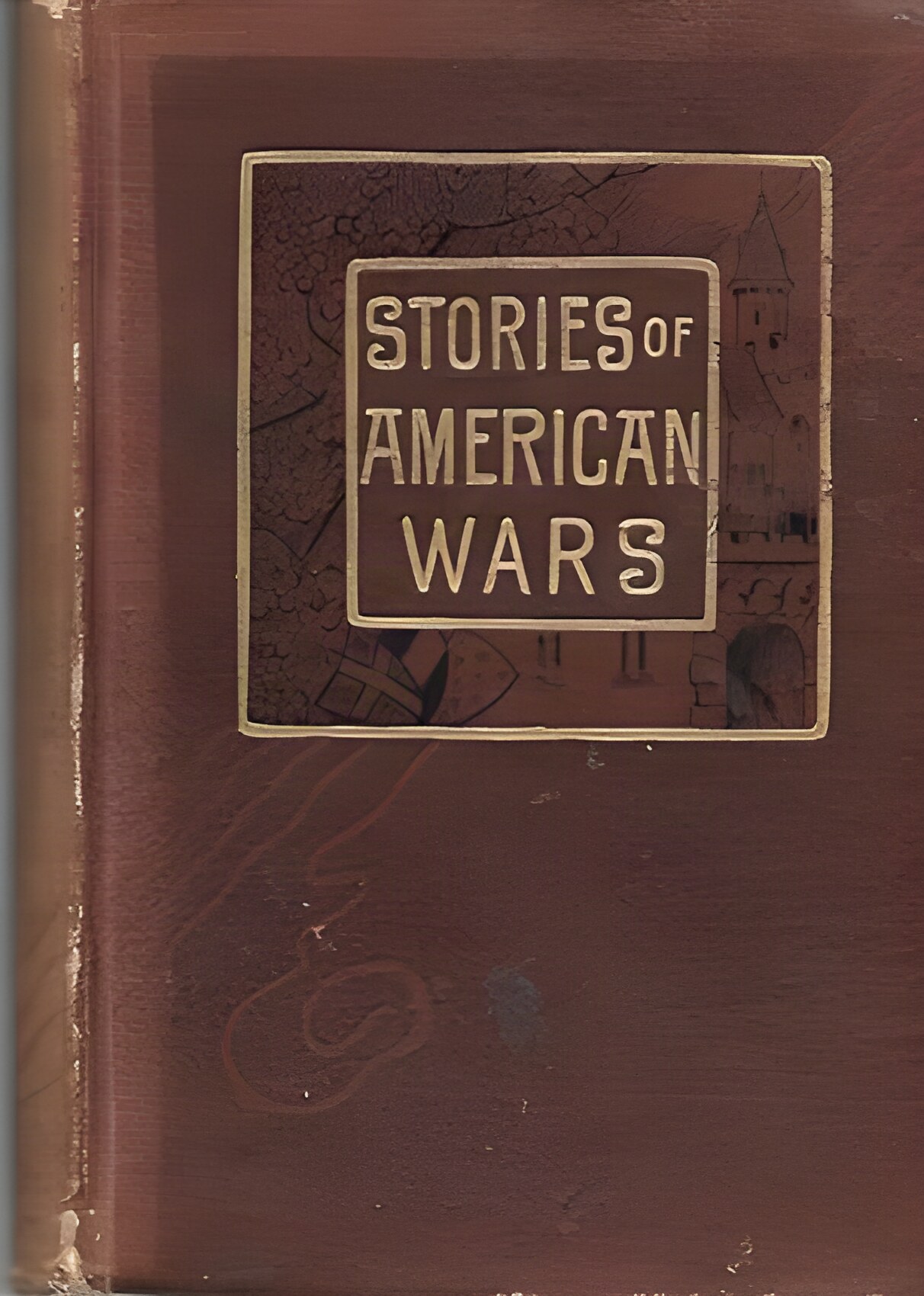
Hardcover. Boston, D. Lothrop and Co., 1st, 1887, Book: Very Good, Dust Jacket: None, Hardcover, brown cloth stamped in gilt and orange, 13 b&w plates. A dozen tales of incidents in American wars. Light pencil note on front fly leaf dated in 1887. Otherwise clean.
Hardcover. Alabama, University of Alabama Press, 1st, 1985, Book: Very Good, Dust Jacket: Very Good, 299 pages. Hardcover with dust jacket. Illustrated with black & white photographs. Clean, bright copy.
Hardcover. Berkeley/Los Angeles, University of California Press, 1st, 2005, Book: Very Good, Dust Jacket: Very Good, Hardcover, 225 pages, illustrated in b&w. In the first in-depth examination of music written for Hollywood animated cartoons of the 1930s through the 1950s, Daniel Goldmark provides a brilliant account of the enormous creative effort that went into setting cartoons to music and shows how this effort shaped the characters and stories that have become embedded in American culture. Focusing on classical music, opera, and jazz, Goldmark considers the genre and compositional style of cartoons produced by major Hollywood animation studios, including Warner Bros., MGM, Lantz, and the Fleischers. Tunes for 'Toons discusses several well-known cartoons in detail, including What's Opera, Doc?, the 1957 Warner Bros. parody of Wagner and opera that is one of the most popular cartoons ever created.
Softcover. New York , Ira Spanierman Gallery, 1st, 1987, Book: Very Good, Dust Jacket: None, Exhibition catalog. 88 pages, illustrated throughout with numerous plates in b&w and 19 plates in full color. French folded pictorial wrappers. Lovely copy. like new.
Softcover. Newport RI, Naval War College Press, 1st, 1994, Book: Very Good, Dust Jacket: None, Softcover, 419 pages. Naval War College Historical Monograph Series No. 11. Collection of papers by naval historians on the state of international maritime history in the 1990;s. Includes footnotes, chapter bibliographies, Illustrated with b&w charts & tables. Clean copy.
Hardcover. NY, Dial Books, reprint, 1990, Book: Very Good, Dust Jacket: Very Good, Hardcover in a bright, lightly worn dust jacket, 686 pages. The Uncle Remus tales, originally written down by Joel Chandler Harris, were first published over a hundred years ago, and serve as the largest collection of African-American folklore. In this four-book series, Julius Lester masterfully retains the flavor of the tales, while dropping the heavy dialect of the Harris originals and adding contemporary language and references-- ensuring that the stories will be understood and enjoyed by new generations of readers. The stories are beautifully illuminated by the slyly humorous full-color and black-and-white art of Jerry Pinkney.
Hardcover. San Diego, Harcourt Brace Jovanovich, 1st, 1989, Book: Very Good, Dust Jacket: Very Good, Hardcover, 244 pages. Illustrated with over 100 archival photos of religion on the American frontier. Three quarter brown paper over boards with rust cloth around spine and gilt text on spine; no defects. Illustrated dust jacket with maroon and black text on upper and mint green and maroon text on spine; no chips, tears or edge wear; no price clipped. Interior pages clean, remainder line on top edge, otherwise clean. Binding is tight.
Softcover. NY, Penguin Books, 1st, 1982, Book: Very Good, Dust Jacket: None, Softcover, 144 pages. Nice history of paperbacks from its early beginnings up to the mid 70's. Chapters on collecting. Many b&w stills + 111 color reproductions of covers & artwork. Clean, bright copy.
Hardcover. San Francisco, Chronicle Books, 1st, 2008, Book: Very Good, Dust Jacket: Very Good, Hardcover in a bright dust jacket, 208 pages, illustrated in color and b&w. This is the first career-spanning monograph from one of the foremost contemporary realist painters. New York-based artist Harvey Dinnerstein creates hauntingly penetrating portraits and allegorical street scenes. His work over the course of five decades remains fresh and apt for our time, depicting New York as a microcosm of our society's rich pluralism, struggle, and resilience.
Hardcover. New Haven, CT, Yale University Press, 1st, 2014, Book: Very Good, Dust Jacket: Very Good, 232 pages. Hardcover with dust jacket. Very clean, unmarked copy still in shrink wrap. Black & white and color photographs throughout. City scenes have been chronicled in photographs since the early 1800s, but street photography as traditionally defined has captured a relatively narrow field of these images. Revolutionizing the history of street photography, Unfamiliar Streets explores the work of Richard Avedon (1923-2004), Charles Moore (1931-2010), Martha Rosler (b. 1943), and Philip-Lorca diCorcia (b. 1951), four American photographers whose careers in fashion, photojournalism, conceptual art, and contemporary art are not usually associated with the genre. Bussard's lively and engaging text, a timely response to a growing interest in urban photography, challenges the traditional understanding of street photography and makes original and important connections among urban culture, social history, and the visual arts, constructing a new historical model for understanding street photography. Illustrated with more than one hundred images, this book provides an interpretation of a compelling genre that is as fresh as its consideration of the city streets themselves, sites of commerce, dispossession, desire, demonstration, power, and spectacle.
Chelsea, VT, Chelsea Green, 1st, 1985, Book: Very Good, Dust Jacket: Very Good, Hardcover. Black & white illustration. 188 pages. Slight cock to spine. Dust jacket price clipped. Previous owner's signature front fly leaf.
Hardcover. London, Perpetua Books, 1st, 1959, Book: Very Good, Dust Jacket: Fair, Hardcover, Illustrated in black & white by the wonderful Ronald Searle. 111 pages. A humorous Grand Tour of America with some startling sidelights on the American character. Book is very good, the dust jacket with chipping, edgewear, fair only.
Softcover. Berkeley, University of California Press, 1st, 1995, Book: Very Good, Dust Jacket: None, Softcover, 536 pages. Illustrated in color and black-and-white. A landmark study of California's visual arts and poetry, 1925 to 1975, Utopia and Dissent demonstrates the profound influence this regional culture had on American art and thought. Bookselle's label on rear cover, wrinkle to page 513, otherwise clean, very good.
Hardcover. Salt Lake City, Peregrine Smith, Inc, 1st US, 1980, Book: Very Good, Dust Jacket: Very Good, Hardcover, 218 pages. Green cloth cover with gilt lettering to spine, color illustrated dust jacket, 256 b&w plates, some in color. Light wear to dust jacket; overall a tight, clean copy.
Hardcover. Montpelier, State of Vermont, 1st, 1929, Book: Good, Dust Jacket: None, 163 pages. Hardcover. Ex-library copy with stamping and marking on endpapers. Illustrated with two black & white photographs. Features historical data, Vermont Roster 1898, etc. Green cloth covers with rubbing along edges. Clean, tight.
Hardcover. Boston, Briggs and Co., 1887, Book: Very Good, Dust Jacket: None, Hardcover, 352 pages, includes many ads with line illustrations. Black cloth spine with ad-illustrated cardboard covers, chipping to the paper covering the boards at edges. Otherwise clean, solid.
Hardcover. Boston, Little, Brown and Company, 2nd pr., 1960, Book: Very Good, Dust Jacket: None, Hardcover, blue cloth with gilt lettering on spine. Volume XIV in The History of United States Naval Operations in World War II. 407 pages, illustrated with maps (one fold-out) and b&w photos. Gilt on spine with light fading, lacks dust jacket, dj flap pasted to inside front cover, otherwise clean, tight copy.
Hardcover. NY, Atria Books, 1st, 2021, Book: Very Good, Dust Jacket: Very Good, Hardcover in a bright, unclipped dust jacket, 368 pages, illustrated in color and b&w. The definitive biography that unlocks the remarkable story of Vivian Maier, the nanny who lived secretly as a world-class photographer, featuring nearly 400 of her images, many never seen before, placed for the first time in the context of her life. Vivian Maier, the photographer nanny whose work was famously discovered in a Chicago storage locker, captured the imagination of the world with her masterful images and mysterious life. Before posthumously skyrocketing to global fame, she had so deeply buried her past that even the families she lived with knew little about her. No one could relay where she was born or raised, if she had parents or siblings, if she enjoyed personal relationships, why she took photographs and why she didn't share them with others. Now, in this definitive biography, Ann Marks uses her complete access to Vivian's personal records and archive of 140,000 photographs to reveal the full story of her extraordinary life. Based on meticulous investigative research, Vivian Maier Developed reveals the story of a woman who fled from a family with a hidden history of illegitimacy, bigamy, parental rejection, substance abuse, violence, and mental illness to live life on her own terms. Left with a limited ability to disclose feelings and form relationships, she expressed herself through photography, creating a secret portfolio of pictures teeming with emotion, authenticity, and humanity. With limitless resilience she knocked down every obstacle in her way, determined to improve her lot in life and that of others by tirelessly advocating for the rights of workers, women, African Americans, and Native Americans. No one knew that behind the detached veneer was a profoundly intelligent, empathetic, and inspired woman--a woman so creatively gifted that her body of work would become one of the greatest photographic discoveries of the century.
Hardcover. GR, Hatje Cantz, 1st, 2010, Book: Very Good, Dust Jacket: Very Good, Hardcover, 272 pages. Illustrated in b&w. Walker Evans (1903-1975) is, without doubt, one of the most influential American photographers ever, and many of his images have become fixed in the collective memory. But while Evans' uncompromising depiction of poverty during the Great Depression of the 1930s, the subject of a series commissioned by the Farm Security Administration, has become a key chapter in the history of photography, his equally innovative images from later decades have generally commanded less attention. Back in print, this bilingual monograph attempts to redress the balance by examining Evans' complete body of work, and features many rarely seen photographs, including his final works, a sequence of Polaroids shot in the early 1970s (a sequence made possible by an unlimited supply of film from its manufacturer). Evans' re-ascendancy in the 1970s and his relationship with legendary Museum of Modern Art curator John Szarkowski are also closely examined, in this essential and definitive volume on a great photographer who certainly achieved his aim to produce pictures that were "literate, authoritative, transcendent."
Hardcover. New York , Pantheon, 1st US, 1989, Book: Very Good, Dust Jacket: Very Good, 111 pages, illustrated throughout in b&w. Light edgewear and rubbing to dust jacket. Faint foxing to top edge, otherwise a clean, tight copy. In April 1933 an editor at Lippincott asked Evans to take photographs for a polemical book by Carlton Beals, a leftist writer who was very critical of the then Cuban dictator Gerardo Machado and anxious to show how American support of Machado had created an economic catastrophe in Cuba. Evans agreed after acceptance of his conditions that he have complete freedom to choose the photographs for publication and that they be collected at the end of the book so that they appeared to be an independent entity and not simply illustration of the text. Indeed, according to legend, Evans had not read Beals's text when he went to Havana in May 1933. He was in Cuba for three weeks. When his personal funds ran out, his way was paid for by Ernest Hemingway; the two had never met before, but Hemingway was eager for the company of someone equally qualified in literary conversation and in drinking. In the end, Evans contributed thirty-one photographs to the published "The Crime of Cuba". This book, WALKER EVANS: HAVANA 1933, contains seventy of the photographs Evans took in Cuba, including most of the photographs he selected for "The Crime of Cuba". The volume is introduced by an excellent essay by Gilles Mora that gives the historical background and discusses the place of Evans's Cuban photographs in his overall body of work. The photographs were selected by Mora and by John T. Hill, who also was responsible for the sequencing of their presentation. (One of Mora's points is that Evans attached a great deal of significance to the sequencing of his photographs, any collection of which he viewed as a composite artistic/documentary statement and, as such, more important than any single photograph.)
Softcover. London, Afterall Books, 1st, 2019, Book: Very Good, Dust Jacket: None, Softcover, 88 pages. Illustrated with b&w and color plates. Kitchen Corner, Tenant Farmhouse, Hale County, Alabama shows a painstakingly clean-swept corner in the house of an Alabama sharecropper. Taken in 1936 by Walker Evans as part of his work for the Farm Security Administration, Kitchen Corner was not published until 1960, when it was included in a new edition of Walker Evans and James Agee's classic Let Us Now Praise Famous Men. The 1960 reissue of Evans and Agee's book had an enormous impact on Americans' perceptions of the Depression, creating a memory-image retrospectively through Walker's iconic photographs and Agee's text. In this latest addition to the Afterall One Work series, photographer Olivier Richon examines Kitchen Corner. The photograph is particularly significant, he argues, because it uses a documentary form that privileges detachment, calling attention to overlooked objects and to the architecture of the dispossessed.
Softcover. London, Afterall Books, 1st, 2019, Book: Very Good, Dust Jacket: None, Softcover, 88 pages. Illustrated with b&w and color plates. Kitchen Corner, Tenant Farmhouse, Hale County, Alabama shows a painstakingly clean-swept corner in the house of an Alabama sharecropper. Taken in 1936 by Walker Evans as part of his work for the Farm Security Administration, Kitchen Corner was not published until 1960, when it was included in a new edition of Walker Evans and James Agee's classic Let Us Now Praise Famous Men. The 1960 reissue of Evans and Agee's book had an enormous impact on Americans' perceptions of the Depression, creating a memory-image retrospectively through Walker's iconic photographs and Agee's text. In this latest addition to the Afterall One Work series, photographer Olivier Richon examines Kitchen Corner. The photograph is particularly significant, he argues, because it uses a documentary form that privileges detachment, calling attention to overlooked objects and to the architecture of the dispossessed.
Hardcover. New York, Da Capo Press, 1st, 1973, Book: Very Good, Dust Jacket: Very Good, Hardcover, unpaginated, approx. 250 pages. Profusely illustrated in b&w. Features 488 photographs taken in Georgia, South Carolina, New Orleans, Mississippi, West Virginia, and other environs. Light wear to dust jacket, some mild scaring to inside covers where dust jacket was once taped to cover.

 "Trying Times: Alabama Photographs, 1917-1945by: Thomason, Michael V. R.")
 "Tunes for 'Toons: Music and the Hollywood Cartoonby: Goldmark, Daniel")
 "Twachtman in Gloucester : His Last Years, 1900 - 1902by: Hale, Essays by John Douglas & Richard J Boyle, William H Gerdts")
 "Ubi Sumus? The State of Naval and Maritime Historyby: Hattendorf, John B.")

 "Under God's Spell: Frontier Evangelists 1772-1915by: Luchetti, Cathy")


 "Undercover: An Illustrated History of American Mass Market Paperbacks by: Bonn, Thomas L.")


 "Underground Together: The Art and Life of Harvey Dinnersteinby: Frey, Raman and Wendi Norris")
 "Unfamiliar Streets: The Photographs of Richard Avedon, Charles Moore, Martha Rosler, and Philip-Lorca DiCorciaby: Bussard, Katherine A.")
 "Upper Valley: An Illustrated Tour Along the Connecticut River Before the Twentieth Century, Theby: Wikoff, Jerold")
 "USA for Beginners: by Rocking Chair across Americaby: Alex Atkinson and Ronald Searle")
 "Utopia and Dissent: Art Poetry and Poltics in Californiaby: Richard Candida Smith")
 "Utopian Craftsmen: The Arts and Crafts Movement from the Cotswolds to Chicagoby: Lambourne, Lionel")
 "Vermont in the Spanish-American Warby: Johnson, Herbert T./The General Assembly, 1929/State of Vermont")
 "Vermont State Directory and Gazetteer for 1887-88by: Briggs and Co.")
![Vestiges of a Proud Nation the Ogden B. Read Northern Plains Indian Collectionby: Markoe, Glenn J. [Ed.]](javascript:largeIMTop('https://www.browsingisarousing.com/shop/images/Vestiges-of-a-Proud-Nation-the-Ogden-B.-Read-Northern-Plains-Indian-Collection_by_Markoe-Glenn-J.-Ed378701-411947.jpg','https://www.browsingisarousing.com/shop/images/Vestiges-of-a-Proud-Nation-the-Ogden-B.-Read-Northern-Plains-Indian-Collection_by_Markoe-Glenn-J.-Ed378701-411947.jpg',0,'378701',0,'') "Vestiges of a Proud Nation the Ogden B. Read Northern Plains Indian Collectionby: Markoe, Glenn J. [Ed.]")
 "Victory in the Pacific 1945; History of United States Naval Operations in World War II, Volume 14 by: Morison, Samuel Eliot")
 "Vivian Maier Developed: The Untold Story of the Photographer Nanny by: Ann Marks")
 "Walker Evans: Decade by Decadeby: Crump and Walker Evans, James")
 "Walker Evans: Havana 1933by: Mora, Gilles")
 "Walker Evans: Kitchen Corner by: Olivier Richon")
 "Walker Evans: Kitchen Corner by: Olivier Richon")