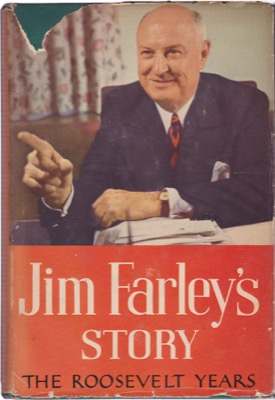
Hardcover. NY, Whittlesey House/McGraw-Hill , 3rd pr., 1948, Book: Very Good, Dust Jacket: Fair, Hardcover in a worn dust jacket with a chunk gone from front panel. Full green cloth, gilt lettering and decoration on spine. Illustrated with several pages of B&W photographs. 388 pages. SIGNED BY FARLEY in green ink on the front fly leaf. The 'unvarnished' facts about the man who put FDR in the White House, and built-up one of the most effective political party organizations in history. A revealing portrait of Franklin D. Roosevelt.
Hardcover. Seattle, Fantagraphics, 1st, 2025, Book: Very Good, Dust Jacket: None, Hardcover, large format, pictorial boards, 160 pages. The definitive collection of comics and illustration from 1892 to 1942 by James Swinnerton, one of the founding fathers of the American comic strip. This sumptuous volume covers Swinnerton's six-decade career in comics, from his beginnings as a sports/editorial cartoonist for William Randolph Hearst in San Francisco to his years in the America's Southwest desert, where his love for the land and its people came through in his comics and illustration. Jimmy! includes an illustrated biography and essays by co-editor Michael Tisserand and Eddie Campbell. The comic strips in this volume are carefully restored to their original colors and printed at near-full size. Swinnerton lovers will be delighted by the richness and variety of the works seen here. Those new to this uniquely American artist will likely join the growing numbers who appreciate his important role in the history of the comics. Clean, bright copy. DOMESTIC SHIPPING ONLY.
Softcover. Montevideo, Impresora Gordon, 1st, 1999, Book: Good, Dust Jacket: None, Softcover, 272 pages, illustrated in color and b&w. Monograph on the Uruguayan artist who championed a modernist aesthetic in South American art. Color wrappers with light wear, interior clean. SPANISH TEXT.
Hardcover. Philadelphia, John C. Winston Company, 1st, 1933, Book: Very Good, Dust Jacket: Good, Hardcover in a worn, chipped dust jacket that has a paper scar to spine where label was removed. Illustrated on dj and cover of a man standing at a bar. B&w illustrations by Jack Gallagher. A satiric view of tipplers, depicted in the character of a Falstaffian American male apparently meant to counteract the caticature of prohibition and prohibitionists as a pinch-faced old spoil sport put forth by the cartoonist Rollin Kirby in the "New York World."
Hardcover. New Haven CT, Yale University Press;, 1st, 2009, Book: Very Good, Dust Jacket: Very Good, Hardcover, 180 pages. John Gutmann (1905-1998) was one of America's most distinctive photographers. Born in Germany where he trained as an artist and art teacher, he fled the Nazis in 1933 and settled in San Francisco, reinventing himself as a photo-reporter. Gutmann captured images of American culture, celebrating signs of a vibrant democracy, however imperfect. His own status as an outsider--a Jew in Germany, a naturalized citizen in the United States--informed his focus on individuals from the Asian-American, African-American, and gay communities, as well as his photography in India, Burma, and China during World War II. This handsome book acknowledges Gutmann's place in the history of photography. Drawing on his archive of photographs and papers at the Center for Creative Photography, it presents both unfamiliar works and little-known contexts for his imagery, linking his photography to his passionate interest in painting and filmmaking, his collections of non-Western art and artifacts, and his pedagogy. In addition to a major essay by Sally Stein, the volume includes an introduction by Douglas R. Nickel, and an overview of the Gutmann archive by Amy Rule.
Hardcover. New Haven CT, Yale University Press;, 1st, 2009, Book: Very Good, Dust Jacket: Very Good, Hardcover, 180 pages. John Gutmann (1905-1998) was one of America's most distinctive photographers. Born in Germany where he trained as an artist and art teacher, he fled the Nazis in 1933 and settled in San Francisco, reinventing himself as a photo-reporter. Gutmann captured images of American culture, celebrating signs of a vibrant democracy, however imperfect. His own status as an outsider--a Jew in Germany, a naturalized citizen in the United States--informed his focus on individuals from the Asian-American, African-American, and gay communities, as well as his photography in India, Burma, and China during World War II. This handsome book acknowledges Gutmann's place in the history of photography. Drawing on his archive of photographs and papers at the Center for Creative Photography, it presents both unfamiliar works and little-known contexts for his imagery, linking his photography to his passionate interest in painting and filmmaking, his collections of non-Western art and artifacts, and his pedagogy. In addition to a major essay by Sally Stein, the volume includes an introduction by Douglas R. Nickel, and an overview of the Gutmann archive by Amy Rule.
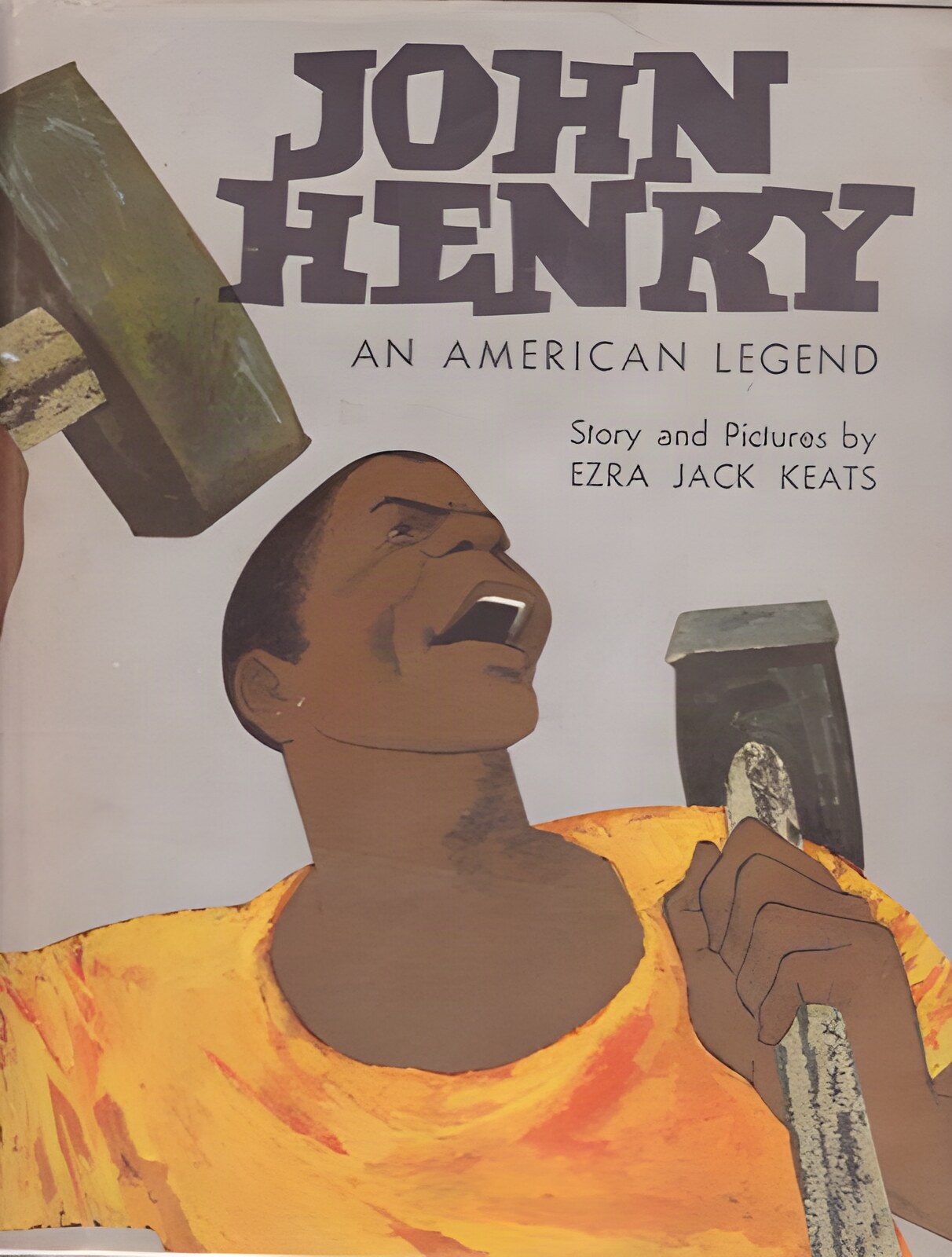
Hardcover. New York, Pantheon, 1st, 1965, Book: Very Good, Dust Jacket: Good, 32 pages. Hardcover with price-clipped dust jacket. Illustrated in color by Keats. Rear end papers with some crayon marks otherwise clean. Dust jacket worn with internal tape repair, chipping.
Hardcover. US, University of Delaware Press, 1st, 1988, Book: Very Good, Dust Jacket: Very Good, Hardcover, 204 pages, illustrated throughout in color and b&w. Light shelf-wear to dust jacket, else a clean, tight copy.
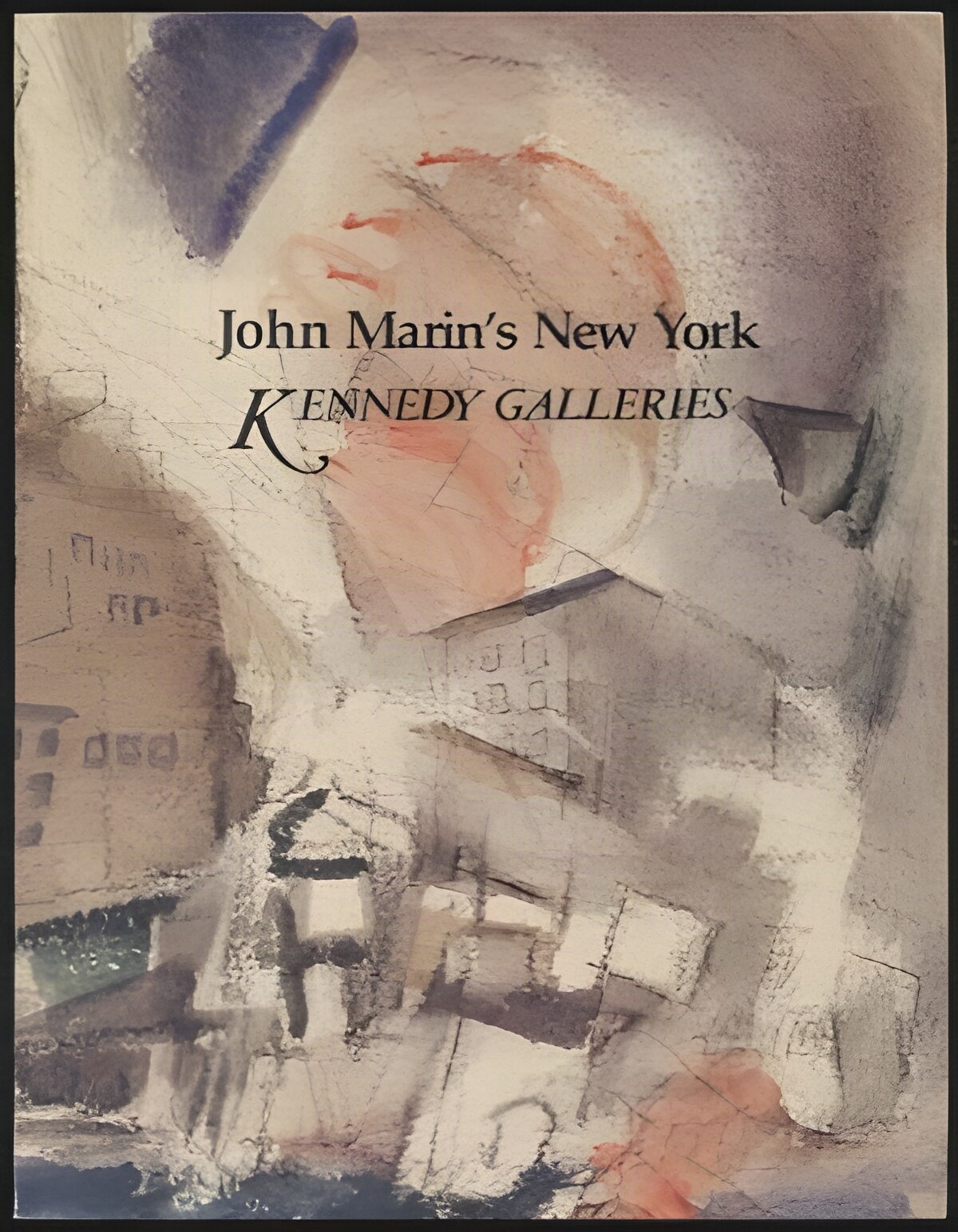
Softcover. New York, Kennedy Galleries, 1st, 1981, Book: Very Good, Dust Jacket: None, Softcover. Exhibition catalog. Unpaginated, illustrated throughout with 86 plates in color and b&w. Pictorial stiff wrappers. Slight wear to edges and spine, else a very nice, tight copy.
Hardcover. Minneapolis MN, University of Minnesota Press, 1st, 1958, Book: Very Good, Dust Jacket: Very Good, 112 pages, illustrated with b&w photos, one color plate. Dust jacket with light rubbing, edgewear.
Softcover. New York, Coe Kerr Gallery & Wittenborn Art Books,, 1st, 1980, Book: Very Good, Dust Jacket: None, Exhibition catalog. Unpaginated, illustrated throughout with 65 plates in color and b&w. White pictorial stiff wrappers. Light wear and foxing to covers and spine, else a very nice, tight copy.
Hardcover. Boston, Boston Book & Art, 1st, 1971, Book: Very Good, Dust Jacket: Good, Hardcover, 215 pages, 176 illustrations in b&w and color. A book issued in conjunction with an exhibition at the National Gallery of Art in Washington celebrating the centennial of Sloan's birth. Includes a list of books illustrated by the artist, other selected bibliography. Dust Jacket with light edgewear, rubbing.
Softcover. New York, Gerald Peters Gallery, 1st, 2008, Book: Very Good, Dust Jacket: None, Softcover. Like new in publisher's shrink-wrap. 63 pages.; four pages, biographical information by Avis Berman with 4 etchings and photo of John and Dolly Sloan; 23 color plates with identifying information; additional 5 etchings plus those on inside covers; large photos of Sloan at easel. Catalogue to accompany joint exhibition by Gerald Peters and Kraushaar Galleries in New York. 2008.
Softcover. Washington DC, National Gallery of Art, 1st, 1995, Book: Near Fine, Dust Jacket: None, 118 pages, illustrated in color and b&w. INSCRIBED BY CHOTNER TO JOHN (WILMERDING) on title page. Softcover exhibition catalog in like new condition.
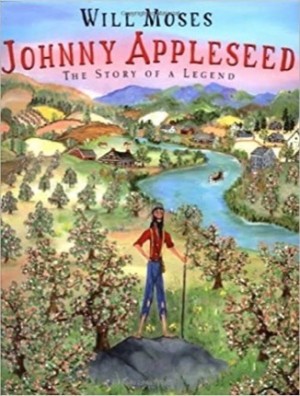
Hardcover. NY, Philomel Books, 4th pr., 2001, Book: Very Good, Dust Jacket: Very Good, Hardcover in a bright, unclipped dust jacket with mild fad to spine. The long-enduring American legend of Johnny Appleseed comes to life in the glorious folk illustrations and spirited storytelling of Will Moses. Everyone knows the story of Johnny Appleseed: how he traveled westward across our young country, spreading apple trees wherever he went and wearing outlandish hats, like a soup pot, on his head. But did you know that Johnny Appleseed was a real person? Born John Chapman in 1774, he grew up in a family of twelve children, and as a young man, struck out to find the frontier. It was along this journey that he discovered the wonders of apple trees, and where he had his life adventures. In the tradition of his great-grandmother, Grandma Moses, Will Moses's much-loved folk art perfectly illustrates this American tale.
Hardcover. New York, American Federation of Arts, 1st, 1961, Book: Near Fine, Dust Jacket: Very Good, Catalogue of the sculpture of Jose de Rivera, with a chronology and introductory essay. Approximately 50 pages, illustrated with 15 black/white plates in addition to several other illustrations. Small cloth bound book is in near fine condition, dust jacket is slightly faded on the spine but in very good condition.
Hardcover. Ostfildern GR, Hatje Cantz, 1st, 2008, Book: Very Good, Dust Jacket: Very Good, Hardcover, 288 pages 231 illustrations 60 in color with 274 plans and drawings. Biography. Like new in publisher's shrink-wrap. Josef Paul Kleihues (1933-2004) was one of the most prolific architects of postwar Germany, famous both as the Director of the International Building Exhibition Berlin in 1987 and for his design for the Museum of Contemporary Art in Chicago. He was also known for his sensitive interventions into older buildings, an instance of which is the former Hamburger Bahnhof--now the Museum fur Gegenwart--in Berlin, where Kleihues intermixed glass walls and light installations by the American Minimalist Dan Flavin with the building's original nineteenth-century Neoclassical design. (His reconstruction was widely deemed to rival or even surpass Gae Aulenti's overhaul of the interior of the Musee d'Orsay in Paris.) This first volume of a three-part monograph presents projects up to 1980, including the highly acclaimed Berlin Sanitation Department and the Neukolln Hospital. Even in these early works, Kleihues' practical, problem-solving approach is already evident, indicating his readiness to reflect on the traditional approaches of Modern architecture and his capacity to expand them in interesting ways. This very generously illustrated volume was designed by Kleihues himself, just before his death in 2004.
Hardcover. NY, Thames & Hudson, 1st, 2012, Book: Very Good, Dust Jacket: None, Hardcover, 152 pages. A fabulous facsimile of an almost unknown masterpiece by Joseph Cornell, presented in a box, along with a volume of essays and an interactive DVD One of Joseph Cornell's favorite pastimes was to meander through the used bookstalls of lower Manhattan, sorting through old books, magazines, postcards, photos, and other ephemera in search of items to spark his creative impulses. Sometime in the early 1930s he came upon the Journal d'Agriculture Practique (Volume 21, 1911), a voluminous handbook of advice for farmers. Though he was very much an urban creature, he adored French culture of that period, and the book was filled with charming black and white engraving and photographs of pigs, horses, vegetables, and farm machinery. Over time Cornell altered and reinvented many of the pages in the Journal. He inserted collages, photomontages, and occasional drawings; he crossed out words in the text and made French puns with others. Hand-colored engravings, cutouts, and lift-ups intricately transport the reader from page to page. The dazzling elegance of Cornell's work on the Journal has rarely been viewed. It was discovered in his basement studio soon after his death in 1972 and is now in the collection of the Philadelphia Museum of Art. Due to its fragility, the work is not well known, even among Cornell scholars. Now, in a unique venture, sixty of the most extraordinary pages have been re-created in virtual facsimile, with cutouts, glue-ons, and other unique handmade details. Included in a specially designed box are a DVD of the entire work, including pop-up commentaries, and a volume of illustrated essays on the Journal and Cornell's artistic practice. 103 illustrations
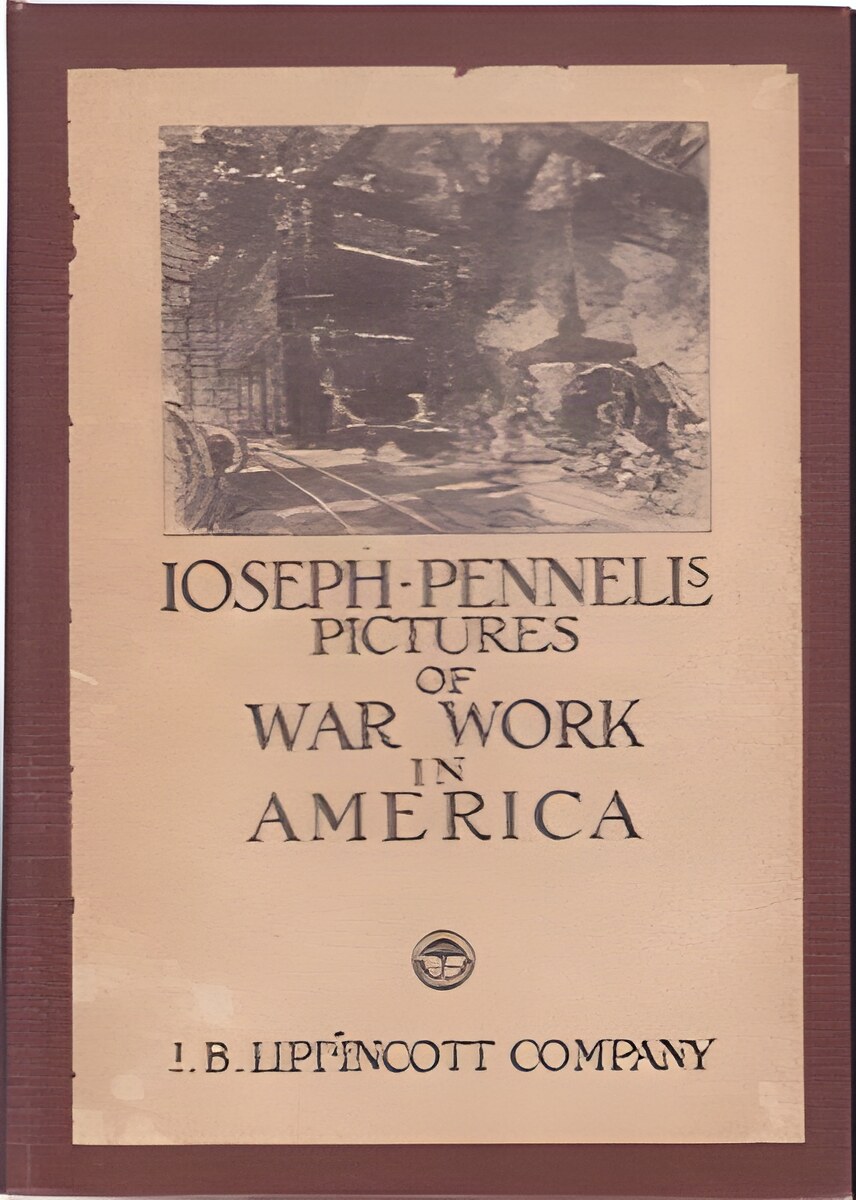
Hardcover. Philadelphia, J.B. Lippincott, 1st, 1918, Book: Very Good, Dust Jacket: None, Hardcover, brown cloth with a pastedown on front cover with title and illustration. Offers a powerful visual record of the United States' contribution to World War I. This collection of lithographs by renowned artist Joseph Pennell provides a unique glimpse into the nation's war effort, focusing on the crucial role of American industry. Previous owner's note on the front fly leaf, otherwise clean.
Hardcover. New York , Metropolitan Books, 1st US, 2012, Book: Very Good, Dust Jacket: None, Hardcover, 191 pages, illustrated throughout in color and b&w. Clean, unmarked copy in excellent condition. Over the past decade, Joe Sacco has increasingly turned to short-form comics journalism to report from conflict zones around the world. Collected here for the first time, Sacco's darkly funny, revealing reportage confirms his standing as one of the foremost war correspondents working today. Journalism takes readers from the smuggling tunnels of Gaza to war crimes trials in The Hague, from the lives of India's "untouchables" to the ordeal of Saharan refugees washed up on the shores of Malta. And in pieces never published before in the United States, Sacco confronts the misery and absurdity of the war in Iraq, including the darkest chapter in recent American history-the torture of detainees.
Hardcover. New York, Argosy-Antiquarian Ltd., Reprint, 1963, Book: Very Good, Dust Jacket: None, Hardcover, 272 pages. limited edition (#10 of 750 copies). A diary of the late Emil Teichmann, edited and with an introduction by his son Oskar. Foreword by Ernest Gruening. Illustrated with b/w drawings and maps. Frontis portrait of author. Top edge stained blue. Blue cloth with gilt pictorial front and gilt lettering on spine. Light wear to top and bottom of spine.
Hardcover. Chicago, Albert Whitman & Co, 1st, 1968, Book: Very Good, Hardcover, pictorial cloth/library binding, 32 pages illustrated in color and b&w. Ex-lib with endpaper stamp and residue. Interior is clean. Tales told in the MIddle East travel from storyteller to storyteller, from country to country. Sometimes they cross the ocean, as this story in one form did to be told in Detroit by an Armenian grandmother. An American scholar heard this story told of the Bedouins, while still another version is Turkish.
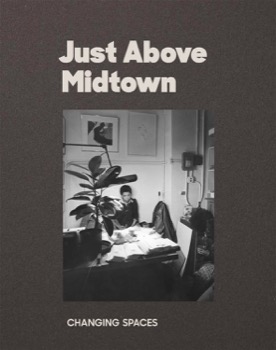
Softcover. NY, Museum of Modern Art, 1st, 2022, Book: Very Good, Dust Jacket: None, Softcover, 184 pages, illustrated in color and b&w. Just Above Midtown, or JAM, was an art gallery and self-described laboratory for experimentation led by Linda Goode Bryant that foregrounded African American artists and artists of color. Open from 1974 to 1986, it was a place where an expansive idea of contemporary art flourished and debate was cultivated. The gallery offered early opportunities for artists recognized as pivotal figures in late-20th-century art-including David Hammons, Butch Morris, Senga Nengudi, Lorraine O'Grady and Howardena Pindell-as well as a nonhierarchical approach to art that welcomed artists without stylistic proscription. Published in conjunction with the first museum exhibition to focus on this visionary gallery and its ongoing impact, Just Above Midtown: Changing Spaces showcases rarely seen material from JAM's history-artworks, ephemera and photographs-that collectively document the gallery's communal and programmatic activities. This richly illustrated, jacketed paperback catalog includes essays that contextualize JAM and consider its legacy, a conversation between Goode Bryant and Thelma Golden, Director and Chief Curator of the Studio Museum in Harlem, a complete exhibition chronology written by MoMA and Studio Museum staff with nearly 50 annotated entries, and excerpts from oral histories with JAM staff and artists conducted especially for this project. Clean copy.
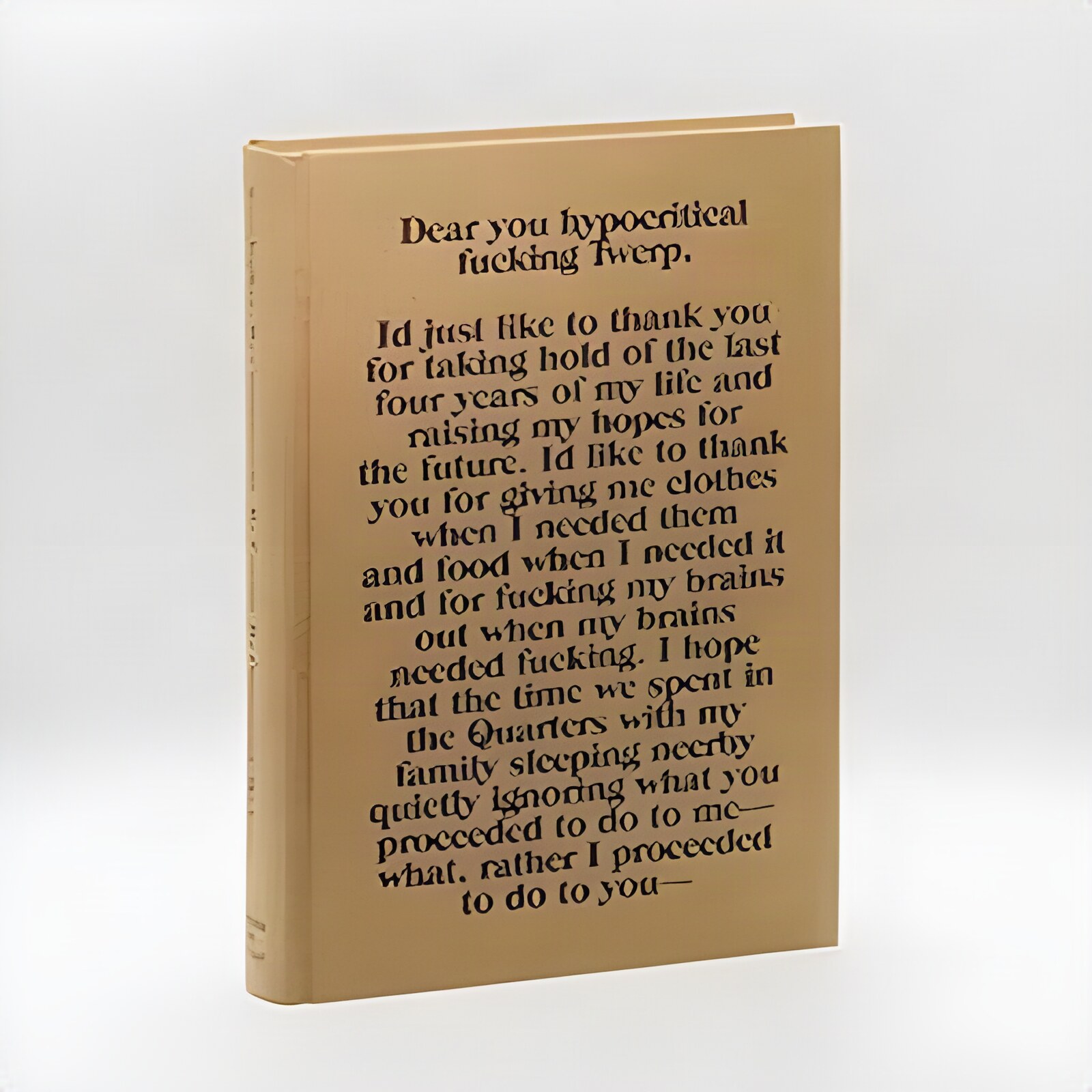
Hardcover. Minneapolis MN, Walker Art Center, 1st, 2007, Book: Very Good, Dust Jacket: None, Hardcover, publisher's light-brown cloth over boards, stamped lettering, and illustration to the spine, and boards. Richly illustrated in black-and-white and color throughout. "Deploying an acidic sense of humor, Walker examines the dialectics of pleasure and danger, guilt and fulfillment, desire and fear, race and class. This landmark publication, which is sure to win international design awards, accompanies Walker's first major American museum survey. It features critical essays by Philippe Vergne, Sander L. Gilman, Thomas McEvilley, Robert Storr and Kevin Young, as well as an illustrated lexicon of recurring themes and motifs in the artist's most influential installations by Yasmil Raymond, more than 200 full-color images, an extensive exhibition history and bibliography." Clean copy.






 "Joaquin Torres-Garcia: La Tramay y Los Signosby: Battegazzore, Miguel A.")
 "John Barleycorn His Life and Letters. A Satirical Story of His Eventful Career Replete with Facts, Repartee, and Humor. by: Poling, Daniel A")
 "John Gutmann: The Photographer at Workby: Sally Stein , Douglas R. Nickel, et al.")
 "John Gutmann: The Photographer at Workby: Sally Stein , Douglas R. Nickel, et al.")
 "John Lewis Krimmel: An Artist in Federal America (The University of Delaware Press American artists series)by: Naeve, Milo")
 "John Rood's Sculptureby: Schneider, Bruno F.")
 "John Singer Sargent: His Own Workby: Adelson , Warren")
 "John Sloan 1871-1951by: Scott, David W. and E. John Bullard")
 "John Sloan: An American View by: Berman, Avis")
 "John Twachtman: Connecticut Landscapesby: Chotner, Deborah, Lisa Peters and Kathleen Pyne")
 "Jose de Riveraby: Gordon, John")
 "Josef Paul Kleihuesby: Kleihues, Josef Paul, Andrea Mesecke and Thorsten Scheer")
 "Joseph Cornell's Manual of Marvels: How Joseph Cornell reinvented a French agricultural manual to create an American masterpieceby: Dickran Tashjian and Analisa Leppa")
 "Journalismby: Sacco, Joe")
 "JOURNEY TO ALASKA IN THE YEAR 1868, A. Being a Diary of the Late Emil Teichmann. Edited by his son Oskar.by: Teichmann, Emil")