Hardcover. NY, Abrams, 1st, 2009, Book: Very Good, Dust Jacket: Very Good, Hardcover, 256 pages. Harvey Kurtzman discovered Robert Crumb and gave Gloria Steinem her first job in publishing when he hired her as his assistant. Terry Gilliam also started at his side, met an unknown John Cleese in the process, and the genesis of Monty Python was formed. Art Spiegelman has stated on record that he owes his career to him. And he's one of Playboy publisher Hugh Hefner's favorite artists. Harvey Kurtzman had a Midas touch for talent, but was himself an astonishingly talented and influential artist, writer, editor, and satirist. The creator of MAD and Playboy's "Little Annie Fanny" was called, "One of the most important figures in postwar America" by the New York Times. Kurtzman's groundbreaking "realistic" war comics of the early '50s and various satirical publications (MAD, Trump, Humbug, and Help!) had an immense impact on popular culture, inspiring a generation of underground cartoonists. Without Kurtzman, it's unlikely we'd have had Airplane, SNL, or National Lampoon. The Art of Harvey Kurtzman is the first and only authorized celebration of this "Master of American Comics." This definitive book includes hundreds of never-before-seen illustrations, paintings, pencil sketches, newly discovered lost E.C. Comics layouts, color compositions, illustrated correspondence, and vintage photos from the rich Kurtzman archives
Hardcover. Boston , David R. Godine , reprint , 1992, Book: Very Good, Dust Jacket: Very Good, 110 pages, hardcover. Color illustrated dust jacket with blue cloth covers. Extensive color and black and white illustrations though out. Illustrated end pages and flyleaves. (Originally published in 1984). Previous owner's notation on half-title page otherwise clean, minor wear to dust jacket.
Hardcover. Pittsburgh PA, GoodKnight Books, 1st, 2017, Book: Very Good, Dust Jacket: Very Good, Hardcover in a bright, unclipped dust jacket. The Art of Selling Movies presents the first-ever look at 60 years of newspaper advertising for motion pictures great and small. These ads created by Hollywood and adapted by local and regional exhibitors motivated patrons to leave their homes, part with precious income, and spend time in the dark. Because of the high stakes involved, theater operators used wildly creative means to make that happen. They made movie advertising equal parts art and psychology, appealing to every human instinct (especially sex) in an effort to push product and keep their theatres in business. From the pen-and-ink masterpieces of the 1920s and 30s to location-specific folk art to ad space jam-packed with enticements for every member of the family, The Art of Selling Movies dissects the psyche of the American movie-going public ... and the advertisers seeking to push just the right buttons.
Hardcover. Princeton NJ, Princeton University Press, 1st, 2007, Book: Very Good, Dust Jacket: Very Good, Hardcover, 288 pages. The impact of the humble American snapshot has been anything but humble. Any American who takes a snapshot contributes to a compelling and influential genre. Since 1888, when George Eastman introduced the Kodak camera and roll film, the snapshot has not only changed everyday American life and memory; it has also changed the history of fine art photography. The distinctive subject matter and visual vocabulary of the American snapshot--its poses, facial expressions, viewpoints, framing, and themes--influenced modernist photographers as they explored spontaneity, objectivity, and new topics and perspectives. A richly illustrated chronicle of the first century of snapshot photography in America, The Art of the American Snapshot is the first book to examine the evolution of this most common form of American photography. The book shows that among the countless snapshots taken by American amateurs, some works, through intention or accident, continue to resonate long after their intimate context and original meaning have been lost.The catalogue of a fall 2007 exhibition at the National Gallery of Art in Washington, DC, The Art of the American Snapshot reproduces some 250 snapshots drawn from Robert Jackson's outstanding collection and from a recent gift Jackson made to the museum. Organized decade by decade, the book traces the evolution of American snapshot imagery and describes how technical, social, and cultural factors affected the look of snapshots at different periods.
Hardcover. NY, Metropolitan Museum of Art, 1st, 2024, Hardcover in a bright dust jacket, 256 pages illustrated in color. An exploration of late nineteenth-century American literary posters. a vibrant genre at the vanguard of modern commercial art and graphic design spurred by innovations in printing technology, the modern poster emerged in the 1890s as a popular form of visual culture in the United States. Created by some of the best-known illustrators and graphic designers of the period including Will H. Bradley, Florence Lundborg, Edward Penfield, and Ethel Reed these advertisements for books and high-tone periodicals such as Harper's and Lippincott's went beyond the realm of commercial art, incorporating bold, stylized imagery and striking typography. This book, based on the renowned Leonard A. Lauder Collection, explores the craze for literary posters, which became sought after collectibles even in their day. It offers new scholarly perspectives that address the aesthetic sophistication and modernity of the literary poster; the impact of early experiments in the field of advertising psychology; the expanded opportunities for women artists, who played an important role in advancing the so-called poster style; and the printmaking techniques that artists employed in this novel art form. A lively survey of a little-known but highly influential period in graphic design,
Hardcover. Boston, Little, Brown and Company, reprint, 1957, Book: Very Good, Dust Jacket: None, Hardcover, blue cloth with gilt lettering on spine. Volume X in The History of United States Naval Operations in World War II. 399 pages, illustrated with maps (one fold-out) and b&w photos. Gilt on spine with light fading, lacks dust jacket, dj flap copy pasted inside front cover, otherwise clean, tight copy.
Hardcover. Seattle, Fantagraphics Books, 1st, 2025, Book: Very Good, Dust Jacket: None, Hardcover in pictorial boards, 397 pages illustrated in color. This new volume in Fantagraphics' and Marvel's collaborative Atlas Library presents Girl Comics #1-12, a long unseen subversion of romance comics beautifully designed for a new generation of readers!In 1950, Timely/Atlas/Marvel took a typical romance title called Girl Comics and turned it into a sister companion to its successful men's-adventure comics: an empowering girls'-adventure comic! Mystery, adventure and suspense was promised and delivered! At the hands of a stellar artistic line-up, including John Buscema, Mike Sekowsky, Bill Everett, Joe Maneely, Russ Heath, and Bernard Krigstein, Girl Comics evolved from heart-stricken love stories to hair-raising girl-power thrill rides like "The Death Plunge!," "The House of Shadows!," "I was a Murderer's Daughter!," "They Called me a Spy!," "The Dead Hands at the Controls," and "The Dark Hallway."This volume also features the story behind the stories, with editor Dr. Michael J. Vassallo's essays on Marvel publisher Martin Goodman's enthusiastic relationship with romance comics and magazines at a time when the art form was cementing itself into American youth culture! Clean copy. DOMESTIC SHIPPING ONLY.
Hardcover. Boston, Little, Brown and Company, reprint, 1950, Book: Very Good, Dust Jacket: None, Hardcover, blue cloth with gilt lettering on spine. Volume I in The History of United States Naval Operations in World War II. 432 pages, illustrated with maps and b&w photos. Gilt on spine with light fading, lacks dust jacket, otherwise clean, tight copy.
Hardcover. Boston, Houghton Mifflin Harcourt, 1st, 2008, Book: Very Good, Dust Jacket: Very Good, Hardcover, 324 pages, illustrated throughout in color and b&w. Clean, unmarked copy with only minor wear to dust jacket. This newest edition to the Best American Series--"A genuine salute to comics" (Houston Chronicle)--returns with a set of both established and up-and-coming contributors. Editor Lynda Barry and and brand new series editors Jessica Abel and Matt Madden--acclaimed cartoonists in their own right-- have sought out the best stories culled from graphic novels, pamphlet comics, newspapers, magazines, mini-comics, and the Web to create this cutting-edge collection "perfect for newbies as well as fans"--The San Diego Union Tribune. This newest volume features luminaries like Chris Ware, Seth, and Alison Bechdel alongside Paul Pope's "Batman" and beloved daily cartoonists like Matt Groening.
Hardcover. Boston, Houghton Mifflin Harcourt, 1st, 2008, Book: Very Good, Dust Jacket: Very Good, Hardcover, 324 pages, illustrated throughout in color and b&w. Clean, unmarked copy with only minor wear to dust jacket. This newest edition to the Best American Series--"A genuine salute to comics" (Houston Chronicle)--returns with a set of both established and up-and-coming contributors. Editor Lynda Barry and and brand new series editors Jessica Abel and Matt Madden--acclaimed cartoonists in their own right-- have sought out the best stories culled from graphic novels, pamphlet comics, newspapers, magazines, mini-comics, and the Web to create this cutting-edge collection "perfect for newbies as well as fans"--The San Diego Union Tribune. This newest volume features luminaries like Chris Ware, Seth, and Alison Bechdel alongside Paul Pope's "Batman" and beloved daily cartoonists like Matt Groening.
Hardcover. New York, Golden Press, 1st, 1991, Book: Very Good, Dust Jacket: None, Hardcover, glazed boards, 61 pages. Color illustrations by Gene Biggs. Clean copy.
Hardcover. London, Constable, reprint, 1927, Book: Very Good, Dust Jacket: None, Hardcover, tan cloth stamped in black on spine and front cover, 567 pages. Over 500 drawings by author, whose life work is the development or revival of Woodcraft, that is outdoor life in its greatest sense, as a school for manhood. He defends Indians and their traditions, as he sees them as a model for outdoor life. Clean copy.
Softcover. Stanford CA, Stanford University Press;, reprint, 1992, Book: Very Good, Dust Jacket: None, Softcover, 584 pages. The only field guide to cover all North American butterfly species, this monumental work is also a complete natural history, fully describing the biological and ecological world of butterflies in general. It is without question the most important book on butterflies in several decades, and the most complete treatment of a major butterfly faun ever published. The book is written at several levels of detail, most of it accessible to anyone, and employs the minimum of technical terms necessary for ensuring scientific accuracy. Extensive introductory material-a book in itself-stresses butterfly biology and ecology: structure, flight, metamorphosis, hibernation, physiology, roosting, migration, mating, egg laying, intelligence, social behavior, larval and adult foods, enemies, mimicry, variation, evolution, habitats, distribution, and conservation. The main text is arranged in phylogenetic sequence, and characteristics or behavior common to all members of a family, subfamily, or tribe are discussed at those levels. The skippers, a large group often excluded, are treated in full. Several unique features make identification easier and more certain than with any other field guide. First, every species (and many subspecies) of butterfly ever recorded north of Mexico (or in Bermuda or Hawaii) is treated at length and illustrated in color. Over 1,800 butterflies representing all 679 species (males, females, uppersides, undersides, subspecies, etc.) are illustrated on 42 full-page plats. Another 136 color photographs illustrate the various life forms in natural habitat: eggs, larvae, pupae, and the more familiar and more spectacular adults.
Hardcover. NY, The Century Co., reprint, 1905, Book: Very Good, Dust Jacket: None, Hardcover, gray-green cloth lettereed and decorated in gilt and black. 239 pages, Illustrated with 36 drawings by Frederic Dorr Steele. Frank Richard Stockton (April 5, 1834 ?- April 20, 1902) was an American writer and humorist, best known today for a series of innovative children's fairy tales that were widely popular during the last decades of the 19th century. Primarily a short story writer this is one of his few novels. A very clean, bight copy.
Hardcover. NY, Viking Press, 1st, 1948, Book: Very Good, Dust Jacket: None, Hardcover, red cloth with dark maroon stamping, 236 pages. Illustrated with sixteen full-page black and white drawings by Seredy. The dramatic and heart-warming tale is set first on an estate in Hungary near the end of WW II, and then on a farm in the Hudson Valley, New York. Young Michael of Hungary carries an acorn all the way from his castle home in Chestry Valley, Hungary, to the warm soil of the Hudson Valley farm where he makes a new home after the war. He is accepted into an American family who accept Michael as one of their own. A compelling character is Midnight, the black stallion that has been trained to perform before princes. Bright, tight copy. Lacks dust jacket.
Hardcover. NY, The Monacelli Press, 1st, 2005, Book: Very Good, Dust Jacket: Very Good, Hardcover, 640 pages, pofusely illustrated. In the late nineteenth century, Chicago -- the birthplace of modern architecture in the United States -- was a magnet for aspiring architects. The city was forced to rebuild after the destruction wrought by the Great Fire of 1871 and also to expand to accommodate a surge in the population. The seemingly endless demand for taller and more sophisticated buildings offered young draftsmen an unprecedented opportunity to influence the design of the American skyscraper. The Chicago Architecture Club: Prelude to the Modern documents the history of these draftsmen, the organization they founded, and its role in shaping architectural education and modern architectural practice.
Hardcover. NY, The Monacelli Press, 1st, 2005, Book: Very Good, Dust Jacket: Very Good, Hardcover, 640 pages, pofusely illustrated. In the late nineteenth century, Chicago -- the birthplace of modern architecture in the United States -- was a magnet for aspiring architects. The city was forced to rebuild after the destruction wrought by the Great Fire of 1871 and also to expand to accommodate a surge in the population. The seemingly endless demand for taller and more sophisticated buildings offered young draftsmen an unprecedented opportunity to influence the design of the American skyscraper. The Chicago Architecture Club: Prelude to the Modern documents the history of these draftsmen, the organization they founded, and its role in shaping architectural education and modern architectural practice.
Hardcover. NY/Cleveland, World Publishing Company, 1st US, 1969, Book: Very Good, Dust Jacket: Very Good, Hardcover in a bright dust jacket. First American edition 8.25 x 7.75". Unpaginated [52 pages]. Essentially an artists' book created by the noted Italian futurist, Munari, widely regarded as one of the most influential book-designers of the 20th century. Illustrations feature translucent overlays and brightly colored pages with die cut edges and windows. Voted the New York Times Best Illustrated Children's Book 1969 winner. Previous owner;s inscription on front fly leaf, otherwise clean.
Center for American Places, 1st, Book: Very Good, Dust Jacket: None, Softcover, 180 pages, profusely illustrated in b&w. Foreword by Bill Kurtis. Contemporary Photographs by Judith Bromley and James Iska. Historic images from the Chicago Park District's Special Collections. Even Chicagoans who routinely enjoy its diverse open spaces -from the magnificent lakeshore parks to intimate neighborhood settings- may be surprised about their parkland legacy. The City in a Garden, developed in association with the Chicago Park District, is the first official history of Chicago's parks and it reveals why they are second to none in America and abroad. Clean copy.
Softcover. Houston, TX, Museum of Fine Arts Houston, 1st, 1972, Book: Very Good, Dust Jacket: None, Softcover. Exhibition catalog. 93 pages, illustrated throughout in color and b&w. White stiff wrappers, black/red titles. Light wear to edges and spine, front cover slightly sunned, small tear to spine, else a very nice, clean, tight copy.
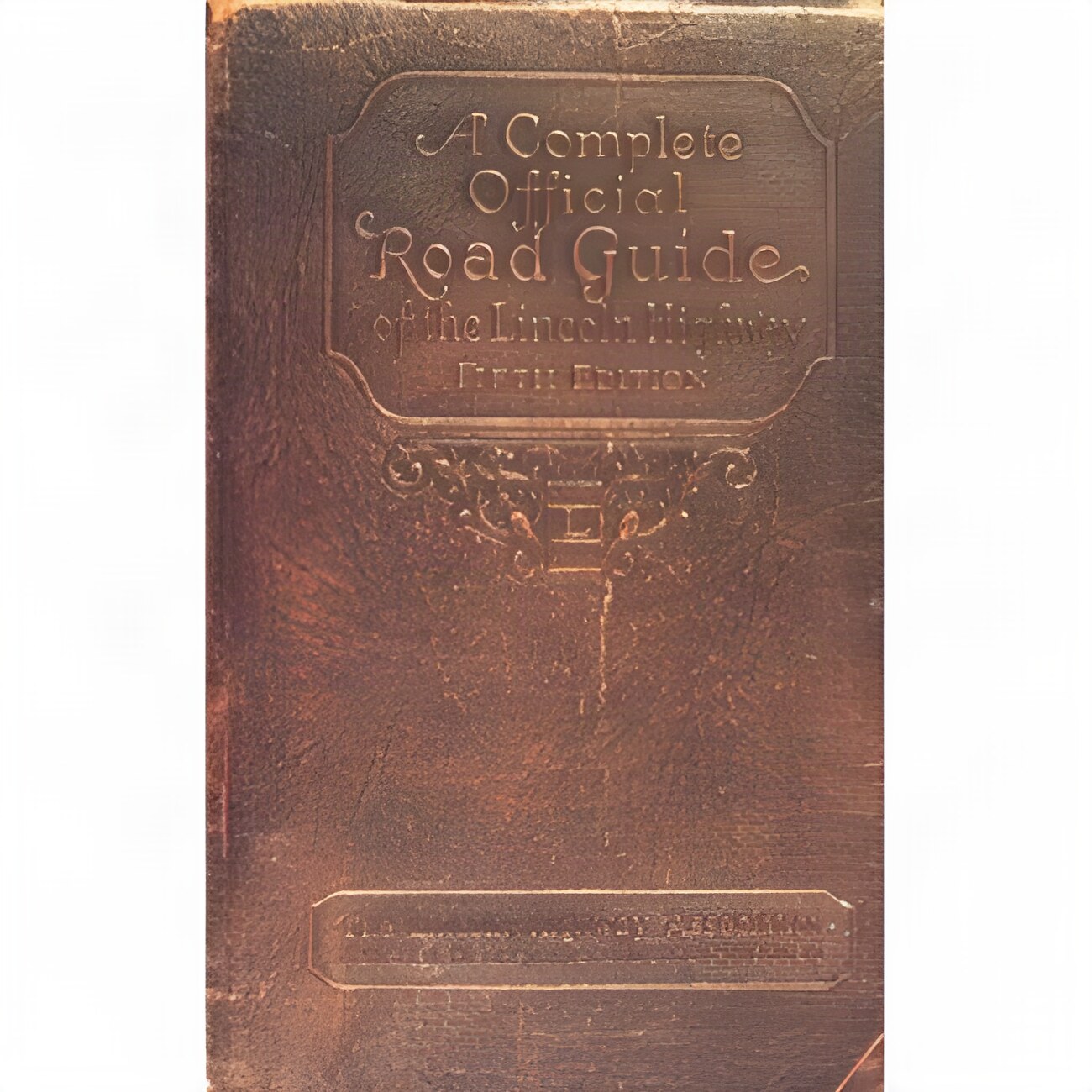
Softcover. Tucson AZ, Patrice Press, reprint, 1993, Book: Very Good, Dust Jacket: None, Softcover, 536 pages. This is a facsimile printing of the 1924 edition, profusely illustrated including original advertisements. The book gives detailed information on the 414 cities and towns through which the famous highway passed, from Times Square in New York City to San Francisco's Lincoln Park, on the Pacific Ocean. Advice to readers includes "Don't forget the colored goggles," and "Don't stop to cool motor at top of a hill, put car in gear and coast down to cool motor." The trip was thrilling in 1924. The book is thrilling today. Mild nick to top of rear cover otherwise clean and bright copy.
Hardcover. NY, Macmillan, 2nd pr., Book: Very Good, Dust Jacket: Very Good, Hardcover in a bright, unclipped dust jacket. 127 pages; black and white illustrations. Discusses American birds of prey, such as eagle, hawk, osprey, and falcon, giving technical information as well as anecdotes of the author's experience with them. Clean copy.
Hardcover. Cambridge MA, The MIT Press, 1st, 2016, Book: Very Good, Dust Jacket: Very Good, Hardcover in a bright dust jacket. The daguerreotype, invented in France, came to America in 1839. By 1851, this early photographic method had been improved by American daguerreotypists to such a degree that it was often referred to as "the American process." The daguerreotype-now perhaps mostly associated with stiffly posed portraits of serious-visaged nineteenth-century personages-was an extremely detailed photographic image, produced though a complicated process involving a copper plate, light-sensitive chemicals, and mercury fumes. It was, as Sarah Kate Gillespie shows in this generously illustrated history, something wholly and remarkably new: a product of science and innovative technology that resulted in a visual object. It was a hybrid, with roots in both fine art and science, and it interacted in reciprocally formative ways with fine art, science, and technology. Gillespie maps the evolution of the daguerreotype, as medium and as profession, from its introduction to the ascendancy of the "American process," tracing its relationship to other fields and the professionalization of those fields. She does so by recounting the activities of a series of American daguerreotypists, including fine artists, scientists, and mechanical tinkerers. She describes, for example, experiments undertaken by Samuel F. B. Morse as he made the transition from artist to inventor; how artists made use of the daguerreotype, both borrowing conventions from fine art and establishing new ones for a new medium; the use of the daguerreotype in various sciences, particularly astronomy; and technological innovators who drew on their work in the mechanical arts.

 "The American Woman's Home Or, Principles of Domestic Science, Being a Guide to the Formation and Maintenance of Economical, Healthful, Beautiful and Christian Homes by:")


 "The Art of Harvey Kurtzman: The Mad Genius of Comicsby: Denis Kitchen , Paul Buhle , et al.")


 "The Art of Selling Moviesby: John McElwee")
 "The Art of the American Snapshot, 1888-1978by: Sarah Greenough , Diane Waggoner, et al.")

 "The Atlantic Battle Won, May 1943-May 1945: History of United States Naval Operations in World War II, Volume 10 by: Morison, Samuel Eliot")

 "The Battle of the Atlantic: September 1939 - May 1943 (History of United States Naval Operations in World War Ii, Volume 1)by: Morison, Samuel Eliot")
 "The Best American Comics 2008by: Abel, Jessica and Lynda Barry")

 "The Big Golden Book of the Wild West - American Indians, Cowboys, and the Settling of the Westby: Ingoglia, Gina")






 "The Chicago Architectural Club: Prelude to the Modernby: Wilbert Hasbrouck")
 "The Chicago Architectural Club: Prelude to the Modernby: Wilbert Hasbrouck")
 "The Circus in the Mistby: Munari, Bruno")


 "The Daywatchersby: Parnall, Peter")
 "The Early American Daguerreotype: Cross-Currents in Art and Technologyby: Sarah Kate Gillespie")