Hardcover. London , Rupert Hart=Davis, 1st, 1968, Book: Very Good, Dust Jacket: Good, Hardcover in a dust jacket with light edgewear, 365 pages. An informal military history of the North American continent. The two major campaigns covered being the war with France for the possession of Canada & the American War of Independence. Service discipline in the British Army meant a bloody back, hence the nickname for the soldiers of the time. Name on front fly leaf, otherwise clean.
Hardcover. Baltimore, Clearfield Company, reprint, 1989, Book: Very Good, Dust Jacket: None, Hardcover, blue cloth, gilt lettering on spine, 132 pages. A reprint of a book written by Alexander Jones in 1855. The book explores the role of Welsh immigrants and their descendants during the American Revolution. It provides a detailed account of the Welsh contributions to the war effort, including their participation in battles, their leadership in politics and commerce, and their support for the cause of American independence. The book is divided into several chapters, each focusing on a different aspect of Welsh involvement in the Revolution. It begins by discussing the early settlement of Welsh immigrants in America, their struggles to maintain their language and culture, and their eventual integration into American society. Jones then goes on to describe the various battles and campaigns in which Welsh soldiers fought, including the Battle of Bunker Hill, the Battle of Saratoga, and the Battle of Yorktown. He also highlights the contributions of Welsh leaders such as General Richard Montgomery and Colonel William Davies.In addition to military contributions, the book also explores the role of Welsh Americans in politics and commerce during the Revolution. Jones discusses the involvement of Welshmen in the Continental Congress, as well as their contributions to the development of American industry and trade. Overall, The Cymry of '76 provides a comprehensive and detailed account of the Welsh contribution to the American Revolution. Clean copy.
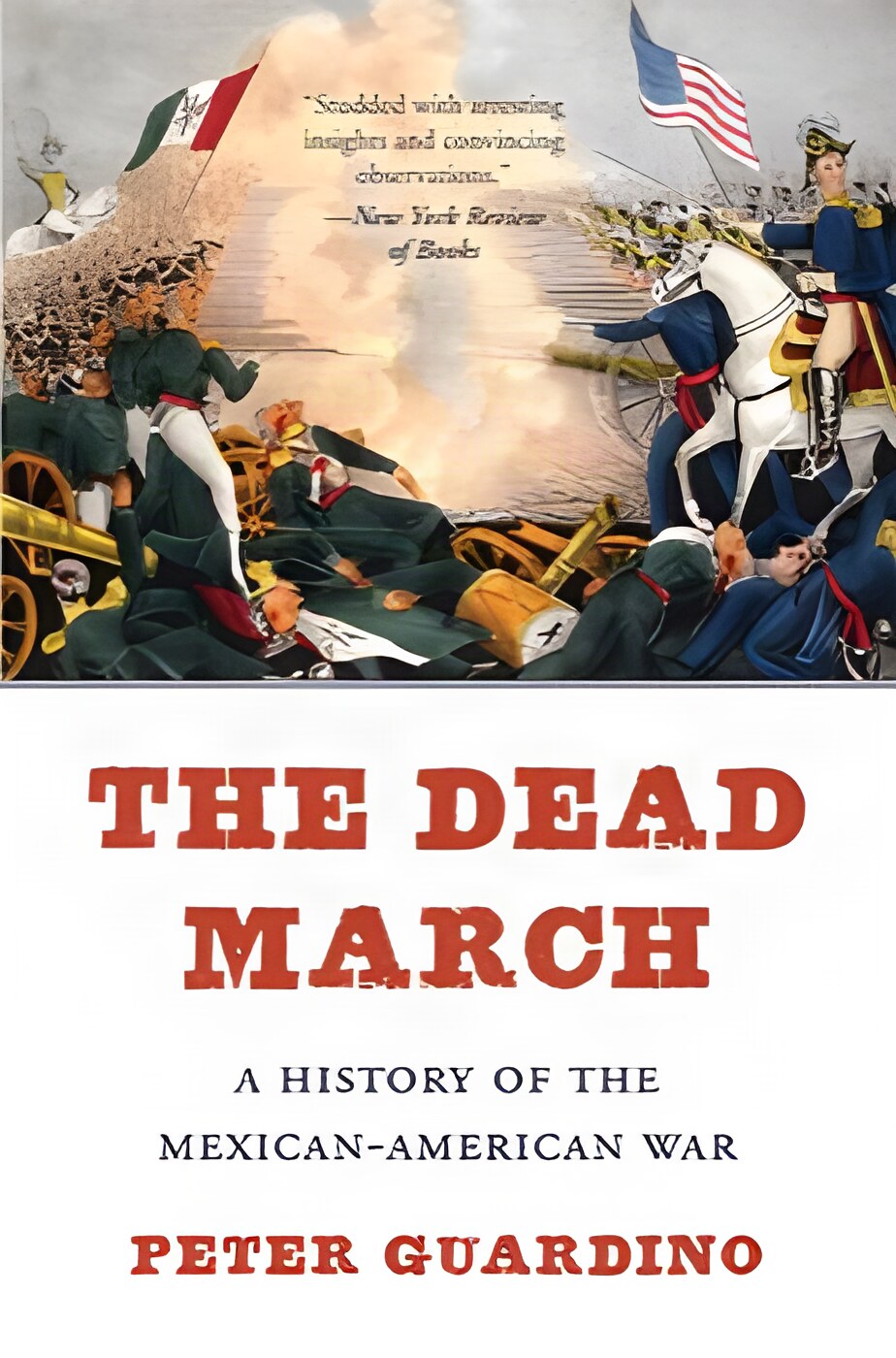
Hardcover. Cambridge MA, Harvard University Press, 2nd pr., 2017, Book: Very Good, Dust Jacket: Very Good, Hardcover in a bright dust jacket, 502 pages, b&w illustrations. "Superb...A remarkable achievement, by far the best general account of the war now available. It is critical, insightful, and rooted in a wealth of archival sources; it brings far more of the Mexican experience than any other work...and it clearly demonstrates the social and cultural dynamics that shaped Mexican and American politics and military force." -Journal of American History It has long been held that the United States emerged victorious from the Mexican-American War because its democratic system was more stable and its citizens more loyal. But this award-winning history shows that Americans dramatically underestimated the strength of Mexican patriotism and failed to see how bitterly Mexicans resented their claims to national and racial superiority. Their fierce resistance surprised US leaders, who had expected a quick victory with few casualties. By focusing on how ordinary soldiers and civilians in both countries understood and experienced the conflict, The Dead March offers a clearer picture of the brief, bloody war that redrew the map of North America. Clean copy.
Hardcover. Baltimore, Johns Hopkins University, 1st, 1978, Book: Very Good, Dust Jacket: Very Good, Hardcover in a bright dust jacket with light edgewear, 460 pages. Translated by Lawrence Lipson. A vivid historical narrative of the US military intervention in Central America. Uncommon. Name on front fly leaf otherwise clean.
Hardcover. Cambridge MA, Harvard University Press, 1st, 1972, Book: Very Good, Dust Jacket: Very Good, Hardcover in a bright, unclipped dust jacket, 246 pages. Preface, Introduction, Chapters on: The United States and the Dominican Republic to 1965: Background to Intervention; The Origins of the 1965 Dominican Crisis: Setting the Stage; The Decision to Intervene; Deploying the Troops; and Explaining the Dominican Intervention. Drawing on nearly 150 personal interviews with individuals in the Dominican Republic and the United States, on rare access to classified U.S. government documents, and on his own first-hand experiences during the crisis, Abraham F. Lowenthal rejects official, liberal, and radical accounts of the intervention. Instead, he explains it as the product of fundamental premises, of decision-making procedures, and of bureaucratic politics. Name on front fly leaf, otherwise clean.
Hardcover. NY, Orion/Crown, 1st, 1989, Book: Very Good, Dust Jacket: Very Good, Hardcover, 272 pages. Recaptures the World War II bombing raid over Tokyo under the command of Lt. Col. "Jimmy" Doolittle and the incredible seek-and-destroy mission that he and other American pilots endured after the bombing.
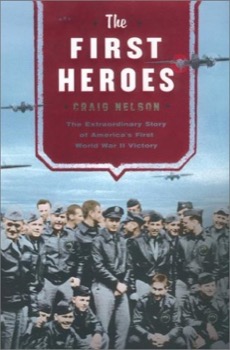
Hardcover. NY, Viking Press, 2nd pr., 2002, Book: Very Good, Dust Jacket: Very Good, Hardcover in a bright, unclipped dust jacket, 430 pages. Immediately after Japan's attack on Pearl Harbor, President Franklin D. Roosevelt sought to restore the honor of the United States with a dramatic act of a retaliatory bombing raid on Tokyo. On April 18, 1942, eighty brave young men, led by the famous daredevil Jimmy Doolittle, took off from a navy carrier in the mid-Pacific on what everyone regarded as a suicide mission but instead became a resounding American victory and helped turn the tide of the war. The First Heroes is the story of that mission. Meticulously researched and based on interviews with twenty of the surviving Tokyo Raiders, this is a true account that almost defies belief, a tremendous human drama of great personal courage, and a powerful reminder that ordinary people, when faced with extraordinary circumstances, can rise to the challenge of history. Clean copy.
Hardcover. NY, Viking, 1st, 2018, Book: Very Good, Dust Jacket: Very Good, Hardcover in a bright, unclipped dust jacket. 294 pages, b&w photos. Sam Kleiner's The Flying Tigers uncovers the hidden story of the group of young American men and women who crossed the Pacific before Pearl Harbor to risk their lives defending China. Led by legendary army pilot Claire Chennault, these men left behind an America still at peace in the summer of 1941 using false identities to travel across the Pacific to a run-down airbase in the jungles of Burma. In the wake of the disaster at Pearl Harbor this motley crew was the first group of Americans to take on the Japanese in combat, shooting down hundreds of Japanese aircraft in the skies over Burma, Thailand, and China. At a time when the Allies were being defeated across the globe, the Flying Tigers' exploits gave hope to Americans and Chinese alike. Clean copy.
Hardcover. NY, New York University Press, 1st, 2002, Book: Very Good, Dust Jacket: Very Good, Hardcover in a bright dust jacket, pages. The GI War Against Japan recounts the harrowing experiences of American soldiers in Asia and the Pacific. Based on countless diaries and letters, it sweeps across the battlefields, from the early desperate stand at Guadalcanal to the tragic sinking of the U.S.S. Indianapolis at war's very end. From the daunting spaces of the China-India theater to the fortress islands of Iwo Jima and Okinawa, Schrijvers brings to life the GIs' struggle with suffocating wilderness, devastating diseases, and Japanese soldiers who preferred death over life. Amidst the frustration and despair of this war, American soldiers abandoned themselves to an escalating rage that presaged Hiroshima and Nagasaki.
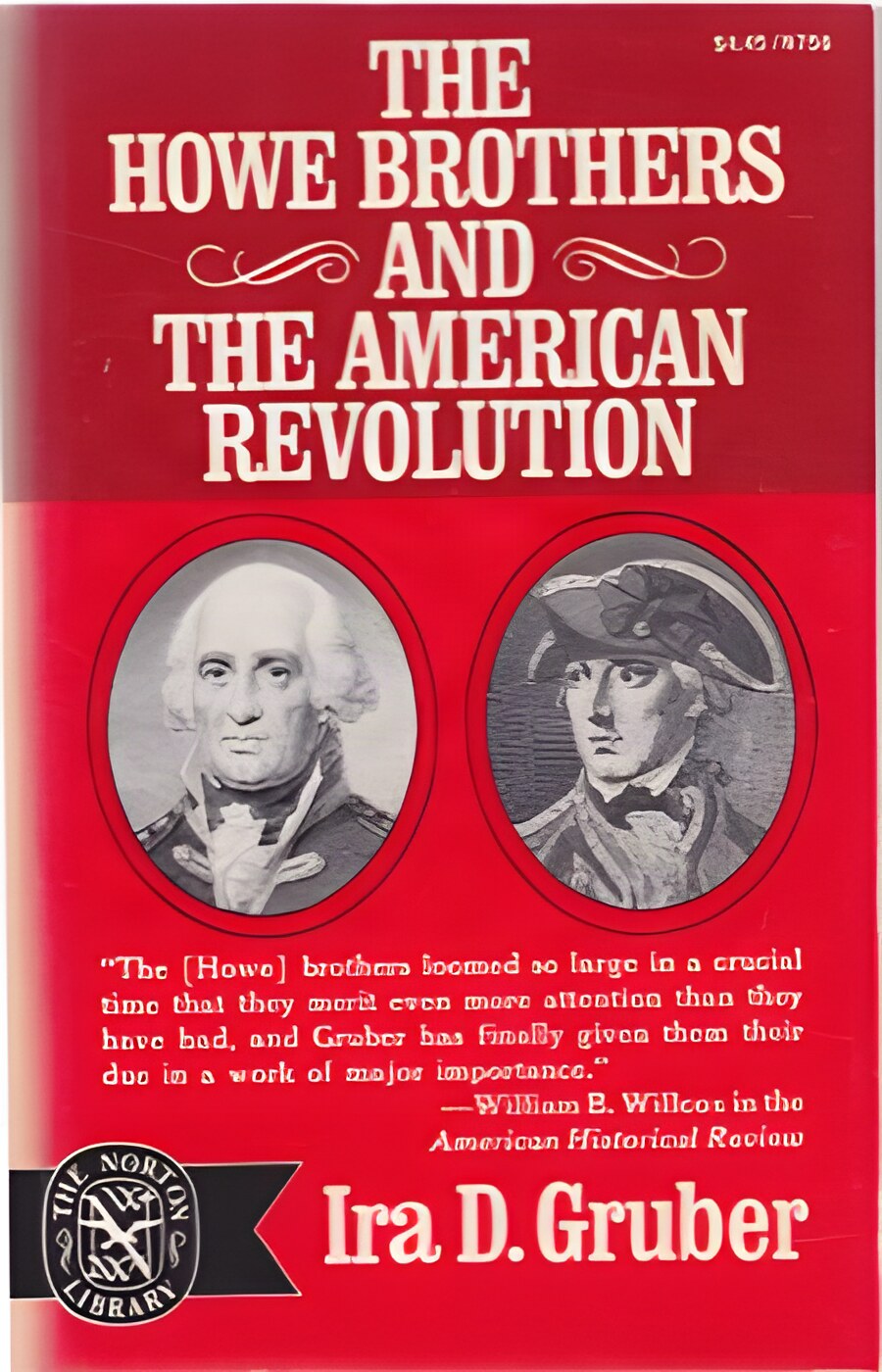
Softcover. NY, W. W. Norton & Company, reprint, 1975, Book: Very Good, Dust Jacket: None, Softcover, 396 pages including index. By focusing on the Howe brothers, their political connections, their relationships with the British ministry, their attitude toward the Revolution, and their military activities in America, Gruber answers the frequently asked question of why the British failed to end the American Revolution in its early years. This book supersedes earlier studies because of its broader research and because it elucidates the complex personal interplay between Whitehall and its commanders. Clean, bright copy.
Hardcover. Boston, Little, Brown and Company, 1st, 1957, Book: Very Good, Dust Jacket: None, Hardcover, blue cloth with gilt lettering on spine. Volume XI in The History of United States Naval Operations in World War II. 360 pages, illustrated with maps (one fold-out) and b&w photos. Gilt on spine with light fading, lacks dust jacket, dj flap copy pasted inside front cover, otherwise clean, tight copy.
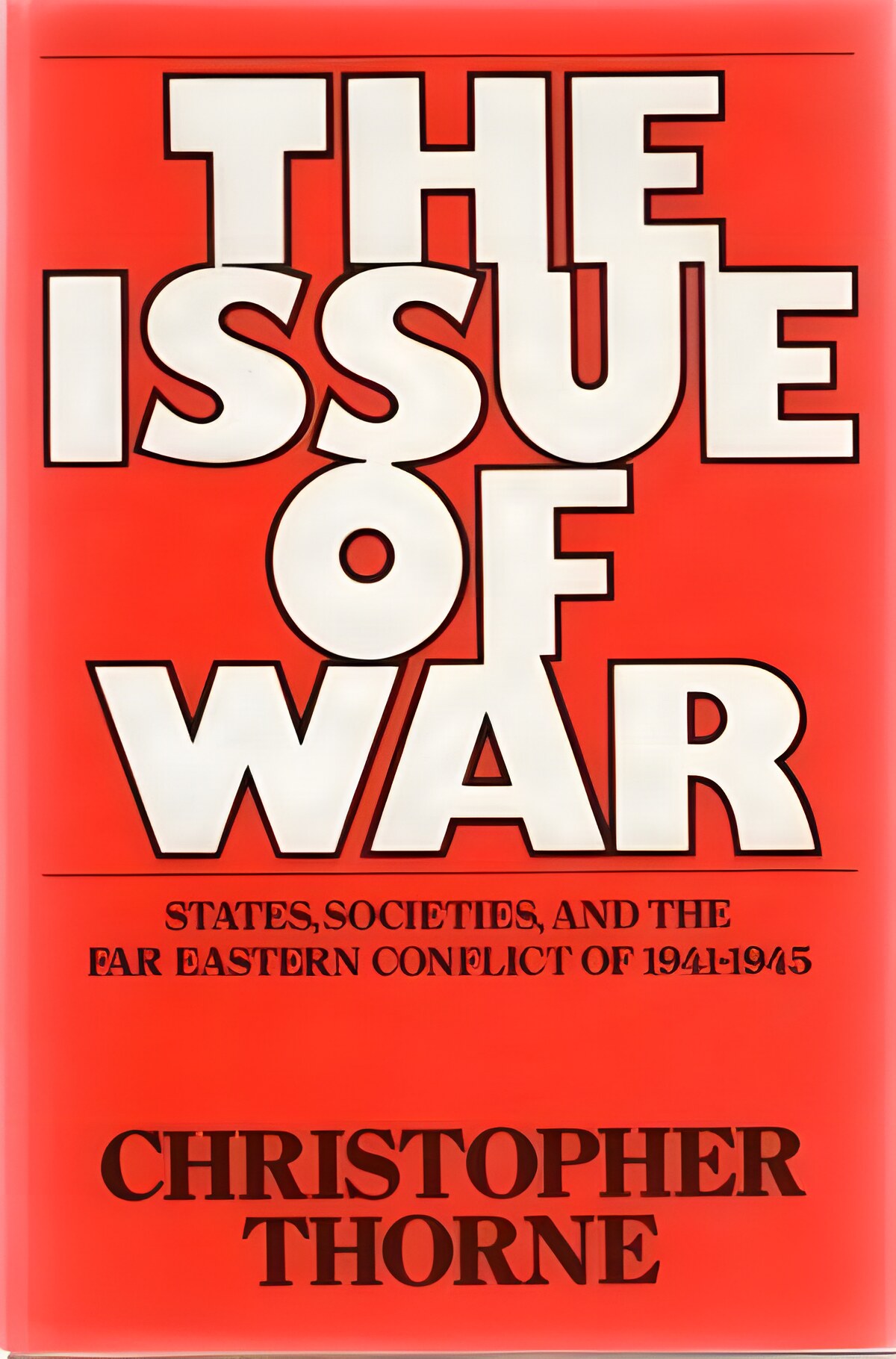
Hardcover. NY, Oxford University Press, 1st, 1985, Book: Very Good, Dust Jacket: Very Good, Hardcover in a bright, unclipped dust jacket, 364 pages. The Second World War's Pacific conflict was one of the most complex in history. It embrioled peoples from opposite sides of the globe; it was fought in China, across the expanses of the Pacific, and in the jungles of Southeast Asia; and it was devastating in its consequences for civilians and servicemen alike. It saw the first use of atomic weapons, hastened the end of the Western empires in Asia, and marked America's rise to the position of the most powerful nation in the world. Christopher Thorne, whose previous studies of the war in the Pacific have become landmarks in the field, here weaves together both the entire network of international relations surrounding the war and the impact the war had on all the societies involved--Indian as well as American; Australian and New Zealand as well as Japanese; Korean, Chinese, and Southeast Asian as well as British, French, and Dutch. The Issue of War draws on material gathered over many years in the Far East, Western Europe, and the U.S.--material including wartime films, broadcasts, and newspapers,as well as countless private and offical papers. Representing a synthesis of military, diplomatic, economic, intellectual, and social history, it not only places the war in the context of developments before 1941, but illuminates various patterns that cut across the familiar distinctions between Asia and the West or between Japan and the Allies. Name on front fly leaf, otherwise clean.
Hardcover. NY, The Free Press, 1st, 1968, Book: Very Good, Dust Jacket: None, Hardcover, gray cloth binding with orange and gilt lettering on spine. 394 pages. Prof. Paige's reconstruction and analysis of the U.S. decision to resist Chinese aggression in Korea in 1950. Name on front fly leaf othewise clean. No dust jacket.
Hardcover. NY, Liveright, 1st, 2012, Book: Very Good, Dust Jacket: Very Good, Hardcover in a bright, unclipped dust jacket. In the summer of 1862, after a year of protracted fighting, Abraham Lincoln decided on a radical change of strategy-one that abandoned hope for a compromise peace and committed the nation to all-out war. The centerpiece of that new strategy was the Emancipation Proclamation: an unprecedented use of federal power that would revolutionize Southern society. In The Long Road to Antietam, Richard Slotkin, a renowned cultural historian, reexamines the challenges that Lincoln encountered during that anguished summer 150 years ago. In an original and incisive study of character, Slotkin re-creates the showdown between Lincoln and General George McClellan, the "Young Napoleon" whose opposition to Lincoln included obsessive fantasies of dictatorship and a military coup. He brings to three-dimensional life their ruinous conflict, demonstrating how their political struggle provided Confederate General Robert E. Lee with his best opportunity to win the war, in the grand offensive that ended in September of 1862 at the bloody Battle of Antietam. 10 illustrations; 8 maps.
Softcover. Washington DC, The Infantry Journal, reprint, 1944, Book: Very Good, Dust Jacket: None, Small softcover, 335 pages. "The primary purpose of this book is to provide a guide to the main forces, institutional and ideological, in the Nazi system." Published for the American servicemen. Name on front cover,mild wear to covers.
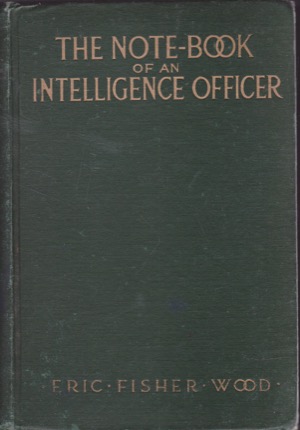
Hardcover. NY, The Century Co., 1st, 1917, Book: Good, Dust Jacket: None, Hardcover, green cloth stamped in gilt. 346 pages. Frontis. portrait, illustrated with b&w plates and folding facsimile documents. "Authoritative information as to how the soldiers of the Allies are transported, housed and trained, how a battle is prepared for in advance, etc. " Author observed British Postal Censorship and war, including trench-fighting, during WWI. Eric Fisher Wood, Sr. (1889 1962) was an American civil engineer, architect, author, and officer in the United States Army, retiring with the rank of Brigadier General. Book shows mild shelf wear, name and stamp to front endpapers, otherwise clean. Good plus.
Hardcover. NY, Norton, 1st US, 1985, Book: Very Good, Dust Jacket: Very Good, Hardcover in a bright dust jacket, 192 pages. The photos are breathtaking not necessarily for their quality - many are washed out and most of the subject matter is routine day to day military stuff - but for their rarity. While the Germans seem to have been at least as far advanced in the use of color photography as the Americans, there is still a paucity of color photography in the public record. That is being addressed by the various nations who took large amounts of color film in an official capacity, including the US, UK, Germany and Canada. The book's captions are adequate to the task, and there are good historical sections, as well as an introduction by Max Hastings as well as commentary by an actual German war correspondent. The strength of the book is in its ability to bring the participants of the subject campaign - the German invasion of Russia up to and including Stalingrad - to life. The use of a large format allows one to note small details of the photos, and relate to the subject matter on a personal level. Despite the lack of "action" shots, there is much to see in facial expressions, uniform details, and especially geography as the Russian steppe is shown in summer and winter, as well as the famous Russian mud (Rasputitsa) about which so much has been written.
Hardcover. Boston, Little, Brown and Company, reprint, 1950, Book: Very Good, Dust Jacket: None, Hardcover, blue cloth with gilt lettering on spine. Volume III in The History of United States Naval Operations in World War II. 411 pages, illustrated with maps and b&w photos. Gilt on spine with light fading, lacks dust jacket, otherwise clean, tight copy.
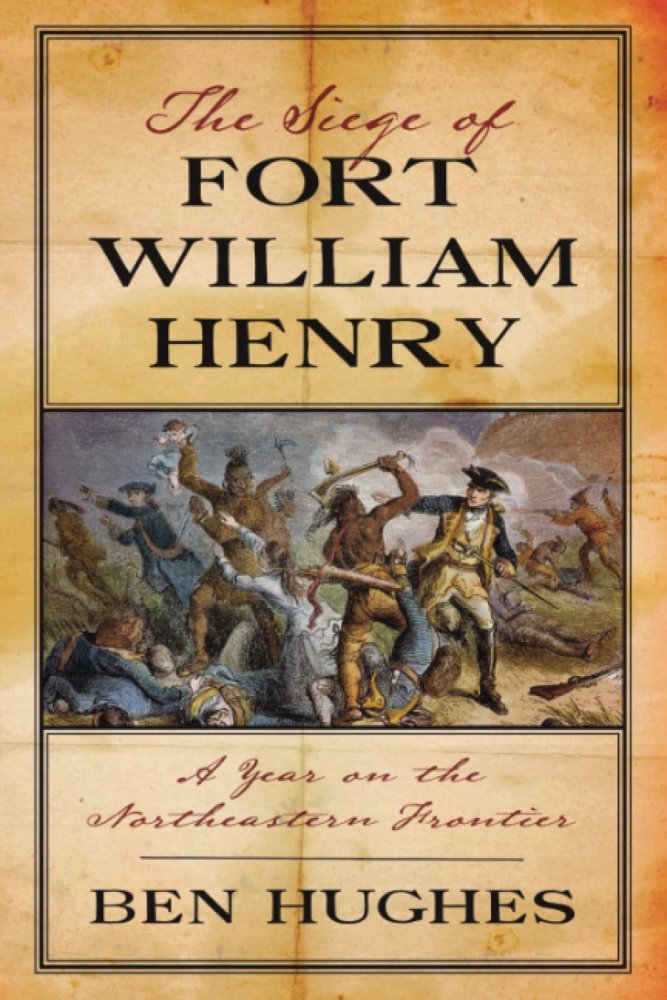
Hardcover. Yardley PA, Westholme Publishing, BC Ed., 2011, Book: Very Good, Dust Jacket: Very Good, Hardcover in a bright dust jacket, 337 pages. The opening years of the French and Indian War were disastrous for the British. In 1755 General Braddock's troops were routed at the Battle of Monongahela and by the middle of 1756 Fort Oswego on Lake Ontario had fallen. Hindered by quarrelsome provincial councils, incompetent generals, and the redcoats' inability to adapt to wilderness warfare, Britain was losing the war. In 1757 the 35th Regiment of Foot stepped into the breach. A poorly trained assortment of conscripts, old soldiers, and convicted criminals led by Lieutenant Colonel George Monro, the regiment was destined to take center stage in the most controversial event of the war. Fort William Henry on the southern shore of New York's Lake George was a key fortification supporting British interests along the frontier with French America. Clean copy.
Hardcover. Boston, Little, Brown and Company, reprint, 1950, Book: Very Good, Dust Jacket: None, Hardcover, blue cloth with gilt lettering on spine. Volume V in The History of United States Naval Operations in World War II. 389 pages, illustrated with maps (one fold-out) and b&w photos. Gilt on spine with light fading, lacks dust jacket, otherwise clean, tight copy.
Hardcover. NY, E. P. Dutton, reprint, 1977, Book: Very Good, Dust Jacket: Very Good, Hardcover in a bright dust jacket. David Irving's The Trail of the Fox is the best work on Rommel ever written. The circumstances around Rommel's involvement with the attempt on Hitler's life, which is the most speculated aspect of Rommel's life, and how the Gestapo came to believe Rommel was involved, have not been made clear in most of the historiography on Rommel. Irving pieces together what really happened most effectively. There are so many strengths of this book, of which the greatest is probably the fact Irving had access to Rommel's dairy and many of his letters, which he got permission from the family to view. Other items he found in collections in the United States, England, and Germany. Since he worked on this in the 1970's he also was able to interview a number of German officers who were still alive that knew and served with Rommel. The whole work is the way historical research should be done; totally reliant on primary source material, and ignores secondary sources that often use conjecture or just repeat incorrect narratives from earlier books. Every source is from people who fought the war; Germans, Italians, British, French and American officers who were in these campaigns and had either first hand observation of Rommel or were major participants like Eisenhower, Churchill, Goebbels, etc. Clean copy.
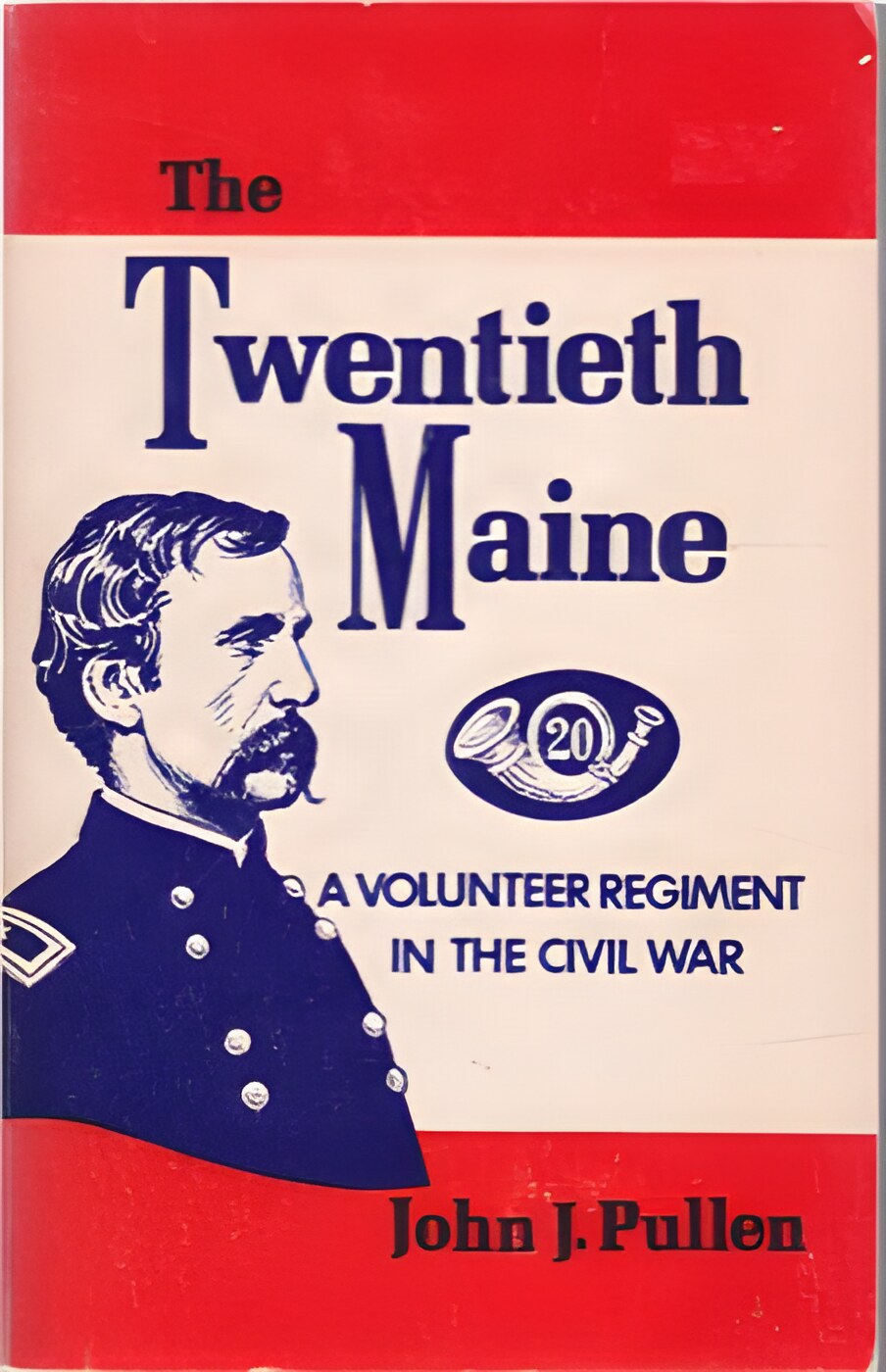
Softcover. Dayton OH, Morningside Bookshop, reprint, 1983, Book: Very Good, Dust Jacket: None, Softcover, 338 pages, b&w illustrations. Reprint of 1957 Edition. "Mr. Pullen...has gone to the letters, diaries and memoirs of the participants with the thoroughness and care of a good historian...He can also describe battle action with much distinction, his account of the 20th's fight at Gettysburg is as good a piece of battle writing as you are likely to find anywhere." - Bruce Catton. Clean copy.
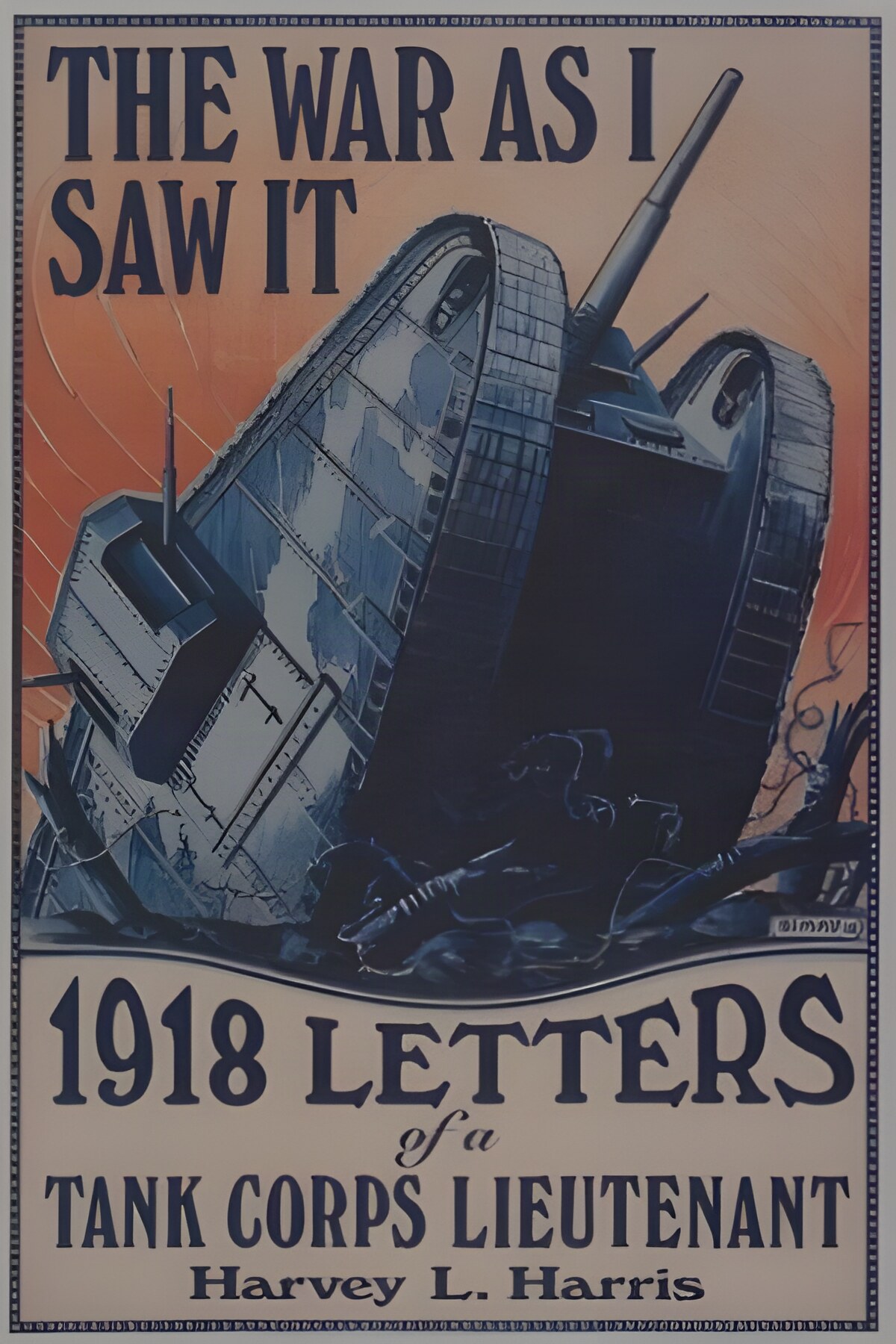
Softcover. St. Paul MN, Pogo Press, 1st, 1998, Book: Very Good, Dust Jacket: None, Softcover, 158 pages, b&w illustrations. During World War I, soldiers in the American Expeditionary Force rarely fought in the newly developed tank, and those who did manned British and French tanks since American models did not become available until after the war. Harris joined the Tank Corps because it was considered the elite unit of the ground forces and had a certain amount of romance connected with it. Initially assigned as a driving instructor, he later saw action at the St. Mihiel salient and on the Meuse-Argonne front. This book, which offers an extensive preface, summarizing Harris's life before, during, and after the war, along with some penetrating insights into his character, collects 46 letters he wrote home while in service. As they show, Harris saw war as a game not unlike the football games he played in his youth. Although he spent only 18 months in Europe, he looked upon it as a bold adventure, surviving the bad periods and enjoying the better moments. He returned from war apparently unscathed in both body and mind. The letters provide an entertaining if hardly probing portrayal of World War I from a tank officer's point of view. Clean copy.
Hardcover. Indianapolis, Bobbs-Merrill, 1st, 1972, Book: Very Good, Dust Jacket: Very Good, Hardcover in a bright, unclipped dust jacket. All about the motivation and planning for the Wars in Laos (1959-62), Vietnam (from 1954) and Cambodia. Peter Dale Scott examines the many ways in which war policy has been driven by "accidents" and other events in the field, in some cases despite moves toward peace that were directed by presidents. Name on front fly leaf, light rubbing to dj, otherwise clean.



 "The Doolittle Raid: America's daring first strike against Japanby: Carroll V. Glines")
 "The Flying Tigers: The Untold Story of the American Pilots Who Waged a Secret War Against Japanby: Sam Kleiner")

 "The Invasion of France and Germany, 1944-1945: History of United States Naval Operations in World War II, Volume 11 by: Morison, Samuel Eliot")

 "The Long Road To Antietam: How the Civil War Became a Revolutionby: Richard Slotkin")

 "The Onslaught: The German Drive to Stalingrad : Documented in 150 Unpublished Colour Photographs by: Heinrich Von Einsiedel")
 "The Rising Sun in Pacific, 1931-April 1942: History of United States Naval Operations in World War II, Volume 3 by: Morison, Samuel Eliot")
 "The Struggle for Guadalcanal: August 1942-February 1943 (History of United States Naval Operations in World War Ii, Volume 5) by: Morison, Samuel Eliot")
 "The Trail of the Fox: The Search for the True Field Marshal Rommel by: David Irving")