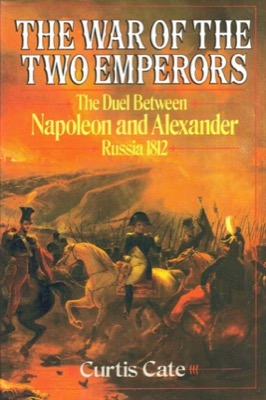
Hardcover. NY, Random House, 1st, 1985, Book: Very Good, Dust Jacket: Very Good, Hardcover in a bright dust jacket, 487 pages, b&w illustrations. Napoleon's colorful but disastrous Russian campaign has been strangely neglected by American publishers. Bridging the gap between popular and scholarly history, historian Cate has written a thoroughly detailed and researched account that should also appeal to the lay reader. His writing is deliberately paced but dramatic and does far more justice to the extremely complex political and military situation of 1812 than Philippe de Segur's Napoleon's Russian Campaign (1965), the only other work available in the United States. Clean copy.
Hardcover. New York, Hawthorn, 1st, 1968, Book: Very Good, Dust Jacket: Very Good, Hardcover, 159 pages. SIGNED BY AUTHOR on title page. Illustrated with black & white photographs. Clean, tight copy.
Hardcover. NY, Time Life, reprint, 1984, Book: Very Good, Dust Jacket: None, 436 pages. Hardcover with no dust jacket. Dark blue leather bound with gilt titles to front cover and spine. Embossed decoration on front cover. Gilt text block edges, red ribbon marker. Clean, tight copy.
Softcover. self-published, 1st, 2017, Softcover, 238 pages, b&w illustrations. SIGNED BY AUTHOR on the title page. An historical and biographical study of the men from College Point, Queens, New York who rendered valuable service to their country in World War One. More than six hundred fifty served in the Army, the Navy, the Marine Corps and the Merchant Marine. Twenty-eight died. What gives the book its relatively unique character is that the hamlet was basically German in origin, primarily industrial, and in the late 19th and early 20th centuries, a destination place for large numbers of entertainment-seeking New Yorkers. The book includes an overview of these elements, illustrating how each played its role before, during and, to a limited extent, after the war. These subjects are woven into a detailed analysis of how College Point, and its people weathered movements and events; labor strife, anti-German sentiment, espionage, the influenza epidemic, and a host of other forces that impacted American culture in general, and their lives in particular. Also told in chronological order, and brief vignettes are the stories of the twenty-eight men who went willingly to war, and died. Clean copy.
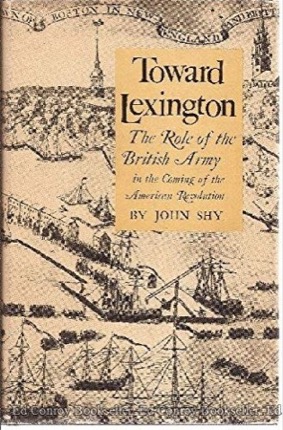
Hardcover. Princeton NJ, Princeton University Press, 1st, 1965, Book: Very Good, Dust Jacket: Very Good, Hardcover in a bright dust jacket, 463 pages with index. This study considers the subtle and frequently confused relationship of armed force and political control in the British Empire before the American Revolution. It also clarifies a number of points of controversy and uncertainty about the causes of the American Revolution. A crisp copy of the 1965 1st edition. Name on front fly leaf, price clipped otherwise clean.
Hardcover. NY, Simon & Schuster, 1st, 2002, Book: Very Good, Dust Jacket: Very Good, Hardcover in a bright dust jacket, 352 pages. Alfred Lee Loomis (1887-1975) made his fortune in the 1920s by investing in public utilities, but science was his first love. In 1928, he established a premier research facility in Tuxedo Park, N.Y., that attracted such brilliant minds as Einstein, Bohr and Fermi and became instrumental in the Allies' WWII victory. Conant, a magazine writer, draws on studies, family papers and interviews with Loomis's friends, family and colleagues (she's a relative of two scientists who worked with Loomis) to trace the story of the tycoon's professional and social life (the latter fairly racy). At the Tuxedo Park lab, Loomis attracted top-flight scientists who experimented with sound, time measurement and brain waves. During WWII, he established a laboratory at MIT (the "rad lab") where radar was developed. He also served as a conduit between civilian scientists and Roosevelt's military establishment. Although he lost some of his top people to the Manhattan Project, the "rad lab" was a major contributor to the allies' defense. In his well-publicized personal life, Loomis angered family members by trying to have his emotionally unstable wife institutionalized while he pursued an affair with another woman. Through Conant's spare, unobtrusive prose and well-paced storytelling, Loomis emerges as a contradictory man who craved scientific accomplishment and influence, but rarely took credit for himself.
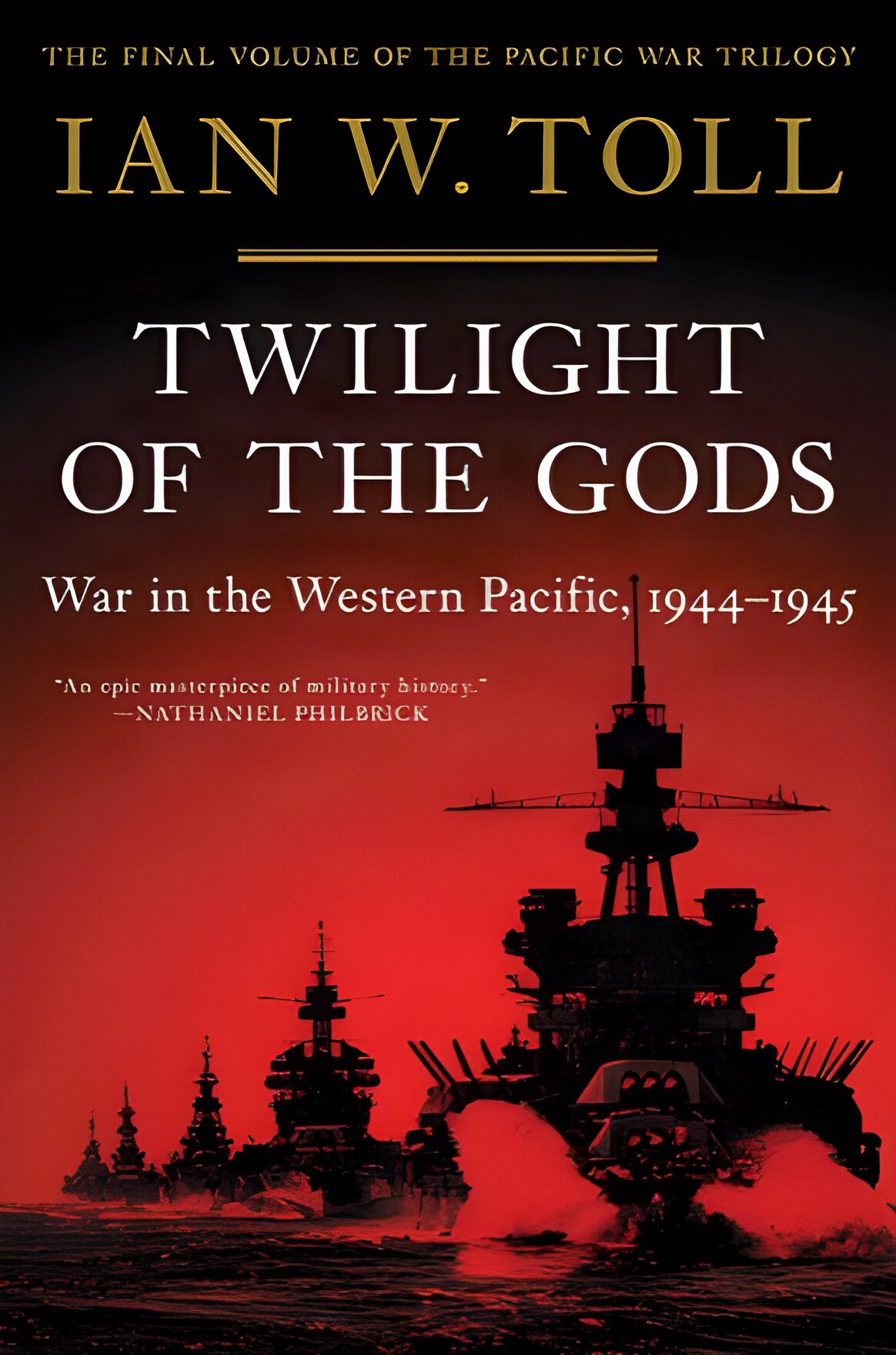
Hardcover. NY, W. W. Norton & Company, 2nd pr., 2020, Book: Very Good, Dust Jacket: Very Good, Hardcover in a bright dust jacket, 926 pages, illustrations. In June 1944, the United States launched a crushing assault on the Japanese navy in the Battle of the Philippine Sea. The capture of the Mariana Islands and the accompanying ruin of Japanese carrier airpower marked a pivotal moment in the Pacific War. No tactical masterstroke or blunder could reverse the increasingly lopsided balance of power between the two combatants. The War in the Pacific had entered its endgame. Beginning with the Honolulu Conference, when President Franklin Delano Roosevelt met with his Pacific theater commanders to plan the last phase of the campaign against Japan, Twilight of the Gods brings to life the harrowing last year of World War II in the Pacific, when the U.S. Navy won the largest naval battle in history; Douglas MacArthur made good his pledge to return to the Philippines; waves of kamikazes attacked the Allied fleets; the Japanese fought to the last man on one island after another; B-29 bombers burned down Japanese cities; and Hiroshima and Nagasaki were vaporized in atomic blasts. Ian W. Tolls narratives of combat in the air, at sea, and on the beaches are as gripping as ever, but he also reconstructs the Japanese and American home fronts and takes the reader into the halls of power in Washington and Tokyo, where the great questions of strategy and diplomacy were decided. Clean copy.
Hardcover. Claremont, Tracy, Chase and Company, 1st, 1869, Book: Very Good, Dust Jacket: None, 288 pages. Hardcover. Green cloth with titles in gilt on cover and spine. Black & white illustrations. Light wear. Clean, tight copy.
Hardcover. Montpelier, State of Vermont, 1st, 1929, Book: Good, Dust Jacket: None, 163 pages. Hardcover. Ex-library copy with stamping and marking on endpapers. Illustrated with two black & white photographs. Features historical data, Vermont Roster 1898, etc. Green cloth covers with rubbing along edges. Clean, tight.
Hardcover. Rochester MI, Grand Army Press, reprint, 1981, Book: Very Good, Dust Jacket: None, Hardcover, green cloth with gilt lettering, 204 pages plus 50 page appendix. A History of Company F, First United States Sharp Shooters. A limited printing (#119 of 750), a facsimile from the 1883 edition. The 1st United States Sharpshooters were an infantry regiment that served in the Union Army during the American Civil War. During battle, the mission of the sharpshooter was to kill important enemy targets, i.e., officers, NCOs, and artillery crews from long range.
Hardcover. NY, Henry Holt and Co., 3rd pr., 2004, Book: Very Good, Dust Jacket: Very Good, Hardcover in a bright dust jacket, 350 pages. In 1780, George Washington's army lay idle for want of supplies, food, and money. All hope seemed lost until a powerful French force landed at Newport in July. Then, under Washington's directives, Nathanael Greene began a series of hit-and-run operations against the British. The damage the guerrilla fighters inflicted would help drive the enemy to Yorktown, where Greene and Lafayette would trap them before Washington and Rochambeau, supported by the French fleet, arrived to deliver the coup de grace. Richard M. Ketchum illuminates, for the first time, the strategies and heroic personalities-American and French-that led to the surprise victory, only the second major battle the Americans would win in almost seven horrific years. Relying on good fortune, daring, and sheer determination never to give up, American and French fighters-many of whom walked from Newport and New York to Virginia-brought about that rarest of military operations: a race against time and distance, on land and at sea. Ketchum brings to life the gripping and inspirational story of how the rebels defeated the world's finest army against all odds. Clean, like new.
Hardcover. Boston, Little, Brown and Company, 2nd pr., 1960, Book: Very Good, Dust Jacket: None, Hardcover, blue cloth with gilt lettering on spine. Volume XIV in The History of United States Naval Operations in World War II. 407 pages, illustrated with maps (one fold-out) and b&w photos. Gilt on spine with light fading, lacks dust jacket, dj flap pasted to inside front cover, otherwise clean, tight copy.
Hardcover. New Haven CT, Yale University Press, 1st thus, 1950, Book: Very Good, Dust Jacket: None, Hardcover. The Chronicles of America Vol. 54. 364 pages, b&w illustrations. Red gilt-decorated cloth, top edge gilt, no dust jacket as issued. Details the campaigns of the U.S. Armed Forces in all theaters of World War II, including Tunisia, France, Italy, the Philippines, and Guadalcanal. A very nice, tight, clean copy in excellent condition.
Hardcover. NY, Time Life, reprint, 1985, Book: Very Good, Dust Jacket: None, 308 pages. Hardcover with no dust jacket. Dark blue leather bound with gilt titles to front cover and spine. Embossed decoration on front cover. Gilt text block edges, red ribbon marker. Clean, tight copy. From a captain who served in three manor battles the full story of their hardships and trials during the war. 40% casualties being the norm for 9 months service. Inspirational writings on a period of time that continues to have an effect on our country.
Hardcover. London, J. Hatchard, 2nd Ed., 1805, Book: Good, Dust Jacket: None, 252 pages with appendix added in this December printing. (The first edition consisted of 215 pages and was issued in October.) Half black leather binding and marbled boards. Both covers detached, the front missing. The interior and binding are in very nice condition, clean.
Hardcover. Syracuse, N.Y., Syracuse University Press, 1st, 1981, Book: Very Good, Dust Jacket: Very Good, Hardcover, 239 pages, b&w photographs and maps. Minor edgewear to dust jacket. Else a very clean, tight copy.
Hardcover. Mechanicsburg PA, Stackpole Books, 1st, 2010, Book: Very Good, Dust Jacket: Very Good, Hardcover, 227 pages, b&w photos. Light scratching to dust jacket front cover. Clean, tight copy. They shot some of the most iconic footage of World War II while risking their lives, yet the stories--and sheer guts--of the U.S. Marine Corps combat cameramen have been overshadowed by the heroism of the men with the rifles. War Shots brings these photographers into sharp focus through the career of Norm Hatch, a true American character whose skill with a camera and knack for being in the right place at the right time thrust him to the fore of the effort to record the Marines at war in the Pacific.
Hardcover. Mechanicsburg PA, Stackpole Books, 1st, 2010, Book: Very Good, Dust Jacket: Very Good, Hardcover, 227 pages, b&w photos. Light scratching to dust jacket front cover. Clean, tight copy. They shot some of the most iconic footage of World War II while risking their lives, yet the stories--and sheer guts--of the U.S. Marine Corps combat cameramen have been overshadowed by the heroism of the men with the rifles. War Shots brings these photographers into sharp focus through the career of Norm Hatch, a true American character whose skill with a camera and knack for being in the right place at the right time thrust him to the fore of the effort to record the Marines at war in the Pacific.
Softcover. NY, Noonday Press, 1st, 1988, Book: Very Good, Dust Jacket: None, Softcover, 148 pages, b&w photographs. Introduction by Ron Kovic. Durrance served in Vietnam and kept a photographic journal; this book is a selection of his photographs. Captures the range of emotions and realities of the American experience in Vietnam in the years 1966-1968, describing how young American boys became part of the military machine . Clean copy.
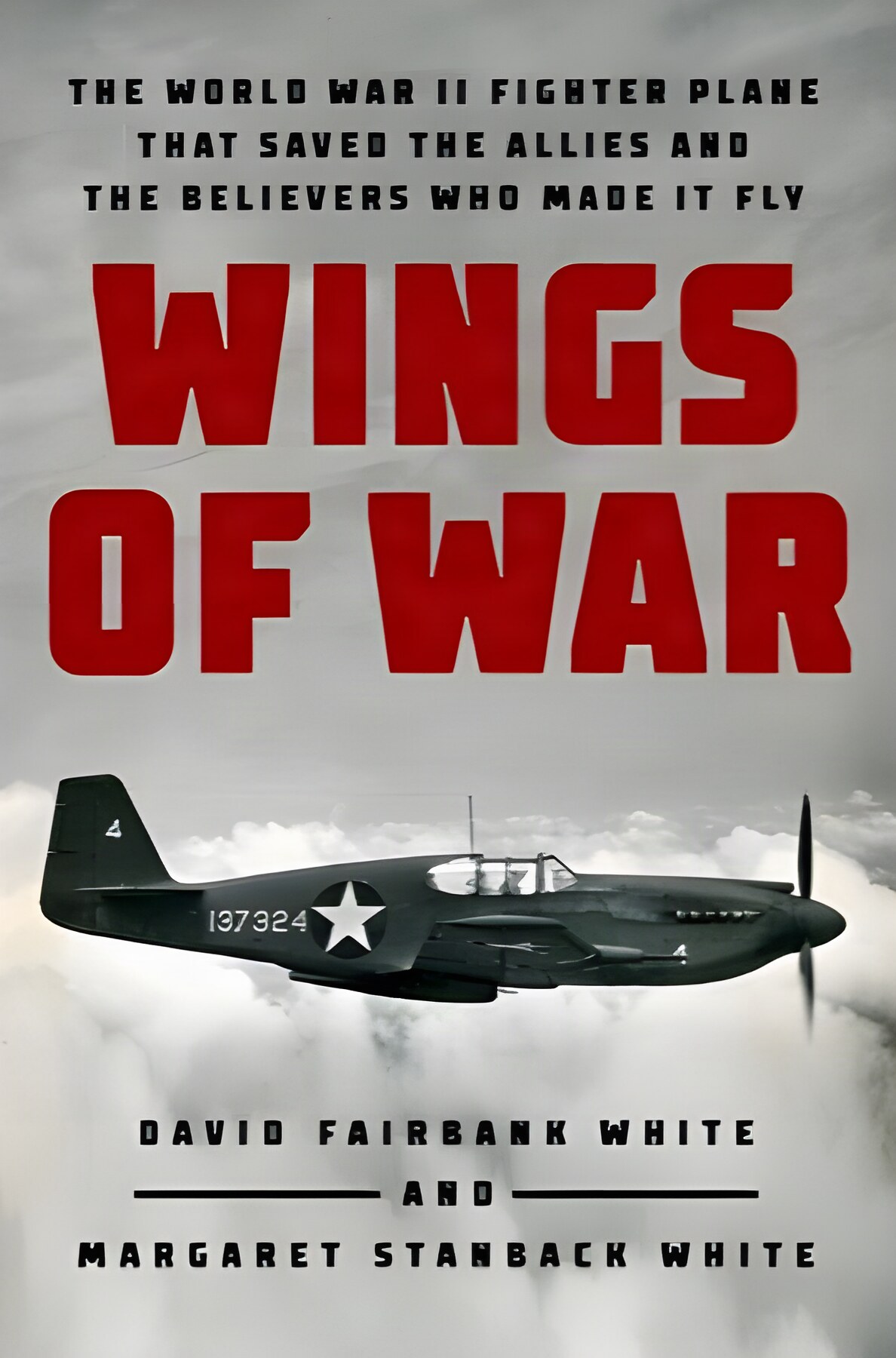
Hardcover. NY, Dutton Caliber, 1st, 2022, Book: Very Good, Dust Jacket: Very Good, Hardcover in a bright dust jacket, 324 pages, b&w illustrations. When the P-51 Mustang began tearing across European skies in early 1944, the Allies had been losing the air war for years. Staggering numbers of bomber crews, both British and American, had been shot down and killed thanks to the Luftwaffe's superior fighter force. Not only did the air war appear grim, but any landing of troops in France was impossible while German fighters hunted overhead. But behind the scenes, a team of visionaries had begun to design a bold new type of airplane, one that could outrun and outmaneuver Germany's best. Wings of War is the incredible true story of the P-51 Mustang fighter and the unlikely crew of designers, engineers, test pilots, and army officers who brought it from the drafting table to the skies over World War II. This is hardly a straightforward tale of building an airplane--for years, the team was stymied by corruption within the defense industry and stonewalled by the Army Air Forces, who failed to understand the Mustang's potential. But when squadrons of Mustangs were finally unleashed over Hitler's empire, the Luftwaffe was decimated within months, clearing the skies for D-Day. Clean copy.
Hardcover. University Press of Colorado, 1st, 1990, Book: Very Good, Dust Jacket: Very Good, Hardcover in a bright dust jacket, 198 pages, b&w illustrations. Women of the New Mexico Frontier, 1846-1912 is a collection of essays that include biographical sketches and writings from women of all walks of life who helped bring about the Americanization of the New Mexico Territory, from the Mexican War until statehood in 1912. These women were wives of missionaries, soldiers and military officers, and government officials who came from the eastern part of the United States. INSCRIBED BY AUTHOR on title page. Clean copy.
Hardcover. London, Cambridge University Press, 1st, 2010, Book: Very Good, Dust Jacket: Very Good, Hardcover in a bright, unclipped dust jacket. This revisionist study of Allied diplomacy from 1941 to 1946 challenges Americocentric views of the period and highlights Europe's neglected role. Fraser J. Harbutt, drawing on international sources, shows that in planning for the future Churchill, Roosevelt, Stalin, and others self-consciously operated into 1945, not on "East/West" lines but within a "Europe/America" political framework characterized by the plausible prospect of Anglo-Russian collaboration and persisting American detachment. Harbutt then explains the destabilizing transformation around the time of the pivotal Yalta conference of February 1945, when a sudden series of provocative initiatives, manipulations, and miscues interacted with events to produce the breakdown of European solidarity and the Anglo-Soviet nexus, an evolving Anglo-American alignment, and new tensions that led finally to the Cold War. This fresh perspective, stressing structural, geopolitical, and traditional impulses and constraints, raises important new questions about the enduringly controversial transition from World War II to a cold war that no statesman wanted. Clean copy.
Hardcover. NY, Random House , 1st, 2021, Book: Very Good, Dust Jacket: Very Good, Hardcover in a bright, unclipped dust jacket. 532 pages. The first definitive account of the rise and fall of the Secret Service, from the Kennedy assassination to the alarming mismanagement of the Obama and Trump years, right up to the insurrection at the Capitol on January 6--by the Pulitzer Prize winner.

 "These Hallowed Grounds (SIGNED COPY)by: Clagett, John")
 "Three Years in the Sixth Corps: A Concise Narrative of Events in the Army of the Potomac, from 1861 to the Close of the Rebellion, April, 1865 (Collector's Library of the Civil War)by:")
 "To Honor Fallen Heroes: How a Small German American Village in New York City Experienced the Great War (SIGNED COPY)by: Haas, James E.")


 "Vermont in the Spanish-American Warby: Johnson, Herbert T./The General Assembly, 1929/State of Vermont")


 "Victory in the Pacific 1945; History of United States Naval Operations in World War II, Volume 14 by: Morison, Samuel Eliot")

 "War from the Inside -The Story of the 132nd Regiment Pennsylvania Volunteer Infantry in the War for the Suppression of the Rebellion, 1862-1863 (Collector's Library of the Civil War)by:")
 "War in Disguise: Or the Frauds of the Neutral Flagsby: Stephen)(James")
 "War of 1812 in the Champlain Valley, The by: Everest, Allan Seymour")
 "War Shots: Norm Hatch and the U.S. Marine Corps Combat Cameramen of World War IIby: Jones, Charles")
 "War Shots: Norm Hatch and the U.S. Marine Corps Combat Cameramen of World War IIby: Jones, Charles")

 "Women of the New Mexico Frontier, 1846-1912 (SIGNED COPY)by: Cheryl Foote")
 "Yalta 1945: Europe and America at the Crossroadsby: Fraser J. Harbutt")
 "Zero Fail: The Rise and Fall of the Secret Service by: Carol Leonnig")