Hardcover. NY, Time Life, reprint, 1983, Book: Very Good, Dust Jacket: None, 401 pages. Hardcover with no dust jacket. Dark blue leather bound with gilt titles to front cover and spine. Embossed decoration on front cover. Gilt text block edges, red ribbon marker. Clean, tight copy. This is one of the more impressive (and unfortunately little known) records of the American Civil War. John Beatty was a lawyer from Ohio who joined the Union Army when the South seceded. He started his service in western Virginia under General George B. McClellan. Although McClellan would later become one of the most well-known generals of the war, it was here that he first achieved the prominence that would lead to Lincoln promoting him to head Union forces on two separate occasions. Beatty, however, was clearly not enamored of McClellan. His journal opens with a description of arriving in one of the local railroad communities and subsequent entries describe the minutiae of camp life. Beatty is relatively unique among memoirists in that his book is largely a transcription of his original diary. As a result, his recollections are of recent events and have a degree of candor not present in many post-bellum narratives.
Softcover. Freetown MA, Freetown Historical Society, 1st, 2005, Book: Very Good, Dust Jacket: None, Softcover, light gray wrappers, 327 pages. John Milton Deane (January 8, 1840 - September 2, 1914), was an American Civil War Medal of Honor recipient and a major in the United States Army. Deane was born in Assonet, Massachusetts to John and Lydia (Andros) Deane. The diary he kept is here type-written out in chronological order. B&w photo of Deane as a Lieutenant in 1863. Clean, like new.
Hardcover. Knoxville, University of Tennessee Press , 1st, 1980, Book: Very Good, Dust Jacket: Very Good, Hardcover in a bright dust jacket, 149 pages. The chief nurse of the Union Hospital in Washington, D.C., describes life and stress in the hospital and comments on notable persons of power. Her heretofore unpublished diary and letters comprise a fresh, highly significant document concerning the medical history of the Civil War and the contributions of women nurses in the Northern military hospitals. This book is edited, with Introduction and Commentary, by John R. Brumgardt.
Hardcover. Freeport, NY, Books for Libraries Press, reprint, 1970, Book: Very Good, Dust Jacket: None, 165 pages. Blue cloth cover, very light wear to corners and edges, bottom edge slightly bumped. Some foxing and shadowing on front and rear endpages, otherwise inside is bright and clean. Three pages have light markings by previous owner, otherwise inside in unmarked. A nice, tight copy.
Hardcover. NY, Knopf, 1st, 1990, Book: Very Good, Dust Jacket: Very Good, Hardcover in a bright dustjacket, 402 pages, b&w illustrations. The biography of a seminal figure in American public life, whose active career spanned the years from Theodore Roosevelt through the early Cold War. Stimson was an intimate friend of Theodore Roosevelt's, and was the crucial figure linking Roosevelt's imperialist expansionism to the world of Truman, Eisenhower, and Kennedy.
Hardcover. York, George Shumway, 1st, 1978, Book: Very Good, Dust Jacket: Fair, 71 pages. Hardcover. Black & white illustrations. Stain along dust jacket spine and edge of front and rear dust jacket cover. No slipcase. Clean, tight copy.
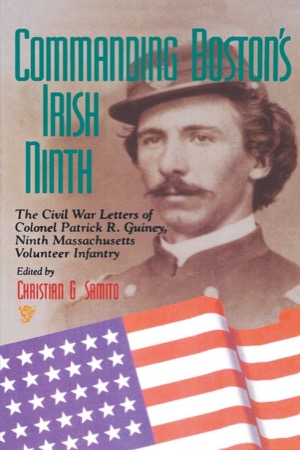
Hardcover. NY, Fordham University Press, 1st, 1997, Book: Very Good, Dust Jacket: Very Good, Hardcover in a bright dust jacket. 280 pages. The Ninth Massachusetts Infantry, which saw duty with the Army of the Potomac, was composed primarily of Irish immigrants and their descendants who hailed from Boston. One officer, Patrick R. Guiney, eventually rose to command the regiment as a colonel prior to suffering a service-ending wound in 1864. He left a full record of his men's activities in his letters to his wife, Jeannette; the letters also reveal that Guiney's political views, which leaned toward Lincoln and the Republicans, were not shared by most of his fellow officers or men. Editor Samito has provided a rather detailed prolog and annotation for the letters, which tell us as much about Guiney as a husband as they do about matters at the front. Among the numerous collections of Civil War letters that appear in print, these are distinguished for the author's forthright discussion of political and military affairs. Clean copy.
Hardcover. New York, Appleton & Co., 1st, 1900, Book: Good, Dust Jacket: None, Hardcover, light green cloth with gilt and b&w decoration, 480 pages. Top edge gilt. Front and rear hinges tender. Cloth covers rubbed at corners and along edges. Clean copy.
Softcover. Stanford CA, Stanford University Press, 3rd pr., 1999, Book: Very Good, Dust Jacket: None, Softcover, 493 pages. This book is about ending guerrilla conflicts in Latin America through political means. It is about peace processes, aimed at securing an end to military hostilities in the context of agreements that touch on some of the principal political, economic, social, and ethnic imbalances that led to conflict in the first place. The book presents a carefully structured comparative analysis of six Latin American countries--Nicaragua, El Salvador, Guatemala, Mexico, Colombia, and Peru--which experienced guerrilla warfare that outlasted the end of the Cold War. The book explores in detail the unique constellation of national and international events that allowed some wars to end in negotiated settlement, one to end in virtual defeat of the insurgents, and the others to rage on. The aim of the book is to identify the variables that contribute to the success or failure of a peace dialogue. Clean copy.
Hardcover. NY, Time Life, reprint, 1984, Book: Very Good, Dust Jacket: None, 480 pages. Hardcover with no dust jacket. Dark blue leather bound with gilt titles to front cover and spine. Embossed decoration on front cover. Gilt text block edges, red ribbon marker. Clean, tight copy. A well written and well thought out story of the Confederate Secret Service. Headley tells the little known and forgotten story of Confederate operations in Canada.
Hardcover. Kent, OH, The Kent State University Press, 1st, 1998, Book: Very Good, Dust Jacket: Very Good, 348 pages. Hardcover with dust jacket. Very clean, unmarked copy still in publishers shrink-wrap. Conrad Wise Chapman (1842-1910) is unique among Civil War artists: he painted and sketched while on duty as a Confederate soldier who served in three theaters of the war. Chapman's first-hand knowledge is evident in his work. Ben Bassham has written both a critical study of Chapman's art and a biography, incorporating Chapman's correspondence and Civil War memoirs.
Hardcover. Boston, Little, Brown and Company, 2nd pr., 1950, Book: Very Good, Dust Jacket: None, Hardcover, blue cloth with gilt lettering on spine. Volume IV in The History of United States Naval Operations in World War II. 307 pages, illustrated with maps (one fold-out) and b&w photos. Gilt on spine with light fading, lacks dust jacket, otherwise clean, tight copy.
Hardcover. NY, Stein & Day, 1st, 1982, Book: Very Good, Dust Jacket: Very Good, Hardcover in a bright dust jacket. General MacArthur's troops retreated here after the first surrender ever of an American Army in the Field, on the Bataan Peninsula. Reenacts the events of the Bataan and Corregidor battles of World War II through the eyes of the doctors, nurses, and soldiers interviewed after the war. Clean copy.
Hardcover. Cambridge MA, Harvard University Press , 1st, 2017, Book: Very Good, Dust Jacket: Very Good, Hardcover in a bright, unclipped dust jacket. 586 pages, b&w illustrations. Cuba's Revolutionary World examines in forensic detail how the turmoil that rocked a small Caribbean nation in the 1950s became one of the twentieth century's most transformative events. Initially, Castro's revolution augured well for democratic reform movements gaining traction in Latin America. But what had begun promisingly veered off course as Castro took a heavy hand in efforts to centralize Cuba's economy and stamp out private enterprise. Embracing the Soviet Union as an ally, Castro and his lieutenant Che Guevara sought to export the socialist revolution abroad through armed insurrection. Castro's provocations inspired intense opposition. Cuban anticommunists who had fled to Miami found a patron in the CIA, which actively supported their efforts to topple Castro's regime. The unrest fomented by Cuban-trained leftist guerrillas lent support to Latin America's military castes, who promised to restore stability. Brazil was the first to succumb to a coup in 1964; a decade later, military juntas governed most Latin American states. Thus did a revolution that had seemed to signal the death knell of dictatorship in Latin America bring about its tragic opposite. Clean copy.
Hardcover. New York, Charles Scribner's Sons, 1st, 1898, Book: Very Good, Dust Jacket: None, Hardcover, tan cloth covers stamped in blue and red, 360 pages. 116 b&w photos throughout, color maps in rear. In 1898 America intervened in the Cuban War of Independence, leading to conflict with Spain. This is a detailed account of this campaign, together with American military sea and land operations on the island of Puerto Rico during the Spanish American War. Cloth spine darkened otherwise clean, tight copy.
Hardcover. Philadelphia, J.B. Lippincott, 2nd Ed., 1865, Book: Very Good, Dust Jacket: None, Hardcover, dark green pebbled cloth with gilt lettering on spine, 4" x 6 1/4", 303 pages including index. A detailed instructional guide for the Civil War era soldier. Copyright page states 1964, title page says 1865. Probably a second edition. Still scarce in this nice condition. A few pages with dog ears, previous owner's pencil signature on front fly leaf. Otherwise clean, tight copy.
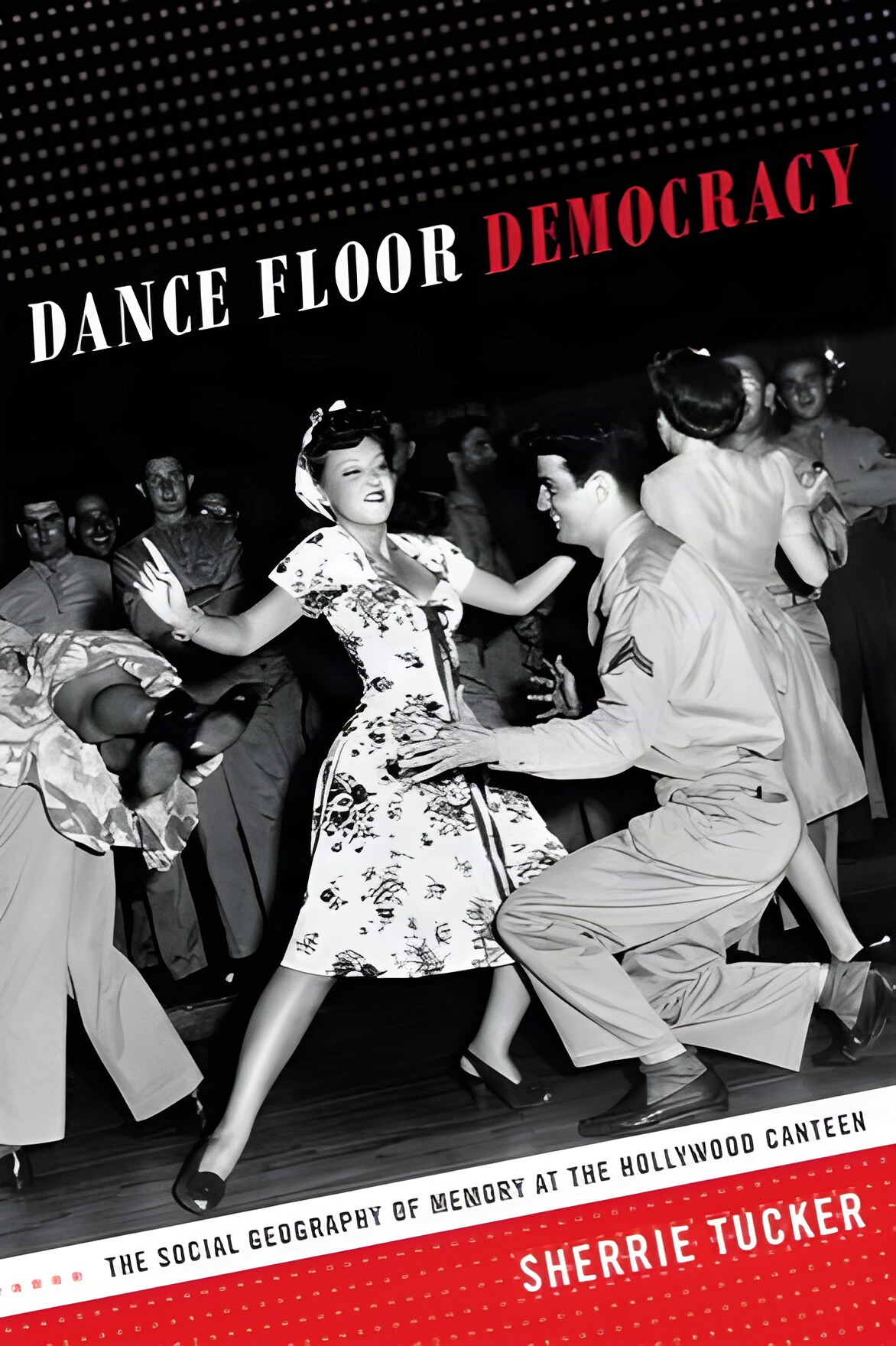
Softcover. Durham NC, Duke University Press, 1st, 2014, Book: Very Good, Dust Jacket: None, Softcover, 416 pages. Open from 1942 until 1945, the Hollywood Canteen was the most famous of the patriotic home front nightclubs where civilian hostesses jitterbugged with enlisted men of the Allied Nations. Since the opening night, when the crowds were so thick that Bette Davis had to enter through the bathroom window to give her welcome speech, the storied dance floor where movie stars danced with soldiers has been the subject of much U.S. nostalgia about the 'Greatest Generation.' Drawing from oral histories with civilian volunteers and military guests who danced at the wartime nightclub, Sherrie Tucker explores how jitterbugging swing culture has come to represent the war in U.S. national memory. Yet her interviewees' varied experiences and recollections belie the possibility of any singular historical narrative. Some recall racism, sexism, and inequality on the nightclub's dance floor and in Los Angeles neighborhoods, dynamics at odds with the U.S. democratic, egalitarian ideals associated with the Hollywood Canteen and the 'Good War' in popular culture narratives. Clean copy in publisher's shrinkwrap.
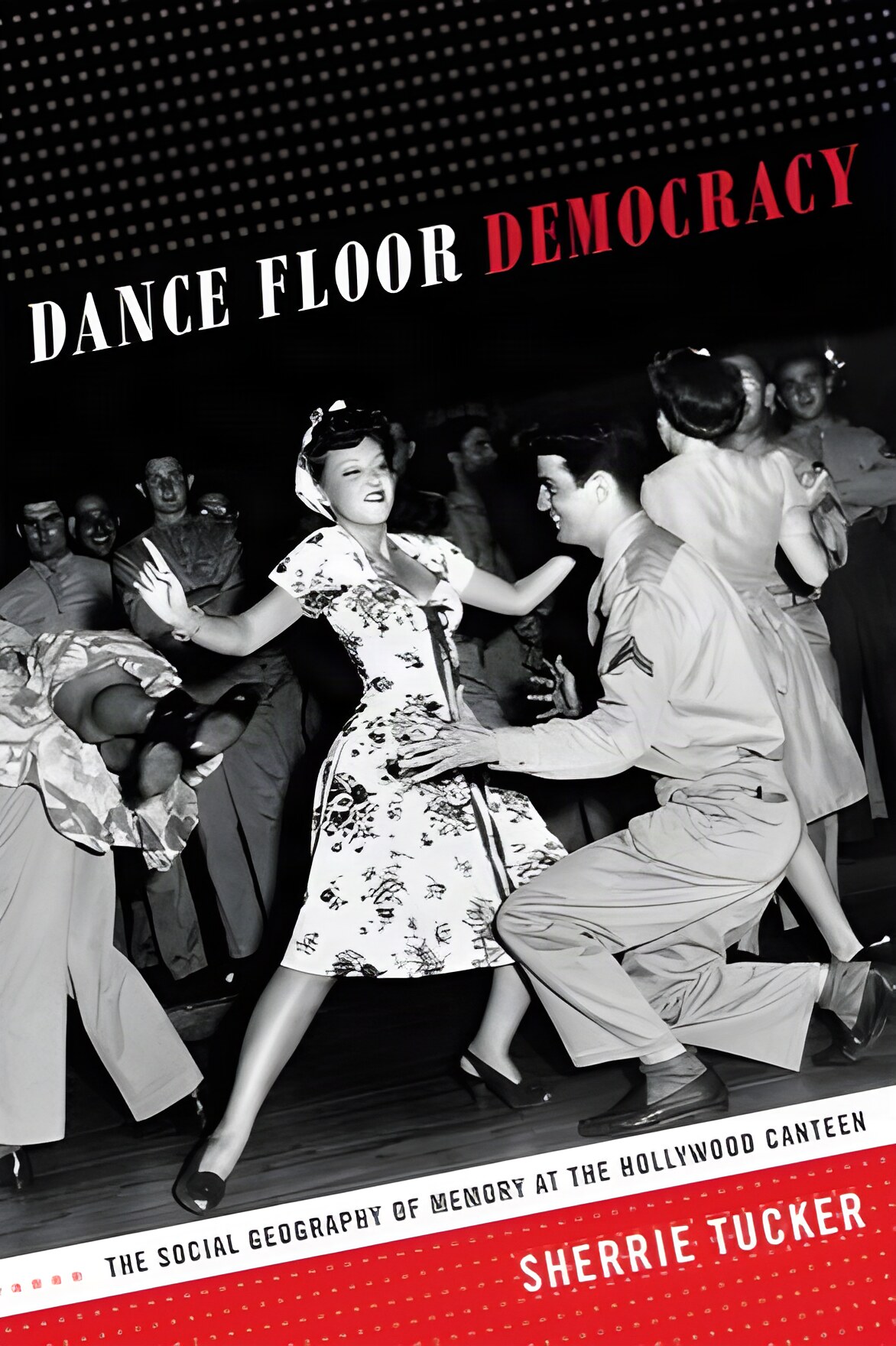
Softcover. Durham NC, Duke University Press, 1st, 2014, Book: Very Good, Dust Jacket: None, Softcover, 416 pages. Open from 1942 until 1945, the Hollywood Canteen was the most famous of the patriotic home front nightclubs where civilian hostesses jitterbugged with enlisted men of the Allied Nations. Since the opening night, when the crowds were so thick that Bette Davis had to enter through the bathroom window to give her welcome speech, the storied dance floor where movie stars danced with soldiers has been the subject of much U.S. nostalgia about the 'Greatest Generation.' Drawing from oral histories with civilian volunteers and military guests who danced at the wartime nightclub, Sherrie Tucker explores how jitterbugging swing culture has come to represent the war in U.S. national memory. Yet her interviewees' varied experiences and recollections belie the possibility of any singular historical narrative. Some recall racism, sexism, and inequality on the nightclub's dance floor and in Los Angeles neighborhoods, dynamics at odds with the U.S. democratic, egalitarian ideals associated with the Hollywood Canteen and the 'Good War' in popular culture narratives. Clean copy in publisher's shrinkwrap.
Hardcover. NY, Time Life, reprint, 1982, Book: Very Good, Dust Jacket: None, 288 pages. Hardcover with no dust jacket. Dark blue leather bound with gilt titles to front cover and spine. Embossed decoration on front cover. Gilt text block edges, red ribbon marker. Light scuffing to fore edge gilt. Otherwise, clean, tight copy. A History of the Andrews Railroad Raid into Georgia in 1862, Embracing a Full and Accurate Account of the Secret Journey to the Heart of the Confederacy, the Capture of a Railway Train in a Confederate Camp, the Terrible Chase that Followed, and the Subsequent Fortunes of the Leader and His Party. Reprint of the 1877 edition.
Hardcover. NY, Time Life, reprint, 1983, Book: Very Good, Dust Jacket: None, 274 pages. Hardcover with no dust jacket. Dark blue leather bound with gilt titles to front cover and spine. Embossed decoration on front cover. Gilt text block edges, red ribbon marker. Clean, tight copy. This memoir by Confederate General Richard Taylor is usually considered one of the best and least biased by a general officer. The work is full of considered analysis on both the strategy of the war and the personalities of his fellow officers. Taylor is always fair in his criticism and seems to have no real scores to settle. While he makes little mention of his own talents, his tactical brilliance and strategic insight does shine through. Many contemporaries said Richard Taylor was one of the best soldiers of the war, but he is comparatively little known due to his posting to peripheral theaters. While he was a man of his time, the work (with the exception of some of his Reconstruction writings) is much less tainted by Lost Cause polemics than most Confederate memoirs.
Hardcover. NY, Time Life, reprint, 1982, Book: Very Good, Dust Jacket: None, 224 pages. Hardcover with no dust jacket. Dark blue leather bound with gilt titles to front cover and spine. Embossed decoration on front cover. Gilt text block edges, red ribbon marker. Clean, tight copy. This Civil War classic of soldiering in the ranks debunks all the romantic notions of war. Like his Northern counterpart, the Confederate soldier fought against bullets, starvation, miserable weather, disease, and mental strain. But the experience was perhaps even worse for Johnny Reb because of the odds against him. Never as well equipped and provisioned as the Yankee, he nevertheless performed heroically. Carlton McCarthy, a private in the Army of Northern Virginia, describes the not-always-regular rations, various improvisations in clothing and weaponry, etc.
Hardcover. New York, Hovendon & Co., 1st, 1899, Book: Very Good, Dust Jacket: None, 366 pages. Blue cloth covers with bright gilt and 3-color design. Illustrated with black & white engravings and color plates. Previous owners inscription on front endpaper. Light fraying at top and bottom of spine. Otherwise clean, tight copy.
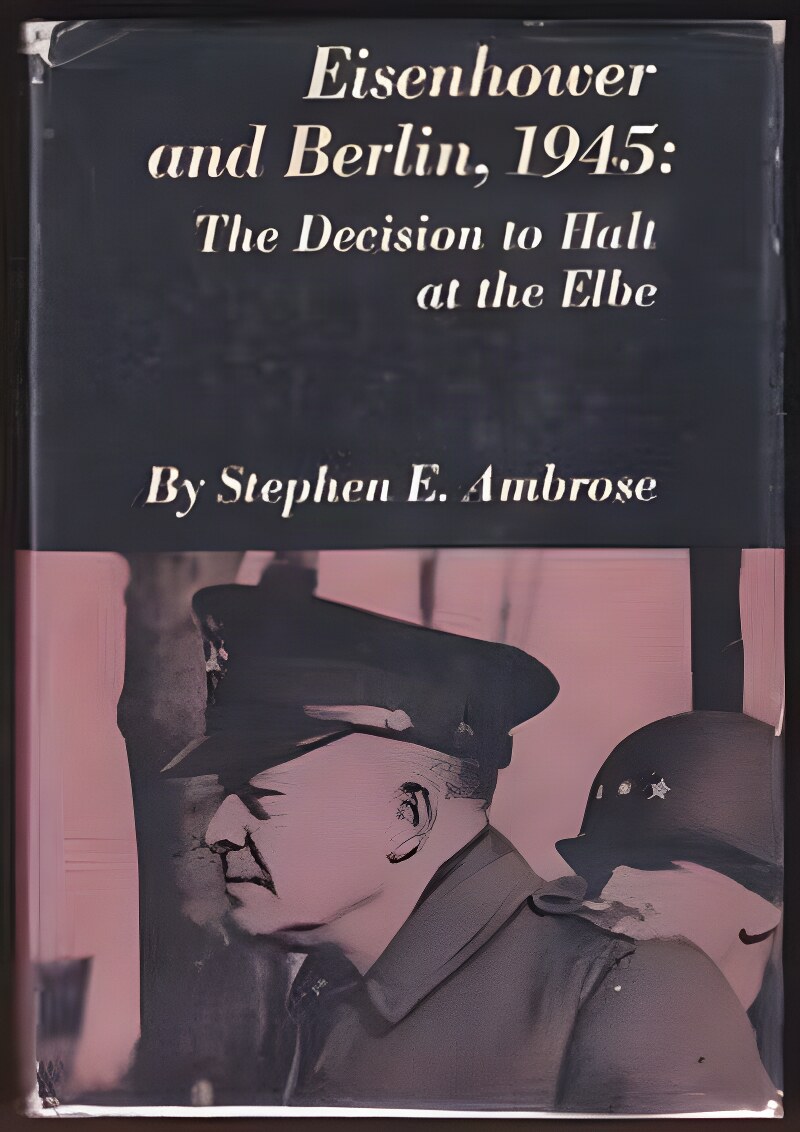
Hardcover. NY, W. W. Norton, 1st, 1967, Book: Very Good, Dust Jacket: Very Good, Hardcover in a worn, chipped dust jacket, 119 pages, maps, index. As WWII ground to a close, whose forces would be the first to reach Berlin? General Dwight David Eisenhower, supreme commander of the British and American armies, chose to halt at the Elbe River and leave Berlin to the Red Army. Could he have beaten the Russians to Berlin? If so, why didn't he? If he had, would the Berlin question have arisen? Would Germany have been divided as it was? Name on front fly leaf, otherwise clean.

 "Citizen-Soldier, The; Or, Memoirs of a Volunteer (Collector's Library of the Civil War)by: Beatty, John")
 "Civil War Diaries of Major John M. Deane: 1861-1865by: John Milton Deane")
 "Civil War Nurse: The Diary and Letters of Hannah Ropesby: Hannah Ropes /John R. Brumgardt (Editor)")
 "Civil War: A Narrative - 3 Volumes, Theby: Foote, Shelby")

 "Colonel The: The Life and Wars of Henry Stimson 1867 - 1950 by: Hodgson, Godfrey")
 "Colonial Riflemen in the American Revolutionby: Huddleston, Joe D.")
 "Commodore Paul Jonesby: Brady, Cyrus Townsend")

 "Confederate Operations in Canada and New York (Collector's Library of the Civil War)by: Headley, John W.")
 "Conrad Wise Chapman: Artist and Solider of the Confederacyby: Bassham, Ben")
 "Coral Sea, Midway and Submarine Actions: May 1942-August 1942 (History of United States Naval Operations in World War Ii, Volume 4)by: Morison, Samuel Eliot")
 "Corregidor: The End of the Line by: Eric Morris")

 "Cuban and Porto Rican Campaigns, Theby: Davis, Richard Harding")
 "Customs Of Service for Non Commissioned Officers and Soldiers as Derived from Law and Regulations and Practised in the Army of the United States by: Kautz, August V.")
 "Daring and Suffering: A History of the Great Railroad Adventure (Collector's Library of the Civil War)by: Pittenger, William")
 "Destruction and Reconstruction - Personal experiences of the late war (Collector's Library of the Civil War)by: Taylor, Richard")
 "Detailed Minutiae of Soldier Life in the Army of Northern Virginia, 1861-1865 (Collector's Library of the Civil War)by: McCarthy, Carlton")
 "Dewey and Other Naval Commandersby: Ellis, Edward S.")